



Kalvárie na Křížovém vrchu Sculpture
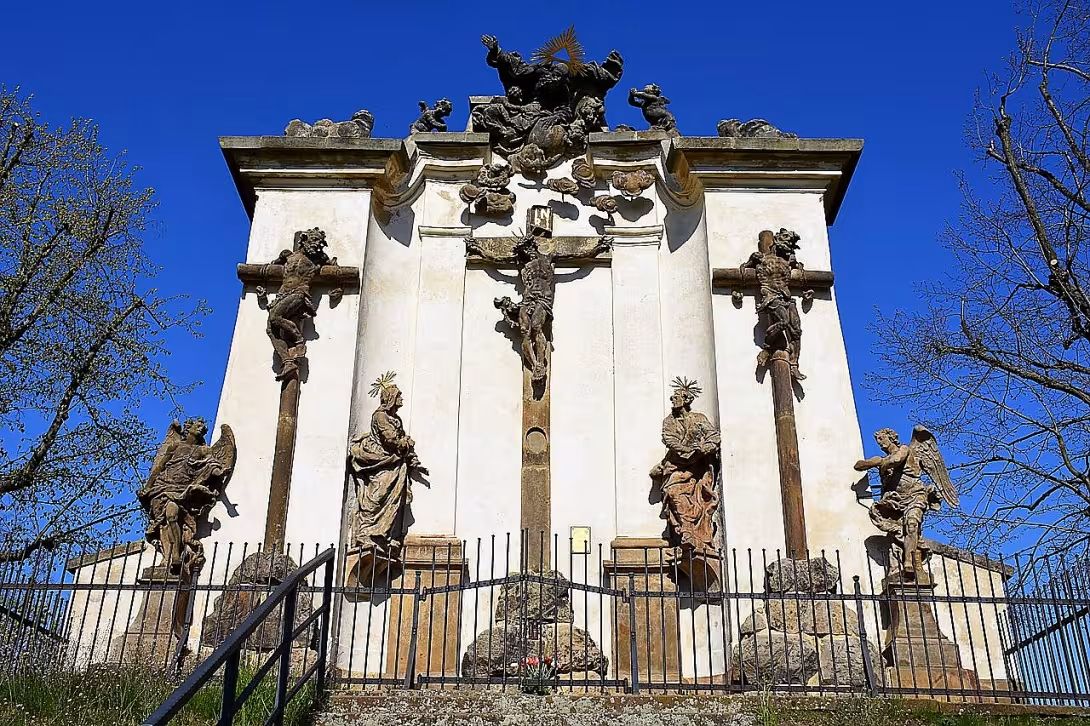
Kalvárie na Křížovém vrchu in Moravian Třebová represents an important baroque dominance of the city. This monument protected area includes a cross road with four chaples. It was created between 1730 and 1731 and is valued mainly for its sculpture decoration.
The history of the place goes deep into the past, with three wooden crosses standing on top. Ladislav z Boskovic had them taken out and moved to the cemetery church around 1510. They were later replaced by a stone sculpture whose authors were Hans Gatschka and Georg Fauler. But this work was destroyed by lightning in 1679. The current shape of the calvary was created on the initiative of Dean Antonín Stöhr. His request was granted by Prince Josef Jan Adam z Lichtenštejna, who personally laid the foundation stone for the construction.
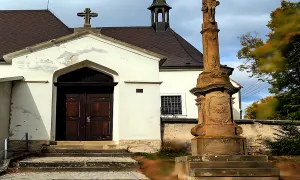
The architectural whole complements the cross road lined with four caples of a polygonal floor plan with mansard roofs. The sculpture itself, an important example of the late Baroque sculpture, created by Severin Tischler. The composition includes three crosses, figures of the Virgin Mary and Saint John the Evangelist, two angels on the sides and on the ledge placed a representation of God the Father with the heads of angels in the clouds.
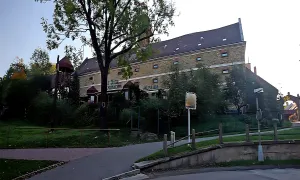
Since 1964, this monument has been listed in the state list of cultural monuments. There is today a permanent exhibition of Holzmaister's non-European collection. The immediate surroundings are a museum park. Visitors can see in it a monument of Bedřich Smetana by Karel Otajal from 1959 and a monument of Liberation from Vendelín Zpalický.
Kalvárie na Křížovém vrchu is a valuable proof of religious symbolism and monumental sculpting of the period of the high baroque in Czech countries. Visiting this place offers the opportunity to become acquainted with the history of Moravian-Trebov sculpture as well as with a unique collection of non-European art in the quiet environment of the museum park.
Historical milestones
- 1510
- Ladislav z Boskovic had the original wooden crosses taken out.
- 1679
- The stone sculpture was destroyed by lightning.
- 1730
- The launch of the construction of the current calvary by Prince Joseph Jan Adam of Liechtenstein.
- 1964
- Listing to the state list of cultural monuments.
Architectural development
The original wooden crosses were replaced by a stone sculpture, which after the destruction by lightning in 1679 was replaced by the present late Baroque composition. The complex includes four chapel of polygonal floor plan with Mansard roofs that line the access path.
Historical events
Around 1510, Ladislav z Boskovic had the original wooden crosses taken out. In 1679, the stone sculpture was destroyed by lightning. The current Baroque calvary was built between 1730 and 1731.
Points of interest
- The area was established between 1730 and 1731 and includes a cross road with four chaples. - The original three wooden crosses had Ladislav z Boskovic moved to the cemetery church around 1510. - The stone sculpture that replaced the wooden crosses was destroyed in 1679 by lightning. - The basic stone of the current shape of the calvary was laid personally by Prince Josef Jan Adam z Lichtenštejna. - There is a permanent exhibition of non-European collections and the surroundings form a museum park with monuments.
Guide
Show guide text
This text was created by artificial intelligence and has not been editorially reviewed. It may contain inaccuracies.
Welcome to this beautiful place that has been defining the face of your whole surrounding landscape for centuries. You are standing in front of one of the most important and important points that you can see in Moravian Treb. This calvary on the Cross Hill is not just an ordinary sculpture, it is a monumental entity that you perceive as a dominant suburb. Look around you and see how this place affects your senses. It has a deep sense of calm, but also the weight of history that has taken place here for many generations. This monument welcomes you with its size and makes you feel that you have just entered the space where human art meets spiritual peace. Feel the atmosphere of this place as it mingles with the view of the surrounding area and how this sculpture is held in the sky.
In order to fully understand why this place is so special, we need to look together at its roots and how time was formed here. The current form that you now see before your eyes was not created immediately. It is the result of a close connection between faith, art and the power of the time. In the years of a thousand seven hundred thirty and a thousand seven hundred thirty one there was a major milestone that changed the appearance of the whole hill. At the behest of Prince Josef Jan Adam of Liechtenstein, construction started here, which gave rise to this present sculpture. The prince was a man who at the time saw the need to create this place as an important symbol. Thanks to his will and support, a work could be carried out, which still so deeply addresses us in its form and meaning. It's proof of how one decisive act can leave a trail in the landscape for centuries.
Now pay attention to the details you have right in front of you. Notice how the whole sculpture is thought out and how there is a certain order. The main point of the whole focus is the three crosses that form the heart of this scene. If you look more closely at the individual characters, you will see the masterpiece of sculptor Severin Tischler. It was he who breathed life into the stone to the characters you are now observing. Notice the Virgin Mary and Saint John the Evangelist standing by the cross, and perceive the emotions that radiate these statues. The angels and the image of God the Father are added to the whole sculpture, which adds to the whole scene in depth and nobility. But this whole space is not just about a group of statues. It's also a path you can take. A cross path that is lined with four chapels leads you to the memory. Notice their roofs, which have a specific shape, so-called Mansard roofs, which gives the whole place rhythm and special architecture. Every chapel is a step in this spiritual and historical story.
However, the history of this place is much more complex and dramatic than it might seem. Before these stone shapes stood here, everything here was completely different. In the year one thousand and five hundred ten, the nobleman Ladislav z Boskovic decided this place. That's when he took down the original wooden crosses and moved them to the cemetery church. Imagine that time when all these works were made of wood and were much more fragile. But history can be unpredictable and sometimes very destructive. In the year one thousand six hundred seventy-nine, something happened that probably no one had ever expected. The stone sculpture that was already there was destroyed by the devastating lightning strike. Nature has decided that this place must undergo a fundamental transformation. This event left a deep mark in history and required a new, huge effort to rebirth this place. And so, thanks to the Prince of Liechtenstein, everything came back to life in a new, more durable and more beautiful form that you now see.
There's something fascinating about this place being repeatedly faced with trials and storms. From wooden crosses, to sudden destruction by lightning, to today's stone size. It's a story about how the human quest for beauty and expression of faith seeks to overcome even the greatest sudden storms of nature. Notice how protected and valued this place is today. Already in the year one thousand nine hundred sixty-four this place was included in the state list of cultural monuments, which confirms its immense value to all of us and to future generations.
Now, I beg you, continue along the cross road. Go through the individual chapel, feel the calm this place offers, and look at the details that the sculptor Tischler left you. Let yourself be carried away by the atmosphere of this place and enjoy each moment spent at this important point in Moravian Třebová. Explore every step of this journey and let yourself drift through the history that is felt in every stone. Thank you for having the opportunity to accompany us.
Tips for visitors
The best time to visit is during the late afternoon when the setting sun lights up the statues beautifully and offers impressive views of the city. The location is freely accessible, so we recommend using a quieter morning clock for undisturbed contemplation. We recommend fixed shoes because the path to the top leads up the hill and the terrain can be slippery after rain. It is ideal for photographers to use a wide-angle lens to capture the entire sculpture against the background of the Moravian Třebová panorama. In the surrounding area you can visit the adjacent museum park where you can see the monument of Bedřich Smetana by Karel Otajal and the memorial of the Liberation from Vendelín Zpalický. For families with children, the hike is a pleasant walk where the history of baroque art in nature can be brought closer to the children.
Frequently asked questions
Can the monument be visited?
This is a structure in a public space that can usually be seen from outside free of charge. We have not verified that this particular one is freely accessible.
Where is the monument?
Location: Předměstí. The map on this page shows the exact spot.
Why is the monument protected?
It is listed in the Central List of Cultural Monuments of the Czech Republic as a cultural monument (register no. 1000148068).
Businesses nearby
Do you run a restaurant, accommodation, shop, museum, rental, wellness or other visitor service near this monument? Show yourself directly to the people heading to it — this is how they will see you in the app and on the web:
Nearby
V přilehlém muzejním parku se nachází pomník Bedřicha Smetany od Karla Otáhala z roku 1959 a památník Osvobození od Vendelína Zdrůbeckého.
Accommodation nearby
Themed route
Kalvárie na Křížovém vrchu This dominant object is the heart of the entire cruise route. Visitors can enjoy a quiet environment and admire the architectural solution of the calvary, which is characteristic of this location.
The memorial of Bedřich Smetana It is located in a nearby museum park. The sculpture by Karel Otajal from 1959 reminds us of the famous Czech music composer and offers the opportunity to stop at a significant cultural monument.
The Memorial of Liberation This memorial plate by Vendelín Zpelický is also located in the museum park area. It serves as an important historical reminder of the liberation events and complements the cultural offer of this place.
Museum park area The space between the monuments is an ideal place to relax and walk. Allows you to join a visit to the musical and historical monument with admiration of the natural environment of the village Předměstí.
Seasonal recommendations
Spring: In spring, life wakes up here. The trees start to green and the light is fine, which beautifully highlights the faces of the statues. It's time for fresh air and new flowers. I suggest you take several layers of clothing because the wounds are still cold. People here are not the same as in the summer, so you will enjoy the peace especially in the morning.
Summer: In the summer months everything is green and dense. The sun shines the strongest and creates sharp shadows between statues. Due to high temperatures and larger groups of visitors, I suggest you come first thing in the morning. Don't forget enough water and headgear because there is little shade on the road to the monument.
Autumn: Autumn brings gold and brown to the surroundings. The fog sometimes covers religious images, which gives the place a deep, serious feeling. It's good to have a waterproof jacket and tight shoes, because the road can get wet. The best time to observe colored leaves is the middle of the day.
Winter: The winter here is quiet and the landscape looks steep and clean, especially when snow falls. The light is weak and the days are short, so plan a visit around noon. A very warm winter jacket, scarf and gloves are necessary. Watch out for possible ice on stairs and paths that can be dangerous.
Visualizations and artistic views

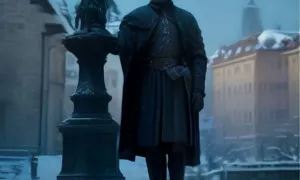
The visualisations are generated by artificial intelligence and serve as inspiration.
Photos from the area
Real photos taken near the monument


Zdroj a licence jsou uvedeny u každého snímku.
Tips from visitors
No tips yet. Be the first!
Log in and add your tip.
Sources and literature
Photos: Ben Skála, Benfoto / CC BY-SA 3.0 — Wikimedia Commons. The author and licence also appear when you hover over the image.
Faktickým podkladem tohoto textu byl článek na Wikipedii, jehož autory jsou přispěvatelé Wikipedie. Článek je dostupný pod licencí CC BY-SA 4.0.
Location on the map

Příběhy a pověsti
Legendy, pověsti a příběhy spjaté s touto památkou
Fotografie návštěvníků
Zatím žádné fotografie. Buďte první, kdo přidá fotografii z návštěvy!
Log in a přidejte svou fotografii nebo hodnoťte.
Za ověřenou návštěvu v aplikaci získáte víc bodů — poznáme podle GPS, že jste na místě.
Reviews and comments