



kamenný most přes Radbuzu v Mostku Road bridge
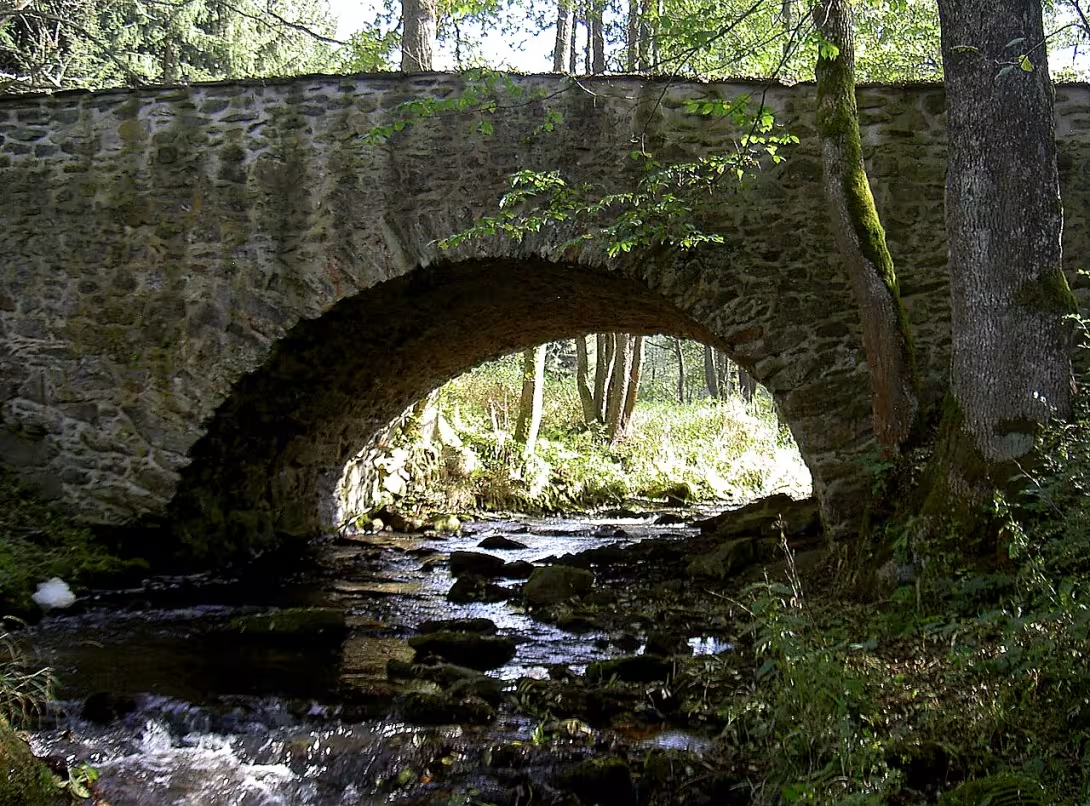
The stone bridge over the Radbuz River in the cadastral area of the Bridge near Rybník on Domažlick is a classic technical monument from 1809. This single-arc structure made of quarry stone is the only preserved reminder of the extinct village Schwanenbrückl. In 2004 it was declared a cultural monument of the Czech Republic.
The bridge was built in 1809 at the site of the original wooden bridging. The Czech countries were then in the period of the Napoleon Wars, which influenced both the economy and the development of the road network. The construction served as part of an important business road connecting Bavarian Schönsee to the Czech inland, namely with Horšín and Mutěnin. In the immediate vicinity was the dam of the pond and water mill.
Architecturally, it is a wall single-arc construction made of quarry stone with significantly marked jewelers. The bridge reaches a length of approximately 14 metres, a width of 5 metres and a height above 2.5 to 3 metres. The wagon is stone and the year 1809 is still visible on the foot of the bridge. During the reconstruction in 2009, half-meter parapet walls were restored. One of the parapets has a wider name in the middle of the span, which probably served as a base for the statue, which was common in the then rural bridges.
The fate of the building is closely linked to the development of the municipality of Mostek, which disappeared between 1950 and 1960. While the village Schwanenbrückl, whose name in translation means Swan Bridge, completely disappeared, the bridge remained a lonely monument in the landscape. In 2009 it underwent a general repair by VS CRIADO s.r.o. from Pilsen.
Today the bridge is freely accessible through the forest road and represents an important proof of the historical transport link between Bavaria and the Czech territory. As the only material remnant of the extinct village has a high documentary value for knowledge of regional history. Visiting this place offers the possibility of seeing a technical monument in an authentic forest environment, where it resembles a decayed residential structure and old business routes.
Then and now
Drag the slider to compare how the landmark may have looked when it was built with the view today.
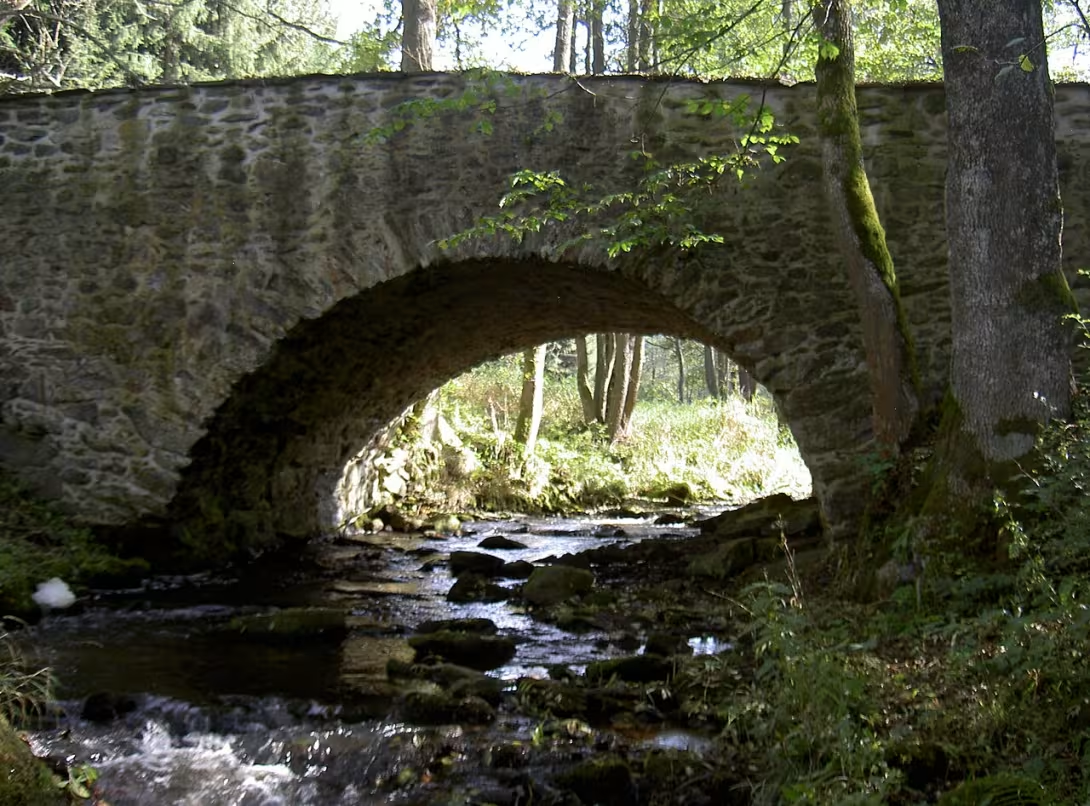

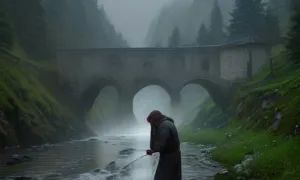
The historical appearance on the left is an AI-generated visualisation and serves as inspiration only.
Historical milestones
- 1809
- Completion of stone bridge construction.
- 2004
- Declaration of the bridge cultural monument of the Czech Republic.
- 2009
- The overhaul of the bridge.
Architectural development
The bridge is built from a quarry stone with distinctive arches. In the reconstruction of 2009, the parapet walls were restored, one of which bears a wider name, which in the past could serve as a base for the statue. The construction is approximately 14 metres long and 5 metres wide.
Historical events
1809: Construction of a stone bridge at the site of the original wooden bridging. 1950-1960: The demise of the village of Mostek, after which the bridge remained a lonely monument in the landscape. 2004: Declaration of the bridge cultural monument of the Czech Republic. 2009: General repair of bridge construction.
Points of interest
- It is a classicist technical monument from 1809, which is the only preserved reminder of the extinct village. - The construction was created at the site of the original wooden bridge and served as part of an important business trip. - The year 1809 is still visible on the foot of the bridge. - One of the parapets has a wider name in the middle, which probably served as a base for the statue. - The bridge is the only material remnant of a defunct village and has a high documentary value for knowledge of regional history.
Guide
Show guide text
This text was created by artificial intelligence and has not been editorially reviewed. It may contain inaccuracies.
Welcome to this place's gem, a stone bridge through Radbuz in Most. You are standing here at Rybník and there is history and architecture associated with this classical monument under your feet. Let's look at what this building has to offer.
The bridge was completed in 1809 as part of an important road connection between Bavaria and the Czech inland. It originally served as a substitute for the wooden bridging that stood here, and became a key element of the business trip. Today it is the only preserved monument of the village Schwanenbrückl, which was destroyed in the middle of the 20th century.
Let's take a closer look at the architecture of this bridge. Its single-arc wall body is built of quarry stone, which gives it a robust and durable look. On the foot of the bridge, notice the carved year 1809 - these details are like a time trail that reminds us of its ancient origin.
Although we are unable to name the individuals who were behind it, it is clear that the bridge was built with great care and expertise. The interesting thing is that one of the parapets has something you may wish to see more closely.
As for the interesting, this place is full of mysteries and stories. The bridge was declared a cultural monument of the Czech Republic in 2004, which confirms its historical and aesthetic importance. In 2009, a general repair took place to ensure its durability for future generations.
If you stand before this monument, you can not only enjoy its historical significance, but also the atmosphere and calm that exists here. It's a place where time seems to stop and allows us to reflect on the past for a moment.
Inviting you to explore other surrounding areas that also have much to offer. We hope that this bridge and its stories interest you and inspire further discoveries. Be with us on further journeys and explore more historical gems. Thank you for your attentive listening and we hope you enjoyed this monument.
Tips for visitors
The best time to visit is late spring or early autumn, when the surrounding woodland is the most colorful and vegetation around the Radbuza River does not prevent the view of the stone bridge construction itself.
For photography I recommend using soft light during the morning or late afternoon. The best shots will be taken from the bank of the river, where the vault of the bridge from the quarry stone will stand out in contrast to the surrounding nature.
Pack solid shoes suitable for use in the field on the way because you are moving in a forested area of a degraded village. Given the distance of the site, I recommend that you take with you enough water and snacks because there are no services in the immediate vicinity.
Families with children can view the trip as an adventure for history to the places where the village used to be. Children can explore the remnants of the pond dam and look for traces of a extinct water mill in the field.
In the vicinity of the monument, you can explore the remains of the extinct village of Mostek, where the water mill and the dam of the pond used to work, which today only resembles the terrain inequalities and remains of building material.
Frequently asked questions
Can the monument be visited?
This is a structure in a public space that can usually be seen from outside free of charge. We have not verified that this particular one is freely accessible.
Where is the monument?
Location: Rybník. The map on this page shows the exact spot.
Why is the monument protected?
It is listed in the Central List of Cultural Monuments of the Czech Republic as a cultural monument (register no. 1140106464).
Businesses nearby
Do you run a restaurant, accommodation, shop, museum, rental, wellness or other visitor service near this monument? Show yourself directly to the people heading to it — this is how they will see you in the app and on the web:
Nearby
Most se nachází v lesnaté krajině v blízkosti zaniklé obce Mostek u Rybníku v okrese Domažlice. V okolí se dříve nacházel vodní mlýn a hráz rybníka, které jsou dnes již zaniklé.
Accommodation nearby
Themed route
Thematic cruise route "Stone bridge over Radbuza in Most"
1. Main objective: Stone bridge over Radbuzu - Type: Historical landmark - Why is it worth visiting: This stone bridge is one of the few preserved elements of the history of the village of Bridge. Its architecture and location over the Radbuza River offer a view of the past and beautiful landscape.
2. Vanished water mill - Type: Historical site - Why is it worth a visit: Even if it no longer works, the remains of this mill are indicative of the former industrial use of the area. Looking at its remains and the idea of the past add historical depth.
3. Vanished pond dam - Type: Historical site - Why is it worth a visit: This dam, although it is no longer in operation, was an important part of the local agricultural system. Her visit offers insight into past techniques of water management and agriculture.
Route order: - Start at the Stone Bridge via Radbuza, where you can explore its architecture and understand the historical context. - Then we'll look at the remains of the Vanished Water Mill. Even without a full structure, there are traces of the past that can be fascinating. - Finally followed by a visit to the Zanikla dam of the pond where you can imagine earlier lifestyle and technology.
This route offers a view of history and missing elements of the local industry while surrounded by beautiful woodland landscape.
Seasonal recommendations
Spring: In the spring season the surrounding area of the stone bridge through Radbuzy in the Bridge is full of newly blooming flowers and green trees, creating a wonderful atmosphere. It is advisable to visit the memory at noon when the sun lights up the bridge and the surrounding pond best. Clothes should be warm because the cool wind from the fast flowing river can be felt even in summer days.
Summer: In summer the surrounding bridge is lively and full of tourist groups enjoying a beautiful day in nature. The sun lights up the bridge and pond, creating ideal conditions for photography. The best time to visit a monument is in the morning or in the evening when the crowds calm down and you can enjoy a quieter moment. Clothes should be light and playful to help you withstand warm summer winter.
Autumn: In the autumn period, the surrounding area of the bridge is transformed into a colourful web where tree leaves pick up live colors. Sunshine days are ideal for visiting and natural beauty is particularly captured in softer light. The best time to visit the memory is at noon when the sun lights the bridge and the surrounding area best. The clothes should be warm because the cold wind from the river has become more visible.
Winter: In winter the atmosphere around the stone bridge is calm and quiet. The sun's rays illuminate the bridge and the pond when their shading turns into beautiful patterns on snow. The best time to visit a monument is in the morning or in the evening when the sun's rays illuminate the bridge and surroundings. Clothes should be warm and protective against cold wind from the river, which becomes more intense.
Visualizations and artistic views


The visualisations are generated by artificial intelligence and serve as inspiration.
Photos from the area
Real photos taken near the monument


Zdroj a licence jsou uvedeny u každého snímku.
Tips from visitors
No tips yet. Be the first!
Log in and add your tip.
Sources and literature
Photos: Allexkoch / CC BY-SA 4.0 — Wikimedia Commons. The author and licence also appear when you hover over the image.
Faktickým podkladem tohoto textu byl článek na Wikipedii, jehož autory jsou přispěvatelé Wikipedie. Článek je dostupný pod licencí CC BY-SA 4.0.
Location on the map
More monuments – Rybník
Show all in the municipality


Příběhy a pověsti
Legendy, pověsti a příběhy spjaté s touto památkou
Fotografie návštěvníků
Zatím žádné fotografie. Buďte první, kdo přidá fotografii z návštěvy!
Log in a přidejte svou fotografii nebo hodnoťte.
Za ověřenou návštěvu v aplikaci získáte víc bodů — poznáme podle GPS, že jste na místě.
Reviews and comments