



Stará Huť Settlement
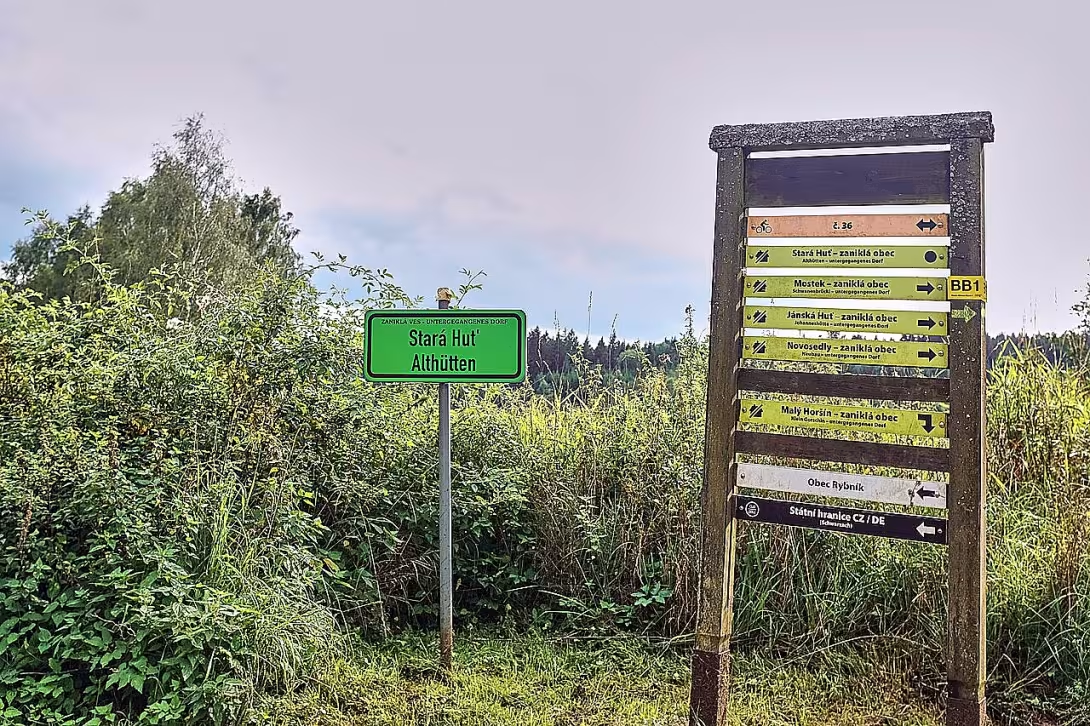
Objekt se nedochoval — na místě dnes nestojí. Následující text popisuje jeho historii, ne současnou návštěvu.
Stará Huť, in German Althütten, was a extinct village in those places where the part of the village of Rybník is located today in the district of Domažlice. It was lying at the foot of the Iron Hill, which rises to 790 metres, approximately one kilometre from Rybníka, at the left bank of the Radbouza River. A road connecting Rybník to Smoluvo was passing through the village and it fell under the ruined town of Mostek. It was a place of particular importance in the history of Czech glassmaking - the name is based on one of the oldest glassworks of the Czech Forest.
The development of the industry in the site was initiated by Švamberková, who called in glassmakers and soon after 1560 had a glassworks plant set up here. The 1970s were turbulent - the smelter was apparently the subject of a dispute between the Choda and the Swiss. Trusted reports of her condition are preserved until 1601, when the glass mill was sold. However, the buyer Pavel Schürer sold it to another owner the same year, which subsequently had it desolate. In the division of the Mutiny property of Vidrježigágár in 1644, the glass smelter in Staré Huti is no longer listed - only the mill and saw remain, as confirmed by the Teresian cadastral.
The real growth of the village occurred only in the second half of the 18th century. The parish fell under the parish Mutín, the nearest parish church was located in Rybník. Postal services were initially provided from Horšovský Týn (until 1851), later from Hostěň (since 1902) and from 1938 from Mutěňín.
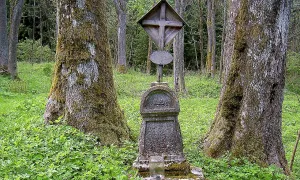
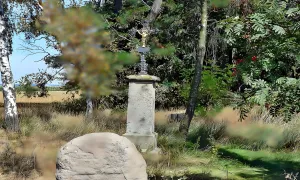
The fate of the village broke after World War II. Its German population - in the census in 1921, 394 inhabitants of German nationality lived here - was affected by a postponement. There was a partial settlement, but it stopped in the 1950s. Despite the creation of the border zone, the village was relocated. The signal wall divided the territory into two halves: one was in the forbidden zone, the other was in the border. Only a minimal artifact - a stone base of the 1854 cross, which was moved to Rybníka in the 1990s, survived from this unfortunate division. There's practically nothing left of the other infrastructure.
Historical milestones
- 1560
- The foundation of the glass mill Švamberka, which named the village.
- 1601
- The first written mention of the sale of the smelter to Pavel Schürer.
- 1644
- The Terezian cadastre presents only the mill and saw in Stara Huti, the glass mill has already disappeared.
- 1921
- The population census confirmed the superiority of the German population (394 out of 396 inhabitants).
- 1950
- The village was definitely displaced and divided by the border zone.
Architectural development
The village was established as a residence for the employees of the glass mill, and later it grew as an agricultural community. It developed in the 18th century, but no significant modifications or architectural changes are documented. In the 20th century, it disappeared as a result of the border zone and relocations.
Historical events
- 1560
- The foundation of the glass mill Švamberky, after which the village was named.
- 1601
- The sale of the metal to the glassmaker Pavel Schürer, who subsequently had it desolate.
- 1945-1950
- The settlement of the German population and the subsequent division of the village through the border zone.
Owners
- after 1560
- 1601
- 1644
Points of interest
- The name of the village Stará Huť comes from one of the oldest glass smelters in the Czech Forest.
- The village was lying at the foot of the Iron Hill, which is 790 meters high.
- The real development of the village was only in the second half of the 18th century.
- Postal services were originally provided from Horšovský Týn, later from Hostěň and since 1938 from Mutěňín.
- After World War II, the village was displaced, with virtually nothing preserved from the original infrastructure.
Guide
This guide is narrated by a synthetic voice generated by artificial intelligence.
Show guide text
This text was created by artificial intelligence and has not been editorially reviewed. It may contain inaccuracies.
Stará Huť, in German Althütten, is a vanished village in the territory of the municipality of Rybník in the Domažlice district. It stood at the foot of Železný vrch, which is 790 meters high, about a kilometer from Rybník, on the left bank of the Radbuz River. A road from Rybník to Smolovo ran through the village. Officially it belonged to the municipality of Mostek, which no longer exists today either.
The name of the village commemorates the oldest known glassworks of the Český les. The Švamberks acquired the territory and brought glassmakers here, who founded a glassmaking workshop shortly after 1560. In the seventies of the sixteenth century, the workshop probably became the subject of a dispute between the Chods and the Švamberks. However, reliable information about it comes only from a sales contract from 1601. The glassmaker Pavel Schürer bought the workshop at that time, but sold it further the same year, and the new owner had it abandoned. When the Mutěnín properties of the Vidršpergárs were divided in 1644, the glassmaking workshop in Stará Huť is no longer mentioned. The Theresian cadastre also records only a mill and a sawmill there. The village began to develop only in the second half of the eighteenth century.
Stará Huť belonged to the parish of Mutěnín, but the nearest parish church stood in Rybník. Until 1851 the inhabitants had their mail in Horšovský Týn, from 1902 in Hostouna, and from 1938 in Mutěnín.
In the 1921 census, 396 people lived here. Except for two inhabitants of Czechoslovak nationality, they were Germans. 395 people belonged to the Roman Catholic Church and one to the Evangelical Church.
After the Second World War, the German population was expelled. The village was then partially resettled, but in the nineteen-fifties, when a border zone was being created, it was evacuated a second time. A signal wall divided the territory into two halves. One lay in a prohibited zone, the other in a border zone. Practically nothing was preserved from both parts. Only a stone pedestal of a cross from 1854 remained, which was moved to the road to Rybník in the nineteen-nineties.
For kids
Imagine going back to a time when the woods were full of wild animals and people lived closely in connection with nature. This is the story of Old Huti, the extinct settlement at the foot of the Iron Hill.
It was like a game where people and nature played. The village was administratively fallen under the then town of Mostek. This is where farmers, shepherds and craftsmen lived. It was a village alive, full of life and work. People here took care of their crops, raised animals and traded the surrounding settlements.
Businesses nearby
Do you run a restaurant, accommodation, shop, museum, rental, wellness or other visitor service near this monument? Show yourself directly to the people heading to it — this is how they will see you in the app and on the web:
Nearby
Ambient landscape, other monuments, natural elements up to 5 km: Iron hill (790 m), Rybník, Radbuza.
Visualizations and artistic views


The visualisations are generated by artificial intelligence and serve as inspiration.
Photos from the area
Real photos taken near the monument

Zdroj a licence jsou uvedeny u každého snímku.
Tips from visitors
No tips yet. Be the first!
Log in and add your tip.
Sources and literature
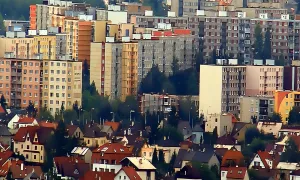
Photos: Lubor Ferenc / CC BY-SA 4.0 — Wikimedia Commons. The author and licence also appear when you hover over the image.
Faktickým podkladem tohoto textu byl článek na Wikipedii, jehož autory jsou přispěvatelé Wikipedie. Článek je dostupný pod licencí CC BY-SA 4.0.
Location on the map

Příběhy a pověsti
Legendy, pověsti a příběhy spjaté s touto památkou
Fotografie návštěvníků
Zatím žádné fotografie. Buďte první, kdo přidá fotografii z návštěvy!
Log in a přidejte svou fotografii nebo hodnoťte.
Za ověřenou návštěvu v aplikaci získáte víc bodů — poznáme podle GPS, že jste na místě.
Reviews and comments