



kamenný most v Budkově Road bridge
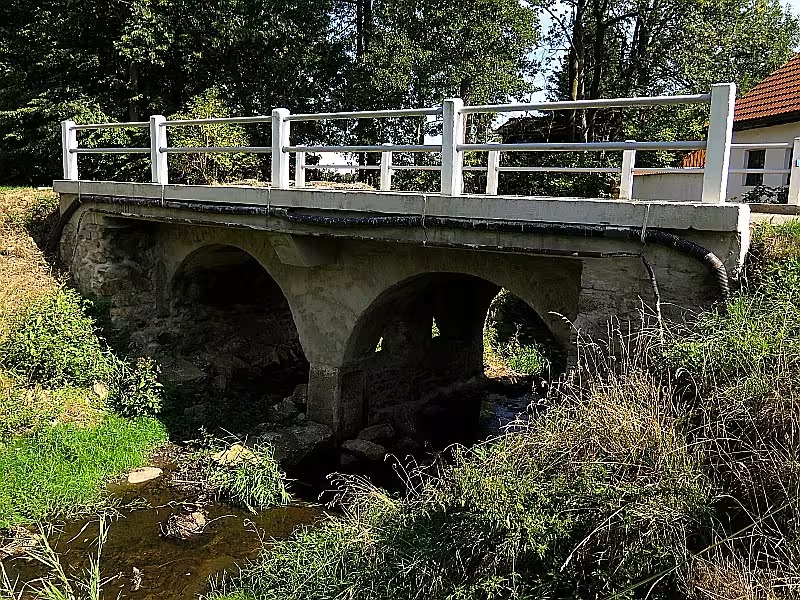
The stone bridge in Budkov is a renaissance monument of the 16th century, located on the road III / 14418 near Budkov village in the district of Prachatice, South Bohemia. It bridges the Libotyn stream and is an important cultural monument of the Czech Republic. Its architecture of quarry stone with lime mortar and plastered with lime cement plaster represents a typical two-arc bridge of the time.
The bridge was created during the Renaissance when stone bridge structures developed. Its construction was motivated by the need to improve passageway in the area. Architecturally, they form two semi-circular arches supported by the middle pillars and side supports, with a protective stone block on the middle pillar guide side. The bridge wagon consists of a live belt.
Although the history of its ownership is not documented in detail, its preservation as a cultural monument means long-term maintenance and respect. The bridge survived for many years and changes in the landscape, suggesting its robustness.
An interesting feature is the specific structure of the creek trough under the northeastern arch, where the bottom was reduced by 25 cm for better water flow. This detail shows the sophisticated and adaptable design.
Today the bridge is available for visitors who want to appreciate its historical value and architectural features. When you walk, you can see the Libotyn stream flowing into the river Blanice. The bridge is an important part of local culture and history.
The stone bridge in Budkov represents an architectural monument as well as a testimony about regional history and culture. His visit offers a unique view of the past and allows himself to imagine life during the Renaissance. It is an important part of the cultural heritage of the Czech Republic, its preservation ensures that future generations can also appreciate the history of their country.
Historical milestones
- 16th century
- The creation of a Renaissance stone bridge through the Libotyn stream.
- 16th century
- The development of stone bridge structures during the Renaissance period.
- present
- The bridge is protected as an important cultural monument of the Czech Republic.
Architectural development
The construction consists of two semi-circular arches supported by two middle pillars and side supports. There is a protective stone block on the front side of the middle pillar. The vehicle currently consists of a live belt.
Points of interest
The stone bridge in Budkov is a renaissance monument of the 16th century. - Its architecture of quarry stone with lime mortar and plastered with lime cement plaster represents a typical two-arc bridge of the time. - The specific structure of the creek trough under the northeastern arch, where the bottom has been reduced by 25 cm for improved water flow, indicates the sophisticated and adaptable design. - The bridge survived for many years and changes in the landscape, suggesting its rugged nature. - It is an important part of the cultural heritage of the Czech Republic, its preservation ensures that future generations can also appreciate the history of their country.
Guide
Show guide text
This text was created by artificial intelligence and has not been editorially reviewed. It may contain inaccuracies.
Welcome to this silent but deeply important monument that carries within it the traces of centuries. Stop for a moment, take a breath and look ahead. You are standing in front of the stone bridge in Budkov, a building that tells the story of human effort, craftsmanship and the desire to overcome obstacles in the landscape by its simplicity and strength. In front of you there is a structure that has been connecting two shores for hundreds of years and allowing passengers to safely pass through the Libotyn stream. Feel his presence, his weight, and the strange calm that radiates from such ancient stone structures. It is a place where the practical need for transport meets the aesthetic value of ancient times.
Now let's look together at where this bridge came from and at what time it came from. If we could turn back time, we'd have to move back to the 16th century. It was during this period, known as the Renaissance, that the bridge was built. The Renaissance was not only a time for art and science to flourish in large cities, but it was a time when it began to think again about stability, proportions and durability of buildings. It was in the 16th century that the stone bridge structures developed significantly. People no longer wanted to rely only on wooden bridges that eventually rotten or washed away by great floods. They were looking for material to resist everything, and they found it in a rock. This bridge in Budkov is precisely such evidence of the time when solid stone connections began to appear in the landscape, which were intended to serve generations.
I now ask you to pay full attention to the architecture of the bridge itself. Look at its shape. There's a typical two-arc bridge in front of you. Notice those two elegant vaults that don't carry the weight of the road and all the people that pass through here. These arches are not only an ornament, but they are a basic building principle that allows pressure to spread from top to side and down to the foundation. It's a brilliant solution that basically remained the same from ancient Rome to the Renaissance.
Look closer at the surface of the bridge. Notice the material from which it is built. The whole building is made of quarry stone. The quarry stone is basically the stone that was cut from the surrounding rocks and then only grossly worked to fit in. This material gives the bridge its natural, a little rough look that perfectly fits into the surrounding nature. To hold these stones together, the builders used calcium mortar. In the sixteenth century, the limestone was the basic binder that held the entire buildings and bridges together. If you look very carefully, you will see that the surface of the bridge is roughly plastered with a calcium cement plaster. This layer was used as a protective mantle to protect the inner stone core and mortar from the adverse effects of weather, frost and moisture of the stream.
If you stand by this bridge, you might wonder who actually designed it and built it. Who were those people who worked in this area in the 16th century? Unfortunately, the names of particular architects or builders remained forgotten. We don't know their names, we don't know their faces. But even if they're anonymous, their work speaks for them. Each worked stone, each joint and every arch is the signature of craftsmen who have done their work with such care that the bridge has survived for 500 years. It is fascinating to think of those unknown people who have worked here on hot summer days or cold autumn mornings, carried heavy boulders and carefully folded the vault so that today we can stand on its surface.
This bridge is not just an ordinary road across the water. It is a significant cultural monument of the Czech Republic. This means that the state has recognised its historical and architectural value. It is a witness to the past that survived changes in regimes, war and modernization of transport. Nowadays, horses and oxen-drawn vehicles are no longer on the bridge, but modern cars are passing through it on a road bearing the mark three four four four one eight. It's a strange contrast when modern technology passes through the Renaissance stone.
Now I want to impress you with one interesting thing that you don't need to see at first sight, but that is very specific to this bridge. If you look down into the trough of the Libotyn creek, specifically under the northeast arch, there is a technical secret. It was here that the bottom of the creek was deliberately reduced by 25 centimeters. Why was it done? It was probably an attempt to improve the flow of water under the bridge so that the stream could flow more freely and that the water would not push too hard against the arc structure at a higher level. Such minor interventions in the landscape show how much the builders and later administrators were aware of the power of water and how they were trying to protect the bridge from its devastating effects. It's a small detail, but it's these details that make up the history of memorial care.
Now imagine for a moment all the thousands of people who have passed through here in the last 500 years. Maybe there were textile merchants walking through here, local peasants leading their animals to pasture, or travelers traveling from one city to another. Each of them felt the same stability of the stone beneath your feet that you feel right now. The bridge in Budkov was and is a key point in the landscape, a link that shortened the way and made life easier.
Now that you know the story of this two-arch beauty, I suggest you take a closer look at the bridge from both sides. Go over its length, touch the rough plaster, and feel the sound of the Libotyn stream running under you all the time. Try to imagine what this landscape looked like in the sixteenth century, when the bridge was a new and proud building around Budkov.
Thank you for letting me show you a piece of history. I hope you've found time to appreciate the beauty of this stone witness of the Renaissance era. Now invited to further explore the surroundings and discover other hidden treasures of this beautiful region in the district of Prachatice. I wish you a pleasant journey and many new experiences. Goodbye.
Tips for visitors
The best time to visit the stone bridge in Budkov is autumn, when forest pallets are the most lively and the atmosphere around it is quieter. In addition, there are fewer tourists, which allows a better tour.
The location is also available by public transport; Check the current connection in the search engine. Road III / 14418 leads directly to the bridge.
You bring with you shoes suitable for walking on rocks because the path to the bridge can sometimes be uneven. Also remember the sun cream and drinking, especially in the summer period.
It is best for photography to come morning or evening when the light is softer. The most beautiful views of the bridge offer a sunset. Also interesting are panoramic images of the eastern side of the bridge with an oversight of the Libotyn creek.
In the surroundings, within 30 minutes walk or drive, there is a river Blanice, which is ideal for picnic and relaxation. For families with children it can be interesting to visit nearby forests where you can organize games or explore nature.
Frequently asked questions
Can the monument be visited?
This is a structure in a public space that can usually be seen from outside free of charge. We have not verified that this particular one is freely accessible.
Where is the monument?
Location: Jihočeský kraj. The map on this page shows the exact spot.
Why is the monument protected?
It is listed in the Central List of Cultural Monuments of the Czech Republic as a cultural monument (register no. 1000135838).
Businesses nearby
Do you run a restaurant, accommodation, shop, museum, rental, wellness or other visitor service near this monument? Show yourself directly to the people heading to it — this is how they will see you in the app and on the web:
Nearby
Most se nachází v krajině okresu Prachatice a přemosťuje Libotyňský potok, který se následně vlévá do řeky Blanice.
Accommodation nearby
Themed route
Thematic cruise route from Budkov
1. Stone bridge in Budkov (bridge) Type: historical monument Why is it worth a visit: This ancient stone bridge is one of the oldest buildings in Prachatika County. It overcomes the Libotyn stream and offers a view of the classic construction craft of past times.
2. Libotyn stream Type: natural element Why is worth a visit: The stream that crosses the bridge is the key water artery of the area. Its trough offers beautiful views and is an ideal place to relax on the banks.
3. Blanice River Type: natural element Why is it worth a visit: After the Libotyn stream flows into the Blanice River, you can explore its crystal water and natural beauty. It's an ideal place for a picnic or a moment of rest.
4. Ambient forests Type: nature Why is it worth a visit: The forests around Budkov offer beautiful views and are ideal for walking or picnic. Their peace and quiet provide an escape from everyday life.
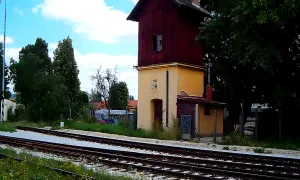
5. Budkov Railway Station Type: historical object Why is it worth a visit: Even if it is a place connected with transport, the building can be seen as part of local history. It offers a view of the past and is an ideal place to stop on the way.
This route will guide you through the most significant points surrounding the stone bridge in Budkov, offering views of the history and nature of this part of Bohemia.
Seasonal recommendations
Spring: In the spring season kamenný most v Budkově appears in its most beautiful glow of blooming nature. Trees and shrubs are covered with new leaves that create a living image of the background of ancient stone arches. The sun illuminates the bridge with its warm light, which increases its historic atmosphere. At this time it is recommended to visit in the morning or in the late afternoon to avoid the middle hours with a potential crowd of tourists. Clothes should be adapted to mild temperatures - short gloves and light jackets are suitable because morning and evening can be colder.
Summer: In summer kamenný most v Budkově is celebrated with its fullness of life and warm sunlight. Nature offers the best conditions for photography when trees on both sides of the bridge cover with green leaves and flowers. The atmosphere is full of energy thanks to long sunny days. The best time to visit is early morning or late afternoon to avoid the hottest hours and crowds of tourists. Clothes should be light and light, with sun protection - short coat and hat are essential.
Autumn: In the autumn period kamenný most v Budkově offers a wonderful view of the colorful leaves of trees that create a live palette from gold to red and orange. The sunlight illuminates the shiny stone arches of the bridge, giving the atmosphere a calm and comfortable feeling. At this time it is advisable to visit the memory in the prehistoric hours when the shadow stops and the temperature is pleasant. Clothes should be mild - short coat or coat to protect against cold wind.
Winter: In winter, kamenný most v Budkově is transformed into a snow blanket that covers its ancient stones. The sun lights up the snow, which increases the beauty and mystery of the monument. The atmosphere is calm and relaxed due to a lower number of tourists at this time. The best time to visit is at the beginning of the day when the temperature is lighter and the snow is fresh. Clothes should be warm - long gloves, leather shoes and wool coat are necessary for comfort when visiting the sights on cold winter days.
Visualizations and artistic views


The visualisations are generated by artificial intelligence and serve as inspiration.
Photos from the area
Real photos taken near the monument


Zdroj a licence jsou uvedeny u každého snímku.
Tips from visitors
No tips yet. Be the first!
Log in and add your tip.
Sources and literature
Photos: Sovicka169 / CC BY-SA 4.0 — Wikimedia Commons. The author and licence also appear when you hover over the image.
Faktickým podkladem tohoto textu byl článek na Wikipedii, jehož autory jsou přispěvatelé Wikipedie. Článek je dostupný pod licencí CC BY-SA 4.0.
Location on the map


Příběhy a pověsti
Legendy, pověsti a příběhy spjaté s touto památkou

Fotografie návštěvníků
Zatím žádné fotografie. Buďte první, kdo přidá fotografii z návštěvy!
Log in a přidejte svou fotografii nebo hodnoťte.
Za ověřenou návštěvu v aplikaci získáte víc bodů — poznáme podle GPS, že jste na místě.
Reviews and comments