






kaple Panny Marie Pomocné (Zahrady) Chapel
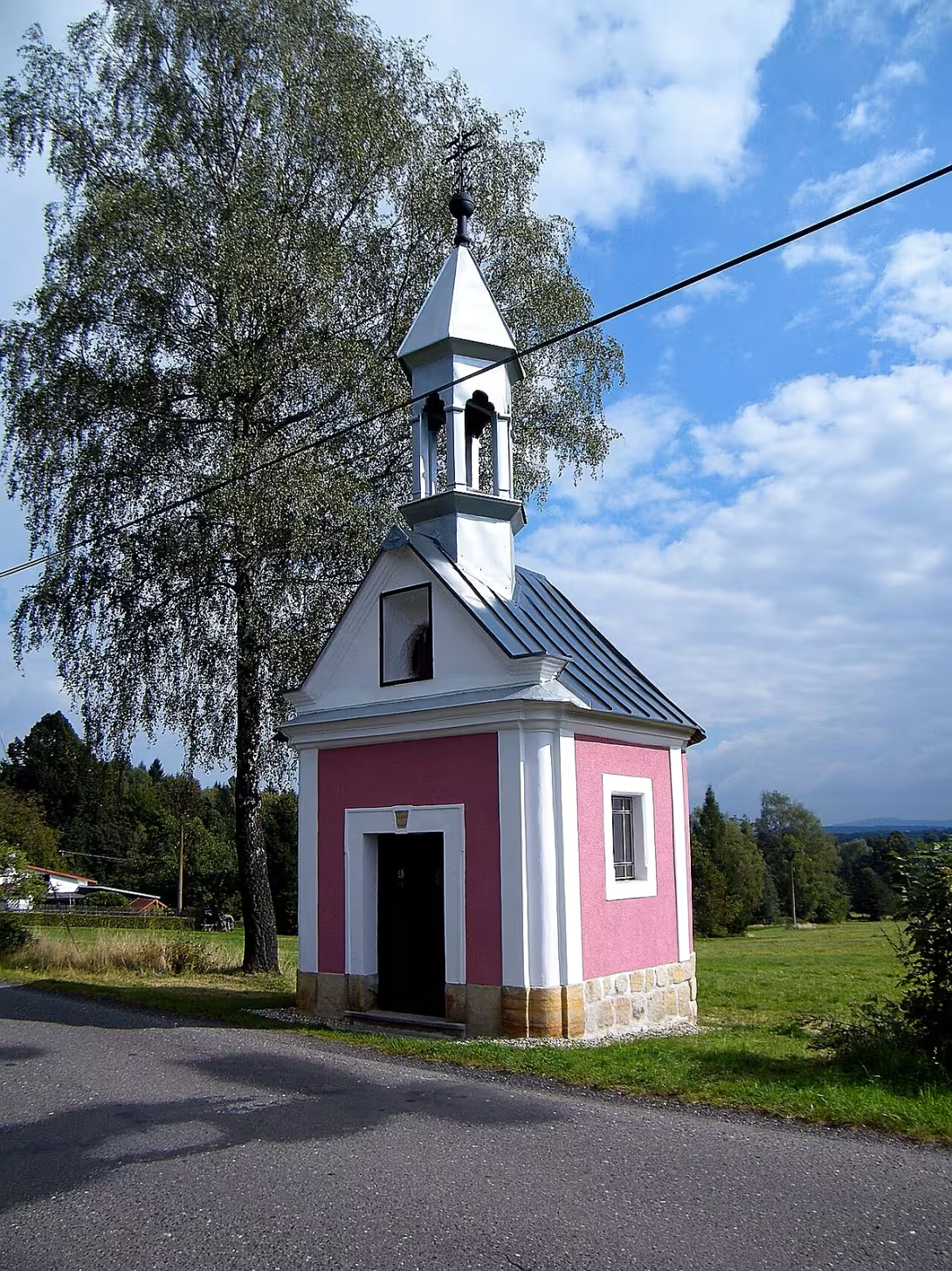
The Chapel of the Virgin Mary the Auxiliary, also known as the Beggar Chapel, stands in the local part of Zahrady near the Beautiful Lip. It is a late Baroque sacral building from 1808, which is closely related to the personality of the local beggar and weirdo Daniel Hiek and his devout wish to build a temple dedicated to the Virgin Mary the Auxiliary.
The creation of the building was preceded by the existence of an old field chapel from the beginning of the eighteenth century, dedicated to Saint Erasmus. This chapel was built by the gardener Christoph Henke from house No. 2, who had supposedly miraculously recovered from the болest days after completing it. At the beginning of the nineteenth century, however, the construction faded and lacked maintenance.
At that time he lived in Gardens Daniel Hieke, born in house No. 6 in the family of gardener. At first he worked in a mine, and later he worked for a living in the middle of his fifties, trading in rivets and nets. He returned to his old age to his native village where he had a reputation as a distinct weirdo. He lived in a very modest, hermit way, strongly pious and far too strict together. When he was 25, he secretly made a chain that he wore twice around his bare body, and because he never took it off, it grew into flesh. He was not persecuted by health problems until his father removed him at his request. Then Hieke gave away all the property and lived only from charity. He visited St. Mary Magdalena's beautiful church every day, where he was attracted to the painting of the Virgin Mary the Auxiliary. One night, the Virgin Mary appeared to him in a dream asking him to build her a chapel.
Without his own funds, Hieke collected financial contributions in the area. The painting from the beautiful lipa church was brought on his back. The place for the new chapel was designated by the beautiful-lipa vicar Hübner, who also donated the painting of the Virgin Mary of the Auxiliary. The construction was built in 1808 and was consecrated in the following year. Daniel Hieke died in 1810 at the age of seventy-four years, a year after the ordination. Gottfried Hesse of Wolf Mountain later created a new painting replacing the original painting. In 1822 the chapel acquired a tower with a bell financed from a public collection; The bell has been ringing since then at noon. In the tower, the local residents have inserted a memorial certificate from teacher Johann Pohl and also Hiek's original chain.
The chapel has a rectangular plan with cut corners and half-circle closure. The facade ends with a triangular shield separated by a distinctive ledge. Above the wooden door is a sandstone jewel with dating 1808. The shield is decorated with a niche with a painting of the beggar Hiek who painted Natalie Belisová.
After World War II, the construction of the постhil significant damage. The equipment disappeared and gradually faded without maintenance of the chapel. A major correction took place in 1994 on the initiative of the local innkeeper Willibald Klinger. The last extensive reconstruction took place in 2016 when plaster, roof and new windows and doors were repaired. The construction on 1 June 2017 was blessed by the lithomeric capitals Jiří Hladík.
The chapel remains in the possession of the town of Beautiful Lipa, it is not protected by the pakom and regular mass is not served there. There is a teaching trail of Kögler, which makes it an interesting stop for people interested in folk piety and Baroque architecture.
Then and now
Drag the slider to compare how the landmark may have looked when it was built with the view today.
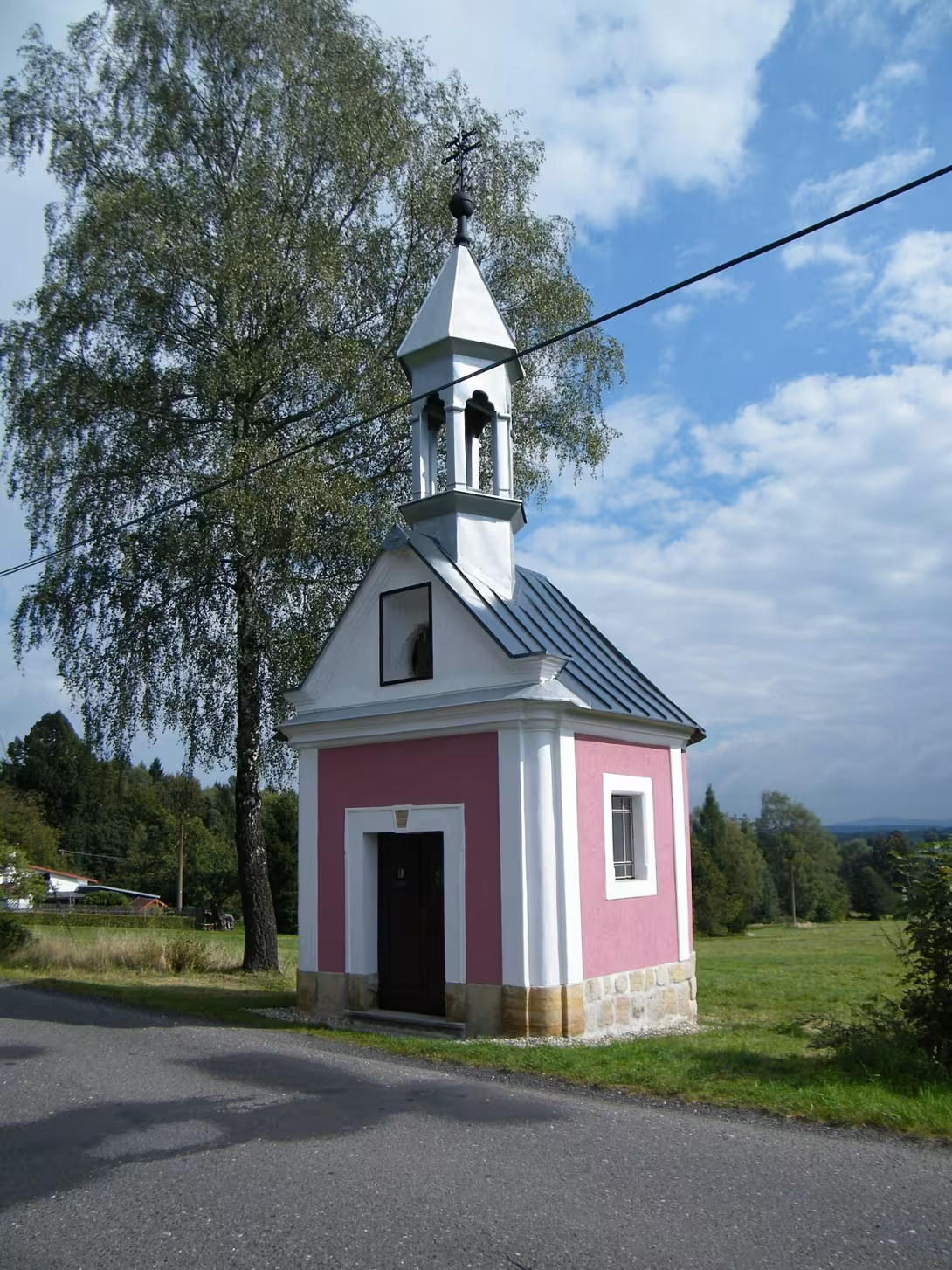

The historical appearance on the left is an AI-generated visualisation and serves as inspiration only.
Historical milestones
- 1808
- Construction of a new chapel on the site of an old field chapel initiated by Daniel Hiek.
- 1809
- The chapel was ceremoniously consecrated.
- 1822
- Complete the tower with a bell and deposit a memorial certificate with Hiek chain into the makovika.
- 2016
- For now, the last overall reconstruction of the chapel includes repair of plaster, roof, windows and doors.
Architectural development
In 1808 a new late Baroque building of a rectangular ground plan with cut corners grew on the site of the old field chapel from the beginning of the 18th century. In 1822 the chapel was supplemented with a tower with a bell, whose manet the locals had deposited with a memorial certificate and a chain of iron for Hiek. During subsequent reconstruction in 1994 and 2016, internal and external plaster, roof and new windows and doors were repaired.
Historical events
In 1808 a new chapel was built on the initiative of Daniel Hiek. In 1822, a tower with a bell financed by a public collection was added. After World War II, the building was seriously decayed, but in 1994 and again in 2016, major reconstruction took place.
Owners
City Beautiful Lip
Points of interest
- The Chapel of the Virgin Mary the Auxiliary, also known as the Beggar Chapel, is a late Baroque sacral building from 1808. - The origin of the chapel is closely linked to the local beggar and weirdo Daniel Hiek, to whom the Virgin Mary appeared in a dream asking to build a temple. - Daniel Hieke wore a secret chain around his bare body until it grew into flesh. - Local residents have inserted a commemorative charter and Hiek's original chain into the tower. - The shielding of the chapel is decorated with a niche with the painting of the beggar Hiek who painted Natalie Belisová.
Guide
This guide is narrated by a synthetic voice generated by artificial intelligence.
Show guide text
This text was created by artificial intelligence and has not been editorially reviewed. It may contain inaccuracies.
Welcome to the picturesque landscape of the Garden by the Beautiful Lips. You are standing right in front of a remarkable sacral building, which is the Chapel of the Virgin Mary the Helpers, which has long been called the Chapel of the Beggar. Enjoy the quiet moment, take a breath of fresh air from the region and let your thoughts flow for a while with the history that breathes heavily from this place. When you look at the chapel in front of you, you see a late baroque structure with a rectangular ground plan, for which are characterized by interesting cut corners, a semi-circular finish and a distinctive triangle shield in the facade. Perhaps you can think of the story behind this rather modest but very impressive architecture, and who actually stood at the birth of such a work in this remote place.
Let's move on in time to the beginning of the nineteenth century, namely, 1808. Then a new spiritual work began to be born in the place of the original, already decrepit field chapel of St. Erasmus. This whole event is firmly linked to the extraordinary fate of a local beggar and weirdo whose name was Daniel Hieke. It was this man who became the main initiator of the building, based on a deep internal movement. The origin of the chapel is closely related to his dream, in which the Virgin Mary herself appeared to him with an urgent request to build a temple in this place. Hieke did not hesitate, he took this spiritual challenge with great humility and determination for his own, and despite his humble position in society, he managed to move the outside world to grow a new sanctuary. A year later, in 1809, the new chapel was ceremoniously consecrated and served its purpose.
Now pay attention to the construction itself and its architectural details, which are right in front of your eyes. Although the names of the creators or architects who designed this late Baroque building remain unknown to this day, the architectural composition speaks its own language to you. Take a look at the rectangular plan, which is softened by the precisely mentioned cut corners, which provide construction of dynamics and elegance. You can turn your vision towards the end of a building that is semi-circular, and also towards the facade that dominates the triangle shield. The event of 1822, when the tower with the bell was finished, also testifies to how much people cared about this place. A memorial note was deposited in her head.
Throughout the centuries, many human destinies and stories have fought around the chapel. When we say Daniel Hieke, we don't just remember the builder of the temple, but we also remember a man who was denied secrets. One of his biggest weirdness was that he wore a secret iron chain wrapped around his body as a constant penance mark. And it was this heavy iron chain that was symbolically deposited along with the memorial note into the tower's poppy when it was finished in 1822, which brought Hiek's life story and his personal sacrifice together forever with the actual mass of the chapel. Among those who were not indifferent to this place, we must also mention modern characters such as Natalie Belisová or Johann Pohl whose names are associated with the care and interest in this cultural heritage.
An interesting thing that gives the place special and almost tangible tension is the contrast between the humble life of a beggar and the grandeur of his spiritual dream. Daniel Hieke was able to convince his surroundings of the power of vision given to him by the Virgin Mary and left a permanent trail in the landscape. But the chapel didn't just have golden times. After the end of World War II, a period of decline occurred and the chapel had long been decayed, abandoned and issued for the conversion of time and human inattention. Fortunately, the story didn't end sadly. In 2016 the chapel went through the last overall and very thorough reconstruction, during which it was possible to repair damaged plaster, restore the roof, replace and modify the windows and doors. Thanks to this intervention, we can now stand in front of a fixed monument that is once again shining into the landscape.
Before you go on another journey, take a moment of silence and feel the atmosphere of this place. Take a look at the details, let the harmony of shapes affect you, and remember the determination of a man who once believed his dream enough to build a chapel here. Thank you for listening to this story, we hope it has enriched your walk today, and we wish you a happy journey in the further discovery of the beauty of this region. Goodbye.
Tips for visitors
To visit the Chapel of the Virgin Mary Help in the Gardens, choose ideal hours in the morning, when the sunlight illuminates the late Baroque architecture and surrounding landscape of Krasnolipska. The location is perfectly accessible by foot or by bike if you go along the Kögler educational path that passes right by the object. If you choose to transport by car, use the appropriate storage area in the village Zahrady and take a short walk to the chapel itself. Be sure to bring with you, with you, with you with you in order to move in nature, solid shoes, drinking water and possibly a map of Kögler's learning path, which will guide you through the entire region. For photography of the chapel and its picturesque surroundings, morning fog or late afternoon, when soft light highlights the details of the sacral building standing on the site of the original chapel of St. Erasmus. In the wider area within 30 minutes of the journey is definitely worth the attention of the nearby Beautiful Buk, where in the past was the author of the original memorial document Johann Pohl. A trip to this quiet part of the Ústí Region will also be enjoyed by families with children, for whom the easy route of the educational path is a suitable destination for a pleasant family trip connected with the recognition of local history.
Frequently asked questions
Is kaple Panny Marie Pomocné (Zahrady) open to the public?
Yes, the chapel is generally open to the public. However, it is important to look at current information on the state of reconstruction and possible limited access.
How do I get to the place by car / public transport?
The location is available both by car and public transport. Parking in the surrounding area may be limited, so we recommend using buses that ensure connections with nearby municipalities.
How much is the entrance fee and is it paid on the spot?
Admission fee is payable on site. The current price list can be found on the official site of the sights or when visiting.
Is the tour suitable for children and seniors?
Yes, the chapel is suitable for children and seniors. Its quiet atmosphere and historical importance offer interesting experience for all visitors.
How long does the tour take?
A tour of the chapel usually takes approximately 30 to 60 minutes, depending on how much time you want to spend inside and outside the building.
What are the opening times and booking is required?
The opening times of the chapel may vary depending on the season. It is advisable to check current information about opening times and booking options before visiting.
What's interesting in the immediate vicinity?
In the vicinity of the chapel there is a picturesque nature that can be explored during short walks. In addition, you can discover historical and cultural elements of the region of Ústí Region.
For kids
About 218 years ago, something really strange and magical happened in the small village of Zahrady! Where today stands the chapel of the Virgin Mary the Auxiliary, the only beggar named Daniel Hieke began an incredible adventure story. It was like a book with a secret and a real miracle.
Businesses nearby
Do you run a restaurant, accommodation, shop, museum, rental, wellness or other visitor service near this monument? Show yourself directly to the people heading to it — this is how they will see you in the app and on the web:
Nearby
The chapel is located in the local part of the Garden near the town of Beautiful Lipa in the Ústí region. Kögler's teaching trail passes the building. The author of the original memorial document Johann Pohl worked in the nearby Beautiful Buk.
Accommodation nearby
Themed route
I propose a thematic cruise route around the village Zahrady.
1. Beautiful Buk Type: Local area and historical location Why is it worth a visit: In this village in close proximity to the Garden was the author of the original memorial certificate Johann Pohl. The site is closely related to history and written sources associated with the main destination of the trip.
2. Chapel of the Virgin Mary's Auxiliary (Zahrady) Type: Chapel Why is worth a visit: The main goal of our route, located in the local part of Zahrady near the town of Beautiful Lipa. It represents an important sacral monument to the region where historical traces and local traditions are crossed.
3. Kögler's Educational Path Type: Educational Path Why is it worth a visit: This route passes right past the Chapel of the Virgin Mary the Auxiliary. It offers the possibility of exploring the local landscape and connects individual historical points around the Gardens and Beautiful Lips.
Seasonal recommendations
Spring brings nature awakening to the surroundings of the Chapel of the Virgin Mary the Helpers in the gardens of the Ústí Region, which complements the peaceful character of this small sacral building. Light is usually soft and scattered during this period, often intermingling through the newly blooming leaves of the surrounding trees, creating a poetic atmosphere suitable for reflection. Practically a spring visit is ideal for those who prefer less attendance than the summer months. Clothing should be laminated as temperatures may vary significantly during the day and therefore it is advisable to have a light jacket on hand. The best time to visit is the morning hours when the air is fresh and the surrounding greenery have not yet been disturbed by more people.
Summer offers the longest days and brightest lighting, which highlights architectural details of the chapel and surrounding vegetation. The atmosphere is getting more lively because there are frequent hikers out here looking for cool in the shade of trees in the afternoon. However, it should be assumed that in the main summer season the surroundings can be more frequent, especially on weekends. It is recommended to arrive in the morning when heat is more tolerable and the crowds are minimal. Clothes should be light and breathable, suitable for outdoor movement, and protection from the sun is necessary, i.e. a hat and sunglasses.
Autumn brings to the landscape a palette of warm colors that contradict the stone structure of the chapel and create a dramatic visual impression. The light is lower and warmer, which underlines the intimate and quiet atmosphere of the place. Nature passes through transformation around the chapel, leaves fall down and creates a soft carpet on the ground that dampens sounds and promotes peace. Practically the autumn season is less disturbing than summer, which allows for a deeper experience. Clothing should be more robust, with emphasis on the water-resistant layer as rain and damp air may occur. The ideal time is the late afternoon when light breaks through bare branches and creates unique shadows.
Winter brings a chapel and its surroundings a specific calm, often underlined by snow, that covers the ground and roof, and reduces the surrounding noise. The lighting is short and cold, which gives the place a mystical and relaxing character. The atmosphere is quiet and thoughtful, suitable for personal rest from the everyday rush. In practice, shorter opening times should be envisaged, if any, and the possibility of limited access due to snow or ice. Clothing must be warm, laminated and with an emphasis on dry and anti-slip shoes to ensure safety while moving along possibly slippery roads. The best time is lunch, when the day is warmer and the sun is high, which makes orientation and movement easier.
Visualizations and artistic views


The visualisations are generated by artificial intelligence and serve as inspiration.
Photos from the area
Real photos taken near the monument


Zdroj a licence jsou uvedeny u každého snímku.
Tips from visitors
No tips yet. Be the first!
Log in and add your tip.
Sources and literature
Fotografie: Gumideck / CC BY-SA 4.0 — Wikimedia Commons. The author and licence also appear when you hover over the image.
Faktickým podkladem tohoto textu byl článek na Wikipedii, jehož autory jsou přispěvatelé Wikipedie. Článek je dostupný pod licencí CC BY-SA 4.0.
Location on the map
Příběhy a pověsti
Legendy, pověsti a příběhy spjaté s touto památkou

Fotografie návštěvníků
Zatím žádné fotografie. Buďte první, kdo přidá fotografii z návštěvy!
Přihlaste se a přidejte svou fotografii nebo hodnoťte.
Za ověřenou návštěvu v aplikaci získáte víc bodů — poznáme podle GPS, že jste na místě.
Reviews and comments