



Kaple Panny Marie Růžencové (Borač) Chapel
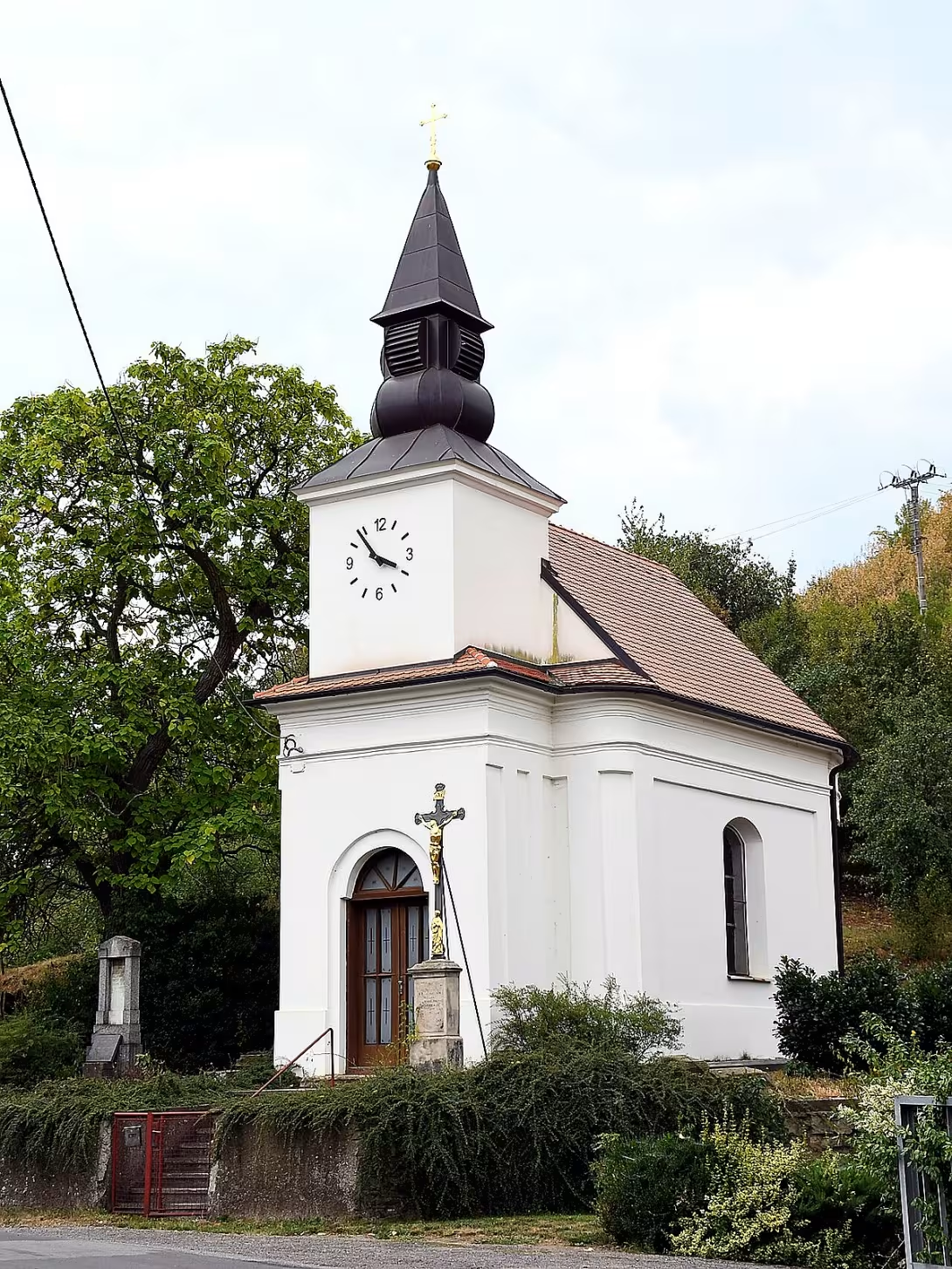
The Chapel of the Virgin Mary Roženková is situated on the edge of the village Borač in the district of Brno-venkov off the road II / 387. This single-boat temple belongs to the Catholic parish Doubravac in the Czech Republic in the Czech deanery of Brno and is rightly protected as a cultural monument.
The construction was created in the late period of Classicism in the 1950s. The dates of 1853 were preserved above the main entrance, but in some historical sources it was only in 1856. The temple was built during the period when the Czech rural communities gradually restore their sacral structures and expand the offer of local churches and chapels for their believers.
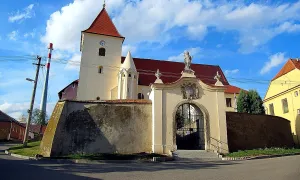
The chapel is an interesting example of the classical concept of sacral construction. It is a walled plastered structure made of bricks on a rectangular ground plan, which closes a semi-circular finish at the front. The building elements are simple but sophisticated - the facade breaks the circulatory lizene, in the side walls they are located after one window with a segment enchantment. The entire building is surrounded by a roof-shaped ledge.
A characteristic element of the chapel is the attached prism tower in the facade, which is divided by corner lizens. The entrance to the chapel is finished here with a semi-circular wedge and a profiled ledge runs over it. The tower deserves special attention - it has a low tent roof which is transformed into a spherical shape. The tower is finished with two onions with needles roofs, each roof onion has a head with a cross on top, a typical element of Central European sacral architecture. The cover of the ship itself is made up of a saddle roof, while the end is finished by a valb roof.
The area in front of the chapel expands the marble cross and beside it stands a monument dedicated to the victims of both world wars, which shows the importance of this place for the local community. Both of these elements form a dignified framework for this small sacral structure and resemble the historical burdens borne by the municipality.
The chapel represents a successful example of rural sacral architecture in the second half of the 19th century and is worth visiting those interested in the Czech architecture tradition. Its modest but elegant form reflects the spirit of the time in which it was built.
Then and now
Drag the slider to compare how the landmark may have looked when it was built with the view today.
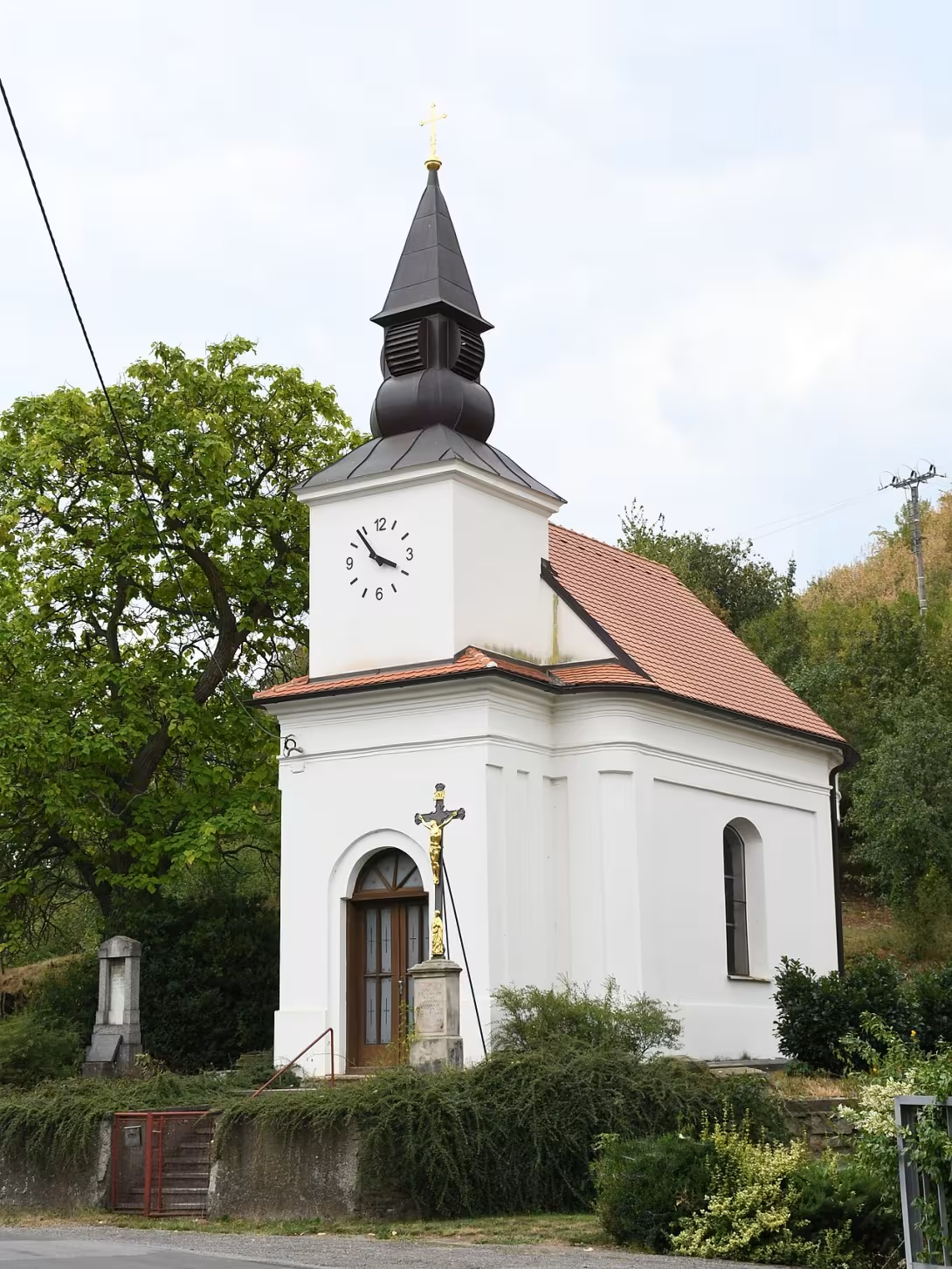
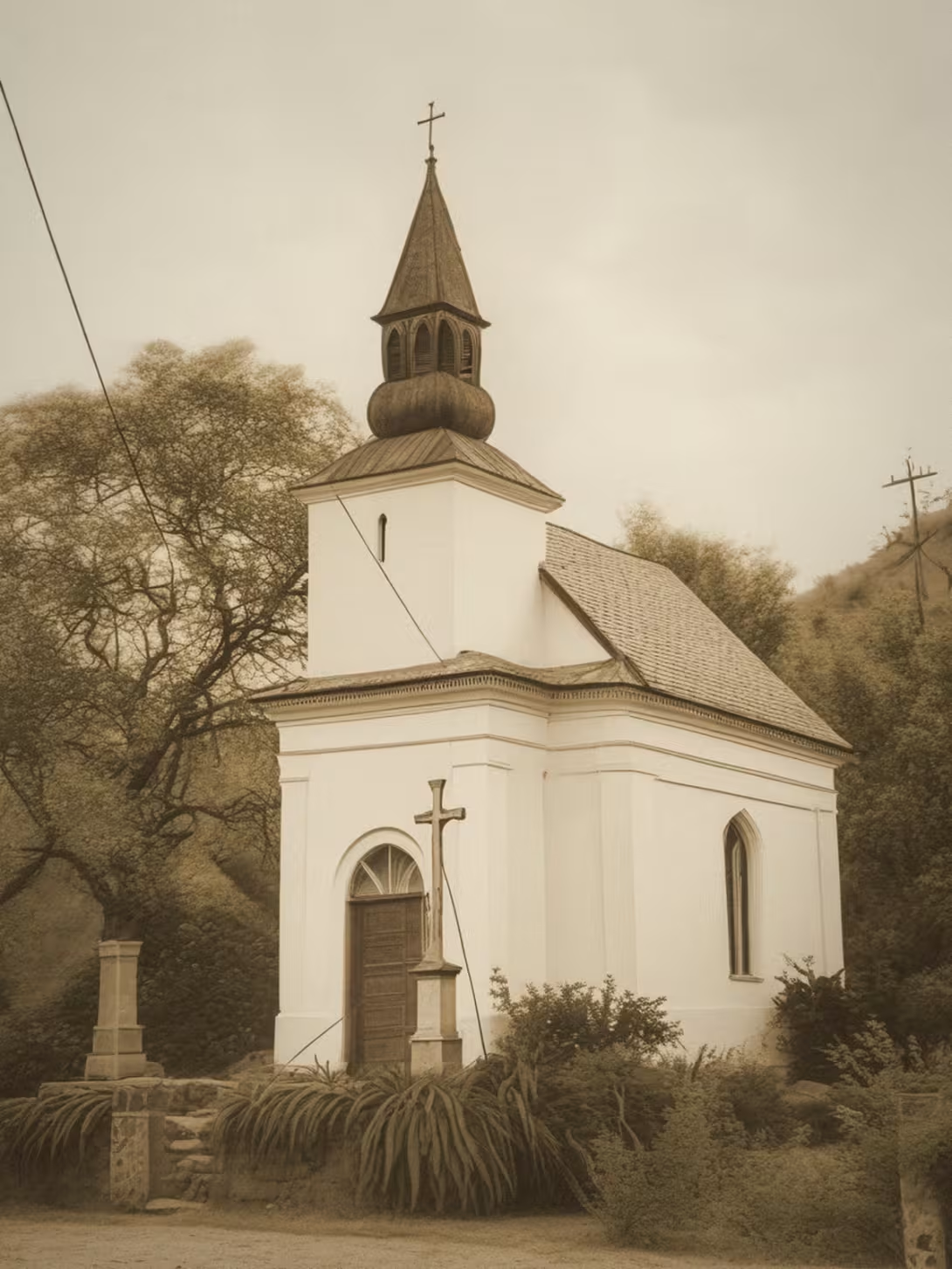
The historical appearance on the left is an AI-generated visualisation and serves as inspiration only.
Historical milestones
- 1853
- The base stone of the chapel of the Virgin Mary Rosženková was laid down, the building was built in late classicism.
- 1856
- According to some sources the chapel was completed, the exact year is not quite clear.
- Around 1850-1860
- The chapel was built during the reconstruction of rural sacral buildings in Czech municipalities.
- After 1918
- By the chapel, a monument was built to the victims of both world wars.
- 1958
- The chapel was declared a cultural monument of the Czech Republic.
Architectural development
The chapel was built in 1853-1854 of bricks, with plaster and typical classical elements such as lizens, moldings and segmented window warmers. The tower is finished with a low tent roof with onion-shaped needles and poppy head with cross. The ship is covered by a saddle roof, above the end of the Valba. The construction is typical of late classicism with elements of rural sacral architecture.
Historical events
It stands in the village Borač in the district Brno-venkov.
Owners
The Rim Catholic parish of Doubravac in the Czech deanery, within the framework of the Brno diocese.
Points of interest
- The chapel was built in the late period of Classicism in the 1950s, and above the main entrance is dating in 1853, but some sources mention completion in 1856.
- The facade of the chapel is broken down by circular lizene and the side walls have a single window with a segment enchantment.
- The characteristic dominant feature of the construction is the attached prismatic tower with a low tent roof, which is transformed into a spherical shape and ends with two onions with needles roofs and poppies with crosses.
- The tower is finished with two onions, each with a needle roof and a head with a cross, a typical element of Central European sacral architecture.
- There is a marble cross and a monument to the victims of both world wars, which emphasizes the importance of a place for the local community.
Guide
This guide is narrated by a synthetic voice generated by artificial intelligence.
Show guide text
This text was created by artificial intelligence and has not been editorially reviewed. It may contain inaccuracies.
The Chapel of the Virgin Mary of the Rosary stands on the edge of the village of Borač in the Brno-venkov district, beside the second-class road number 387. It is protected as a cultural monument of the Czech Republic. It belongs to the Roman Catholic parish of Doubravník in the Tišnov deanery of the Brno diocese.
The chapel was built in the years 1853 to 1854 in the late classical style. Above the entrance is the date 1853, but some sources state the year of construction as 1856. In front of the chapel stands a marble cross, and beside it is a monument with the names of victims of the First and Second World Wars.
It is a single-nave brick building. It is plastered and has a rectangular floor plan. The nave ends with a semicircular apse. The façade is articulated by a continuous lesene, that is a shallow strip that projects from the wall. In both side walls of the nave there is one window each with a segmental arch, meaning a low arch at the top. Under the roof, a profiled cornice runs around the nave and the apse.
A four-sided prismatic tower with lesenes at the corners is attached to the front façade. The chapel is entered precisely through this tower. The entrance is finished with a semicircular arch and above it runs another profiled cornice. The tower is covered with a low tent roof, which transitions into two domes. They are crowned by a pyramidal roof with a finial and a cross. The nave has a gabled roof, and above the apse is a hipped roof.
Tips for visitors
The best time to visit the chapel of the Virgin Mary Rosary is in the summer months, especially in June and July when the weather is pleasant and the surrounding nature is in full glory. The chapel is also beautiful in autumn colours when the surrounding forests and fields turn into a varied palette of shades. It is recommended to avoid weekends when the chapel can be visited by larger groups of people. If you want to experience a quiet atmosphere, visit it on Monday or Tuesday morning.
At these times the light is ideal for photography, and the chapel is surrounded by nature, which gives a visit a sense of peace and harmony.
It is recommended to arrive by car because public transport to Borače's not very common.
Before the journey check the current connection in the search engine, because the time tables can be variable.
When visiting the chapel, wear comfortable clothes and shoes, as the path to the monument leads to a partially uneven terrain. It is also convenient to take with you a small umbrella or raincoat, because the chapel stands on the edge of the village and the weather can change quickly. If you are planning to take pictures, bring with you a lens with a larger focus that allows you to capture a detailed view of the facade and the inner elements.
Do not forget also the small backpack in which you can store a water bottle and a small snack.
The chapel is an ideal place for photography, especially in the morning or afternoon light, when light falls sideways and creates interesting shadows. The best places for photography are the front facade of the chapel and its semicircular conclusion. If you want to capture the surrounding nature, follow the chapel into the forest, where old trees grow and create a natural framework for the memory. The interior of the chapel is also interesting, but photography inside is limited because of respect for the quiet atmosphere.
Before taking photos make sure you do not violate the rules of conservation.
There are several interesting places in the vicinity of the chapel of the Virgin Mary Rosary that are worth visiting. In 30 minutes by car or a half-hour walk you can visit the Parish Church of St. Peter and Paul in Doubravnik, which is only three kilometres away. This Baroque church from the 18th century offers rich decoration and is a parish church for Borač and surrounding villages. Another interesting thing is the Castle Doubravík, which is located four kilometers from the chapel. This Baroque chateau from the 18th century is now private property and offers visitors the opportunity to get to know the history of the region.
Both of these monuments are ideal for combining with the chapel visit.
The chapel of the Virgin Mary Rosary is also suitable for families with children. Children can look at a small but historically interesting building and talk about its importance. There is also enough space around the chapel for short walks and exploring nature. If you go towards the forest, children can play and collect nature. It is also advisable for families with smaller children to visit the parish church of St. Peter and Paul in Doubravnik, where children can look at rich decoration and listen to history stories.
The chapel offers a quiet environment that is ideal for family trips.
Frequently asked questions
Can the monument be visited?
Religious buildings are usually open mainly during services; at other times a visit is normally arranged with the parish or the operator. We have not verified specific times.
Where is the monument?
Location: Borač, Jihomoravský kraj. The map on this page shows the exact spot.
Why is the monument protected?
It is listed in the Central List of Cultural Monuments of the Czech Republic as a cultural monument (register no. 22863/7-3951).
For kids
Imagine going back to the past, when the medieval world developed in Czech territory. The town Borač was a small farmhouse where people lived and animal production was their main livelihood.
The chapel of the Virgin Mary Rosary, which stands in this place today, was still in construction at that time. The building of the chapel began in 1450 and it took decades to get into today's form. The chapel was built thanks to the efforts of local parishioners and nobles.
Businesses nearby
Do you run a restaurant, accommodation, shop, museum, rental, wellness or other visitor service near this monument? Show yourself directly to the people heading to it — this is how they will see you in the app and on the web:
Accommodation nearby
Trips and activities nearby
Guided tours, tickets and activities nearby from GetYourGuide
Affiliate link: if you buy from the partner, we may receive a commission. The price for you does not change.
Search tours and activities →Themed route
Thematic cruise route: Baroque Gems Borače and Doubravník
1.Kaple Panny Marie Růžencové (Borač) * Type: Sacral construction * The unique Baroque chapel from the 18th century, dedicated to the Virgin Mary Roženková, is the centre of the village Borač. Its charm and calm atmosphere attracts a short rest in the middle of the picturesque countryside.
2. The parish church of St. Peter and Paul in Doubravnik * Type: Baroque parish church * Just three kilometers from Borače stands this impressive church, which served as a spiritual center for the wide area. Its interior with rich decoration and organ is an excellent example of baroque art.
3. Castle Doubravík * Type: Baroque lock * Four kilometers from Borače, this representative chateau is built in the 18th century. Although he is now a private property, his architecture and surroundings offer a view of the life of the nobles in the past.
4. National Nature Reserve Doubravac * Type: Protected nature * Five kilometers from Borače there are these reservations where you can enjoy peace and natural beauty. Ideal place for a short walk or watching local fauna and flora.
Seasonal recommendations
Spring around the chapel brings refreshing nature and fine colors of blooming vegetation, which complement the peaceful atmosphere of the place. The light is very fine in this period, which is ideal for observing the details of architecture. I recommend visiting the morning hours when the air is the cleanest. Prepare layered clothes because spring weather can be variable and morning temperatures still low.
Summer offers intense sunlight and a rich green apron around the monument. In the main summer season there may be more people around, which is why it is best to arrive early in the morning to enjoy peace and avoid the greatest heat. Don't forget the sun protection and plenty of water, because the road to the monument can be difficult in the summer heat.
Autumn brings a melancholy mood to the landscape thanks to golden shades of leaves and morning fog, which create a mystical touch. Lighting is deep at this time and very interesting for photography. The best time for a tour is in the afternoon when the sun shines at a lower angle. Due to possible rain or wet terrain, it is recommended to wear waterproof shoes and a laminated jacket.
Winter turns the surroundings into a quiet and desolate landscape, where snow or frost emphasize the sacral nature of the chapel. The atmosphere is very remote and quiet. Given the short days, it is best to plan a visit around noon to make enough daylight. The need is very warm clothes, including hat and gloves, because there can be a considerable freezing wind in the open landscape.
Visualizations and artistic views


The visualisations are generated by artificial intelligence and serve as inspiration.
Photos from the area
Real photos taken near the monument


Zdroj a licence jsou uvedeny u každého snímku.
Tips from visitors
No tips yet. Be the first!
Log in and add your tip.
Sources and literature
Photos: Ben Skála, Benfoto / CC BY-SA 4.0 — Wikimedia Commons. The author and licence also appear when you hover over the image.
Faktickým podkladem tohoto textu byl článek na Wikipedii, jehož autory jsou přispěvatelé Wikipedie. Článek je dostupný pod licencí CC BY-SA 4.0.
Location on the map


Příběhy a pověsti
Legendy, pověsti a příběhy spjaté s touto památkou
Fotografie návštěvníků
Zatím žádné fotografie. Buďte první, kdo přidá fotografii z návštěvy!
Log in a přidejte svou fotografii nebo hodnoťte.
Za ověřenou návštěvu v aplikaci získáte víc bodů — poznáme podle GPS, že jste na místě.
Reviews and comments