






Kaple Povýšení svatého Kříže (Lovětín) Chapel
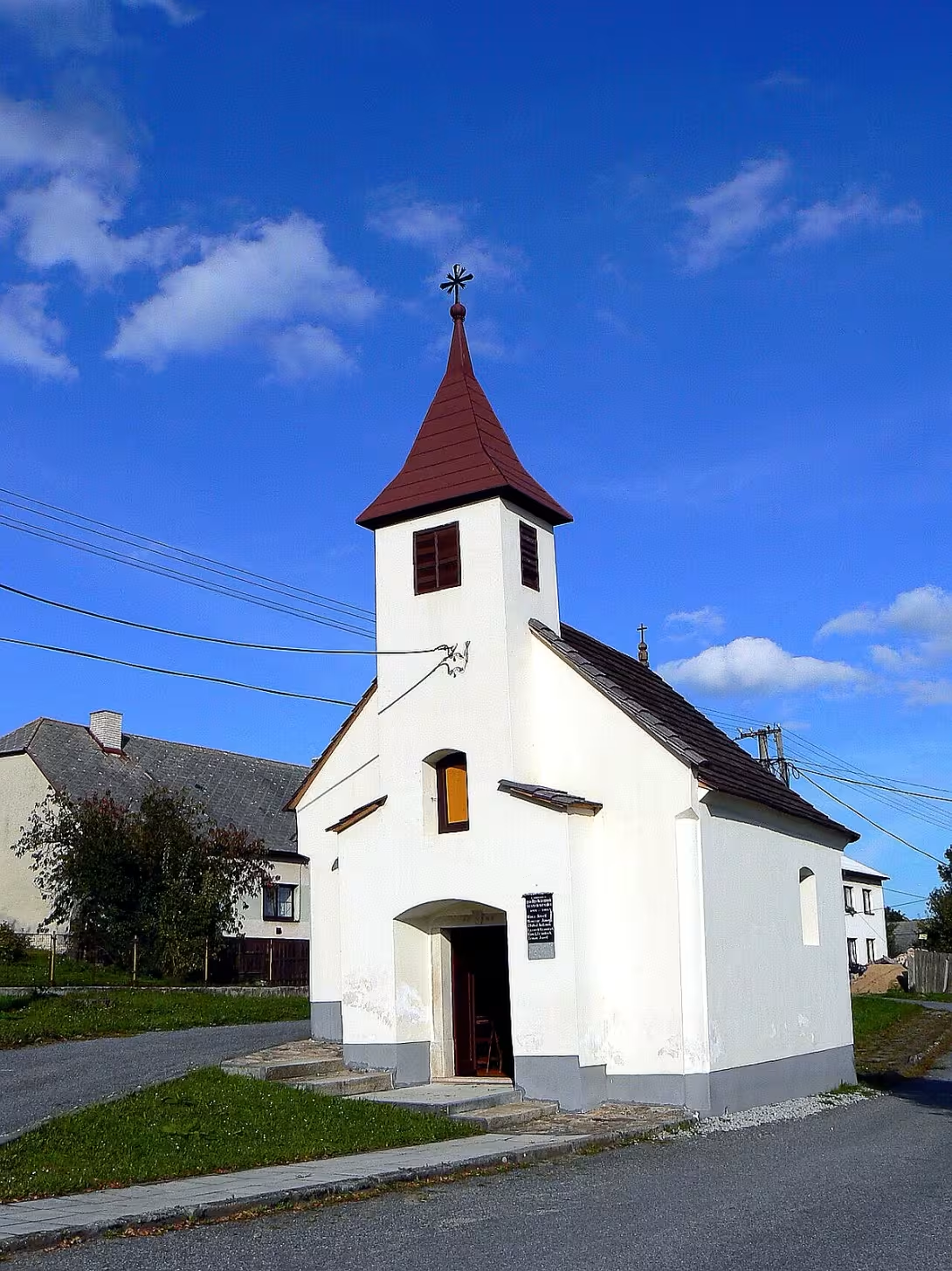
The Chapel of the Holy Cross, located on the village of Batelov in the district of Jihlava in Vysočina, is a historical monument from 1845. Its architectural character and location make it an interesting target not only for local residents, but also for visitors interested in the region's heritage. Since 1958 it has been protected as a cultural monument and is one of the important sacral structures of Czech history.
Its creation was linked to a period of national renewal, when rural communities focused on strengthening their religious and cultural identity. The construction of 1845 was built as an important element of local spiritual life, reflecting the broader trends at the time. The architecture of the building is characteristic of rural sacral structures of this period and combines stone with bricks under the outer plaster.
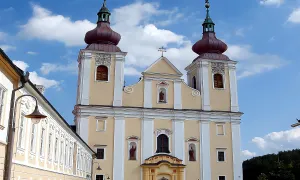
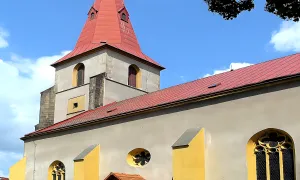
It is an architectural building with a rectangular ground plan and a segmented finish. Side facades are broken down by forest frames and illuminated by segmentally sealed windows, while the main facade features rounded corners. In its centre is located a rectangular entrance placed in a segment niche, above which is a gem with engraved year 1848. The building has a four-sided bell tower with blind windows and a tent roof ended with a poppy and cross, which gives its appearance a specific character. The inner space is a glass-filled vault, divided by passports and a series of architecturally divided semi-pillars with Roman heads.
In the past she was sometimes referred to as the chapel of the Virgin Mary, which reflects her original function or spiritual focus. Part of the sacral ensemble is also cast iron cross from 1856, which gives another historical value and aesthetic expression to the construction.
Since its inception, the building has undergone several phases of maintenance and changes. The original roofing made of burnt bimonite was later replaced by shingles, which is common for many historical objects due to damage or the need for modernization. Since 1958, the chapel has been protected as a cultural monument, which ensures its preservation for future generations.
Today the Chapel of the Holy Cross in Lovětín stands as a witness to the historical and cultural heritage of the region. Its architectural beauty and historical value make it an interesting destination for tourists and locals who are trying to keep the historical tradition alive. The visit offers an opportunity not only to explore its history and architecture, but also to reflect on the development of the local community and its spiritual life.
Holy Promotion Chapel The cross is therefore not only a sacral building with a rich history, but also a symbol of a lasting relationship between the past and the present. Its protection and maintenance ensure that future generations can continue to appreciate its historical importance and architectural beauty.
Then and now
Drag the slider to compare how the landmark may have looked when it was built with the view today.
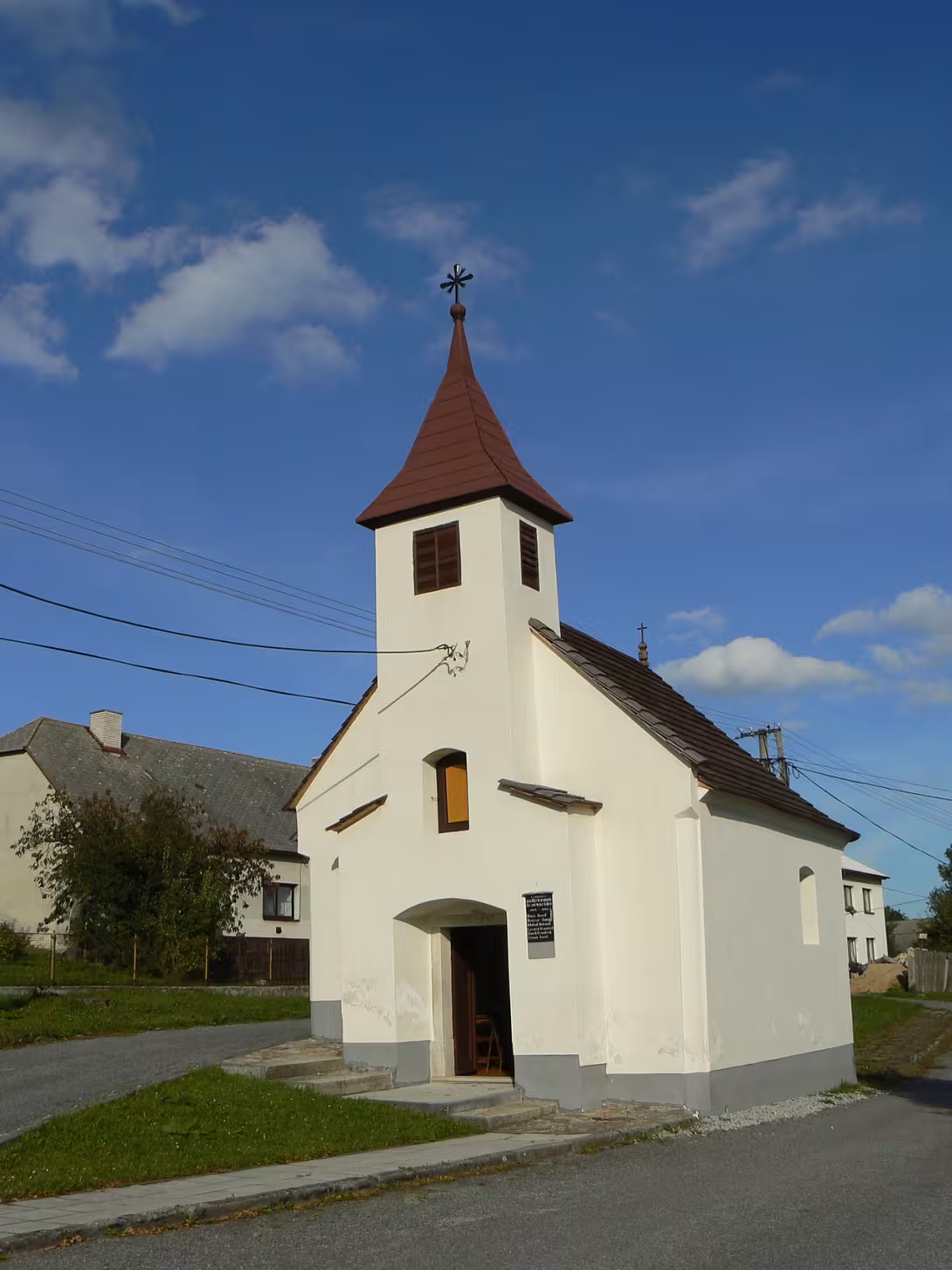
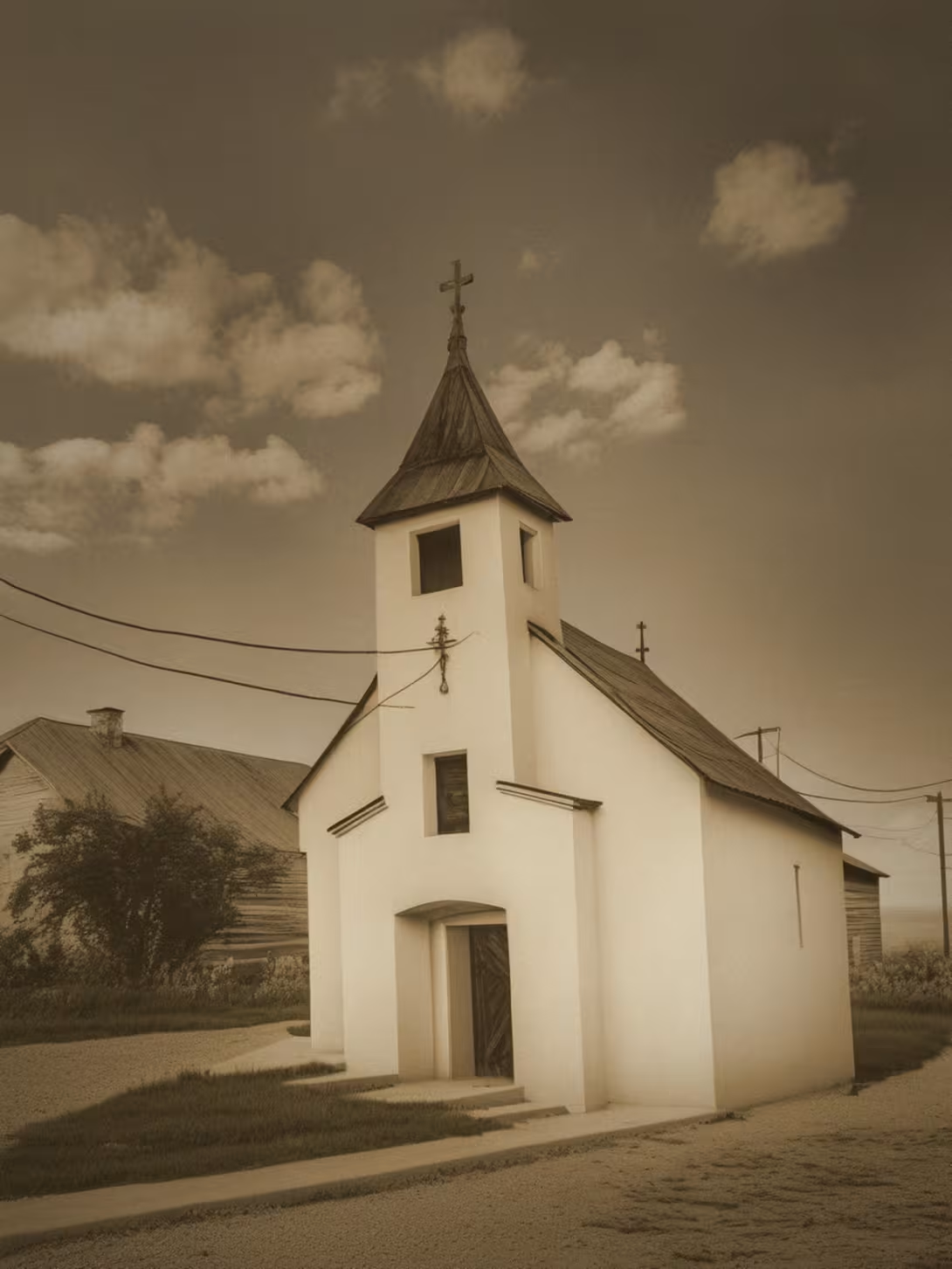
The historical appearance on the left is an AI-generated visualisation and serves as inspiration only.
Historical milestones
- 1845
- Building a chapel on a village in Lovětín.
- 1848
- The location of the vault with the engraved year-old above the entrance.
- 1856
- Location of a valuable cast iron cross near the chapel.
- 1958
- Writing the chapel into the preservation register.
Architectural development
The construction was built in 1845 using stone and bricks under the outer plaster. The inner space is finished with a vaulted vault and architecturally divided by the adjacent half-pillers. The original canopy was later replaced by shingles.
Historical events
In 1845 the chapel was exhibited. In 1848 he was placed on the vault above the portal engraved with an integer. In 1856 a cast iron cross was located nearby. Since 1958, the chapel has been protected as a cultural monument.
Points of interest
- The chapel dates back to 1845 and since 1958 it has been protected as a cultural monument. - The architecture of the object combines stone with bricks under the outer plaster. - Above the entrance there is a jewel with an engraved year of 1848. - Part of the sacral ensemble is a cast iron cross from 1856. - The original burnout casing was later replaced by shingles.
Guide
This guide is narrated by a synthetic voice generated by artificial intelligence.
Show guide text
This text was created by artificial intelligence and has not been editorially reviewed. It may contain inaccuracies.
Welcome to Lovětín. You just stopped in front of one of the most important symbols of this village, the Chapel of the Holy Cross. Before we go into her history, let yourself stand for a moment and perceive the atmosphere of the place. You are in the heart of the rural landscape of Highlands, where time flows a little differently and where every building on the village tells its own quiet story. In front of your eyes is a rustic sacral building that perfectly fits into this environment with its simplicity and humility. Its presence here is not random, it is a fixed point that has been defining the appearance of this village for almost two centuries.
Now let's look together at how this place came to be. This chapel is not just an ordinary building, it is a witness to history that grew up in this very place in a thousand eight hundred forty-five. At that time, the village community was strongly associated with faith and the chapel on the village served as a spiritual centre, a place of meeting and peace for all inhabitants. Although we may not see the same everyday need today, its importance to local identity remains unquestionable. The chapel was built to withstand time, and it's actually thriving. Its existence was officially recognised and entered in the register of monument protection in the year one thousand nine hundred fifty-eight, which confirms to us that even this modest rural building carries a value that we must protect for future generations.
Now pay attention to the architecture itself and try to see the details you have right in front of you. The chapel has a rectangular ground plan, which is typical of the sacral structures of this type, and its ending is segmented in shape, which gives the whole object softness. If you look at her facade, a four-sided bell tower will come right into your eyes. It is she who forms the dominant feature of this building and in the past probably signalled important events in the life of the village. Although at first glance the chapel may appear to be built from one material, you can perceive an interesting combination when looking closely at its structure. Under the outer plaster there is a connection of stone and bricks. This combination of materials was common in the middle of the nineteenth century, but it also shows the craftsmanship of the then builders who were able to create a solid and durable construction.
Try to move your eyes now towards the entrance to the chapel. There is one of the most important historical elements you can see from the outside. You'll see a jewel above the entrance, which is not just a decorative element, but it also carries important information. It has an engraved flyer of a thousand eight hundred forty-eight. This detail tells us that although the chapel was built three years earlier, the process of finishing it or decorating it continued in the following years. It's a fascinating example of how history gradually burrows into one object. And if you look up, you can see the roof. It's covered with the original burning bimbo. These flat bags with characteristic curvature of the end are typical of old architecture and provide the building with the right, historically faithful sound.
Now when you move around the chapel a little bit, notice the entire sacral file. This chapel does not rise alone, but is supplemented by another very valuable element that lies near it. It's a cast iron cross from a thousand eight hundred fifty-six. His presence gives the whole place depth and completes the image that was created here after several decades. Litina was a modern and very durable material at the time, and this cross is a beautiful example of how art and craft interconnected with religious tradition.
Perhaps now you might wonder who was behind this construction. Although the chapel is so dignified and its details are so carefully processed, the names of the architects who designed it, and the personalities who financed it, we have not been able to preserve it in history. But this anonymity has its own charm. The chapel does not look like the work of a famous artist, but rather as a joint work of the entire community. It is the result of the efforts of people who have lived here, worked and believed, and who wanted to leave something lasting for their offspring. This unknown face makes the chapel a symbol of general folk effort, not just an individual artistic expression.
There is one interesting thing that can make you think. Think about how many things have changed in less than 200 years around this chapel. The world was developing around it, technology was changing, people were coming and going, but this chapel is still standing here. It's like a fixed point in a constantly moving stream of time. The combination of stone, bricks, cast iron, and the burnt bobbies that you're watching right now is a constant quite that resists all the challenges of weather and human fate. It's fascinating how a small sacral structure can create such a strong sense of continuity and stability.
Now that you've been through the main features of the Holy Cross Ascension Chapel, I suggest you stay in its vicinity for a while. Look at it from different angles, see how light changes on its walls and how its shadow is reflected on the surface. You may notice other minor details in the plaster or around the cross that you missed at the speed of the guide. Just take a moment around this place and enjoy the peace that exists here at these moments.
Thank you for spending this moment with us and paying attention to this historic monument. We hope that this view of the chapel in Lovětín helped you better understand its meaning and beauty. We wish you the pleasant rest of your journey around this beautiful region of Highlands and hope that the other places you visit will enrich you as well. Goodbye.
Tips for visitors
For the best experience we recommend a visit on quiet days, ideally during morning hours, when the surrounding area is the least busy. Soft light during late afternoon will highlight the rustic character of the sacral structure.
The chapel is easily accessible by car and public transport; use internet search engine for accurate traffic information. Parking can be used near Batelov town, where the chapel is located.
Since it is a rural location, we recommend to bring comfortable shoes suitable for walking around and possible weather protection.
For the photography of architecture with a rectangular plan, the most appropriate position on the baits is to capture the whole building. Within short walks you can explore the surrounding Batelov district Jihlava.
For families with children it is advisable to combine a visit with a quiet walk along the rural landscape, which offers space for outdoor movement.
Frequently asked questions
Is Kaple Povýšení svatého Kříže (Lovětín) open to the public?
Yes, the chapel is generally open to the public. We recommend checking the current opening times on the official website or contacting the local office.
How do I get to the place by car / public transport?
The location is available both by car and public transport. The best way to get there is to use the train and bus. You can verify the current connection in the online search engine.
How much is the entrance fee and is it paid on the spot?
Admission fees are usually paid on the spot. Current prices can be found on the official chapel website or by contacting the local office.
Is the tour suitable for children and seniors?
Yes, the tour is suitable for both children and seniors. The chapel offers a quiet environment and short trips around it are easy to navigate.
How long does the tour take?
A tour of the chapel usually takes from 30 minutes to one hour, depending on how much time you want to spend inside and outside.
What are the opening times and booking is required?
Opening hours may vary depending on the season. We recommend verifying the current opening hours online or by contacting the office. Reservation is not usually necessary.
What's interesting in the immediate vicinity?
Around the chapel there are several picturesque paths and paths suitable for short walks. These trails are ideal for exploring nature and offer beautiful views of the surrounding countryside.
For kids
About 181 years ago, in 1845, a small but beautiful building pavement appeared in a picturesque place in Lovětín. It was a chapel that quickly won the heart of the rural people. To dive into this time, imagine you're a little kid in the 19th century and you see a new chapel gradually being built. They planted stones and bricks to create a place of prayer and meeting.
Businesses nearby
Do you run a restaurant, accommodation, shop, museum, rental, wellness or other visitor service near this monument? Show yourself directly to the people heading to it — this is how they will see you in the app and on the web:
Events nearby
Zdroj akcí: otevřená data měst a obcí ČR (Národní katalog otevřených dat) a kalendář akcí Národního památkového ústavu.
Nearby
The chapel is located in the part of the city of Batelov in the district of Jihlava.
Accommodation nearby
Trips and activities nearby
Guided tours, tickets and activities nearby from GetYourGuide
Affiliate link: if you buy from the partner, we may receive a commission. The price for you does not change.
Search tours and activities →Themed route
1. Batelov (part of the town) - A peaceful walk in this part of the village serves as an ideal introduction before visiting the sights. 2.Kaple Povýšení svatého Kříže (Lovětín) (chapel) - The main destination of the route, which represents the most important sacral object in the area. 3. Chapel (outdoor area) - A tour of the outer space at the chapel allows detailed observation of its architecture.
Seasonal recommendations
Spring: In spring nature awakens around the chapel in Lovětín and surrounding vegetation begins to gain fresh colors. The light is soft and pleasant in this period to observe the details of the construction. We recommend visiting the morning hours when the air is the cleanest. Because the weather in the mountain landscape Highlands can be variable, it is best to choose layered clothes that allow you to easily respond to sudden temperature changes.
Summer: The summer months bring to a place full of blossoms and intense sunlight, which lights beautifully through the sights. In the main summer time there may be more people around the chapel, therefore it is advisable to arrive early in the morning or in the late afternoon when the heat is milder. Don't forget enough drinking and sun protection, especially if you go for a walk around.
Autumn: Autumn season is characterized by golden shades of leaves and morning fog, which give the chapel a mysterious and peaceful atmosphere. It's the perfect time for quiet contemplation in nature. Due to the humid air and possible rain, we recommend to wear a waterproof jacket and shoes with good grip to keep your journey around the surrounding roads safe.
Winter: In winter time the surroundings of the chapel are often covered with snow, which creates a quiet and sacred environment, ideal for a spiritual visit. Days are short, so it is necessary to plan your arrival to make full use of the remaining daylight. Because of the cold in this region of the Highlands, it is absolutely necessary to wear very warm clothes, including quality gloves and hats.
Visualizations and artistic views


The visualisations are generated by artificial intelligence and serve as inspiration.
Photos from the area
Real photos taken near the monument


Zdroj a licence jsou uvedeny u každého snímku.
Tips from visitors
No tips yet. Be the first!
Log in and add your tip.
Sources and literature
Fotografie: Jules333 / CC BY-SA 3.0 — Wikimedia Commons. The author and licence also appear when you hover over the image.
Faktickým podkladem tohoto textu byl článek na Wikipedii, jehož autory jsou přispěvatelé Wikipedie. Článek je dostupný pod licencí CC BY-SA 4.0.
Location on the map

Příběhy a pověsti
Legendy, pověsti a příběhy spjaté s touto památkou
Fotografie návštěvníků
Zatím žádné fotografie. Buďte první, kdo přidá fotografii z návštěvy!
Přihlaste se a přidejte svou fotografii nebo hodnoťte.
Za ověřenou návštěvu v aplikaci získáte víc bodů — poznáme podle GPS, že jste na místě.
Reviews and comments