



kaple svaté Anny (Černé Budy) Chapel
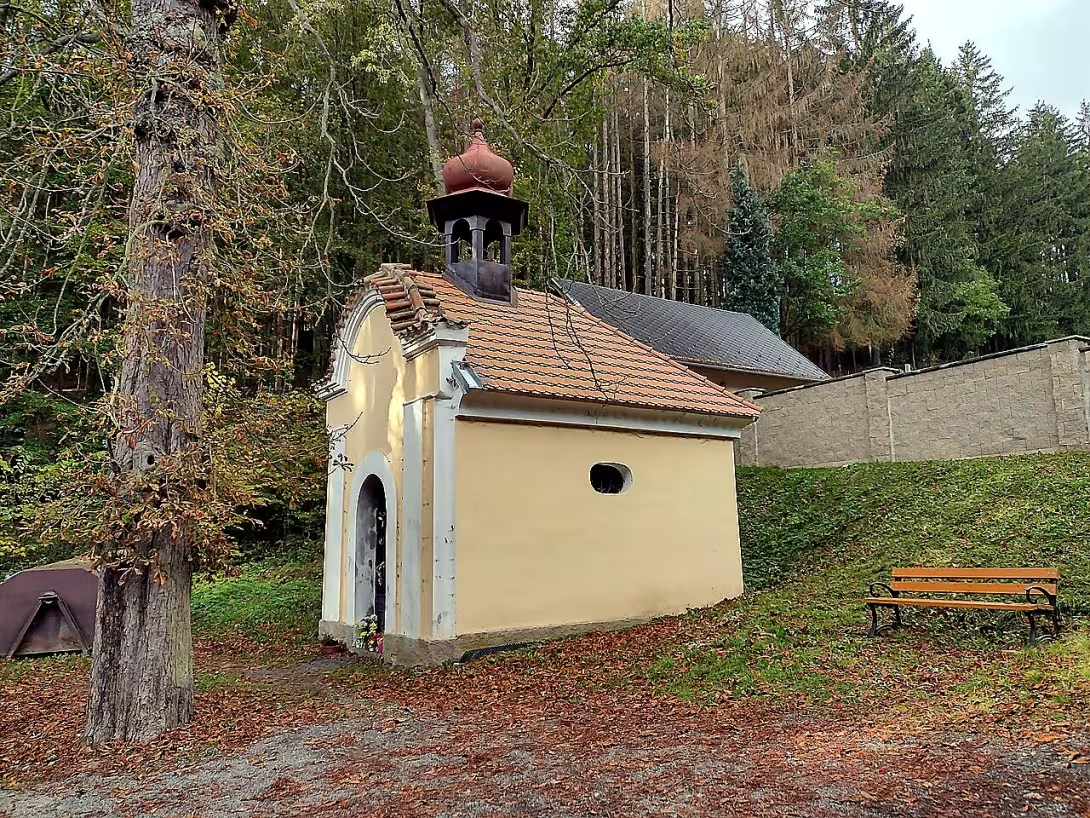
The Chapel of Saint Anne in Černé Budy is a notable historical monument located at the edge of Sázava near Černé Budy, within the Středočeský kraj region. Dating back to the early 19th century, this small chapel stands out for its architectural blend of baroque and neoclassical styles, reflecting common design trends in Bohemia during that period. It is listed as a cultural monument under number 2-3522 in the State List of Cultural Monuments, highlighting its historical significance.
The chapel's origins are linked to an era when Bohemia experienced significant architectural transitions following the Napoleonic Wars. Although specific details about its construction are limited, it is known that the current structure was built at the beginning of the 19th century. Historical sources suggest earlier versions existed, but no verifiable records or archaeological evidence confirm their exact nature or location.
Architecturally, the Chapel of Saint Anne features a rectangular floor plan oriented north-south and a hipped roof covered with tiles. Its façade is protected by prejzy, and it boasts a hexagonal belfry topped with a weathervane and cross, known as a sanctus bell tower. The interior is simple and white-washed, housing an altar adorned with a fresco of the Virgin Mary and wooden crosses. This combination of baroque elements with a neoclassical façade, marked by two pilasters, exemplifies early 19th-century Bohemian architectural trends.
Ownership has remained consistent, as it belongs to the Benedictine Abbey of Our Lady and Saint Jerome in Emauzes, Prague. Despite its historical significance, regular religious services are not conducted at the chapel today. However, the bell housed within the sanctus bell tower continues to serve during funeral ceremonies on the adjacent cemetery.
Today, the Chapel of Saint Anne stands as a testament to the architectural and cultural transitions of early 19th-century Bohemia. Its location offers visitors a glimpse into the historical landscape that once connected Sázavský Monastery with Stříbrná Skalice. While regular religious services are not held, its status as a cultural monument makes it a worthwhile visit for those interested in exploring the region's rich history and architectural heritage.
The chapel invites visitors to appreciate its unique blend of styles and historical context, offering a serene spot to reflect on the past while enjoying the natural beauty surrounding it.
Then and now
Drag the slider to compare how the landmark may have looked when it was built with the view today.
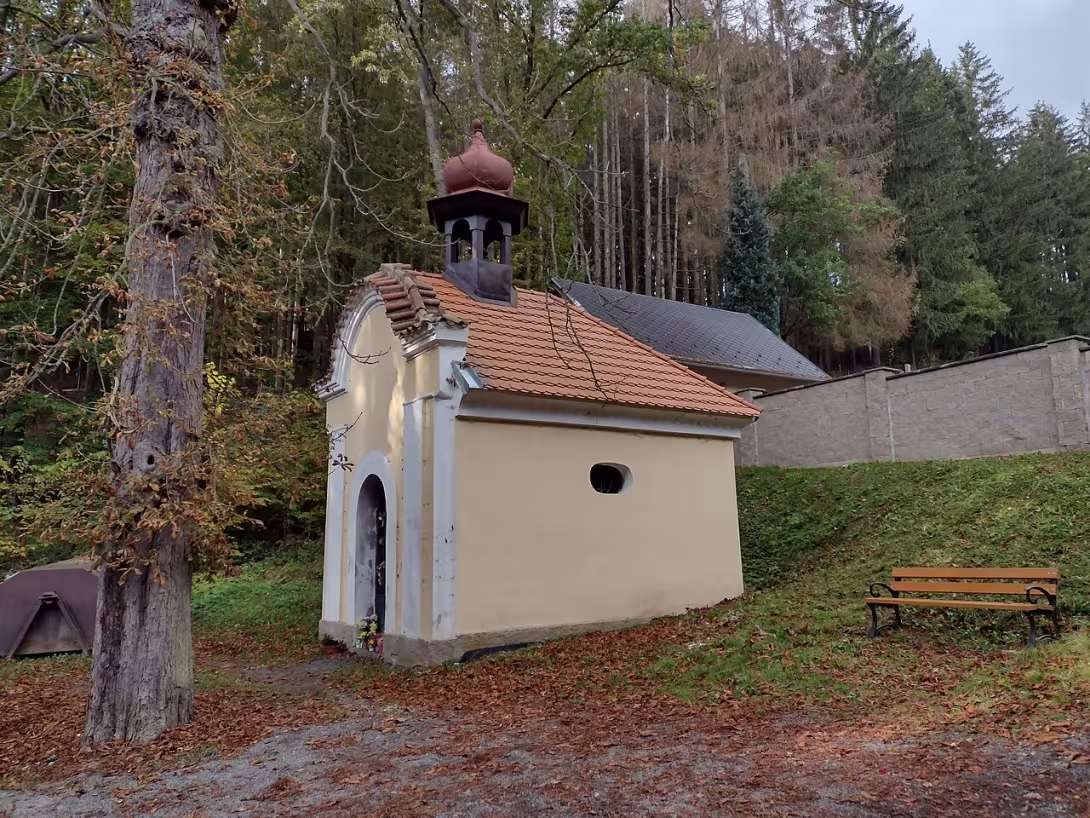

The historical appearance on the left is an AI-generated visualisation and serves as inspiration only.
Historical milestones
- kolem 1800
- Vznik kaple svaté Anny v Černých Budách.
- po roce 1815
- Architektonická přechodná doba po napoleonských válkách.
Architectural development
Constructed at the beginning of the 19th century, the chapel exhibits a blend of baroque and neoclassical styles. It features a typical baroque sanctus bell tower alongside a façade with minimal decoration, marked by two pilasters.
Historical events
The current structure dates back to the early 19th century.
Restoration work was completed in 1998.
Owners
The chapel is owned by the Benedictine Abbey of Our Lady and Saint Jerome in Emauzes, Prague.
Points of interest
- The Chapel of Saint Anne is believed to have a connection with local folklore that speaks of hidden treasures buried beneath its foundations during the Napoleonic Wars, although no evidence has been found to support these tales.
- Interestingly, the fresco of the Virgin Mary inside the chapel was reportedly painted by an unknown artist who left behind a small signature in one corner, leading to speculation about their identity and other potential works they may have created in the region.
- Despite its serene appearance today, historical records suggest that during the 19th century, the chapel served as a secret meeting place for local resistance groups opposing foreign rule, adding an element of intrigue to its history.
- The hexagonal belfry with its weathervane and cross is said to have been inspired by a similar structure in a distant European country, reflecting the widespread influence of architectural styles across borders during that era.
- Although regular religious services are not held at the chapel today, it has become a focal point for annual community gatherings where local historians share stories and legends about Černé Budy's past, fostering a sense of continuity with its rich heritage.
Guide
This guide is narrated by a synthetic voice generated by artificial intelligence.
Show guide text
This text was created by artificial intelligence and has not been editorially reviewed. It may contain inaccuracies.
The Chapel of Saint Anne stands on the northwestern edge of the town of Sázava, in the municipal district of Černé Budy. You will find it on the slopes of Veletín hill, which is referred to in some sources also as Beletín, just before the cemetery wall. The present structure dates from the beginning of the nineteenth century.
The chapel lies beside an ancient road that connected the Sázava Monastery with Stříbrná Skalice and further on to Prague. It is the shortest possible route to Stříbrná Skalice. From the monastery in Černé Budy it first ascends to the Chapel of Saint Anne and from there continues along the ridge of Krkavčí Rocks. This ridge separates the valley of the Sázava River and the Nučický valley, also called the Vlkančický stream. The chapel is already marked on the first military map, which was surveyed between 1764 and 1768.
There are no reliable sources for earlier forms of the chapel, and no archaeological survey has ever been conducted here. A Sázava monk, the continuator of the chronicler Kosmas, does mention a Chapel of Saint Anne in Sázava, which was founded in the twelfth century by Abbot Silvestr of the Sázava Monastery. However, we do not know where that chapel stood, and it cannot be reliably identified with the present location. The neighbouring cemetery with the chapel are not directly related; they were only established in 1934.
The structure has a rectangular ground plan and is oriented from north to south. The roof is covered with tiles, and the gable of the facade is protected by barge boards. On the roof ridge sits a hexagonal turret with a metal bulbous dome and a cross at the apex. Inside hangs a small bell. Such a turret is called a sanctus bell tower. Architecturally, the chapel combines baroque layout with a classical facade, which was quite common in Bohemia at the beginning of the nineteenth century. Alongside the typically baroque sanctus bell tower, we thus find a facade with almost no ornamentation, only with two suggested pilasters on the front.
The whitewashed interior is simple. There is an altar with a mural image of the Virgin Mary and wooden crosses. On the ceiling is an inscription which restorers renewed during the last repair in 1998.
The chapel has been a cultural monument since 1987. It belongs to the Benedictine Abbey of the Virgin Mary and Saint Jerome in Emauzy in Prague. Regular services are not held in it today. However, the bell from the sanctus bell tower still serves as a death bell during funerals at the neighbouring cemetery.
Tips for visitors
The best time to visit the Chapel of Saint Anne in Černé Budy is during late spring or early autumn, when the weather is pleasant for walking through the surrounding forested area and enjoying the scenic views. These seasons offer mild temperatures and vibrant natural surroundings, making it ideal for exploring the chapel and its landscape. Additionally, visiting outside peak tourist seasons can provide a more tranquil experience.
The chapel's location near an ancient route makes it accessible for those traveling by foot or bicycle, offering a scenic approach through the natural landscape.
When visiting the Chapel of Saint Anne, consider bringing comfortable walking shoes and weather-appropriate clothing, especially if you plan to explore the surrounding forested area and trails. A camera is recommended to capture the chapel's architectural details and the picturesque views from its location. Additionally, carrying a light snack or water can enhance your visit, particularly during longer explorations.
For photography enthusiasts, the best spots around the chapel are those offering views of the Veletín hill and Krkavčích skal ridge, especially during sunrise or sunset when the lighting is soft and warm. The gable front of the chapel with its hexagonal belfry provides a charming subject for photos. Early morning or late afternoon light can create dramatic shadows and highlights on the chapel's structure.
Nearby attractions within 30 minutes include the Sázava Monastery, known for its stunning architecture and serene atmosphere, ideal for history enthusiasts and those interested in religious sites. The area also offers opportunities for nature walks and exploring local flora and fauna. These nearby spots provide a well-rounded experience combining cultural heritage with natural beauty.
Frequently asked questions
Can the monument be visited?
Religious buildings are usually open mainly during services; at other times a visit is normally arranged with the parish or the operator. We have not verified specific times.
Where is the monument?
Location: Černé Budy, Středočeský kraj. The map on this page shows the exact spot.
Why is the monument protected?
It is listed in the Central List of Cultural Monuments of the Czech Republic as a cultural monument (register no. 36637/2-3522).
Businesses nearby
Do you run a restaurant, accommodation, shop, museum, rental, wellness or other visitor service near this monument? Show yourself directly to the people heading to it — this is how they will see you in the app and on the web:
Nearby
Located on the edge of Sázava near Černé Budy, the chapel is situated by a forest parcel and overlooks an ancient route connecting Sázavský Monastery with Stříbrná Skalice. The surrounding landscape includes the Veletín hill and Krkavčích skal ridge.
Accommodation nearby
Trips and activities nearby
Guided tours, tickets and activities nearby from GetYourGuide
Affiliate link: if you buy from the partner, we may receive a commission. The price for you does not change.
Search tours and activities →Themed route
Thematic Walking Tour: The Chapel of Saint Anne and Its Surroundings
1. Chapel of Saint Anne (Černé Budy) - Type: Historical Religious Site - Why Visit: This charming chapel, nestled on the edge of Sázava near Černé Budy, offers a serene retreat overlooking an ancient route that once connected Sázavský Monastery with Stříbrná Skalice. Its picturesque setting by a forest parcel and views of the surrounding landscape make it a perfect starting point for exploring the area's rich history and natural beauty.
2. Veletín Hill - Type: Natural Landmark - Why Visit: A short walk from the Chapel of Saint Anne, Veletín Hill provides panoramic views of the surrounding countryside. This hill is part of the region's unique topography and offers a perfect spot for nature enthusiasts to appreciate the landscape that has shaped local history.
3. Krkavčích Skal Ridge - Type: Natural Landmark - Why Visit: Continuing from Veletín Hill, the Krkavčích Skal ridge offers a rugged and scenic hiking experience. The area is known for its distinctive rock formations and provides an excellent opportunity to explore the natural environment that has influenced local folklore and history.
This thematic tour allows visitors to immerse themselves in both the historical significance of the Chapel of Saint Anne and the captivating natural beauty of its surroundings, offering insights into how geography and history intertwine in this part of Středočeský kraj.
Seasonal recommendations
Spring: The chapel of Saint Anne in Černé Budy is enveloped by the vibrant hues of blooming wildflowers and fresh greenery during spring, creating a picturesque setting for visitors. This time offers the perfect balance between mild temperatures and fewer crowds compared to summer, making it ideal for those seeking tranquility. As daylight hours increase, arriving early in the morning can provide an enchanting experience with soft light filtering through the chapel's windows. Visitors should consider wearing layers as mornings can be cool, transitioning into warmer afternoons.
Summer: Summer at the Chapel of Saint Anne is characterized by lush landscapes and extended daylight, inviting visitors to explore the surrounding natural beauty under clear skies. This season often attracts more tourists due to its popularity for outdoor activities; thus, arriving early in the morning or later in the afternoon can help avoid larger crowds. The warm weather calls for comfortable clothing and sun protection, such as hats and sunscreen, while ensuring hydration is maintained throughout your visit.
Autumn: Autumn transforms the Chapel of Saint Anne into a serene haven with its rich tapestry of reds, oranges, and yellows, offering an ideal backdrop for photography enthusiasts or those seeking solace in nature's beauty. The cooler temperatures make it comfortable to explore without the summer heat, although visitors should be prepared for occasional rain showers by bringing waterproof clothing or umbrellas. This season is less crowded than summer, providing a more peaceful experience.
Winter: Winter cloaks the Chapel of Saint Anne with a quiet and mystical atmosphere as snow blankets the landscape, creating a magical setting that's particularly enchanting during sunrise or sunset when light softly illuminates the snowy surroundings. Arriving early can ensure ample time for exploration before any closures due to weather conditions.
Visualizations and artistic views


The visualisations are generated by artificial intelligence and serve as inspiration.
Photos from the area
Real photos taken near the monument


Zdroj a licence jsou uvedeny u každého snímku.
Tips from visitors
No tips yet. Be the first!
Log in and add your tip.
Sources and literature
Photos: Jiří Hartvich / CC BY-SA 4.0 — Wikimedia Commons. The author and licence also appear when you hover over the image.
Faktickým podkladem tohoto textu byl článek na Wikipedii, jehož autory jsou přispěvatelé Wikipedie. Článek je dostupný pod licencí CC BY-SA 4.0.
Location on the map





Příběhy a pověsti
Legendy, pověsti a příběhy spjaté s touto památkou

Příběh: kaple svaté Anny (Černé Budy)
Bylo to v pondělí ráno, kdy Mikuláš zjistil, že jeho srdce ho neustále trhne do bolesti tímto neuvěřitelným způsobem. Kostel svaté Anny v Černých Budách se o…
Číst příběh
Pověst: kaple svaté Anny (Černé Budy)
Staří obyvatelé Černých Bud odedávna říkají, že kaple svaté Anny na úbočí vrchu Veletín není jen pouhá stavba z kamene a vápna. Je to místo, kde se minulost …
Číst příběhFotografie návštěvníků
Zatím žádné fotografie. Buďte první, kdo přidá fotografii z návštěvy!
Log in a přidejte svou fotografii nebo hodnoťte.
Za ověřenou návštěvu v aplikaci získáte víc bodů — poznáme podle GPS, že jste na místě.
Reviews and comments