



kaple svatého Václava v Kudlově Chapel
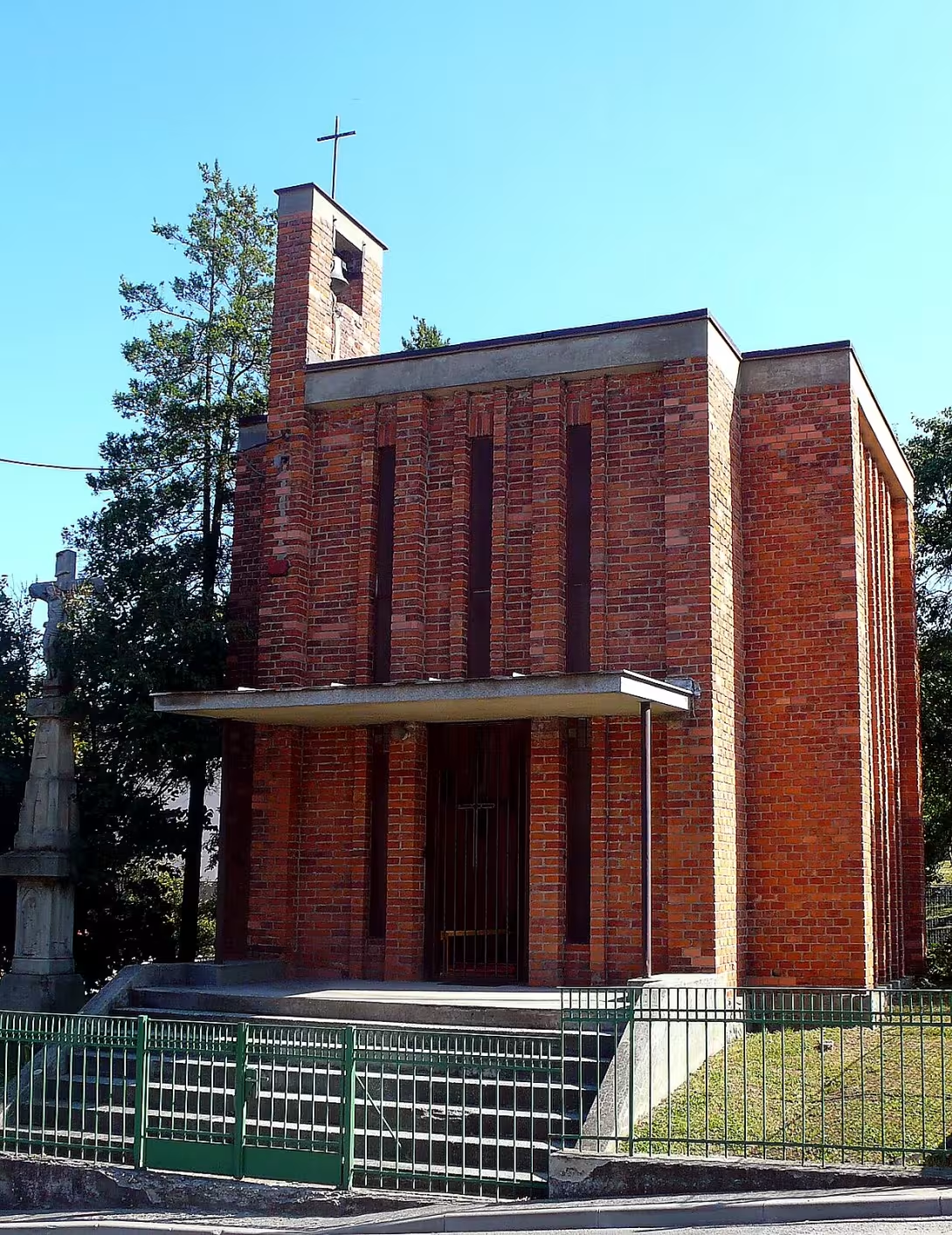
The chapel of St. Wenceslas is located in the Zlín local part Kudlov and represents an interesting example of functionalist sacral architecture. It was built in the years 1927-1929 according to designs by architect František Lydia Gahura, who at that time worked for the construction company Bata. The construction has been declared a cultural monument since 1958.
The creation of the chapel was a process that durал for several years. Kudlov originally belonged to the Zlín parish, and local citizens have been collecting funds to build their own chapel for a long time. A major turnaround came in 1927 when the foundation of the husbands Anna and Josef Procházková was created, who devoted a considerable amount to the construction of 600 crowns. The Bata machinery industry contributed 16,000 bricks from its Zlín brick. The building plot was dedicated to Aloisie and Rudolf Vavrushu's husbands, the sand was provided by the mayor of the nearby Prštný Ignác Šáasta and local forest owners contributed to the construction wood. The architect František Lýdie Gahura himself, who was also a citizen of the village, made plans and budgets free of charge. Although the principle of maximum financial austerity was the main limitation, the total cost amounted to CZK 30,000 (without the value of the donated material). The construction was commissioned to the local builder Josef Jarcovák and the construction lasted less than a year. The chapel was consecrated on 22 September 1929 and performed by Monsignor Antonín Koblih, the vicar at the Olomouc House. The godfather became Marie Baťová, wife of industrialist Thomas Bata.
The name of the chapel to St. Wenceslas was probably chosen to commemorate the thousand anniversary of the torture of the patron of the Czech lands who died in 929.
The chapel is built on the ground plan of the Greek cross with approximate dimensions of 7 × 7 × 7 meters. Its distinctive appearance is determined by the uncovered brick, which also created the scale of all elements of the construction. On all sides, groups of three narrow, oblong window openings are inserted into the facade. The only asymmetry of external appearance is the bell tower from the left corner. The ground was originally marked by a metal fence separating a staircase from the road. The stone cross with Christ was later transferred from another part of the village and located in the northwest corner. The input is covered by concrete parapets carried on metal columns.
The interior was originally dominated by a brick and fresh light passing through slender windows. The altar consisted of two stone plates - granite altar table and sandstone column - in the form of a Greek cross. Above the mensou was planted a box of a shrine with brass relief over which the brass sculpture of Christ's torture stood. The ceiling was geometrically shaped from painted boards. Today's interior is not very similar to its original appearance. In the last modification made by Miroslav Kováč before 2020, there was an exchange of benches, carpets, a new neutral white painting and installation of modern altar and ambo. So the skeleton now serves as a living space for parishioners, even if its appearance was distant from the original idea of minimalism and functionalist purity.
Then and now
Drag the slider to compare how the landmark may have looked when it was built with the view today.
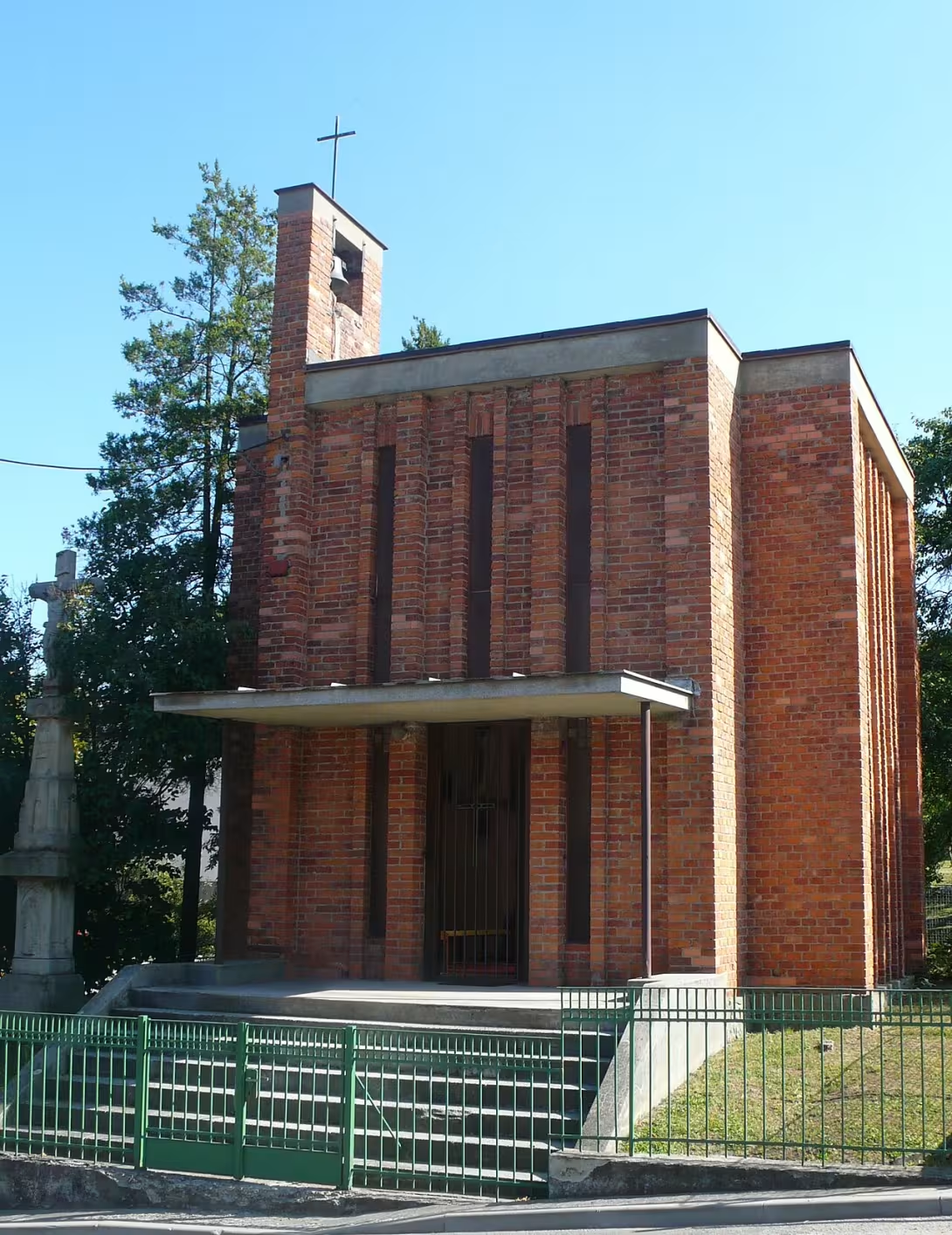

The historical appearance on the left is an AI-generated visualisation and serves as inspiration only.
Historical milestones
- 1927
- The creation of Anna and Josef Procházková Foundation with the intention of building a chapel.
- 1929
- The ceremonial consecration of the chapel on 22 September.
- 1958
- The chapel was declared a cultural monument.
Architectural development
The construction was carried out in 1927-1929 in a solid brick style with minimalist interior. The original design of the interior has undergone modifications, especially after 2020, when reconstruction was carried out according to the design of Miroslav Kováč. The main building element remains unbraided bricks and a geometric wooden ceiling.
Historical events
In 1927, Anna and Josef Procházková were founded to finance the construction. On 22 September 1929, the ceremonial consecration of the chapel took place. Since 1958 the chapel has been protected as a real-estate cultural monument.
Points of interest
- The chapel is an example of functionalist sacral architecture and has been declared a cultural monument since 1958. - Architect František Lýdie Gahura made plans and budgets for construction free of charge. - Different donors contributed to the construction, such as the Bata machinery industry, provided 16,000 bricks and married Vavruz donated the land. - The chapel is built on the ground plan of the Greek cross and its appearance is determined by an uncovered brick. - The name of the chapel to St. Wenceslas was chosen to commemorate the thousand anniversary of the torture of the patron of the Czech lands.
Guide
This guide is narrated by a synthetic voice generated by artificial intelligence.
Show guide text
This text was created by artificial intelligence and has not been editorially reviewed. It may contain inaccuracies.
The Chapel of Saint Václav in Kudlov, today a part of the city of Zlín, is a functionalist building from nineteen twenty-seven to nineteen twenty-nine. It was designed by architect František Lýdie Gahura.
Kudlov was originally an independent village and belonged to the Roman Catholic parish of Zlín. The construction of the chapel was delayed for a long time by a lack of funds, so a collection was conducted in Kudlov and the surrounding villages for several years. A turning point came in nineteen twenty-seven, when the foundation of Anna and Josef Procházek was established with the aim of building the chapel. The couple donated six hundred crowns to the construction. Aloisie and Rudolf Vavrušovi donated the land. The Baťa company provided approximately sixteen thousand bricks from its Zlín brickyard, the mayor of Prštné, Ignác Šťasta, provided sand, and the owners of the surrounding forests provided building timber.
Gahura, an architect of the Baťa company, was himself a resident of the village and prepared the plans and budgets for free. He had a free hand in the design, but had to build as economically as possible. Nevertheless, the construction cost thirty thousand crowns without the donated materials. Local residents transported the materials to the site, and the construction was carried out by Zlín builder Josef Jarcovják. The work lasted almost a year and ended with the installation of a bell from the old bell tower. The chapel was consecrated on September twenty-second, nineteen twenty-nine by Monsignor Antonín Kobliha, the vicar of the Olomouc cathedral. The godmother was Marie Baťová, the wife of industrialist Tomáš Baťa. The dedication to Saint Václav was probably related to the thousandth anniversary of his martyrdom in nine twenty-nine. Since nineteen fifty-eight, the chapel has been a cultural monument.
The chapel has the ground plan of a Greek cross and in its core measures roughly seven metres in length, width and height. The shape and size were determined by the small, almost square plot by the main road. On each side there are three narrow elongated windows. The symmetry is disrupted only by the bell tower, which rises from the left corner. The second prominent vertical line is formed by a stone cross with Christ, brought here from another part of the village. The main material is exposed brick, according to which the entire building is measured, including the width of the windows. The entrance is covered by a concrete canopy on metal columns.
The original interior had a striking contrast of dark red brick and light from the slender windows. The altar consisted of a granite table and a sandstone column with a tabernacle. On its brass relief, a book with seals rises from an ear of grain, and the Lamb of God stands on it. Above the tabernacle was a brass sculpture of the crucified Christ. The wooden ceiling was decorated with a geometric pattern made of coloured boards and laths.
Today's interior bears little resemblance to the original. During the last renovation according to a design by Miroslav Kováč, completed before twenty twenty, the chapel received white paintwork, new benches, lighting fixtures, an altar and an ambo.
Tips for visitors
The best time to visit kaple svatého Václava v Kudlově is autumn or spring when it is quieter and nature offers beautiful colors. This period also provides ideal lighting conditions for shooting architectural details of the chapel.
When visiting, make sure you have a purse or camera to capture the unique architectural details of the chapel. Thanks to its functional design, it offers many interesting angles for photography.
There is a place around the chapel where you can enjoy nature and quiet moments. A short walk nearby offers the possibility of relaxation and relaxation after a sightseeing tour.
For families with children, the chapel is an interesting opportunity to become acquainted with history and architecture. Children can be fascinated by the unique design of the building, which makes the visit educational and fun.
Frequently asked questions
Can the monument be visited?
Religious buildings are usually open mainly during services; at other times a visit is normally arranged with the parish or the operator. We have not verified specific times.
Where is the monument?
Location: Kudlov, Zlínský kraj. The map on this page shows the exact spot.
Why is the monument protected?
It is listed in the Central List of Cultural Monuments of the Czech Republic as a cultural monument (register no. 24342/7-1959).
For kids
Hi! Lift up your eyes and imagine getting to the small village Kudlov, where around 1929 - about 97 years ago - an extraordinary chapel was built. It was like when someone made a magnificent model of building blocks, but here, they used really big stones and bricks.
The chapel of St. Wenceslas was like a small retreat for people in Kudlov. There they could pray, sing songs or just enjoy a quiet moment. Every Sunday they would meet there and share their thoughts and hopes. It was like a little group of friends that created one big family.
Businesses nearby
Do you run a restaurant, accommodation, shop, museum, rental, wellness or other visitor service near this monument? Show yourself directly to the people heading to it — this is how they will see you in the app and on the web:
Nearby
The chapel is located in the Kudlov part of Zlína in close proximity to the main road passing through the village.
Accommodation nearby
Trips and activities nearby
Guided tours, tickets and activities nearby from GetYourGuide
Affiliate link: if you buy from the partner, we may receive a commission. The price for you does not change.
Search tours and activities →Themed route
Thematic cruise route - St. Wenceslas Chapel in Kudlov
1. St. Wenceslas Chapel * Type: * Religious landmark Why is it worth a visit: This historic chapel is not only a spiritual centre for local residents, but also an architectural pearl that attracts visitors with its rich frescos and calm atmosphere. It's the perfect place to warm up in a spiritual sense at the beginning of your trip.
2. Kudlov Square * Type: * City Square Why is worth a visit: This central local square is an ideal place to relax and admire local architecture. The square serves as a link between the historical parts of Kudlova and modern life, allowing you to feel the atmosphere of a small town.
3. Local Shops and Markets * Type: * Trade zone Why is it worth a visit: Visit local shops where you can buy traditional Czech products or see the offer of local agriculture. It is a great opportunity to get acquainted with local products and support traders from Kudlova.
4. Zlín Circles * Type: * Sports equipment Why is worth a visit: If you like sport, Zlín circuits are the ideal place to explore. Although located a little further away from Kudlova, it is a short bike or car trip that offers the possibility of active recreation and admiration of natural landscapes.
This route allows you to explore historical and modern aspects of Kudlova and its surroundings. Whether you stop at a quiet religious pilgrimage or see local shops, every step will bring new impressions from this unique place.
Seasonal recommendations
Spring: In the spring season kaple svatého Václava v Kudlově takes on beautiful colors blooming nature around it. Green meadows and the first flowers celebrate the new year of life, giving the atmosphere a mild temperature and sunlight something cosy and friendly. A slight garment with the possibility of adding layers is suitable for the visit, as the temperature may vary significantly during the day. The best time to visit is in the morning or late afternoon time to avoid the initial crowd load and enjoy a quiet moment in nature.
Summer: In summer the chapel of St. Wenceslas offers visitors an escape to a place full of sunshine and green landscapes. The atmosphere is revived by warm days when nature develops in all its beauty. For a visit it is advisable to choose clothing fresh material and protective sunglasses against strong rays. It is recommended to come at the beginning of the day or later of the evening to avoid heat and crowds in the main summer months. Don't forget to bring drinking water and sunscreen.
Autumn: In the autumn of the chapel of St. Wenceslas, the atmosphere becomes special melancholy when leaves of falling trees cover the way with a variety of colours. Sunshine days are warm and warm, but evenings become colder and short. For the visit it is advisable to choose layered clothing that allows a quick reaction to temperature changes during the day. The chapel is best visited at noon, when the sun is still above the horizon and nature offers its greatest shine.
Winter: Winter visit to St. Wenceslas Chapel offers a completely different experience where the surrounding area is covered with snow and creates a quiet and quiet environment. Sun rays reflecting on ice surfaces add magic to the atmosphere. For visiting it is necessary to choose warm clothes, including hat and gloves, so that cold weather can be enjoyed without discomfort.
Visualizations and artistic views


The visualisations are generated by artificial intelligence and serve as inspiration.
Photos from the area
Real photos taken near the monument


Zdroj a licence jsou uvedeny u každého snímku.
Tips from visitors
No tips yet. Be the first!
Log in and add your tip.
Sources and literature
Photos: Double at cs.wikipedia / Public domain — Wikimedia Commons. The author and licence also appear when you hover over the image.
Faktickým podkladem tohoto textu byl článek na Wikipedii, jehož autory jsou přispěvatelé Wikipedie. Článek je dostupný pod licencí CC BY-SA 4.0.
Location on the map
Příběhy a pověsti
Legendy, pověsti a příběhy spjaté s touto památkou
Fotografie návštěvníků
Zatím žádné fotografie. Buďte první, kdo přidá fotografii z návštěvy!
Log in a přidejte svou fotografii nebo hodnoťte.
Za ověřenou návštěvu v aplikaci získáte víc bodů — poznáme podle GPS, že jste na místě.
Reviews and comments