



kapucínský klášter v Mnichově Hradišti Monastery
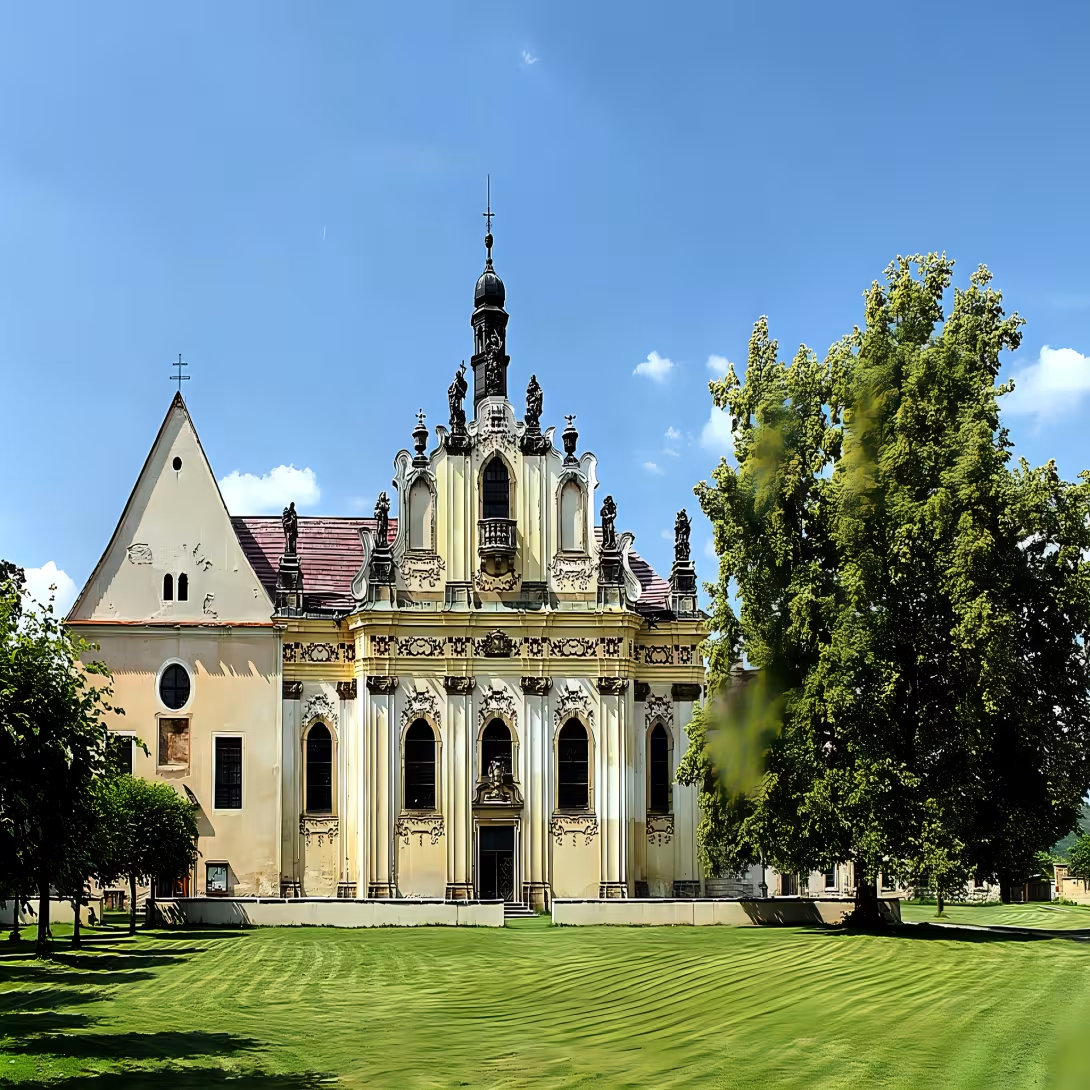
The Capuchin monastery in Munich Hradiště is packed in a close neighbourhood of the Renaissance, later in the barbed chateau Mnichovo Hradiště. It is an interesting example of the baroque style development in outskirts, where the modesty of ordinary capital life collides with the ambitions of noble patrons. The core of his identity is the Church of the Holy Three Kings with the adjacent chapel of St. Anne - a building typical of the spiritual architecture of the early 18th century.
The monastery was founded in 1697, at the time it was working on its main construction. Construction of the Holy Church The Three Kings were taken up in 1694 and lasted until 1699 according to the project of a member of the order of P. Jiří of Munich. Capuchins built what their order always preferred: a simple, without decorative elements built complex. The monastery, consisting of three wings surrounding the centre of the Court, was directly connected to the presbytery of the church, creating a functional whole. It was this architect's ultimate modesty that was part of Capuchin spirituality - the order based itself on poverty and simplicity.
A quarter of a century later, in 1723 to 1724, the pious owner of the estate of Marie Markéta of Valdštejn (born Cernine) had the church built a richly decorated Baroque chapel of St. Anne. The building was connected to the Church of the Three Kings. About sixty years later, Vincenc z Waldstein-Wartenbergu (1731-1797) had the chapel rebuilt into a family tomb - attached an editorial niche with columns and coats of arms in the shield and modified the interior. Let him bury himself here with his wife, but he also did so by protecting the remains of his famous ancestor, Emperor General Albrecht of Valdstein and his wife Lucrezia. They were transported from the Carthusian monastery in Valdice, which died as a result of the Yosefin reforms. In 1934, when they commemorated three hundred years since Albrecht's death, they placed on his grave a tombstone made of red-brown marble by the Liberec sculptor Karl Kolaczek. The tomb served the family until 1923.
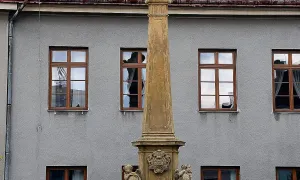
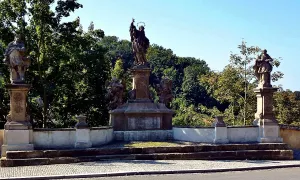
The Baroque statue of St. Anne by sculptor Josef J. Jelinek, carved in 1713, stands outside the monastery.
Since 1966, the monastery church has become home to the lapidarium of Central Bohemian Baroque sculpture. The walls are decorated with approximately fifty sculptures, mostly sandstone - most often by masters of Matyas Bernard Braun, František Ignác Platzer and Ferdinand Maximilian Brokoff, and especially by the sculptor family Jelínky of Kosmonos. This collection makes the monastery a place where the visitor meets the hands of these great Czech artists.
Then and now
Drag the slider to compare how the landmark may have looked when it was built with the view today.
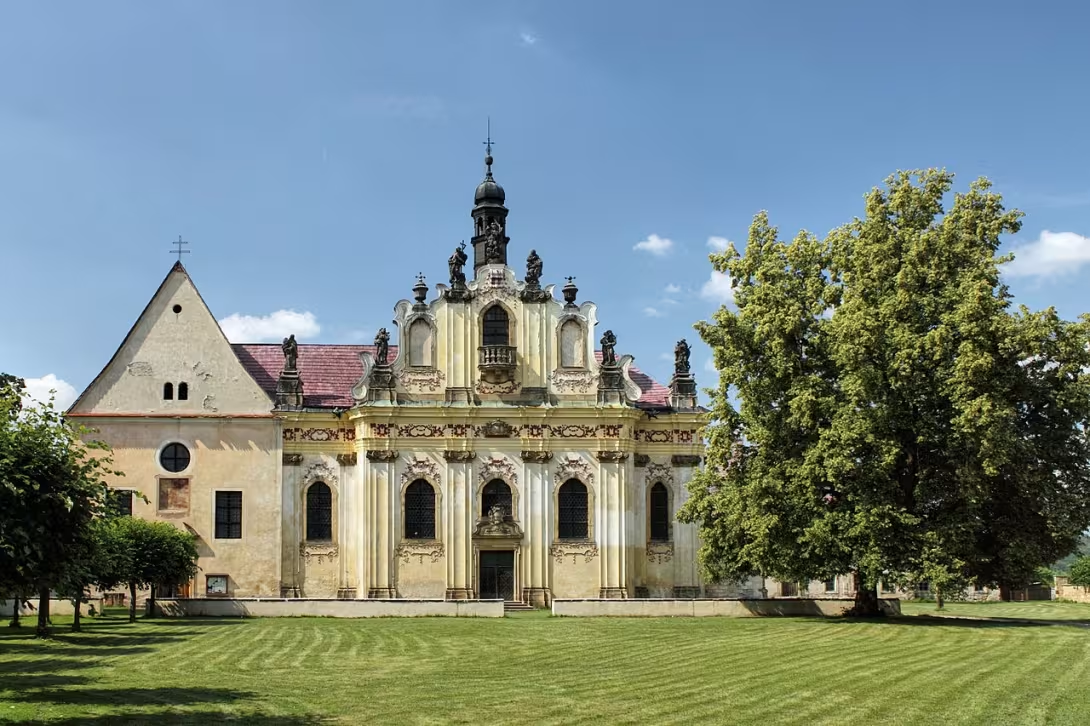

The historical appearance on the left is an AI-generated visualisation and serves as inspiration only.
Historical milestones
- 1694
- The beginning of the church of the Holy Three Kings.
- 1697
- The founding of the Capuchin monastery.
- 1699
- The completion of the Church of the Holy Three Kings.
- 1723-1724
- St Anne's Chapel construction.
- 1966
- The foundation of the lapidarium of Central Bohemian Baroque sculpture in the church.
Architectural development
The monastery was built as a simple complex of three wings surrounding the courtyard, directly connected to the presbytery of the church. The Church of the Holy Three Kings was built in 1694- 1699 from sandstone and stone, with typically Capuchin simplicity. The chapel of St. Anne from 1723-1724 was richly decorated and constructively connected to the church. The Waldstein tomb was built in 1797 and served the Valdstein family until 1923. The interior is decorated with Baroque statues and paintings.
Historical events
- 1694-1699
- Construction of the Holy Church Three kings according to the project by P. Jiří of Munich.
- 1723-1724
- The establishment of St. Anne's Baroque Chapel by order of Marie Margaret of Valdstejn.
- 1934
- Placing the tombstone of Albrecht of Valdštejn on his grave in the chapel.
Points of interest
- The Capuchin monastery was founded in 1697, the construction of the Church of the Holy Three Kings started in 1694 and lasted until 1699.
- The monastery is an example of modest Baroque architecture, which corresponds to the Capuchin spirituality based on poverty and simplicity.
- The chapel of Saint Anne was built between 1723 and 1724 by the devout owner of the estate of Marie Margaret of Valdštejn.
- The chapel was later converted into the family tomb of Vincent of Waldstein-Wartenberg, who carried the remains of his ancestor, the imperial general Albrecht of Valdstein.
- Since 1966, the monastery church has been home to the lapidarium of Central Bohemian Baroque sculpture with approximately fifty sculptures from prominent Czech artists.
Guide
This guide is narrated by a synthetic voice generated by artificial intelligence.
Show guide text
This text was created by artificial intelligence and has not been editorially reviewed. It may contain inaccuracies.
The Capuchin Monastery in Mnichov Hradišti stands in close proximity to the Wallenstein Castle. It includes a Baroque church of the Three Holy Kings and the Chapel of Saint Anne.
The church began construction in 1694 and was completed in 1699. The building project was developed by a member of the order, Father Jiří from Mnichov. The monastery was founded in the intervening period, in 1697. This happened even before the extensive Baroque reconstruction of the Renaissance castle at that time, which ended in 1703.
The Capuchins built a simple complex of buildings without decorative elements here, as was typical for their order. The monastery consists of three wings that surround a courtyard. The church is connected directly to the presbytery.
Since 1966, the church has served as a lapidarium of Central Bohemian Baroque sculpture. About fifty sculptures are displayed here, mostly sandstone ones. Among them are works by Matthias Bernard Braun, Franz Ignaz Platzer, Ferdinand Maximilian Brokoff and other masters. But above all, you will find works by the sculptor family Jelínek from Kosmonos.
In the years 1723 to 1724, Marie Markéta from Valdštejn, née Černínová, the owner of the estate, had a richly decorated Baroque chapel of Saint Anne built next to the church. The chapel is architecturally connected to the church.
Sixty years later, Vincenc from Waldstein-Wartenberg had a niche with columns and a coat of arms in the gable added to the chapel. He had the interior adapted into a family tomb, which then served until 1923. He prepared a grave for himself and his wife in it. He also had the remains of the Friedland Duke and Imperial Generalissimo Albrecht from Valdštejn and his wife Lucretia transferred to the tomb. They were originally buried in the Carthusian monastery in Valdicích, which ceased to exist during the church reforms of Emperor Joseph the Second.
In 1934, three hundred years after Albrecht's death were celebrated. On that occasion, his grave received a tombstone made of reddish-brown marble from the sculptor Karel Kolaczek from Liberec.
In front of the monastery stands a Baroque statue of Saint Anne from 1713. It was created by sculptor Josef J. Jelínek.
Tips for visitors
The best time to visit the monastery is in the summer months, namely from May to September. This time the weather is pleasant and the monastery is open to visitors. In addition, cultural events such as concerts or exhibitions are often held during the summer months, which can be an interesting addition to your visit. There are fewer people in the monastery in the morning or afternoon, so you can enjoy the tour in peace.
The Capuchin monastery is accessible by car and public transport. The monastery is located in the heart of the city, so most traffic connections will get you here.
When visiting the monastery, wear comfortable clothes and shoes because the tour includes corridors and stairs. It may be cold in the interior, so you will bring a lighter sweater or jacket. Next, prepare your laptop or mobile phone with a map to be more easily oriented around and to visit other interesting places. If you are planning to photograph, do not forget to charge the device.
Photography in the monastery is allowed, but it is good to respect other visitors and not to break the rules given by the monument. The best places for photos are the exterior of the Church of the Holy Three Kings and surrounding gardens where there is pleasant light and pleasant background. In the interior of the monastery, avoid flashing lightning so as not to endanger sensitive paintings and statues. The best time for photography is in the morning or in the afternoon when the light is not too strong.
In the vicinity of the monastery is worth visiting the Valdštejn chateau Mnichovo Hradiště, which is located in close proximity. This Baroque chateau forms a unified area with the monastery and offers additional possibilities for a tour. There is also the city park Mnichovo Hradiště, which is ideal for relaxing and walking green. If you have more time, you can visit other interesting places within 30 minutes of the monastery, such as the historical centre of the city.
For families with children the visit of the monastery is interesting due to its historical importance and picturesque architecture. Children can see the Church of the Holy Three Kings and learn more about the history of the monastery through information boards. In the vicinity of the monastery there is also the possibility of staying in the City Park where children can play and relax. For children of older age it may be interesting to visit the Waldstein Chateau and its exposition.
Frequently asked questions
Can the monument be visited?
Religious buildings are usually open mainly during services; at other times a visit is normally arranged with the parish or the operator. We have not verified specific times.
Where is the monument?
Location: č.p. 151, Mnichovo Hradiště, Středočeský kraj. The map on this page shows the exact spot.
Why is the monument protected?
It is listed in the Central List of Cultural Monuments of the Czech Republic as a national cultural monument (register no. 29166/2-1677). It is protected as part of a larger listed ensemble.
For kids
Imagine going back 329 years to when Mnichovo Hradiště was a small town surrounded by forests and rivers. It was like a game called Mystery House, where secrets and stories from the ancient past are hidden.
At that time there was a small monastery in the heart of the city, which was home to capuchins - a monk group that was known for its generous hearts and love for the people. Who lived there? It was the monks themselves with their white robes and broad hats, who devoted themselves to prayer, work and help the needy.
Businesses nearby
Do you run a restaurant, accommodation, shop, museum, rental, wellness or other visitor service near this monument? Show yourself directly to the people heading to it — this is how they will see you in the app and on the web:
Events nearby

Zdroj akcí: otevřená data měst a obcí ČR (Národní katalog otevřených dat) a kalendář akcí Národního památkového ústavu.
Accommodation nearby
Trips and activities nearby
Guided tours, tickets and activities nearby from GetYourGuide
Affiliate link: if you buy from the partner, we may receive a commission. The price for you does not change.
Search tours and activities →Themed route
The daily cruise route to the Capuchin monastery in Munich Hradiště * * * *
1. Visit of the monastery and its historical premises * * Type: Cultural and spiritual stop Why is it worth a visit: The Capucin monastery Mnichovo Hradiště is one of the most important monasteries in Bohemia, founded in the 17th century. Its rich architecture, monastery church with Gothic elements and exposition with historical relics capture spiritual traditions and artistic monuments. The inner courtyard with Capuchin sculptures and garden area offers a quiet environment for reflection.
2. Walk through the Waldstein Chateau * * * * Type: Historical walk Why is it worth a visit: The Baroque Chateau in the close neighbourhood of the monastery forms a unique complex with it. Its rich decoration, garden parades and exposition of the Valdstejn family bring medieval manor to life. The chateau park with historical trees and water elements complements the overall atmosphere.
3. Rest in City Park * * * * Type: Relaxation stop Why is it worth a visit: Green area with historic trees and protected landscape is an ideal place to relax after a tour. The park offers quiet walks, picnic options and views of the monastery area. Its historical value associated with nature creates a pleasant environment for families and individuals.
Recommended route: Start at the monastery, where you can see the exposition and the courtyard. Then you will move on to the Waldstein Chateau where you admire its architectural details. The end of the route in the City Park will provide you with rest and the opportunity to relax on the historic edge of the city. The whole cruise route can be completed in 3-4 hours walking distance.
Seasonal recommendations
Spring In the Capuchin monastery in Munich Hradiste there is a strange, quiet magical atmosphere at this time, when blooming trees and green meadows form a harmonious contrast with the historical walls of the monastery. The light in the interiors is finely scattered, and in the morning there is a strange calm when the crowd tourists are not awake yet. The outer gardens are now full of the first flowers, and there are often small prayers of the local people in the monastery chapel.
Practically the best visit in the first half of spring is when there are fewer tourists. Suitable clothing includes light but durable layers that are easily removed, and comfortable shoes for walking around the terrain. Due to temperatures of around 10- 15 ° C, it is advisable to carry a light coat or umbrella for possible rain.
---
Summer In the main summer season the monastery fulfills life but also crowds of visitors who come here for its rich history and surroundings. The outer spaces are illuminated by sunlight, which emphasizes detailed frescoes and statues, while the inner halls are warm and refreshed. At night there are often evening concerts or lectures around the monastery that attract other tourists.
For the best experience, it is advisable to come by 11:00 to avoid heaps. Suitable clothes are light but sun-resistant, and suitable sunglasses. Due to temperatures of 20-30 ° C, it is important to carry water supplements and light clothes for any wind storms.
---
Autumn At this time the monastery takes on a special serious and peaceful character, when leaves turn into golden and red shades. The light in the interiors is warmer and direct, and in the monastery chapel there are often meditation events or lectures on spiritual history. The outer spaces are warmer, and in the morning, a quiet atmosphere is manifested, when the crowds are not awakening.
The visit is suitable in the second half of autumn when there are fewer tourists. Suitable clothing includes warm layers that are easily removed, and comfortable shoes for walking on wet terrain. Due to temperatures of 10- 18 ° C, it is advisable to carry a light coat or umbrella for possible rain.
Visualizations and artistic views


The visualisations are generated by artificial intelligence and serve as inspiration.
Photos from the area
Real photos taken near the monument


Zdroj a licence jsou uvedeny u každého snímku.
View from the area
This animation was generated by artificial intelligence from a real photograph of the surroundings. The motion and details are not real footage of the location.
Atmosphere of the place
This atmospheric visualisation of the place and period was generated by artificial intelligence. It is not real footage of the location.
Tips from visitors
No tips yet. Be the first!
Log in and add your tip.
Sources and literature
Photos: Miloslav Rejha / CC BY-SA 3.0, rozlišení zvýšeno umělou inteligencí — Wikimedia Commons. The author and licence also appear when you hover over the image.
Faktickým podkladem tohoto textu byl článek na Wikipedii, jehož autory jsou přispěvatelé Wikipedie. Článek je dostupný pod licencí CC BY-SA 4.0.
Location on the map


Příběhy a pověsti
Legendy, pověsti a příběhy spjaté s touto památkou
Fotografie návštěvníků
Zatím žádné fotografie. Buďte první, kdo přidá fotografii z návštěvy!
Log in a přidejte svou fotografii nebo hodnoťte.
Za ověřenou návštěvu v aplikaci získáte víc bodů — poznáme podle GPS, že jste na místě.
Reviews and comments