



Kostel svatého Jakuba (Mnichovo Hradiště) Church
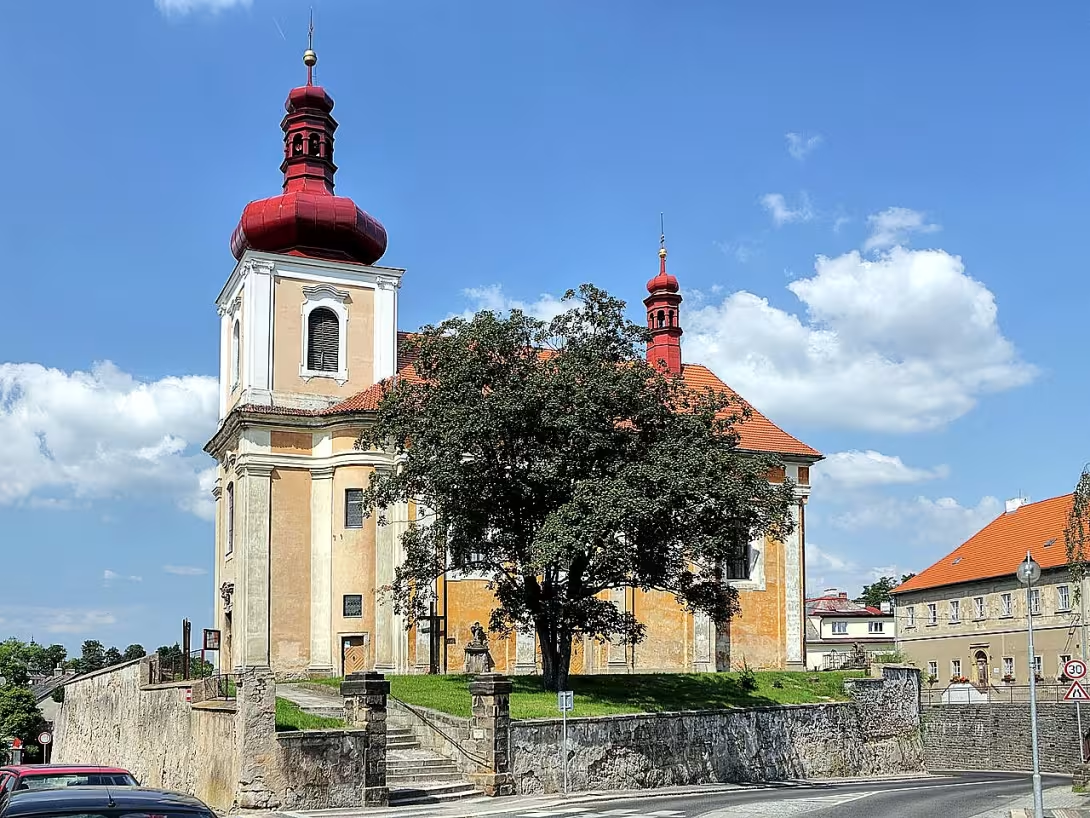
The Dean's Church of St. Jacob the Greater in Munich Hradiste is a top Baroque sacral building from 1726 to 1727. It stands on an elevated terrace above the Nedbalky valley about a hundred metres from T. G. Masaryk Square. This single-boat temple has a rectangular presbytery, a western tower and an onion roof. It was built on the site of the original Gothic sanctuary from the time the town was founded and is protected as a cultural monument of the Czech Republic.
The present Baroque form of the temple was built by Countess Marie Markéta Valdštejnová, born Chernínová of Chudenice, from 1726 to 1727. This is evidenced by a chronogram on the main building portal. The name of the direct builder is not certain in historical sources, but the monument is attributed to the Waldstein builder M. Raimondi. His handwriting also manifests itself on a nearby Baroque parish building from 1701. In style, this building shows similarity to the temples in Bosnia and Loukovce.
Architecturally, it is a rectangular, single-boat building, supplemented by a western tower with an onion roof and a rectangular presbytery, beside which there is a sacristy on the north side. The outer walls are broken down by pilasters and lizene frames, while the inner walls are also broken down by pilasters. In the presbytery there is a cross vault and the sacristy is encapsulated by a valed vault with lunettes. In the ship, the original rolled vaults were cut off and replaced by a wooden ceiling.
The interior equipment of the building comes from various construction periods. The main altar was made by the carpentry master J. Fleher and is supplemented by the altar painting of St. James by the painter John George Hertle of Turnov. On the sides of the main altar are the statues of St. Wenceslas and St. Vojtěch from 1727, the author of which is the cosmos sculptor Josef Jiří Jelínek. The two rococo side altars in the form of baldachins dates back to 1764 and the painting of the Virgin Mary on the plate from 1735 is once again the work of John George Hertle. In the interior there is also a pulpit from 1736 and a baptist from 1776. The spiritual administration is provided by the Roman Catholic parish - the deanery Mnichovo Hradiště.
Key historical moments of the building include the construction of a Baroque temple between 1726 and 1727, the creation of rococo side altars in 1764, the acquisition of the baptism of 1776 and the making of the marble tombstone of Elizabeth Koller in 1818. Around the shrine there is a abolished cemetery with a number of valuable classical and empirical tombstones. At the church wall, there is an empirical marble tombstone of Elizabeth Koller, who had his mother create an Austrian warlord from the period of the Napoleonic wars František Arnošt Koller. The author of the work is the Vienna master Rudolf Schadow. The tombstone of Františka z Ehrental, the tomb of Vincent Valdštejn by J. Hájek z Bakov from 1788 and 1797, the tombstone of Kateřina Leibnicová from 1594, the tombstone of the noblewoman Meluzina Křinecká from Ronov and to Dymokur, as well as the preserved memoirs of fallen soldiers from the Prussian-Austrian War of 1866.
This area in the Mladá Boleslav district in the Central Bohemian Region represents a valuable example of the highest Baroque sacral architecture associated with the Valdstejn family. Visiting this place above the Nedbalka valley offers direct meetings with history ranging from the Gothic beginnings of the city to the Baroque reconstruction to valuable secular works in the immediate vicinity of the parish church.
Then and now
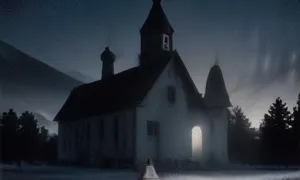
Drag the slider to compare how the landmark may have looked when it was built with the view today.
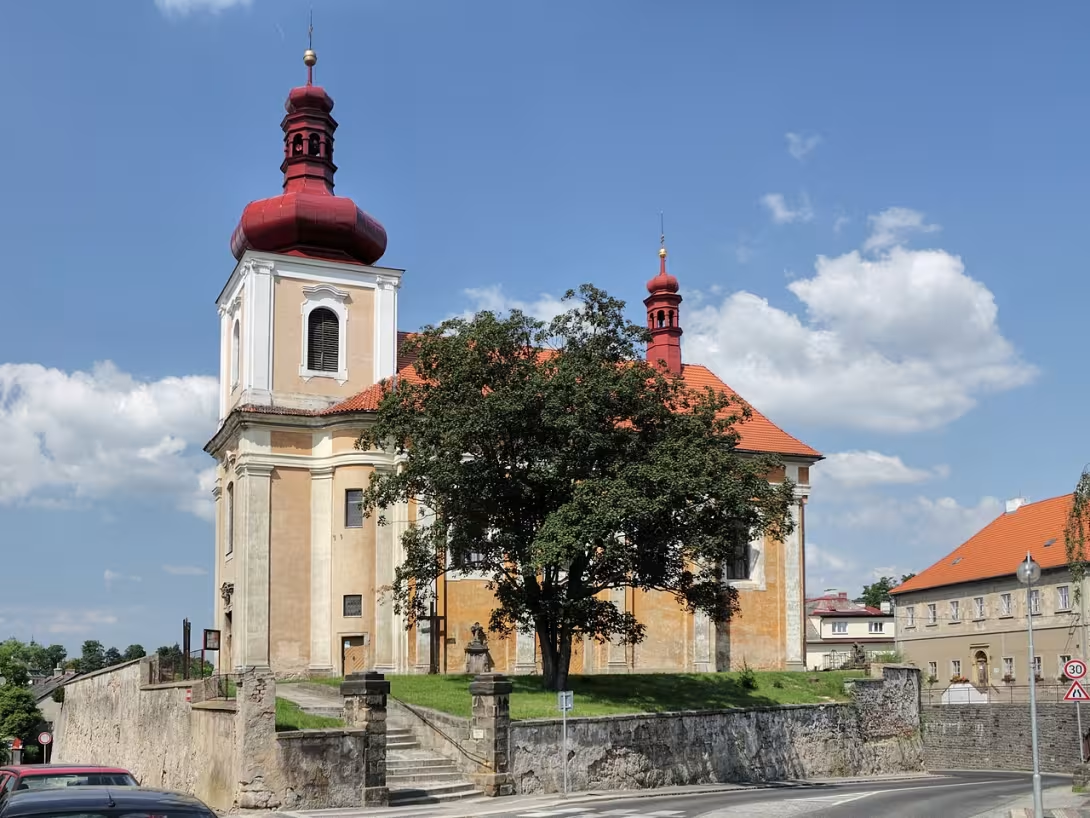
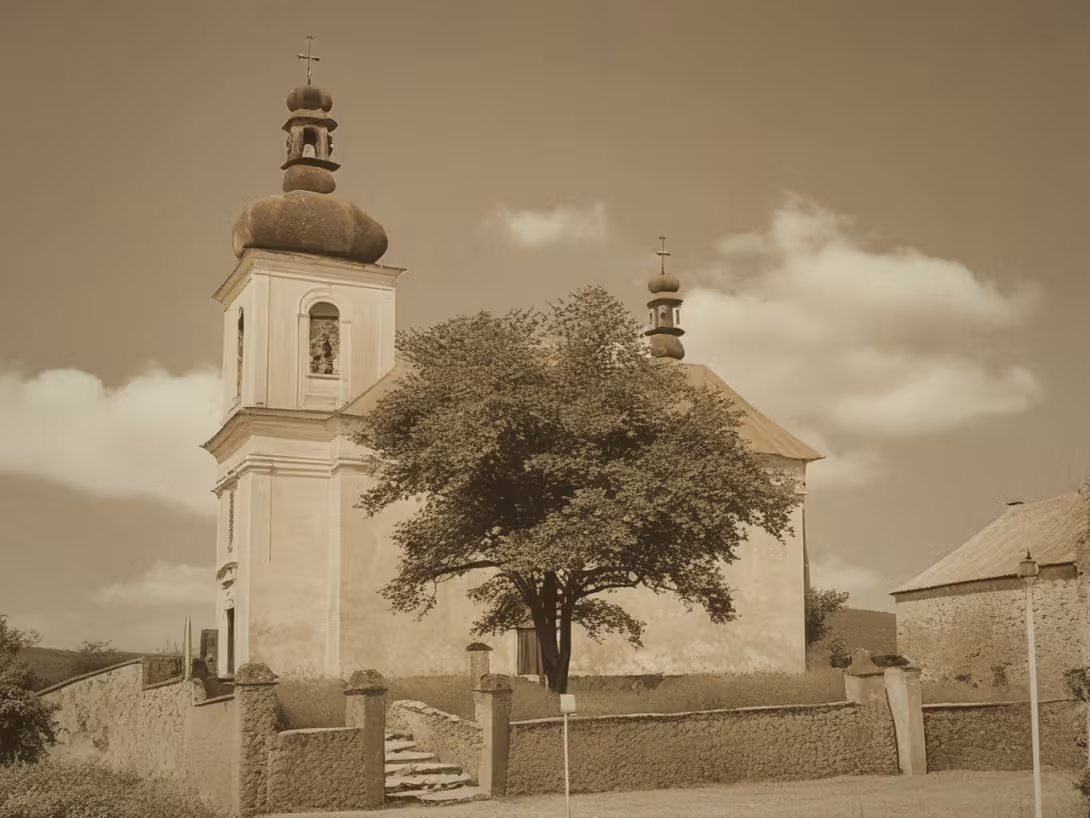
The historical appearance on the left is an AI-generated visualisation and serves as inspiration only.
Historical milestones
- 1726-1727
- Construction of Baroque church in the Gothic place
- 1764
- Creation of rococo side altars
- 1776
- Creation of the Baptist
- 1818
- Making Elizabeth Koller's marble tombstone
Architectural development
The church is one-sided with a rectangular presbytery and a western tower. In the church's ship, the original rolling vault was replaced by a wooden ceiling. The inner space is broken down by pilasters and cast frame.
Historical events
1726-1727: Construction of the present Baroque church in the place of the Gothic predecessor. 1764: Creation of rococo canopy side altars. 1818: Making an empirical marble tombstone of Elizabeth Koller.
Owners
countess Marie Markéta Valdštejnová
Points of interest
- The high Baroque form of the temple was built by Countess Marie Markéta Valdštejnová between 1726 and 1727, as evidenced by a chronogram on the main portal. - In the ship, the original rolling vault was torn off and replaced with a wooden ceiling. - The main altar is supplemented by the altar painting of St. James by the painter John George Hertle and the statue of St. Wenceslas and Saint Vojtěch by the sculptor Josef Jiří Jelínek. - Around the shrine there is a abolished cemetery with a number of valuable classical and empirical tombstones, including the Empire marble tombstone Elizabeth Koller from Viennese Master Rudolf Schadow. - There are also old tombstones as the tombstone of Kateřina Leibnicová from 1594 or monuments of fallen soldiers from the Prussian-Austrian war of 1866.
Guide
This guide is narrated by a synthetic voice generated by artificial intelligence.
Show guide text
This text was created by artificial intelligence and has not been editorially reviewed. It may contain inaccuracies.
The Deanery Church of Saint James the Greater stands in Mnichov Hradišti approximately 100 meters away from Tomáš Garrigua Masaryk Square. It occupies a dominant position above the Nedbalka valley and is protected as a cultural monument.
Today's Baroque church stands on the site of an older Gothic church, which was created together with the founding of the town. The new church was built by Countess Marie Markéta Valdštejnová, born Černínová of Chudenic, in the years 1726 to 1727. These years are revealed by a chronogram on the main portal. The builder is not known, but the building is usually attributed to the Valdštejn builder Raimondi. In style it resembles churches in Bosna and in Loukovka.
The church is rectangular and single-nave. On the western side it has a tower with an onion dome, on the east a rectangular presbytery and beside it on the north side a sacristy. The external and internal walls are articulated by pilasters. The presbytery is vaulted with a cross vault, the sacristy with a barrel vault with lunettes. The nave likewise had a barrel vault, but its top was demolished and replaced with a wooden ceiling.
The furnishings are partly Baroque and partly Rococo. The main altar was made by carpenter master Fleher and is complemented by a painting of Saint James by the Turnov painter Jan Jiří Hertl. On the sides stand statues of Saint Václav and Saint Vojtěch from 1727 by the Kosmonosy sculptor Josef Jiří Jelínek. Two Rococo side altars of the baldachin type date from 1764. Hertl is also the author of a painting of the Virgin Mary, painted on metal in 1735. The pulpit is from 1736, the baptismal font from 1776.
Around the church there was once a graveyard. It was abolished, but several tombstones were preserved. By the church wall is an Empire style figurative tombstone of Alžběta Kollerová made of white marble from 1818. František Arnošt Koller, an Austrian military commander from the time of the Napoleonic Wars, had it created for his mother, who died in 1810. The author is the Vienna master Rudolf Schadow. A tombstone of Františka of Ehrenthal and a vault of Vincent Valdštejn have also been preserved there. Both were created by Hájek from Bakova in 1788 and 1797. From the old graveyard there also remain monuments to soldiers who fell in the Austro-Prussian War of 1866.
According to a plan from 2015, two more tombstones from the property of the municipal museum were to be transferred here. The first is the tombstone of Kateřina Leibnicová from 1594 from the defunct Church of the Virgin Mary. The second is the tombstone of the noblewoman Meluzina Křinecká of Ronov and at Dymokury from the defunct church in Studénka.
Near the church stands a Baroque rectory from 1701. Raimondi participated in its construction, and the stucco work also comes from him.
Tips for visitors
The best time to visit the church of St. James in Munich's Hradiště is the autumn or spring period when it is quieter and nature offers beautiful colors. This time of the year also offers ideal lighting conditions for the photography of the church and the nearby Nedbalky river valley.
G. Masaryk Square, where there are also public transport stops.
During the proposed visit it is advisable to bring a purse or camera if you intend to capture architectural details of the church and surrounding landscape. It is also important to wear clothes suitable for current weather.
For photography it is recommended to use the light on sunny days when the church illuminates bright light rays. The best places for the photograph include T. G. Masaryk Square and surrounding terraces above the Nedbalky Valley, where the view of the church is the most beautiful.
Around the Holy Church James is located several interesting places, such as the Baroque parish building from 1701 and the chateau in Munich Hradiště. These places can be visited during the same trip and offer additional views on the history and architecture of the area.
Frequently asked questions
Can the monument be visited?
Religious buildings are usually open mainly during services; at other times a visit is normally arranged with the parish or the operator. We have not verified specific times.
Where is the monument?
Location: Mnichovo Hradiště, Středočeský kraj. The map on this page shows the exact spot.
Why is the monument protected?
It is listed in the Central List of Cultural Monuments of the Czech Republic as a cultural monument (register no. 22948/2-1673).
For kids
Today we want to go on an adventure in the past! Because 306 years ago, in 1720, St. Jacob's Church was built in Munich.
How did it look here? Who lived here? What happened here? That was when the nobles ruled and people lived in towns and villages. Mnichovo Hradiště was a small town where artisans, peasants and merchants lived. The Church of St. James was their place of prayer.
Businesses nearby
Do you run a restaurant, accommodation, shop, museum, rental, wellness or other visitor service near this monument? Show yourself directly to the people heading to it — this is how they will see you in the app and on the web:
Events nearby
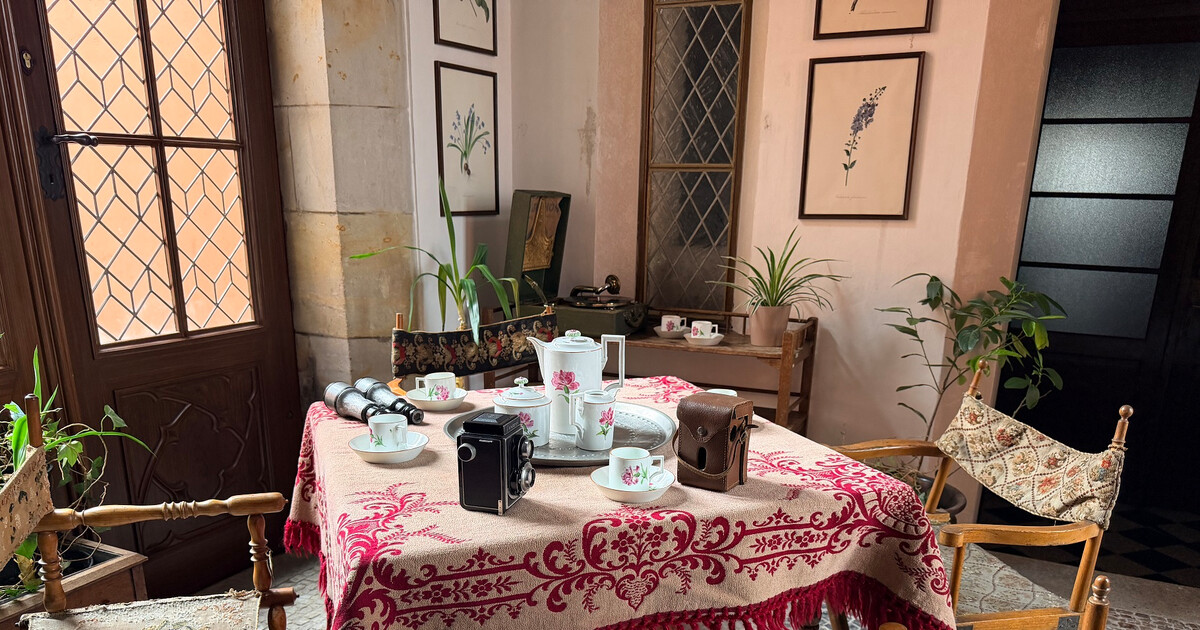
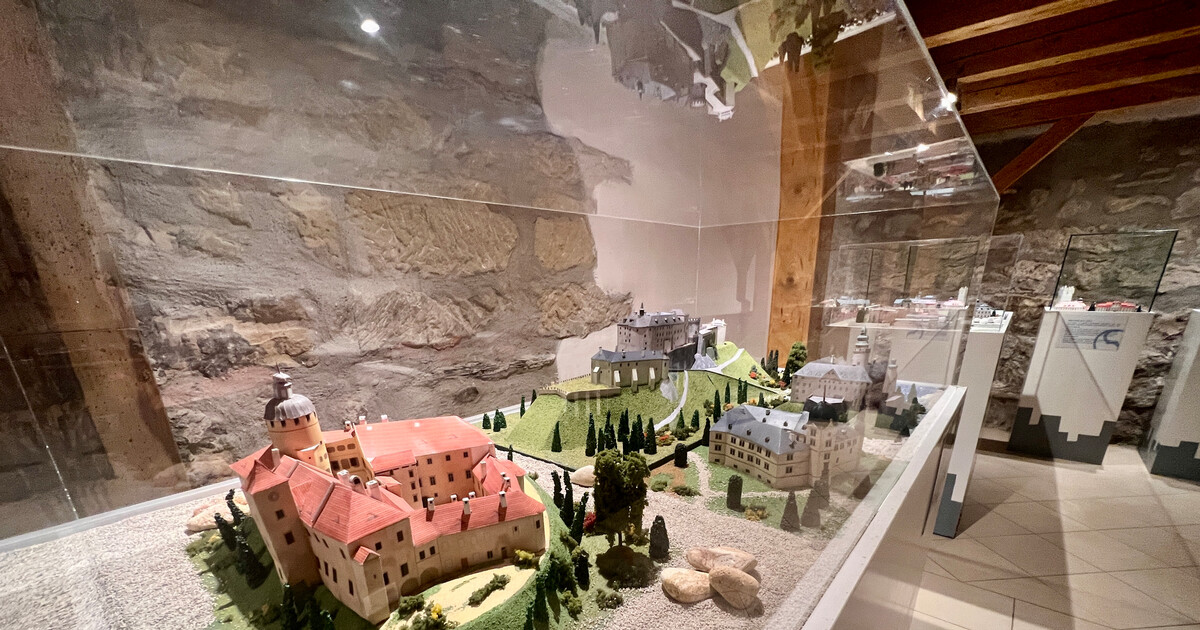
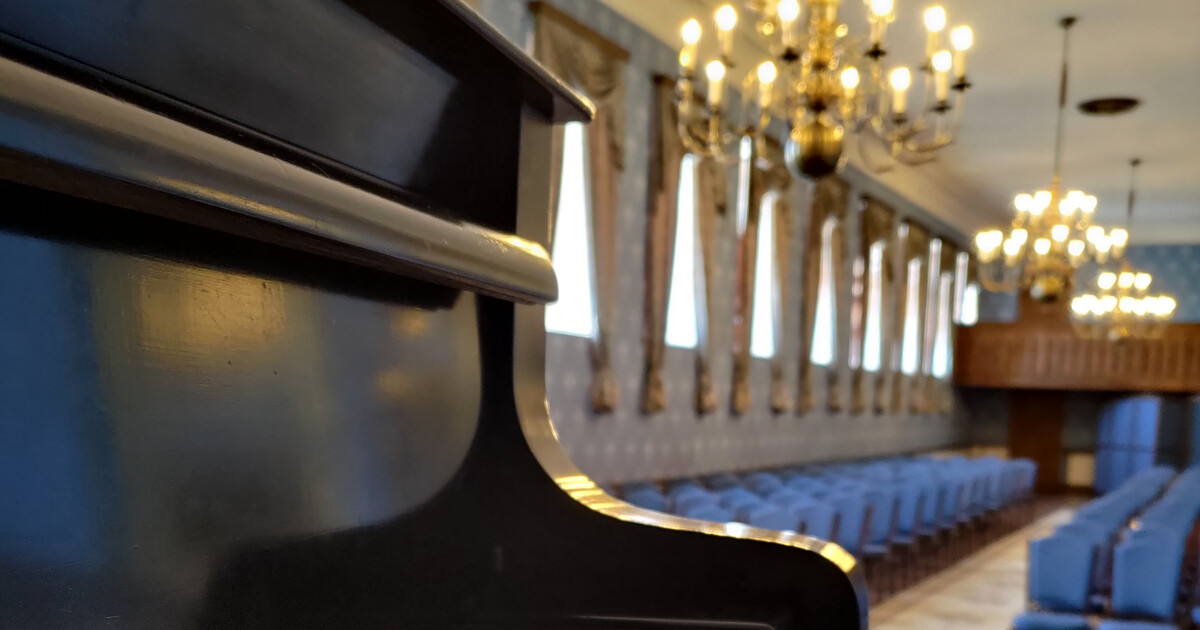
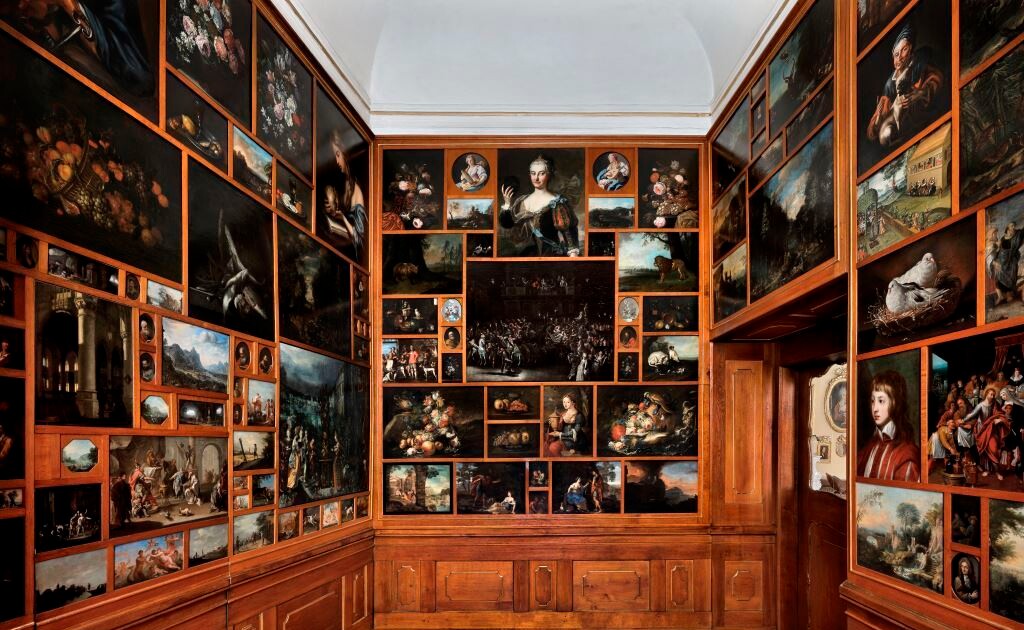

Zdroj akcí: otevřená data měst a obcí ČR (Národní katalog otevřených dat) a kalendář akcí Národního památkového ústavu.
Nearby
The square of T. G. Masaryk, the Nedbalka valley, the chateau in Munich Hradiště, the Baroque parish building from 1701 and the abolished cemetery.
Accommodation nearby
Trips and activities nearby
Guided tours, tickets and activities nearby from GetYourGuide
Affiliate link: if you buy from the partner, we may receive a commission. The price for you does not change.
Search tours and activities →Themed route
1. Chateau in Munich Hradišt (monument) This magnificent Baroque area offers visitors a view of the rich history of the famous family and the vast chateau garden. Located in the immediate vicinity of the city centre.
2. Church of St. James (Church) The main objective of our route, which is the dominant of the city. The construction will take on its sacral architecture and spiritual atmosphere.
3. Baroque parish building from 1701 and abolished cemetery (historical object) This monument-protected building stands right next to the church and resembles ancient building art. The surrounding abolished cemetery gives the place a mysterious and peaceful character.
4. Square T. G. Masaryka (square) Central area surrounded by historic houses that serve as the natural heart of the city. It is an ideal place for a peaceful walk after sightseeing.
5. Valley Nedbalky (natural location) A picturesque natural valley connected to urban development. It provides a pleasant environment for relaxation and a walk in the greenery near the center.
Seasonal recommendations
Spring brings awakening nature to the surroundings of Munich Hradiště and the chateau park, which fluently follows the sacral architecture of St. James's Church. The light is very clean and soft in this period, highlighting the historical details of the facade and the surrounding greenery, which are just beginning to get rich colors. The atmosphere is calm and contemplative, ideal for exploring monuments without rush. The weather is usually variable, so you can use layered clothes and solid shoes suitable for walking on wet grass in the surrounding area. The best time for a tour and photography is in the morning when the sun warms pleasantly, but does not burn as much.
Summer sounds the city with a tourist ruckus and the main season when the sights open in full. The surrounding nature is in full bloom and the massive trees provide a welcome shadow in hot days, while the sun's rays penetrate through narrow windows inside the building and create an impressive game of light and shadow. The atmosphere is alive, full of energy, but also a higher concentration of people. Clothes should be light and breathable, but it is necessary to remember the headgear and plenty of fluids, because the inner spaces of old buildings can accumulate heat.
Autumn turns the landscape of the Central Bohemian Region into a colorful palette of shades of yellow, red and brown. The sun is already falling below the horizon and creates long shadows that supply the Gothic and Renaissance elements of the church with a remarkable dramatic character. The autumn mists over the nearby river Jizera lend the place a melancholy and mysterious atmosphere that all peace lovers will appreciate. Due to more frequent collisions and colder wounds, it is necessary to choose waterproof shoes and warmer coat or windbreaker. You don't have to worry about crowds in this period, but it's a little higher on weekends than on working days. The best time to visit is around noon when daylight reaches its maximum.
Winter covers Mnichovo Hradiště into silence and occasional snow sheets that dampen the sounds of the outside world. The lighting is very specific due to the low sun and early dimming, and in the late afternoon historical public lighting in the streets is being lit up. The atmosphere is unique, chamber and deeply spiritual. Practical advice for this period includes the need for very warm clothes, hats and gloves because heating in historical sacral objects is usually minimal or completely lacking. The ideal time for visiting is early afternoon hours before the landscape sinks into a cool twilight.
Visualizations and artistic views


The visualisations are generated by artificial intelligence and serve as inspiration.
Photos from the area
Real photos taken near the monument


Zdroj a licence jsou uvedeny u každého snímku.
Tips from visitors
No tips yet. Be the first!
Log in and add your tip.
Sources and literature
Photos: Miloslav Rejha / CC BY-SA 3.0 — Wikimedia Commons. The author and licence also appear when you hover over the image.
Faktickým podkladem tohoto textu byl článek na Wikipedii, jehož autory jsou přispěvatelé Wikipedie. Článek je dostupný pod licencí CC BY-SA 4.0.
Location on the map



Příběhy a pověsti
Legendy, pověsti a příběhy spjaté s touto památkou
Fotografie návštěvníků
Zatím žádné fotografie. Buďte první, kdo přidá fotografii z návštěvy!
Log in a přidejte svou fotografii nebo hodnoťte.
Za ověřenou návštěvu v aplikaci získáte víc bodů — poznáme podle GPS, že jste na místě.
Reviews and comments