



Kostel svatých Tří králů Church
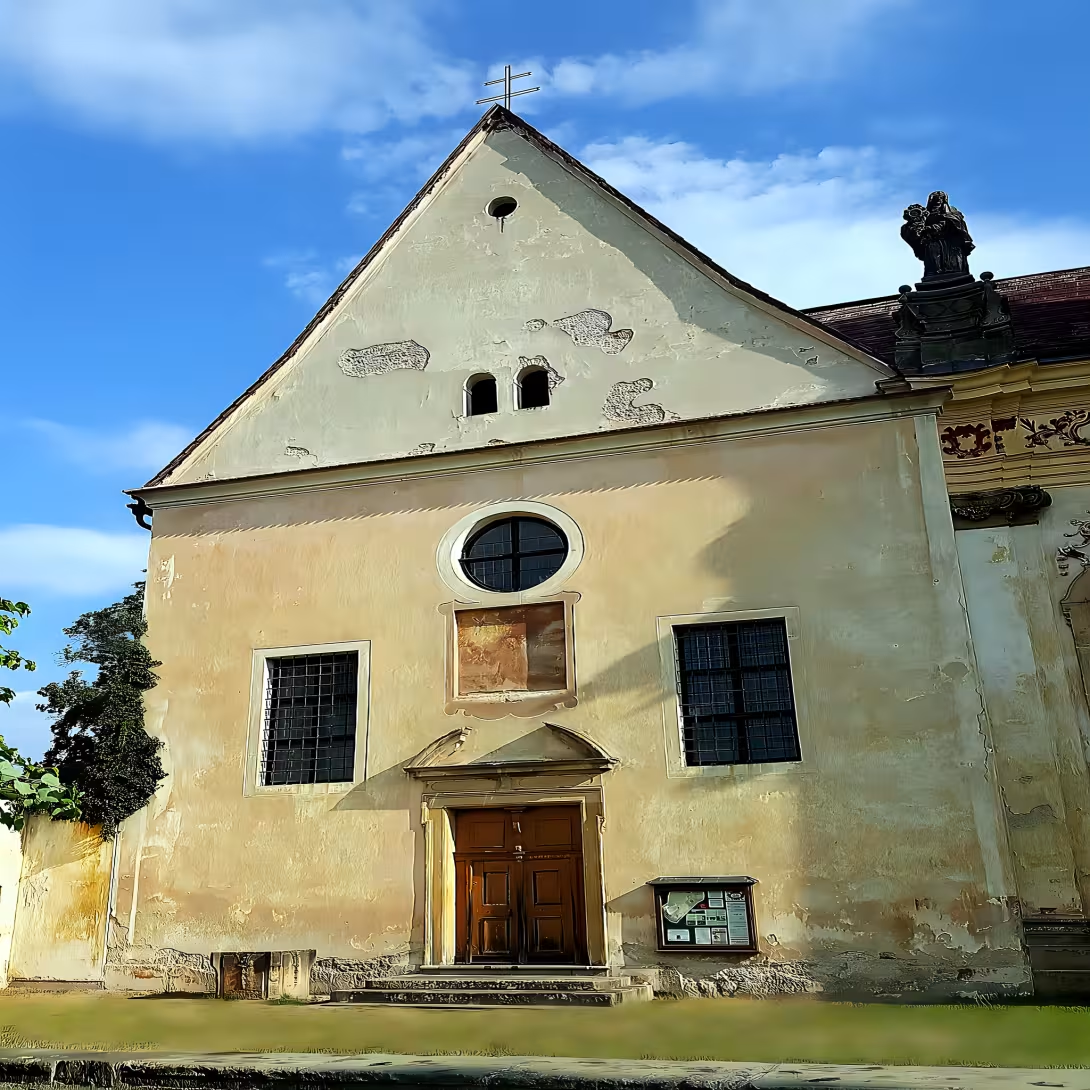
Kostel svatých Tří králů in Munich Hradiště is an early Baroque sacral building in the Mladá Boleslav district. It was created between 1694 and 1699 as part of the monastery complex of capuchins. Today it is part of a protected cultural area, which includes the monastery and chapel of Saint Anne.
The preserved architecture, rich Baroque facilities and lapidarium with 50 statues from around 1700 give him meaning. The Capuchin Order, which emphasizes simplicity and ascetism, chose a place for its monastery in Munich Hradiště, which became an important centre of order in Bohemia.
The church was designed by a member of the order P. Jiří z Mnichova. It is a simple but functional building typical of Capuchin monasteries. The facades are smooth and undecorated, with triangular facade. The portal is decorated with a broken shield. The inside of the church is glazed with a vaulted vault with lunnets. The Chapel of the Virgin Mary on the south side and the Chapel of Saint Anne, built in 1723-1724 on the east side, are other interesting parts of the complex.
The Baroque facility dates back to around 1700. On the main altar are pictures of the Holy Three Kings by the painters John K. Fox and M. Světický. The side paintings of St. Anthony and Franz are also from 1699. Other important works include triptych by M. Světecký and statue by Josef Jelínek from 1740.
Since 1966, the Lapidarium of Central Bohemian Baroque sculpture has been located in the church. The collection contains about fifty sandstone statues.
The church is part of the monastery complex of capuchins, which was founded in the second half of the 17th century. The area consists of three wings of buildings surrounding the courtyard which are connected to the presbytery of the church. The entire complex has been protected as a cultural monument since 1967.
Kostel svatých Tří králů is open to the public and represents a valuable example of early Baroque architecture and art. His lapidarium is a unique collection of statues that are exposed to admiration.
Then and now
Drag the slider to compare how the landmark may have looked when it was built with the view today.
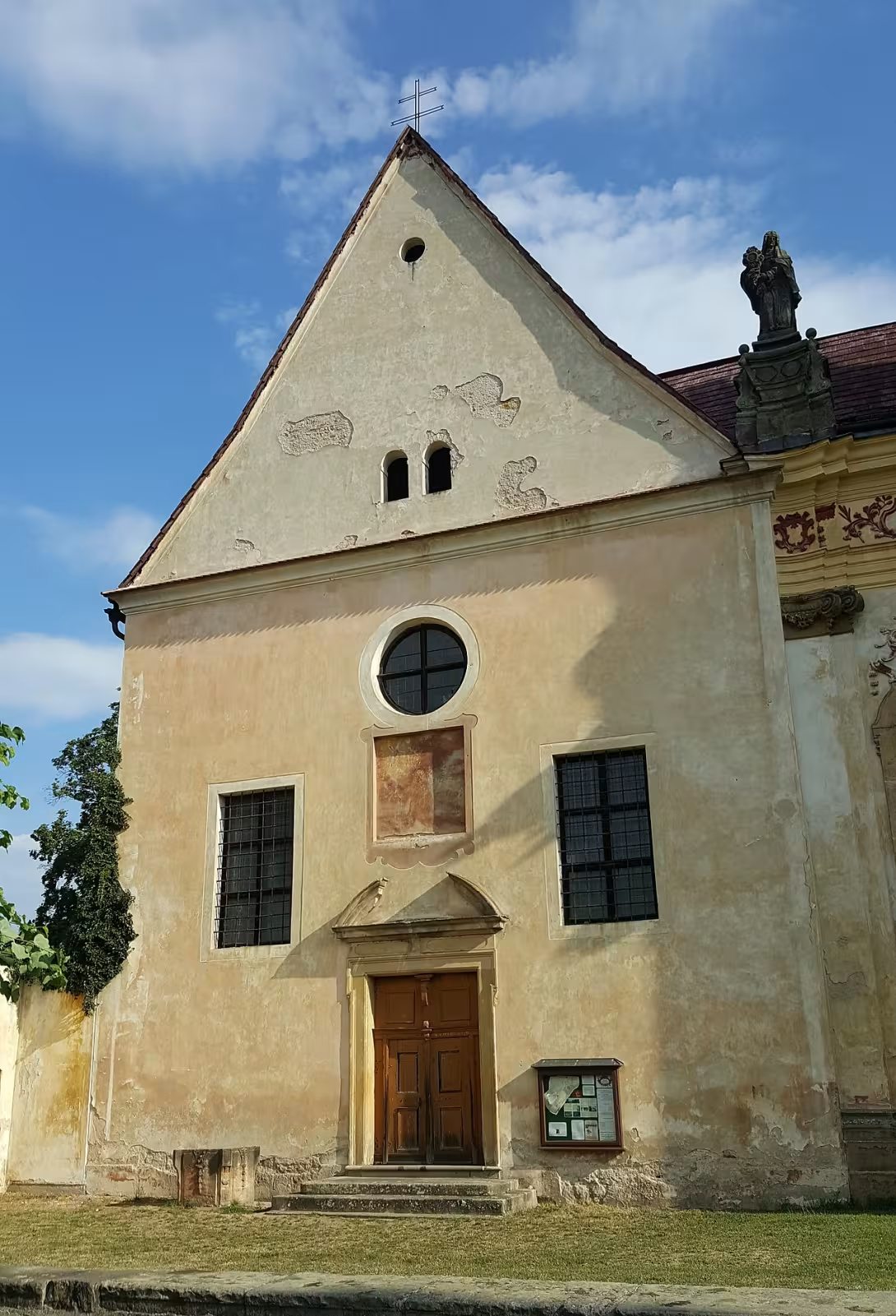
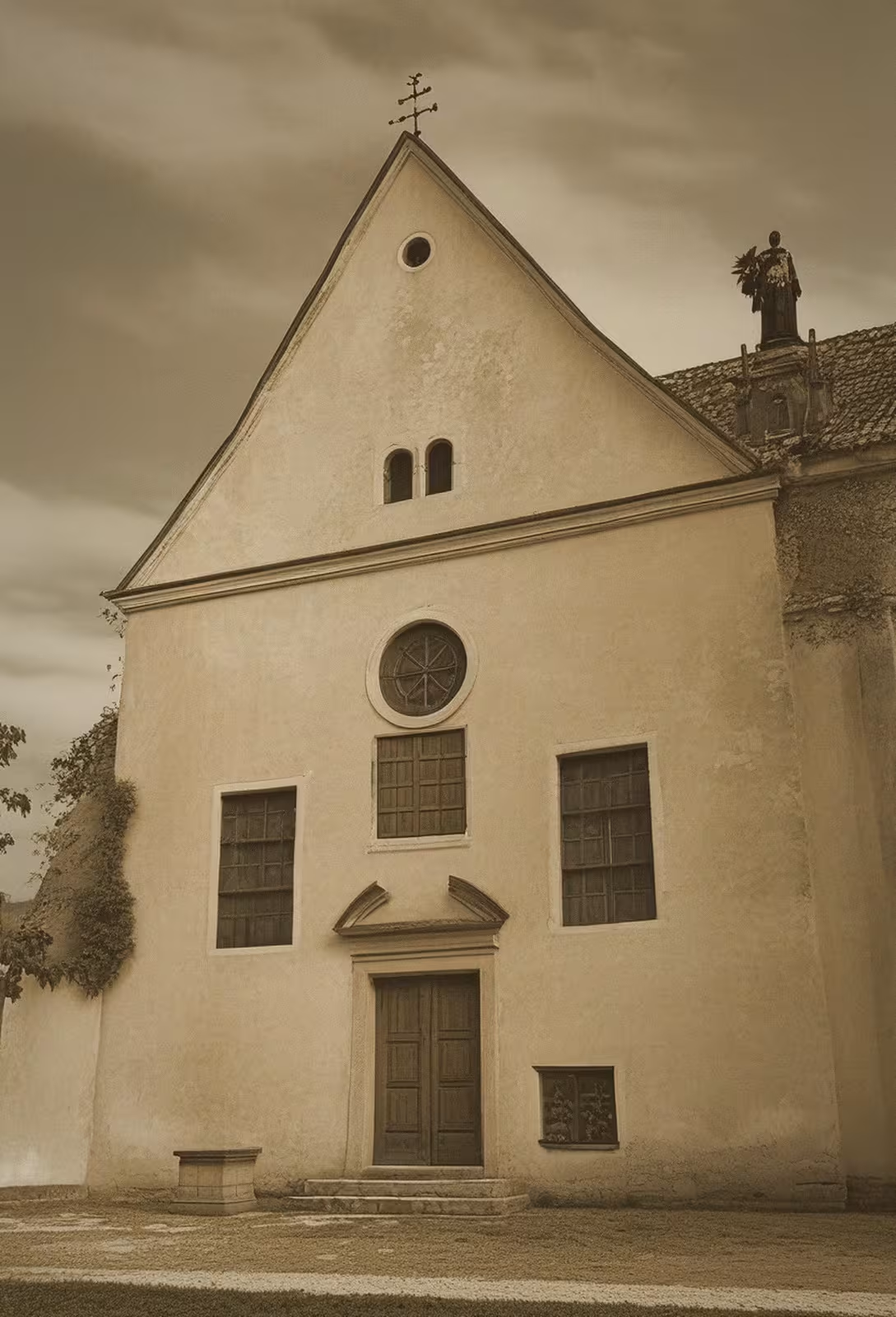
The historical appearance on the left is an AI-generated visualisation and serves as inspiration only.
Historical milestones
- 1694
- Beginning of the construction of the Holy Church Three kings based on project P. Jiří of Munich.
- 1699
- Completion of church construction.
- 1723
- The beginning of the building of St. Anne's Chapel on the east side of the church.
- 1966
- Establishment of a lapidarium baroque sculpture in the church.
- 1967
- Registration of the church and monastery area into the list of cultural monuments.
Architectural development
The church was built as a simple rectangular building with smooth facades and Chapel of the Virgin Mary on the south side. The inner space is glazed with a vaulted vault with lunettes. St. Anne's Chapel was built in 1723-1724. The church is built of stone and walled, with simple but functional architecture typical of Capuchin monasteries.
Historical events
The foundation of the Capuchin monastery in Munich Hradiště in the second half of the 17th century, including the church as part of the monastery complex.
Completion of church construction in 1699.
Adding the chapel of St. Anne on the east side of the church in 1723-1724.
Owners
Capuchins
Points of interest
- Kostel svatých Tří králů was created as part of the monastery complex of capuchins between 1694 and 1699.
- It has been part of a protected cultural area since 1967, which includes the monastery and chapel of Saint Anne.
- In the interior there is a lapidarium with approximately 50 sandstone sculptures from around 1700.
- The main altar is decorated by the paintings of the Holy Three Kings by the painters Jan K. Liška and M. Světecký, side paintings of the saints Antonín and František are from 1699.
- The Chapel of the Virgin Mary on the south side and the Chapel of Saint Anne, built in 1723-1724, are part of the complex.
Guide
This guide is narrated by a synthetic voice generated by artificial intelligence.
Show guide text
This text was created by artificial intelligence and has not been editorially reviewed. It may contain inaccuracies.
The Church of the Holy Three Kings in Mnichov Hradišti is an early Baroque structure that forms one complex with a Capuchin monastery. Both the church and the monastery complex have been protected as a cultural monument since the 31st of December 1967.
The Capuchins built their monastery here after the middle of the 17th century. It is a complex of buildings that was typical for this order: simple and without ornamental elements. Three wings surround a courtyard and the monastery is connected directly to the presbytery of the church. The church itself was designed by a member of the order named Jiří z Mnichova. Construction began in 1694 and was completed in 1699.
The church has a rectangular floor plan and smooth, undecorated facades, which corresponds to Capuchin simplicity. On the southern side there is a chapel of the Virgin Mary attached to it. The rectangular presbytery has an oratory on the northern side. The smooth front elevation is crowned with a triangular gable and is decorated with a portal featuring a split gable. The nave, presbytery and chapel of the Virgin Mary are all vaulted with barrel vaults with lunettes.
The interior has preserved Baroque furnishings from around 1700. The most significant are paintings from 1699 by the painter Jan Liska. On the main altar he depicted the Holy Three Kings, on the side altars Saint Anthony and Saint Francis. From the same year comes a three-part altar painting, so called triptych, whose author is Světecký. Also worthy of attention is a statue of Saint John of Nepomuk by Josef Jelínek from 1740.
Since 1966 the church has also served as a lapidary of Central Bohemian Baroque sculpture. Approximately 50 sculptures are exhibited here, mostly sandstone.
On the eastern side a large chapel of Saint Anna adjoins the church in line with the front elevation. It was added in the years 1723 to 1724.
Tips for visitors
The best time to visit the Church of the Three Kings is in the morning when the interior is pleasant light and fewer crowds. If you want to experience a quiet atmosphere, avoid the afternoon hours during the summer months when the monument is often visited by school trips. In winter the visit is suitable even in the afternoon, when the outdoor light is ideal for shooting the facade and surrounding monastery grounds.
The location is available by car and by public transport; Check the current connection in the search engine.
When visiting, wear comfortable clothes and shoes as the church and surrounding area include several terrain sections. The interior is cold, so bring a light sweater or sweater. Prepare a camera or smartphone with sufficient storage space for photography, as interior decoration and exterior offer many interesting details.
Photography is allowed in the church, but with regard to sensitive historical objects avoid flashing lightning. The best places for photography are side chapel, presbytery and outside facade in the morning or afternoon light. The chapel of St. Anne offers beautiful views of the eastern side of the church and is ideal for photographs with natural lighting.
In the vicinity of the Church of the Holy Three Kings there is a Capuchin monastery, which is part of a cultural monument and is worth visiting. The monastery offers a tour of its interior and garden, where you can explore historical buildings and quiet surroundings. It is also interesting for families with children to visit St. Anne's Chapel, which is attached directly to the church and offers space for small trips and exploring.
It is advisable for families with children to take a visit to the church as an opportunity for a simple trip. Children can see rich Baroque decorations and explain the history of the place. In the area of the Capucín monastery there is enough space for short walks and observations of the surrounding nature. It is also recommended to visit St. Anne's Chapel where children can observe architectural details and a calm atmosphere.
Frequently asked questions
Can the monument be visited?
Religious buildings are usually open mainly during services; at other times a visit is normally arranged with the parish or the operator. We have not verified specific times.
Where is the monument?
Location: č.p. 151, Mnichovo Hradiště, Středočeský kraj. The map on this page shows the exact spot.
Why is the monument protected?
It is listed in the Central List of Cultural Monuments of the Czech Republic as a national cultural monument (register no. 29166/2-1677). It is protected as part of a larger listed ensemble.
For kids
Good morning, young friends! Today, we're going to take a journal back in time to the 17th century, when a beautiful church was built in Mnichovo Hradiště. It's called Kostel svatých Tří králů (Church of the Three Kings), and it's a real treat!
Imagine yourself standing in front of this stunning building, surprised by rolling hills and a quiet village. You can almost hear the sound of horse hooves on the Cobblestone street and the chatter of people going about their daily lives. That's what life was like when our church was built, around 1694 - that's over 332 years ago!
Businesses nearby
Do you run a restaurant, accommodation, shop, museum, rental, wellness or other visitor service near this monument? Show yourself directly to the people heading to it — this is how they will see you in the app and on the web:
Events nearby
Zdroj akcí: otevřená data měst a obcí ČR (Národní katalog otevřených dat) a kalendář akcí Národního památkového ústavu.
Nearby
- Capuchin monastery with three wings of buildings surrounding the courtyard, connected to the presbytery of the church. The area is part of a cultural monument.
- An attached chapel on the east side of the church, built in 1723-1724.
- Baroque chateau, which is part of a wider cultural area and historically related to the Capuchin monastery.
Accommodation nearby
Trips and activities nearby
Guided tours, tickets and activities nearby from GetYourGuide
Affiliate link: if you buy from the partner, we may receive a commission. The price for you does not change.
Search tours and activities →Themed route
Thematic cruise route: Baroque gems of Munich Hradiště
1.Kostel svatých Tří králů * Type: * Baroque sacral building from the 18th century. Why visit? It dominates the city and shows the highest Baroque art with rich interior decoration and unique presbytery. Its architecture and frescoes refer to the tradition of the Jesuit mission.
2. Capucin monastery * Type: * Monastic complex with wing disposition. * Why visit? * It forms an organic part of the church and offers a quiet area with historical buildings. It is an example of Capuchin's ascetic life and its architecture reflects the simplicity of order.
3. St. Anne's Chapel * Type: * Small Baroque chapel from 1723-1724. * Why visit? * Adding to the church is an example of small sacral architecture. The interior decoration and location on the east side of the church supply harmony to the entire area.
4. XZ Chateau * Type: * Renaissance and Baroque chateau with park. * Why visit? * It lies near the church and offers contrast between sacral and secular architecture. Its history is associated with important noble families and the park is suitable for a short walk.
* The route is closed and can be completed on foot. *
Seasonal recommendations
In spring, the church is surrounded by fresh greenery and flowering trees, creating a fresh and optimistic atmosphere. The morning sun gently penetrates through the windows and highlights the historical details of the building. We recommend taking layered clothes because the weather can still be variable during this period. It is an ideal time for quiet tours because the traffic is still low.
Summer months bring intense light and long days of life to Munich's Hradiště. The surroundings of the sights are landscaped and the air is warm, which attracts walks around. More people may appear because of the main summer season, so it is best to arrive first thing in the morning to avoid the greatest heat and crowds. Don't forget light summer clothes and plenty of fluids.
The autumn season offers a magical atmosphere thanks to golden shades of leaves and morning fog, which provide the place with mystery. Lighting is soft at this time and very suitable for photography, especially in the afternoon. Prepare for cooler winds and rain, so practical clothes and waterproof shoes are useful. It's the best time for those who seek peace and melancholy.
In winter, the church is very cozy and quiet, especially if the landscape is covered with snow. The daylight is weaker and the days are shorter, creating deep shadows and a dignified mood in the interior. Due to lower temperatures and shorter opening times we recommend choosing very warm clothes and planning a visit around noon. Visiting is minimal during this period, which guarantees maximum privacy.
Visualizations and artistic views


The visualisations are generated by artificial intelligence and serve as inspiration.
Photos from the area
Real photos taken near the monument


Zdroj a licence jsou uvedeny u každého snímku.
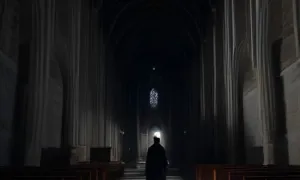
Atmosphere of the place
This atmospheric visualisation of the place and period was generated by artificial intelligence. It is not real footage of the location.
Tips from visitors
No tips yet. Be the first!
Log in and add your tip.
Sources and literature
Photos: Ondraness / CC BY-SA 4.0, rozlišení zvýšeno umělou inteligencí — Wikimedia Commons. The author and licence also appear when you hover over the image.
Faktickým podkladem tohoto textu byl článek na Wikipedii, jehož autory jsou přispěvatelé Wikipedie. Článek je dostupný pod licencí CC BY-SA 4.0.
Location on the map



Příběhy a pověsti
Legendy, pověsti a příběhy spjaté s touto památkou
Fotografie návštěvníků
Zatím žádné fotografie. Buďte první, kdo přidá fotografii z návštěvy!
Log in a přidejte svou fotografii nebo hodnoťte.
Za ověřenou návštěvu v aplikaci získáte víc bodů — poznáme podle GPS, že jste na místě.
Reviews and comments