






Zámek Mnichovo Hradiště Chateau
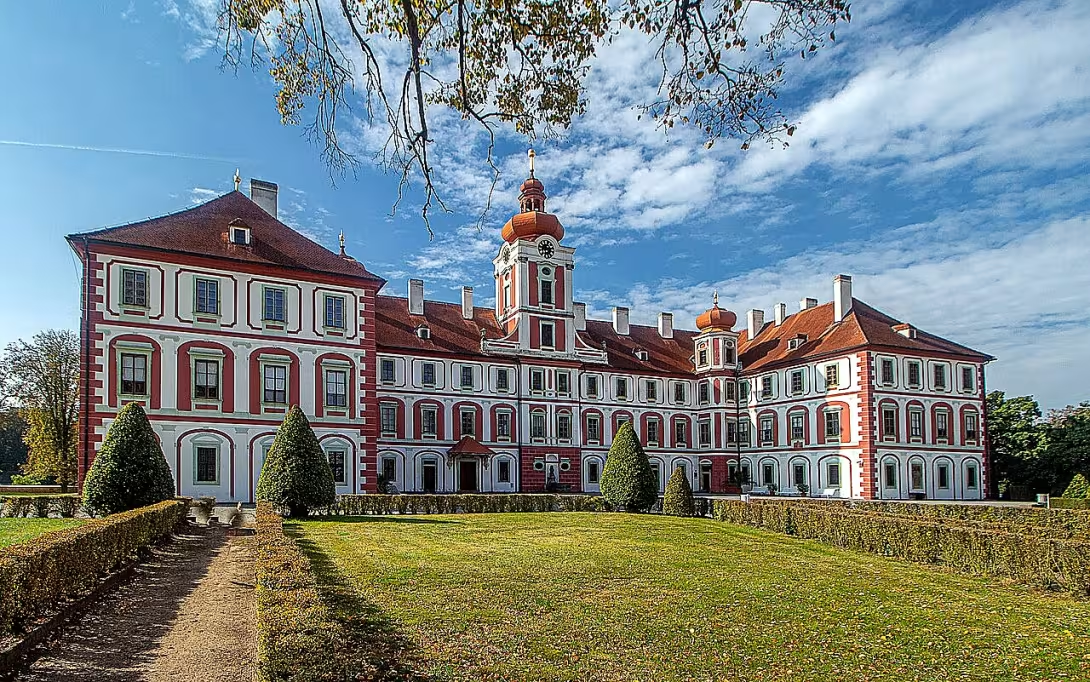
Mnichovo Hradiště is a baroque chateau in the town of Mnichovo Hradiště, located within the Středočeský kraj region of the Czech Republic. Originally built as a Renaissance chateau by Václav Budovec z Budova between 1603 and 1606, it was transformed into its current baroque form in the late 17th century under the Valdštejn family. The chateau is notable for its architectural evolution from Renaissance to Baroque styles, reflecting artistic trends and historical events in Bohemia during this period.
The origins of Mnichovo Hradiště date back to the early 13th century, emerging due to colonization efforts linked to a nearby monastery in Hradiště nad Jizerou. The estate frequently changed hands until Václav Budovec z Budova acquired it through marriage in the 16th century and built the original Renaissance chateau between 1603 and 1606. After his execution in 1621 during the Bohemian Revolt, the estate was confiscated and purchased by Albrecht von Wallenstein for 216,000 gold coins in 1623. The Valdštejn family retained ownership until 1945, overseeing significant architectural transformations.
The chateau's architecture reflects a transition from its Renaissance roots to a baroque masterpiece. After acquiring the estate, Albrecht von Wallenstein initiated changes that culminated under his successor, Maxmilián z Valdštejna. The most transformative period occurred between 1697 and 1703 when architect Mark Antonín Canevalli redesigned the chateau into its current form. This redesign included a new wing to create an L-shaped layout and gardens inspired by French designs. A notable feature from this era is the unique sala terrena, crafted by Nicolo Raimondi between 1709 and 1711, which remains preserved today.
Ownership of Mnichovo Hradiště saw dramatic shifts over centuries. After Wallenstein's assassination in 1634, his properties were threatened but ultimately retained as a Valdštejn family seat until the 20th century. Arnošt Josef z Valdštejna, who owned it from 1675, furthered its transformation into a representative family residence. The chateau also hosted significant diplomatic events; in September 1833, it was the site of meetings between Emperor Franz I of Austria, Tsar Nicholas I of Russia, and Prince Wilhelm of Prussia, leading to the renewal of the Holy Alliance.
Today, Mnichovo Hradiště stands as a testament to its rich history and architectural significance. The chateau is open to the public, managed by the National Heritage Institute, allowing visitors to explore its baroque grandeur and historical gardens. Its inclusion of a former Capuchin monastery within its grounds adds another layer of historical interest. This site offers insight into the artistic and political dynamics of Bohemia during the transition from Renaissance to Baroque periods.
Mnichovo Hradiště is not only an architectural marvel but also a window into the past, illustrating the cultural and historical shifts that shaped Central Europe. Its preservation as a public monument ensures that visitors can appreciate its beauty and significance firsthand. Whether drawn by its history or architecture, Mnichovo Hradiště invites exploration and reflection on its storied legacy.
Then and now
Drag the slider to compare how the landmark may have looked when it was built with the view today.
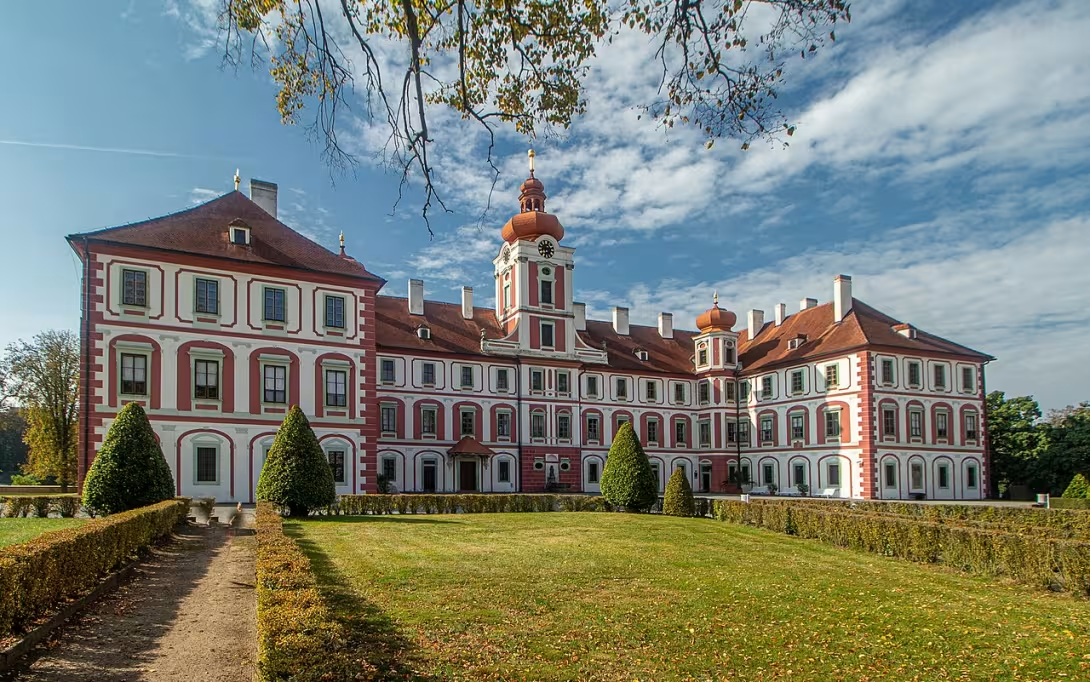

The historical appearance on the left is an AI-generated visualisation and serves as inspiration only.
Historical milestones
- 1606
- Construction of the original Renaissance chateau completed.
- 1623
- Albrecht von Wallenstein purchased the estate.
- 1833
- Diplomatic meetings held at the chateau leading to the renewal of the Holy Alliance.
Architectural development
Mnichovo Hradiště began as a Renaissance chateau built by Václav Budovec. After his execution in 1621, the estate was acquired by Albrecht von Wallenstein. The chateau underwent significant baroque transformation between 1697 and 1703 under architect Mark Antonín Canevalli, expanding with new wings and gardens. Notable features include a unique sala terrena designed by Nicolo Raimondi.
Historical events
Václav Budovec, a leading figure in the Bohemian Revolt, was executed in 1621.
Albrecht von Wallenstein purchased the estate for 216,000 gold coins in 1623.
The chateau hosted diplomatic meetings in September 1833 between Emperor Franz I of Austria, Tsar Nicholas I of Russia, and Prince Wilhelm of Prussia.
Owners
Václav Budovec z Budova (1606)
Valdštejn family (17th century - 1945)
Points of interest
- The unique sala terrena within Mnichovo Hradiště was crafted by Nicolo Raimondi between 1709 and 1711. This feature is notable for its preservation and stands out as a distinctive element of the chateau's baroque architecture.
- In September 1833, Mnichovo Hradiště played host to significant diplomatic meetings involving Emperor Franz I of Austria, Tsar Nicholas I of Russia, and Prince Wilhelm of Prussia. These discussions led to the renewal of the Holy Alliance, marking the chateau as a site of international political importance.
- The estate's transformation from a Renaissance chateau to its current baroque form involved several architectural changes under different owners. The most transformative period was between 1697 and 1703 when architect Mark Antonín Canevalli redesigned it into an L-shaped layout, incorporating French-inspired gardens.
- Mnichovo Hradiště includes the remains of a former Capuchin monastery within its grounds, adding historical depth to the site. This inclusion offers visitors additional insight into the religious and cultural history associated with the estate.
- After Václav Budovec z Budova's execution in 1621 during the Bohemian Revolt, his estate was confiscated and purchased by Albrecht von Wallenstein for 216,000 gold coins in 1623. This acquisition marked a significant shift in ownership that influenced the chateau's architectural evolution.
Guide
This guide is narrated by a synthetic voice generated by artificial intelligence.
Show guide text
This text was created by artificial intelligence and has not been editorially reviewed. It may contain inaccuracies.
Welcome to the historic site of Zámek Mnichovo Hradiště, nestled in the charming town of Mnichovo Hradiště in Středočeský kraj. As you stand here, imagine yourself stepping back into a world where history and architecture blend seamlessly. The chateau before you is a stunning example of baroque elegance, its grandeur echoing through time.
The origins of this magnificent structure date back to the early 17th century when Václav Budovec z Budova commissioned its construction between 1603 and 1606. Originally conceived as a Renaissance chateau, it was destined for transformation under the stewardship of the Valdštejn family. Albrecht von Wallenstein acquired the estate in 1623, setting off a series of changes that would redefine its character.
As you gaze upon the chateau's facade, take note of the architectural evolution from its Renaissance roots to its current baroque grandeur. This transformation was largely completed in the late 17th century through the vision and skill of architects Mark Antonín Canevalli and Nicolo Raimondi. Their work is evident in every detail you see today.
Now, let's draw your attention to one of the chateau’s most remarkable features: the unique sala terrena. Crafted by Nicolo Raimondi between 1709 and 1711, this element stands out as a testament to baroque architecture. Its preservation allows us to appreciate its distinctive design and craftsmanship.
Mnichovo Hradiště is not just about architectural splendor; it's also steeped in history with stories of influential figures who once walked these halls. Among them were Albrecht z Valdštejna, Maxmilián z Valdštejna, and Arnošt Josef z Valdštejn, each leaving their mark on this storied place.
One intriguing historical moment occurred in September 1833 when the chateau played host to significant diplomatic meetings that led to the renewal of the Holy Alliance. This event underscores the strategic importance Mnichovo Hradiště held during its time.
As you continue your exploration, allow yourself to be captivated by the atmosphere and history surrounding this site. Each corner holds a story waiting to be discovered. We invite you to delve deeper into the chateau’s rich past as you wander through its grounds.
Thank you for joining us on this journey through time at Zámek Mnichovo Hradiště. May your visit inspire curiosity and wonder, leaving you with lasting memories of this remarkable place.
Tips for visitors
The best time to visit Mnichovo Hradiště is during the late spring or early autumn months, specifically from May to June and September to October. During these periods, the weather is typically mild and pleasant, making it ideal for exploring both the chateau grounds and the surrounding landscapes. Additionally, visiting outside of peak tourist seasons means fewer crowds, allowing you to enjoy a more serene experience. The historical gardens are particularly beautiful during these times, with blooming flowers in spring and vibrant foliage in autumn.
Parking is available near Mnichovo Hradiště, but it's advisable to check for any restrictions or fees before your visit. Public transportation options include buses that connect the town to nearby areas; however, specific routes and schedules should be verified through a local transport service or online search prior to your trip. If you're driving, ensure your vehicle is parked in designated areas to avoid fines.
When visiting Mnichovo Hradiště, it's recommended to bring comfortable walking shoes as there are several paths throughout the chateau grounds and gardens. A hat and sunscreen can be useful during sunny days, while a light jacket might be needed if you're visiting in early spring or late autumn when temperatures can drop. Don't forget your camera to capture the stunning architecture and landscapes.
For photography enthusiasts, some of the best spots include the main facade of the chateau for capturing its grandeur, especially during golden hour when the sunlight enhances the baroque details. The gardens offer a variety of picturesque scenes with their historical layout and plantings. Early morning or late afternoon light provides softer shadows and warmer tones, ideal for photography.
Nearby attractions within 30 minutes include the former Capuchin monastery located within the chateau grounds, which offers insight into the area's religious history. Additionally, visitors can explore the local town of Mnichovo Hradiště itself, known for its charming streetscapes and cultural sites. For families with children, consider visiting during a time when guided tours are available, as these often include interactive elements that engage younger audiences.
Frequently asked questions
Can the monument be visited?
Yes. We verified the opening hours or admission on the official website (5. 10. 2026); you will find them in the visitor information on this page. Please double-check with the operator before you travel.
What are the opening hours and admission?
Details verified on the official website (5. 10. 2026) are listed in the visitor information on this page. Official website: https://www.zamek-mnichovohradiste.cz/
Where is the monument?
Location: V Lípách 148, Mnichovo Hradiště, Středočeský kraj. The map on this page shows the exact spot.
Why is the monument protected?
It is listed in the Central List of Cultural Monuments of the Czech Republic as a national cultural monument (register no. 244).
Businesses nearby
Do you run a restaurant, accommodation, shop, museum, rental, wellness or other visitor service near this monument? Show yourself directly to the people heading to it — this is how they will see you in the app and on the web:
Natáčelo se zde
- Panna a netvor (1978) film
- Deváté srdce (1979) film
Zdroj: Wikidata (vlastnost „místo natáčení“) · Všechna filmová místa
Events nearby

Zdroj akcí: otevřená data měst a obcí ČR (Národní katalog otevřených dat) a kalendář akcí Národního památkového ústavu.
Nearby
Mnichovo Hradiště is surrounded by picturesque landscapes and includes a former Capuchin monastery within its grounds. The area features historical gardens and other architectural elements from different periods.
Accommodation nearby
Trips and activities nearby
Guided tours, tickets and activities nearby from GetYourGuide
Affiliate link: if you buy from the partner, we may receive a commission. The price for you does not change.
Search tours and activities →Themed route
Thematic Walking Tour of Mnichovo Hradiště
1. Zámek Mnichovo Hradiště (Chateau)
Type: Historical Chateau
Why Visit: Begin your exploration at the stunning Zámek Mnichovo Hradiště, a masterpiece of Renaissance architecture with Baroque elements. The chateau's grandeur and historical significance make it an essential starting point for understanding the region's rich cultural heritage.
2. Former Capuchin Monastery
Type: Historical Building
Why Visit: Located within the chateau grounds, this former monastery offers a glimpse into the spiritual history of Mnichovo Hradiště. The serene atmosphere and architectural details provide insight into the monastic life that once thrived here.
3. Historical Gardens
Type: Garden
Why Visit: Stroll through the beautifully maintained historical gardens surrounding the chateau. These gardens showcase a variety of plant species and landscaping styles from different periods, reflecting the evolution of horticultural artistry in the area.
4. Architectural Elements within Castle Grounds
Type: Architectural Features
Why Visit: Explore various architectural elements scattered throughout the chateau grounds. Each structure tells its own story, offering a deeper appreciation for the diverse influences that have shaped this historic site over centuries.
This tour provides a comprehensive experience of Mnichovo Hradiště's historical and cultural treasures, all within the immediate vicinity of the iconic Zámek Mnichovo Hradiště.
Seasonal recommendations
Spring: Spring at Mnichovo Hradiště Chateau is a time of renewal and natural beauty, as the surrounding landscape bursts into vibrant colors with blooming flowers and lush greenery. The soft morning light enhances the chateau's architectural details, creating a picturesque setting ideal for photography. Visitors should be prepared for occasional showers, so wearing layers and carrying an umbrella or raincoat can enhance comfort during their exploration. As the weather warms up, early mornings are perfect to avoid crowds and enjoy the serene atmosphere.
Summer: Summer at Mnichovo Hradiště Chateau is characterized by long days of sunshine, making it a popular time for visitors seeking outdoor activities and historical exploration. The chateau grounds come alive with events and cultural programs designed to entertain guests throughout the day. Due to increased foot traffic, arriving early in the morning can help avoid crowds and ensure a more relaxed visit. Light, breathable clothing is recommended to stay comfortable under the summer sun, along with sunscreen and plenty of water.
Autumn: Autumn at Mnichovo Hradiště Chateau offers a magical atmosphere as the foliage transforms into warm hues of red, orange, and yellow. The cooler temperatures make for pleasant strolls through the chateau's expansive gardens and grounds. This season is ideal for capturing stunning photographs with the dramatic backdrop of changing leaves. Visitors should dress in layers to accommodate fluctuating weather conditions, which can include crisp mornings and milder afternoons.
Winter: Winter at Mnichovo Hradiště Chateau provides a unique experience as snow blankets the landscape, creating an enchanting winter wonderland around this historic site. The chateau's silhouette against the backdrop of frosty surroundings is particularly striking during sunrise or sunset. Due to shorter daylight hours and potential closures for maintenance, it's advisable to check opening times in advance. Warm clothing, including hats, gloves, and insulated boots, is essential to enjoy a comfortable visit amidst the chilly weather.
Visualizations and artistic views


The visualisations are generated by artificial intelligence and serve as inspiration.
Photos from the area
Real photos taken near the monument

Zdroj a licence jsou uvedeny u každého snímku.
Tips from visitors
No tips yet. Be the first!
Log in and add your tip.
Sources and literature
Photos: VitVit / CC BY-SA 4.0 — Wikimedia Commons. The author and licence also appear when you hover over the image.
Faktickým podkladem tohoto textu byl článek na Wikipedii, jehož autory jsou přispěvatelé Wikipedie. Článek je dostupný pod licencí CC BY-SA 4.0.
Location on the map



Příběhy a pověsti
Legendy, pověsti a příběhy spjaté s touto památkou
Fotografie návštěvníků
Zatím žádné fotografie. Buďte první, kdo přidá fotografii z návštěvy!
Log in a přidejte svou fotografii nebo hodnoťte.
Za ověřenou návštěvu v aplikaci získáte víc bodů — poznáme podle GPS, že jste na místě.
Reviews and comments