






Kapucínský klášter v Roudnici nad Labem Monastery
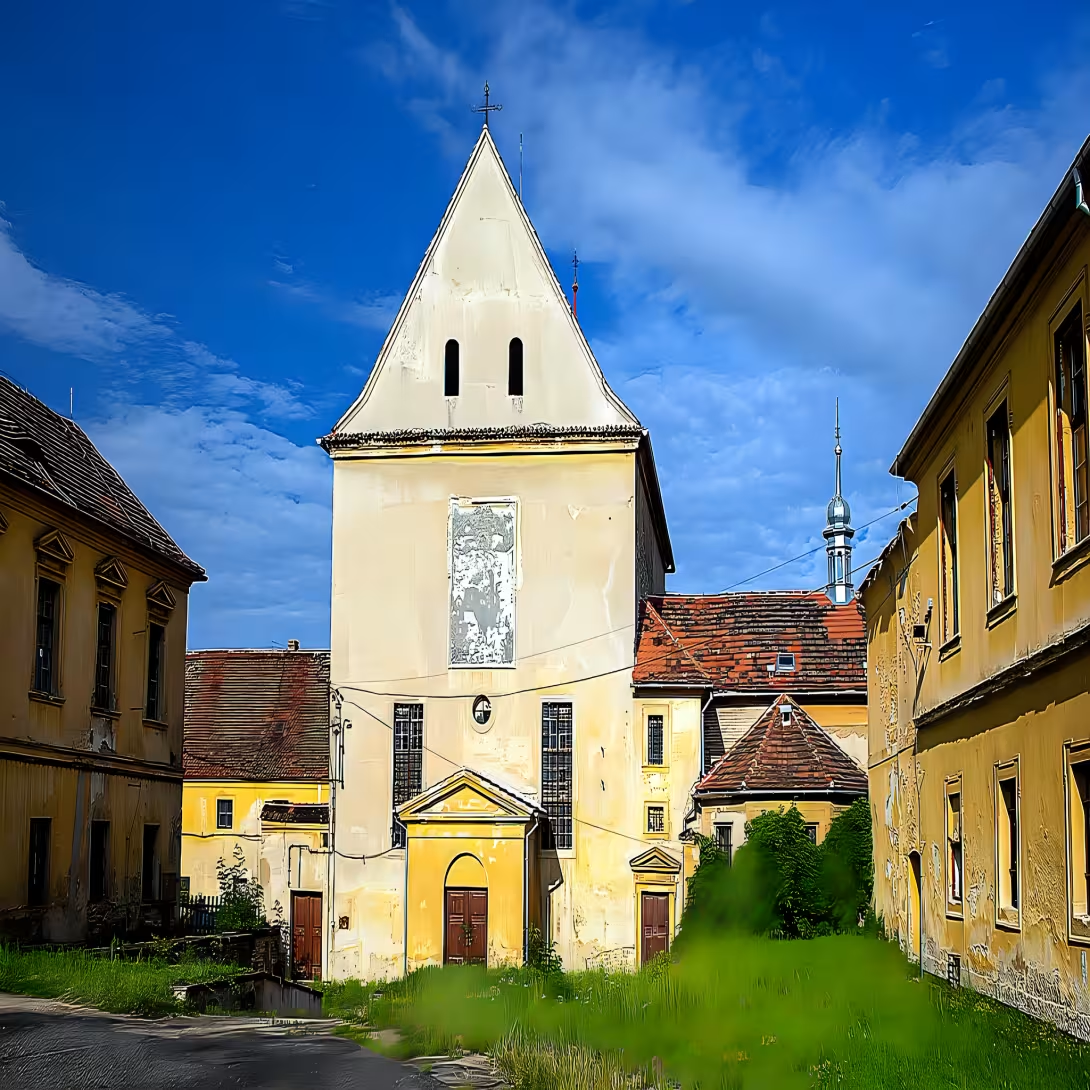
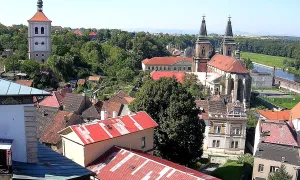
Kapucínský klášter v Roudnici nad Labem is a Baroque monastery complex with the church of St. Wenceslas, built between 1615 and 1628. Located in the castle Lobkovic, this historic place reflects the early 17th century religious and architectural development in Bohemia. It is of importance as the second Kapuchin monastery founded in the Czech Republic, financed by Polyxena z Pernštejna and Zdenko Vojtěch Popel z Lobkovic. The monastery served as a family burial ground for the Prince of Lobkowicz and for centuries witnessed significant historical changes.
The founding of the Capucin monastery took place during a period marked by religious upheaval in Bohemia, which are part of a wider 30-year war. This era saw anti-reforming efforts in the Catholic Church to gain momentum, reflected in the establishment of the Capuchin monastery. The construction began in 1615 and was completed in 1628, continuously integrated with the existing Lobkovic Chateau. The initiative to build this complex was managed by Polyxena z Pernštejna and Zdenko Vojtěch Popel z Lobkovic, which played a key role in its creation.
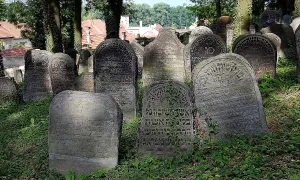
The Capucin monastery is an architectural baroque masterpiece that includes both the monastery and the church of St. Wenceslas. The church served as a place of worship and family burial for Lobkowicz princes, highlighting its dual importance in religious and family contexts. The construction required the relocation of the Jewish ghetto, suggesting sociopolitical dynamics in the game during this period.
The property and administration of the monastery remained with the Lobkovic family until 1948, after which it became under state control after World War II. In 1952 the monastery and the church were dissolved and the Czechoslovak army took the place. This military occupation lasted until the 1990s, during which the complex collapsed.
Despite its present state, the Capucin monastery was a place of cultural importance. In 2022, she served as a film venue for the film "Auf Wiedersehen, Kinder," directed by Edward Berger. This underlines the continuing attractiveness and historical richness of the site.
Today, Kapucínský klášter v Roudnici nad Labem is a reminder of its history. Although it is currently embarrassed and not accessible for public visit, its historical importance makes it a convincing destination for interested people to explore the rich Czech architectural and religious heritage. Visitors are encouraged to think about the layers of history embedded in this site and consider the wider narrative of the change and continuity it represents.
Then and now
Drag the slider to compare how the landmark may have looked when it was built with the view today.
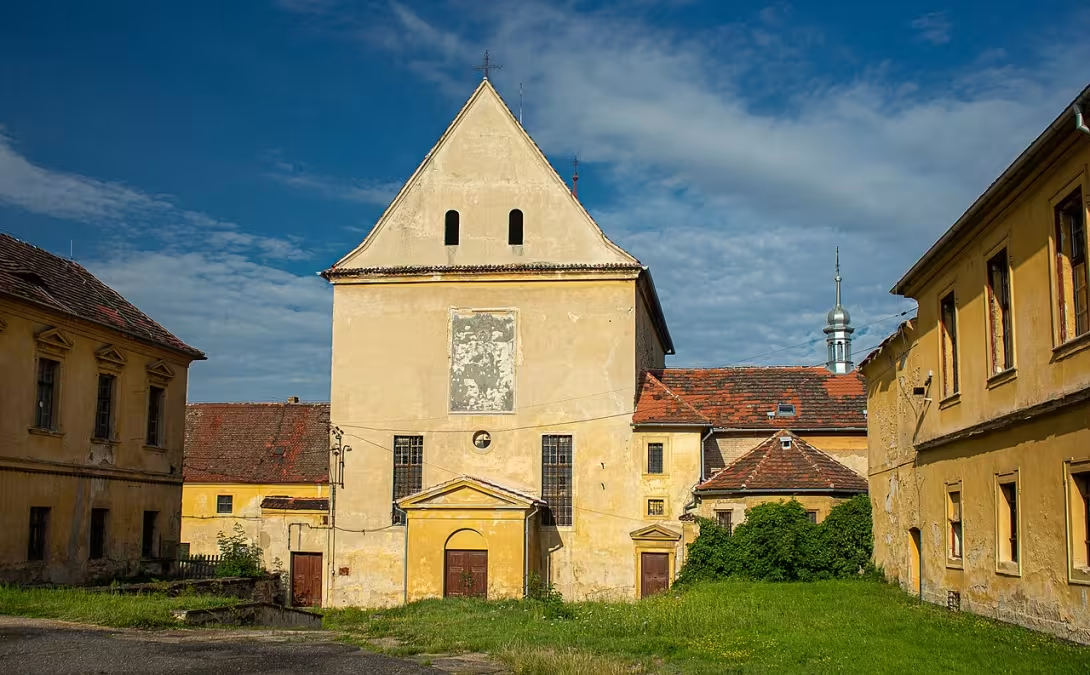
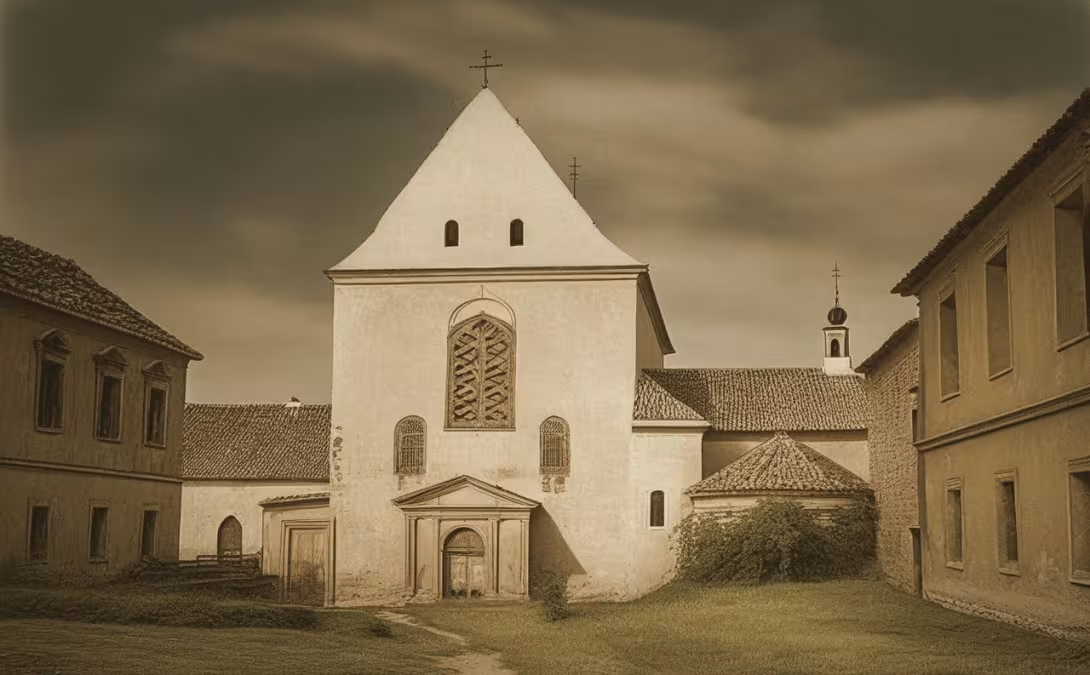
The historical appearance on the left is an AI-generated visualisation and serves as inspiration only.
Historical milestones
- 1615
- The construction began at the Capuchin monastery and church.
- 1628
- Completion of Baroque architectural complex.
Architectural development
The Capucin cluster was built between 1615 and 1628 as a baroque architectural complex. It included both the monastery and the church of St. Wenceslas, which served as a family burial ground for the Prince of Lobkowicz. The construction was integrated into the existing Lobkovic Chateau.
Historical events
1614-1615: Establishment of a Capuchin monastery financed by Polyxena z Pernštejna and Zdenko Vojtěch Popel z Lobkovic.
1948: The monastery came under state control after World War II.
1952: The monastery and the church were dissolved and the Czechoslovak army took the place.
Owners
Founded in 1614-1615 Polyxena z Pernštejna and Zdenko Vojtěch Popel z Lobkovic; remained under Lobkowicz ownership until 1948. The Czechoslovak army used it later from 1952 to the 1990s.
Points of interest
- The construction of the Capucin monastery included the relocation of the Jewish ghetto, highlighting the socio-political tension and religious dynamics of the early 17th century Bohemia. - Despite today's mutilated state, the monastery served as a film place for "Auf Wiedersehen, Kinder" in 2022, presenting its continuing attraction and historical wealth.
- The Capuchin monastery was one of two Capuchin monasteries established in the Czech Kingdom during the counter-reformation that reflected the significant religious development of this time.
- After World War II, the Lobkovic family lost ownership of the monastery of state control in 1948, and later became a military place until the 1990s, illustrating its moving roles in history.
- the church within the complex served as a place of worship and burial for Lobkowicz princes, underlining his dual importance in religious and family contexts.
Guide
This guide is narrated by a synthetic voice generated by artificial intelligence.
Show guide text
This text was created by artificial intelligence and has not been editorially reviewed. It may contain inaccuracies.
Welcome to Kapucínský klášter v Roudnici nad Labem, a remarkable site that whispers stories about history and art from its very stones. As you stand before this baroque masterpiece, take a moment to absorb the size of his architecture and the stories he hides.
The origin of this monastery dates back to the beginning of the 17th century, namely between 1615 and 1628. Thanks to the generous patronage Polyxena z Pernštejna and Zdenko Vojtěch Popel z Lobkovic it was founded as the second Capuchin monastery in the Czech Republic. This period meant a period of religious zeal and transformation across Europe, when the Baroque style emerged as a strong expression of faith and art.
As you look at the complex, notice its harmonious mixture of structure and spirituality. St. Wenceslas Church stands in this ensemble and embodies the characteristic nobility and grandeur of the Baroque. Although particular architects remain unknown, their vision is obvious in every arch and facade that surrounds you.
This site has a deep connection with remarkable historical characters, especially the Lobkowicz family. The monastery served not only as a place of worship, but also as a final resting place for this noble lineage that integrates them into their cultural heritage.
One of the fascinating aspects of his history is the social-political climate during his construction. The introduction of the Capucin monastery included the relocation of the Jewish ghetto, which highlighted the complex interplay of religious and social dynamics in the early 17th century in Bohemia.
Despite its current disillusioned state, the monastery continues to capture images far beyond its physical borders. In 2022 she served as an evocative film place for "Auf Wiedersehen, Kinder," breathing new life into her storied walls.
As you continue your research, let yourself be drawn by layers of history and art that cover this page. Every corner offers a view of the past which invites you to immerse yourself deeper in your mysteries.
Thank you for joining us on this journey through time in Kapucínský klášter v Roudnici nad Labem. Let your visit inspire curiosity and wonder how you reveal more of what this historic jewel offers.
Tips for visitors
The best time to visit Kapucínský klášter v Roudnici nad Labem is at the end of spring or early autumn. During these seasons, the weather is usually mild and pleasant, so it is ideal for exploring baroque architecture without crowds that can be present in the summer. In addition, the surrounding castle Lobkovic are beautiful especially with flowering flowers in spring and pulsating leaves in autumn.
Parking near the Capucín monastery is possible within the castle Lobkovic. For those who prefer public transport, there are possibilities to reach Roudnice nad Labem via regional trains or buses; However, it is appropriate to check the current timetables and routes using a transport application or website. The area is also accessible by car, roads lead directly to the city.
When visiting, consider bringing comfortable walking shoes from discovering both the monastery complex and the chateau area includes some walking on an uneven surface. The camera or smartphone for photography is recommended to capture the stunning Baroque details of St. Wenceslas Church. In addition, wearing a light rainjacket can be useful in case of unexpected weather changes.
For lovers of photography, early morning or late afternoon are the best times to capture soft lighting that emphasizes the complex details of monastery architecture. The Tanks and Facade of St. Wenceslas Church offers excellent places for photographs. Nearby, within 30 minutes drive, is the historic center of the city of Roudnice nad Labem, which provides other picturesque scenes.
For families with children, the Capuchin Cloister and its surroundings are pleasant thanks to a combination of historical exploration and outdoor space. The chateau resort offers plenty of room for children to run around, while the quiet atmosphere of the monastery can be a nice contrast. Near attractions within 30 minutes include Lobkowicz Palace Gardens, which are great for family picnics or peaceful walks.
Businesses nearby
Do you run a restaurant, accommodation, shop, museum, rental, wellness or other visitor service near this monument? Show yourself directly to the people heading to it — this is how they will see you in the app and on the web:
Nearby
This area is located within the castle Lobkovic in Roudnice nad Labem and is part of the Ústí Region.
Accommodation nearby
Themed route
Thematic walking tour: Capucin monastery and Lobkowicz chateau
1. Capucin monastery (Capucin monastery ) - * Type: * Historical religious pages - * Why Visit: * The beginning of your journey in the heart of Roudnice nad Labem is a spiritual heritage, the Capuchin monastery. This monastery, founded in 1653, is famous for its calm atmosphere and complex Baroque architecture. Explore a beautifully preserved church in the complex, decorated with beautiful frescoes and statues that tell stories of religious history.
2. Lobkowicz Castle Grounds (Locks ) - * Type: * Historical architecture - * Why Visit: * Just a short walk from the monastery, dive into the size of Lobkowicz's family heirloom. Chateau lands are full of architectural miracles that reflect centuries of history and art. Walk through vast gardens offering picturesque views and a quiet haven in the historical landscape.
3. Monastic Gardens (Monastic Gardens ) - * Type: * Historical garden - * Why Visit: * These carefully maintained gardens next to the monastery are proof of the monk tradition of growing beauty and peace. Walk through the paths lined with pulsating flowers and ancient trees that provide a perfect environment for reflection or simply enjoy the calm of nature.
4. Monastary Chapel (Chapel Monasteries ) - * Type: * Religious pages - * Why Visit: * Close your tour in the monastery chapel, intimate space known for its spiritual atmosphere and excellent religious art. The chapel offers the opportunity to experience local liturgical traditions and appreciate the delicate craft work of its interior.
This thematic walking tour allows visitors to explore the rich history and cultural importance of the Capucin monastery Roudnice nad Labem and the surrounding castle Lobkovic, which provides a enrichment journey through time.
Seasonal recommendations
Spring: The Kapucínský klášter v Roudnici nad Labem offers a scenic atmosphere, the cods intersect with the fog air and adopt historical structures. The pod is possible early dew, which restores the healthy greenness of the surrounding waters. Injecting a monastery this season means reading small temperatures and the parts that have affected it are sufficient. It is recommended to visit one or earlier in the afternoon, when a quiet calm and fewer people are discussed. Dress up your own for small temperatures, with the possibility of switching to basic measures if they are cold moments.
Summer: Summer in the city offers great days and warm, sunny weather, which are the historical sites in a convenient light. The Green Event is at the top of the holy beauties, which focuses on promoting a place for relaxation and productivity. If the following conditions are met: It is appropriate to take with certain limited bremes and UV radiation, which is like a reclining round, which is also applicable in this case.
Autumn: In autumn, the Capuchin Cluster offers a gentle atmosphere with a golden natural curd and mild temperatures that are beneficial. Leaves falling from the trees of the harvested colored cobalt of the monastery, which always has a romantic touch. This means that ideal for those who are avoiding the summer crowd and that also quiet surroundings. Incentive aid shall not be considered State aid attributable to the common market.
Winter: The winter value of the Capucin monastery urging a one-man company that has cold products and also useful quantities that are the historical structure of production. The sunny rays of the musculature of the monastery complex in the depicted light, which gives its own sense of mystery and peace. The monastery may be restricted by advancing or by shorter working hours, so it is advisable to learn that this information has been submitted at the same time. Transport is not concerned with warm suits and a prohibited object is required in winter currencies to be possible regardless of whether it is intended for use even with cold support.
Visualizations and artistic views


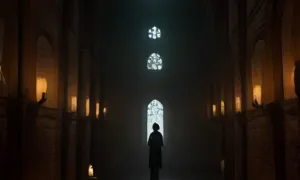
The visualisations are generated by artificial intelligence and serve as inspiration.
Photos from the area
Real photos taken near the monument


Zdroj a licence jsou uvedeny u každého snímku.
Tips from visitors
No tips yet. Be the first!
Log in and add your tip.
Sources and literature
Photos: VitVit / CC BY-SA 4.0, rozlišení zvýšeno umělou inteligencí — Wikimedia Commons. The author and licence also appear when you hover over the image.
Faktickým podkladem tohoto textu byl článek na Wikipedii, jehož autory jsou přispěvatelé Wikipedie. Článek je dostupný pod licencí CC BY-SA 4.0.
Location on the map

Příběhy a pověsti
Legendy, pověsti a příběhy spjaté s touto památkou
Fotografie návštěvníků
Zatím žádné fotografie. Buďte první, kdo přidá fotografii z návštěvy!
Log in a přidejte svou fotografii nebo hodnoťte.
Za ověřenou návštěvu v aplikaci získáte víc bodů — poznáme podle GPS, že jste na místě.
Reviews and comments