



Karlovo náměstí Square
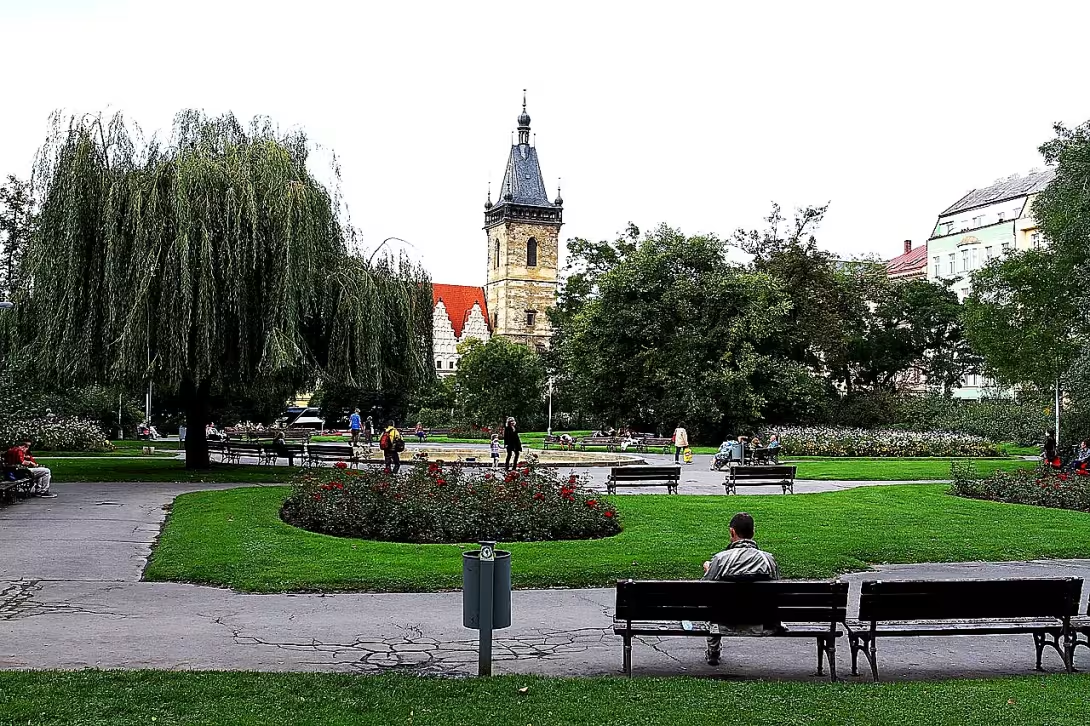
Karlovo náměstí, also known as Karlák, is one of the largest European squares with an area of 80 552 m ². It is located in Prague's New Town, which belongs to Prague 2, and served historically as the main marketplace and meeting place.
The square was founded in 1348 when the New Town was founded. At that time, the largest medieval European theme was the one and only 30 000 people could be gathered here during pilgrimage events linked to the display of the Reich relics. Originally, it had a cosodium, almost rectangular ground plan with dimensions of approximately 152 × 550 metres, extending up to the present Lazarus Street.
The architecture of the square is diverse. In the north stands the eclectic Municipal Court, built in the years 1900- 1903 according to the design of architect Emil von Förster. In this part there is also a Gothic City Hall, which was modified in the style of the Renaissance and around 1950 regotized. The Baroque Basilica of St. Ignatius of Loyola, originally Jesuit Temple, dominates the east side of Jeèná Street. The other important buildings are the Baroque Mladotov Palace (Faust House) with Gothic structure and the northeastern Salmovsky Palace, rebuilt from the Baroque Braun Castle.
The square has undergone significant changes. Since the 1960s, his recovery took place, when market commissions were torn down and the area was converted into a park. In 1884 František Josef Thomayer designed its form as an English park. The current name derived from Charles IV was adopted in 1848, while previously it was called the Conqueror Market.
The history of the place is linked to interesting characters and legends. The English alchemist Edward Kelly supposedly lived in Mladotova Palace. According to legend, there was a Stone Table counter in front of one of the houses, on which the cattle revenue was paid, which was supposed to be an altar menza from the abolished chapel of God's Body. Among the memorable trees in the park include the platan maple-leaf in the southern part of the square.
Today, Karlovo náměstí is an important transport hub with tram network and metro station line B, set up in 1985. In 2020, the first phase of the revitalisation focused on transport and improved accessibility for pedestrians took place. The next stage has to be followed, which will focus on the revitalization of the park with a view to preserving the historic trees.
Karlovo náměstí combines extensive green and rich urban architecture. It's a place where medieval traditions meet the modern life of the metropolis, which is why they deserve a visit.
Then and now
Drag the slider to compare how the landmark may have looked when it was built with the view today.
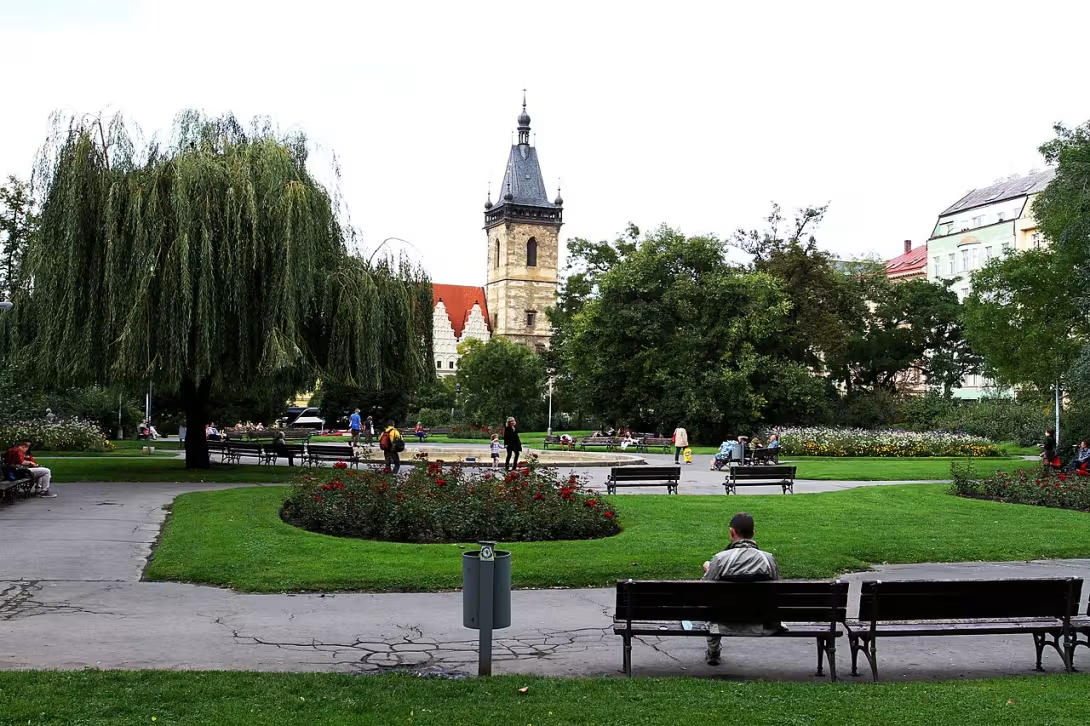

The historical appearance on the left is an AI-generated visualisation and serves as inspiration only.
Historical milestones
- 1348
- Set the square at the location of the New Town of Prague.
- 1848
- Getting the current name after the ruler of Karl IV.
- 1884
- Design of the square as an English park by Franz Joseph Thomayer.
- 2020
- The first phase of revitalisation focused on transport and pedestrians.
Architectural development
Originally it was a medieval marketplace with wooden stalls and meat stuff. Since the 1960s, the area was restored and turned into a park. The current appearance was influenced by historical architecture, including the Gothic Town Hall and the Baroque Basilica.
Historical events
In 1348 the square was set at the location of New Town. In 1884 it was designed as an English park by Franz Joseph Thomayer. In 2020, the first phase of the transport-oriented revitalisation took place.
Owners
capital city Prague
Points of interest
- Karlovo náměstí has an area of 80 552 m ² and is one of the largest European squares. - The square was founded in 1348 when the New Town was founded and served as the main marketplace and meeting place. - In the north is an eclectic Municipal Court built according to the design of architect Emil von Förster, while the eastern side is dominated by the baroque basilica of St. Ignatius of Loyola. - The history of the site is linked to the legend of the Stone Table, on which the cattle were paid for, and the platan of the maple trees in the south part of the square. - Today Karlovo náměstí is an important transport hub with tram network and metro station line B, set up in 1985.
Guide
Show guide text
This text was created by artificial intelligence and has not been editorially reviewed. It may contain inaccuracies.
Welcome to Charles Square, one of the largest European spaces and the historic heart of Prague's New Town. You're standing in front of a vast place that seems like a living book full of history and architectural pearls. Under your feet are 80 552 square meters, which makes it one of Europe's largest squares. Everything around you tells stories of the past and the present.
Let's dive into his history. Karlovo náměstí was founded in 1348 when the New Town of Prague was founded as a new centre of power and trade. This area served as the main marketplace from the beginning and the meeting place of people from different parts of the world. During the years his character changed until in 1884 architect František Josef Thomayer proposed his transformation to the English park. In 1848 the square was named after the monarch Charles IV, who was an important figure for Prague's development.
Look up and look around. In the north stands the Municipal Court, an eclectic building designed by architect Emil von Förster. This facade is just one of many examples of rich architectural construction square. Notice how diverse the styles and details that come together are in this historic place.
Karlovo náměstí is also associated with key personalities. Karel IV., founder of New Town, left an indelible mark in Prague with his visionary mind and politics. In the square were also interesting chapters associated with Edward Kelly and John Dee, who were looking for treasures and secrets.
Now pay attention to one of many interesting mysteries. The square was once a marketplace full of life, but it also witnessed important historical events and mysterious stories. How do you think what could be hidden beneath his surface?
I suggest you explore other parts of Charles Square, where every alley and corner has its own story. Learn to appreciate its rich history and architecture, which still affect today's Prague.
Thank you for your visit to Charles Square. We hope you enjoyed your stay here and remember this place with pleasure. Whether you come again or decide to explore other parts of Prague, remember this visit as the beginning of your travel history. God!
Tips for visitors
The best time to visit Charles Square is in the spring or autumn season when the weather is pleasant and the light is not very strong. These months offer ideal conditions for shooting architectural beauty square and surrounding monuments.
The place is well accessible both by car and public transport.
When planning a visit, remember the appropriate clothes, especially if you visit during winter. It is also important to have an umbrella or umbrella in accordance with the weather and a camera to capture the beauty of the square.
Photography on Charles Square offers many possibilities. The best light is usually in the early morning or evening when the sun is not directly above your head. Special views can be obtained from Salmov Palace or from nearby alleys.
In the vicinity of the square is the New Town Hall and St. Ignatius Church, which are great places for further exploration. It is interesting for families with children to visit the General Faculty Hospital in Prague, where there is a historical building and park.
Frequently asked questions
Can the monument be visited?
We have not verified whether this monument is accessible. Please ask the owner or operator, or the local municipal office.
Where is the monument?
Location: Praha 2. The map on this page shows the exact spot.
Why is the monument protected?
It is listed in the Central List of Cultural Monuments of the Czech Republic as a cultural monument (register no. 1000162742).
Businesses nearby
Do you run a restaurant, accommodation, shop, museum, rental, wellness or other visitor service near this monument? Show yourself directly to the people heading to it — this is how they will see you in the app and on the web:
Events nearby

Zdroj akcí: otevřená data měst a obcí ČR (Národní katalog otevřených dat) a kalendář akcí Národního památkového ústavu.
Nearby
Novoměstská radnice, kostel svatého Ignáce, Salmovský palác, Všeobecná fakultní nemocnice v Praze.
Accommodation nearby
Trips and activities nearby
Guided tours, tickets and activities nearby from GetYourGuide
Affiliate link: if you buy from the partner, we may receive a commission. The price for you does not change.
Search tours and activities →Themed route
1. General Faculty Hospital in Prague Type: Medical area. Why to visit: It is an important place for medical care in this area.
2. Salm Palace Type: Historical building. Why to visit: This building offers a view of beautiful architecture.
3rd Church of St. Ignatius Type: Religious temple. Why to visit: Offers peace and opportunity to see the spiritual space.
4. New Town Hall Type: Public building. Why to visit: It is a historical object with great importance for the surroundings.
5.Karlovo náměstí Type: City square. Why to visit: It is the main destination of the journey and the center of the entire route.
Seasonal recommendations
Spring on Charles Square brings awakening greenery and soft, gradually elongating light. The trees around the square dress up in light green leaves, creating a pleasant contrast with historical architecture. The atmosphere is calm and fresh, ideal for walks when temperatures are not yet heated to summer heat. Practical advice includes layered clothing because the morning cold quickly replaces the afternoon sun. The best time to visit is the morning hours when the surroundings are less disturbed and the light is soft and suitable for photography. Avoid rain, which can be frequent in this season, and select non-blending shoes.
Summer offers the maximum sunlight and full of greenery, which shade the pavement and creates a pleasant microclimate. The atmosphere is vibrant and full of energy, ideal for longer walks at dusk when temperatures are slightly cooled. The lighting of historic buildings is becoming a dominant element in the evening, which gives space to romantic tones. Practical advice recommends light, breathable clothes and plenty of drinking mode, especially in the afternoon when the sun is most intense. The best time to visit is morning hours or evening after sunset to avoid direct heat and possible noisy crowds in the central parts of the city.
Autumn brings golden and orange tones of falling leaves that cover the tile and supply the square with romantic and nostalgic character. The light is lower and warmer, which highlights the texture of stone and wood in the surrounding buildings. The atmosphere is colder and quieter, suitable for slow walks and observing details. Practical advice includes layered clothing with wind-resistant top and comfortable shoes because wet leaves can be slippery. The best time is afternoon hours, when the sun shines at an angle that perfectly illuminates the facades, and temperatures are still tolerable for outdoor stay.
Winter in Charles Square is characterized by cold air, possible snow and short days. The lighting of buildings and street lamps plays a key role, creating an intimate and cozy atmosphere, especially in the evening. Nature around it is dormant, but a white cover of snow can provide a clean and peaceful look. Practical advice strongly recommends warm clothing, including gloves, scarf and cap, and quality winter shoes with anti-slip soles. The best time to visit are late afternoon and evening hours, when evening lighting is switched on and the cold is felt, but the atmosphere is the most beautiful. Avoid the rain that can turn into an iceberg, and count on the shortest days in a year.
Visualizations and artistic views


The visualisations are generated by artificial intelligence and serve as inspiration.
Photos from the area
Real photos taken near the monument


Zdroj a licence jsou uvedeny u každého snímku.
Tips from visitors
No tips yet. Be the first!
Log in and add your tip.
Sources and literature
Photos: Ondřej Kořínek / CC BY-SA 3.0 — Wikimedia Commons. The author and licence also appear when you hover over the image.
Faktickým podkladem tohoto textu byl článek na Wikipedii, jehož autory jsou přispěvatelé Wikipedie. Článek je dostupný pod licencí CC BY-SA 4.0.
Location on the map
Příběhy a pověsti
Legendy, pověsti a příběhy spjaté s touto památkou

Fotografie návštěvníků
Zatím žádné fotografie. Buďte první, kdo přidá fotografii z návštěvy!
Log in a přidejte svou fotografii nebo hodnoťte.
Za ověřenou návštěvu v aplikaci získáte víc bodů — poznáme podle GPS, že jste na místě.
Reviews and comments