



Kašna na Velkém náměstí v Kroměříži Fountain
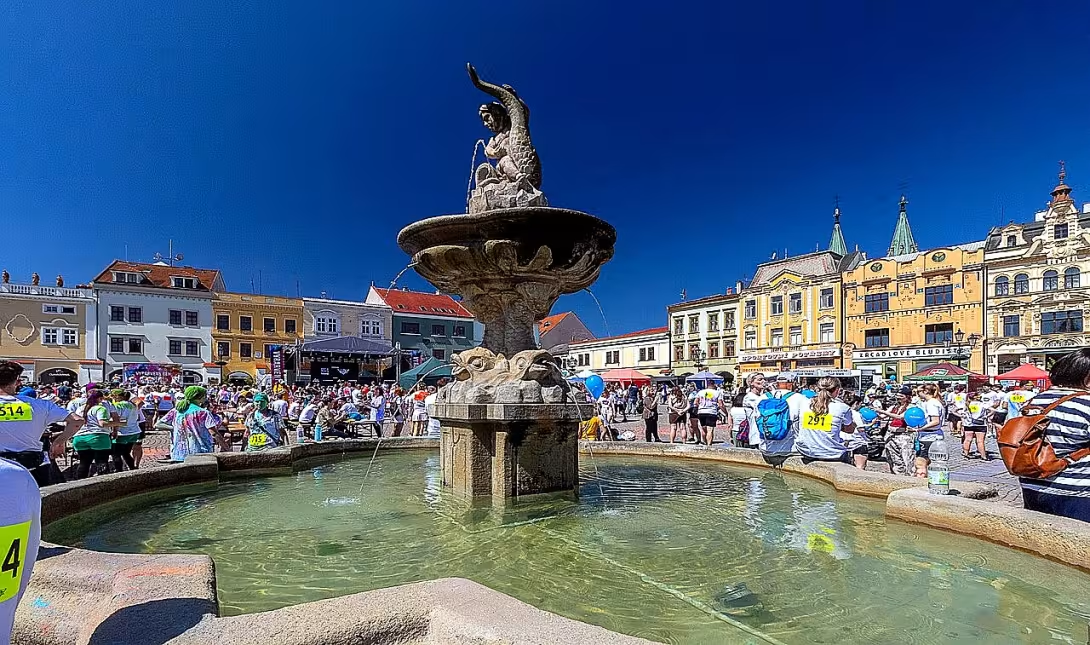
Kašna na Velkém náměstí v Kroměříži is a Baroque stone fountain that boasts its historical and artistic value. Located in the middle of the city centre and protected as a real-estate cultural monument of the Czech Republic. Its importance lies not only in its artistic design, but also in the function it had for urban infrastructure.
The history of the fountain dates back to the 17th century, when it was probably built in 1666 by Bishop Charles of Liechtenstein-Castelkorn as part of a renewable effort aimed at the city of Kroměříž. This historical context is important because Bishop Liechtenstein was interested in the development and modernisation of the city, as well as in securing a new water source. The fountain served not only as a decorative element but also as part of the water infrastructure.
Architecturally, the fountain is built from the Maletian sandstone, which is a typical material for the region with its characteristic brown background. Its shape comes from a tank on a four-leaf floor plan with a prismatic plinth that supports sculpture decoration. The composition of the fountain consists of four dolphins whose tail fins carry the top bath and act as gargoyles. On top of the rock sits putto on the back of one of the dolphins, which represents an allegory of a friendly nature according to the Iconology of Cesar Ripa.
In the past, the Archbishop of Olomouc was the owner of the fountain. During its history, it was moved from its original location to its current position in the Grand Square in 1811. In 1969, there was damage when the tail of the fish above the putt was broken during the celebrations of the hockey victory over the USSR. After this event, the tail was created smaller during the subsequent restaurant.
In 2015, the fountain was subject to a general reconstruction provided by the Kroměříž technical services, s.r.o. A week after the handover of the work there was further damage when the fountain was hit by a wax from flower candles during the honoring of victims of terrorist attacks in Paris. This event highlights not only the cultural but also the emotional value of the fountain for the local community.
Today there is a fountain on the Grand Square in Kroměříži accessible to the public and worth visiting not only as a historical artifact, but also as a witness to the rich cultural tradition of the city. Its artistic decoration and architectural structure attract visitors from all over the world who want to learn more about the history of Kroměříže. The fountain is not only a monument to the past, but also a living element of urban space that contributes to its aesthetic and cultural value.
Historical milestones
- 1666
- Likely to create a fountain as part of the town's restoration by Bishop Liechtenstein.
- 1811
- Moving the fountain from the original place to the current place in the Grand Square.
- 1969
- The damage to the tail of the fish in celebrating the hockey victory over the Soviet Union.
- 2015
- Implementation of the total reconstruction of the fountain.
Architectural development
The fountain is built from a Maletian sandstone with a typical brown colour. Its shape comes from a tank on a four-leaf plan with a prismatic plinth. The sculpture component uses dolphin and putt motifs in Baroque style.
Historical events
1666: Likely to develop a fountain under the patronage of Bishop Karl of Liechtenstein-Castelkorn. 1811: Transferring the fountain to the current place in the Great Square. 2015: Total reconstruction of the fountain.
Owners
Archbishop of Olomouc (17th century)
Points of interest
- The fountain is a Baroque stone fountain with historical and artistic value. - It is located in the middle of the city centre Kroměříže and is protected as a cultural monument of the Czech Republic. - It was built in 1666 by Bishop Karl of Liechtenstein-Castelkorn as part of the renewal effort for the city of Kroměříž. - It's made of Maletian sandstone and has sculpture decoration with dolphins, which represents an allegory of a friendly nature according to Cesar Ripa's Iconology. - In 1811, it was moved to a current position in the Grand Square.
Guide
Show guide text
This text was created by artificial intelligence and has not been editorially reviewed. It may contain inaccuracies.
Welcome to the Great Square in Kroměříži, one of the most famous places of this historic centre. In front of you stands a beautiful stone fountain, which is an integral part of urban memory and culture. Look up at her sculpture decoration inspired by the Roman Triton Fountain. Notice the four dolphins that decorate the fountain, and the putta sitting on one of them. This baroque water element is not only a beautiful work of art, but also a testament to the rich history of the city.
The fountain was probably built in 1666 as part of the reconstruction of the city by Bishop Karl of Liechtenstein-Castelkorn. This historical context is important, as the fountain was part of a wider effort to revitalise Kroměříže and its infrastructure. Visitors can appreciate how Bishop Liechtenstein and his architects used artistic and practical elements to improve life in the city.
Let's take a closer look at the architectural details. The fountain is made of a great Maletian sandstone, which gives it solid and elegant. Note the artistic motifs of dolphins and putta, which represent harmony between the human world and nature. These elements are not only decorative, but they also symbolize the power of water as a life-giving force.
The key person associated with the fountain is, of course, Bishop Karl z Lichtenštejna-Kastelkornu. His efforts to restore the city and his visions for Kroměříž are visible even today when we look at this beautiful monument. The second personality is Hans Jiří Miller, who also contributed to the history and development of this site.
The interesting thing about the fountain is its fate during the 20th century. In 1969, a fish on its tail was damaged in the celebration of a hockey victory over the Soviet Union, which became a symbol of local traditions and community spirit. This incident shows how deeply the fountain is rooted in Kroměříž's social life.
Now that you have taken into account the porridge and its historical stories, I can invite you to explore other parts of Kroměříže. The city offers many other attractions and every alley has its secrets. Thank you for your attention and I wish you the rest of the day!
Tips for visitors
Best time to visit Chestnut in the Great Square in Kroměříži is early in the afternoon, when the sun illuminates sculpture decoration and shading contributes to the dramatic effect. This time also means fewer visitors compared to the noon period, which allows a better tour.
When visiting Kashna, bring protective clothing, especially if you plan to take an extended walk all over the Grand Square. Additional tip: Consider picking up a map or using a mobile application to provide information on the history and architecture of the monument.
For shooting the fountain in the Great Square is the best place in front of the fountain itself with a little aside from the center where the sun illuminates sculptures elements. If you have the chance to take pictures in weather without strong sunlight it can bring better effects.
In the vicinity of Kashna on the Grand Square there is a Mariánské pole and Archbishop's castle, which are ideal for further tours. These places offer rich history and architecture, which can be explored within a 30-minute walk from the fountain.
Frequently asked questions
Can the monument be visited?
This is a structure in a public space that can usually be seen from outside free of charge. We have not verified that this particular one is freely accessible.
Where is the monument?
Location: Kroměříž, Zlínský kraj. The map on this page shows the exact spot.
Why is the monument protected?
It is listed in the Central List of Cultural Monuments of the Czech Republic as a cultural monument (register no. 1510615435).
Businesses nearby
Do you run a restaurant, accommodation, shop, museum, rental, wellness or other visitor service near this monument? Show yourself directly to the people heading to it — this is how they will see you in the app and on the web:
Events nearby
Zdroj akcí: otevřená data měst a obcí ČR (Národní katalog otevřených dat) a kalendář akcí Národního památkového ústavu.
Nearby
Mariánský sloup a Arcibiskupský zámek v Kroměříži.
Accommodation nearby
Trips and activities nearby
Guided tours, tickets and activities nearby from GetYourGuide
Affiliate link: if you buy from the partner, we may receive a commission. The price for you does not change.
Search tours and activities →Themed route
Thematic cruise route in Kroměříži
1. The fountain in the Grand Square - Type: Water work - Why is it worth a visit: This fountain is not only a beautiful example of baroque art, but also a centre of local culture and history. Its architecture and symbolism attract you to the world of the past.
2. Marian Column - Type: Religious monument - Why is it worth a visit: This column is an important Baroque structure that celebrates Mary and reminds us of historical events. Its artistic value and impressive location in the square make it an essential part of the city.
3. Archbishop's Castle - Type: Historical Palace - Why is worth a visit: This castle is home to rich history and art, including the famous Kroměříž oratorium. Its impressionable architecture and interior offer a view of the life of nobility and clergy.
Logic route order: Start your trip at the Chestnut Square, where you can look at this water work and start walking through the historic heart of Kroměříže. Then move close to the Marian Column, which stands a few minutes walk from the fountain. Finally, visit the Archbishop's castle, which is a bit further away, but offers a deeper view of the history and culture of this area.
Seasonal recommendations
Spring brings freshness and color to the square thanks to the blooming vegetation in the surrounding area. The light is fine and does not shine during this period, which allows detailed observation of the architecture of the water work. The ideal is to come in the morning when the coast is clear and there are not so many people around. Dress in layered clothes because the morning cold can still smell.
In the summer months the atmosphere is very lively and full of energy. Sunshine on the water surface creates wonderful visual effects, but high temperatures can be challenging. Due to the increased movement of people in the square, I recommend a visit in the early morning hours to enjoy the peace. Dress lightly and don't forget to protect yourself from the sun.
Autumn gives the memory a calm and nostalgic mood, especially when the morning fog and leaves change colour around the square. The afternoon sun is low in this period and creates very beautiful shadows. For comfort, prepare warmer clothes and shoes that can handle wet surfaces. It's the best time for quiet observation without large crowds.
Zimą causes a fountain in silence and often in a freezing environment that can create interesting shapes on the water. The day is short, so it is best to plan your visit around noon hours when there is the most light. It is necessary to wear very warm clothes, including hats and gloves, so that the stay outside is not unpleasant.
Visualizations and artistic views

The visualisations are generated by artificial intelligence and serve as inspiration.
Photos from the area
Real photos taken near the monument


Zdroj a licence jsou uvedeny u každého snímku.
Tips from visitors
No tips yet. Be the first!
Log in and add your tip.
Sources and literature
Photos: VitVit / CC BY-SA 4.0 — Wikimedia Commons. The author and licence also appear when you hover over the image.
Faktickým podkladem tohoto textu byl článek na Wikipedii, jehož autory jsou přispěvatelé Wikipedie. Článek je dostupný pod licencí CC BY-SA 4.0.
Location on the map
Příběhy a pověsti
Legendy, pověsti a příběhy spjaté s touto památkou

Fotografie návštěvníků
Zatím žádné fotografie. Buďte první, kdo přidá fotografii z návštěvy!
Log in a přidejte svou fotografii nebo hodnoťte.
Za ověřenou návštěvu v aplikaci získáte víc bodů — poznáme podle GPS, že jste na místě.
Reviews and comments