






Katedrála Božského Spasitele Cathedral
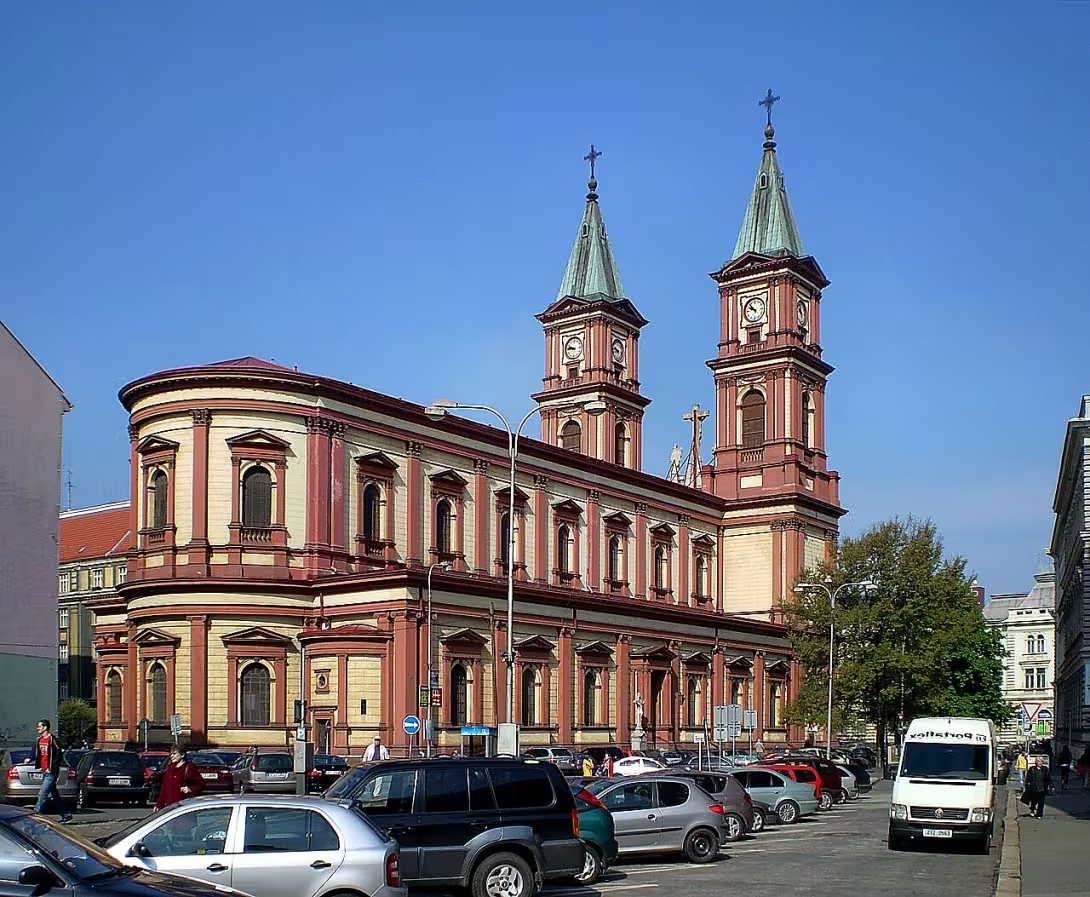
Katedrála Božského Spasitele, known in Czech as Katedrála Božského Spasitele, is a prominent religious and architectural monument in Moravian Ostrava. This Neo-Renaissance basilica, completed between 1883 and 1889, is the second largest Roman Catholic cathedral in Moravia and Silesia after the Basilica of St. Prokop in Velehrad. He proposed Gustav Meretta with interior contributions from Max von Ferstel, being consecrated on 16 July 1897 by Archbishop Theoder Kohn of Olomouc. In 1996, Pope John Paul II founded the Diocese of Ostrava-Opava, who promoted this basilica to the state of the cathedral.
The origin dates back to 23 May 1871, when the town council of Moravian Ostrava decided that a new parish church was needed. The existing church of St. Wenceslas could no longer comply with its growing congregation and did not meet the official requirements for public buildings. After approval by the District Office in Místek on 2 January 1882, construction started. Mayor Anton Lux and Reverend Josef Spurý laid the foundation stone on October 4, 1883. During the construction there were financial challenges with contributions from various sources, including Jewish entrepreneurs such as Baron Rotschild and Gutmann brothers.
Architecturally, the cathedral is an example of the neo-Renaissance style that prevailed in Europe at that time. It has three ships culminating in a semi-circular apse, with two 67m-tall towers on the northwest facade. The main boat is 14 metres wide and rises 22 metres high, while each side alley is 7 metres wide and 10 metres high. The Corinthian Pillasters support the divided vault in the main ship, and ion columns made of sandstone maintain triple friezes on side ships.
Throughout its history, the cathedral has undergone various changes. Originally designed Gustav Meretta with interior posts from Max von Ferstel, the original main altar was replaced after World War II by a new design of architect J. Cermák. Despite financial challenges during construction, significant contributions from Jewish entrepreneurs such as Rotschild and Gutmann brothers.
Today Katedrála Božského Spasitele remains accessible to pilgrims and tourists visiting Ostrava. Visitors can reach it by train or bus, followed by local transport to the city centre. With a capacity of 4,000 people, he continues as a cocaine dealer for Diocese Ostrava-Opava. The introduction of a new non-Baroque body in 1998 further increases its role as a centre of worship and cultural heritage.
Katedrála Božského Spasitele stands not only as a monument to religious significance, but also as an embodiment of architectural beauty and historical wealth. His presence in Moravian Ostrava invites visitors to explore his grandeur, appreciate his artistic elements and reflect on his lasting legacy within the community.
Then and now
Drag the slider to compare how the landmark may have looked when it was built with the view today.
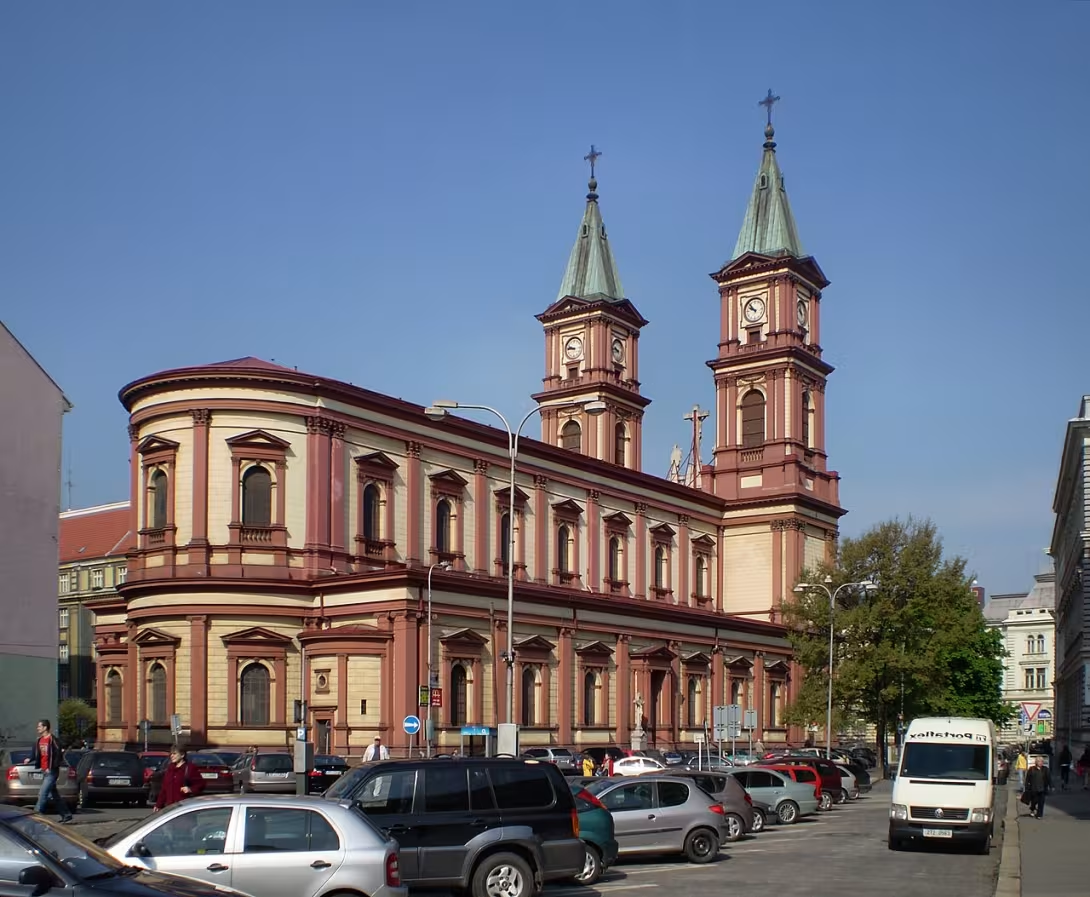
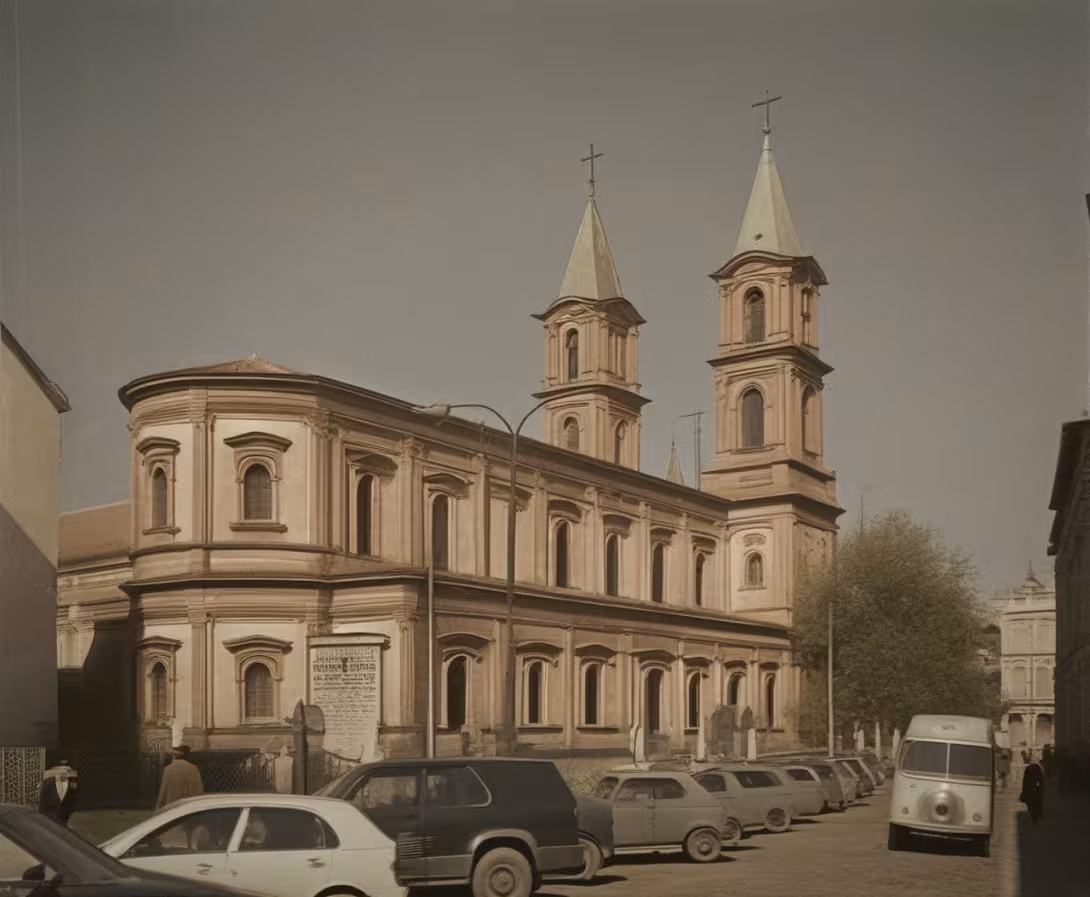
The historical appearance on the left is an AI-generated visualisation and serves as inspiration only.
Historical milestones
- 1883
- The Cornerstone ceremony held by Mayor Anton Luxem and priest Josef Spurný.
- 1897
- The sanctification of the cathedral by Archbishop Theodore Kohn.
Architectural development
Katedrála Božského Spasitele is built between 1883 and 1889 and has a basilica distribution with three hooves ending in a semi-circular apse. Its main ship is decorated with Corinthian Pilasters, which support a split vault, while ion columns made from sandstone support triple friezes on side boats. The twin cathedral rises 67 meters high on the northwest facade.
Historical events
The city council decided to build a new parish church on 23 May 1871, which will replace the insufficient Church of St. Wenceslas.
The construction began after approval by the Regional Office in Místek on 2 January 1882.
Mayor Anton Lux and priest Josef Spurný laid the cornerstone on October 4, 1883.
Points of interest
- Katedrála Božského Spasitele was originally designed by Gustav Meretta and later saw the contributions of the interior from Max von Ferstel, highlighting the cooperation between two important architects of the time.
- Despite financial difficulties during construction, Jewish entrepreneurs such as Baron Rotschild and Gutmann played a key role in financing the project and showed an example of intercultural support for religious architecture.
- After World War II, the original main altar was replaced by a new design by architect J. Cermák, which reflects post-war changes and modifications in the interior of the cathedral.
- The introduction of a non-Baroque body in 1998 modernised the music capabilities of the cathedral, thereby strengthening its role as a place of worship and cultural heritage.
- A cathedral with a capacity of 4,000 people serves not only as a religious place, but also as a great meeting, stressing its importance to the community outside of spiritual functions.
Guide
This guide is narrated by a synthetic voice generated by artificial intelligence.
Show guide text
This text was created by artificial intelligence and has not been editorially reviewed. It may contain inaccuracies.
Welcome to Katedrála Božského Spasitele in Moravian Ostrava, a magnificent structure that costs both an architectural miracle and a beacon of spiritual heritage. As you stand before him, take a moment to absorb its size. The non-Renaissance style of this basilica invites you to explore rich history and complex design.
The story of the cathedral begins in 1883 when Mayor Anton Lux and priest Josef Spurný laid the foundation stone and marked the beginning of a construction road that would last more than a decade. Until 1897, Archbishop Theodor Kohn sanctified the completed construction and consolidated its place as a central landmark in Ostrava.
Architect Gustav Meretta originally designed this monumental decoration, while Clemens Hladisch supervised the construction process and Max von Ferstel contributed to interior design. This cooperation between two important architects led to a harmonious combination of external size and internal elegance. When you look around, notice how every detail reflects their vision.
The history of the cathedral is linked to fascinating stories. Despite financial challenges during its construction, Jewish entrepreneurs played a key role in reviving this architectural dream. Their contributions underline the various influences that shaped this sacred space.
As you continue your research, take the time to appreciate the craftsmanship and art obvious throughout the cathedral. While specific visual elements such as sculptures or frescoes are not described in detail here, focus on the overall atmosphere and how they talk about centuries of devotion and creativity.
We invite you to dive deeper into the history of the cathedral and architecture as you wander through its premises. Every corner has a story waiting to be discovered. Thank you for joining us on this journey, and we hope that your visit will inspire you with the permanent legacy of Katedrála Božského Spasitele.
Frequently asked questions
Can the monument be visited?
Religious buildings are usually open mainly during services; at other times a visit is normally arranged with the parish or the operator. We have not verified specific times.
Where is the monument?
Location: náměstí Msgre Šrámka, Moravská Ostrava, Ostrava, Moravskoslezský kraj. The map on this page shows the exact spot.
Why is the monument protected?
It is listed in the Central List of Cultural Monuments of the Czech Republic as a cultural monument (register no. 21994/8-227).
Businesses nearby
Do you run a restaurant, accommodation, shop, museum, rental, wellness or other visitor service near this monument? Show yourself directly to the people heading to it — this is how they will see you in the app and on the web:
Events nearby
Zdroj akcí: otevřená data měst a obcí ČR (Národní katalog otevřených dat) a kalendář akcí Národního památkového ústavu.
Nearby
ITEX Show interactive overview of the surroundings - restaurants, accommodation, rentals and other places within a 15 km radius.
Data: OpenStreetMap contributors, 15 km radius.
‡ Historical monuments
- bridge Milos Sýkora (0.7 km)
- Schloss Witkowitz (2.4 km)
- Museum Vítkovic (2.4 km)
- Mining Museum (4.0 km)
- Mine Michal (4.0 km)
- Castle Rychvald (5.5 km)
- Memorial Overcoming Oder by Czechoslovak Tankers when liberating Ostravy (6.9 km)
- T.G. Masaryk (7.2 km)
Restaurant and catering
- Castle Zábřih (4.8 km)
- Krčma u Zvolu (7.2 km)
- McDonald's (7.4 km)
- Boombay (7.6 km)
- Restaurant Saigon (7.6 km)
- Racek (7.7 km)
- Rusty Bell Pub (7.8 km)
- El Amigo Muerto (7.8 km)
Accommodation
- Hotel Best (1.3 km - Keltickova 1297 / 60)
- Quality Hotel Ostrava City (1.6 km)
- Jan Maria (2.6 km)
- Hostel Nerudova 23 (3.2 km - Nerudova 499 / 23)
- Hotel Taurus (3.6 km - Teschen 1382 / 260)
- Best Western Hotel Vista (5.8 km)
- Guesthouse Silma (6.4 km - Feature 5)
- House of young smelters (7.0 km)
› Rental and sports
- Alpsport (0.2 km)
- TJ Sokol Hostikovice (5.8 km)
- Dingo Bike Sport Servis (6.1 km)
- MAX CURSOR (6.1 km - Čujkovova 52)
- Mike Bike (6.4 km - Cholevova 1530 / 1)
- Bike Kram (7.6 km)
- Bike Sport Vratimov (7.7 km)
- Heliasport (8.3 km)
© Tourism and nature
- halda Ema (1.9 km)
- Majerovec (fork) (8.6 km)
- Stará Belá (bath.) (8.9 km)
- Lower Pole (public transport) (9.9 km)
- Proskovice (at school, public transport) (11.0 km)
- Proskovice (u sokolovna) (11.4 km)
- Klimkovice (park) (12.6 km)
- Hnej (bus) (12.7 km)
Accommodation nearby
Themed route
Thematic cruise route: Katedrála Božského Spasitele and surroundings
1. Katedrála Božského Spasitele (Cathedral) * Type: * Religious landmark * Why is it worth visiting: * The Cathedral is a tiny architectural house in Moravian Ostrava, which has its own impressive Gothic structure and rich interiors. It is the center of our life in the city and offers the use of the possibilities that are the subject of history, the rights of the arts and constitutional views of the tower.
2. Republic Square (Fair Area) * Type: * Public area * Why is it worth visiting: * Located right next to the cathedrals and celebrates as a center of small life. The square is designed for all historic buildings that can rich the history of the village. It is an ideal place to relax or pierce other architectural pearls around.
3. Town Square (Fair Area) * Type: * Public area * Why is it worth a visit: * This Regulation shall be binding in its entirety and directly applicable in all Member States. It is a popular place for meeting residents as well as tourists, where they can establish cultures or one project to relax.
4. St. John Nepomuk Church (Church) * Type: * Religious landmark * Why is it worth visiting: * This church is another significant religious and historical bridge in Moravian Ostrava. It is a baroque architecture and rich interiors that overlay various objects that are counted on compulsory and cultural events.
This route offers combined historical and religious experiences in the centre of Moravian Ostrava, enhanced use based on the goal of rich minulos and contemporary live products.
Seasonal recommendations
Spring: The Katedrála Božského Spasitele in Moravian Ostrava encourages in the spring business one experience, where the sun's rays plant beauty architecture. Flowers and trees around count the quantities that add live colors to the surroundings of the monuments. The atmosphere is completely new and vitality, which means it affects the settlement. In order to comply with the common market, no other provision is made for the transfer of quantities of heat and potential calculation. Forget about the conditions for small businesses and they can also have an umbrella because they are small businesses.
Summer: In summer, the acquired cathedral in Moravia Ostrava comes from the glare under the sun saint, which is ideal for photography. The atmosphere is full of life and activity, with many people building a monument in the main summer zone. In order to improve the efficiency of public crowds, products which are actually exempt from import duties are supplied or are a Brake Morning products in order to continue to be imported. Remember the warm round and vu for the magic drink, especially the hot days.
Autumn: In autumn the cathedral in Moravian Ostrava acquired melancholic beauty, with a leaf of Padaic and coloring trees around. This season to convert the amount of energy that is ideal for quiet production. The transfer routes remember small conditions and possible rain, because autumn can be promotional. Forget about the requirements for cold temperatures and, if necessary, the umbrella.
Winter: The winter value of the Divine Savior cathedrals offers one experience where the Sun's rays muscle is a structure and snow is to appear, which means that it will give support to an excellent future. Winter calm is perfect for quiet profiles, even when cold bridges of open matter are needed. It is recommended to visit the injured or late in the afternoon and prepare a warm round, including an umbrella or jacket to be covered before the cold.
Visualizations and artistic views


The visualisations are generated by artificial intelligence and serve as inspiration.
Photos from the area
Real photos taken near the monument


Zdroj a licence jsou uvedeny u každého snímku.
Tips from visitors
No tips yet. Be the first!
Log in and add your tip.
Sources and literature
Photos: Michal Klajban / CC BY-SA 4.0 — Wikimedia Commons. The author and licence also appear when you hover over the image.
Faktickým podkladem tohoto textu byl článek na Wikipedii, jehož autory jsou přispěvatelé Wikipedie. Článek je dostupný pod licencí CC BY-SA 4.0.
Location on the map


Příběhy a pověsti
Legendy, pověsti a příběhy spjaté s touto památkou
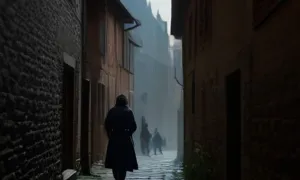
Příběh: Katedrála Božského Spasitele
Bylo to v pondělí ráno, kdy František, mladý černýkuželář z Moravské Ostravy, se nalodil do kostela Božího Spasitele. Krok za krokem, jeho boty stoupaly po k…
Číst příběh
Pověst: Katedrála Božského Spasitele
Traduje se, že když v říjnu roku 1883 zaryl ostravský starosta Anton Lux první rýč do země na náměstí, odkud měla vyrůst nová katedrála, přihlíželi tomu s kl…
Číst příběhFotografie návštěvníků
Zatím žádné fotografie. Buďte první, kdo přidá fotografii z návštěvy!
Log in a přidejte svou fotografii nebo hodnoťte.
Za ověřenou návštěvu v aplikaci získáte víc bodů — poznáme podle GPS, že jste na místě.
Reviews and comments