



Klášter cyriaků Monastery
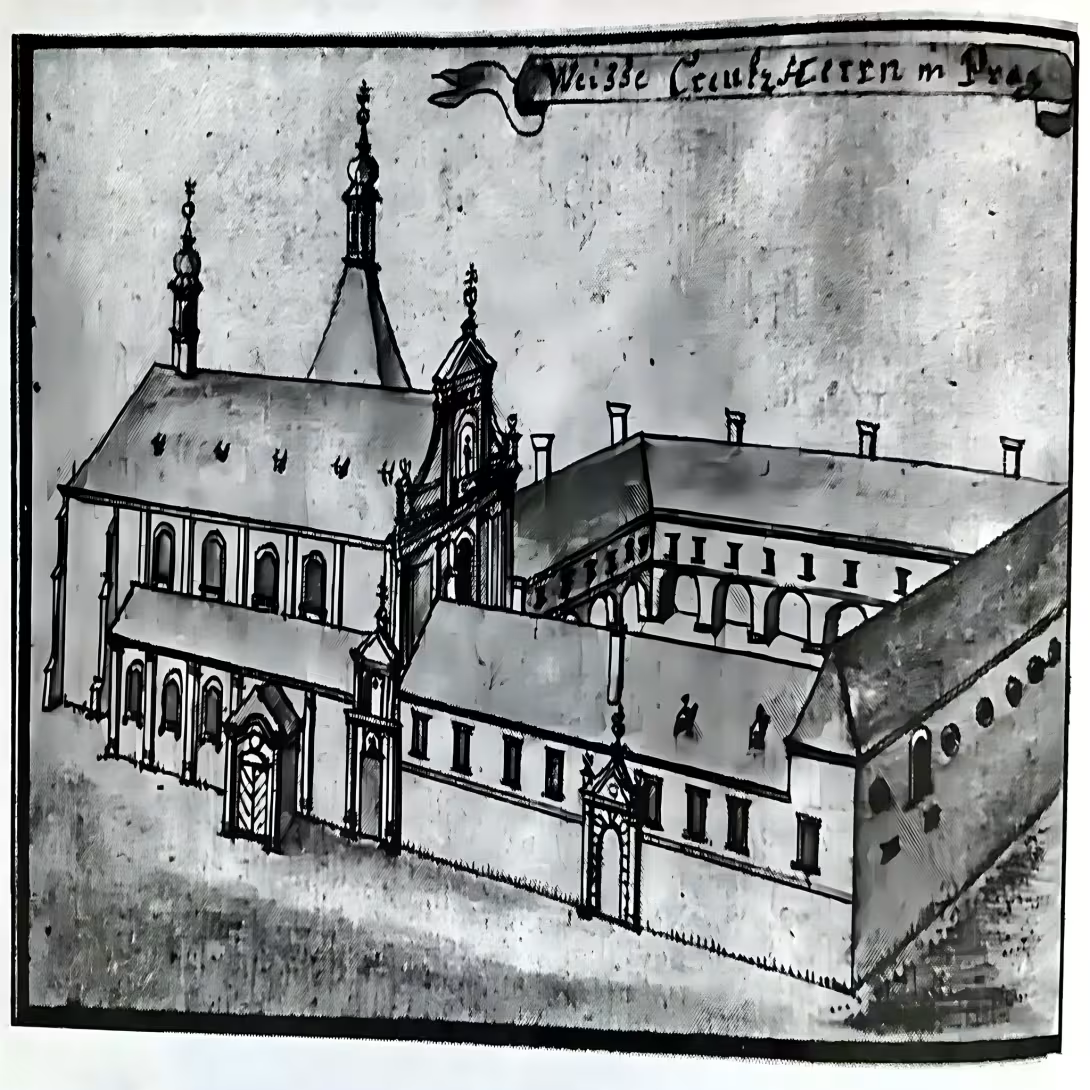
Objekt se nedochoval — na místě dnes nestojí. Následující text popisuje jeho historii, ne současnou návštěvu.
The Order of Cyriacs came to Czech countries in the mid-13th century. The brothers of cyriacs, originally from Livonia, were called by King Primoz Otakar II, who saw them as suitable units for the long-term development of the Czech Church. In 1256, their order was promoted by Pope Alexander IV from the original community to the Canon Order and received new constitutions. The King gave them a place in the Old Town on the track called Na Rvackky, on the desert bank of Vltava, where cyriacs built their oldest Prague monastery along with the Church of St. Cross the Greater.
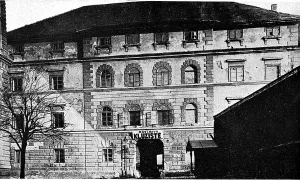
The monastery complex was situated at the site of today's Spiritual Street between today's Hotel President (former SIA Palace) and InterContinental hotels. It consisted of several buildings arranged around the yard. The great Gothic temple of the Holy Cross stood in the place where the Elementary School and Gymnasium are now based on Spiritual Street. It was surrounded by a two-storey monastery building with monks' cells, connected with ambitions with cross corridors. The monastery area also included yards, garden and cemetery. In 1747, in the so-called Garden court, the chapel of God's tomb was consecrated, built according to the pattern of the same name chapel in Jerusalem. Behind the monastery was a set and a tree cemetery.
The life of cyrians was characterized by radical poverty and uniformity. The brothers weren't allowed to have more than two robes, they got a simple fur in the winter. Tonzura on the top of their heads was cut 15 times a year on a well-defined holiday, from Christmas to St. Andrew's Day. The order was quickly extended: cyrians founded monasteries in Pardubice, on Hlumek near St. Wenceslas, Orlík (Monasteries over Orlici) and in New Venice, which led to the transfer of the headquarters of the General Priory to Prague.
One of Prague's most famous events is connected to the monastery. On April 17, 1393, fishermen removed the body of Jan Nepomuk from Vltava near the monastery. The brothers of cyriac under the direction of General Prior John (1373- 1403) took over the corpse and buried it with all seriousness in the church of St. Cross the Greater. Jan later saints is one of the key personalities of Czech monachism.
During Hussite wars, the Order suffered the demise - cyrians from the burnt and disproved Prague fled to Poland, where they kept their monastery in Krakow. It was only in 1628 that they returned to the Czech countries and restored the Prague residence. They returned to their activities with new initiatives: in 1715 they founded the tradition of the St. John's Festival NAVALIS, which they held until the order was dissolved by Emperor Joseph II.
Among the cyrians were also scholars - archivist Jan Karel Rohn (1711-1779) wrote and published the first three volumes of the history of the Czech church between 1774- 1777. The monastery was therefore not only a place of prayer, but also a scientific activity and intellectual life of medieval and early modern Prague.
Then and now
Drag the slider to compare how the landmark may have looked when it was built with the view today.
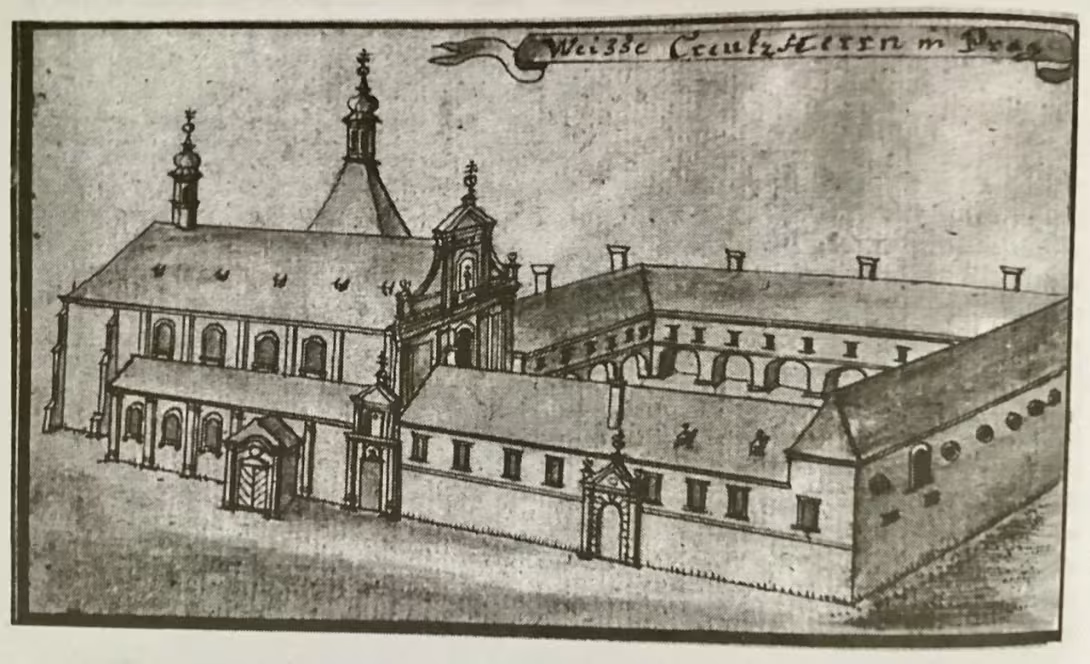

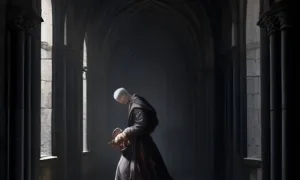
The historical appearance on the left is an AI-generated visualisation and serves as inspiration only.
Historical milestones
- 1256
- The establishment of a cyriac monastery in the Old Town and the promotion of the order to a canonical order.
- 1393
- The burial of St. John Nepomuk's body at St. Cross's Church.
- 1715
- The establishment of the NAVALIS Midsummer Festival.
- 1782
- The abolition of the order of cyriacs and the final demise of the monastery.
Architectural development
The monastery was originally built in Gothic style in the 13th century. The Church of the Holy Cross was Gothic, while the monastery buildings had complex facilities with courtiers and ambition. In the 17th century, the Baroque chapel of God's tomb was built in the monastery area. The monastery was gradually infected with urbanization and today only archaeological findings remain.
Historical events
- 1256
- Pope Alexander IV promoted the order of cyriacs to a canonical order, and King Přemysl Otakar II had them build a monastery in Old Town.
- 1393
- The body of St. John Nepomuk was buried in the church of St. Cross the Greater at the Cyriac monastery.
- 1715
- The Cyriacs founded the Svatojan festival NAVALIS, which took place until the order was abolished.
- 1782
- The order of cyriacs was abolished by the Emperor Joseph II, the monastery has disappeared.
Points of interest
- The Order of Cyriacs was invited to the Czech lands by the King Primohmi Otakar II in the middle of the 13th century.
- The monastery was founded on the desert bank of the Vltava in the line Na Rvačky, where today stands Spiritual Street between the hotel President and InterContinental.
In 1256, Pope Alexander IV promoted the order of cyriacs to canon order and granted them a new constitution.
- The body of St. John Nepomuk was removed from Vltava near the monastery in 1393 and buried in the church of St. Cross the Greater.
- The cyrians founded other monasteries in Pardubice, on Hlumek near St. Wenceslas, Orlík and New Venice.
Guide
This guide is narrated by a synthetic voice generated by artificial intelligence.
Show guide text
This text was created by artificial intelligence and has not been editorially reviewed. It may contain inaccuracies.
The Monastery of the Cyriacs no longer stands today. It used to be the general priory of the order of the Cyriacs and together with the likewise vanished Church of the Holy Cross the Greater, it stood in what is now Dušní Street in the Old Town of Prague.
King Přemysl Otakar the Second called the Cyriac brothers to Bohemia from Livonia. In the year 1256, Pope Alexander the Fourth elevated them to a canonical order. The king had them build the oldest convent in Prague in a place called Na Rvačkách, on a deserted bank of the Vltava River. The Church of the Holy Cross the Greater was part of it.
A large Gothic monastic cathedral stood where today there is an elementary school and gymnasium on Dušní Street. The complex stretched all the way to today's industrial school and lay between the buildings of today's hotels Prezident and InterContinental. It included several courtyards and long multi-story buildings. The square-shaped building of the monastery itself with the monks' cells and the cloister corridor adjoined the southern side of the church. Further to the south lay an orchard and a cemetery. In the paradise courtyard, in the year 1747, the Chapel of the Holy Sepulchre was consecrated, built according to the model of the chapel in the Church of the Holy Sepulchre in Jerusalem.
The order was based on the communal sharing of everything and on sacred poverty. Each monk was allowed to have at most two robes, and in winter additionally a simple fur coat. Their tonsures were cut fifteen times a year, always on a specific feast day. The Cyriacs spread from Prague to other places, among others to Pardubiček, to Klášterec nad Orlicí and to Nové Benátky. Because of this expansion, the general priory was moved to Prague.
On the seventeenth of April 1393, fishermen found the body of John of Nepomuk near the monastery on the right bank of the Vltava River. The Cyriacs, who were also called the Crossbearers with the Red Heart, received it and buried it with reverence in their Church of the Holy Cross the Greater.
During the Hussite Wars, after their branch monasteries were burned down, the Cyriacs had to flee Prague to Poland. They had a monastery there in Kraków near the Church of Saint Mark. They returned to Prague in the year 1628.
On the fifteenth of May 1715, the Cyriacs established the tradition of the Saint John's celebrations Navalis. They held them until the order was abolished by Joseph the Second. Scholars also worked among them. The archivist and church historian Jan Karel Rohn, who lived in the years 1711 through 1779, published in the years 1774 through 1777 the first three volumes of the history of the Czech church by regions.
For kids
Imagine going back to the past to Prague, which was then a small town full of life and culture. And in this very city stood one of the most beautiful monasteries known as Klášter cyriaků.
It was like a game where heroes lived together with priests and monks in a beautiful monastery with tall walls and narrow corridors. And it was here that he was the general priory of the order of cyriacs, which meant that there was a senior official here.
Businesses nearby
Do you run a restaurant, accommodation, shop, museum, rental, wellness or other visitor service near this monument? Show yourself directly to the people heading to it — this is how they will see you in the app and on the web:
Nearby
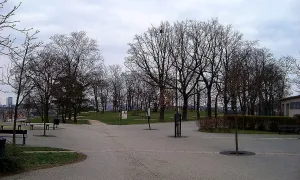
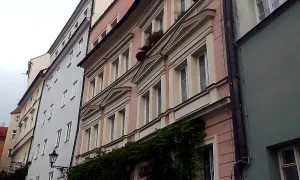
- The present building stands at the site of the former monastery and church of St. Cross the Greater.
- The building stands at the site of the former garden and cemetery monastery.
- The building is at the site of the former St. John's Square, where the monastery was located.
Visualizations and artistic views


The visualisations are generated by artificial intelligence and serve as inspiration.
Tips from visitors
No tips yet. Be the first!
Log in and add your tip.
Sources and literature
Faktickým podkladem tohoto textu byl článek na Wikipedii, jehož autory jsou přispěvatelé Wikipedie. Článek je dostupný pod licencí CC BY-SA 4.0.

Příběhy a pověsti
Legendy, pověsti a příběhy spjaté s touto památkou
Fotografie návštěvníků
Zatím žádné fotografie. Buďte první, kdo přidá fotografii z návštěvy!
Log in a přidejte svou fotografii nebo hodnoťte.
Za ověřenou návštěvu v aplikaci získáte víc bodů — poznáme podle GPS, že jste na místě.
Reviews and comments