






Klášter karmelitánů v Chyši Monastery
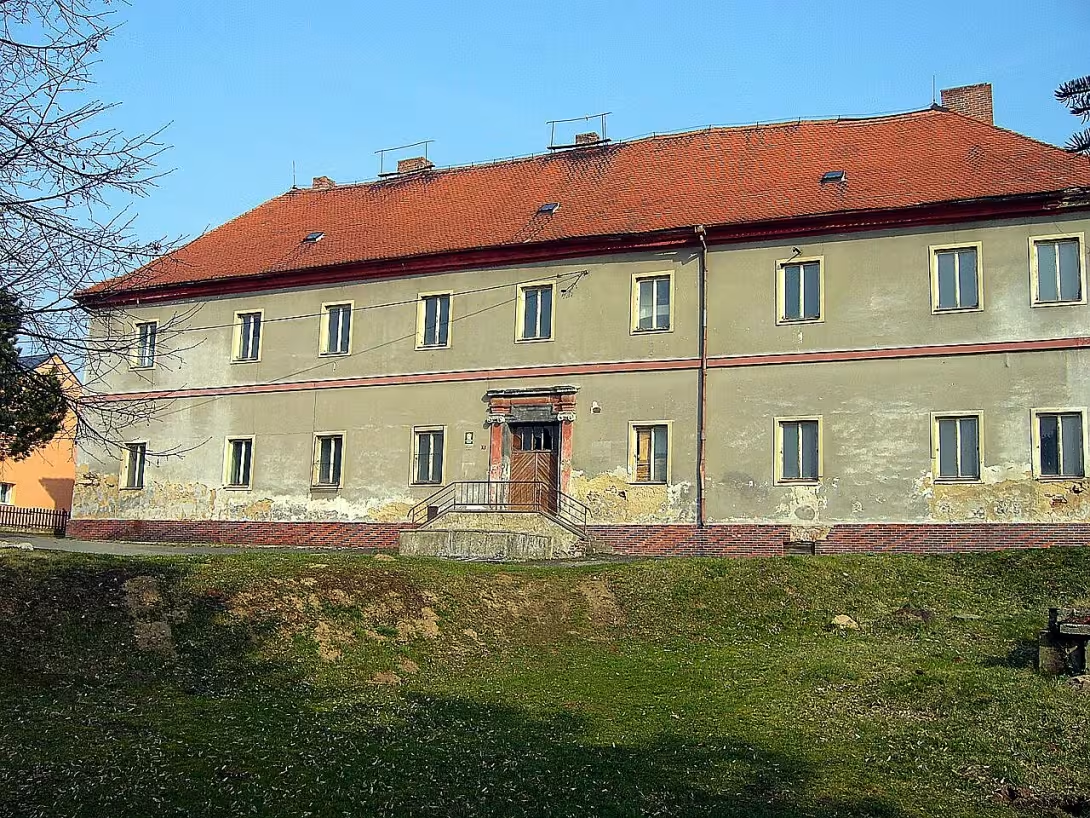
The Karmelitánský Klášter in Chyše is a significant early Baroque structure with deep historical roots. Located in the town of Chyše within Karlovy Vary District, this former convent of the Order of Barefoot Carmelites dates back to the late Middle Ages and was notably reconstructed in the 17th century. Recognized as a cultural monument since 1964, it stands out for its architectural evolution from a medieval foundation through Baroque restoration, reflecting broader religious and historical shifts in Bohemia.
The origins of the Karmelitánský Klášter trace back to 1487 when Burian II. z Gutštejna proposed its establishment, receiving approval from the Prague Consistory on January 9, 1488. The initial church was dedicated to Our Lady of Mount Carmel. During the Reformation in the 16th century, the convent fell into disuse and decay by 1538. Its revival began around 1627 when Gabriel ab Annunziatione reportedly issued a directive for its restoration. However, Jiří Vilém Michna z Vacínova played a crucial role in its re-establishment through his testamentary bequest, inviting monks from the Prague convent of St. John of Nepomuk to aid in reconstruction.
Architecturally, the surviving Baroque structures were constructed in the latter half of the 17th century under Vilém Bedřich Michna z Vacínova's guidance. He confirmed its foundation on August 14, 1660, and laid the cornerstone two days later. Construction faced setbacks due to a fire in 1678 but was completed by June 26, 1679, with further renovations continuing into the early 18th century. Architect Matthias Ruff/Rueff contributed significantly during this period of reconstruction, although details about the original late Gothic structures remain largely unknown.
Throughout its history, the monastery experienced dramatic changes in ownership and purpose. Following its suppression around 1785 or 1787 during a wave of secularization, it served various roles including housing the administration of Chyše Castle, functioning as a nature school, and later being used for residential purposes and retail space. These shifts reflect broader societal transformations from religious to secular uses.
Key events in the monastery's history include its initial establishment approved by the Prague Consistory in 1488, abandonment during the Reformation in 1538, reconstruction efforts led by Vilém Bedřich Michna z Vacínova between 1660 and 1679, and eventual suppression in the late 18th century. The church within the complex was consecrated in 1693 by Francesco Caratti, who also worked for the influential Michna family.
Today, the Karmelitánský Klášter stands as a testament to its rich history and architectural evolution. While it has been without specific use since the early 21st century, its status as a cultural monument ensures its preservation. Visitors can appreciate its historical significance and architectural beauty, making it an intriguing destination for those interested in Bohemia's religious and cultural heritage.
The Karmelitánský Klášter in Chyše offers a unique glimpse into the past, embodying centuries of history within its walls. Its journey from medieval foundation to Baroque masterpiece reflects broader historical narratives, inviting visitors to explore and appreciate its enduring legacy.
Then and now
Drag the slider to compare how the landmark may have looked when it was built with the view today.
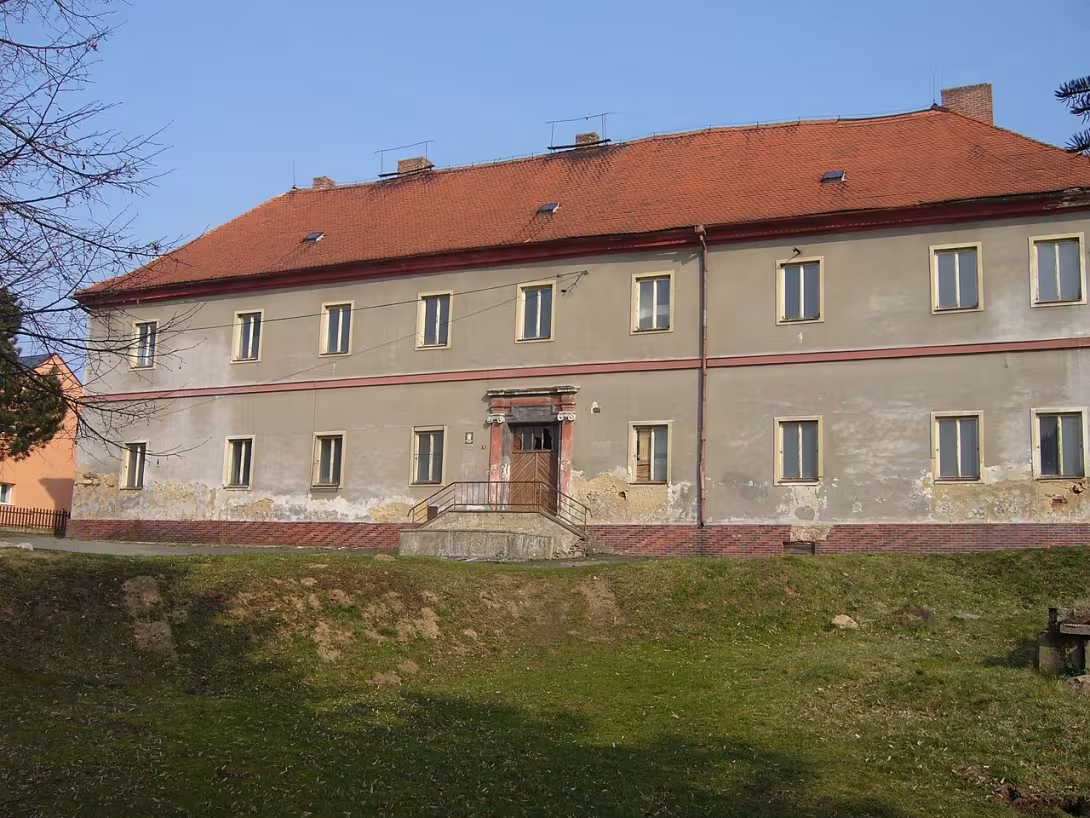

The historical appearance on the left is an AI-generated visualisation and serves as inspiration only.
Historical milestones
- 1488
- Approval by Prague Consistory for the establishment of the monastery.
- 1538
- Abandonment and decay during the Reformation.
- 1660
- Reconstruction initiated by Vilém Bedřich Michna z Vacínova.
- 1679
- Completion of reconstruction after a fire in 1678.
- 1785 or 1787
- Suppression of the monastery.
Architectural development
The original late Gothic structures are largely unknown. The surviving Baroque buildings were constructed in the latter half of the 17th century, with significant contributions from architect Matthias Ruff/Rueff. A fire in 1678 damaged part of the complex, leading to further reconstruction efforts.
Historical events
1488: Approval by Prague Consistory for the establishment of the monastery.
1538: Abandonment and decay during the Reformation.
1660-1679: Reconstruction led by Vilém Bedřich Michna z Vacínova, with a fire in 1678 causing delays.
1785 or 1787: Suppression of the monastery.
Points of interest
- The Karmelitánský Klášter in Chyše was initially proposed by Burian II. z Gutštejna and received approval from the Prague Consistory on January 9, 1488, which is remarkably early for such a significant Baroque structure.
- During its revival in the late 17th century, the cornerstone of the Karmelitánský Klášter was laid just two days after its foundation confirmation by Vilém Bedřich Michna z Vacínova on August 14, 1660, demonstrating a rapid progression from planning to construction.
- The monastery's church was consecrated in 1693 by Francesco Caratti, who had notable ties with the influential Michna family, suggesting that personal connections played a role in its historical development.
- After being suppressed around 1785 or 1787 during secularization efforts, the Karmelitánský Klášter served as diverse functions such as housing for Chyše Castle's administration and later as a nature school, reflecting its adaptability to societal changes over time.
- Despite facing setbacks like a fire in 1678, the construction of the Baroque structures was completed by June 26, 1679, showcasing resilience and determination in preserving the architectural vision despite challenges.
Guide
This guide is narrated by a synthetic voice generated by artificial intelligence.
Show guide text
This text was created by artificial intelligence and has not been editorially reviewed. It may contain inaccuracies.
The Chyší monastery belonged to the Order of Discalced Carmelites and its origins date back to the Middle Ages. The current early Baroque building dates from the seventeenth century and is structurally connected to the neighboring Church of the Name of the Virgin Mary. Since nineteen sixty-four it has been protected as a cultural monument.
The first written mention of the Carmelite monastery in Chyší comes from fourteen eighty-seven. At that time, Burian the Second of Gutštejna, the owner of the estate, proposed its foundation and the Prague consistory approved the proposal on January ninth, fourteen eighty-eight. The church was dedicated to the order's patroness, the Virgin Mary of the Snow. Almost nothing has been preserved to show what the original late Gothic buildings looked like. During the sixteenth century, with the advancing religious reformation, the monks abandoned the convent and in fifteen thirty-eight the monastery ceased to exist.
When exactly the monastery was restored is uncertain. According to František Krásle, the order's general commissioner gave the order for it as early as sixteen twenty-seven. Czech sources, on the other hand, attribute the credit to Jiří Vilém Michna of Vacínov, the first owner of the estate after the Battle of White Mountain. He bequeathed money for the restoration in his will and monks from the Prague convent at the Church of Saint Havel were supposed to come to Chyší.
The construction of the preserved monastery building was confirmed as his foundation only by his younger son Vilém Bedřich Michna of Vacínov. This happened on August fourteenth, sixteen sixty and two days later he ceremonially laid the cornerstone. After three years the first Carmelite moved into the monastery. The construction was led by master mason Matthias Ruff. Work was delayed by a fire in sixteen seventy-eight during which part of the monastery burned down. Prior Norbert began the restoration in the very next year and by the end of June sixteen seventy-nine the damaged part had been repaired. At the same time the church was being restored or rather rebuilt. The cornerstone of another wing was laid in July sixteen eighty-eight and in sixteen ninety-three the church was consecrated. According to Pavel Vlček the project could have come from Francesco Caratti, who was working for the Michnas at that time.
The monastery was dissolved in seventeen eighty-five or seventeen eighty-seven. In the twentieth century the building housed the administration of Chyší Castle, later it was a nature school, apartments, an agricultural school and finally a shop. At the beginning of the twenty-first century the complex remained unused.
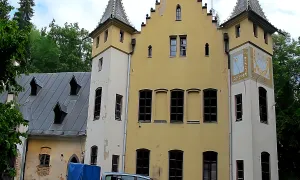
The single-story building has four wings around a square courtyard. The outer façades are modern and without ornamentation, divided only by simple cornices. The arcades through which the original cloister opened into the courtyard were bricked up.
Frequently asked questions
Can the monument be visited?
Religious buildings are usually open mainly during services; at other times a visit is normally arranged with the parish or the operator. We have not verified specific times.
Where is the monument?
Location: č.p. 1, Chyše, Karlovarský kraj. The map on this page shows the exact spot.
Why is the monument protected?
It is listed in the Central List of Cultural Monuments of the Czech Republic as a cultural monument (register no. 28116/4-1278).
Businesses nearby
Do you run a restaurant, accommodation, shop, museum, rental, wellness or other visitor service near this monument? Show yourself directly to the people heading to it — this is how they will see you in the app and on the web:
Events nearby
Zdroj akcí: otevřená data měst a obcí ČR (Národní katalog otevřených dat) a kalendář akcí Národního památkového ústavu.
Accommodation nearby
Themed route
Trasa: Klášter karmelitánů v Chyši a okolí
1. Klášter karmelitánů v Chyši (hlavní cíl) Tento klášter stojí za návštěvu kvůli jeho jedinečné historii a architektuře. Byl založen v roce 1626 a patří k nejstarším klášterům v Čechách. Můžete se zde procházet po nádvoří, navštívit kostel a expozici.
2. Kostel svatého Jakuba Většího (kostel) Kostel svatého Jakuba Většího stojí nedaleko kláštera a stojí za návštěvu kvůli své historické hodnotě. Kostel je zasvěcen svatému Jakubovi Většímu a jeho stavba se datuje do 17. století.
3. Chyše (obec) Obec Chyše stojí za návštěvu kvůli své klidné atmosféře a tradičnímu venkovskému prostředí. Můžete se projet kolem obce a prohlédnout si její historické domy a budovy.
Seasonal recommendations
Jaro
Spring is the ideal time to visit the Carmelite Monastery in Chyše because nature around it begins to bloom, creating a pleasant atmosphere. The lighting is mild and sunlight highlights the architectural details of the building. We recommend visiting the monastery in May or June when the weather is warmest and driest. Don't forget to bring an umbrella as it can still rain during these months.
Léto
Summer is the main season for visitors to the Carmelite Monastery in Chyše. The weather is warm and sunny, but it's also the busiest time. We recommend arriving early in the morning or late afternoon to avoid crowds of tourists. Don't forget to bring sunglasses and a hat as the sun can be strong.
Podzim
Fall is a beautiful season to visit the Carmelite Monastery in Chyše. The lighting is soft, and nature is full of colors. We recommend visiting the monastery in September or October when the weather is cooler but still pleasant. Don't forget to bring warm clothing and comfortable shoes as autumn paths can be wet.
Zima
Winter is a quiet season for visitors to the Carmelite Monastery in Chyše. The lighting is clear, and architectural details are seen in full beauty. We recommend visiting the monastery in December or January when the weather is coldest. Don't forget to bring warm clothing and a scarf as it can be cold and sunlight is weaker.
Visualizations and artistic views


The visualisations are generated by artificial intelligence and serve as inspiration.
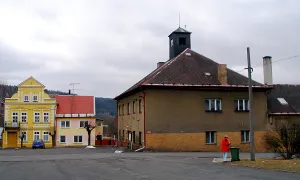
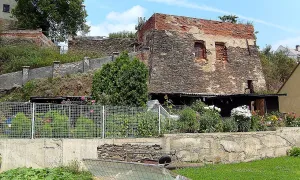
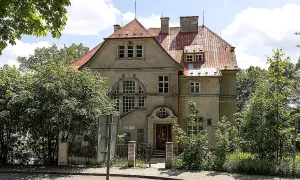
Photos from the area
Real photos taken near the monument


Zdroj a licence jsou uvedeny u každého snímku.
Tips from visitors
No tips yet. Be the first!
Log in and add your tip.
Sources and literature
Photos: Salim2 / CC BY-SA 3.0 — Wikimedia Commons. The author and licence also appear when you hover over the image.
Faktickým podkladem tohoto textu byl článek na Wikipedii, jehož autory jsou přispěvatelé Wikipedie. Článek je dostupný pod licencí CC BY-SA 4.0.
Location on the map
Příběhy a pověsti
Legendy, pověsti a příběhy spjaté s touto památkou
Příběh: Klášter karmelitánů v Chyši
Bylo to v pondělí ráno, kdy Martin zjistil, že se za tichým stínem oltáře objevuje temný vzduch, který nikdy dříve nevnímal. Karmelitánský klášter v Chyši by…
Číst příběh
Pověst: Klášter karmelitánů v Chyši
Traduje se, že oheň, který pohltil část chyšského kláštera v roce 1678, nebyl jen náhodnou pohromou osudu. Staří obyvatelé Chyše si po generace předávali vyp…
Číst příběhFotografie návštěvníků
Zatím žádné fotografie. Buďte první, kdo přidá fotografii z návštěvy!
Log in a přidejte svou fotografii nebo hodnoťte.
Za ověřenou návštěvu v aplikaci získáte víc bodů — poznáme podle GPS, že jste na místě.
Reviews and comments