



synagoga v Chyši Synagogue
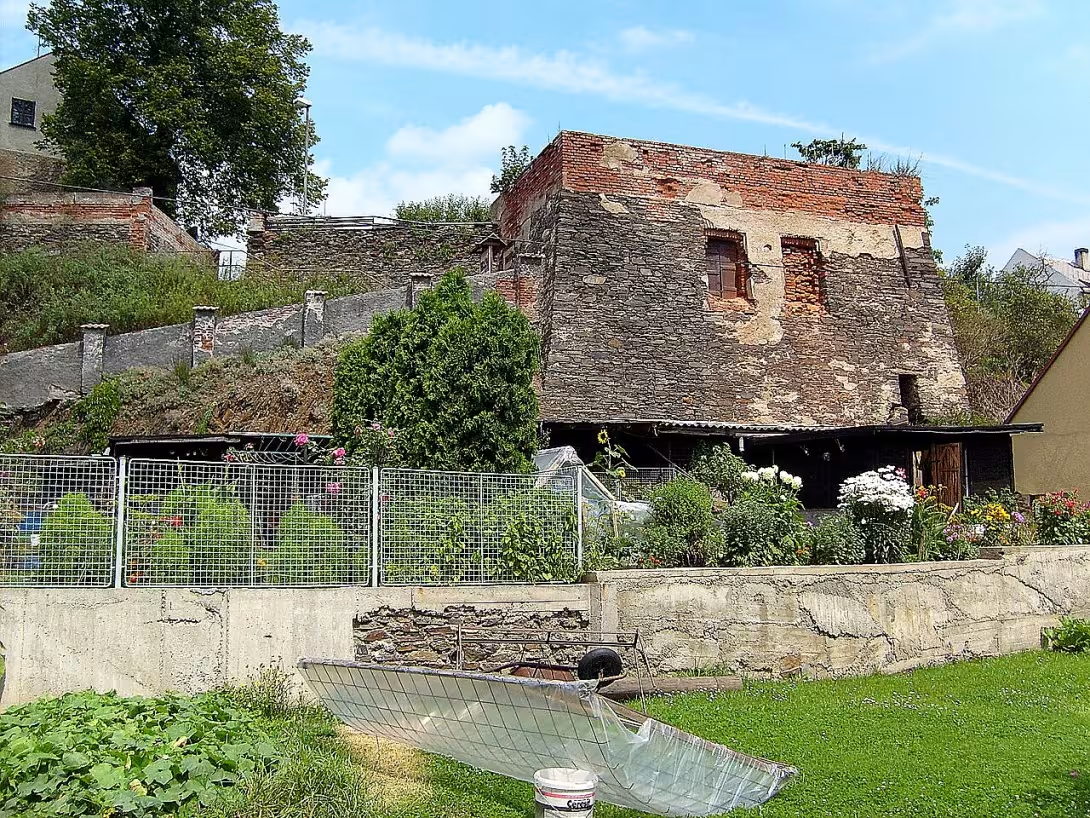
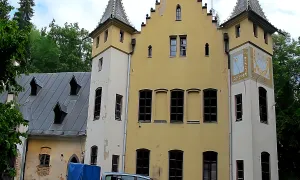
The synagogue in Chyše is one of the few preserved historical objects of Jewish origin in the Karlovy Vary Region. It was built in 1848 as a replacement for an older wooden prayer house. It was located on the southern edge of the city, close to the 15th century urban fortification, and served as the centre of the local Jewish community.
Its importance lies in the architecture and documentation of the reform changes in the Austrian-Hungarian society and the subsequent persecution that destroyed the synagogue.
The creation of the building in 1848 was related to reforms in Austria-Hungary which allowed Jews to participate more in public life. The new building in neoclassical style replaced the wooden prayer house and served as a school in addition to services until 1870. From the local materials built on the fortifications, it connected old and new.
The architecture of the synagogue is characterized by a walled prism body with a valb roof. The facade is smooth, with high windows and a profiled ledge. The top floor contained a prayer hall, the bottom floor contained a Jewish school. The entrance to the prayer hall led from the Jewish ghetto, while the public had access through the lower portal with the above-light.
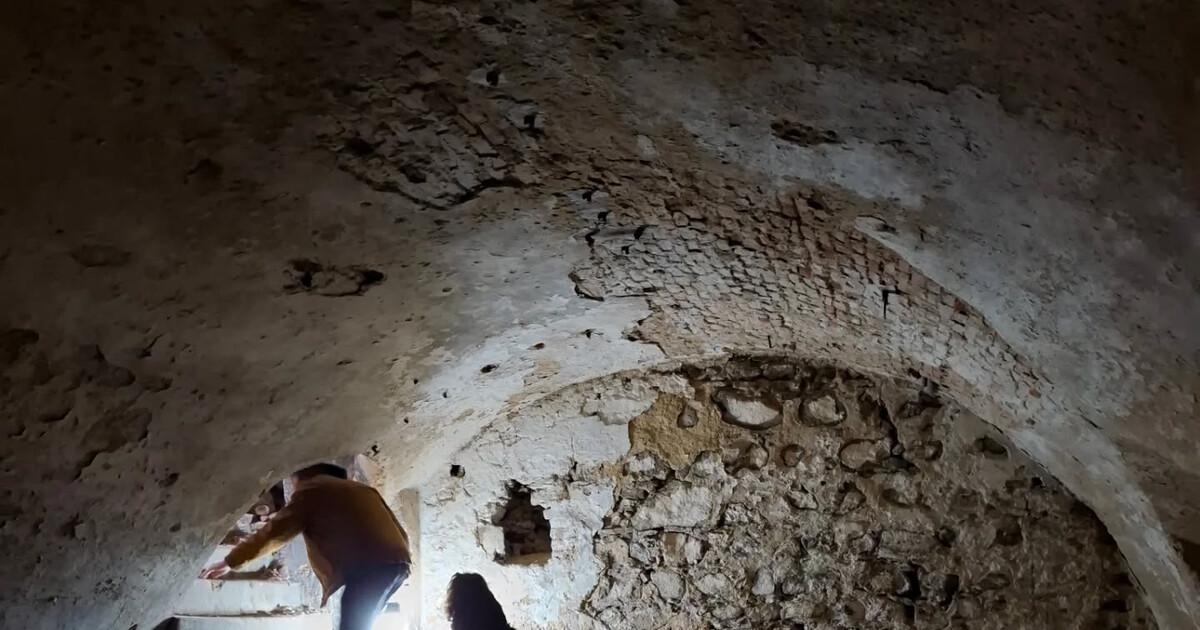
After Nazi persecution in 1938, the synagogue was abandoned and the local Jewish community disappeared. After the war, the building began to wither, and in 1972 it was partially demolished. Only the basement and the so-called Jewish stairs preserved the original form of the building.
Today, synagoga v Chyši is one of the few preserved monuments, reminiscent of the history of the local Jewish community. Access is possible, the visit helps understand the development of local society and the impact of events on its fates. This monument is proof of the heritage and an important place for those interested in the past.
Then and now
Drag the slider to compare how the landmark may have looked when it was built with the view today.
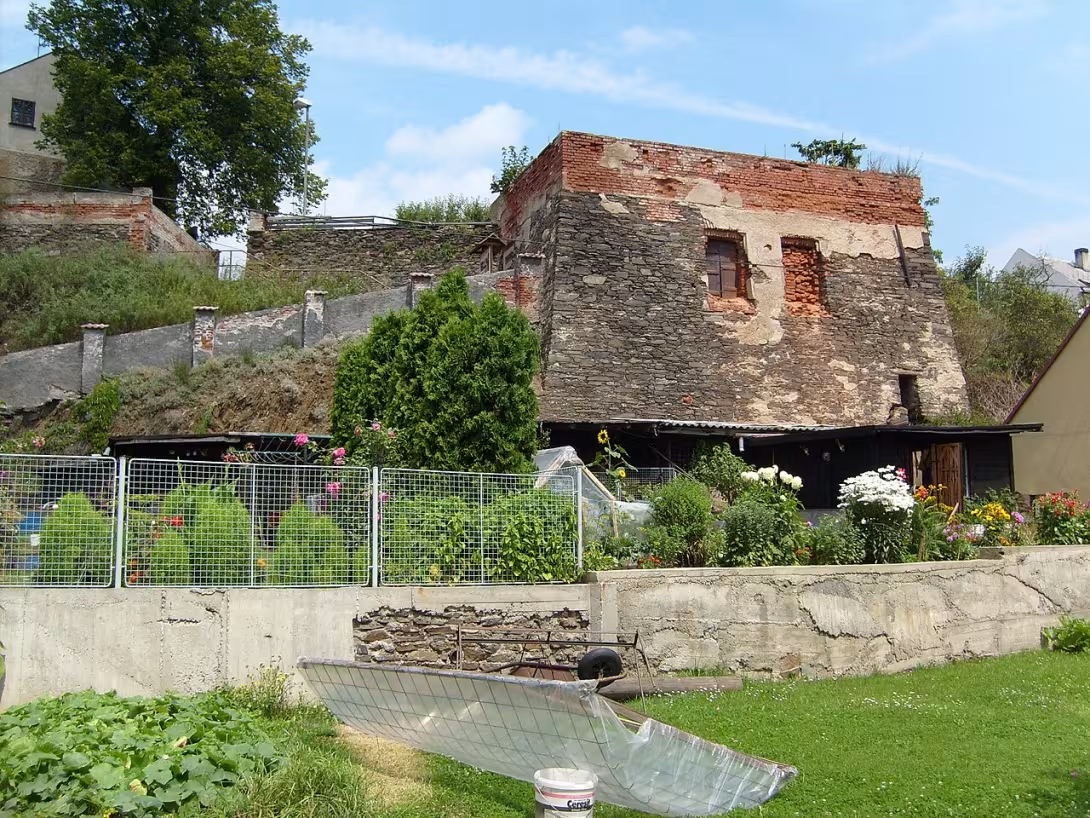
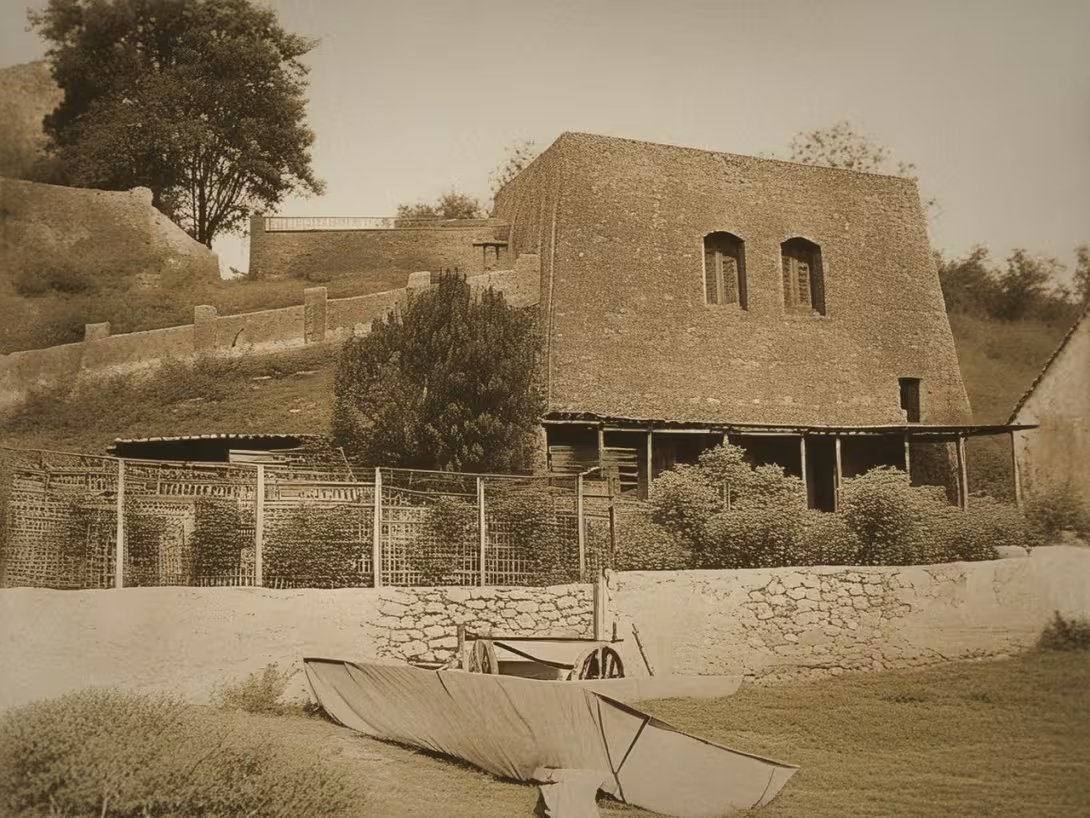
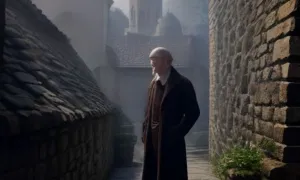
The historical appearance on the left is an AI-generated visualisation and serves as inspiration only.
Historical milestones
- around 1400-1500
- The creation of city fortifications in Chyše, which was part of defence systems in the region
- 15th century
- The Jewish village in Chyše settled and began to develop within the city
- 1848
- Position of the new synagogue as a substitute for an older wooden prayer house, associated with reforms in Austria-Hungary
- 1870
- The synagogue served as a school until this year
- 1938
- Nazi persecution led to the abandonment of the synagogue and the disappearance of the local Jewish community
- 1945
- After the end of World War II, the collapse of the synagogue building began
- 1972
- Cannon demolition of part of synagogue, conservation of basement and Jewish stairs
Architectural development
The synagogue was a walled prismatic building with a valb roof covered with shale. The facade was smooth, broken by high windows and decorated with a profiled ledge. There was a prayer hall on the top floor, Jewish school on the bottom floor. The building was built from local materials and followed the late medieval fortification.
Historical events
- 1848
- Built a new synagogue in neoclassical style as a substitute for an older wooden prayer house.
- 1870
- There was a Jewish school in the synagogue building.
- 1938
- The synagogue was abandoned because of Nazi persecution against the Jews.
- 1945
- After the Second World War, the dissension of the building and the gradual demise of the Jewish community began.
Points of interest
- The synagogue in Chyše is one of the few preserved historical buildings of Jewish origin in the Karlovy Vary Region. - It was built in 1848 as a replacement for an older wooden prayer house. - It was near a 15th-century urban fortification. - In 1938, it was destroyed by Nazi persecution and abandoned by a local Jewish community. - Only the basement and so-called Jewish stairs were preserved.
Guide
Show guide text
This text was created by artificial intelligence and has not been editorially reviewed. It may contain inaccuracies.
Welcome to Chyšy, a place where history enters the landscape in a very deep and sometimes painful way. You are standing in front of a building that once formed the spiritual and social core of the local Jewish community. It's a synagogue. Feel its present form, its silence and the atmosphere that surrounds you now. You may only see an old structure in it, but for many generations, this building was a symbol of faith, hope and life together. Stop for a moment and just feel the space around you like this before we go together through time.
To understand why this building stands here and what it meant to the city, we have to go back much further, until Chyše began to form as a fortified city. Look around you and think about where you are right now. This synagogue was built on the southern edge of the city, close to the late medieval fortification. These walls arose between about a year and four hundred and a thousand five hundred. At that time, the city's defence was crucial because it was part of the wider defence systems throughout the region. It is in this safe space, within the city walls, that the Jewish community settled in the 15th century. It was a community that gradually developed here, traded and became a natural part of life in Chyšy.
For years, the Jewish people met in a much more modest building, a wooden prayer house. But the wood is subject to decay over time, and with the growth of the community and the change of times, the need for something more permanent and dignified came. The year is a thousand eight hundred forty-eight. It is a period of great change, throughout Austria-Hungary reforms are under way that bring a new perspective on the rights of the people and their position in society. It was in this spirit of modernization and flourishing that this new synagogue was built to replace the old wooden structure.
Now pay attention to the architecture of the building itself. If you look at its overall appearance and shapes, you will notice that it is performed in neoclassical style. This style was very popular at the time because it returned to the purity and balance of ancient Rome and Greek. It's not about pomp, it's about peace and order. Look at the facade and feel the geometry of the building. Neoclassicism here expresses stability and dignity, which exactly matched the role that the synagogue held in the village. It was a building that was meant to emit peace and pride of the community, which in the year one thousand eight hundred forty-eight dared to build such a representative house of prayer.
However, this building was not intended only for religious ceremonies. The synagogue in Chyšy had a very important social function in its early decades. She also served as a Jewish school. So imagine that there were not only prayers in these walls, but also the voices of children who learned to read, write and study their traditions. This educational activity took place here until the year one thousand eight hundred seventy. It was a place of transfer of knowledge from generation to generation, a place where the identity of young people was formed both within their community and throughout the city.
Over the decades, the synagogue has become a fixed point in the life of local people. However, history is sometimes cruel and peaceful periods are interrupted by tragedies. Let's move on to the darkest chapter of this place. In the year one thousand nine hundred thirty-eight came a wave of Nazi persecution. That was the break that changed everything. The Jewish community in Chyšy was violently disrupted, people were expelled from their homes and the synagogue was abandoned. At that moment, the prayers and the children's laughter, which sounded before, were silent. With the gradual disappearance of the Jewish village in place, the building lost its meaning and its guardians.
After the end of World War II in a thousand and nine hundred forty-five, life in the Chyšy seemed to return to normal, but there was no return for this building. Without its community, the synagogue slowly began to decay. Time, moisture and lack of care began their work. The building, which was a symbol of a new beginning and hope in a thousand eight hundred forty-eight, became a silent witness to tragedy and oblivion. It is sad to see how the construction, which was to be eternal, was gradually subject to decomposition.
And yet there is one thing you should be interested in and perhaps even surprised by. Despite all destruction, despite years of abandonment and understanding, the synagogue remains a very rare place in Chyšy. If you look at the map of the Karlovy Vary Region, it is one of the few preserved historical buildings of Jewish origin throughout the region. Most of these buildings were completely demolished or levelled at the time of persecution. The fact that this building still stands, even in any condition, is essentially a small miracle. It is a physical proof of the existence of people who have lived here, worked and loved, and who could otherwise be completely erased from the city's memory.
This building is now an open book telling us about the rise and fall of the human spirit. It is a reminder of how fragile civilization can be and how important it is to remember those who are no longer with us. When you stand before this monument today, don't just look at it as an old wall. Feel it as a bridge between the past and the present.
Now I'm leaving you to look around in peace and go around the building. Note the contrast between neoclassical synagogue shapes and the ancient character of the surrounding fortifications. This combination will best show you how the layers of history in the Chyšy overlap for centuries.
Thank you for your attention and for taking the time of this silent witness to history. I wish you a pleasant continuation in exploring the beauty and mystery of this city. Goodbye.
Tips for visitors
It is best to visit during spring or autumn days when the weather is pleasant and visitors are less numerous. Avoid summer hot days when temperature may be higher in the ruin. It is also suitable to visit in the morning when the light is pleasant for photography.
The monument is available by car and public transport. It is recommended to park out of the city and to walk, which is also pleasant for sightseeing.
Always bring suitable clothes for cold weather, because the ruin can be cold. It is also useful to have a guide or map with you to make it easier to navigate around. It is advisable for photography to have a high-quality camera or smartphone with a good photographic ability, because the light in the ruins can be shaded.
The best places for photography are the windows of the synagogue and its surroundings, where you can see the connection with the late medieval fortification. It is convenient to photograph in sunny weather when light is bright and natural. There are woods and fields nearby that offer an interesting background for photos. Avoid shooting when the sun is directly above the synagogue to avoid strong shadows.
In the vicinity of Chyše is worth visiting the late medieval fortification from the 15th century, which is part of the historical core of the city. It's a fascinating notoriety associated with rich history. In the vicinity there are forests and fields which are part of the natural environment of the region of Karlovy Vary. For nature lovers there is the possibility to walk and observe natural scenery.
The synagogue in Chyše can be interesting for children in terms of historical experience, especially if you explain the importance of old buildings and their importance for human history. There is plenty of free space for games and walks around. Children can enjoy the natural landscape of forests and fields that are around. You could also add a visit to a short historical story that would impress children and help them better understand the importance of the place.
Frequently asked questions
Can the monument be visited?
Religious buildings are usually open mainly during services; at other times a visit is normally arranged with the parish or the operator. We have not verified specific times.
Where is the monument?
Location: Chyše, Karlovarský kraj. The map on this page shows the exact spot.
Why is the monument protected?
It is listed in the Central List of Cultural Monuments of the Czech Republic as a cultural monument (register no. 1000023631). It is protected as part of a larger listed ensemble.
Businesses nearby
Do you run a restaurant, accommodation, shop, museum, rental, wellness or other visitor service near this monument? Show yourself directly to the people heading to it — this is how they will see you in the app and on the web:
Events nearby
Zdroj akcí: otevřená data měst a obcí ČR (Národní katalog otevřených dat) a kalendář akcí Národního památkového ústavu.
Nearby
V okolí Chyše se nachází pozdně středověké opevnění z 15. století, které je součástí historického jádra města. V blízkosti se nachází také přírodní krajina s lesy a políčky, které jsou součástí regionu Karlovarského kraje.
Accommodation nearby
Themed route
Daily trip route around the village Chyše
1. Synagogue in Chyše Type: historical religious building Why is it worth a visit: It is a rare preserved 19th-century synagogue that maintains the authentic architecture of the Jewish cult. It is an important cultural monument and an example of local history.
2. Late medieval fortification Type: Military buildings from the 15th century Why is it worth a visit: Fortification represents a well preserved part of the historic Myší core that reflects the region's military and defence tradition. It is interesting for archaeological and historical attractions.
3. Forests and fields around Type: natural landscape Why is it worth a visit: The surrounding area offers quiet forest trails and agricultural areas that are part of the region of the Karlovy Vary region. Ideal for walking and exploring local nature.
Route: From the synagogue you go to fortification, which is located nearby. After viewing the military buildings, you continue to the forest or to the fields where you can relax and enjoy the natural environment. The whole route can be completed in 2-3 hours walking.
Seasonal recommendations
Spring
In Chyše, nature awakens at this time, and the synagogue in the ruin takes on special spells. The sun's rays shine on the wall as the sun rises, and the evening dark creates a skyscraper effect. The first spring flowers flourish in the surrounding area, and light is reflected in the windows of the monument, which is projected into empty spaces. The atmosphere is quiet and airy, as if the monument was preparing for a new life.
Practically, it is advisable to come in a timely time to avoid crowds starting to gather during the day. Suitable clothes should be light, but warm enough for possible colder morning or evening temperatures. It is also recommended to take a lead with you because the inner space is in ruins and further information may be needed. The best time to visit is between 9:00 and 12:00, when the light is pleasant and the crowds are less.
Visualizations and artistic views


The visualisations are generated by artificial intelligence and serve as inspiration.
Photos from the area
Real photos taken near the monument


Zdroj a licence jsou uvedeny u každého snímku.
Tips from visitors
No tips yet. Be the first!
Log in and add your tip.
Sources and literature
Photos: Ben Skála / CC BY 2.5 — Wikimedia Commons. The author and licence also appear when you hover over the image.
Faktickým podkladem tohoto textu byl článek na Wikipedii, jehož autory jsou přispěvatelé Wikipedie. Článek je dostupný pod licencí CC BY-SA 4.0.
Location on the map

Příběhy a pověsti
Legendy, pověsti a příběhy spjaté s touto památkou
Fotografie návštěvníků
Zatím žádné fotografie. Buďte první, kdo přidá fotografii z návštěvy!
Log in a přidejte svou fotografii nebo hodnoťte.
Za ověřenou návštěvu v aplikaci získáte víc bodů — poznáme podle GPS, že jste na místě.
Reviews and comments