






Klostermannova chata Mountain cottage
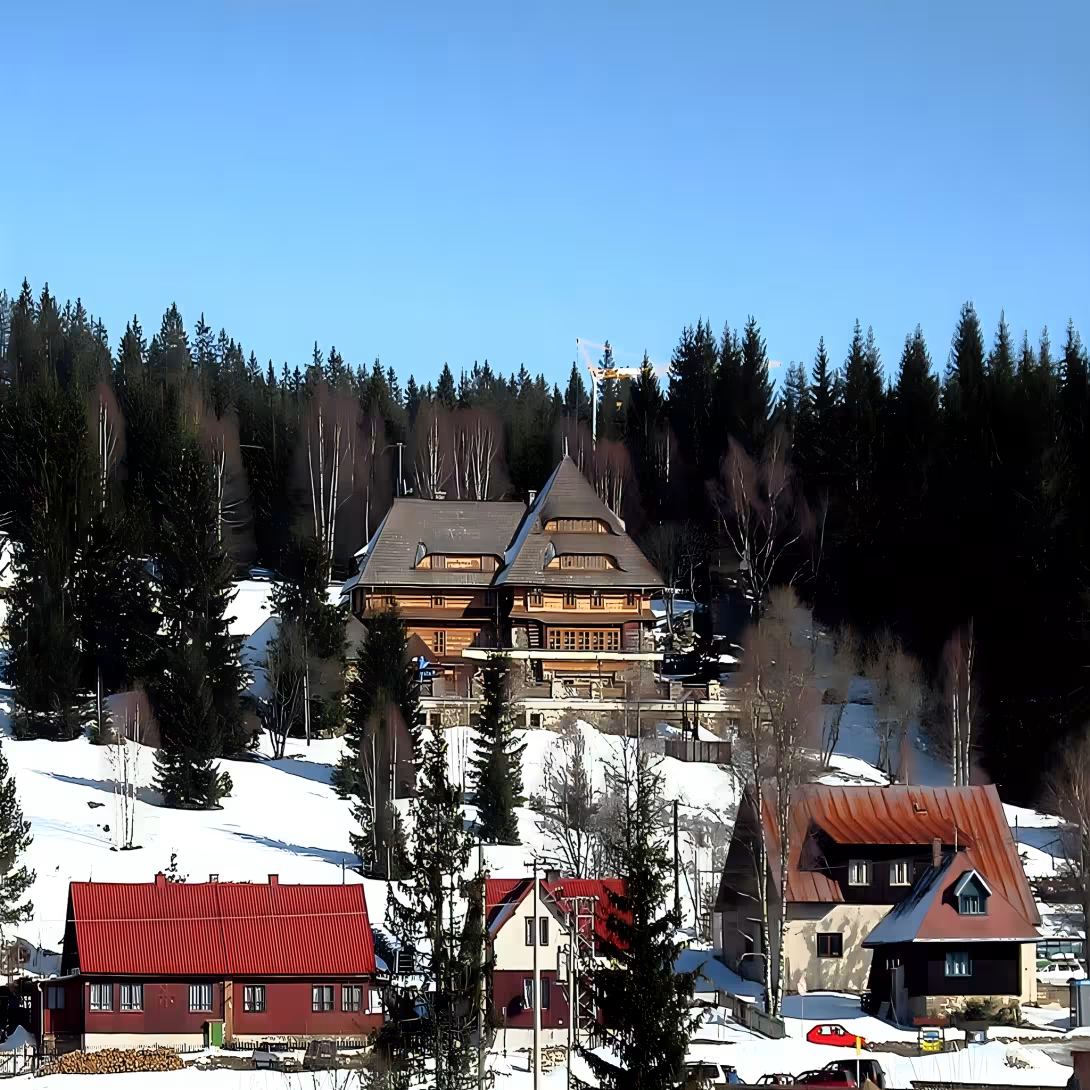
Klostermannova chata is a historic mountain building in the village Modrava, which since 2004 has been a hotel. It is located at an altitude of approximately 1 000 metres on the slope above the eastern border of the Blue Sea towards Filip Huti (Klatovy district, Pilsen region). The building is registered in the Central List of Real Cultural Monuments of the Czech Republic and its architecture follows the traditional Šumava wooden structure.
The building for the Club of Czechoslovak tourists was built according to the plans of architect Bohuslav Fuchs in the first half of the 1920s. The whole construction was completed in 1924 at the cost of CZK 1,041 500.
Architecturally, it is a storey building with a two-storey living attic and a U-shaped floor plan. The building stands in the slope above the valley of the river Vydra. The ground floor is made of walled quarry stone, while the walls on the first floor are lined with wood. Above the dominant prism section in the south facade is a tent roof with shingles cover; The other roofs are valbos with skylights. In the north shorter wing, which equalises the terrain differences between the upper and lower parts of the building, the apartment manager is located. There is a stone terrace with a railing in front of the main west front.
The fate of the building has been variables over the years. After completion, it was owned by the Czechoslovak Tourist Club. During World War II, it was occupied by German military forces for the Wehrmacht local headquarters. After 1945 the Czechoslovak Border Guard was located here. After its transfer, the building served as a recreational facility for employees of Škoda Plzeň until 1993. In 1996 the cottage was declared a cultural monument. The new owner acquired the building in 2000, which enabled extensive reconstruction in 2002- 2004.
Significant events include the fact that the writer Karel Klostermann tapped the base stone of the new cottage, but the completion of the building dedicated to his memory was no longer forthcoming. In 1938 the price for the bed was CZK 8 and CZK 5 in the dormitories. The building was equipped with electrical lighting and water supply from the beginning; The guests had a bath and shower.
Today the cottage offers accommodation and a restaurant with a capacity of 60 seats. It is approximately 360 metres from the Moravian Federal House. There is a green marked tourist path to Filipova Huta around the building, where it connects to the Golden Path leading to the Mountain Kvilda.
Klostermannova chata represents an important historical point on the Šumava route. It is a suitable place for stopping and accommodation while visiting the Šumava National Park.
Historical milestones
- 1924
- Completion of the cottage construction for the Czechoslovak Tourist Club
- 1938
- The price for the bed was CZK 8 and CZK 5 in dormitories
- 1940-1945
- Use of German forces for Wehrmacht headquarters
- 1945
- The seat of the Czechoslovak Border Corps
- 1996
- Declaration of cottage for cultural monument
- 2002-2004
- Implementation of extensive reconstruction of the building
Architectural development
The cottage was built in the first half of the 1920s according to the plans of architect Bohuslav Fuchs and completed in 1924. Originally offered accommodation with electric lighting and water supply. After reconstruction between 2002- 2004, the cottage was reopened as a hotel.
Historical events
- 1924
- Completion of cottage construction
- 1938
- Confiscation by German forces during World War II
- 1996
- Declaration of cottage for cultural monument
Owners
- 1924
- 1938-1945
- 1945-1993
- 1993- 2000
- 2000
Points of interest
- The construction was designed by the architect Bohuslav Fuchs and was completed in 1924 for a price of CZK 1 041 500. - During World War II, the building was occupied by German military forces for the Wehrmacht headquarters. - The author Karel Klostermann reached the base stone of the cottage, but he did not see the completion of the building. - In 1938 the price was 8 crowns per bed and 5 crowns in dormitories. - The building has been equipped with a water duct and electrical lighting from the beginning.
Guide
Show guide text
This text was created by artificial intelligence and has not been editorially reviewed. It may contain inaccuracies.
Welcome to Blue. You are standing in one of the most impressive places in Šumava, where mountains touch the sky and where the air carries the scent of pine trees and pure mountain mornings. In front of you is Klostermannova chata, a building that is not just an ordinary tourist sanctuary, but a living witness of the many decades that have taken place here. Feel the atmosphere, feel the silence of the surrounding forests, and shatter the height, because right here, in a thousand meters above the sea, on the slope above Blue, human history collides with the unruly force of nature. Take a look at this wooden structure and try to imagine how many generations of pilgrims, tourists and soldiers sought shelter under this roof both from storms and from fatalities.
Let us now return together to the time when the first foundations were laid here. Imagine 1924. Czechoslovakia is a young, enthusiastic state and people want to discover their own beauty. The club of Czechoslovak tourists then came with great intention - to create a place that would serve all nature lovers. The construction was an ambitious project. At that time, the amount of one million forty-one thousand five hundred crowns that cost the completion of the cottage was absolutely stunning. It wasn't just a cabin, it was a famous building, a symbol of modern tourism and love for our mountains.
Now pay attention to the architecture itself, which you are now observing. Look at how the building is integrated into the field. This whole proposal belongs to a man named Bohuslav Fuchs. He was an architect who knew how to combine modern needs with tradition. Notice the typical shumava wooden architecture. The construction does not act as a foreign body in the landscape, but rather as if it had grown directly from the rock and wood of this valley. Its traditional appearance, working with material and the way the cottage adapts to slope slope are proof of the architect's championship. Although the building changed over the years, especially during the extensive reconstruction between 2002 and 2004, its soul and its ability to fit harmonically into the Šumava landscape remained preserved.
But this cabin has more than just wood and stones in it. It also has human stories that are deeply imprinted into its walls. Imagine that excited moment where there was a base stone. The author Karel Klostermann himself was present here. He knocked the stone, he put his faith and his love of these mountains into this building. At the same time, however, it is a sad story, because the famous author did not get to finish his building. But his name remained here as if he wanted to link his literary work to this place forever.
But history has not always been about calm and tourist walks. Do you know this cabin has gone through a very dark time? When World War II broke out, the atmosphere of Blue was shattered. Between 1940 and 1945, the building was taken by force by German forces. The place to serve the rest and joy of nature became the headquarters of the Wehrmacht. Imagine the contrast - instead of laughing tourists and the silence of the forest there was a strict military order and shadows of war. After the end of the conflict, however, in 1945, the cottage returned to the hands of Czechoslovak forces, namely, it became the seat of the Border Corps. Each next decade left its mark, from the postwar years to the recognition of its historical value in 1996, when it was declared a cultural monument.
If you look at the building again, you might find one interesting thing that will help you better understand how much the world has changed since its inception. Imagine 1938. At that time the price of the bed in the cottage was only eight crowns. If you were looking for a more modest bed and breakfast in the dormitories, you would only pay five crowns. These are times when the journey to the mountains was not resolved by modern technologies but by simple joy of movement and proximity to nature. Today, these amounts may seem like from another world, but it is these little details that tell us how deep the roots of this place are.
Now that you know the history and the fates associated with this construction, I suggest you just keep walking. Klostermannova chata will continue to stand here, as guardian of the Šumava roads and a memoir of all those who sought peace here. Feel the atmosphere that comes back here with every sunrise and every evening shadow that falls over the slopes of Blue. Thank you for stopping by and paying attention to this place. Read the Šumava wind and enjoy every minute of your journey in these beautiful mountains. Goodbye.
Tips for visitors
The best time to visit is autumn, when the forests of Šumava are colored in golden tones, or winter, when the cottage is very cosy in the snowy landscape. You can reach the cottage by car or public transport; We recommend checking the current connection and parking options in the internet search engine.
Don't forget to bring with you suitable hiking shoes, waterproof clothes and a map of the surroundings to fully enjoy the nature walks. For best photos, use the morning or late afternoon light to highlight the details of traditional wooden architecture.
In the nearby area, visit the Moravian Federal House, which is approximately 360 metres away, or follow the tourist path towards Filip Huta and then the Golden Path.
For families with children are ideal short and easy walks in the immediate surroundings of the cottage, which allow the least safe to know Šumava nature.
Businesses nearby
Do you run a restaurant, accommodation, shop, museum, rental, wellness or other visitor service near this monument? Show yourself directly to the people heading to it — this is how they will see you in the app and on the web:
Nearby
The Klostermannova chata is approximately 360 metres from the Moravian Federal House. There is a tourist trail around the cottage, which continues to Filip Huta and then to the Golden Path.
Accommodation nearby
Themed route
1. Federal house (building) - The entry point of the route is approximately 360 metres from the main destination. 2. Klostermannova chata (mountain cottage) - The main destination of the trip and the resting place. 3. Filipov Hutí (settlement) - Next stop on the hiking trail leading from the cabin. 4. Golden stezka (historical route) - The final part of the route to which the trail from Filip Huta continues.
Seasonal recommendations
Spring: Klostermannova chata offers a unique experience in spring, where nature begins to come to life and the surrounding forests turn into living shades. The sunny days provide ideal conditions for walking along the surrounding paths, where you can enjoy flowering pine trees and views of Blue. The atmosphere is calm and friendly, which makes spring an ideal time to visit without large crowds. We recommend to take with you clothes suitable for variable weather, because temperatures can be medium to cold, especially in valleys. The best time to visit is in the afternoon when the sun lights up the landscape in its most beautiful glow.
Summer: In the summer period, Klostermannova chata becomes a popular place for tourists looking for heat relief. Hot days bring long sunny dawn, allowing you to enjoy the beauty of the mountain environment fully until late evenings. The atmosphere is lively and vibrant, especially in the main summer season, where families and individuals are meeting here to relax in the countryside. We recommend visiting a cottage earlier morning or evening in order to avoid the highest mountains of crowds. Don't forget to bring sun cream and light clothes suitable for warm weather.
Autumn: An autumn visit to Klostermann's cottage offers a view of the extraordinary golden and red palette of leaves, making this time a unique year of beauty. The sunny days are ideal for walking along the surrounding paths, where you can enjoy a quieter atmosphere without large crowds. Wet and cold days require clothes suitable for variable conditions, as temperatures can change rapidly. The best time to visit is in the afternoon when the sun lights the leaves in its most beautiful colors.
Winter: Klostermannova chata in winter offers a magical view of the snow of the mountain and a quiet, icy region. The atmosphere is quiet and friendly, which makes winter an ideal time for those who seek escape from urban life. The opening hours of the cottage may vary depending on the weather and we recommend checking the current information before visiting. We recommend to bring warm clothes, protective shoes and perhaps ski equipment or other winter activities. The best time to visit is in the afternoon when the sun lights up the snow landscape in its most beautiful glow.
Visualizations and artistic views


The visualisations are generated by artificial intelligence and serve as inspiration.
Photos from the area
Real photos taken near the monument


Zdroj a licence jsou uvedeny u každého snímku.
Tips from visitors
No tips yet. Be the first!
Log in and add your tip.
Sources and literature
Fotografie: Dingoa / CC BY-SA 3.0, rozlišení zvýšeno umělou inteligencí — Wikimedia Commons. The author and licence also appear when you hover over the image.
Faktickým podkladem tohoto textu byl článek na Wikipedii, jehož autory jsou přispěvatelé Wikipedie. Článek je dostupný pod licencí CC BY-SA 4.0.
Location on the map
More monuments – Modrava
Show all in the municipality
Příběhy a pověsti
Legendy, pověsti a příběhy spjaté s touto památkou
Fotografie návštěvníků
Zatím žádné fotografie. Buďte první, kdo přidá fotografii z návštěvy!
Přihlaste se a přidejte svou fotografii nebo hodnoťte.
Za ověřenou návštěvu v aplikaci získáte víc bodů — poznáme podle GPS, že jste na místě.
Reviews and comments