



Kokšín Castle
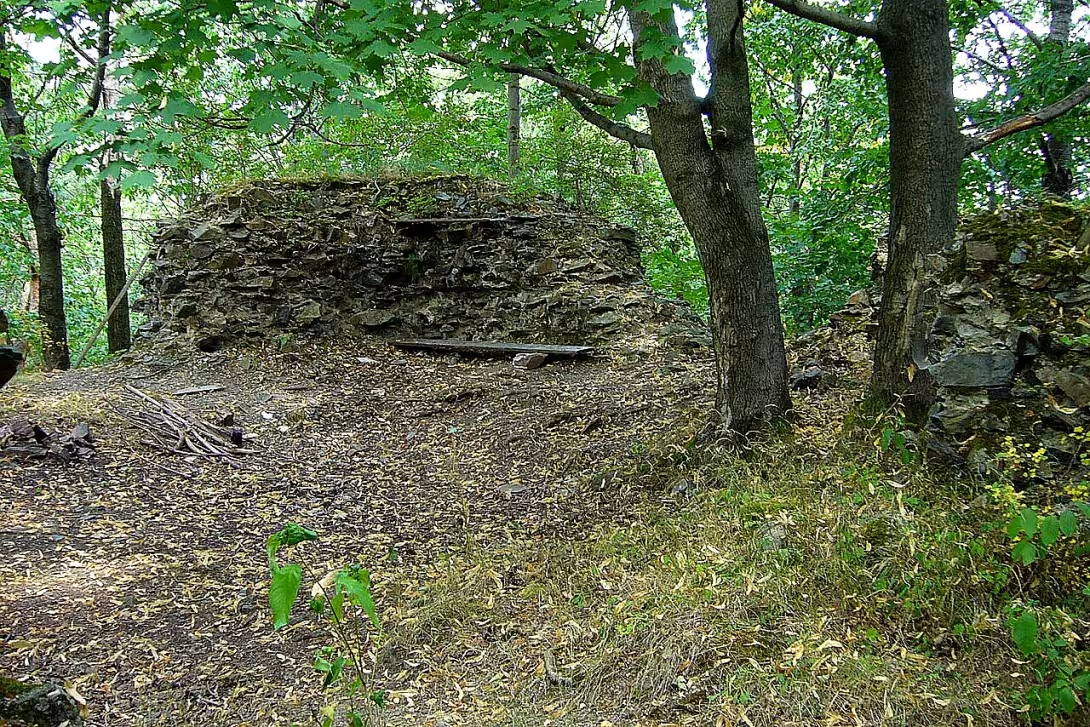
Kokšín is a ruin of the medieval fortified building on the hill above the right bank of the river Úhluj, about 750 metres northwest of the same-name village in Klatovy district. The 15th century location has been a protected cultural monument since 1964. It represents an example of a small aristocratic residence or a forward fortification whose precise function remains the subject of professional discussion.
No written sources have been preserved to the building to illuminate its history, founder or inhabitants. All knowledge of the creation and use of the site in the 15th century comes exclusively from archaeological findings. There is a hypothesis that the site originally served as an advance fortification of the nearby castle Švihov, which later used a minor nobleman to build his own mansion.
The construction form of the complex is divided into two parts. The southern plateau, where no traces of the building were found, was probably protected only by light wooden fortification. The northern part consisted of a castle core surrounded by a moat and a valley, except the south side. The core itself further protected the inner wall with a moat. Behind it there is a hill with remnants of a rectangular two-space building, which is interpreted as a residential tower. The western part of the trench was disturbed later by the mining of stone.
In the absence of written documents, neither the fate of the object nor the names of its owners can be reconstructed. Experts focus mainly on whether to classify the site as a separate fortress or as part of a defence system 1.5 km away from the water castle Švihov. However, the extent of the area which served as an economic background rather supports the theory of the existence of a separate fortress.
The remnants of the castle are now freely accessible via a detour from the red marked tourist route leading from Švihova to Klatov. In the immediate vicinity, the natural monument of Stará Úšuk is situated in the western direction.
Kokšín represents valuable evidence of medieval fortification construction. Despite the lack of written reports, it speaks of the way the landscape was settled in the 15th century. Visiting this site offers an opportunity to learn less conspicuous but historically important forms of noble settlements in Czech countries.
Then and now
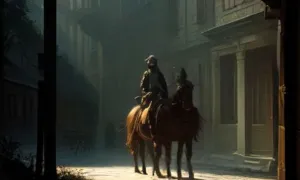
Drag the slider to compare how the landmark may have looked when it was built with the view today.
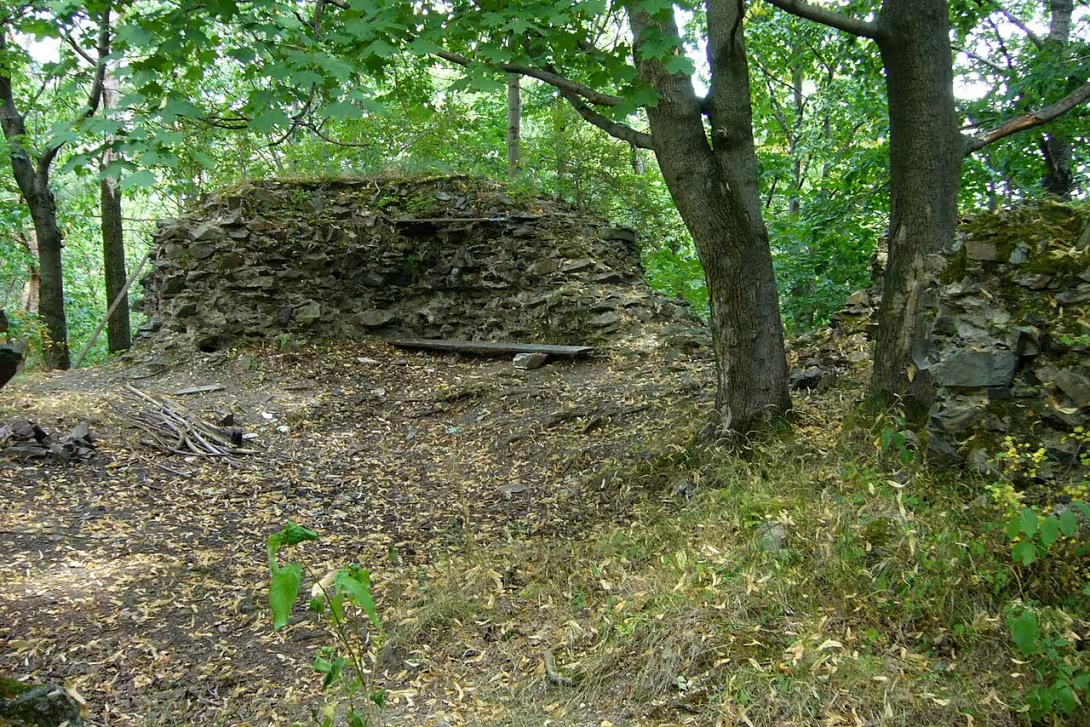
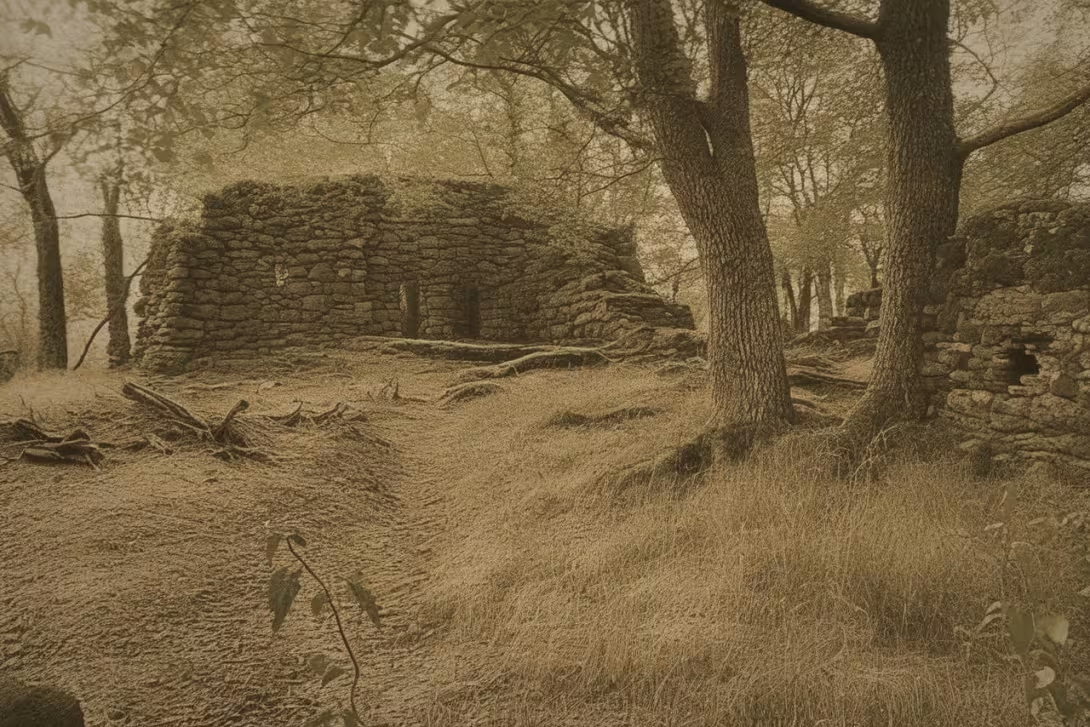
The historical appearance on the left is an AI-generated visualisation and serves as inspiration only.
Historical milestones
- around 1400
- The expected foundation of a fortified object or fortress.
- 15th Century
- Active use of the site as a noble residence or fortification.
- 1964
- Object declared a protected cultural monument.
Architectural development
The area consisted of a castle core protected by trenches and walls and southern platforms, which were probably equipped with only light wooden fortifications. The dominant was a rectangular two-space building, interpreted as a tower. The western part of the trench was disturbed later by the mining of stone.
Points of interest
- The ruin is located on the hill above the right bank of the river Úhluje and since 1964 it has been a protected cultural monument. - There are no written sources of the building, therefore all knowledge of its origin and use in the 15th century comes exclusively from archaeological findings. - The building form of the complex is divided into two parts, the northern part being the castle core with a residential tower, while the southern plateau was probably protected only by light wooden fortification. - Experts are discussing whether it was a separate fortress or a forward fortification of nearby castle Švihov. - The western part of the trench was disturbed later by stone mining.
Guide
Show guide text
This text was created by artificial intelligence and has not been editorially reviewed. It may contain inaccuracies.
Welcome to the place where time stopped and where nature gradually, but relentlessly, regains what human hands once built. You're standing in front of the ruins of Kokšína. Before we explore ourselves, let yourself stand for a moment and soak up the atmosphere of this place. Look around you. See this above the right bank of the Head River? Feel the calm that prevails here, and at the same time the special weight of history that is felt in every stone and in every wind that enchantments you here. Before your eyes, a view of the remains of an object once had to be a symbol of strength and security in this landscape. Even though you see mostly stony remains and grafted terrain today, try to imagine what this place looked like 600 years ago, when it wasn't just silence and green vegetation, but when real life happened here.
Now let's move forward in time together and try to understand what you see. The question of exactly what Kokšín was today is the subject of deep expert discussions between historians and archaeologists. It's not easy. For all we know, this object wasn't just for decoration. Its scope and strategic location suggest that it was not an ordinary residence. Some experts believe it to be a separate fortress, others say it was an advance fortification, which was intended to serve as a shield for nearby castle Švihov. Think of it as the first line of defense to warn or stop a possible enemy in time. It is estimated that this fortified unit was created around 1400. In the fifteenth century, life was the most active, the place served as a noble mansion or strategic fortification, which controlled the surrounding surroundings and river flow.
Now pay attention to what you have right in front of you and what you can perceive when you look at the rest of the building itself. Because you're looking at a ruin, you're not going to see whole buildings with their roofs or their inner rooms, but you have to notice the details that we have left. See the terrain remains that define the outlines of the former fortifications. Notice how the ground lines change, how they create artificial terraces or cliffs that were once part of the defense system. You see here the remains of stone structures that are trying to tell the story of how they were built and what materials were available at the time. Although these remains are now partially embedded in the soil or overgrown, their presence is proof of the enormous effort that people had to make to build something on this challenging design. Feel the structure, the division of the site, which suggests that the space was premeditated for defence and everyday operation.
When you look at these stone fragments, you might wonder who lived here. Who was the master of this place? Who here has spent nights in cold weather and days in constant vigilance? And this is where we come across one of the biggest mysteries of this place. Unlike many other castles or castles, there are unfortunately no written sources of Kokšín. There are no chronicles, no court records, no pedigree to tell us exactly who was based in these walls. We are in a situation where history has become silent. We don't know the names of the heroes or the names of those who sought refuge here. We depend entirely on what the country can tell us.
And that's why this place is so fascinating. All of our findings, every detail of how they lived here in the fifteenth century, come exclusively from archaeological findings. That means historians have to be like detectives. Every shard of ceramics, every metal object, or every change in the arrangement of stone in the ground is the key to unlocking the mystery. What you see is not just a pile of stones, it's a huge puzzle that scientists have been trying to put together for decades. This absence of written records gives Kokšín an untouchable and mythical atmosphere. It's a place that refuses to be fully described in words and allows us to imagine its past with our own imagination.
The interesting thing to remember is that this ruin has been protected as a cultural monument since 1964. It tells us that its value is not only in what it was, but in what it represents for our culture and our knowledge of the past. It's a living teaching material that reminds us of how fragile human history can be and how important it is to protect these clues that we have left of our ancestors.
Now, I'd like to invite you to go on your own survey of this area. Take a walk around the terrain remains, try to find shadows of former walls and tower defense elements in those lines and stacks. Feel the atmosphere of this hill, look at the flow of the Inner River and try to connect everything you have just heard to what you see. Let yourself be carried away by imagination and let this place tell its own silent story. Thank you for being with us on this short journey to the past, and we will outlast you on the next discovery of our historical treasures. We wish you a pleasant and inspiring rest of the day at this beautiful monument.
Tips for visitors
The best time to visit is during spring or autumn months, when vegetation is not so dense and the ruin is more permeable. At these times, the light is also softer, which is ideal for capturing the details of the masonry on the top.
You can easily walk to the memory from Švihova. If you arrive by car, park in the village Švihov and go to ruin on marked roads.
We recommend that you wear fixed shoes suitable for the field, as the road to the ruin leads to an unreinforced surface. Don't forget enough fluids and snacks, as there are no services or refreshments at the ruins.
Take advantage of the morning clock when the sun lights up the ruins from the east. The best shots are taken from the foot of the top of the top, from where the position of the object above the Úhluj River stands out. In the surrounding area you can visit the water castle Švihov or the natural monument of Stará Úšek.
For families with children the trip is suitable as a light nature walk. As this is a freely accessible ruin, care for the safety of children near masonry residues and field inequalities.
Frequently asked questions
Can the monument be visited?
This is a ruin. Such sites are often freely accessible, but some can only be visited with a guide or are closed for safety reasons. We have not verified the current situation – take care and respect any restrictions.
Where is the monument?
Location: Švihov, Plzeňský kraj. The map on this page shows the exact spot.
Why is the monument protected?
It is listed in the Central List of Cultural Monuments of the Czech Republic as a cultural monument (register no. 1000126011).
Businesses nearby
Do you run a restaurant, accommodation, shop, museum, rental, wellness or other visitor service near this monument? Show yourself directly to the people heading to it — this is how they will see you in the app and on the web:
Events nearby
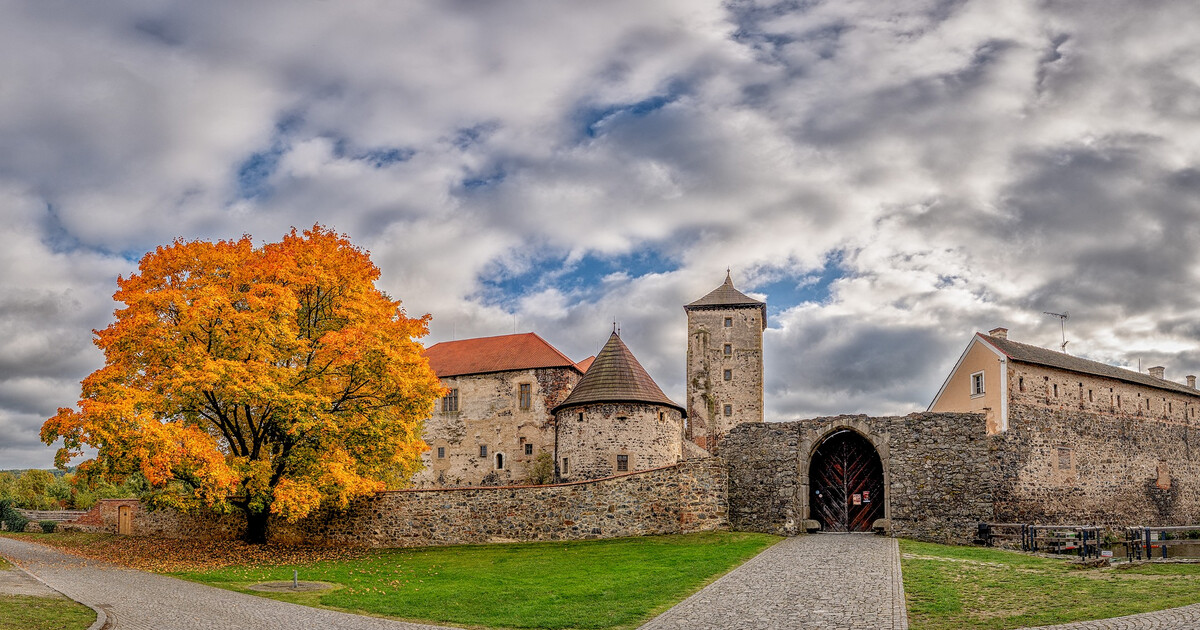
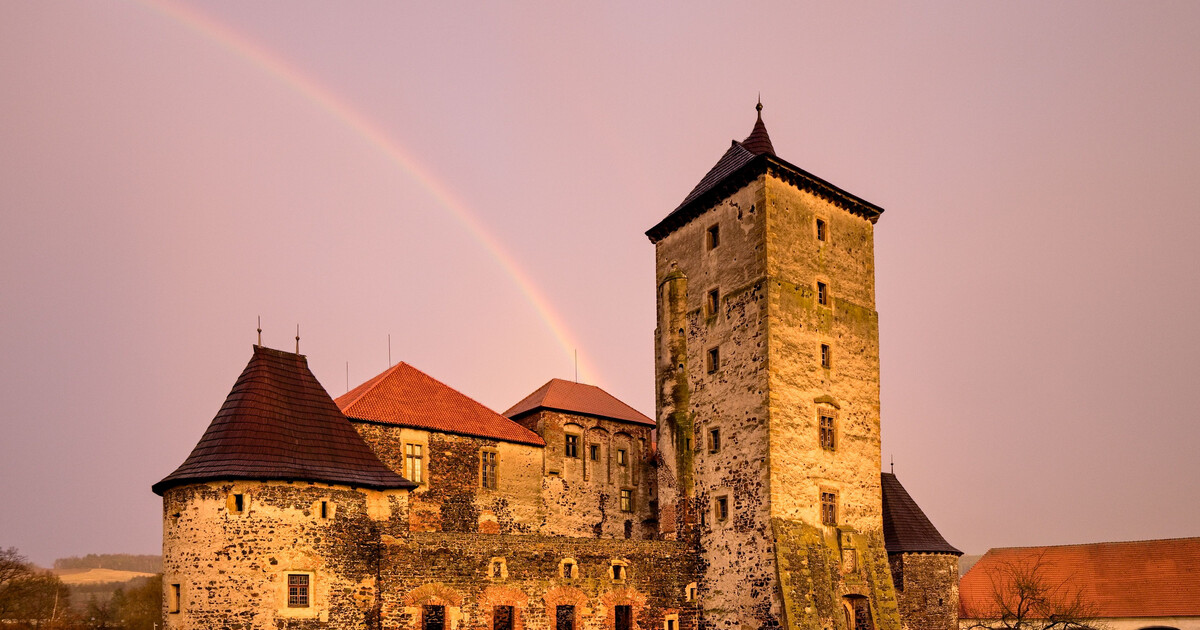
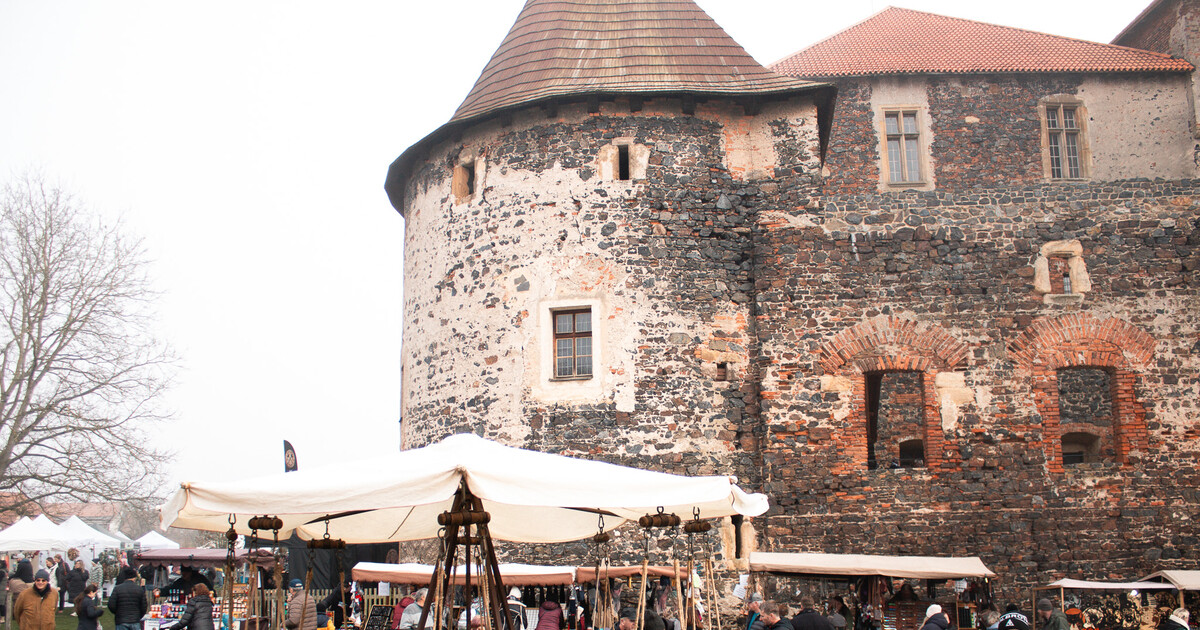
Zdroj akcí: otevřená data měst a obcí ČR (Národní katalog otevřených dat) a kalendář akcí Národního památkového ústavu.
Nearby
There is a water castle Švihov nearby, approximately 1.5 km away, and a natural monument to Stará Úhluka lying west of the ruins.
Accommodation nearby
Themed route
1. water castle Švihov, water castle, this historic building is located approximately 1.5 km from the main destination. It's a great place to start a tour. 2. Kokšín, ruin, the main destination of the trip, which offers a view of the rock ruins and beautiful views. 3. the natural monument Stará Úšek, a natural monument, This area lies west of the ruins and is suitable for relaxing in nature.
Seasonal recommendations
Spring on Kokšín brings the awakening of nature, when the surrounding meadows and forests come alive with fresh greenery and flowers. The light is soft and scattered at this time, creating a calm atmosphere to explore the ruins without sharp shadows. Practically, a spring visit is ideal for those who prefer a smaller gathering of people, as the main tourist season has not yet begun. It is recommended that footwear with good grip, as the roads can be slippery and muddy after the rains. It is best to leave in the late afternoon when temperatures rise and the air is fresh but still without summer heat.
Leto offers the longest days and brightest lighting, which dramatically highlights the texture of old walls and the depth of the terrain. The atmosphere is full of energy, but with this comes the greatest mass utilization. In order to avoid heat and crowds, it is crucial to arrive as early as possible in the morning, ideally before 9:00 a.m., when the shadow is still long and the temperature is tolerable. Clothes should be light, breathable and light, with sufficient water and sun protection. The afternoon hours are less suitable for visiting ruins due to direct sun and the accumulation of visitors.
Autumn at Kokšín is visually the richest time of the year when tree leaves turn colors into shades of gold, orange and red. The light of autumn is warmer and lower, which gives the ruins a nostalgic and dramatic look. The atmosphere is colder and the air is often cleaner, allowing better views of the landscape. In fact, autumn is a great choice for lovers of photographers and peaceful walks, because the summer peak has gone away. It is necessary to carry layered clothes because temperatures are rapidly decreasing, and careful step on wet leaves that can hide slippery stones.
Winter brings Kokšín a quiet and majestic atmosphere where bare branches of trees and possible snow cover the walls with white tarp. Short days and low sun create long shadows and cold, sharp light that emphasizes the hardness of stone. Visiting in winter is for those who seek silence and solitude because the number of tourists is minimal. Practical advice includes warm layers of clothing, winter shoes with anti-slip soles and watch out for a shortened daily period which limits the time for inspection. It is important to plan your trip so that the return home takes place in broad daylight, as the journey can be dangerous at night.
Visualizations and artistic views


The visualisations are generated by artificial intelligence and serve as inspiration.
Photos from the area
Real photos taken near the monument


Zdroj a licence jsou uvedeny u každého snímku.
Tips from visitors
No tips yet. Be the first!
Log in and add your tip.
Sources and literature
Photos: Petr Kinšt / CC BY-SA 4.0 — Wikimedia Commons. The author and licence also appear when you hover over the image.
Faktickým podkladem tohoto textu byl článek na Wikipedii, jehož autory jsou přispěvatelé Wikipedie. Článek je dostupný pod licencí CC BY-SA 4.0.
Location on the map

Příběhy a pověsti
Legendy, pověsti a příběhy spjaté s touto památkou
Fotografie návštěvníků
Zatím žádné fotografie. Buďte první, kdo přidá fotografii z návštěvy!
Log in a přidejte svou fotografii nebo hodnoťte.
Za ověřenou návštěvu v aplikaci získáte víc bodů — poznáme podle GPS, že jste na místě.
Reviews and comments