



Starý židovský hřbitov ve Švihově Jewish cemetery
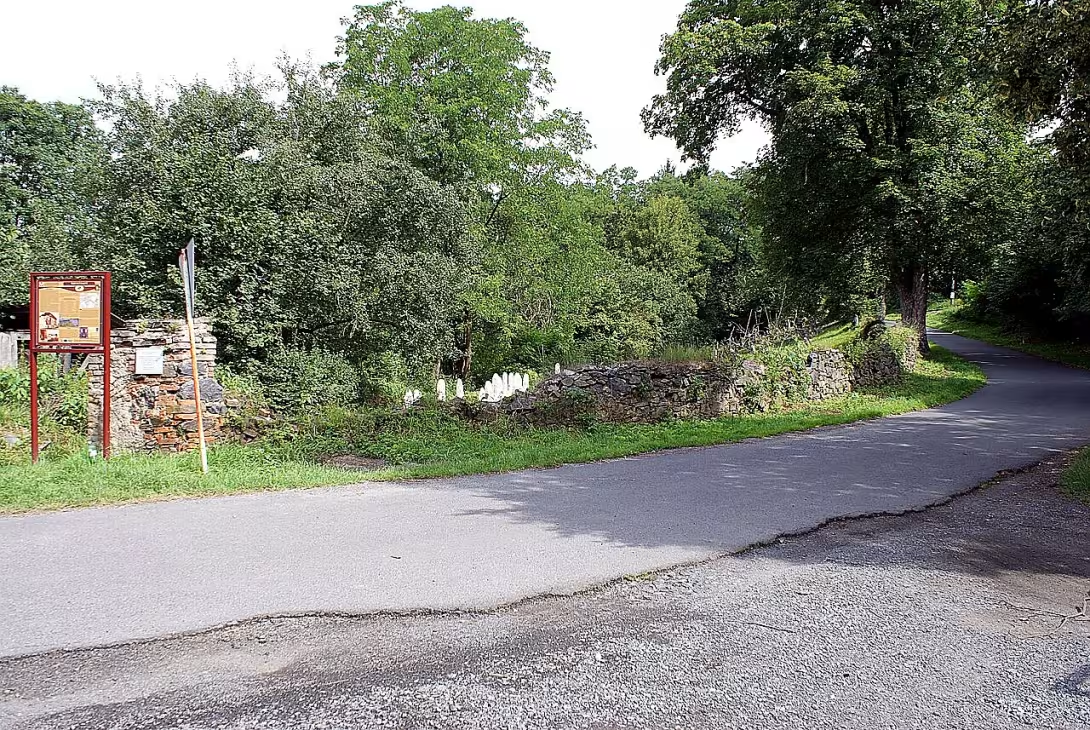
Starý židovský hřbitov ve Švihově is a cultural monument with rich history and artistic significance. It is located in the village Švihov on the eastern side of the city behind the road I / 27 Plzeň - Klatovy, in the street Za Vodou in front of the railway viadutem of the line No. 183. The area is protected as a cultural monument of the Czech Republic and includes about 140 tombstones, which represent a valuable set of works of Renaissance, Baroque and classical type. The oldest legible tombstones come from the time the cemetery was founded in 1644, the youngest stone is from the last funeral in 1913.
The cemetery was established in 1644 during the Thirty Years' War, a period of full unrest and conflict. The Jewish community in Švihov existed before 1570, but the official establishment of this place dates back to the mid-seventeenth century. For the local Jewish village the resort was an important place of burial and a monument, which for centuries served as the last rest for their ancestors. In 1828, the last expansion of space took place, allowing further funerals and maintaining its functionality.
The architecture of the cemetery is reflected in the tombstones of various styles that document artistic development from Renaissance to Classicism. This file is very valuable not only for its historical value, but also for the aesthetic beauty of individual monuments. The oldest legible tombstones come directly from the time the cemetery was founded in 1644, which shows the long existence and continuity of the Jewish community in Švihov. In 2012, a large renovation of the complex took place, during which the stacked tombstones were raised again, cleaned from ivy, the wall was repaired and trees were destroyed. The work was carried out by the Jewish Community in Prague through Matana.
The owner of the Old Jewish Cemetery in Švihov is the Federation of Jewish Communities, which takes care of its maintenance and protection. After 1940, the entrance morgue in the southwest of the complex was demolished, one of the many changes in its history. The Jewish village in Klatovy took care of the cemetery, which underlines the importance of this place and beyond Švihov itself.
Key events include the creation of the cemetery in 1644, the last extension of the premises in 1828 and the last funeral in 1913. After 1940 the entrance morgue was demolished, which was another change in the history of the site. In 2012 there was an important renovation that brought new life to this monument.
Today the cemetery is open to visitors and is worth a tour not only because of its historical value, but also because of the possibility of learning more about the life and culture of the Jewish community in this area. The resort is located on a mild slope along the road leading to a nearby Christian cemetery, making it a unique and peaceful place for relaxation and reflection. It is an opportunity for visitors to appreciate the rich history and work of art that has been preserved for centuries.
Starý židovský hřbitov ve Švihově is not only a monument to the past, but also a place where history and the present meet. His tombstones bear witness to the lives and destinies of many people whose stories remain in these stones. Visiting this place is a valuable experience for anyone interested in history and culture, and reminds us of the importance of memory retention.
Then and now
Drag the slider to compare how the landmark may have looked when it was built with the view today.
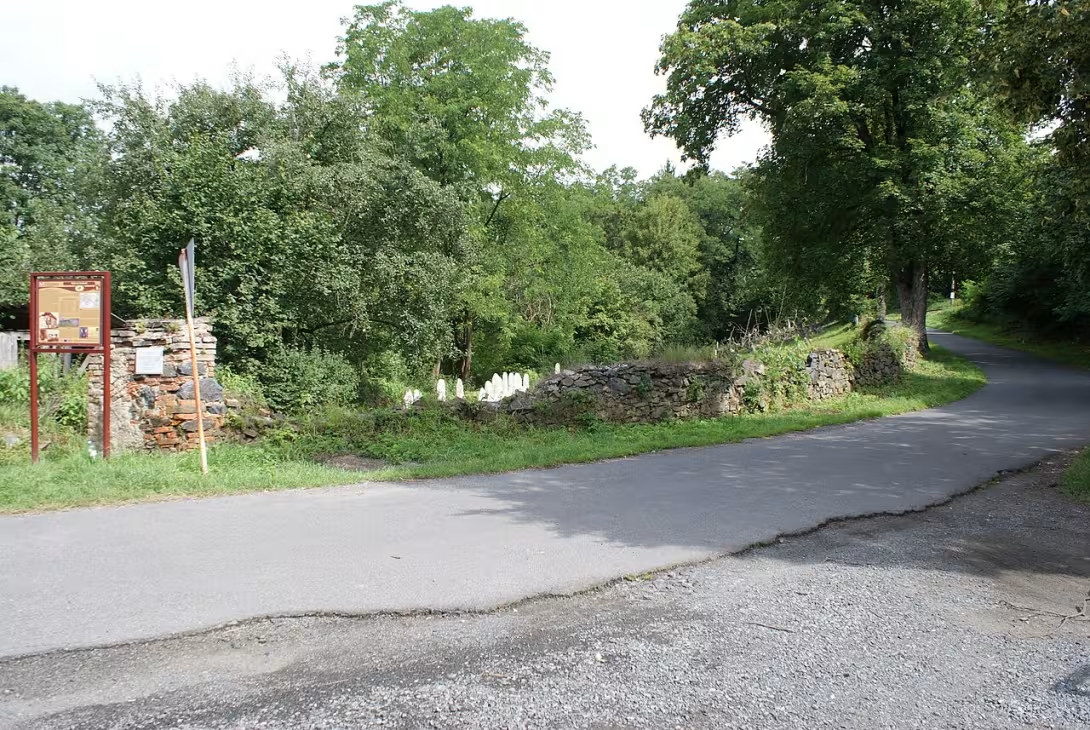
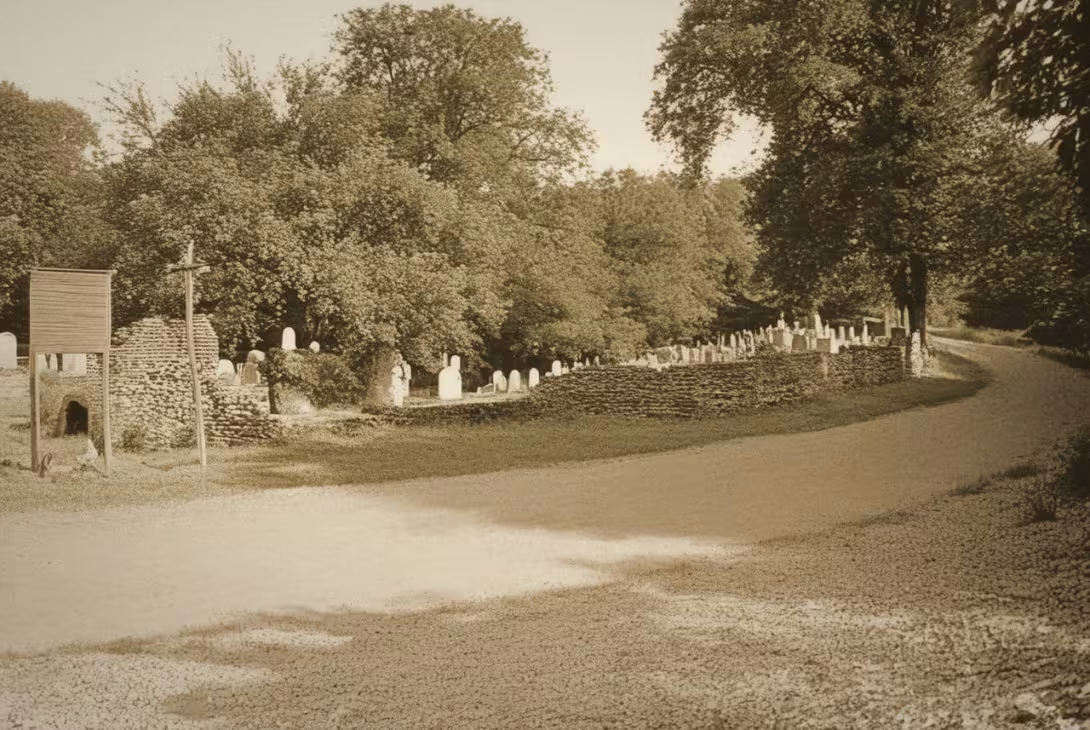
The historical appearance on the left is an AI-generated visualisation and serves as inspiration only.
Historical milestones
- 1644
- Establishment of a cemetery
- 1828
- Last expansion of the cemetery
- 1913
- Last funeral on campus
- 2012
- The renovation of tombstones and walls
Architectural development
The area contains tombstones of Renaissance, Baroque and Classicist type. In 2012 there was extensive renovation involving the repair of the walls and the raising of tombstones. Before that, the entrance morgue was demolished in the southwest section.
Historical events
The foundation of the cemetery in 1644, the extension of the premises in 1828, the last funeral in 1913 and the demolition of the morgue after 1940.
Owners
Federation of Jewish Communes
Points of interest
- Starý židovský hřbitov ve Švihově is a cultural monument with rich history and artistic significance. - It is located on the east side of the town behind the road I / 27 Plzeň - Klatovy, in the street Za Vodou in front of the railway viaduct of the track no. 183. - The area is protected as a cultural monument of the Czech Republic and includes about 140 tombstones, which represent a valuable set of works of Renaissance, Baroque and Classicist types. - The oldest readable tombs come from the time the cemetery was founded in 1644, the youngest stone is from the last funeral in 1913. The cemetery was established in 1644 during the Thirty Years' War.
Guide
Show guide text
This text was created by artificial intelligence and has not been editorially reviewed. It may contain inaccuracies.
Welcome to Švihov, where history meets with silence and deep reflection. You are standing right outside the gate of the old Jewish cemetery, which is one of the most important cultural monuments in this part of town. Feel the space around you and try for a moment to forget all the hustle and bustle of the day. You are in the eastern part of Švihova, on a street called Za Vodou. If you look behind you now, you will see the main road connecting Pilsen and Klatovy, and right in front of you, the railway viaduct of track number hundred and eighty-three. It is this contrast between the modern movement of traffic, the noise of cars and the rhythm of trains and the absolute immobility of this sacred place that creates a strange, almost magical atmosphere. It's where time stopped, and now you've entered his realm.
Let's stop together at the beginnings of this place to understand why it's so important to us. This cemetery was not founded by chance, but from the deep need of the local Jewish community to have its own, separate place of last rest that would fit their traditions and beliefs. The first tombstones were set here in the year one thousand six hundred forty four. Imagine how many centuries have passed since then and how many events have seen this place. At the time of its establishment, the cemetery was a symbol of stability and the permanent presence of the Jewish village in Švihov. Over the centuries, artisans, businessmen, and whole families have been resting here, helping to build this city for generations, contributing to its flourishing. The cemetery gradually grew along with the community that developed in the region. This resulted in the last major extension of the site in the year one thousand eight hundred twenty-eight. This shows us that the site has been actively used and valued for a very long time.
Now, I beg you to step slowly into the compound and start walking between the tombstones. Notice that there are approximately 140 stones standing in front of you. Each of them is like an open book, even though time and air-tight influences have erased some of them. Look carefully at the shapes, lines and decorating that are seen on the stones. This set is very valuable from the artistic point of view because you can see how taste, aesthetics and style have changed over the centuries. Here you will see elements of the Renaissance, which brought harmony, balance and return to fundamental values into the art. At the same time, you will find later influences of Classicism, which bet on moderation, clean lines, geometrical accuracy and noble peace. Watch how these styles intersect and how the interchange of times becomes one big gallery in the open air. Feel how stones with different shapes create the rhythm of the entire space.
Note also the wall that surrounds the entire area and separates it from the outside world. It is in good condition, thanks to an important and meticulous recovery, which took place in the year two thousand and twelve. At that time, renovation was carried out not only of the walls themselves, but also of many tombstones to prevent their further decay and demise. Today, this care allows us to see the memory of her dignity and fully perceive her historical value. Without this intervention, many of these stones could now be irreparably lost.
Now that you're thinking about the people who rest here, you might wonder who they were and what kind of lives they led. Although specific personality names are not highlighted in our records today as dominant, each of these stones tells its own unique story. It's a story about life, love, hard work, hope and sadness. This community has been here for centuries and the cemetery has served as its common monument until the beginning of the twentieth century. The last funeral on the premises took place in the year of a thousand nine hundred thirteen. Since then, the cemetery has become a place of silence, where time has stopped its course and where the voices of the living no longer sound, but the stones themselves speak to us.
An interesting detail you should not overlook is the location of the cemetery itself in the city area. It is fascinating how this peaceful and introverted space is wedged between the dynamics of the modern world. Roads I / 27 and railway viaduct are symbols of progress, speed and constant movement. While there is absolute eternity and immobility beyond the cemetery wall. This neighborhood reminds us that history is not just something that remains in the dusty books in the archives, but that it is present right in the middle of our everyday life, often just a few steps away. The whole complex is today protected as a cultural monument of the Czech Republic, which is an recognition of its extraordinary value. This status guarantees that future generations will be able to feel the same peace and respect for the ancestors as you feel now.
Now I leave you alone and quietly to explore the rest of the premises. I suggest you stop by one of the rocks that will impress you, close your eyes and try to imagine life in Švihov hundreds of years ago. Try to perceive the smell of surrounding vegetation, listen to the distant sounds of the city that mingle with the silence of the cemetery, and think about what it means to leave a mark in time. Let your intuition guide you and walk between the tombstones at a slow pace. Feel the texture of the stones and play light and shadow in this quiet space.
I hope that your visit to this place has restored you to reflect on history, on human fate and on the value of the memory that we as humans retain. Thank you for accompanying me on this short journey to the history of the Jewish community in Švihov. I wish you a pleasant rest of the day, peace of heart and an inspirational continuation of your journey around this beautiful city. Goodbye.
Tips for visitors
The best time to visit is late afternoon or morning hours, when peace is in the cemetery and light hits the tombstones at a soft angle, highlighting reliefs and inscriptions.
Transport to Švihova is secured by road network, so you can easily get here by your own car.
Bring comfortable shoes with a good heel, because the terrain in the cemetery is uneven and covered with grass. We also recommend a light layer of clothing, because the surrounding area of the monument and the viaduct can be windy.
For photography are ideal positions on the edges of the complex, from where you can capture a general view of the series of tombstones and their relation to the surrounding landscape. The best light for detailed pictures of inscriptions and sculpture elements occurs at low sun, early morning or late afternoon. Remember, this is a place of rest, so respect silence and do not go off the road in order not to harm historical monuments.
For families with children we recommend a short walk to the viaduct where children can enjoy the view and movement, but in the cemetery itself it is advisable to guide the children by the hand and explain the importance of silence and respect for the place.
Frequently asked questions
Can the monument be visited?
Cemeteries and graves are usually accessible; please respect the dignity of the place. We have not verified the opening hours of this cemetery.
Where is the monument?
Location: Švihov, Plzeňský kraj. The map on this page shows the exact spot.
Why is the monument protected?
It is listed in the Central List of Cultural Monuments of the Czech Republic as a cultural monument (register no. 1000129887).
Businesses nearby
Do you run a restaurant, accommodation, shop, museum, rental, wellness or other visitor service near this monument? Show yourself directly to the people heading to it — this is how they will see you in the app and on the web:
Events nearby
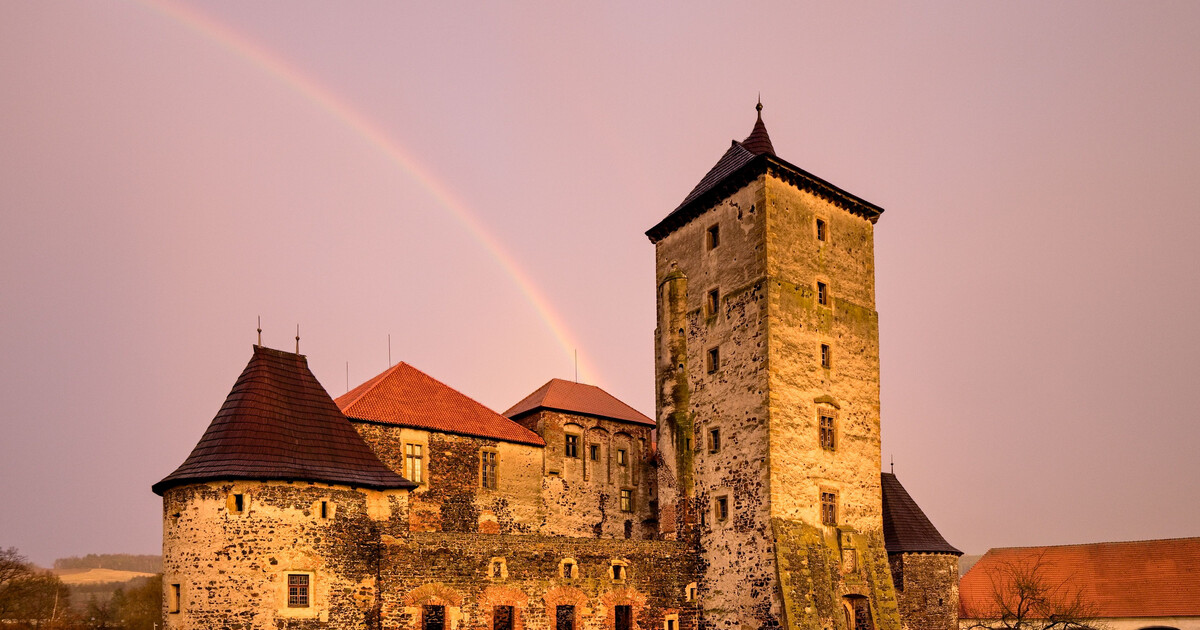
Zdroj akcí: otevřená data měst a obcí ČR (Národní katalog otevřených dat) a kalendář akcí Národního památkového ústavu.
Nearby
Nedaleký křesťanský hřbitov a železniční viadukt.
Accommodation nearby
Themed route
1. Railway viaduct - Type: Technical construction. Why: An impressive architectural element that complements the landscape. 2. Christian cemetery - Type: Funeral. Why: Instead of silence and reflection, which serves as a comparison with the Jewish cemetery. 3. Starý židovský hřbitov ve Švihově - Type: Historical monument. Why: The main destination of the trip with unique tombstones and a strong atmosphere of the past.
Seasonal recommendations
Spring: In the spring period Starý židovský hřbitov ve Švihově offers visitors a view of flowering shrubs and trees that create a living color. The sun rays illuminating the cemetery provide a pleasant atmosphere for walking between old tombstones. It is advisable to visit the cemetery in the early afternoon when the temperature is most pleasant and the crowd is not too much. It is recommended to wear clothes that will protect against cold vortex - short jacket or cape.
Summer: Summer is the most visited time at the Old Jewish Cemetery in Švihov when the sun lights up each plate and increases temperature. The cemetery turns into a place full of life because of the presence of many visitors, which makes it feel like a historical place as part of a living community. It is recommended to arrive at the cemetery at an early afternoon time when the temperature is a little low and the crowd may be less. It is advisable to wear light clothes and not forget sun protection.
Autumn: In autumn the Starý židovský hřbitov ve Švihově offers a view of leaves that change colour and fall from trees. This atmosphere creates a sense of peace and relief from the summer crowd. The sun rays illuminating the cemetery bring warm light, which is ideal for relaxing between old tombstones. It is recommended to visit the cemetery at an early afternoon time and wear clothes suitable for mild temperature - short jacket or cape.
Winter: In winter, Starý židovský hřbitov ve Švihově is quiet if there are no special events. The snow covering the cemetery creates a romantic and calm atmosphere, while the cool sunlight illuminates every plate. The cemetery is less visited during this period, allowing you to enjoy the peace and historical environment. It is recommended to arrive at the cemetery in the early afternoon and wear warm clothes - long jacket, scarf and protective gloves.
Visualizations and artistic views


The visualisations are generated by artificial intelligence and serve as inspiration.
Photos from the area
Real photos taken near the monument


Zdroj a licence jsou uvedeny u každého snímku.
Tips from visitors
No tips yet. Be the first!
Log in and add your tip.
Sources and literature
Photos: Feťour / Public domain — Wikimedia Commons. The author and licence also appear when you hover over the image.
Faktickým podkladem tohoto textu byl článek na Wikipedii, jehož autory jsou přispěvatelé Wikipedie. Článek je dostupný pod licencí CC BY-SA 4.0.
Location on the map



Příběhy a pověsti
Legendy, pověsti a příběhy spjaté s touto památkou

Fotografie návštěvníků
Zatím žádné fotografie. Buďte první, kdo přidá fotografii z návštěvy!
Log in a přidejte svou fotografii nebo hodnoťte.
Za ověřenou návštěvu v aplikaci získáte víc bodů — poznáme podle GPS, že jste na místě.
Reviews and comments