



Koubova skála Housing estate
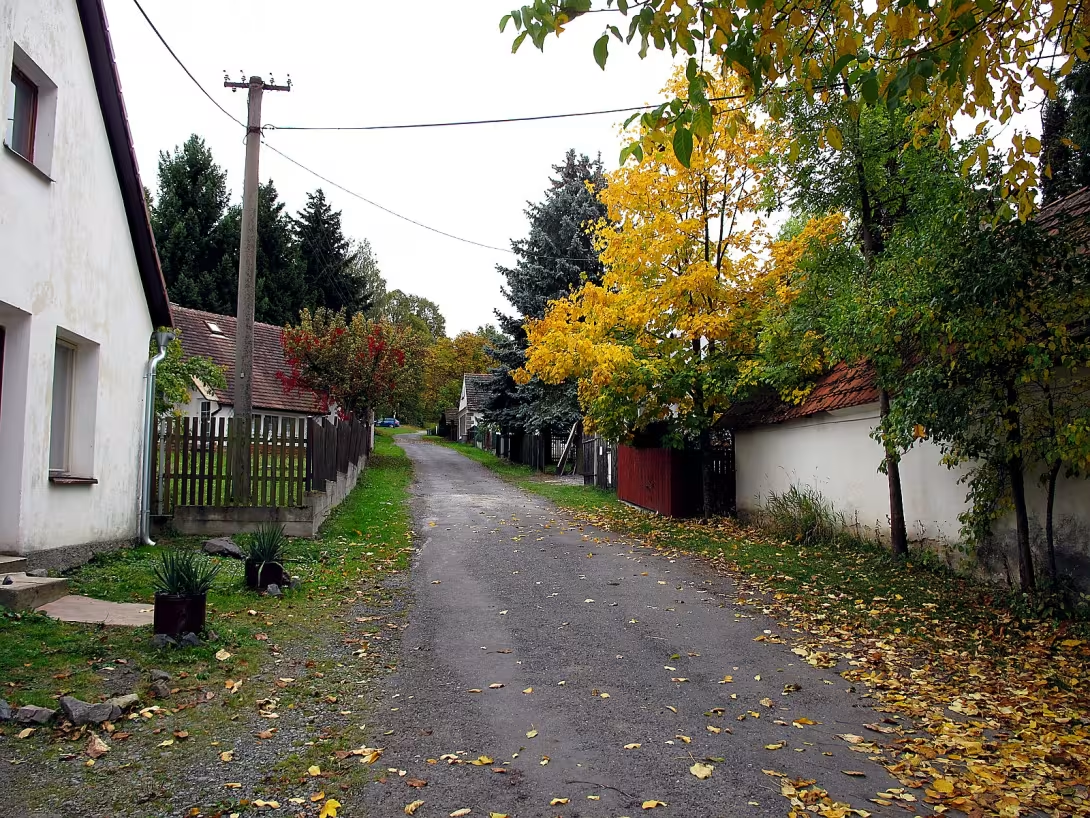
Koubova skála is an ancient archaeological site located above the southeast edge of the village of Kaliste near Švihova in Klatovy district. In the period of the eneolite of the settlement of the Chamese culture, the remains of which are protected as a cultural monument, were located in this member of the bulištík body. The location represents an important proof of prehistoric settlement and forms part of a group of three non-olithic settlements in the immediate vicinity of the Kaliste.
The creation of the estate falls within the eneolite, i.e. the late Stone Age, when the region's culture was promoted and agriculture and the gradual use of metals developed. For their refuge, the ancient people chose a bulging rock massif with an altitude of 520 meters. The natural architecture of the settlement consisted of a number of terraces and platforms with a total area of approximately 500 square metres. It is assumed that all available platforms have been populated, but the main residential area has concentrated in the northeast section of the rock.
For modern archeology the location was discovered in 1900 by the Chinese teacher Adolf Šlégl, who performed several probes here between 1900 and 1903. These excavations damaged the site but confirmed its historical value. In 1951, the archaeologists Jiří Neustupný and Václav Čtrnáct carried out a review study. During the survey were found fragments of ceramics, remains of building clay lubricating and stone axe, which demonstrated the presence of the Champ culture.
A remarkable element of the site is an object cut directly into a rock with a plan of about 1.5 × 1.5 meters and a depth of 20 to 30 centimetres. Neither the purpose nor the time for this deepening is clearly substantiated. Similar facilities are known, for example, from the Dänemark Castle, where they probably used to store grain, but there is also the possibility that the carved object on the Koubov Rock comes from the modern era. In the wider context of Koubova skála, it is related to the neighbouring Heat Rock and the third settlement found in 2008, with which it creates a comprehensive set of prehistoric settlement landscapes.
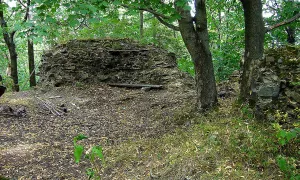
Today, Koubova skála is covered with a grown forest and forms a freely perceptible natural and historical element in the landscape. Visiting this place offers an opportunity to see the way our ancestors used broken terrain to build their fortified settlements. The stop on the Koub Rock is such a valuable goal for anyone who is interested in the oldest history of human settlement when traveling in Poshumavi.
Historical milestones
- 1900
- The discovery of the location by the Chinese teacher Adolf Šléglem.
- 1900- 1903
- The execution of several archaeological probes by Adolf Šléglem.
- 1951
- Re-examining the location of Jiří Neustným and Václav the 14th.
Architectural development
The settlement was set up on natural platforms and terraces of a bulging rock body at an altitude of 520 metres. The main part of the settlement was located in the northeast part of the rock. Within the location was found an object cut directly into a rock with dimensions of 1,5 × 1,5 meters.
Historical events
In 1900, the site was discovered by Adolf Šlégle. In 1951, the damaged site was reexamined by Jiří Neustný and Václav the 14th.
Points of interest
- Koubova skála is an ancient archaeological site with a settlement of the Champ culture of eneolite. - The location is located above the southeast edge of the village of Kaliste near Švihova in Klatovy district. - The manor was discovered by the Chinese teacher Adolf Šlégl in 1900, who carried out several probe excavations here. - During the survey of archaeologists Jiří Intranascene and Václav Fourteenth in 1951, remains of ceramics, building clay lubrications and stone axe were found. - On the site is a remarkable object cut directly into the rock with a plan of 1.5 × 1.5 meters, its purpose is not clearly documented.
Guide
Show guide text
This text was created by artificial intelligence and has not been editorially reviewed. It may contain inaccuracies.
Welcome to the Koubov Rock, a unique archaeological site that awaits you at the top of the rocky dome above the southeast edge of the village of Kaliste at Švihova. As you look up, you can imagine the inhabitants of the eneolite who once lived on these terraces and the plains of the bullion. This site is an important cultural monument and part of a collection of three settlements of the Champ culture, which also consists of the Tepla Rock.
Let's go into history. Koubova skála was discovered in 1900 by the Chinese teacher Adolf Šlégl, who carried out several probe excavations here until 1903. His work laid the foundations for understanding the life of the non-olithic population in this place. In 1951, the site returned to archaeologists Jiří Neustných and Václav the Fourteenth, who had done further research.
Now pay attention to the place itself. Look at the overtrain and imagine how people have adapted to this rocky environment. Although there are no visible structures like in modern cities, the atmosphere of this location tells the story of the ancient inhabitants who took hold on these terraces. Notice how nature and history harmonically exist together.
Adolf Šlégl, which discovered the site, is one of the key personalities associated with this monument. His determination and scientific research have opened the door to the past of a non-olithic culture. Jiří Neustupný and Václav Čtrnáct, who later participated in exploring this site, contributed to the further discovery of evidence of the lives of people from this period.
The interesting thing is that Koubova skála gives us a unique view of life in eneolithic. Here you can feel a connection to the ancient past and think about how people evolved in a world that was not yet known. It's a place full of secrets and historical stories.
Let us now explore other parts of this site and discover more about the lives of the people who once lived here. Koubova skála is just the beginning of the journey to the past and offers many opportunities for learning and understanding our common history.
Thank you for your visit to the Koub Rock. We hope you'll find yourself at home here and remember this place with a smile on your face. May your next journey fill you with new discoveries and inspiration!
Tips for visitors
Best time to visit The bathing rocks are in the summer months when the days are longest and the temperature is favourable for walking. This period offers ideal conditions to explore historical remains and surrounding landscape.
When visiting, remember to bring protective clothing and shoes suitable for walking on uneven terrain. A piece of sunglasses can be added to help you search the rocky slopes.
Photography is particularly interesting here in the morning or evening light, where the local landscape is given a romantic and mystical touch. The best places for photos can be found at the top of the rock cluster, where you have a wide view of the surroundings.
In the vicinity is the possibility to visit other archaeological sites A warm rock that is nearby. For families with children it may be interesting to explore these historical sites and imagine the life of our ancient ancestors.
Frequently asked questions
Can the monument be visited?
This is a structure in a public space that can usually be seen from outside free of charge. We have not verified that this particular one is freely accessible.
Where is the monument?
Location: Švihov. The map on this page shows the exact spot.
Why is the monument protected?
It is listed in the Central List of Cultural Monuments of the Czech Republic as a cultural monument (register no. 1000143699).
Businesses nearby
Do you run a restaurant, accommodation, shop, museum, rental, wellness or other visitor service near this monument? Show yourself directly to the people heading to it — this is how they will see you in the app and on the web:
Events nearby
Zdroj akcí: otevřená data měst a obcí ČR (Národní katalog otevřených dat) a kalendář akcí Národního památkového ústavu.
Nearby
V okolí obce Kaliště se nachází další dvě eneolitická sídliště, z nichž jedno je Teplá skála. Lokalita leží v okrese Klatovy v blízkosti obce Švihov.
Accommodation nearby
Trips and activities nearby
Guided tours, tickets and activities nearby from GetYourGuide
Affiliate link: if you buy from the partner, we may receive a commission. The price for you does not change.
Search tours and activities →Seasonal recommendations
In spring, the surrounding area awakens into life and the landscape is flooded with fresh greenery and first flowers. The atmosphere is full of hope and the light is fine, which helps the perception of terrain detail. We recommend moisture-resistant shoes because the roads can be muddy when the snow is thawed. It's best to visit the place in the morning.
The summer season brings a radiant sun and thick shade of trees that surround the memory. Nature is in full bloom and the air is shaking hot. Due to the largest number of visitors, it is advisable to come first thing in the morning to be quiet. Remember light clothes, hat and plenty of drinking water.
In the autumn, the surroundings of the Koub Rock turn into golden and brown tones, while morning fog gives the place a mysterious touch. It is the perfect time for quiet walks and observing details in a soft autumn light. Due to the variable weather, choose layered clothes and visit the site rather in the afternoon.
In winter there is an archaeological site of a grate and the quiet region below the frost offers a unique calm. The contrasts between grey stone and white snow create strict but beautiful aesthetics. It is essential to have warm thermals and solid shoes. Count on a shorter opening time and we recommend a visit in clear noon hours.
Visualizations and artistic views

The visualisations are generated by artificial intelligence and serve as inspiration.
Photos from the area
Real photos taken near the monument

Zdroj a licence jsou uvedeny u každého snímku.
Tips from visitors
No tips yet. Be the first!
Log in and add your tip.
Sources and literature
Faktickým podkladem tohoto textu byl článek na Wikipedii, jehož autory jsou přispěvatelé Wikipedie. Článek je dostupný pod licencí CC BY-SA 4.0.
Location on the map



Příběhy a pověsti
Legendy, pověsti a příběhy spjaté s touto památkou

Fotografie návštěvníků
Zatím žádné fotografie. Buďte první, kdo přidá fotografii z návštěvy!
Log in a přidejte svou fotografii nebo hodnoťte.
Za ověřenou návštěvu v aplikaci získáte víc bodů — poznáme podle GPS, že jste na místě.
Reviews and comments