



Kolej krále Václava, Bazar House
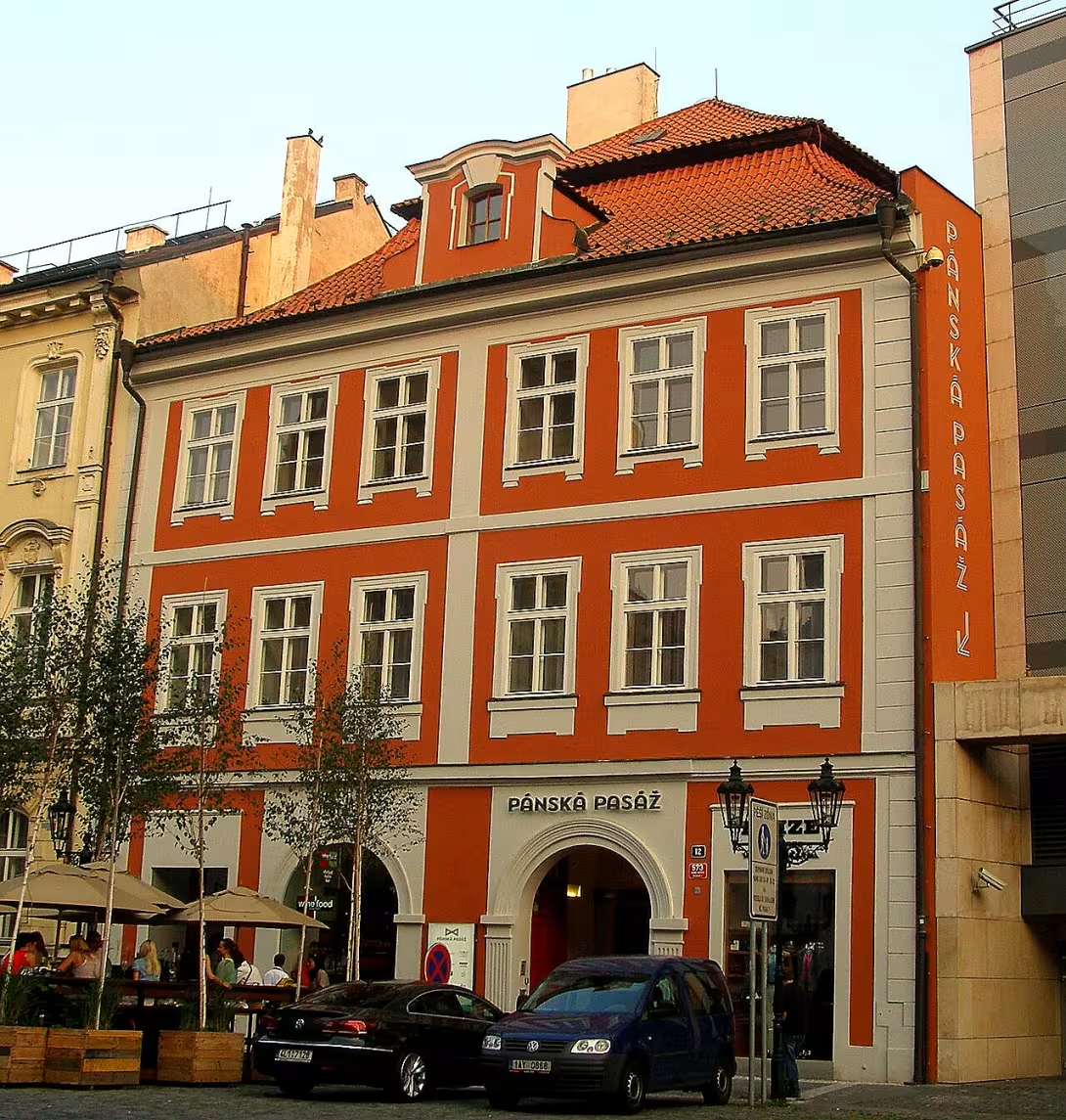
The Royal University College Václava IV, also known as the Svatoclav College, is a historical monument located in Prague 1 in the Fruit Market. Founded in 1381 by King Wenceslas IV, she served as a seat for the free arts masters of the University of Prague. Her history is closely linked to the development of Charles University and significant personalities such as the astronomer Johannes Kepler. The dorm was located in an already existing Gothic house which King Václav IV. purchased for this purpose. After the Belarusian events in 1622, the building was cancelled and later sold to private owners.
The establishment of the college by King Wenceslas IV was a key stage in the development of the Prague University, one of the oldest and most important European universities. At that time Prague prospered as a centre of education and culture. The college was part of a larger effort to strengthen the university, as evidenced by the donation of Rotlevo's palace, today's Karolina, to the needs of the university. This approach points to the ambition of Václav IV to make Prague not only a political but also an intellectual centre.
Architectural college was located in a Gothic house, which reflects common practice from when new institutions often used existing buildings. Between 1604 and 1607, a stellar tower for Jan Kepler was built in the garden of the college, highlighting its importance as a place of intellectual progress. This tower served as a workplace for Kepler's astronomical work and contributed to his findings, which had major implications for understanding the universe.
The ownership and management of the track have undergone significant changes. After its cancellation in 1622, the building was sold to private owners, reflecting broader social and political shifts in the Czech Republic following the Belarusian events. In 1704 it was purchased by the husbands Alois and Louisa Olive, who later donated the building to the establishment of the Children's Education Institute of the Olives. This act of charity points to the continued impact of the track even after its abolition.
Key events include not only its creation and connection with Jan Keplr, but also its donation for charitable purposes. The college witnessed many changes in Czech history, from the peak of medieval education to the period following the Belarusian battle.
Today it no longer exists as a physical structure, but its history remains an important aspect of Prague's cultural and educational heritage. Her presence at the Fruit Market in Prague 1 shows the rich history of the city, which was once the centre of Europe's intellectual life. Visiting this place offers an opportunity to appreciate the important role that Prague played in the history of European education and culture.
The Royal University College Václav IV is a monument that reminds the past and inspires recognition of the lasting values of education and charity. It is a noble example of how a historic place can affect future generations without its physical existence. For those who want to understand the deeper layers of Prague history, a visit to this place is necessary.
Then and now
Drag the slider to compare how the landmark may have looked when it was built with the view today.
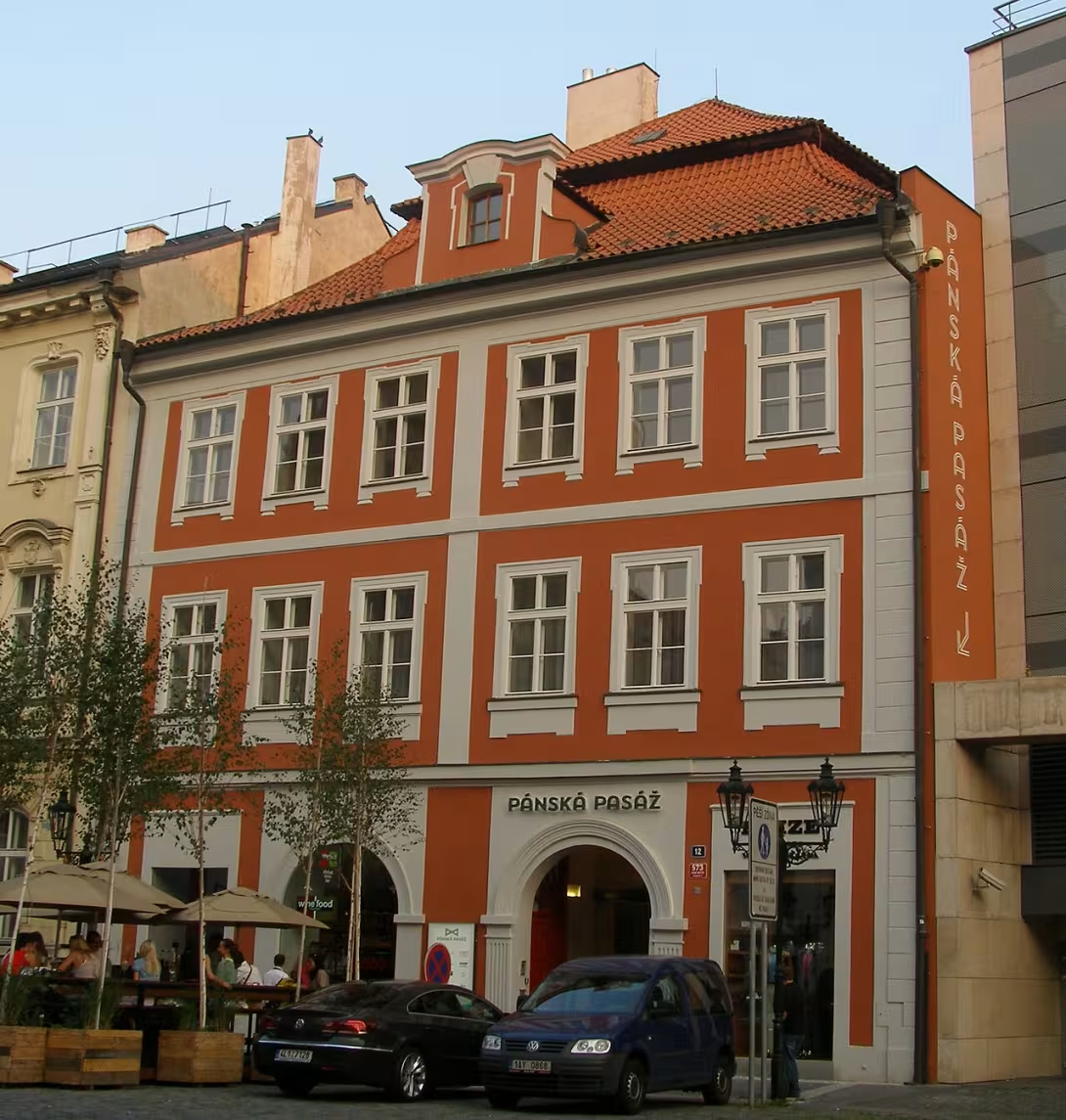

The historical appearance on the left is an AI-generated visualisation and serves as inspiration only.
Historical milestones
- 1381
- The establishment of a royal college for free arts masters.
- 1604
- The beginning of the construction of the stellar tower for Jan Kepler.
- 1622
- Cancellation of the track as a result of leaving Czech professors.
- 1704
- Sale of the building to private owners.
Architectural development
The dorm was set up in an existing Gothic house. Between 1604 and 1607, a tower was built in the garden to observe the stars.
Historical events
1381: establishment of the track by King Wenceslas IV., 1622: cancellation of the track after Belarusian events, 1704: sale of the building to private owners
Owners
King Václav IV. (since 1381), private owners (since 1704), married to Alois and Louis Olive
Points of interest
- Royal University College Wenceslas IV, also known as the Svatoclav College, is a historical monument located in Prague 1 in the Fruit Market. - Established in 1381 by King Wenceslas IV, she served as a seat for the free arts masters of Prague University. - The dorm was located in an existing Gothic house that King Václav IV. purchased for this purpose. - After the Belarusian events in 1622, it was cancelled and later sold to private owners. - From 1604 to 1607 a stellar tower for Jan Kepler was built in the garden of the college.
Guide
Show guide text
This text was created by artificial intelligence and has not been editorially reviewed. It may contain inaccuracies.
Welcome, distinguished visitors. Please stop for a moment and take a deep look at the atmosphere of this place. You are now in the heart of Prague's Old Town, the Fruit Market, where history intersects with every step you take here. There is a building in front of you that carries a trail of centuries, and even though it may seem different today than the royal manor we imagine, its past is full of intellectual movement and great names. Look at the facade of this house. What you see is the remnant of the Royal University College Václav the Fourth, which was also known at the time of its glory as the St. Clave College.
Let us now return together in time more than 600 years ago. Imagine Prague at the end of the 14th century, a city that was at that time one of the most important learning centres in Europe. Just in the year three hundred and eighty-one king Wenceslas the fourth decided to establish this place. But it wasn't just an ordinary building for accommodation. This college was supposed to serve as a seat for free arts masters of Prague University. At that time, free art meant the fundamental pillars of human knowledge, from grammar and logic to astronomy and music. So imagine that in these walls, where you may hear the hustle and bustle of a modern city today, deep discussions once took place about the nature of the universe, about the power of words and about the truths that would help humanity understand the world better.
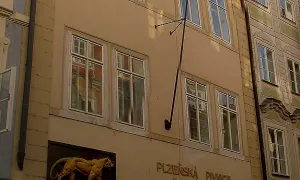
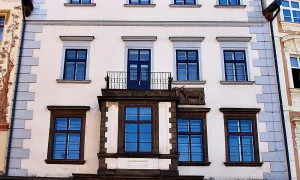
Now pay attention to the very form of the building. As you can see, the dorm was housed in a Gothic house. Gothic is a style that we find in many places in Prague, but here you can see the practicality associated with the social status at the time. Notice the overall impact of the construction and perceive its stability. Although the building has changed and adapted for new purposes over the centuries, its basic character from the Middle Ages still lies in it. Take a look at the facade details and try to imagine what this house looked like when it was a symbol of royal care for science and education. It wasn't just a stone structure, it was a space where the sharpest minds of the time met.
When we talk about the personalities we associate with this place, we cannot forget one name that sounds like thunder in the history of world science. Johannes Kepler. This famous astronomer worked here in the seventeenth century. Imagine Kepler walking through these corridors looking for answers to questions that no one else could solve at the time. It was in the year of the thousand six hundred and four that the construction of the observatory tower began for him. Try to look up and imagine how Kepler from a height watched the movement of planets and stars, how he wrote down his calculations and how he tried to reveal the harmony of the universe. It is fascinating to think that the foundations of modern astronomy were formed here, in Prague, in this dorm.
Apart from Kepler, there were other important people like Marek Bydžovský z Florentina or Martin Bacháček z Nouměřic. The names may not be known today as Kepler's, but they were the people who formed the backbone of the then academic life. Later, the names Aloise Oliva and Louise Olive joined the building, which shows us how the role of this place changed over time and how the Royal Institute of Education became the hands of private owners.
But history is not only about ups and downs, but also about breaking moments that change everything. Let's move on to the year one thousand six hundred twenty-two. It was a year of deep sadness and change for the University of Prague. As a result of political and religious unrest, Czech professors left, which led to the abolition of this royal college. Imagine the empty space, the silence that replaced the students' screams and passionate feud. The college lost its original meaning, and its fame as the center of science began to go out slowly. A few decades later, in the year one thousand seven hundred and four, the building was finally sold to private owners. This act closed the chapter of the royal patronage and the building began to live its own civilian life.
You may now wonder why this place is so interesting today, since it no longer serves as a university. That's where the secret and the magic of Prague lie. This building is living proof of how society's priorities change. From royal foundation to scientific discoveries of global importance to private ownership and the current state of the bazaar. It is an unexpected contrast that the place where the planets used to count earlier is now used to trade in various objects. But it is this contrast that reminds us that history is not only in museums, but is present in every house we go through.
Now, if you look at the building again, you don't just see an ordinary fruit market house. You see in it a reflection of the ambitions of King Wenceslas the fourth, you see the silent shadow of astronomer Kepler, and you feel echoes of medieval debates. It's a place where the royal power has joined the human desire for knowledge.
Thank you for stopping by this hidden treasure of Prague history for a moment. I hope this short trip in time helped you see more than what you can see at first sight. Now, I invite you to look around, see the fruit market and continue to explore the other beauties of our city. Let your curiosity guide you and search for stories that hide behind every facade. I wish you a pleasant and inspiring walk through Prague. Goodbye.
Tips for visitors
The best time to visit the Royal University College of Wenceslas IV, known as the St. John's College, is the period before and after the winter solstice. During these months you have a chance to explore the Gothic house in mild temperatures and with beautiful lighting conditions that give the historic walls a wonderful shine. Moreover, the fruit market area is less visited in these months compared to winter and summer peaks, which means shorter queues when visiting.
It is best to make use of public transport to reach the St. Vladoclav track. The place is easily accessible from the centre of Prague, especially if you come from Carolina or the Fruit Market.
When planning a visit, remind yourself to take your sunglasses with you, especially if you visit the dorm during long days. The additional element is also comfortable shoes and a light umbrella because the weather can suddenly be variable. Also remember the water and sweet food if you are planning an extended walk around the Fruit Market.
Photography is particularly engaging in early morning or late afternoon, when the sun shines at an angle and gives Gothic architectural elements a romantic atmosphere. The best places for photos include the facade of the Fruit Market house, where the walls are reflected in nearby alleys and buildings. When visiting you also notice interiors with rich historical details.
In the vicinity of the Svatoclava College is located Karolinum, which is now part of the Charles University and offers exhibitions focused on university history. If you like cultural tours, you can also explore the Old Town Hall or visit the beautiful church of the Týnská monastery. It is fun for families with children to walk around the Fruit Market and discover various shops or cafés where children can enjoy a little rest.
Frequently asked questions
Can the monument be visited?
This is a residential or farm building, not a museum with opening hours. Please view it from public space and respect the owners' privacy. We have no information about access to the interior.
Where is the monument?
Location: Praha 1, Hlavní město Praha. The map on this page shows the exact spot.
Why is the monument protected?
It is listed in the Central List of Cultural Monuments of the Czech Republic as a cultural monument (register no. 1000150664).
Businesses nearby
Do you run a restaurant, accommodation, shop, museum, rental, wellness or other visitor service near this monument? Show yourself directly to the people heading to it — this is how they will see you in the app and on the web:
Events nearby

Zdroj akcí: otevřená data měst a obcí ČR (Národní katalog otevřených dat) a kalendář akcí Národního památkového ústavu.
Nearby
Karolinum, Ovocný trh, Staré Město pražské
Accommodation nearby
Trips and activities nearby
Guided tours, tickets and activities nearby from GetYourGuide
Affiliate link: if you buy from the partner, we may receive a commission. The price for you does not change.
Search tours and activities →Themed route
1. Old City of Prague (Quarter): Start your journey in this historic area. It's the perfect place to start the tour. 2. Karolinum (Building): Visit this important place associated with learning. It's a key point in the area. 3. Fruit Market (Square): Walk around this open space. It offers a pleasant atmosphere for every visitor. 4. King Wenceslas College (Memorial): See this main destination of your route. This building has great historical significance. 5. Bazar (Shop): Finish your trip in this place. You can find different attractions here.
Seasonal recommendations
Spring: In the spring, King Wenceslas College and Bazar appear in a new light, when the sun illuminates the buildings for longer periods of daylight. Flowers and trees of gardens are beginning to bloom, which adds a colorful shine to this historical monument. Visitors are advised to come in the early afternoon when the crowds are still mild and the temperature is comfortable for walking on the streets. The good idea is to have light clothes with you, but also sun protection.
Summer: In the summer, King Wenceslas College offers an escape from the city's hot heat effect. Full sun ensures long opening times, allowing visitors to enjoy every corner of this monument. Due to the popularity of the main summer season, it is advisable to come early in the morning or late in the afternoon to avoid large crowds. Hot clothes and sun protection are key for comfort during the visit.
Autumn: In the autumn months, King Wenceslas College offers a charming experience with a colourful leaf. The sun becomes warmer and longer evenings provide an opportunity for long walks. Visitors can enjoy a quieter ambition because crowds are usually smaller than in the summer. Mild clothes are recommended with the possibility of adding a layer to cooler evenings.
Winter: The winter visit to King Wenceslas College offers a unique view of buildings and streets covered with snow. The sun rises later and sets early, which means a shorter opening time of the monument. Visitors are advised to carry warm clothes and protection against cold. Due to smaller crowds, a quieter atmosphere can be used to explore the historical details of the monument.
Visualizations and artistic views


The visualisations are generated by artificial intelligence and serve as inspiration.
Photos from the area
Real photos taken near the monument


Zdroj a licence jsou uvedeny u každého snímku.
Tips from visitors
No tips yet. Be the first!
Log in and add your tip.
Sources and literature
Photos: Michal Kmínek / CC BY-SA 3.0 — Wikimedia Commons. The author and licence also appear when you hover over the image.
Faktickým podkladem tohoto textu byl článek na Wikipedii, jehož autory jsou přispěvatelé Wikipedie. Článek je dostupný pod licencí CC BY-SA 4.0.
Location on the map
More monuments – Praha 1
Show all in the municipality

Příběhy a pověsti
Legendy, pověsti a příběhy spjaté s touto památkou
Fotografie návštěvníků
Zatím žádné fotografie. Buďte první, kdo přidá fotografii z návštěvy!
Log in a přidejte svou fotografii nebo hodnoťte.
Za ověřenou návštěvu v aplikaci získáte víc bodů — poznáme podle GPS, že jste na místě.
Reviews and comments