



Komenda Český Dub Castle
The Johanite commendation in Czech oak was created from the strategy of the order of St. John the Baptist to expand his manor. Shortly after 1237, the Johanites received from Havel of Lemberk - who was the husband of St. Zdislava - extensive territory south of Jested. Originally there was a market village under Jested, but it was lying too peripheral. Therefore, the fundator moved the yohanite center to the territory of the village of Dub, where market law went. Thus came a new city with its parish temple of the Holy Spirit, initially called New Light.
The medieval commendation developed gradually. The first direct reports about it come from 1291, when it is mentioned by the Charter also on the occasion of granting indulgences for pilgrims visiting local churches. During the 14th century, the size of the Johanite estate increased considerably. The figures from 1373 suggest that the commendation controlled approximately 10 450 hectares of land, where the secular comtur assisted it by five spiritual and five order knights. Cada commenda carried a fifth of her income to the central treasury in Rhoda. At the turn of the 15th century, the commendation continued to receive wills and gifts from surrounding feudals.
The fate of the commendation broke with the coming of the Hussite Revolution. In 1425, the Hussite army led by Jan Čapek of Sán overmarried over Czechoslovakia. He also occupied Český Dub and its commendation after the conquest of the nearby castle Mikhalovice in mid-June 1425. The Johanite Order, which ruled here for 200 years, fell under the blow of Hussite armourers. The remains of the commendation were later converted into a Renaissance castle.
The fate of the johanite hold changed twice. In 1653, Český Dub with the manor regained the religious community - specifically the canon of St. Augustine from the Vienna monastery of St. James. Their ownership lasted until 1782, when the monastery was abolished in accordance with the reforms of Josef II.
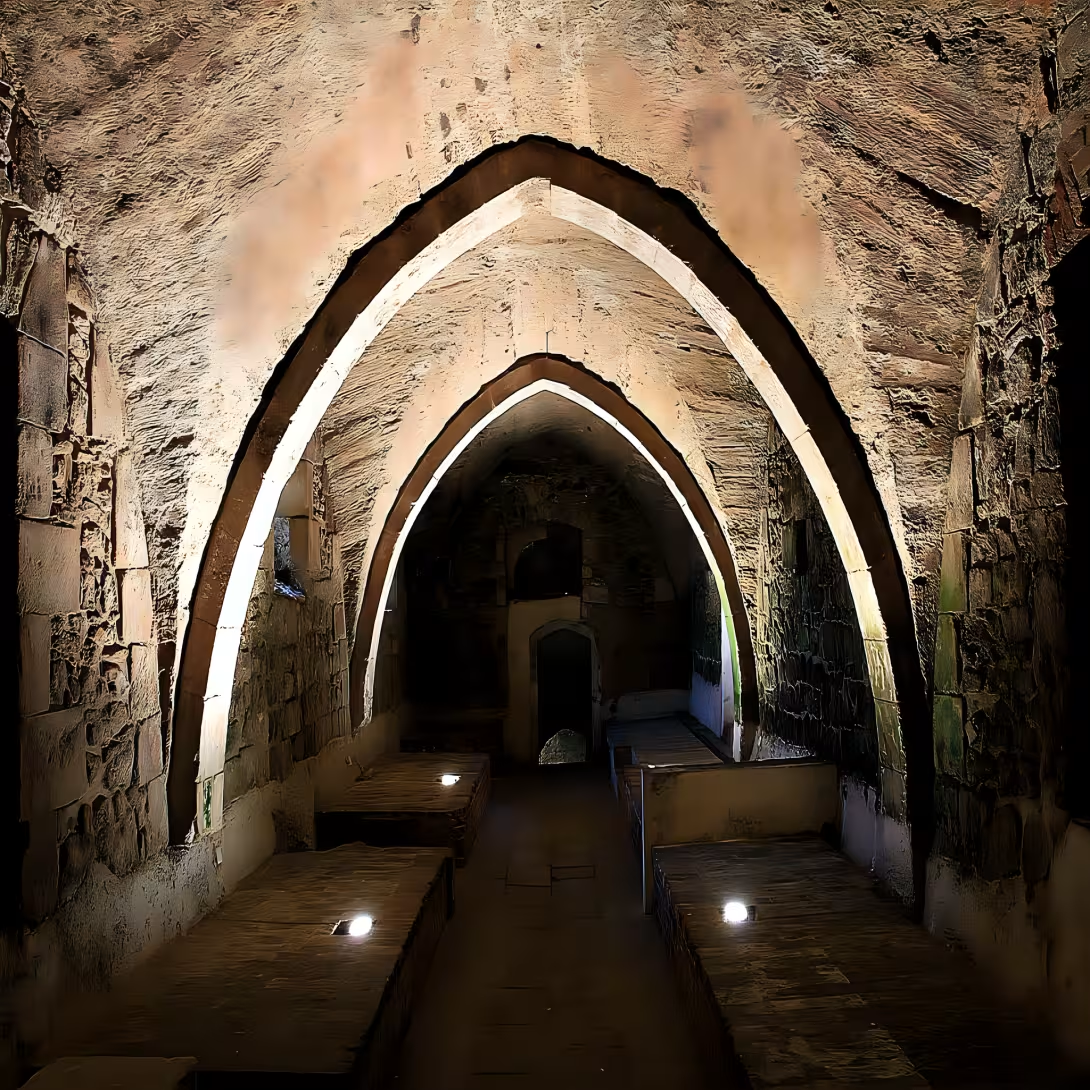
The best preserved testimony of the commendation was only the Church of the Holy Spirit for centuries. For a long time, nothing was preserved from the manor. This changed in 1991 when there was a surprising discovery. The Археологic work with the contribution of Tomáš Edel revealed the preserved remains of the small and large hall and chapel of John the Baptist. These buildings represent an exceptional example of late Romanesque and Gothic construction in Czech territory.
Today, the commendation is part of the protected castle site. Its premises have been under official protection since 8 December 1995. It is managed by the Czechoslovak Museum of Podzedědská. The chapel of John the Baptist was reconsecrated and thus serves not only historical memory but also traditional liturgical purposes. Visiting this quiet location allows you to zoom in on what the johanite mansion of the Middle Ages looked like and how deep history can be hidden underground even under the oblivion of generations.
Then and now
Drag the slider to compare how the landmark may have looked when it was built with the view today.
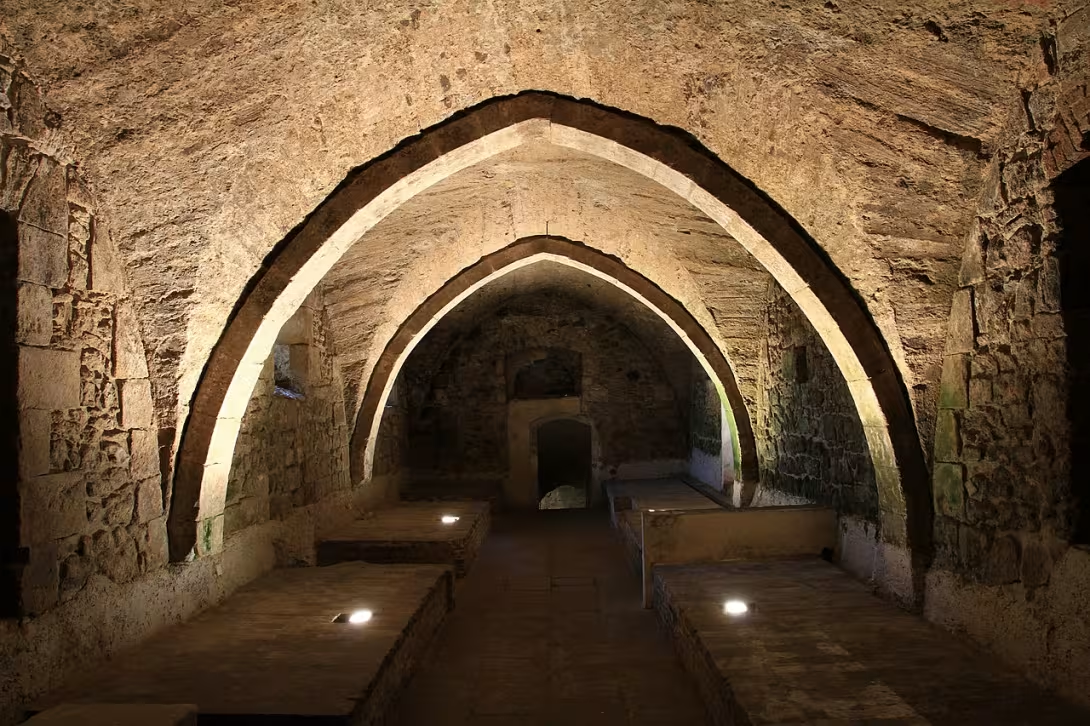

The historical appearance on the left is an AI-generated visualisation and serves as inspiration only.
Historical milestones
- 1237
- The creation of a commendation after the transfer of the Johanite residence from the village of Svetla under Jested to oak.
- 1291
- First written mention of the commendation in Český Dub.
- 1373
- The commendation had five order knights and five clergy, driven by a secular chamber.
- 1425
- The end of the commendation after the conquest of Czech Oak Hussite.
- 1991
- Detection and archaeological confirmation of preserved building residues.
Architectural development
The complex dates back to late Romanesque and Gothic architecture. The chapel of St. John the Baptist is the best preserved part, while the other buildings were later converted into a Renaissance castle. Archaeological findings confirm the original available hall and chapel, which were covered by layers of later buildings. The materials included stone and wood, typical of medieval houses.
Historical events
- before 1260
- The establishment of a commendation of johanita on the territory of the village of April, which became the center of their estate in Podjedědí.
- 1425
- The Conquest of the Czech Dubu Hussite under the leadership of Jan Čapek from Sán and the demise of the commendation.
- 1991
- The unveiling and archaeological uncovering of the remains of the commenda, including the chapel of St.
Owners
1237-1425 – The Order of St. John (Johanite); 1425- 1653 – Jan Čapek of Sán and other Hussite representatives (after conquest); 1653-1782 – St Augustine of St. James's monastery in Vienna; from 1782 – The Czechoslovak Museum of Podzedědský (administration since the 20th century).
Points of interest
- The creation of the commendation in Český Dubu is related to the expansion of the manor of the Order of St. John the Baptist, who acquired the territory from Havel of Lemberk, the husband of St. Zdislava, shortly after 1237.
- Originally there was the village of Svetla under Jested, but the johanites carried the centre to the village of Dub and brought the market law here, creating the new town of Nová Svetla.
- The first written mention of the commendation dates back to 1291, when it was mentioned in the award of indulgences for pilgrims visiting local churches.
- In 1373 the commenda controlled approximately 10 450 hectares of land and managed by a secular comtur with five spiritual and five order knights.
- In 1991, preserved remains of the small and large hall and chapel of John the Baptist were uncovered by archaeological works, which represent a rare example of late Romanesque and Gothic construction.
Guide
This guide is narrated by a synthetic voice generated by artificial intelligence.
Show guide text
This text was created by artificial intelligence and has not been editorially reviewed. It may contain inaccuracies.
The Johannite Commandery in Český Dub was established before 1260 and ceased to exist in 1425. For a long time, it was believed that nothing had survived from it. It was only in 1991 that a small hall, a large hall, and the Chapel of Saint John the Baptist were discovered. Tomáš Edel played a significant role in this discovery. Today, this complex ranks among the very finest examples of late Romanesque and Gothic architecture in the Czech Republic. It is managed by the Podještědské Museum in Český Dub. The chapel has been reconsecrated and serves for religious services. The commandery is part of the heritage-protected area of Český Dub Castle. The protection of the newly discovered spaces has been in effect since December 8, 1995.
The history of the commandery is closely connected to the origins of the city. Shortly after 1237, Havel of Lemberka, the husband of Saint Zdislava, donated territory to the south of Ještěd to the Johannites. Its center was the market village of Světlá under Ještědem. However, it lay too far on the edge of the new domain, and so the founder established a commandery in the territory of the village of Dub. The market rights were also transferred here from Světlá. A new city was created with a parish Church of the Holy Spirit, which was initially called Nová Světlá.
The first direct records of the commandery date from 1291 and 1294. On August 24, 1294, the Bishop of Kraków granted forty-day indulgences to pilgrims who visited selected churches on certain feast days. Among them was the Church of the Holy Spirit in Dub. The commandery's estates grew steadily, and by the fourteenth century, they covered an area of approximately ten thousand four hundred fifty hectares, with their core in the Podještědí region. In 1373, the commandery was headed by a secular commander and had five clergy and five order knights living there. The clerics were led by a prior. Each commandery remitted one fifth of its income to the order's treasury on the island of Rhodes.
At the beginning of the Hussite Revolution, King Sigismund assigned the commandery's estates to Jan Chudoba of Ralsko, who was to protect them. However, in 1425, the Hussite army of Jan Čapek of Sán, after capturing Michalovice Castle, marched on the Český Dub region. In mid-June, Český Dub fell, and with it, the commandery. Čapek took over its estates. The remains of the commandery were later rebuilt into a Renaissance castle.
Český Dub became order property again in 1653, when it was acquired by the canonesses regular of Saint Augustine from the Vienna convent of Saint James. It remained theirs until 1782, when Joseph the Second dissolved the convent.
Tips for visitors
The best time to visit the chapel Komenda Český Dub is in spring or autumn when the weather is pleasant and there are no crowds of tourists like in summer months. In summer there are often more visitors, but if you want to experience a quiet atmosphere, avoid the main summer holidays. The chapel is also suitable for visiting in winter, but when snowing or freezing it may be more difficult to access the premises.
It is recommended to arrive by car because public transport to Český Dubu does not travel very often.
When visiting the chapel take on comfortable clothes and shoes because the area is not completely flat and some parts may be covered with grass or stony surface. Further prepare a map or navigation if you want to visit other interesting places around. It is often cold in the chapel, so take a light sweater or long-sleeved sweater. If you plan to take pictures, do not forget batteries and memory cards.
Photography in the chapel is allowed, but it is advisable to choose the right light and places. The best time to take pictures is in the morning or in the evening when the light is softer and more pleasant. When shooting in the interior, avoid flashing lightning to avoid damage to the paintings.
Around the chapel Komenda Český Dub there are several interesting places worth visiting during your trip. The castle is located in the area of the commendation, which is also a historical monument and offers the possibility of sightseeing. In the centre of Český Dubu, about five minutes' walk away, the Parish Church of the Holy Spirit is another beautiful example of sacral architecture.
If you visit the chapel with children, prepare for them some small activity, such as drawing historical monuments or searching for differences in images from the chapel. There is plenty of room for children's games and walks in the commendation area. The children will surely be intrigued by the medieval atmosphere and stories associated with the order of St. John. The tour of the chapel may be interesting for children if you explain to them what the customs were then and what the order of St. John's was.
Frequently asked questions
Can the monument be visited?
Some buildings of this kind are open for guided tours, others serve another purpose or are privately owned. We have not verified whether and when this monument is open – please ask the operator.
What are the opening hours and admission?
We have not verified the opening hours or admission. Current information is published by the operator. Official website: https://www.muzeumceskydub.cz/509-johanitska-komenda.html
Where is the monument?
Location: Český Dub, Liberecký kraj. The map on this page shows the exact spot.
For kids
Imagine going back 766 years, until Český Dub was still a young town. There was a castle that we now know as Komenda Český Dub. It was a fortress built by knights and warriors to protect their territory from attacks from the outside.
It's like they're going back to the past today, so you could see how people lived at the time. They were honest warriors trying to protect their countries and families. They were also masters who built and repaired the castle to be strong and firm.
Businesses nearby
Do you run a restaurant, accommodation, shop, museum, rental, wellness or other visitor service near this monument? Show yourself directly to the people heading to it — this is how they will see you in the app and on the web:
Events nearby

Zdroj akcí: otevřená data měst a obcí ČR (Národní katalog otevřených dat) a kalendář akcí Národního památkového ústavu.
Accommodation nearby
Trips and activities nearby
Guided tours, tickets and activities nearby from GetYourGuide
Affiliate link: if you buy from the partner, we may receive a commission. The price for you does not change.
Search tours and activities →Themed route
Thematic cruise route: History and nature in Czech oak
1. Komenda Český Dub (chapel) - * Main objective * A unique Baroque building connected to the history of the Jesuit Order, today serving as a cultural and social centre. The chapel offers a quiet environment for meditation and tour of historical interiors.
2. Czech castle - * Castle in the commendation area * Renaissance mansion with rich history, which was part of Jesuit residence. Today it serves as a representative building with the possibility to visit the interiors and surrounding park.
3. Parish Church of the Holy Spirit - * Church in the centre of Czech oak * An impressive Baroque building with valuable artistic elements that dominates the historical core of the city. The interior decoration and organ is worth the attention of lovers of sacral architecture.
4. Natural Reservation Jested - * Natural Reservation * A picturesque area with beech forests and rich fauna, ideal for nature tourism and observation. There is also a famous Jested lookout tower nearby, which is not part of the route.
5. Podjedí - * Landscape region * Large forests and hills with rich history, suitable for cycling or walking. The region offers a quiet and authentic rural atmosphere.
Seasonal recommendations
Spring: In the spring period, Komenda Český Dub is transformed into a shining refuge, where flowering shrubs and trees celebrate new growth. The sun's rays penetrate the leafy trees that are beginning to pick up colors, creating an attractive atmosphere for visitors. In this period it is advisable to visit a monument at the end of the morning or evening when you avoid crowds and you can enjoy a quiet moment in nature. It is recommended to wear clothes suitable for mild weather to ensure comfort during walks.
Summer: Komenda Český Dub is most visited in the summer thanks to pleasant warmth and long days. The chapel enters into dialogue with the sun rays, which decorate its roofs and surrounding green landscape. In these months, it is best to come to memory early in the morning or late in the evening to avoid the biggest crowds during the day. It is advisable to take with you sunscreen and clothes for all weather conditions, as the weather can be sudden.
Autumn: In the autumn season, trees and shrubs acquire colour shades, creating a remarkable atmosphere around the Český Dub Commendation. Sunshine days are getting shorter and the temperature is dropping, which means the visit is best in the morning when nature is still calm. It is advisable to wear clothes for mild cold and perhaps even umbrella for possible chills.
Winter: Winter Komenda Český Dub offers a unique atmosphere where the chapel stands in a quiet, covered with snow landscape. Less visitors means the opportunity to explore the memory in peace and enjoy its historical character. Hot clothes, protective shoes and perhaps head covers are essential for a comfortable visit in the cold.
Visualizations and artistic views


The visualisations are generated by artificial intelligence and serve as inspiration.
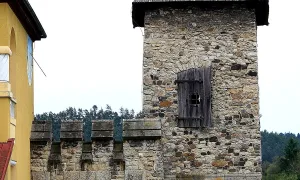
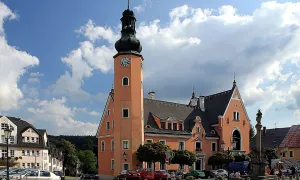
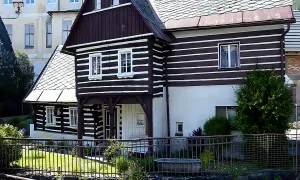
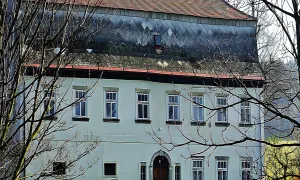
Photos from the area
Real photos taken near the monument

Zdroj a licence jsou uvedeny u každého snímku.
Tips from visitors
No tips yet. Be the first!
Log in and add your tip.
Sources and literature
Photos: Ondřej Kořínek / CC BY-SA 3.0, rozlišení zvýšeno umělou inteligencí — Wikimedia Commons. The author and licence also appear when you hover over the image.
Faktickým podkladem tohoto textu byl článek na Wikipedii, jehož autory jsou přispěvatelé Wikipedie. Článek je dostupný pod licencí CC BY-SA 4.0.
Location on the map

Příběhy a pověsti
Legendy, pověsti a příběhy spjaté s touto památkou

Fotografie návštěvníků
Zatím žádné fotografie. Buďte první, kdo přidá fotografii z návštěvy!
Log in a přidejte svou fotografii nebo hodnoťte.
Za ověřenou návštěvu v aplikaci získáte víc bodů — poznáme podle GPS, že jste na místě.
Reviews and comments