



Kostel Nanebevzetí Panny Marie (Ročov) Church
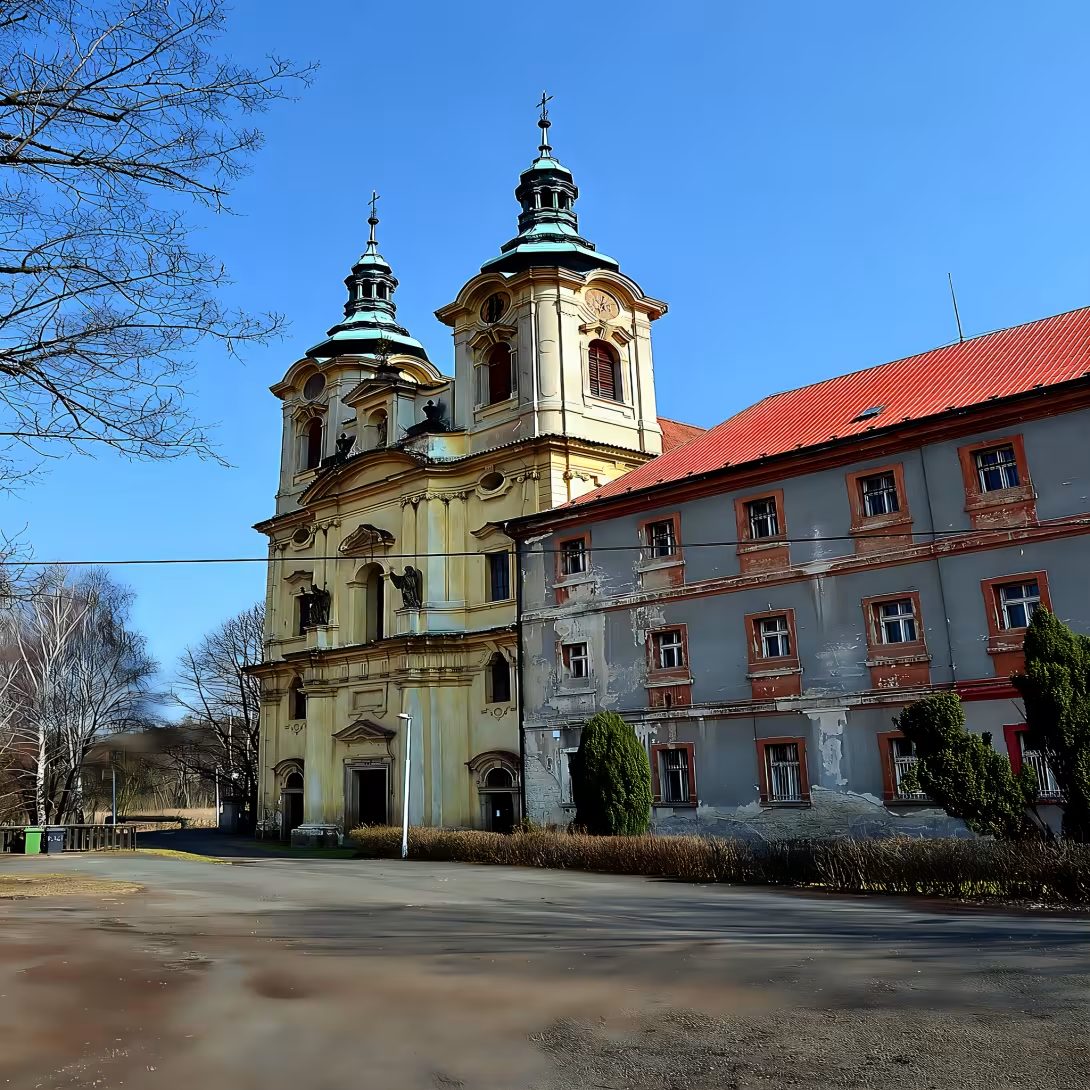
The Church of the Assumption of the Virgin Mary in Lower Ročov is located in the district of Louny and belongs to exceptional Baroque buildings of the Czech environment. The building was created in 1746-1750 as a substitute for an older Gothic church from the end of the 14th century. The author of the project was an important architect Kilián Ignác Dientzenhofer, who thus put together today's form. At the core of the pilgrimage cult, however, the element remains much older - the Gothic statue of the Virgin Mary, 1.5 metres high, which tradition attaches to the gift of 1373 from Albrecht the Elder of Kolowrat to the then Augustinian monastery.
The history of the place dates back to the time of the monastery. Soon after its founding, the respect for the love Madonna spread throughout the Lounian Podlesi. Around the statue, the tradition of pilgrimage, which lasted even in the Pohusite era, formed by the procedure of времени. The Catholic faith remained uninterrupted in Podlesí, and so the pilgrimage continued in the New Testament. Every year I went through many processions, especially about the annual pilgrimage linked to a special prayer text called the Ročov Healthy, composed directly in honor of this statue. At the beginning of the 20th century, almost 15,000 pilgrims came here on average every year. Tradition also lives at present, when regular pilgrimage takes place here.
Architecturally, the church is a one-ship building of a baroque style with a rectangular plan. The facade is decorated with rizalite with a pair of towers whose corners are rounded and rounded with detached bans. The Rizalite on the ground floor is decorated with half-pillars, and the Pillasters on the floor. Part of the facade is also a niche with a statue of Madonna. The statues of St. Augustine and St. Monica on the facade come from the workshop Ignatius František Weiss. The presbytery is covered with a dome on the pendants, and the ship is rolled by a vault with lunnets. The ceiling is decorated with frescoes by A. Smichaea of Louns created in 1750-1760, depicting scenes from the life of the Virgin Mary and the Ascension of the Lord.
The main altar from 1748 by the sculptor's workshop F. I. Weiss is the most valuable interior installation. It's a pillar altar ended with a baldachin carrying a Marian crown, carried by angels. In the rococo box on the altar is placed the central reality - the Gothic statue from the end of the 14th century. In honor of this statue, silver clothing was acquired in 1723, which now lies in the National Museum in Prague. The statue of Madonna holds bread and grapes in one hand, and in the other Jesus. There are six other altars in the ship, four of which come from the second quarter of the 18th century and are dedicated to St. Augustine, St. Monica, St. John of Nepomuk and St. Anna.
The church remains an important place of living piety. Friday's manager is Jan Mária Valt. A centuries-old tradition of Pilgrimage comes to life for visitors here every season, and one of the most beautiful examples of Baroque sacral architecture in the Czech boiler can be seen here.
Then and now
Drag the slider to compare how the landmark may have looked when it was built with the view today.
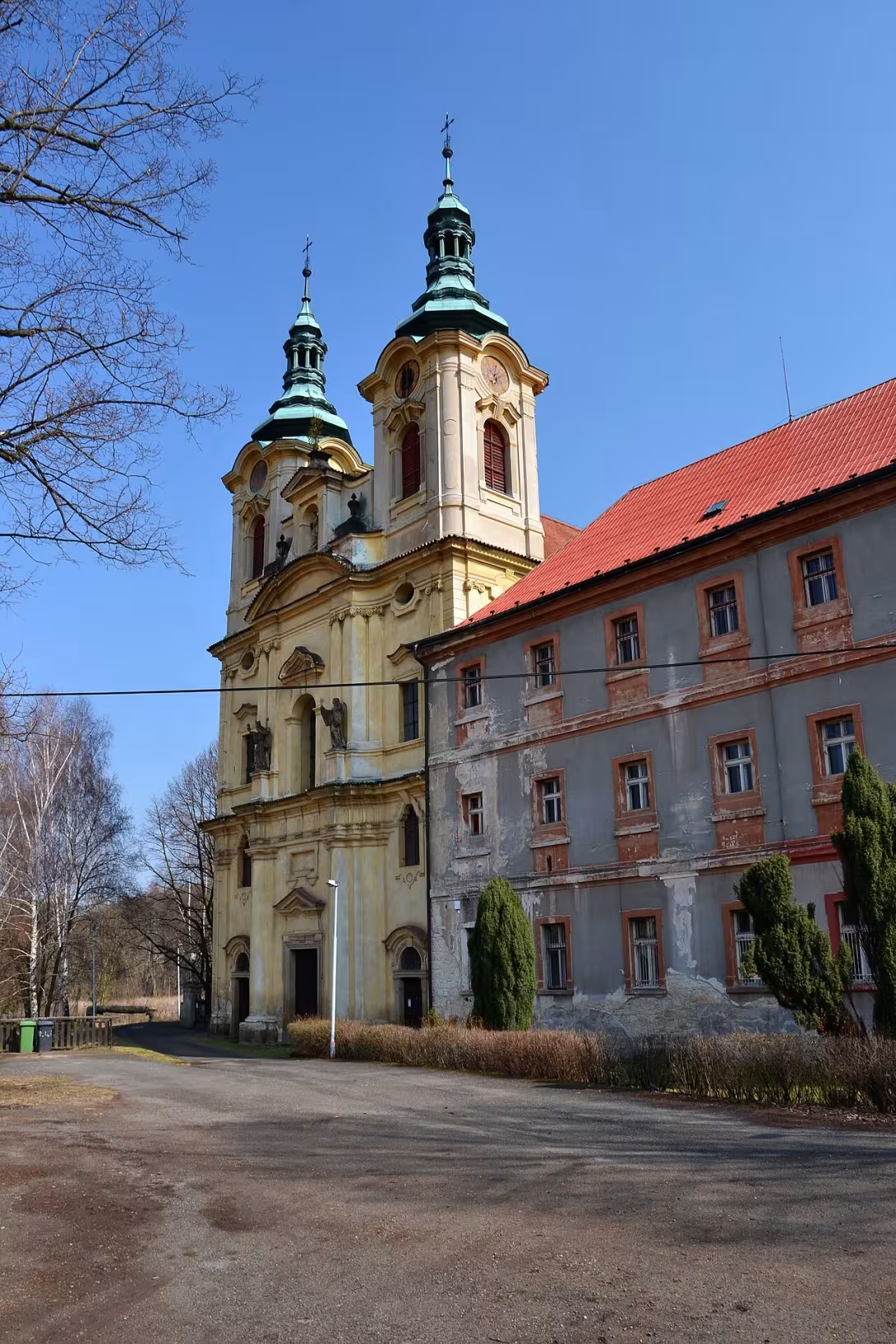
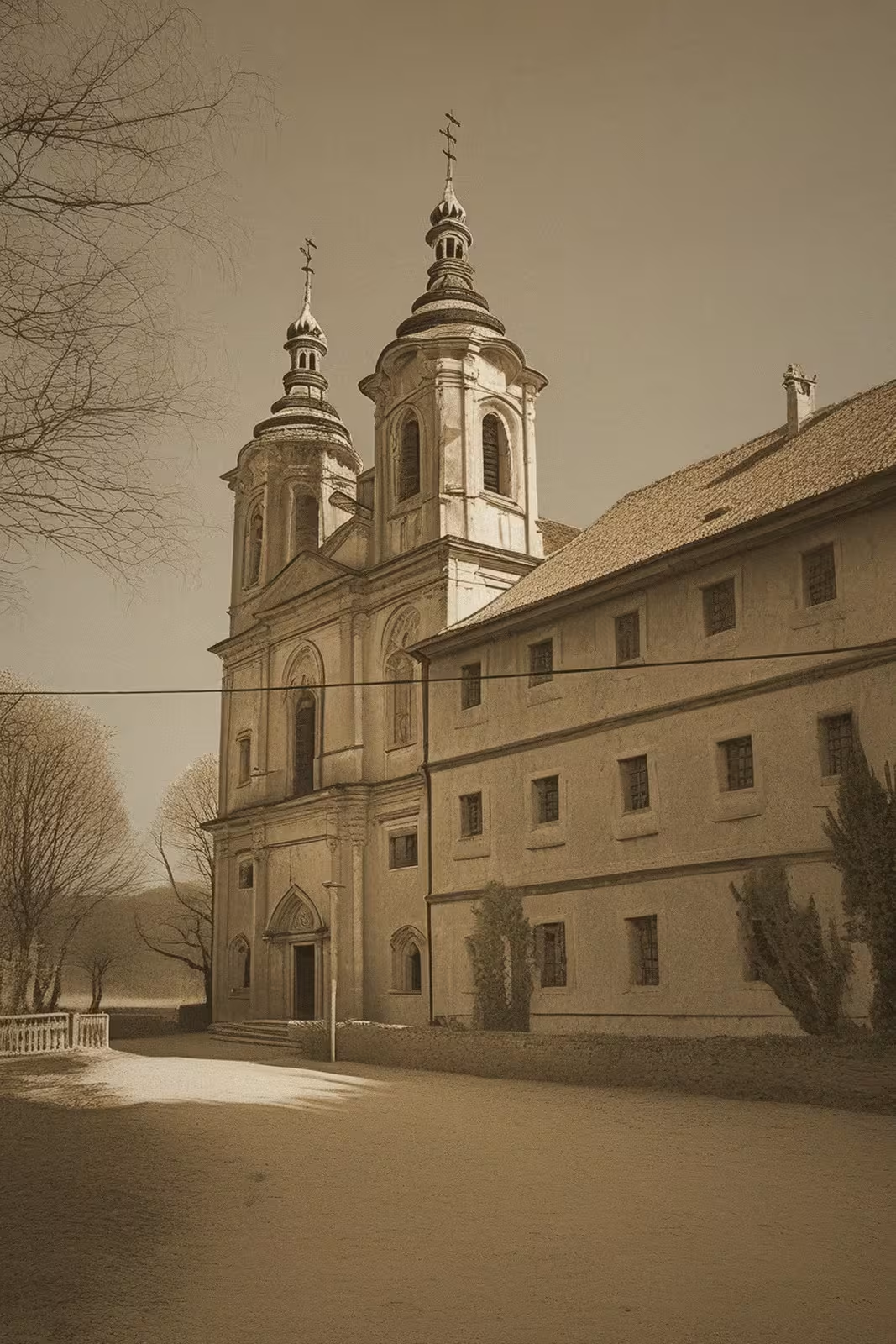
The historical appearance on the left is an AI-generated visualisation and serves as inspiration only.
Historical milestones
- 1373
- Albrecht starší z Kolowrat donated a Gothic statue of the Virgin Mary to the founded Augustinian monastery.
- 1723
- Getting a silver garment for the statue of the Virgin Mary.
- 1746-1750
- Construction of the present Baroque church by Kilian Ignác Dientzenhofer.
- 1750-1760
- Painting vaults with frescoes by A. Smichae from Louns.
Architectural development
The original Gothic church from the end of the 14th century was replaced by a single baroque temple with two towers in the facade. Presbytery is a glass dome on pendents and the ship contains a field of Czech buttons and rolled vaults. The interior is decorated with frescoes A. Smichaea from 1750-1760.
Historical events
1373: Donating the Gothic statue of the Virgin Mary to the Augustinian monastery. 1746-1750: Construction of the present Baroque church.
Owners
Augustinian monastery (since 1373)
Points of interest
- The building was created in 1746-1750 as a substitute for an older Gothic church from the end of the 14th century. The project was created by Kilián Ignác Dientzenhofer. The core of the pilgrimage cult is a gothic statue of the Virgin Mary, 1.5 meters high. Tradition ascribes her gift from 1373 to Albrecht the Elder of Kolowrat. - At the beginning of the 20th century, almost 15,000 pilgrims came here on average every year. - The ceiling is decorated with frescoes by A. Smichae of Louns created in 1750-1760. - In honor of the Gothic statue, silver clothing was acquired in 1723, which now lies in the National Museum in Prague.
Guide
This guide is narrated by a synthetic voice generated by artificial intelligence.
Show guide text
This text was created by artificial intelligence and has not been editorially reviewed. It may contain inaccuracies.
The pilgrimage church of the Assumption of the Virgin Mary in Dolní Ročov on the Louny region was once the church of an Augustinian monastery. A Gothic church already stood on this site at the end of the 14th century. Between 1746 and 1750, it was replaced by the present Baroque building, which was designed by Kilian Ignatz Dientzenhofer.
The heart of the church is a Gothic statue of the Virgin Mary from the end of the 14th century, known as the Podělkovská Virgin Mary. It measures approximately one and a half meters. In one hand she holds bread and grapes, and in the other a small Christ child. The statue originally probably stood on the castle of Albert the Elder of Kolowrat. He donated it to the Augustinian monastery in 1373, which he was founding in Dolní Ročov at that time. In 1723, the Madonna received a silver garment, which is now housed in the National Museum in Prague.
Veneration of the statue quickly spread throughout the Louny Podlesí region. It endured even during the period after the Hussite Wars, and the Catholic faith was always maintained in the area. Every year, numerous processions made their way to the Ročov valley, and at the beginning of the 20th century, nearly fifteen thousand pilgrims came here annually. Václav Beneš Třebízský mentions Ročov as a pilgrimage site in his works. Pilgrims still come here today, most notably during the annual pilgrimage. At this time, the Ročov Hail Mary is always sung, a song composed in honor of the Madonna.
The church is a single-nave rectangular building. The façade with two towers is decorated in the gable with a statue of the Madonna. On the sides stand statues of Saint Augustine and his mother Saint Monica, works from the workshop of sculptor Ignatz Francis Weisse.
The vaults inside are covered with frescoes by the Louny painter Smichaeus from 1750 to 1760. They depict scenes from the life of the Virgin Mary, such as her birth, the Annunciation, and the Visitation. Under the gallery is the Virgin Mary as she appears to the founder of the monastery. In the cupola above the presbytery, her Assumption is painted.
The main altar from 1748 is a work of Ignatz Francis Weisse. Above it arches a baldachin, which is topped by a Marian crown borne by angels. In the center of the altar, a miraculous Gothic Madonna is displayed in a Rococo shrine behind glass. She is accompanied by statues of Saint Joseph and Saint Joachim, as well as reliefs from the life of the Virgin Mary. In the nave stand six facing altars. Among them are altars dedicated to Saint Augustine and Saint Monica, Saint John of Nepomuk, and Saint Anne.
Tips for visitors
For the best experience we recommend a visit during bright days when the sun's rays penetrate through baroque windows and highlight the interior. The ideal time is morning or late afternoon to achieve soft light.
The most suitable spaces inside the temple for photography are the Baroque details and overall architecture. For visitors, we recommend taking drinking water with you and following a calm regime.
Families with children should remember the spiritual and historical importance of a place that requires a quiet and respectful approach during the tour.
Frequently asked questions
Can the monument be visited?
Religious buildings are usually open mainly during services; at other times a visit is normally arranged with the parish or the operator. We have not verified specific times.
Where is the monument?
Location: Ročov, Ústecký kraj. The map on this page shows the exact spot.
Why is the monument protected?
It is listed in the Central List of Cultural Monuments of the Czech Republic as a cultural monument. It is protected as part of a larger listed ensemble.
Businesses nearby
Do you run a restaurant, accommodation, shop, museum, rental, wellness or other visitor service near this monument? Show yourself directly to the people heading to it — this is how they will see you in the app and on the web:
Nearby
ITEX Show interactive overview of the surroundings - restaurants, accommodation, rentals and other places within a 15 km radius.
Data: OpenStreetMap contributors, 15 km radius.
‡ Historical monuments
- Woods (3.4 km)
- Memorial to the victims of World War I (3.6 km)
- Ruins Jban (6.0 km)
- Gibbon (6.5 km)
- Kounovsky stone lines (6.6 km)
- Pegas (6.8 km)
- Statue of the Virgin Marie (7.8 km)
- Jan Hus (8.0 km)
Restaurant and catering
- U Cucks (0.7 km)
- Podjban Brewery (7.9 km - Big Page 2)
- Krusovice (8.2 km)
- Krusovice (8.2 km)
- Krusovice (8.2 km)
- Worker's house Cítoly (9.7 km - Geographic 219)
- Žeroc management (10.4 km)
- U Banks (11.6 km)
Accommodation
- Heller (12.0 km)
- Hudebka (12.0 km)
- Kasárna (12.0 km)
- Golden Lev (12.0 km)
- Union (12.1 km)
- Hotel Black Horse (12.1 km)
- Alena (12.1 km)
- Apartments Rossa (12.1 km - Prague 78)
› Rental and sports
- JK Falco Krusovice (8.3 km)
- JK Falco Krusovice (8.8 km)
- Kola Chrobák (12.0 km - Pottery 583)
- Kola Fiala (12.5 km - River 1120)
- Cycling Stadion (13.2 km)
- Sport hall BIOS (13.4 km - Husova 1146)
- Swimming area Postoloprty (13.7 km)
- Beach swimming pool Hřivčice (14.2 km)
© Tourism and nature
- Timber - chapel St. Wenceslas (3.4 km)
- Na Hýží (rozc.) (3.6 km)
- Certovka (4.8 km)
- Pravda (4.9 km)
- Lodenice (5.2 km)
- Pod Jbanem (year) (6.0 km)
- Rivničská Lísa (9.3 km)
- Louštín (9.5 km)
Accommodation nearby
Themed route
Thematic cruise route to the village Ročov
1. Kostel Nanebevzetí Panny Marie (Ročov) - Church The main aim of our route is the Church of the Assumption of the Virgin Mary, which boasts rich history and architectural significance. This Baroque temple was built in the 18th century and is famous for its impressionable interiors and spiritual atmosphere that attracts visitors from all over the region.
2. Municipal Office Ročov - Historical building After exploring the church, we go to the neighborhood to the municipal office, which is located in the historic house. This object reminds us of the history of the city and its administrative history. It's the perfect place to know local life and governance.
3. Saint Anne's Chapel - Chapel Shortly from the municipal office you will find the chapel of St. Anne, a small but significant sacral building with a rich history. Its space is suitable for quiet moments and reflections, while its architectural structure attracts attention.
4. Local park - Green spaces After visiting the chapel we will go to the local park, which offers beautiful green spaces to relax and relax. The park is an ideal place to walk the whole equation and listen to natural music.
5. Cultural Center Ročov - Cultural Space To conclude our route we will visit the cultural centre where various events and exhibitions can take place. This area is an important place for the cultural life of the village and offers the opportunity to meet local artists and their parts.
This route allows us to know not only the main memory but also other attractions around Ročov, which makes it an ideal holiday for the whole family.
Seasonal recommendations
In spring the church surrounds the awakening nature and fresh green, which gives the building a new touch. The atmosphere is full of hope and the light is fine, which is ideal for observing the facade details. We recommend wearing layered clothes because the weather is variable, and visit the place in the morning when the air is purest.
Summer months bring intense sun and rich green trees that create a pleasant shadow around the temple. There are more visitors in the main season, so it is best to come first thing in the morning to avoid clumps and heat. Don't forget light, breathable clothes and plenty of fluids.
In autumn, the surroundings of the church turn into gold and red tones, creating a nostalgic and calm mood. The fog in the valley often gives the memory a mysterious look, especially in the setting sun. Due to the moisture of the terrain, waterproof shoes and lighter jacket are suitable for the wind.
In winter, the church operates in quiet and quiet, possibly under a white layer of snow, which underlines its monumental nature. In advent time, there's a strange, braver atmosphere. It is necessary to choose very warm clothes and to check in advance the opening times which are shorter in this season.
Visualizations and artistic views


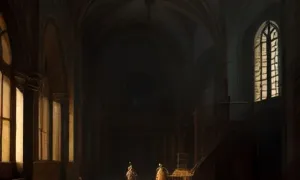
The visualisations are generated by artificial intelligence and serve as inspiration.
Photos from the area
Real photos taken near the monument


Zdroj a licence jsou uvedeny u každého snímku.
Atmosphere of the place
This atmospheric visualisation of the place and period was generated by artificial intelligence. It is not real footage of the location.
Tips from visitors
No tips yet. Be the first!
Log in and add your tip.
Sources and literature
Photos: Salim2 / CC BY-SA 3.0, rozlišení zvýšeno umělou inteligencí — Wikimedia Commons. The author and licence also appear when you hover over the image.
Faktickým podkladem tohoto textu byl článek na Wikipedii, jehož autory jsou přispěvatelé Wikipedie. Článek je dostupný pod licencí CC BY-SA 4.0.
Location on the map

Příběhy a pověsti
Legendy, pověsti a příběhy spjaté s touto památkou
Fotografie návštěvníků
Zatím žádné fotografie. Buďte první, kdo přidá fotografii z návštěvy!
Log in a přidejte svou fotografii nebo hodnoťte.
Za ověřenou návštěvu v aplikaci získáte víc bodů — poznáme podle GPS, že jste na místě.
Reviews and comments