






kostel Nanebevzetí Panny Marie a svatého Karla Velikého Church
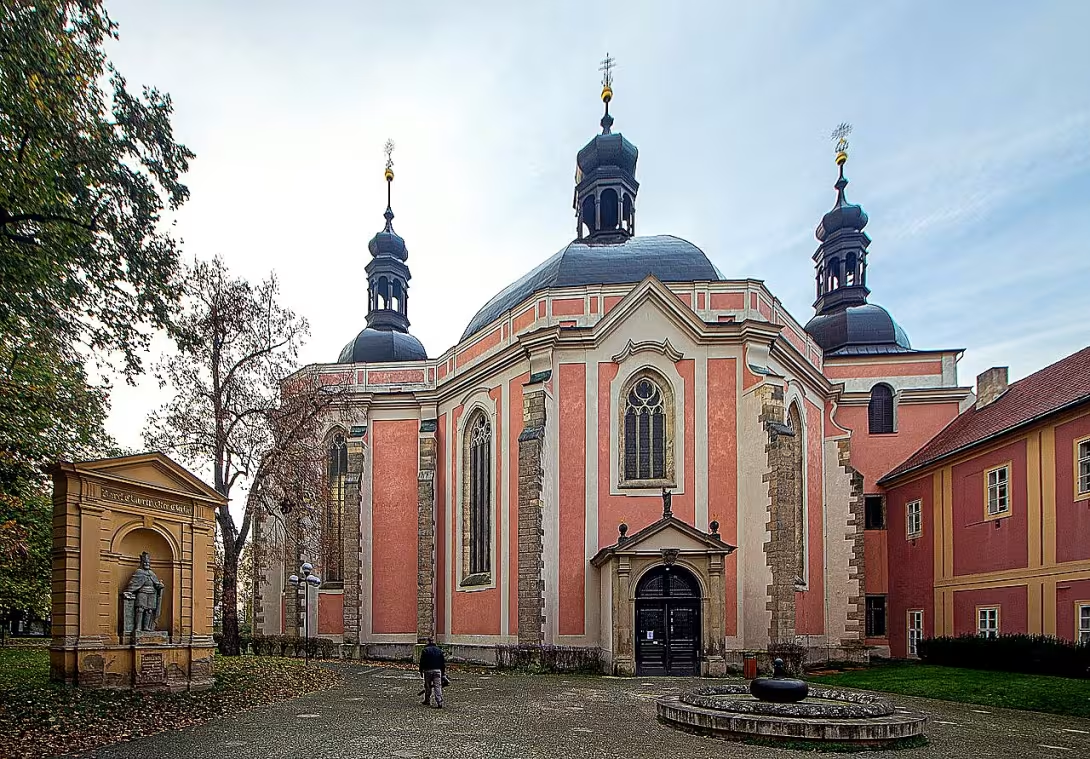
The Church of the Assumption of the Virgin Mary and St. Charles the Great is a remarkable historical monument in Prague's Karlov area. It features a unique blend of Gothic and Baroque architecture, reflecting Prague's rich history during the Middle Ages. Founded by Emperor Charles IV as part of an Augustinian canonry within New Town, it aimed to elevate Prague's status akin to Rome. The church is notable for its octagonal layout, inspired by Charlemagne’s Palatine Chapel in Aachen, and houses a rare relic: three teeth of Charlemagne, donated by Charles IV.
Construction began in 1351 under Matyáš z Arrasu as part of Emperor Charles IV's project to develop New Town. The church was consecrated in 1377 by Archbishop Jan Očko z Vlašimi, marking its initial completion, though it remained unfinished at that time. Its dedication to both the Virgin Mary and Charlemagne underscores its historical significance.
Architecturally, the Church of the Assumption is distinguished by its octagonal central nave with Late Gothic brick vaulting supported by stone ribs forming a star figure. The polygonal presbytery features a Gothic rib-supported vault spanning 22.8 meters in width. Over time, it underwent several transformations, including Baroque renovations that introduced significant changes such as the dome reconstruction by Bonifác Wolmut in 1575 and further modifications following a fire in 1755.
Throughout its history, the church experienced various ownerships and administrative changes. Initially part of an Augustinian convent, it later became a hospital under Joseph II in 1785. The church endured damage during the Hussite Wars and subsequent reconstructions, reflecting its resilience and continued importance to Prague’s architectural heritage.
Key events include its initial consecration in 1377 and reconstruction after the Hussite Wars in 1498. A legend suggests that the builder of the vault made a pact with the devil to complete construction swiftly, only to hang himself upon completion out of fear for the structure’s stability.
Today, the Church of the Assumption remains an accessible site of historical and architectural interest. Visitors can appreciate its unique blend of Gothic and Baroque elements, as well as its significant place in Prague's history. Its dedication to both religious figures and its connection to Charlemagne make it a compelling destination for those interested in exploring Prague’s cultural tapestry.
The Church of the Assumption of the Virgin Mary and St. Charles the Great stands as a testament to Prague’s architectural innovation and historical depth, inviting visitors to explore its storied past and appreciate its enduring beauty.
Then and now
Drag the slider to compare how the landmark may have looked when it was built with the view today.
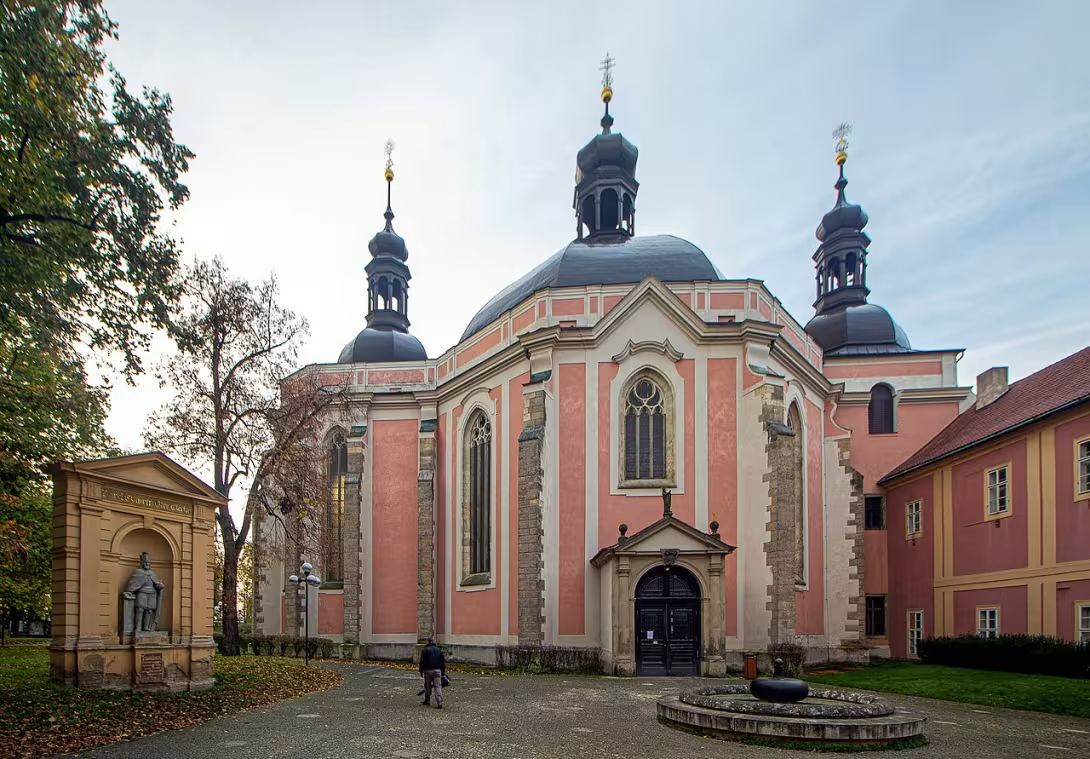

The historical appearance on the left is an AI-generated visualisation and serves as inspiration only.
Historical milestones
- 1351
- The beginning of the construction of the Church of the Assumption of the Virgin Mary and St. Charles the Great.
- 1377
- The church was consecrated by Archbishop Jan Očko z Vlašimi.
- 1498
- Reconstruction of the church after damages from the Hussite Wars.
- 1575
- Reconstruction of the vault thanks to Bonifác Wolmut.
- 1755
- Changes following a fire that caused further reconstruction.
Architectural development
Construction began in 1351 under the supervision of Matyáš z Arrasu. The church's original Gothic design featured an unusual octagonal layout. It underwent Baroque renovations, including a significant dome reconstruction by Bonifác Wolmut in 1575. Further modifications occurred in the early 18th century and after a fire in 1755.
Historical events
- 1377
- The church was consecrated by Archbishop Jan Očko z Vlašimi in the presence of Emperor Charles IV and his son Wenceslaus IV.
- 1498
- After being damaged during the Hussite Wars, the church was repaired and reconsecrated.
Points of interest
- A legend suggests that the builder of the church's vault made a pact with the devil to ensure swift completion; upon finishing, he hanged himself due to fear for the structure’s stability.
- The church houses a rare relic: three teeth of Charlemagne, which were donated by Emperor Charles IV as part of his efforts to connect Prague with the legacy of Charlemagne.
- Initially founded as an Augustinian canonry within New Town, the church was intended by Emperor Charles IV to elevate Prague's status akin to that of Rome.
- The octagonal layout of the Church of the Assumption is inspired by Charlemagne’s Palatine Chapel in Aachen, reflecting a historical connection between Prague and the Holy Roman Empire.
- Despite suffering damage during the Hussite Wars, the church was reconstructed in 1498, showcasing its resilience and continued importance throughout Prague's tumultuous history.
Guide
This guide is narrated by a synthetic voice generated by artificial intelligence.
Show guide text
This text was created by artificial intelligence and has not been editorially reviewed. It may contain inaccuracies.
The Church of the Assumption of the Virgin Mary and Saint Charles the Great stands on Prague's Karlova above Nuselské Valley. It is part of a former monastery of Augustinian canons and is originally Gothic, later rebuilt and expanded in the Baroque style.
It was founded by Emperor Charles IV during the grandiose construction of the New Town. He wanted to elevate Prague to the level of the capital of the Roman Empire. This is reflected in the unusual shape of the building. The octagonal ground plan of the nave refers to the Church of the Virgin Mary in Aachen, the main building of Charlemagne's palace. A central ground plan was very rare in Gothic architecture. The dedication to the Virgin Mary and Charles the Great, the restorer of the Roman Empire, was approved by Pope Clement VI, the former tutor of Charles IV. The emperor also donated a precious relic to the church, three teeth of Charles the Great. Prague's pewterers, coppersmith assistants, and brass workers venerated Charles the Great as the patron of their guild.
Construction began in 1351 and the imperial workshop of Matěj of Arras participated in it. In 1377, Archbishop Jan Očko z Vlašimi consecrated the church in the presence of Charles IV and his son Václav IV, although it apparently was not yet completely finished. During the Hussite turmoil, the monastery was damaged and abandoned. After repairs, the church was reconsecrated in 1498 and from 1502 to 1505 come two remarkable stained glass windows.
The present vault dates from 1575. It is a boldly designed dome with a network of Gothicizing ribs and is attributed to Bonifác Wolmut. It is twenty-two point eight meters wide. The octagonal nave is covered by a brick vault with stone ribs in the shape of a complex star. The nave is followed by a multi-sided presbytery and on the opposite side a bell tower, which does not significantly exceed the nave in height. The exterior of the building is reinforced by Gothic buttresses.
After 1704, holy steps were built at the church following the model of the Lateran Basilica in Rome. The building was completed with its decoration in 1711 and its project is attributed to Jan Blažej Santini, but this is not documented in archives. At the same time, a Bethlehem cave was added to the south side. Between 1735 and 1740, the interior received a new gallery with an organ by Bedřich Semerád, new oratories, a pulpit, and altars.
In 1755, a fire affected both the church and the monastery. In 1785, Joseph II abolished the monastery and the buildings were converted into a hospital.
Tips for visitors
Best Time to Visit: The Church of the Assumption of the Virgin Mary and St. Charles the Great is a year-round attraction, but the best time to visit is during spring or autumn when the weather is mild and sunny. This allows you to fully appreciate the church's architecture and surroundings without the crowds that come with peak tourist season. Parking and Transport: The church is easily accessible by car, as there are several parking options available nearby. Alternatively, you can take public transportation – bus or tram – which stops within a short walking distance from the church. What to Bring: Comfortable shoes for walking around the church and its surroundings are essential. You may also want to bring a camera to capture the stunning architecture and beautiful stained-glass windows. Photography: The best spots for photography are inside the church, where you can capture the intricate details of the Gothic-Baroque architecture and the vibrant colors of the stained-glass windows. Natural light is ideal for photography, so try to visit during the morning or late afternoon when the sun is not too harsh. What to See Nearby: Within a 30-minute walk from the church, you can explore other historical landmarks such as the Charles Bridge and Old Town Square.
Frequently asked questions
Can the monument be visited?
Yes. We verified the opening hours or admission on the official website (10. 9. 2026); you will find them in the visitor information on this page. Please double-check with the operator before you travel.
What are the opening hours and admission?
Details verified on the official website (10. 9. 2026) are listed in the visitor information on this page. Official website: https://kostelnakarlove.com/
Where is the monument?
Location: Praha, Hlavní město Praha. The map on this page shows the exact spot.
Why is the monument protected?
It is listed in the Central List of Cultural Monuments of the Czech Republic as a cultural monument. It is protected as part of a larger listed ensemble.
Businesses nearby
Do you run a restaurant, accommodation, shop, museum, rental, wellness or other visitor service near this monument? Show yourself directly to the people heading to it — this is how they will see you in the app and on the web:
Events nearby

Zdroj akcí: otevřená data měst a obcí ČR (Národní katalog otevřených dat) a kalendář akcí Národního památkového ústavu.
Accommodation nearby
Trips and activities nearby
Guided tours, tickets and activities nearby from GetYourGuide
Affiliate link: if you buy from the partner, we may receive a commission. The price for you does not change.
Search tours and activities →Themed route
Tematická výletní trasa: Kostel Nanebevzetí Panny Marie a svatého Karla Velikého
1. Kostel Nanebevzetí Panny Marie a svatého Karla Velikého (Kostel)
Typ: Religiózní památka
Proč stojí za návštěvu: Tento barokní kostel, nacházející se v srdci Prahy, je architektonickým dílem Jana B. Matheyse a představuje jednu z nejvýznamnějších náboženských budov města. Jeho bohaté interiérní výzdoba, včetně fresky na stropu od Františka Šíchy a sochařského díla od Matyáše Braunera, nabízí hluboký pohled do barokní umělecké tradice.
2. Náměstí Republiky
Typ: Veřejný prostor
Proč stojí za návštěvu: Nacházející se jen pár minut chůze od kostela, Náměstí Republiky je centrem města s historickým významem. Toto místo bylo svědkem důležitých událostí české historie a nabízí pohled na některé z nejvýraznějších budov Prahy, jako je Národní divadlo. Je ideálním místem pro odpočinek a pozorování života města.
3. Národní divadlo
Typ: Kulturní památka
Proč stojí za návštěvu: Toto impozantní goticko-románské divadlo, nacházející se na Náměstí Republiky, je nejen architektonickou perle Prahy, ale také kulturním centrem národa. Jeho historie sahá do 19. století a hostilo zde mnoho významných premiér českého divadla a hudby.
4. Pražský hrad
Typ: Historická památka
Proč stojí za návštěvu: I když Pražský hrad není přímo v okolí kostela, je dostupný krátkou autodopravou nebo veřejnou dopravou. Tato ikonická pevnost, s jejím bohatým historickým pozadím a nesčetnými památkami, nabízí pohled na celé město a je nezbytným zastavením pro každého cestovatele.
5. Kostel svaté Anny
Typ: Religiózní památka
Proč stojí za návštěvu: Nacházející se nedaleko Náměstí Republiky, tento barokní kostel je známý svou elegantní architekturou a významnými uměleckými díly. Je to místo klidu a útulku pro návštěvníky i místní obyvatele, což ho činí ideálním doplňkem k hlavnímu cíli trasy.
Tato trasa nabízí pohled na bohatou historii a kulturu Prahy, spojující náboženské, kulturní a historické prvky města.
Seasonal recommendations
Spring: The spring season at the Church of the Assumption of the Virgin Mary and St. Charles Borromeo is marked by a gentle awakening of nature, with blooming flowers and lush greenery surrounding the historic site in Prague. The soft light filtering through budding leaves creates a serene atmosphere, perfect for appreciating the church's intricate architecture. This period often sees fewer visitors compared to summer, making it an ideal time for those seeking a quieter experience. It is advisable to wear comfortable layers as temperatures can vary; mornings may be cool while afternoons become warmer. Visiting in late morning or early afternoon allows you to enjoy the site with minimal crowds and optimal lighting.
Summer: During the summer months, the church basks in long daylight hours, offering a warm glow that highlights its architectural details beautifully. The surrounding gardens are at their most vibrant, providing a picturesque backdrop for visitors. However, this is also peak tourist season, so expect larger crowds, especially during weekends and holidays. To avoid the hustle and bustle, it's best to arrive early in the morning or later in the afternoon when the sun is less intense. Dressing in light, breathable clothing is recommended, along with comfortable shoes for walking. Don't forget your sunglasses and a hat to protect against the summer sun.
Autumn: Autumn brings a spectacular display of colors as the leaves around the church turn shades of red, orange, and yellow, creating a stunning contrast with the historic architecture. The cooler temperatures make it an enjoyable time to explore without the summer crowds. This season can also bring unpredictable weather, so layering your clothing is advisable—bring a light jacket or sweater for chilly mornings and afternoons. Visiting on weekdays can further ensure a more peaceful experience. The soft autumn light adds a warm, inviting atmosphere that enhances the church's beauty.
Winter: In winter, the Church of the Assumption of the Virgin Mary and St. Charles Borromeo is enveloped in a quiet, almost mystical ambiance as snow gently blankets the surrounding area, transforming it into a picturesque scene reminiscent of a fairy tale. The shorter days mean fewer visitors and more intimate moments to appreciate the church's serene beauty under soft winter lighting. It’s essential to dress warmly with layers, including a heavy coat, hat, gloves, and scarf, to stay comfortable during your visit. Since many historic sites have reduced hours in winter, checking opening times beforehand is advisable. Early visits are recommended to make the most of daylight hours while avoiding any potential closures due to inclement weather.
Visualizations and artistic views


The visualisations are generated by artificial intelligence and serve as inspiration.
Photos from the area
Real photos taken near the monument


Zdroj a licence jsou uvedeny u každého snímku.
Tips from visitors
No tips yet. Be the first!
Log in and add your tip.
Sources and literature
Photos: VitVit / CC BY-SA 4.0 — Wikimedia Commons. The author and licence also appear when you hover over the image.
Location on the map

Fotografie návštěvníků
Zatím žádné fotografie. Buďte první, kdo přidá fotografii z návštěvy!
Log in a přidejte svou fotografii nebo hodnoťte.
Za ověřenou návštěvu v aplikaci získáte víc bodů — poznáme podle GPS, že jste na místě.
Reviews and comments