



Kostel Narození Panny Marie (Turnov) Church
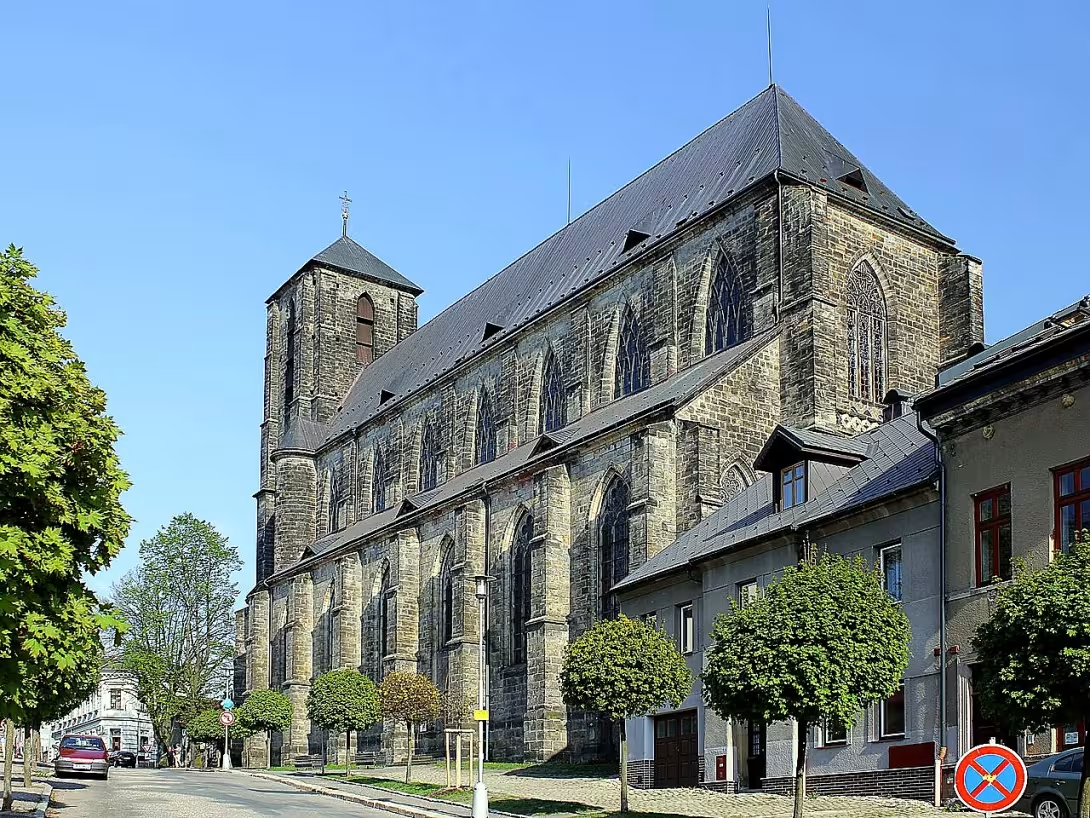
The Church of the Nativity of the Virgin Mary in Turnov is a significant neogothic monument. It stands out as one of Europe's earliest examples of this architectural style, located on Mariánské Square in Turnov, Liberecký kraj. Constructed between 1825 and 1853, it holds historical and cultural importance, protected by the Czech Republic.
The site dates back to the mid-13th century when Havel z Hutwice and Svatá Zdislava established a wooden church with a Dominican monastery. This structure faced destruction during the Hussite Wars in 1423–1424, resulting in monks' deaths. Subsequent reconstructions occurred, notably between 1550 and 1620 for the Jednota bratrská community. By the early 19th century, due to repeated fires, Aehrenthal, owner of the Hruboskalsko estate, demolished it to build a new neogothic church.
The architectural journey began with Martin Hausknecht's design in 1825. His vision led to a prominent three-nave structure with an unfinished tower—a distinctive feature symbolizing Turnov. Leadership transitions from Karl Schramm to Bernard Grueber ensured the project’s completion in 1853. Architect Josef Kranner significantly contributed with his interior furnishings design in 1843.
Throughout its history, the church has seen various ownerships and administrations. Initially established by Havel z Hutwice and Svatá Zdislava, it later deteriorated due to fires and war damage. Fortunát Durych, a Turnov native and court librarian, played a crucial role in preserving the church during Joseph II's reforms.
The site has witnessed key events shaping its history. The original wooden church and monastery were destroyed during the Hussite Wars, leading to significant rebuilding efforts over centuries. Aehrenthal’s decision to replace the deteriorating structure with a neogothic design marked a pivotal moment in the church's evolution.
Today, the Church of the Nativity of the Virgin Mary remains a vital cultural and historical site in Turnov. Its architectural grandeur and historical significance make it essential for those interested in European history and architecture. The unfinished tower continues to stand as a distinctive landmark, inviting visitors to explore its rich past and appreciate its place within neogothic architecture.
The church's enduring legacy is a testament to 19th-century Europe’s cultural shifts and the resilience of historical preservation efforts. It stands not only as a monument to architectural innovation but also as a symbol of Turnov’s historical narrative, inviting visitors to delve into its storied past and appreciate its significance in Czech heritage.
Then and now
Drag the slider to compare how the landmark may have looked when it was built with the view today.
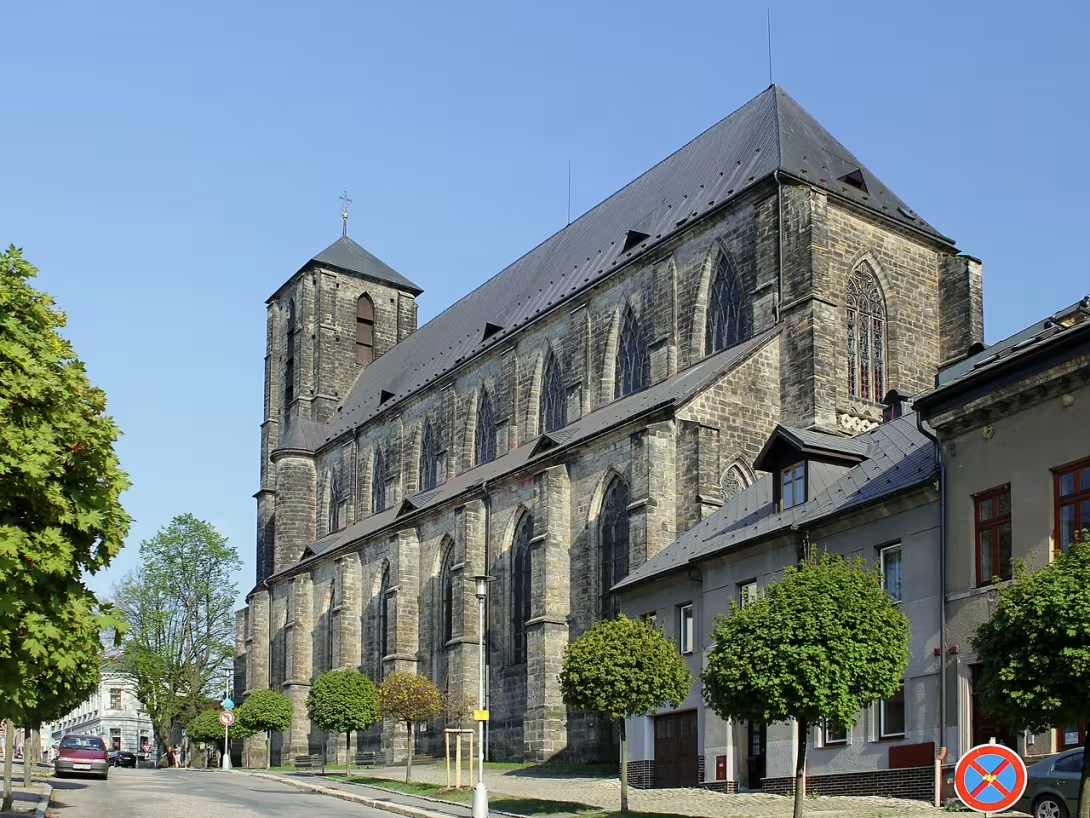
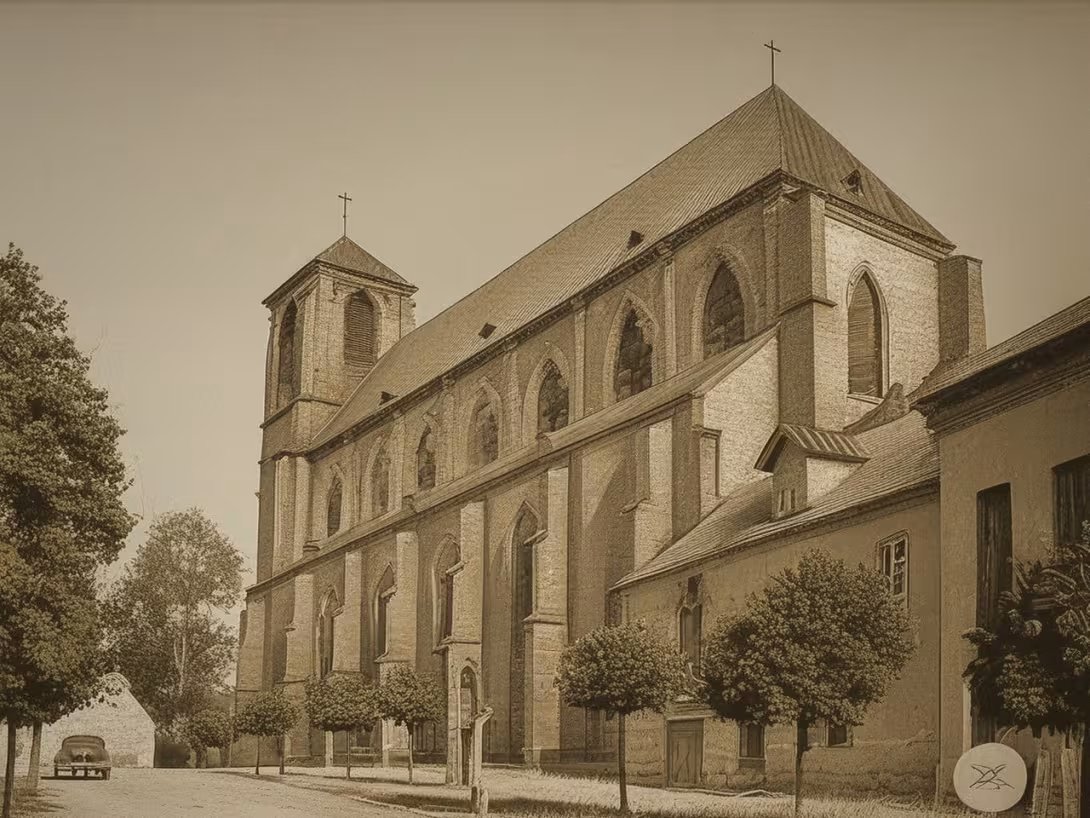
The historical appearance on the left is an AI-generated visualisation and serves as inspiration only.
Historical milestones
- 1423
- The monastery and church were burned down during the Hussite Wars.
- 1550
- Rebuilding of the church for the Jednota bratrská community began.
- 1825
- Construction started on the new neogothic church under Martin Hausknecht's design.
Architectural development
Initially a wooden structure with a Dominican monastery in the mid-13th century, the site saw multiple reconstructions due to fires and war damage. The current neogothic church was designed by Martin Hausknecht and later overseen by Karl Schramm and Bernard Grueber. Its construction began in 1825 and concluded in 1853.
Historical events
The original wooden church and monastery were established around the mid-13th century by Havel z Hutwice and Svatá Zdislava.
During the Hussite Wars (1423–1424), the monastery and church were burned down, leading to the death of monks in the fire.
The church was rebuilt between 1550 and 1620 for the Jednota bratrská community.
In 1825, construction began on the new neogothic church under Martin Hausknecht's design.
Owners
The original wooden church and Dominican monastery were established by Havel z Hutwice and Svatá Zdislava around the mid-13th century. After several fires, including one during the Hussite Wars, the structure was rebuilt multiple times until Aehrenthal, a new owner of the Hruboskalsko estate in the 1820s, decided to demolish it and construct the current neogothic church.
Points of interest
- The Church of the Nativity of the Virgin Mary in Turnov is one of Europe's earliest examples of neogothic architecture, marking a significant departure from traditional styles prevalent at that time.
- Despite its grandeur today, the original wooden church and monastery were destroyed during the Hussite Wars, highlighting the tumultuous historical period it survived through before reconstruction efforts began.
- The unfinished tower of the church is not just an architectural feature but a symbol of Turnov itself, representing both the city's resilience and its ongoing narrative throughout history.
- Fortunát Durych, who played a key role in preserving the church during Joseph II’s reforms, was originally from Turnov. His involvement underscores the local connection to this historical site.
- The transition from Martin Hausknecht's initial design to Bernard Grueber's completion reflects the collaborative and evolving nature of architectural projects in 19th-century Europe, showcasing a blend of artistic visions over decades.
Guide
This guide is narrated by a synthetic voice generated by artificial intelligence.
Show guide text
This text was created by artificial intelligence and has not been editorially reviewed. It may contain inaccuracies.
Welcome to the Church of the Nativity of the Virgin Mary in Turnov, a stunning example of European neogothic architecture that stands as one of the earliest of its kind on this continent. As you stand here on Mariánské Square, imagine yourself stepping back into time where history and artistry intertwine.
This remarkable church was constructed between 1825 and 1853, replacing a wooden predecessor that once stood in this very spot. The original site held both historical and spiritual significance, having been home to a Dominican monastery founded by notable figures such as Havel z Hutwice and Svatá Zdislava. These individuals played crucial roles in the establishment of this sacred place.
The church you see before you is the result of visionary design by Martin Hausknecht, with contributions from Karl Schramm and Bernard Grueber. Its large three-nave structure invites you to explore its grandeur and intricate details. As you look around, notice how the neogothic style sets it apart, marking a significant departure from traditional architectural styles of that era.
The history here is rich and layered. In 1423, during the tumultuous Hussite Wars, both the monastery and church were tragically burned down. Yet, resilience marked this place as rebuilding efforts began in 1550 for the Jednota bratrská community, showcasing a spirit of renewal and faith that has endured through centuries.
As you stand here today, take a moment to appreciate not just the physical beauty but also the stories embedded within these walls. Figures like Fortunát Durych are part of this narrative tapestry, adding depth and context to your visit.
One fascinating aspect of this church is its role as one of Europe's earliest neogothic structures, symbolizing a shift in architectural trends that would influence many subsequent designs across the continent. This makes it not just a place of worship but also a landmark in the evolution of European architecture.
As you continue to explore, let your senses guide you through this historical journey. Feel the weight of history and the whispers of those who walked these grounds before you. Each element here tells a story waiting to be discovered.
Thank you for joining us on this exploration of the Church of the Nativity of the Virgin Mary in Turnov. We hope this experience has enriched your understanding and appreciation of its historical and architectural significance. As you move forward, continue to seek out stories and places that connect us with our past. Safe travels, and may your journey be filled with discovery.
Tips for visitors
The best time to visit the Church of the Nativity of the Virgin Mary in Turnov is during late spring or early autumn when the weather is pleasant, and the surrounding Jizera Mountains are lush with greenery. This period offers a comfortable climate for exploring both the church and its picturesque surroundings. Additionally, visiting outside peak tourist seasons can provide a more serene experience, allowing you to appreciate the neogothic architecture without large crowds.
The church is accessible by various modes of transport; visitors can drive or use local buses that connect different parts of the town.
When planning your visit, consider bringing comfortable walking shoes as you might want to explore the nearby natural landscapes and historical sites within Turnov. A camera is recommended for capturing the stunning architecture of the church and its scenic surroundings. If visiting during colder months, don't forget warm clothing and perhaps an umbrella or raincoat, given the unpredictable weather.
Photography enthusiasts will find several spots around the Church of the Nativity of the Virgin Mary ideal for taking pictures, especially during the golden hours of early morning or late afternoon when the light is soft and enhances the neogothic details. The church's façade and interior offer a rich tapestry of architectural elements to capture. For families with children, Turnov provides an engaging experience; the city’s historical sites are complemented by outdoor activities in the nearby Jizera Mountains, making it an educational yet fun outing.
Frequently asked questions
Can the monument be visited?
Religious buildings are usually open mainly during services; at other times a visit is normally arranged with the parish or the operator. We have not verified specific times.
Where is the monument?
Location: Mariánské náměstí, Turnov, Liberecký kraj. The map on this page shows the exact spot.
Why is the monument protected?
It is listed in the Central List of Cultural Monuments of the Czech Republic as a cultural monument (register no. 22658/6-2815).
Businesses nearby
Do you run a restaurant, accommodation, shop, museum, rental, wellness or other visitor service near this monument? Show yourself directly to the people heading to it — this is how they will see you in the app and on the web:
Events nearby

Zdroj akcí: otevřená data měst a obcí ČR (Národní katalog otevřených dat) a kalendář akcí Národního památkového ústavu.
Nearby
Turnov is surrounded by picturesque landscapes, including the Jizera Mountains to the north. The city itself hosts several historical sites and natural features within a five-kilometer radius.
Accommodation nearby
Trips and activities nearby
Guided tours, tickets and activities nearby from GetYourGuide
Affiliate link: if you buy from the partner, we may receive a commission. The price for you does not change.
Search tours and activities →Themed route
Thematic Walking Tour: Turnov and Its Historical Charm
1. Kostel Narození Panny Marie (Turnov) - Type: Church - Why Visit: Begin your journey at this stunning Baroque church, a masterpiece designed by Kilian Ignaz Dientzenhofer in the 18th century. Its elegant architecture and serene atmosphere make it an essential stop for anyone interested in history or art.
2. Turnov Historical Town Centre - Type: Urban Area - Why Visit: Explore the charming streets of Turnov's historical town center, where you can immerse yourself in a blend of architectural styles from different eras. The area is rich with stories and offers picturesque views that capture the essence of this historic city.
3. Jizera Mountains Viewpoint - Type: Natural Feature - Why Visit: Just a short distance north, the Jizera Mountains offer breathtaking panoramic views of the surrounding landscape. This spot provides a perfect opportunity to appreciate the natural beauty and tranquility that frame Turnov, making it an ideal place for reflection or photography.
4. Turnov City Park - Type: Park - Why Visit: Conclude your tour in the peaceful surroundings of Turnov's city park. This green oasis is perfect for a leisurely stroll, offering beautiful gardens and paths that invite relaxation after exploring the town’s historical sites. It's an ideal spot to unwind and reflect on your journey through Turnov.
This walking tour provides a well-rounded experience of Turnov, combining its rich history with natural beauty in just a few steps.
Seasonal recommendations
Spring: The arrival of spring brings a gentle warmth to the Church of the Nativity of the Virgin Mary, with its surroundings blooming into vibrant life. As nature awakens, the church is bathed in soft, natural light that enhances its architectural details and stained glass windows. During this time, visitors can enjoy the lush greenery and floral scents surrounding the site. It's an ideal period for photography enthusiasts to capture the interplay of light and shadow within the church. Visitors should consider wearing comfortable layers as temperatures can vary throughout the day. Arriving early in the morning allows you to experience a quieter atmosphere before larger crowds gather, making it perfect for those seeking a peaceful visit.
Summer: Summer is when Turnov's Church of the Nativity of the Virgin Mary experiences its peak visitor season. The long daylight hours provide ample opportunity to explore both the church and its picturesque surroundings in full light. During this time, the area buzzes with activity as tourists flock to enjoy the region's natural beauty and cultural heritage. It’s advisable to dress lightly but bring a hat or sunscreen for protection against the sun. To avoid crowds, consider visiting early in the morning or later in the afternoon when temperatures are more bearable. This season is ideal for those looking to combine their visit with outdoor activities like hiking nearby trails.
Autumn: Autumn transforms the Church of the Nativity of the Virgin Mary into a stunning canvas of warm hues as the foliage changes color around Turnov. The cooler temperatures and softer light create an atmospheric setting that enhances the church's historic charm. This is a particularly photogenic time, with the interplay of reds, oranges, and yellows providing a picturesque backdrop to any visit. Visitors should opt for layered clothing to accommodate fluctuating weather conditions. Early mornings or late afternoons are recommended times to explore, as they offer milder temperatures and fewer crowds compared to midday.
Winter: The winter months envelop the Church of the Nativity of the Virgin Mary in a serene blanket of snow, offering a unique and tranquil experience. The church's architecture is highlighted against the stark white landscape, creating a magical atmosphere that is especially enchanting during sunrise or sunset. While fewer tourists visit in winter, those who do are treated to an intimate encounter with history and nature alike. Early visits can provide a peaceful experience before any midday visitors arrive.
Visualizations and artistic views


The visualisations are generated by artificial intelligence and serve as inspiration.
Photos from the area
Real photos taken near the monument


Zdroj a licence jsou uvedeny u každého snímku.
Tips from visitors
No tips yet. Be the first!
Log in and add your tip.
Sources and literature
Photos: This image is a work by Miloslav Rejha (User:M.Rejha). When reusing, please credit me as: Miloslav Rejha, Wikimedia Comm / CC BY-SA 3.0 — Wikimedia Commons. The author and licence also appear when you hover over the image.
Faktickým podkladem tohoto textu byl článek na Wikipedii, jehož autory jsou přispěvatelé Wikipedie. Článek je dostupný pod licencí CC BY-SA 4.0.
Location on the map


Příběhy a pověsti
Legendy, pověsti a příběhy spjaté s touto památkou

Fotografie návštěvníků
Zatím žádné fotografie. Buďte první, kdo přidá fotografii z návštěvy!
Log in a přidejte svou fotografii nebo hodnoťte.
Za ověřenou návštěvu v aplikaci získáte víc bodů — poznáme podle GPS, že jste na místě.
Reviews and comments