






Kostel Nejsvětější Trojice (Aš) Church
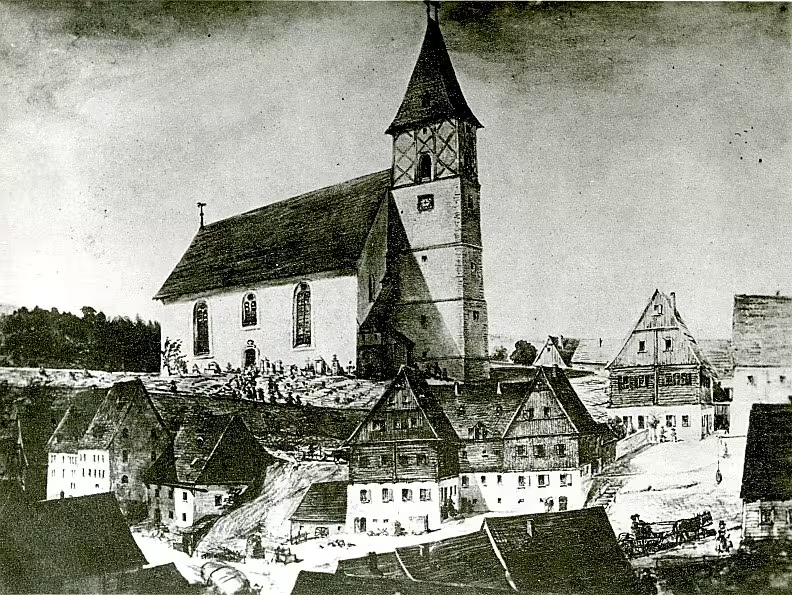
The Church of the Holy Trinity in Aš is a historically significant monument. It served as an Evangelical church from 1622 until its destruction by fire in 1960. Situated on a hill near the town hall in Aš, Karlovarský kraj, this site was notable for its architectural evolution and cultural importance within the region. The church's history reflects religious transformations and community developments that mirror broader historical shifts.
The origins of the Church of the Holy Trinity date back to 1370 when a Gothic Catholic church dedicated to Saint Louis was constructed on the same site. This structure eventually transitioned into an Evangelical church, with construction beginning in 1622. The shift from Catholicism to Evangelicalism in Aš during this period was influenced by local nobility such as the Zedtwitz family, who promoted the new faith amidst religious and political upheaval following the Thirty Years' War.
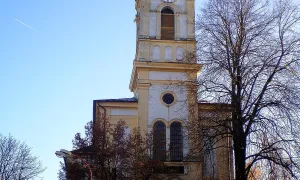
Architecturally, the church underwent significant transformations over its history. Initially built with late Renaissance influences, it experienced a complete Baroque reconstruction in 1747. This renovation expanded its capacity to accommodate up to 4,000 people, making it one of the largest churches in the region at that time. The design included a distinctive octagonal section atop its square tower, crowned by a bulbous dome, which became an important landmark for Aš.
Notable figures such as Gustav Geipel contributed significantly to the church's legacy. In 1911, Geipel installed Europe’s largest organ at that time, featuring 4,318 pipes, enhancing the church's cultural significance. The church also served as a spiritual home for various pastors over the years, including Evangelical ministers like Gustav Alberti and Adolf Thorn, and later Českobratrští leaders such as Jaroslav Dokoupil.
A key event in the church’s history was its destruction by fire on January 19, 1960. The blaze, caused by an explosion of drying stones, was so intense that it was visible from neighboring German villages. Despite efforts to preserve what remained after the fire, the structure was eventually demolished in 1987 due to unmaterialized urban planning decisions.
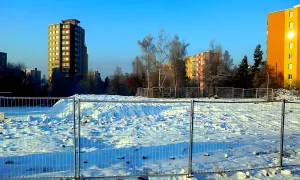
Today, while the church itself no longer stands, its legacy endures through several related sites and memorials. The foundations of the church are marked by a low stone wall, creating a memorial site established in 2000. Nearby, a statue of Martin Luther, erected in 1883, was restored in 2008 and declared a cultural monument in 2018. These elements highlight the enduring influence of the church's history on Aš.
Visitors to Aš can still appreciate the historical significance of the Church of the Holy Trinity through these memorials and the surrounding area. The site offers insight into the religious transformations that shaped the region, making it a meaningful destination for those interested in cultural and architectural heritage.
Then and now
Drag the slider to compare how the landmark may have looked when it was built with the view today.
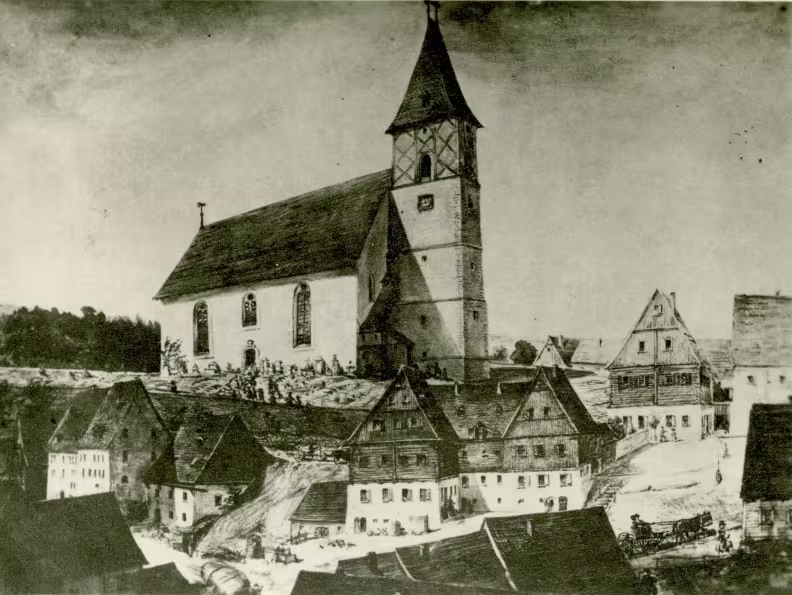
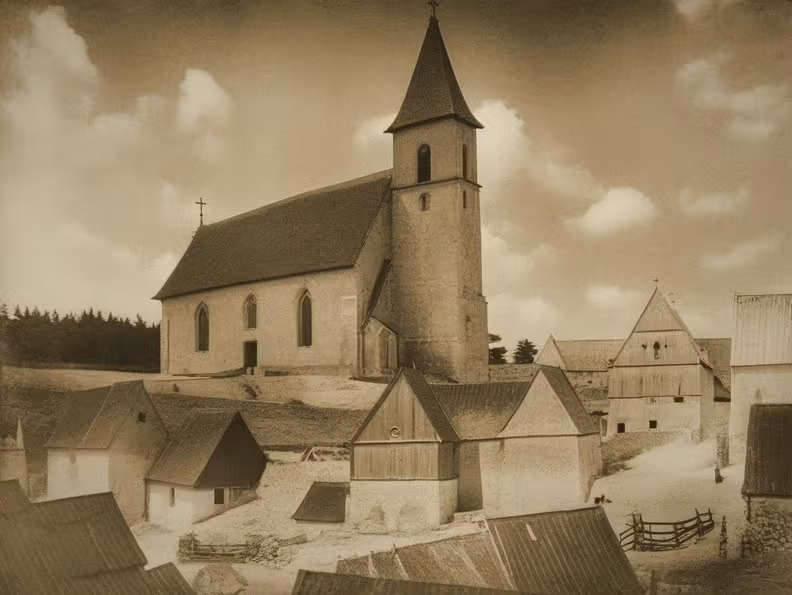
The historical appearance on the left is an AI-generated visualisation and serves as inspiration only.
Historical milestones
- 1960
- The church was destroyed by a major fire caused by an explosion of drying stones.
Architectural development
The Church of the Holy Trinity began as a Gothic Catholic structure dedicated to Saint Louis in 1370. It was replaced by an Evangelical church starting in 1622, with significant Baroque renovations completed in 1747. The church's architecture evolved from late Renaissance to Baroque styles.
Historical events
1622: Construction of the new Evangelical church began on the site of an earlier Gothic Catholic church.
1747: The church underwent a complete Baroque reconstruction, significantly increasing its capacity.
1960: A major fire destroyed the church, leading to its eventual demolition in 1987.
Points of interest
- The Church of the Holy Trinity was originally built as a Gothic Catholic church dedicated to Saint Louis in 1370 before transitioning into an Evangelical church. This reflects the broader religious shifts occurring across Europe during that era.
- Gustav Geipel's installation of Europe’s largest organ in 1911, with its impressive 4,318 pipes, significantly enhanced the cultural and musical heritage of the Church of the Holy Trinity, making it a notable site for music enthusiasts.
Guide
This guide is narrated by a synthetic voice generated by artificial intelligence.
Show guide text
This text was created by artificial intelligence and has not been editorially reviewed. It may contain inaccuracies.
Welcome to the historic site of the Church of the Holy Trinity in Aš, a place where history and spirituality intertwine against the backdrop of this picturesque town in Karlovarský kraj. As you stand here, enveloped by the serene landscape, imagine the stories that have unfolded over centuries on this very ground.
The origins of this church trace back to 1370 when it was initially constructed as a Gothic Catholic church dedicated to Saint Louis. This early structure marked the beginning of its long and varied history, reflecting the broader religious shifts occurring across Europe during that era. By 1622, the Church of the Holy Trinity had been rebuilt, signifying not just architectural transformation but also a pivotal change in its spiritual identity as it transitioned into an Evangelical church.
As you look around, notice how the site carries the echoes of its past transformations. The Baroque reconstruction completed in 1747 was particularly significant, expanding the church's capacity to accommodate up to 4,000 people—a testament to its importance and the community it served. This period also saw the installation of Europe’s largest organ at the time, boasting an impressive 4,318 pipes, crafted by Gustav Geipel in 1911. Although the physical structure is no longer standing due to a devastating fire in 1960 caused by an explosion of drying stones, these historical milestones continue to resonate here.
Gustav Geipel’s contribution through his organ installation remains a key highlight, symbolizing both artistic and musical heritage that once filled this space with sound. His work not only added to the church's grandeur but also connected it to a broader European cultural narrative.
Now, let your imagination wander to what might have been: envision the majestic Baroque architecture, the vibrant sounds of Geipel’s organ filling the air, and the bustling congregation that once gathered here. Each element speaks volumes about the community's resilience and adaptability through changing times.
As we conclude this auditory journey, I invite you to explore further and reflect on the layers of history embedded in Aš itself. The story of the Church of the Holy Trinity is a poignant reminder of both human creativity and the impermanence of even our grandest creations. Thank you for joining me today; may your visit inspire curiosity and appreciation for this remarkable chapter of history.
Tips for visitors
The best time to visit the site of the former Church of the Holy Trinity is during late spring or early autumn. These seasons offer pleasant weather, making it ideal for exploring the surrounding area and enjoying the nearby tennis courts. Additionally, visiting outside peak tourist season can provide a more tranquil experience.
Parking and transportation options are convenient for those wishing to visit the site. There is parking available near the town hall, which was close to the original church location. Public transport can also be used; however, it's advisable to check current routes and schedules in advance to plan your trip efficiently.
When visiting the area, consider bringing comfortable walking shoes as there are several points of interest within a short walk from each other. A camera or smartphone for photography is recommended, especially if you wish to capture the scenic views around the former church site. Sunscreen and water are also advisable, particularly during warmer months.
For photography enthusiasts, the area surrounding the former cemetery now offers excellent vantage points. Early morning light can provide a soft glow over the landscape, ideal for capturing the serene ambiance of the tennis courts and the hill where the church once stood. The changing light throughout the day can offer varied photographic opportunities.
Businesses nearby
Do you run a restaurant, accommodation, shop, museum, rental, wellness or other visitor service near this monument? Show yourself directly to the people heading to it — this is how they will see you in the app and on the web:
Nearby
The church stood on a hill near the town hall, serving as an important landmark. The area now features tennis courts where a former cemetery once existed.
Accommodation nearby
Themed route
Tematická výletní trasa kolem Kostela Nejsvětější Trojice (Aš)
1. Kostel Nejsvětější Trojice - *Typ:* Historický kostel - *Proč stojí za návštěvu:* Tento barokní kostel, postavený v 18. století, je nejenom duchovním centrem města Aš, ale také jeho ikonickou památkou. Jeho umístění na kopci blízko radnice mu dodává zvláštní význam a krásu, což ho činí neodmyslitelnou součástí místního panoramatu.
2. Místní Radnice - *Typ:* Historické obecní úřady - *Proč stojí za návštěvu:* Nachází se nedaleko kostela a je významnou architektonickou památkou, která přispívá k historickému charakteru centra města. Její blízkost ke kostelu nabízí pohled na harmonii mezi duchovní a správní části městského života.
3. Tenisové hřiště - *Typ:* Sportovní zařízení - *Proč stojí za návštěvu:* Tato místa, umístěná poblíž bývalého hřbitova, představují moderní využití původních pozemků a jsou dnes oblíbeným místem pro sportovce i návštěvníky. Poskytují možnost si užít aktivního volna na příjemném venkovním prostředí.
Tato trasa nabízí kombinaci historických a moderních prvků, které společně tvoří jedinečný obraz města Aš.
Seasonal recommendations
Spring: Visiting the site of the Holy Trinity Church in Aš during spring offers a unique experience as nature begins to awaken around the remnants of this historical structure. The landscape is adorned with vibrant wildflowers and budding trees, creating an idyllic backdrop that contrasts beautifully with the solemn history of the church's ruins. This season sees fewer visitors, allowing for a more reflective exploration. It’s advisable to wear comfortable walking shoes and bring layers, as spring weather can be unpredictable with occasional rain showers.
Summer: The summer months provide ideal conditions for exploring the former site of the Holy Trinity Church in Aš. With long daylight hours and warm temperatures, this is the peak season for visitors, so it's best to arrive early to avoid larger crowds. The lush greenery surrounding the ruins offers a picturesque setting perfect for photography or simply enjoying the outdoors. Sun protection, including hats and sunscreen, is recommended due to the increased sun exposure.
Autumn: Autumn brings a stunning display of colors to the area around the Holy Trinity Church site in Aš, with leaves turning shades of red, orange, and yellow. This creates a magical atmosphere that enhances the historical ambiance of the ruins. While temperatures are cooler, it's still pleasant for walking tours and exploring the surrounding landscape. Visitors should dress warmly and consider bringing an umbrella or raincoat, as autumn weather can be quite variable.
Winter: The winter months transform the site of the Holy Trinity Church in Aš into a serene and quiet place to visit. Snow blankets the ruins, offering a stark yet beautiful contrast that highlights their historical significance. While the cold may deter some visitors, those who venture out will find the atmosphere particularly peaceful during this time. It is essential to wear warm clothing and sturdy boots for comfort while exploring in potentially icy conditions. The site's opening hours may be shorter, so checking ahead is advisable.
Visualizations and artistic views


The visualisations are generated by artificial intelligence and serve as inspiration.
Photos from the area
Real photos taken near the monument


Zdroj a licence jsou uvedeny u každého snímku.
Tips from visitors
No tips yet. Be the first!
Log in and add your tip.
Sources and literature
Fotografie: Dr. Traugott Alberti / Public domain — Wikimedia Commons. The author and licence also appear when you hover over the image.
Faktickým podkladem tohoto textu byl článek na Wikipedii, jehož autory jsou přispěvatelé Wikipedie. Článek je dostupný pod licencí CC BY-SA 4.0.
Location on the map

Příběhy a pověsti
Legendy, pověsti a příběhy spjaté s touto památkou

Fotografie návštěvníků
Zatím žádné fotografie. Buďte první, kdo přidá fotografii z návštěvy!
Přihlaste se a přidejte svou fotografii nebo hodnoťte.
Za ověřenou návštěvu v aplikaci získáte víc bodů — poznáme podle GPS, že jste na místě.
Reviews and comments