






Kostel Nejsvětější Trojice (Chýnov) Church
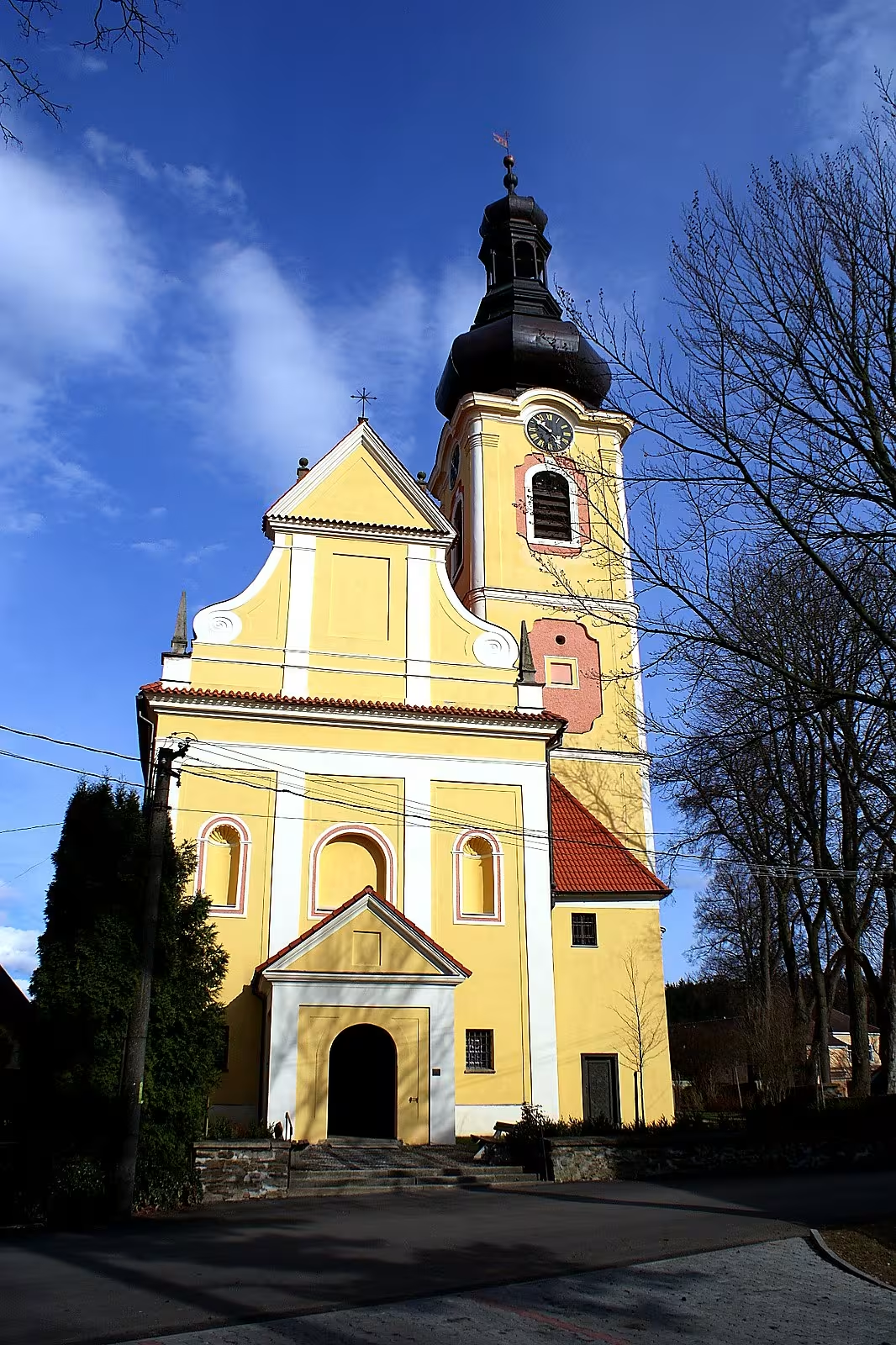
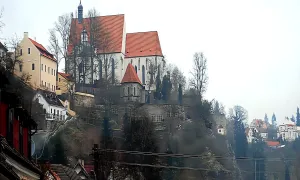
The Church of the Holy Trinity in Chýnov stands as a significant Roman Catholic church located at the heart of the town near its castle. This monument is notable for its rich history and architectural evolution from a Romanesque chapel to its current Baroque form. The church's journey through various architectural styles reflects broader historical shifts in Bohemia, making it an important cultural and religious site.
The earliest mention of Chýnov dates back to 981 in Kosmas' Chronicle of the Czechs. However, the first documented reference to the church itself appears in a sale document from 1250 when King Václav I sold the estate to the Prague bishop. This marks an early point in its history. By 1364, under Archbishop Arnošt z Pardubic, the original Romanesque chapel was demolished and replaced with a larger Gothic church during the Luxembourg dynasty's reign, which influenced architectural styles across Europe.
The most significant changes occurred between 1670 and 1679 when the church underwent Baroque renovations directed by Italian architect Pietro Spinetti. Commissioned by Jan Křtitel Eggenberg, these renovations expanded and stylistically transformed the structure into its present form. In 1727, Adam František ze Schwarzenberga added a tower to enhance its architectural prominence.
The church's interior features five altars from the 18th century, with an oval painting of the Holy Trinity on the main altar by Jan Jiří Heinsche. The organ, crafted in 1892 by Prague organ builder Emanuel Štěpán Petr, adds to the church's artistic heritage. Three bells adorn the tower: the largest, Václav, dates back to 1696 and was likely cast in Klatovy, while Maria and Josef were added in 1984 by Petr Manoušek from Zbraslav.
Throughout its history, the Church of the Holy Trinity has been a focal point for religious activity. Today, it continues to serve as a venue for regular services conducted by the Římskokatolická farnost Chýnov. In 2002, as part of a program aimed at preserving architectural heritage, 1 million Czech koruna was allocated for its restoration.
Visitors today can appreciate not only the church's historical significance but also its ongoing role in the community. The Church of the Holy Trinity in Chýnov is a testament to the region's rich cultural and religious history, making it a worthwhile destination for those interested in exploring Bohemia's architectural and spiritual heritage.
Then and now
Drag the slider to compare how the landmark may have looked when it was built with the view today.
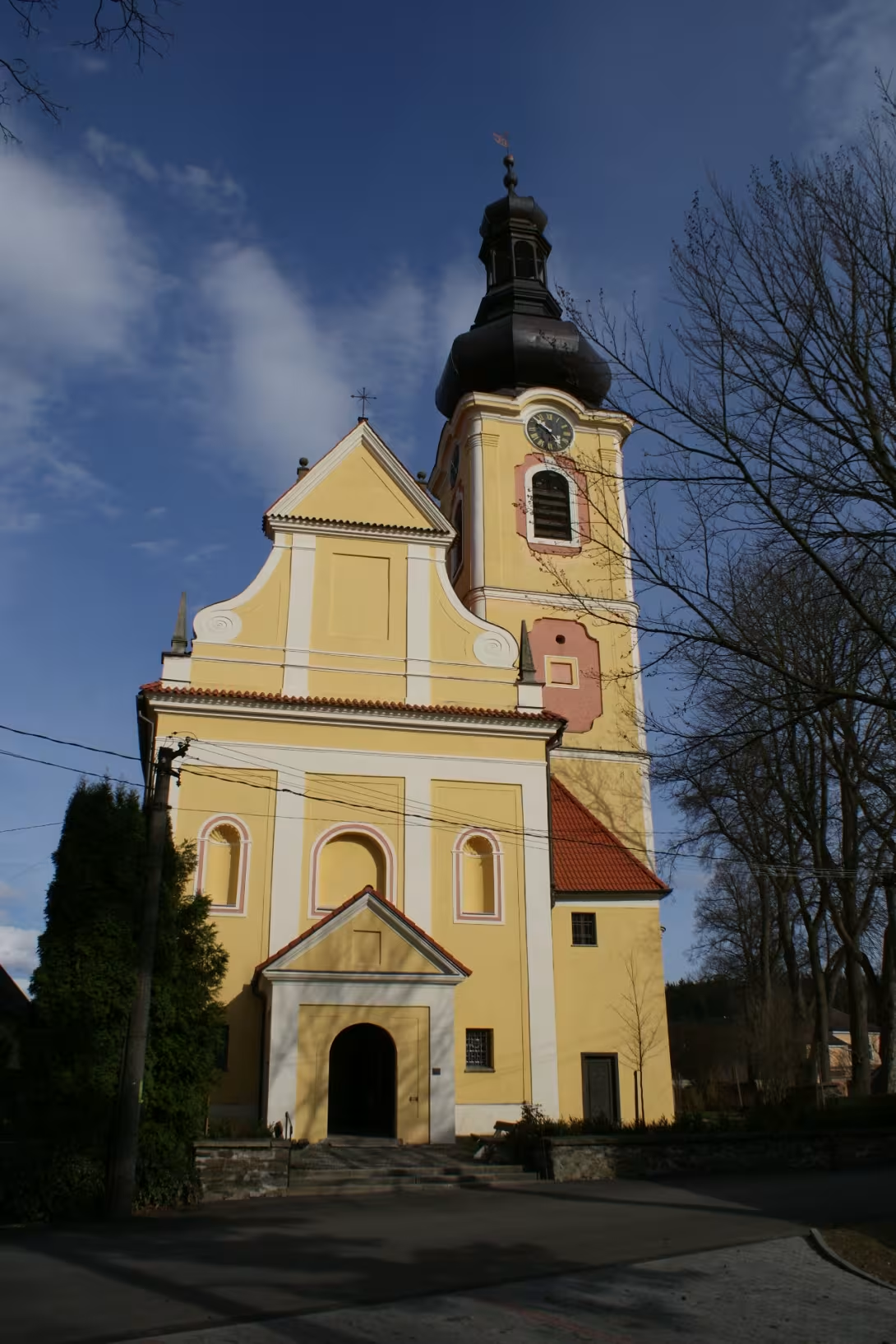
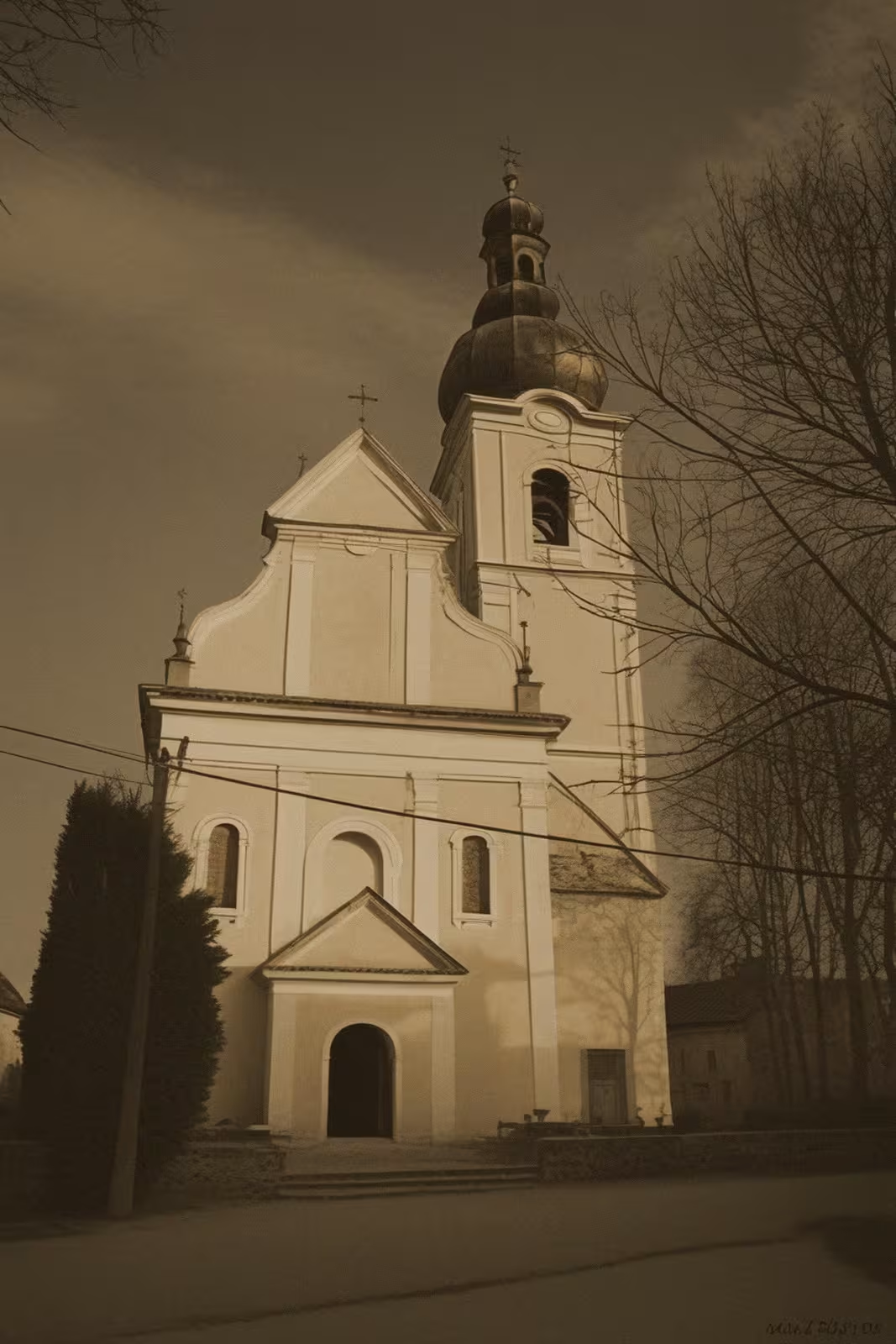
The historical appearance on the left is an AI-generated visualisation and serves as inspiration only.
Historical milestones
- 1250
- First mention of the church in a sale document.
- 1364
- Demolition of the Romanesque chapel and construction of a Gothic church.
- 1679
- Completion of Baroque renovations by Pietro Spinetti.
- 1727
- Addition of a tower by Adam František ze Schwarzenberga.
Architectural development
The Church of the Holy Trinity in Chýnov has experienced several architectural phases. Initially built as a Romanesque chapel, it was replaced with a Gothic church under Archbishop Arnošt z Pardubic's direction. The significant Baroque transformation occurred between 1670 and 1679 by Pietro Spinetti, which included enlargements and stylistic changes. A tower addition in 1727 further contributed to its current form.
Historical events
1250: First mention of the church in a sale document by King Václav I.
1364: Demolition of the Romanesque chapel and construction of a larger Gothic church under Archbishop Arnošt z Pardubic.
1679: Completion of Baroque renovations by Pietro Spinetti for Jan Křtitel Eggenberg.
1727: Addition of a tower by Adam František ze Schwarzenberga.
Points of interest
- The Church of the Holy Trinity's architectural evolution from a Romanesque chapel to its current Baroque form reflects broader historical shifts in Bohemia during periods like the Luxembourg dynasty and later Baroque influences.
- Pietro Spinetti, an Italian architect, directed the significant Baroque renovations between 1670 and 1679, highlighting the international influence on local architecture at that time.
- The church's main altar features an oval painting of the Holy Trinity by Jan Jiří Heinsche, showcasing the blend of religious artistry typical of the 18th century in Bohemia.
- Among its three bells, Václav is notable for being one of the oldest, cast around 1696 likely in Klatovy, illustrating historical bell-casting traditions in the region.
- In 2002, as part of a heritage preservation program, 1 million Czech koruna was allocated to restore the church, underscoring its ongoing cultural and architectural significance.
Guide
This guide is narrated by a synthetic voice generated by artificial intelligence.
Show guide text
This text was created by artificial intelligence and has not been editorially reviewed. It may contain inaccuracies.
Welcome to the Church of Nejsvětější Trojice in Chýnov, a remarkable testament to centuries of architectural and cultural evolution nestled at the heart of this historic town near its castle. As you stand here, take a moment to soak in the grandeur before you; the church's Baroque façade is an invitation into a story that stretches back to 1250.
The origins of this sacred site trace back to a humble Romanesque chapel first mentioned in a sale document from 1250. By 1364, this modest structure was replaced by a Gothic church under the guidance of Archbishop Arnošt z Pardubic. Over time, the church underwent significant transformations, culminating in its current Baroque appearance completed in 1679 by Italian architect Pietro Spinetti. In 1727, Adam František ze Schwarzenberga added a tower that further enhanced its majestic profile.
As you gaze upon the church, notice how the Baroque style is evident in its ornate detailing and elegant lines—a stark contrast to its original Romanesque simplicity. The transformation reflects broader historical shifts in Bohemia, from the Luxembourg dynasty's influence to later Baroque influences that swept through the region.
This site is intertwined with stories of notable figures such as Václav I., Arnošt z Pardubic, Jan Křtitel Eggenberg, and Adam František ze Schwarzenberga. Each played a pivotal role in shaping not only this church but also the cultural tapestry of Chýnov.
One intriguing aspect of this site is its architectural evolution, mirroring the historical tides that have swept through Bohemia. The journey from a Romanesque chapel to a Baroque masterpiece encapsulates a rich history filled with artistic and political change.
As you continue your exploration, I invite you to delve deeper into Chýnov's captivating history. Each corner of this town holds stories waiting to be discovered. Thank you for joining me on this journey through time, and may the spirit of discovery guide your path as you explore further.
Tips for visitors
The best time to visit the Church of the Holy Trinity in Chýnov is during late spring or early autumn, when the weather is mild and pleasant for exploring outdoor sites. This period also offers softer natural light, ideal for appreciating the church's architecture and stained glass windows without the harsh midday sun. Additionally, visiting outside peak tourist seasons can provide a more tranquil experience, allowing you to enjoy the historical ambiance with fewer crowds.
If you're relying on public transport, verify current routes and schedules through a local travel planner or app to ensure smooth access to the church.
When visiting the Church of the Holy Trinity, consider bringing comfortable walking shoes as you may want to explore the surrounding area near the castle. A camera is recommended for capturing the stunning architecture and intricate details within the church. Additionally, carrying a light jacket can be useful, especially if you plan to spend time outdoors or during cooler months.
For photography enthusiasts, some of the best spots include the entrance where natural light filters through the stained glass windows, creating vibrant patterns on the interior walls. The altar area also offers excellent opportunities for capturing the church's detailed artwork and religious iconography. Early morning or late afternoon visits are ideal for softer lighting conditions that enhance the beauty of these features.
Nearby attractions within a 30-minute drive include the Chýnov Castle, which is located close to the church. The castle grounds offer historical insights and scenic views, making it a worthwhile visit for those interested in regional history. For families with children, consider planning some time at local parks or playgrounds after exploring the church and castle, providing a balance of cultural enrichment and leisure activities.
Frequently asked questions
Can the monument be visited?
Religious buildings are usually open mainly during services; at other times a visit is normally arranged with the parish or the operator. We have not verified specific times.
Where is the monument?
Location: Chýnov, Jihočeský kraj. The map on this page shows the exact spot.
Why is the monument protected?
It is listed in the Central List of Cultural Monuments of the Czech Republic as a cultural monument (register no. 41918/3-4850).
Businesses nearby
Do you run a restaurant, accommodation, shop, museum, rental, wellness or other visitor service near this monument? Show yourself directly to the people heading to it — this is how they will see you in the app and on the web:
Accommodation nearby
Themed route
Tematická výletní trasa: Kostel Nejsvětější Trojice (Chýnov)
1. Kostel Nejsvětější Trojice, Chýnov
- Typ: Náboženská památka
- Proč stojí za návštěvu: Tento barokní kostel je architektonickou perli obce Chýnov. Jeho bohaté vnitřní vybavení a historie z 18. století nabízejí pohled na duchovní život minulých dob. Návštěvníci mohou prozkoumat jeho krásný interiér, který je příkladem barokního umění.
2. Nádvoří kostela Nejsvětější Trojice
- Typ: Historické nádvoří
- Proč stojí za návštěvu: Nádvoří před kostelem je místo, kde se můžete odpojit a užít si klidné chvilky. Je to ideální místo pro relaxaci nebo krátkou meditaci v malebném prostředí. Zde lze také pochopit historický kontext kostela ve spojení s jeho okolím.
3. Kaple svatého Jana Nepomuckého
- Typ: Kaple
- Proč stojí za návštěvu: Tato kaple je součástí areálu kostela a poskytuje další pohled na místní duchovní tradice. Je známá svou historickou významností a architektonickým designem, který doplňuje celkové prostředí kostela.
4. Věž kostela Nejsvětější Trojice
- Typ: Věž
- Proč stojí za návštěvu: Návštěva věže nabízí jedinečný pohled na obec Chýnov a okolní krajinu. Je to nejen technické dobrodružství, ale také způsob, jak si užít panoramatickou vyhlídku a pochopit význam kostela jako orientačního bodu pro místní obyvatele.
Tato trasa nabízí komplexní pohled na duchovní a historické aspekty obce Chýnov, zaměřený především kolem Kostela Nejsvětější Trojice.
Seasonal recommendations
Spring: Visiting the Church of the Holy Trinity in Chýnov during spring offers a unique experience as nature awakens around the historic site. The surrounding landscape is adorned with blooming flowers and fresh greenery, creating a vibrant atmosphere that enhances the beauty of the church's architecture. This season often sees fewer visitors compared to summer, making it an ideal time for those seeking tranquility. To fully appreciate this picturesque setting, consider wearing comfortable walking shoes and layers, as temperatures can vary throughout the day. Early morning visits are recommended to enjoy the serene ambiance before larger crowds arrive.
Summer: Summer is a popular season to explore the Church of the Holy Trinity in Chýnov due to its long daylight hours and pleasant weather, which allows for extended sightseeing opportunities. The lush greenery around the church provides an idyllic backdrop, perfect for photography enthusiasts. However, this is also peak tourist season, so expect larger crowds, especially during afternoons. Arriving early can help avoid the busiest times and ensure a more peaceful visit. Light, breathable clothing is advisable, along with sun protection to enjoy your time comfortably under the summer sun.
Autumn: Autumn brings a stunning display of colors as the leaves around the Church of the Holy Trinity in Chýnov change into vibrant hues of red, orange, and yellow. This seasonal transformation creates a picturesque setting that complements the historic architecture beautifully. The air is crisp and cool, making it an excellent time for leisurely strolls through the area. As visitor numbers begin to decrease compared to summer, you can enjoy a more relaxed visit. Dressing in layers is recommended to accommodate fluctuating temperatures throughout the day.
Winter: During winter, the Church of the Holy Trinity in Chýnov exudes a unique charm as snow blankets the surrounding landscape, creating a serene and almost magical atmosphere. The church's architecture stands out against the white backdrop, offering a striking visual contrast. This season typically sees fewer visitors, allowing for a more intimate experience. Warm clothing is essential, along with appropriate footwear for walking on snow or ice. Visiting in the morning can provide better light for photography and a quieter environment before any winter activities begin.
Visualizations and artistic views


The visualisations are generated by artificial intelligence and serve as inspiration.
Photos from the area
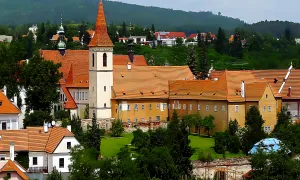
Real photos taken near the monument


Zdroj a licence jsou uvedeny u každého snímku.
Atmosphere of the place
This atmospheric visualisation of the place and period was generated by artificial intelligence. It is not real footage of the location.
Tips from visitors
No tips yet. Be the first!
Log in and add your tip.
Sources and literature
Photos: Václav Mikula / CC BY-SA 4.0 — Wikimedia Commons. The author and licence also appear when you hover over the image.
Faktickým podkladem tohoto textu byl článek na Wikipedii, jehož autory jsou přispěvatelé Wikipedie. Článek je dostupný pod licencí CC BY-SA 4.0.
Location on the map


Příběhy a pověsti
Legendy, pověsti a příběhy spjaté s touto památkou

Příběh: Kostel Nejsvětější Trojice (Chýnov)
Bylo to v pondělí ráno, kdy Martin ze Šternberka našel kostel Nejsvětější Trojice stále uzavřený, jehož dveře zazvonily pod prsty jakousi neviditelnou silou.…
Číst příběh
Pověst: Kostel Nejsvětější Trojice (Chýnov)
Podle místní pověsti se stalo to nejpodivuhodnější za oněch horkých letních nocí roku 1670, kdy se v Chýnově usadil italský stavitel Pietro Spinetti. Přijel …
Číst příběhFotografie návštěvníků
Zatím žádné fotografie. Buďte první, kdo přidá fotografii z návštěvy!
Log in a přidejte svou fotografii nebo hodnoťte.
Za ověřenou návštěvu v aplikaci získáte víc bodů — poznáme podle GPS, že jste na místě.
Reviews and comments