



Kostel Nejsvětější Trojice (Dědice) Church
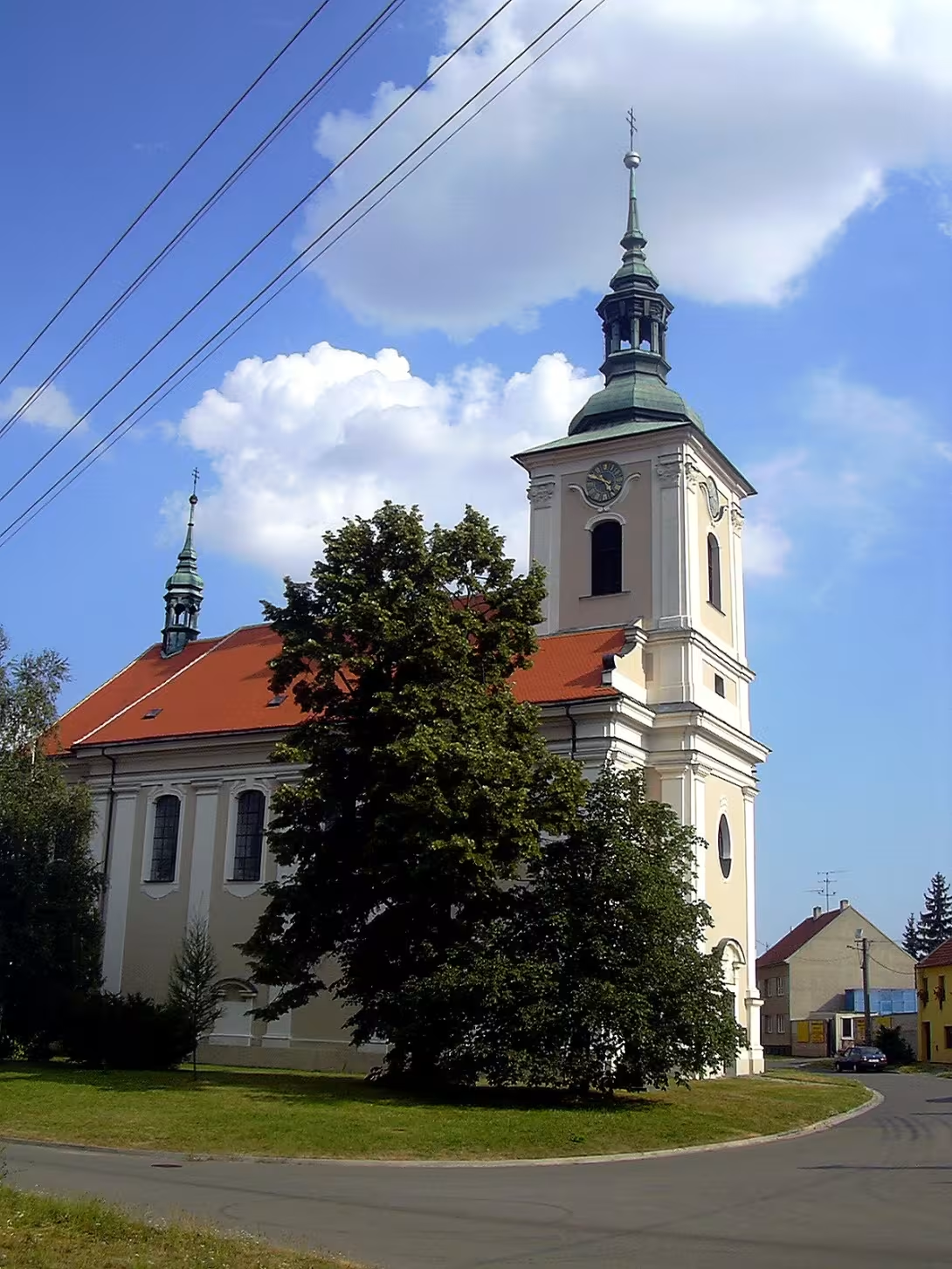
The Church of the Holy Trinity in Heredice is a remarkable Baroque church built in 1753, replacing the medieval building destroyed by fire in 1731. This church is located in the Dědice district of Vyškov, as proof of the resilience and dedication of its parishioners who rebuilt it after the devastating fire. Its architecture reflects dramatic expressions and complex details characteristic of the baroque style prevailing at the time of its construction. Over time it became an integral part of the local cultural heritage.
The original church of the 14th century was destroyed by a great fire caused by lightning in 1731. After this disaster, parishioners led by then farmer P. Karl Leopold Felix began repairs and extended the tower by about three metres. By 1750, however, they decided to build a completely new church, which will lead to the demolition of the existing structure. The construction started on 6 March 1752, but the disputes between the builders, which led to structural problems, in particular with the insulation of the roof, were stunned. Despite these challenges, parishioners completed the building without interior decoration and equipment in 1753.
Significant interior ornaments began in 1761 under the guidance of P. Jan Spáčil. Significant contributions include the main altar with the painting of the Holy Trinity painted by the Brno artist Josef Stern in 1775, which also decorated the presbyte ceiling. Other works of art were provided by František Vavřinec Korompay and Ondřej Schweigl, including sculptures for the main altar, pulpit, christening font and organ decoration from the beginning of the 18th century. The total cost of these ornaments was at that time a huge sum of 8401 golden 19 tailors.
During its history, the church recorded various changes in ownership and administration that reflect a wider historical context. In the middle of the 18th century when it was built, Bohemia was part of the Habsburg monarchy, which experienced significant cultural and architectural developments influenced by baroque art. In this period, religious architecture flourished as part of wider artistic movements throughout Europe.
Key events in the history of the church include his consecration on June 18, 1780. The surrounding area contains statues of crucified Christ, the holy patrons of Cyril and Methodius and John Nepomuk, which complement its historical significance. In 1915 the wall around the church was removed and in 1923 it underwent repairs. Electrical lighting was installed in 1929 and after it was damaged during World War II, efforts to recover were successful. In 1996, the intersection of the sculptor Ladislav Vančury from Valasské Bystřice was added to the interior.
Today, the Church of the Holy Trinity remains an important cultural and historical place. It is accessible to visitors who wish to explore rich history and appreciate its artistic contributions. The current link church as a symbol of the resilience and commitment of the community makes it a useful destination for those interested in Baroque architecture and local heritage. Its mixture of historical importance and artistic beauty invites everyone to experience the story of the beloved monument Dědice.
Then and now
Drag the slider to compare how the landmark may have looked when it was built with the view today.
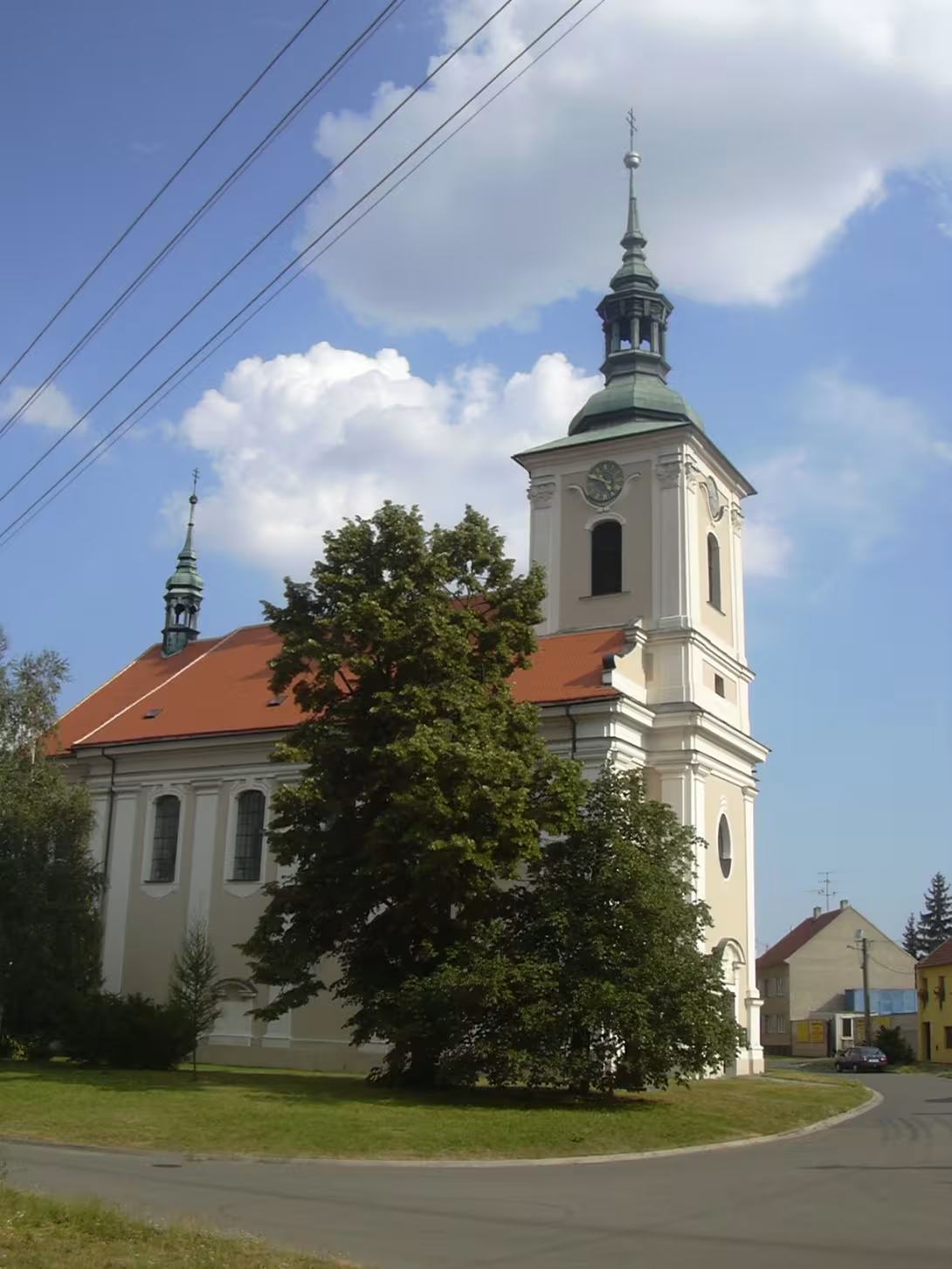
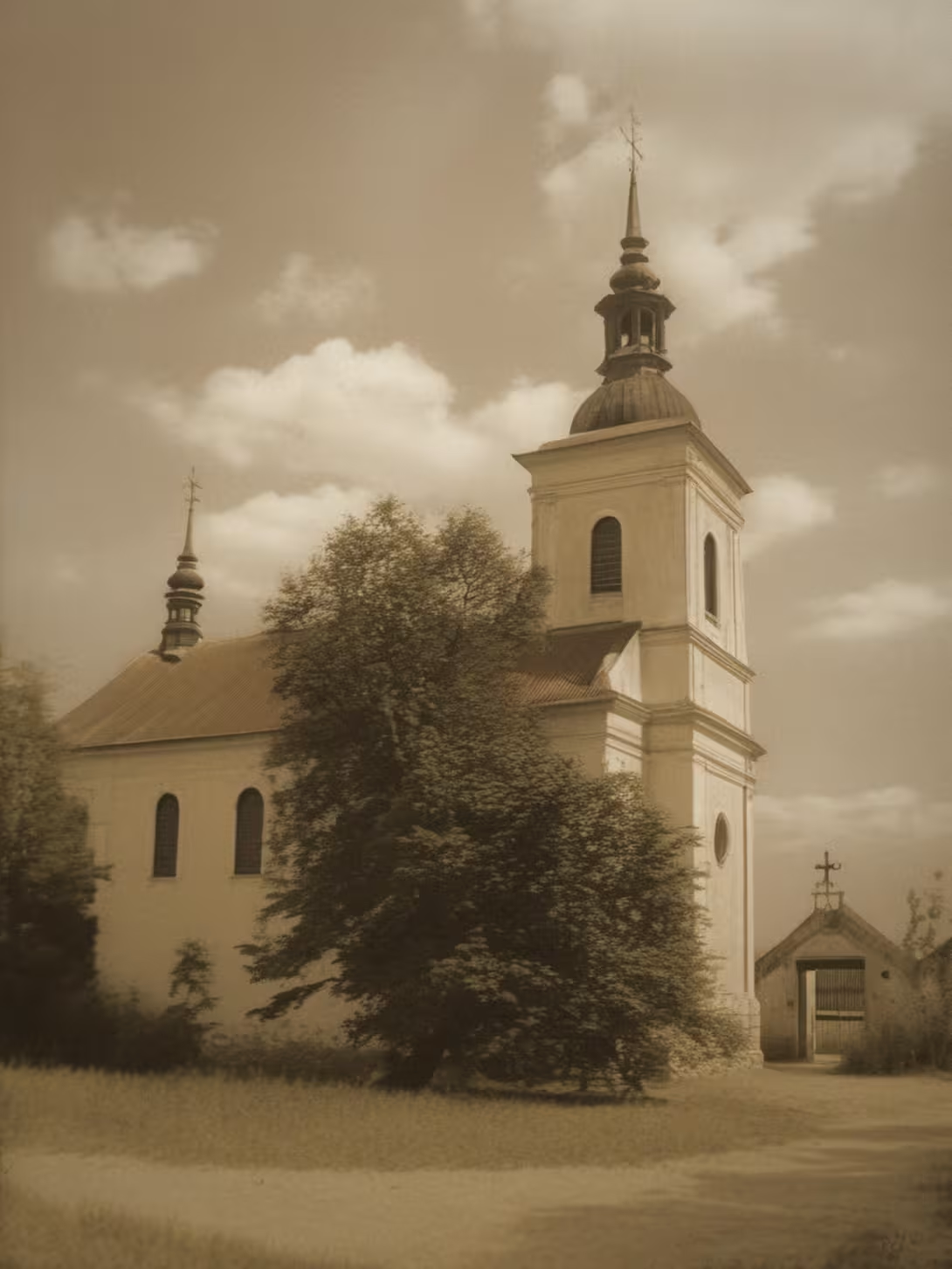
The historical appearance on the left is an AI-generated visualisation and serves as inspiration only.
Historical milestones
- 1731
- A big fire caused by lightning destroyed the original church.
- 1750
- It was decided to build a completely new church that would lead to the demolition of the existing tower.
- 1780
- the church was consecrated on june 18th.
Architectural development
The construction began in March 1752 and faced several challenges, including disputes between builders that led to structural issues. Despite these failures, parishioners completed the building without interior decoration or equipment in 1753. The church has undergone significant interior decorations starting in 1761 under the guidance of P. Jan Spášil, representing works from important artists such as Josef Stern and Ondřej Schweigl.
Historical events
- 1731
- A big fire caused by lightning destroyed the original church.
- 1750
- It was decided to build a completely new church that would lead to the demolition of the existing tower.
- 1780
- the church was consecrated on june 18th.
Points of interest
- Despite the original plan to repair the church after the fire in 1731, the dispute between the builders led to significant structural problems, especially with the insulation of the roof, which highlighted the initial problems in the area of building management during this time.
- The image of the Holy One The Trinity was painted in 1775 by the Brno artist Josef Stern, who shows how the regional artists made a significant contribution to local religious art and architecture during the Baroque period.
- In an interesting twist of history, the church saw its wall removed in 1915, reflecting wider social changes towards openness and accessibility, which were at that time part of larger trends throughout Europe.
- Installation of electric lighting in 1929 was an important modernization for the Church of the Holy Trinity, illustrating how technological progress began to affect historical religious monuments in the early 20th century.
- After the church suffered damage during World War II, it went through a successful restoration effort that showed the community's resilience and commitment to preserving their cultural heritage despite widespread destruction.
Guide
This guide is narrated by a synthetic voice generated by artificial intelligence.
Show guide text
This text was created by artificial intelligence and has not been editorially reviewed. It may contain inaccuracies.
Welcome to the Church of the Holy Trinity in Heredice - a remarkable proof of resistance and baroque elegance. As you stand here, take a moment to absorb its size. The church facade invites you with its complex details, pointing to stories from centuries ago.
The origin of this sacred place dates back to 1731, when the devastating fire, lit by lightning, engulfed the original structure. This tragedy was not the end, but rather a catalyst for transformation. In 1750, after much consideration, parishioners decided to build again. The old tower was dismantled and this beautiful Baroque church, completed in 1753, was raised in its place.
As you look at it now, notice how the architectural style reflects the dramatic taste of the baroque era - characterized by dynamic forms and elaborate decoration. While particular architects remain unknown, their vision is evident in every detail surrounding you.
This church has important historical stories, especially those that include P. Karl Leopold Felix and P. Jan Spážil. Their stories are woven into his very substance, contributing to the rich tapestry of the history of this community.
An interesting aspect of the past church includes the challenges it faces in reconstruction after the fire in 1731. The dispute between the builders led to structural problems, particularly with roof insulation - the conclusion of early obstacles in the construction process, which were eventually overcome.
As you continue your research, let your imagination wander through time and consider the loyalty that was needed to restore this sacred space. The church was consecrated on June 18, 1780, marking a new chapter in its history.
We invite you to dive deeper into the history and beauty of this site. Take your time to appreciate every nuance and let the ghost Dědice cover you up. Thank you for joining us on this journey through time.
Frequently asked questions
Can the monument be visited?
Religious buildings are usually open mainly during services; at other times a visit is normally arranged with the parish or the operator. We have not verified specific times.
Where is the monument?
Location: Dědice, Jihomoravský kraj. The map on this page shows the exact spot.
Why is the monument protected?
It is listed in the Central List of Cultural Monuments of the Czech Republic as a cultural monument (register no. 37228/7-3923).
Businesses nearby
Do you run a restaurant, accommodation, shop, museum, rental, wellness or other visitor service near this monument? Show yourself directly to the people heading to it — this is how they will see you in the app and on the web:
Nearby
The surrounding church are statues of crucified Christ, patron saint Cyril and Methodius and John Nepomuk. The area includes the remnants of the liturgical objects of the former monastery.
Accommodation nearby
Trips and activities nearby
Guided tours, tickets and activities nearby from GetYourGuide
Affiliate link: if you buy from the partner, we may receive a commission. The price for you does not change.
Search tours and activities →Themed route
Thematic cruise route: Church of the oldest Trinity and surroundings
1.Kostel Nejsvětější Trojice (Dědice) - * Type: * Church monument - * Why is it worth a visit: * This church is the center of spiritual life in the villages of Heredice and it represents its own historical architecture and rich Hungarian style. The interior of the church offers a peaceful atmosphere for meditation and regulation.
2. Statue: The crucific Christ, Saint Cyril and Methodius, John Nepomuk - * Type: * Art - * Why is it worth a visit: * These statues are placed around the church and represent a loophole for Czech circular history. The crucific Christ symbolizes transverse sufferings, the saints Cyril and Methodius are patrons of Slavic nations, while John Nepomuk is known as the defences of mystery.
3. Residues of liturgical increments of the former monastery - * Type: * Historical Relict - * Why is it worth visiting: * These remnants provide insight into the past when he was in the areas of active monasteries. They are an important element for the use of the historical and cultural importance of the city.
4. Church tank - * Type: * Exercise area - * Why is it worth visiting: * Hire providing information regarding relaxation and adaptation. It's an ideal place to remove the protruding cube and its surroundings.
This route offers on the basis of the possibility of involvement in history and placement, which are associated with the Church of the Heavenly Trinity in Heredice.
Seasonal recommendations
Spring: A visit to the Church of the Heavenly Trinity in Heirs is represented by the permitted value of spring, which refers to the assumption of world winter sharing. The green forest and which shrubs around the church offers a beautiful background for photography. Sunshine days are ideal for announcements, but since activities other than those intended for economic purposes which are necessary for competition may be linked. Visit the church in early afternoons to avoid a possible crowd and enjoy a quiet atmosphere.
Summer: Summer transfer of heavy sunny days and warm weather, which is the ideal task for determining the Church of the absence of the Trinity. Nature at this time offers or benefits from green products and which are shrubs that give the church a romantic atmosphere. It strongly recommends that it should be in proper afternoon or evening to avoid the main dose to tourists. Convert sunglasses with you and plenty of drinking, because temperatures can be high.
Autumn: In autumn, the Church of the Newest Trinity offers a unique atmosphere with colourful tree leaves and peaceful moments. This season is ideal for the nation, because it can be avoided by public tourists who prefer summer months. Put on a warm suit and transfer the umbrella because the autumn application is promotional. The guesthouse in quiet afternoons offers the best experience, when also the usable hands and beauty of nature can be used.
Winter: The Winter Value of the Church of the oldest Trinity offers a different kind of attraction with snow covering the surrounding forests and calm atmosphere. It should be noted that this Decision is not intended for State aid. The round is persistent for proven cold temperatures and possible dreaming. Visit the church in the early hours, the abyss avoided the shorter period of the day and enjoyed a quiet winter atmosphere.
Visualizations and artistic views


The visualisations are generated by artificial intelligence and serve as inspiration.
Photos from the area
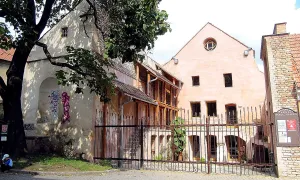
Real photos taken near the monument

Zdroj a licence jsou uvedeny u každého snímku.
Tips from visitors
No tips yet. Be the first!
Log in and add your tip.
Sources and literature
Photos: cs:User:Pernak / CC BY-SA 3.0 — Wikimedia Commons. The author and licence also appear when you hover over the image.
Faktickým podkladem tohoto textu byl článek na Wikipedii, jehož autory jsou přispěvatelé Wikipedie. Článek je dostupný pod licencí CC BY-SA 4.0.
Location on the map




Příběhy a pověsti
Legendy, pověsti a příběhy spjaté s touto památkou
Fotografie návštěvníků
Zatím žádné fotografie. Buďte první, kdo přidá fotografii z návštěvy!
Log in a přidejte svou fotografii nebo hodnoťte.
Za ověřenou návštěvu v aplikaci získáte víc bodů — poznáme podle GPS, že jste na místě.
Reviews and comments