



Kostel Nejsvětější Trojice (Libníč) Church
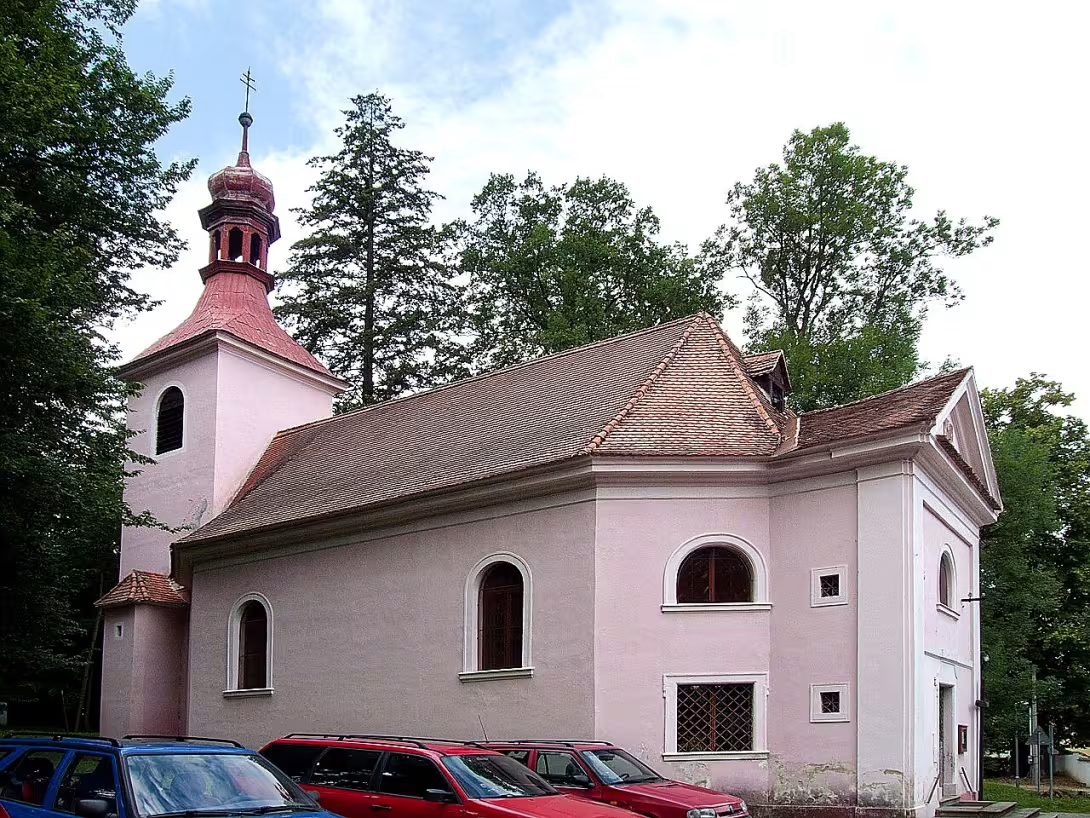
The Church of Nejsvětější Trojice in Libníč is a Roman Catholic church located in the Jihočeský kraj region of the Czech Republic. Originally built as a wooden chapel in 1691, it transformed significantly over time into an octagonal brick chapel with a central tower between 1714 and 1720. Architect Pavel Ignác Bayer later expanded it into a larger church in 1788.
This site is notable for its architectural evolution and historical significance within the community. The origins date back to 1691 when it served local healing baths, suggesting an early role in community health. Notably, Jan Adolf I. ze Schwarzenbergu received treatment there. By the early 18th century, this modest structure had evolved into an octagonal brick chapel with a central tower and one bell, blessed by Abbot Gerhard Pauer on August 17, 1714.
In 1788, architect Pavel Ignác Bayer expanded the church, adding an extended nave, a new tower, and a sacristy. These changes enhanced its physical presence and elevated its status within the community, leading to its designation as a parish church by 1855. The Baroque style is evident in its design elements, characterized by symmetry and grandeur typical of the period.
Throughout its history, the Church of Nejsvětější Trojice experienced various ownerships and administrative changes. Initially part of local healing baths, it later became a parish church under Roman Catholic administration. The mid-20th century brought challenges as the building suffered damage during communist rule, leading to near abandonment until restoration efforts began in 1989.
Key events include the blessing of its first bell in 1714 and significant restorations marked by the consecration of three new bells in 1923 by Bishop Šimon Bárta. These highlight the community's commitment to preserving this historical monument despite periods of neglect.
Today, the Church stands as a testament to resilience and restoration. Efforts since 1989 have focused on repairing damage from earlier decades, including roof repairs, adding a small annex near the tower, and installing a copper roof covering for the bell tower. Administered by the parish in Lišov, it remains open only occasionally but continues to hold historical significance.
Visitors can appreciate this church not just as an architectural relic but as a symbol of cultural endurance. Its history reflects broader societal changes and the enduring spirit of its community. The Church of Nejsvětější Trojice invites those interested in history, architecture, and spirituality to explore its storied past and witness ongoing preservation efforts.
Then and now
Drag the slider to compare how the landmark may have looked when it was built with the view today.
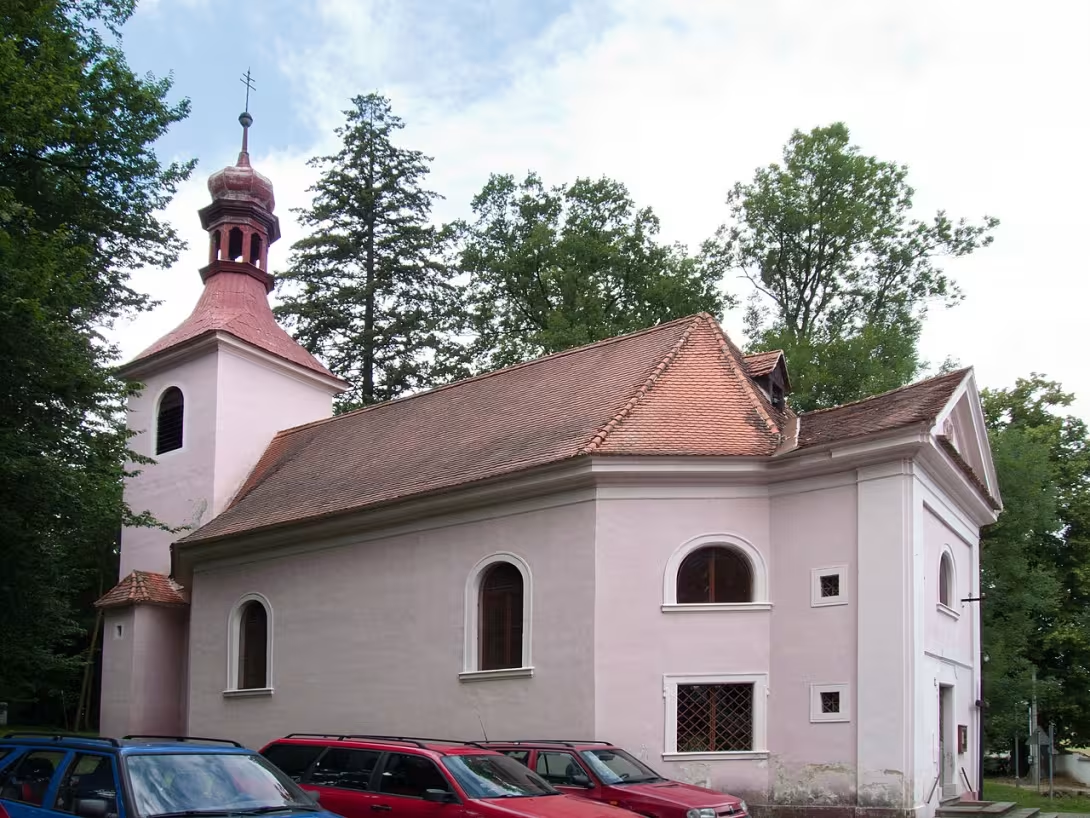

The historical appearance on the left is an AI-generated visualisation and serves as inspiration only.
Historical milestones
- 1691
- Původní stavba jako dřevěná kaple.
- 1714
- Blessing of the first bell by Abbot Gerhard Pauer.
- 1720
- Transformed into an octagonal brick chapel with a central tower.
- 1788
- Expanded by architect Pavel Ignác Bayer, adding nave and new tower.
- 1855
- Designated as a parish church.
- 1923
- Consecration of three new bells by Bishop Šimon Bárta.
Architectural development
The Church of Nejsvětější Trojice began as a wooden chapel in 1691 and was transformed into an octagonal brick chapel with a central tower between 1714 and 1720. In 1788, architect Pavel Ignác Bayer expanded it into a larger church by extending the nave, adding a tower, and constructing a sacristy. The building has undergone various restorations, including significant efforts post-1989 to repair damage from earlier decades.
Historical events
- 1691
- The first mention of a sacred building at this location, initially as a wooden chapel.
- 1788
- Expansion of the chapel into a church with an extended nave, tower, and sacristy.
- 1868
- The original smaller bell was melted down for recasting due to damage.
- 1923
- Three new bells were consecrated by Bishop Šimon Bárta, marking a significant restoration effort.
Points of interest
- The Church of Nejsvětější Trojice originally began as a wooden chapel in 1691, serving local healing baths—a rare example of religious architecture initially linked to health and wellness practices.
- Jan Adolf I. ze Schwarzenbergu, an influential nobleman, was treated at the site's healing baths, indicating its historical significance beyond purely spiritual functions and highlighting its role within noble circles of the time.
- The church’s first bell was blessed in 1714 by Abbot Gerhard Pauer, a notable event marking the chapel’s transformation into a more established religious structure with community engagement through sound signaling.
- In 1923, three new bells were consecrated by Bishop Šimon Bárta, reflecting ongoing efforts to maintain and enhance the church's auditory presence in the community despite periods of neglect during communist rule.
- The restoration efforts that began in 1989 included the addition of a small annex near the tower and a copper roof covering for the bell tower, showcasing modern interventions aimed at preserving its historical integrity while adapting it to contemporary needs.
Guide
This guide is narrated by a synthetic voice generated by artificial intelligence.
Show guide text
This text was created by artificial intelligence and has not been editorially reviewed. It may contain inaccuracies.
Welcome to the Church of Nejsvětější Trojice in Libníč, a remarkable testament to history and architecture nestled in the Jihočeský kraj region. As you stand here, take a moment to absorb your first impression: an octagonal brick chapel with a commanding central tower that reaches towards the sky, its silhouette a graceful blend of past and present.
The story of this church begins in 1691 when it was originally built as a simple wooden chapel. Its inception is deeply intertwined with the local healing baths, offering a unique glimpse into how religious architecture once catered to health and wellness practices. Fast forward to between 1714 and 1720, when the structure evolved from its humble beginnings into an octagonal brick chapel crowned with a central tower—a transformation blessed by Abbot Gerhard Pauer in 1714.
As we delve further into its history, notice how architect Pavel Ignác Bayer expanded this sacred space in 1788. His vision added a nave and a new tower, enhancing both the church's capacity and grandeur. By 1855, it was designated as a parish church, solidifying its role within the community. The year 1923 marked another significant milestone with the consecration of three new bells by Bishop Šimon Bárta.
Now, let’s focus on some architectural details that catch your eye. Observe the harmonious blend of brickwork and symmetry—an octagonal design that is both rare and captivating. Notice how the central tower adds a focal point to the structure, drawing your gaze upwards as you appreciate its historical significance.
Key figures have left their mark here. Jan Adolf I. ze Schwarzenbergu, an influential nobleman, sought healing at these baths, intertwining his legacy with this sacred site. Abbot Gerhard Pauer’s blessing of the first bell in 1714 is another pivotal moment that echoes through time.
Here's a fascinating tidbit: the church began as part of a health and wellness tradition—a rare instance where religious architecture was initially linked to healing practices. This connection offers a unique perspective on how spiritual and physical well-being were once intertwined.
As you conclude your visit, I invite you to explore further, perhaps wandering around the surrounding area or delving deeper into its rich history. Thank you for joining me today at this historic gem in Libníč. May it inspire you with stories of transformation, community, and enduring faith.
Tips for visitors
The best time to visit the Church of Nejsvětější Trojice in Libníč is during late spring or early autumn. During these months, the weather is generally pleasant, and the surrounding nature is particularly beautiful, enhancing your experience as you explore this historic site. Additionally, visiting outside peak tourist seasons can provide a more tranquil atmosphere, allowing for better appreciation of the church's architecture and history.
For those preferring public transport, there are services that can bring you close to the site. It’s recommended to verify the latest routes and schedules in a transportation app or online before your visit.
When planning your visit, consider bringing comfortable walking shoes as exploring the church and its surroundings may involve some walking on uneven paths. Additionally, carrying a camera is advisable since there are several picturesque spots around the church that offer excellent opportunities for photography, especially during golden hours—early morning or late afternoon when the light is soft and warm.
For families with children, visiting the Church of Nejsvětější Trojice can be an educational and enjoyable experience. The unique octagonal structure and historical significance provide a great opportunity to teach kids about architectural styles and local history. Nearby, within 30 minutes, there are no specific attractions listed in this guide, but exploring the natural landscapes around Libníč could offer a fun day out for families.
Frequently asked questions
Can the monument be visited?
Religious buildings are usually open mainly during services; at other times a visit is normally arranged with the parish or the operator. We have not verified specific times. According to the heritage register restoration is under way, so access may be restricted.
Where is the monument?
Location: Libníč, Jihočeský kraj. The map on this page shows the exact spot.
Why is the monument protected?
It is listed in the Central List of Cultural Monuments of the Czech Republic as a cultural monument (register no. 26966/3-224).
Businesses nearby
Do you run a restaurant, accommodation, shop, museum, rental, wellness or other visitor service near this monument? Show yourself directly to the people heading to it — this is how they will see you in the app and on the web:
Events nearby
Zdroj akcí: otevřená data měst a obcí ČR (Národní katalog otevřených dat) a kalendář akcí Národního památkového ústavu.
Accommodation nearby
Trips and activities nearby
Guided tours, tickets and activities nearby from GetYourGuide
Affiliate link: if you buy from the partner, we may receive a commission. The price for you does not change.
Search tours and activities →Themed route
Tematická výletní trasa: Kostel Nejsvětější Trojice (Libníč)
1. Kostel Nejsvětější Trojice (Libníč) - Typ: Historický kostel - Proč stojí za návštěvu: Tento barokní kostel, postavený v 18. století, je architektonickou perli obce Libníč. Jeho bohaté interiér a historie nabízejí hluboký pohled do minulosti regionu.
2. Nádvoří kostela - Typ: Historické nádvoří - Proč stojí za návštěvu: Nádvoří kolem kostela je ideálním místem pro relaxaci a prohlédnutí se po okolí. Zde si můžete užít klidné chvilky při procházce mezi historickými budovami.
3. Věž kostela - Typ: Historická věž - Proč stojí za návštěvu: Vystoupením na věž můžete užít pohled na obec Libníč a okolní krajinné krásy. Je to nejen zábavný způsob, jak se podívat na region z jiného úhlu, ale také nabídka pro fotografování.
4. Místní expozice v kostele - Typ: Historická expozice - Proč stojí za návštěvu: Exponáty poskytují vhled do historie a kultury obce, s důrazem na místní tradice a význam kostela pro komunitu. Je to skvělý způsob, jak se dozvědět více o minulosti Libníče.
Tato trasa nabízí návštěvníkům možnost hluboce se ponořit do historie a kultury obce Libníč, zaměřením na její nejcharakterističtější památku - Kostel Nejsvětější Trojice.
Seasonal recommendations
Spring: Visiting the Church of the Holy Trinity during spring offers a unique experience as nature begins to awaken around Libníč. The blooming flowers and fresh greenery create a picturesque backdrop for exploring the church, which is currently undergoing reconstruction. The soft natural light enhances the beauty of both the site and its surroundings. Visitors should consider wearing comfortable walking shoes suitable for uneven paths, as spring can bring unpredictable weather with occasional rain showers. Arriving early in the morning helps avoid larger crowds that gather later in the day when temperatures rise.
Summer: Summer is an ideal time to visit the Church of the Holy Trinity due to the extended daylight hours and pleasant weather, making it perfect for exploring both the church and its natural surroundings. The warm atmosphere encourages visitors to spend more time outdoors, appreciating the lush landscape around Libníč. With longer opening times, you can enjoy a leisurely tour without feeling rushed. However, be prepared for larger crowds during peak tourist season, so arriving early in the day is advisable. Wear light and breathable clothing to stay comfortable in the summer heat.
Autumn: Autumn brings a magical transformation to the Church of the Holy Trinity with its vibrant fall foliage providing a stunning contrast against the church's historic architecture. The cooler temperatures make it an enjoyable time for walking tours, as you can comfortably explore the area without the summer heat. The softer light during this season adds a warm glow to the site, enhancing its atmosphere. Visitors should dress in layers to accommodate changing weather conditions and consider bringing a jacket or sweater for cooler evenings.
Winter: Winter offers a serene and tranquil setting at the Church of the Holy Trinity, with snow often blanketing Libníč, creating a picturesque winter wonderland. The church's architecture is particularly striking against the white landscape, providing a unique visual experience. Wearing warm clothing and sturdy boots is essential, as paths may be slippery or icy. Despite potential closures during extreme weather, winter can offer a peaceful time to appreciate the church's beauty with fewer crowds.
Visualizations and artistic views


The visualisations are generated by artificial intelligence and serve as inspiration.
Photos from the area
Real photos taken near the monument


Zdroj a licence jsou uvedeny u každého snímku.
Tips from visitors
No tips yet. Be the first!
Log in and add your tip.
Sources and literature
Photos: Jitka Erbenová (cheva) / CC BY-SA 3.0 — Wikimedia Commons. The author and licence also appear when you hover over the image.
Faktickým podkladem tohoto textu byl článek na Wikipedii, jehož autory jsou přispěvatelé Wikipedie. Článek je dostupný pod licencí CC BY-SA 4.0.
Location on the map





Příběhy a pověsti
Legendy, pověsti a příběhy spjaté s touto památkou

Příběh: Kostel Nejsvětější Trojice (Libníč)
Bylo to v pondělí ráno, kdy Mikuláš Trnka se zastavil u kostela Nejsvětější Trojice v Libníči, jeho mysl byla plná starostí. Jeho krokům poslouchal neslyšený…
Číst příběh
Pověst: Kostel Nejsvětější Trojice (Libníč)
Traduje se, že za starých časů, kdy mor kosil vesnici za vesnicí a nikdo nevěděl, zdali dočká příštího svítání, přišel do Libniče nemocný muž na koni. Byl to…
Číst příběhFotografie návštěvníků
Zatím žádné fotografie. Buďte první, kdo přidá fotografii z návštěvy!
Log in a přidejte svou fotografii nebo hodnoťte.
Za ověřenou návštěvu v aplikaci získáte víc bodů — poznáme podle GPS, že jste na místě.
Reviews and comments