



Kostel Nejsvětější Trojice (Nový Bydžov) Church
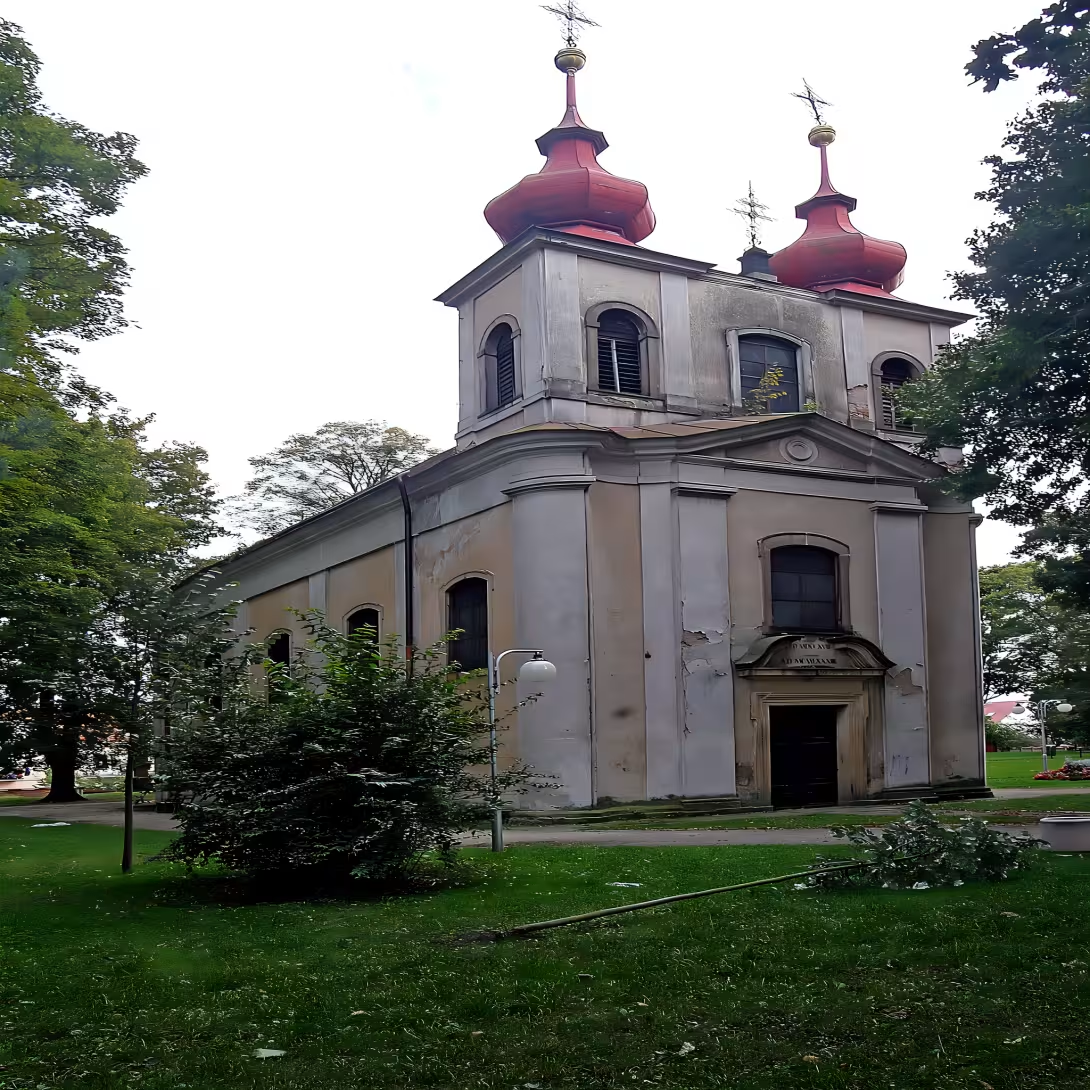
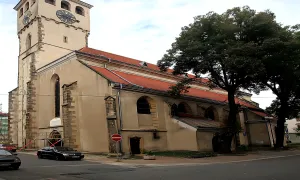
The Church of the Holy Trinity in Nový Bydžov is an outstanding example of Baroque architecture located within a peaceful park northeast of the town center. Built between 1601 and 1620 as a Lutheran chapel, it underwent significant changes under Mikuláš Rossi from 1717 to 1718, evolving into its current form. Recognized as a cultural monument since December 15, 2009, this site offers visitors insight into the region's rich historical and architectural heritage.
The church's origins are deeply tied to the religious transformations in Bohemia during the early 17th century. This era saw significant shifts among Christian denominations amidst the Thirty Years' War, influencing cultural and architectural developments across Europe. Initially a Lutheran chapel within a churchyard, the building reflects the complex interplay between faith and architecture of that time.
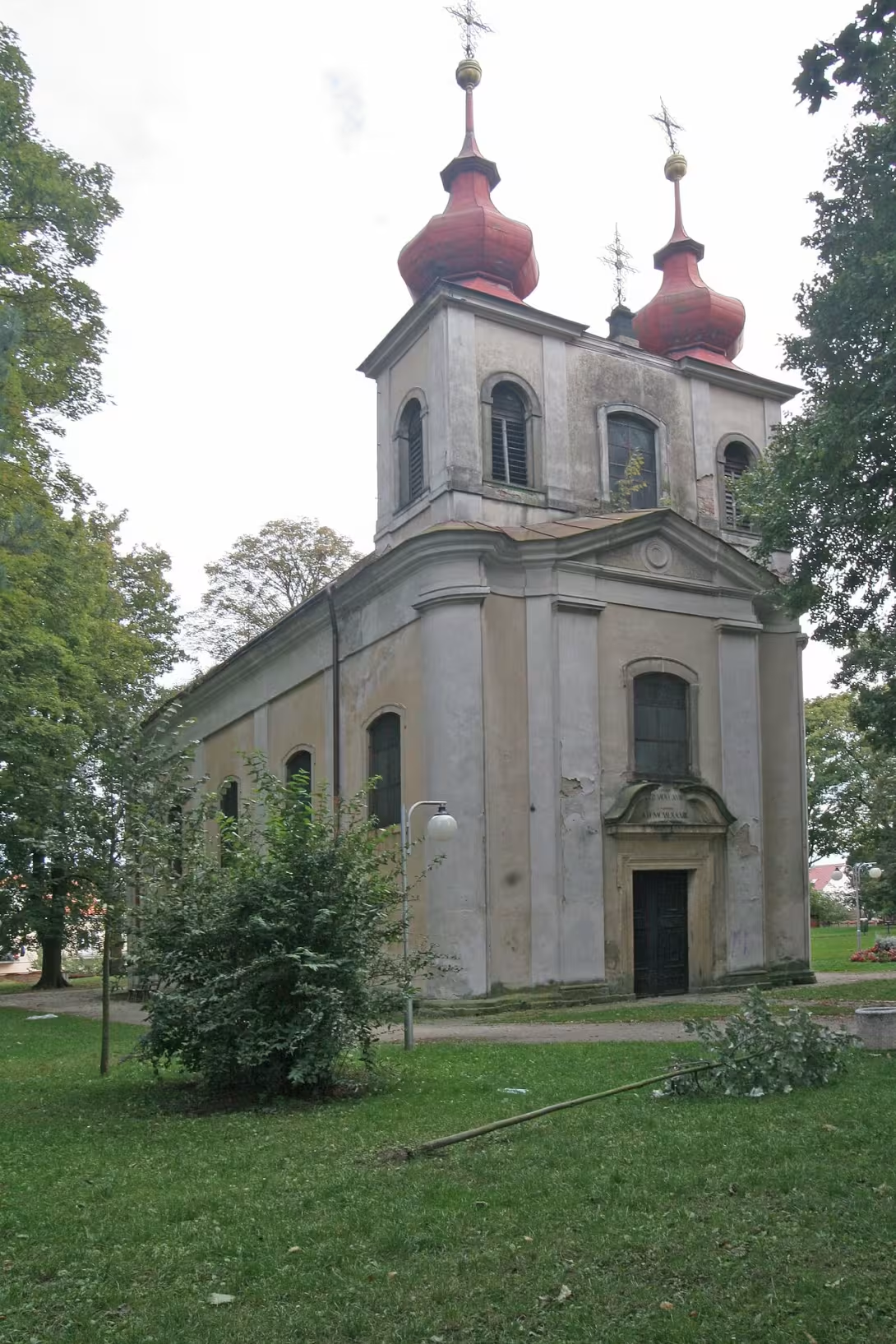
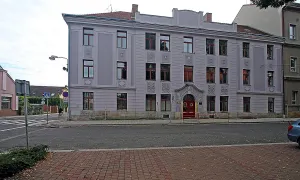
Architecturally, the Church of the Holy Trinity is noted for its Baroque style, featuring elegant towers and rich interior furnishings. The transformation led by Mikuláš Rossi in the early 18th century resulted in a single-nave rectangular structure with a polygonal presbytery. Its façade includes pilasters that enhance its grandeur, while two Baroque towers topped with onion domes add to its silhouette against the landscape. Inside, visitors can admire predominantly 18th-century Baroque furnishings, including a main altar adorned with an image of Nanebevzetí Panny Marie and sculptures of Czech patrons. The church also houses rococo side altars from the mid-18th century and baroque paintings, alongside gravestones commemorating Nový Bydžov's citizens from the early 19th century.
Throughout its history, the Church of the Holy Trinity has experienced shifts in ownership and purpose. Originally a Lutheran chapel, it was later transformed into a Roman Catholic filial church, reflecting broader religious changes within the region. The Baroque renovation under Rossi marked a significant chapter in its architectural evolution, aligning with the stylistic trends of the time.
Today, the Church of the Holy Trinity remains an accessible and cherished cultural monument. Its designation underscores its historical significance and architectural beauty. Visitors are drawn to its serene setting within the park, offering peaceful views into the surrounding landscape. The church's rich history and exquisite Baroque elements make it a must-see for those interested in exploring Nový Bydžov's cultural heritage.
The Church of the Holy Trinity is not only an architectural gem but also a testament to the region's dynamic historical narrative. Its preservation as a cultural monument ensures that future generations can appreciate its beauty and significance. Visitors are invited to explore this remarkable site, where history and artistry converge in a tranquil setting.
Then and now
Drag the slider to compare how the landmark may have looked when it was built with the view today.
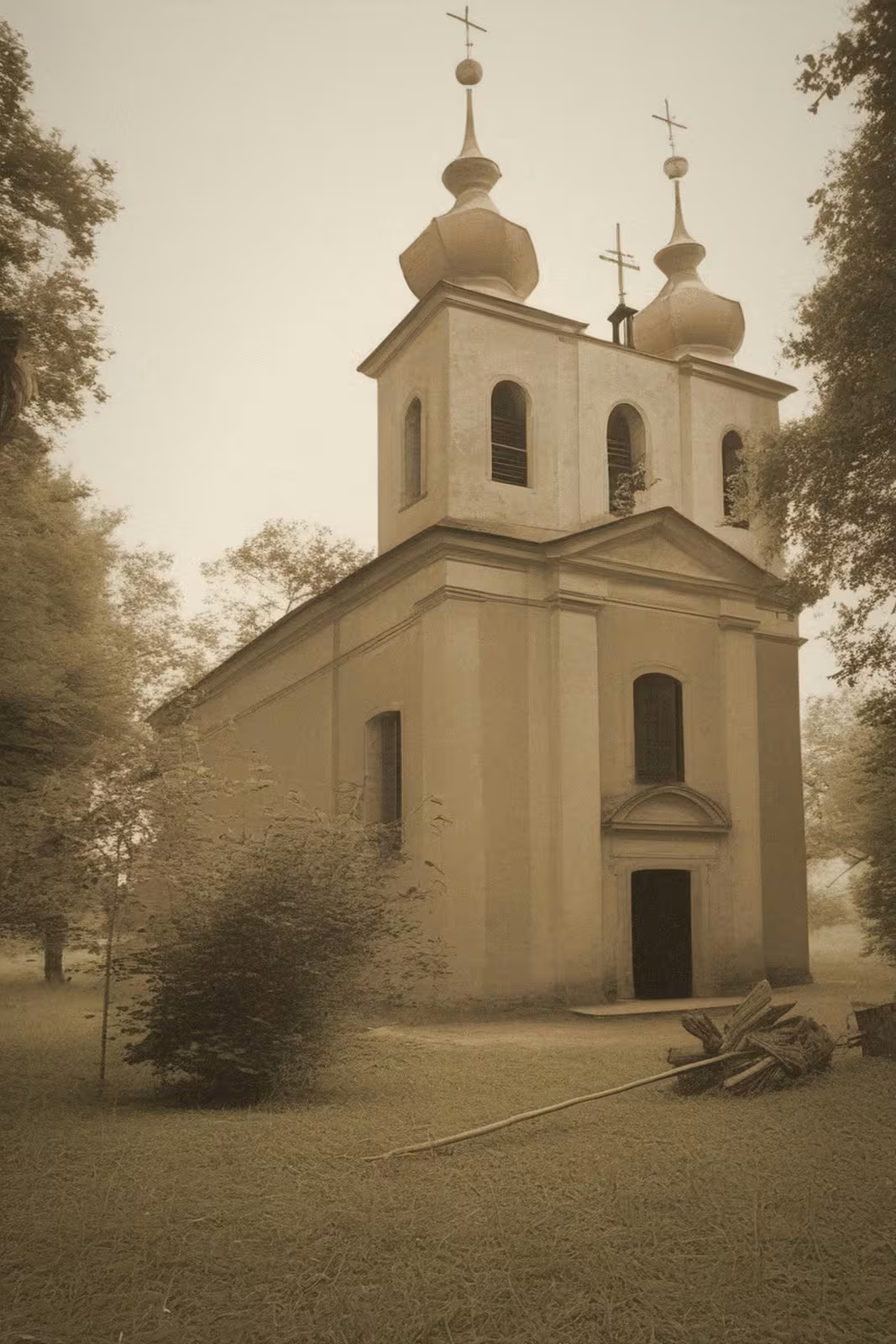
The historical appearance on the left is an AI-generated visualisation and serves as inspiration only.
Historical milestones
- 1601
- Beginning of construction as a Lutheran chapel
- 1620
- Completion of the chapel's construction
- 1717
- Baroque renovation under Mikuláš Rossi
- 1718
- Completion of the Baroque renovation
- 2009
- Designated as a cultural monument
Architectural development
The Church of the Holy Trinity began as a Lutheran structure in the early 17th century, later transformed into its current Baroque form under Mikuláš Rossi's direction. The church features a single-nave rectangular building with a polygonal presbytery and two baroque towers topped with onion domes. Its façade is adorned with pilasters, while the interior boasts predominantly 18th-century Baroque furnishings.
Historical events
1601-1620: Original construction of the Lutheran churchyard chapel.
1717-1718: Baroque renovation led by Mikuláš Rossi.
Points of interest
- The Church of the Holy Trinity was originally constructed as a Lutheran chapel during a time when Bohemia experienced significant religious upheaval, reflecting the broader Protestant Reformation movements sweeping across Europe in the early 17th century.
- Mikuláš Rossi's transformation of the church into its Baroque form coincided with the Counter-Reformation efforts by the Catholic Church to reclaim influence and territory lost to Protestantism during the Thirty Years' War, highlighting the interplay between religion and architecture.
- Despite being a Lutheran chapel initially, the building was later converted into a Roman Catholic filial church, illustrating the shifting religious dynamics in Nový Bydžov as power and faith allegiances changed over centuries.
- The Baroque towers topped with onion domes are distinctive architectural features that not only enhance the church's silhouette but also reflect the influence of Eastern European styles on Bohemian architecture during the early 18th century.
- Among the church’s interior treasures is a main altar featuring an image of Nanebevzetí Panny Marie, which symbolizes the Catholic focus on Marian devotion that became prominent in post-Reformation religious art and culture.
Guide
This guide is narrated by a synthetic voice generated by artificial intelligence.
Show guide text
This text was created by artificial intelligence and has not been editorially reviewed. It may contain inaccuracies.
The Church of the Holy Trinity stands in a park to the northeast of the center of Nový Bydžov. At first glance, it appears to be a Baroque building, but its roots are older.
It was built between 1601 and 1620 as a Lutheran cemetery church. It acquired its Baroque appearance during a reconstruction from 1717 to 1718 according to plans by the Mladá Boleslav architect Mikuláš Rossi. The cemetery to which the church originally belonged was later closed. Today the church serves as a branch church of the Roman Catholic parish of Nový Bydžov. Since December 15, 2009, it has been protected as a cultural monument.
The building has a single rectangular nave and a presbytery enclosed in a polygon. The most distinctive feature is the western facade. Its central part projects slightly forward and is crowned by a gable. This facade is supported by two Baroque towers with onion domes and contains the main entrance. The facade is articulated by vertical flat strips called pilasters. The presbytery has a cross vault, while the nave is covered with a flat ceiling.
The church furnishings come mainly from the eighteenth century. The main altar has the form of a portal and bears an image of the Assumption of the Virgin Mary. It is accompanied by statues of Czech patrons. The side altars are Rococo from the mid-eighteenth century. They are complemented by Baroque paintings from the same period.
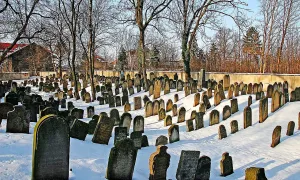
A reminder of the closed cemetery are gravestones of Nový Bydžov citizens from the early nineteenth century. They can be found both inside the church and in its outer walls.
Tips for visitors
The best time to visit the Church of the Holy Trinity in Nový Bydžov is during late spring or early autumn when the weather is mild, and the surrounding park offers a lush landscape that enhances the serene environment. These seasons provide pleasant temperatures for walking around the area, allowing visitors to fully appreciate both the church's architecture and its picturesque setting. Additionally, visiting outside of peak tourist season can mean fewer crowds, offering a more intimate experience with this historical site.
The church itself is a short walk from the town center, making it easily accessible on foot once in the area.
When planning your visit, consider bringing comfortable walking shoes and weather-appropriate clothing, especially if you plan to explore the surrounding park or nearby areas. A camera with a zoom lens could be beneficial for capturing detailed photographs of the church's Baroque architecture from various angles. Since there are no specific restrictions on photography within the church, visitors can capture its rich interior furnishings and elegant towers.
For photography enthusiasts, the best spots to capture the Church of the Holy Trinity include the park surrounding it, especially during golden hours in the early morning or late afternoon when the light enhances the Baroque architecture's details. The serene environment also offers a peaceful backdrop for photographs. Inside the church, natural light filtering through windows can illuminate its interior furnishings beautifully, making it an ideal time to take pictures.
For families with children visiting the Church of the Holy Trinity and its surroundings, the nearby park provides ample space for outdoor activities and exploration. The serene environment is perfect for a leisurely walk or picnic. Within 30 minutes from Nový Bydžov, visitors can explore other historical sites that offer educational insights into the region's past, making it an enriching experience for both adults and children.
Frequently asked questions
Can the monument be visited?
Religious buildings are usually open mainly during services; at other times a visit is normally arranged with the parish or the operator. We have not verified specific times.
Where is the monument?
Location: Nový Bydžov, Královéhradecký kraj. The map on this page shows the exact spot.
Why is the monument protected?
It is listed in the Central List of Cultural Monuments of the Czech Republic as a cultural monument (register no. 103808).
Businesses nearby
Do you run a restaurant, accommodation, shop, museum, rental, wellness or other visitor service near this monument? Show yourself directly to the people heading to it — this is how they will see you in the app and on the web:
Nearby
Located in a park northeast of Nový Bydžov's town center, the church offers views into the surrounding landscape. The area is characterized by its serene environment and historical significance.
Accommodation nearby
Themed route
Tematická výletní trasa: Kostel Nejsvětější Trojice (Nový Bydžov)
1. Kostel Nejsvětější Trojice
- Typ: Historický kostel
- Proč stojí za návštěvu: Tento barokní kostel je nejen architektonickou perli, ale také nabízí vynikající pohledy na okolní krajinu. Jeho umístění v parku zajišťuje klidný a odlehčující prostředí pro návštěvníky.
2. Park u kostela
- Typ: Místo s přírodou
- Proč stojí za návštěvu: Park kolem kostela je ideálním místem pro relaxaci a procházku, kde si můžete užít klidného prostředí. Jeho zelené plochy a přírodní krása dodávají návštěvě kostela další rozměr.
3. Výhledy do okolních krajin
- Typ: Pohlednice
- Proč stojí za návštěvu: Od kostela Nejsvětější Trojice můžete užít výhledy na okolní krajiny, které jsou zvlášť působivé ze svých vyšších bodů. Tyto pohledy nabízejí krásný přehled nad klidným a historicky bohatým regionem.
Tato trasa vám umožní prozkoumat nejen kostel Nejsvětější Trojice, ale také jeho okolí, které je plné klidu a krásy.
Seasonal recommendations
Spring: Visiting the Church of the Holy Trinity in Nový Bydžov during spring offers a unique experience as nature awakens around this historic site. The church is surrounded by blooming flowers and lush greenery, creating a vibrant and picturesque setting that enhances its architectural beauty. As daylight extends into the evening, visitors can enjoy the soft natural lighting that highlights the intricate details of the building. To make the most of your visit, consider coming in the late morning or early afternoon when crowds are thinner, allowing for a more peaceful exploration. Dress comfortably in layers to accommodate the variable spring weather.
Summer: Summer is an ideal time to explore the Church of the Holy Trinity due to longer daylight hours and pleasant temperatures that make outdoor activities enjoyable. The surrounding landscape, with its verdant trees and gardens, provides a lush backdrop to the church's historic architecture. However, this season also attracts more visitors, so it’s advisable to arrive early in the day to avoid larger crowds. Wearing light clothing is recommended to stay comfortable during your visit, and don’t forget sun protection like hats or sunglasses.
Autumn: Autumn brings a magical atmosphere to the Church of the Holy Trinity with its warm hues of red, orange, and yellow foliage creating a stunning contrast against the historic structure. The cooler temperatures make for a pleasant walking experience around the church grounds, which are often quieter compared to other seasons. As days get shorter, plan your visit during daylight hours to fully appreciate the natural beauty surrounding the site. Layered clothing is advisable as temperatures can vary significantly throughout the day.
Winter: In winter, the Church of the Holy Trinity offers a serene and contemplative experience with its snow-covered surroundings enhancing the historic ambiance. The lighting inside the church may be softer due to shorter days, providing a cozy atmosphere perfect for reflection. However, visitors should be prepared for colder temperatures and potential closures during extreme weather conditions.
Visualizations and artistic views


The visualisations are generated by artificial intelligence and serve as inspiration.
Photos from the area
Real photos taken near the monument


Zdroj a licence jsou uvedeny u každého snímku.
Tips from visitors
No tips yet. Be the first!
Log in and add your tip.
Sources and literature
Photos: Petr1888 / CC BY-SA 3.0, rozlišení zvýšeno umělou inteligencí — Wikimedia Commons. The author and licence also appear when you hover over the image.
Faktickým podkladem tohoto textu byl článek na Wikipedii, jehož autory jsou přispěvatelé Wikipedie. Článek je dostupný pod licencí CC BY-SA 4.0.
Location on the map
Příběhy a pověsti
Legendy, pověsti a příběhy spjaté s touto památkou
Fotografie návštěvníků
Zatím žádné fotografie. Buďte první, kdo přidá fotografii z návštěvy!
Log in a přidejte svou fotografii nebo hodnoťte.
Za ověřenou návštěvu v aplikaci získáte víc bodů — poznáme podle GPS, že jste na místě.
Reviews and comments