






Kostel svatého Vavřince (Nový Bydžov) Church
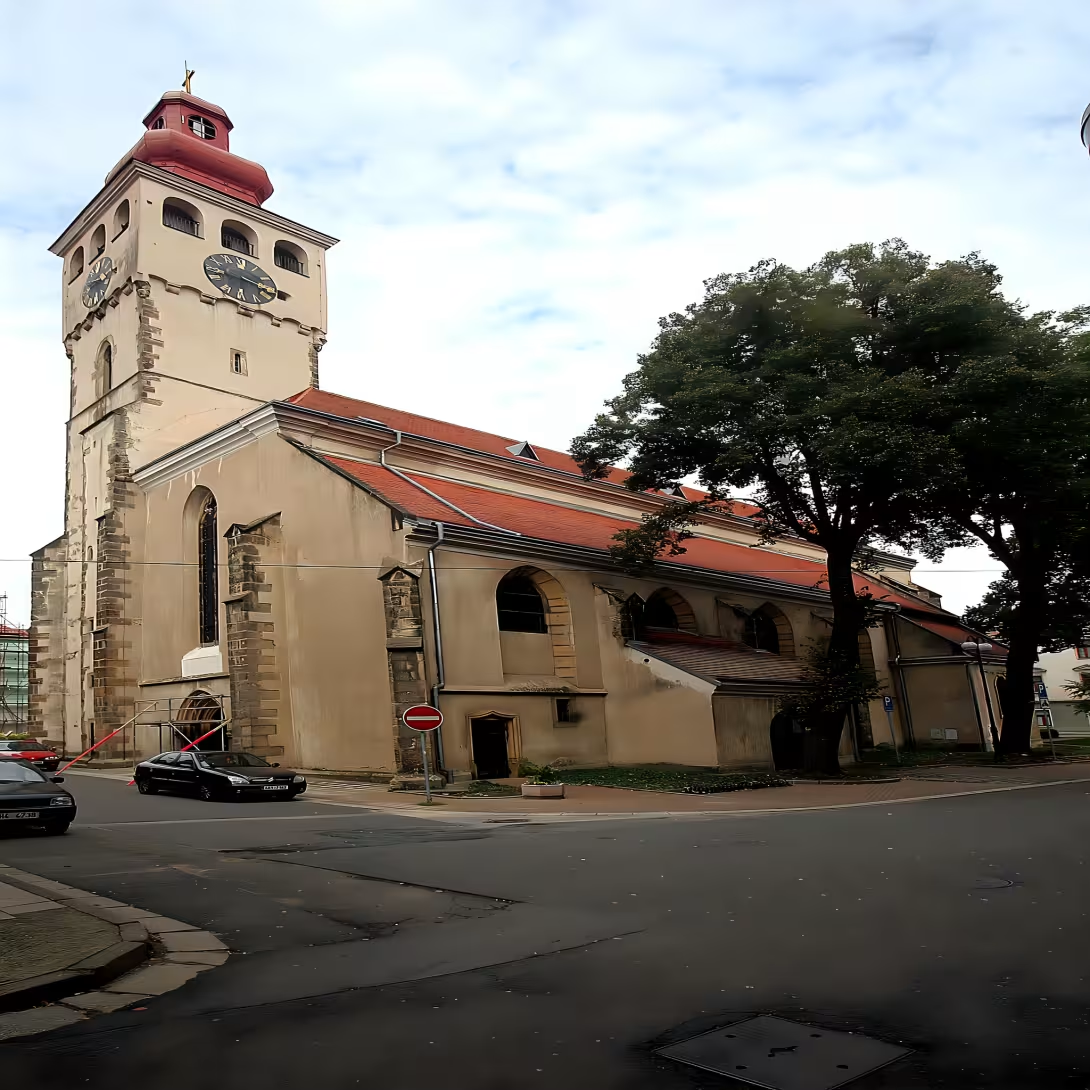
The church of St. Lawrence is a Roman Catholic dean's temple and the oldest preserved building of New Bydžov. By its age and construction composition, it represents a testimony of the creation of the city itself in the early days of Czech Gothic.
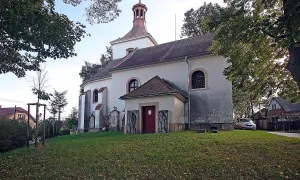
The church was built between 1305 and 1311 when New Bydžov was founded as a three-boat stone building with a characteristic prism tower. Originally dedicated to the Mother of God and his location in the heart of the city centre, in the middle of the park near Masaryk Square, underlines his central function in the life of the village. The building is located in a block between the Revolutionary Class, Komenské Street and Na valech Street, the entrance to it leads both from the west side of Komenské Street and from the north side of the park.
Over the centuries, the church has undergone several significant modifications. In the Baroque period, namely between 1680 and 1772, his Baroque reconstruction took place, which made him a witness to changes in architectural taste and liturgical needs. The bells hanging in his tower tell us about the long history of the temple: the oldest is the Wenceslas bell from 1507, held in the company of the Median bell from 1574, which was added only in modern times by the bell Vavránek from 1999.
For centuries, the church has been the head of the spiritual life of the New Obyjo parish. A long line of priests served here, starting with Dean Tyklan around 1574 and continuing through numerous spiritual leaders until now. The parish also produced a number of religious heirs - from many benedictines originating in New Bydžov and later serving in the monasteries in Broum, Police over Metátije and elsewhere to other clerics who sought their roots in this very temple.
Today, the Church of St. Lawrence remains not only a place to visit for those who are interested in Czech architecture and history, but also a living part of the spiritual life of the New Bydi community. Its position in the middle of the park makes it easily accessible, with its three-boat structure with Gothic elements and prism tower representing authentic evidence of the way the city formed around its religious center in the late Middle Ages.
Then and now
Drag the slider to compare how the landmark may have looked when it was built with the view today.
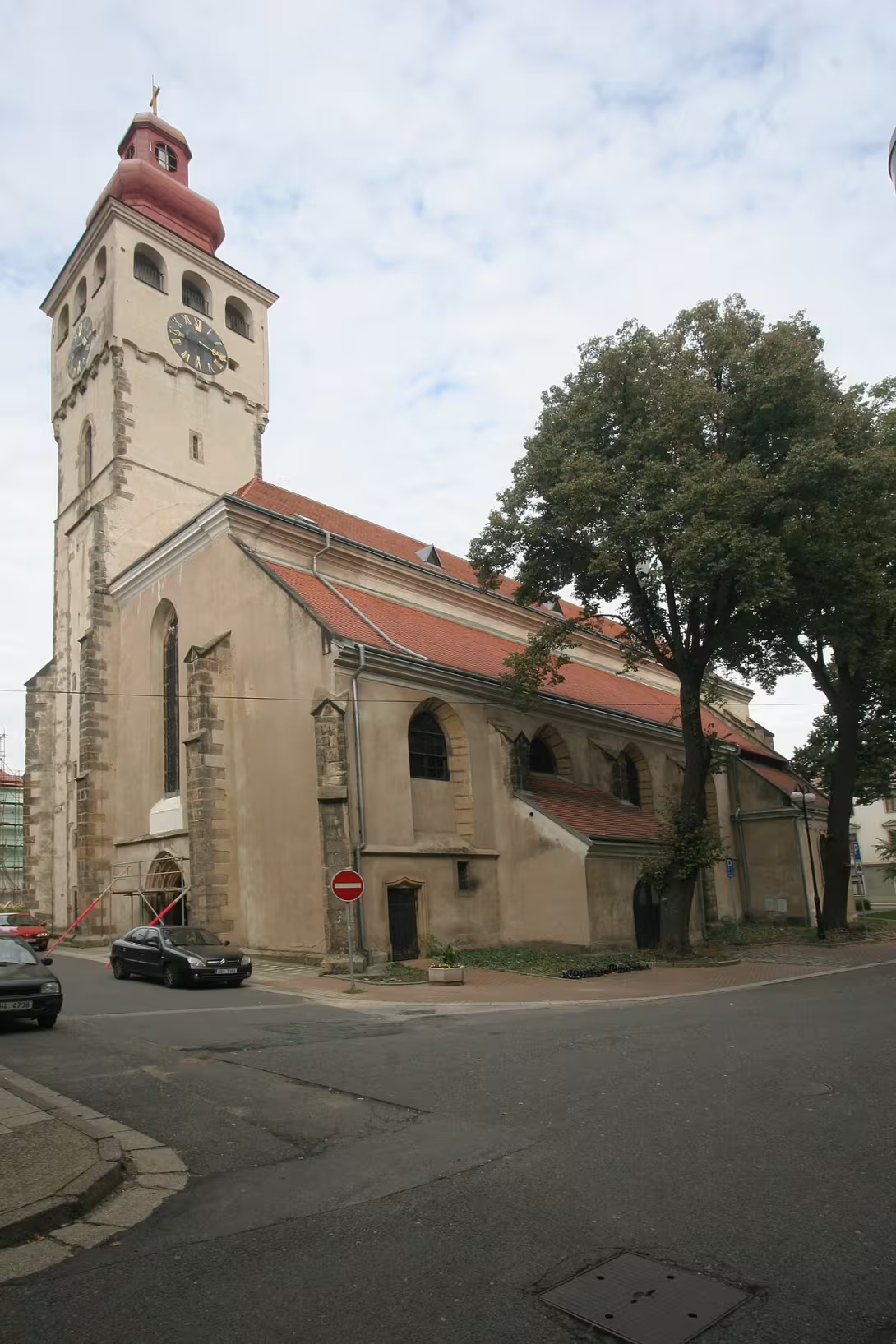

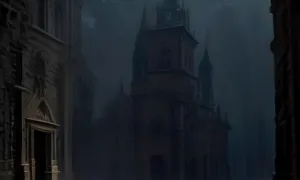
The historical appearance on the left is an AI-generated visualisation and serves as inspiration only.
Historical milestones
- 1305-1311
- The church was founded when the city of Nový Bydžov was founded, originally dedicated to the Mother of God.
- 1507
- The first preserved bell of Wenceslas.
- 1680
- First Baroque style of church.
- 1772
- Another Baroque reconstruction of the interior.
- 1870
- The church's rebooking.
- 1999
- Installation of new bell Vavřinec.
Architectural development
Original three-boat church with prism tower from 1305- 1311, late Gothic style. In the 17th and 18th centuries Baroque modifications of the interior and exterior. In the 19th century, regotissed elements (according to the GTC). A building made of stone, with a five-sided presbytery and a city tower in the corner.
Historical events
City of Nový Bydžov and church construction in 1305- 1311; Baroque reconstruction in the 17th and 18th centuries; installation of new bell Vavřinec in 1999.
Points of interest
- It is the oldest preserved building of New Bydžov and testifies to the founding of the city in the beginnings of Czech Gothic.
- It was built between 1305 and 1311 as a three-boat stone building with a prism tower and was originally dedicated to the Mother of God.
- In his tower is the oldest bell Václav from 1507, supplemented by another bell Median from 1574.
- He passed baroque modifications in 1680 and 1772, which changed his appearance and liturgical use.
- The church served as a spiritual center of the parish for centuries, from which the monks of the order came, for example benedictinis.
Guide
This guide is narrated by a synthetic voice generated by artificial intelligence.
Show guide text
This text was created by artificial intelligence and has not been editorially reviewed. It may contain inaccuracies.
Welcome to New Byjo. You are standing right in front of the most important symbol of this city, the building that is its oldest living witness. In front of your eyes is the church of St. Vavranice, a monumental building that carries the walls of seven centuries of history. Feel this atmosphere, feel the calm that radiates from these walls. We are here not only in the presence of stone and mortar, but in the presence of time that has passed inexorably since the beginning of the fourteenth century. This church is not only a sacral building, it is the spiritual heart of an entire area that survived wars, reconstruction and transformation of human lives.
Let's go back to the deep past together to understand why this place is so special. Imagine a period of a thousand three hundred and five to a thousand three hundred eleven. These were the years when Nový Bydžov was born, when the city was founded here and when a new order was being built in this country. At this critical moment, in the very core of the city, this church building was also built. It is fascinating to realize that the church and the city were formed hand in hand, as two parts of one whole. Originally, however, this church was not dedicated to Saint Vincent, as we know it today. His first identity was different - he was dedicated to the Mother of God. This original sanctity gave him a different spiritual touch, which is still hidden in its foundations.
Now pay attention to the architecture itself, which now surrounds you. Even though we don't know the names of the particular architects who laid these stones, their championships are evident in every detail you see now. The church is a three-boat Gothic building, which means that its inner space is divided into three main parts, which gives it a sense of tonnage and nobility. Look at its overall structure. Note the interesting combination of styles that is so typical of this church. The original Gothic basis, created in the times of the highest Czech Gothic, was gradually, over centuries, enamelled with waves of Baroque style. In the years of a thousand six hundred and eighty, and then in a year of a thousand seven hundred and seventy-two, there were significant baroque modifications that changed the interior and exterior and gave them a new, richer form.
Notice this massive prism tower that dominates the whole neighborhood. This was part of the construction from the beginning and serves as an orientation point for the whole landscape. It is interesting that in the year one thousand eight hundred seventy, there was a process called regotization. The then builders decided to return some of its original medieval character to the church, creating this unique mixture that you are now observing. It's like looking into a book, where different chapters are changed on one side, written with different hands, but the story remains one and the same.
Now that you're looking at these walls, don't just think of them as stone matter. For centuries, the church has been the center of not only prayer, but also social life. In its history, a number of important personalities have been enrolled here and have shaped the spiritual life of the city. Here we can name a number of spiritual men who were part of the Benedict Order, such as the father of Václav Umlauff, the father of Benediktin Chwalkowsky, the father of Emilian Nalha, the father of Jan Nepomuk Turinský, and the father of Rudolf Peřina. These men were guardians of tradition and bringers of faith in times when the world around them was changing very quickly. Next to them, we must not forget the deans, such as Josef Madle or Miroslav Paclík, who led this community and were key figures for the people of New Bydžov. Their lives were inextricably linked to this place.
And now I want to take you to one of the greatest mysteries and treasures of this church. Stop for a moment and imagine the sound these walls have occupied for centuries. The towers of the church of St. Lawrence host an incredible treasure in the form of bells. There is the oldest preserved bell, Václav, whose history dates back to a thousand and five hundred and seven. Imagine the sound that more than 500 years ago announced to people in the fields and houses a new day, a new Sunday or important events. This ancient voice was later supplemented with other bells and in the year one thousand nine hundred and ninety a new bell was installed. This continuity of ringing, this connecting element between the past and the present, is something you really feel in this place. Bells aren't just tools, they're voices of history that still talk to people.
Looking at the church, you can ask yourself what all these walls have experienced. What prayers were said here, what joys and what sorrows were shared here. The Church of St. Lawrence is not just a monument, it is a living organism that has constantly evolved along with the city. From its founding in the early 14th century to this day, it remains a symbol of stability and continuity. It is a place where gothic rigour meets baroque richness and where every layer of history manifests itself in its present form.
Now I won't keep you out too long. The Church of St. Lawrence invites you to another personal examination. Whether you choose to enter and perceive the silence and space of the interior, or just walk around and watch the light change on its walls, I believe you will find a moment in this place for reflection and peace. Let yourself drift through the atmosphere of this place and try to find your own connection to the history that is so tangible here. Thank you for choosing to make this journey to the history of New Bydžov. We wish you pleasant additional tours and beautiful rest of the day.
Tips for visitors
{'text': 'The best time to visit the church of St. Lawrence is morning in the morning or afternoon after 3 pm. In these times it is quiet in the church and you can see the interior without disturbing crowd. If you want to visit the church during services, it is recommended to find out the current program at the local parish as it can change.'}
{'text': 'The church is accessible by car and public transport. If you arrive by car, you can use the parking lot near Masaryk Square. The city centre also has the possibility of parking along the streets of the Revolutionary or Komensky. If you arrive by bus or tram, the stops are near the church, but check the current connection in the search engine.'}
{'text': 'When visiting the church, wear comfortable shoes because the floor is stone and can be slippery. It is also recommended to take a small bag or bag with you to leave things like mobile phones or keys. Admission is paid on site, the current price list can be found on the official site of the sights.'}
{'text': 'For photography are the most suitable places in the church interior in natural light that penetrates the windows. It is best photographed in the morning light, when the rays of the sun illuminate the vitrates and gothic elements. The outside facade of the church is particularly interesting at sunset, when it is reflected in stone details. The use of lightning is prohibited in the interior.'}
{'text': 'In the vicinity of the church is worth visiting Chateau Kost, which is located about 5 kilometers from Nové Bydžov. Another interesting thing is the ruin of the chateau Kostelec, which is also within the foreseeable distance. In Hradec Kralove, which is about 30 minutes from Nové Bydžov, you can visit a beautiful park which is ideal for walking and relaxing.'}
{'text': 'For families with children, a visit to the church of St. Lawrence is interesting thanks to its historic atmosphere and picturesque details. Children can see the Gothic vaults and old stone statues. In the vicinity of the church there is also the possibility of walking around Masaryk Square, where there are historic houses from the 19th century. It may also be interesting for children to visit Kost Chateau, where various cultural events are often held.'}
Frequently asked questions
Is Kostel svatého Vavřince (Nový Bydžov) open to the public?
Yes, the church is open to the public. The opening hours are 9: 00 to 5: 00.
How do I get to the place by car / public transport?
The location can be reached by car or public transport. The bus stop is located near the church. Parking is available in front of the church and the surrounding streets.
How much is the entrance fee and is it paid on the spot?
Payment is made directly at the entrance to the church.
Is the tour suitable for children and seniors?
Yes, a church tour is also suitable for families with children. There are several places where children can relax and watch historical monuments.
How long does the tour take?
A church tour usually takes about 30-45 minutes. If you want more information about the church or its history, you can contact the local guide.
What are the opening times and booking is required?
The church opening hours are from 9: 00 to 5: 00. Reservation is not necessary, but if you want more information about the church or its history, you can contact the local guide.
What's interesting in the immediate vicinity?
In the immediate vicinity of the church is the historical centre of Nové Bydžov. You can visit the local museum, located just a few minutes walking from the church.
For kids
Imagine going back to when Nový Bydžov was still a small village mansion. The church of St. Vavrnice stood like a small wooden chapel and was the center of the religious life of the local people.
There were people who lived here for a living in agriculture, animal husbandry and trade. The village was surrounded by forests and meadows where there were closely hidden springs and ponds. The church was their sanctuary where festivities and rituals took place.
Businesses nearby
Do you run a restaurant, accommodation, shop, museum, rental, wellness or other visitor service near this monument? Show yourself directly to the people heading to it — this is how they will see you in the app and on the web:
Nearby
The church is situated in the center of New Bydžov in the middle of a small park between the streets of the Revolutionary, Komenský and Na valy. The surrounding area is the Masaryk Square and other historic houses from the 19th century. Within 5 km are significant monuments such as Kost Chateau, the ruins of Kostelec Chateau or the park in Hradec Kralove.
Accommodation nearby
Themed route
Thematic cruise route Nový Bydžov
1.Kostel svatého Vavřince (Nový Bydžov) * Type: * Church It is worth visiting for its architectural beauty and history, which dates back to the 13th century. It's one of the oldest sacral structures in an area of rich artistic heritage.
2. Masaryk Square * Type: * Square This central local square is ideal for exploring the historical and cultural life of New Bydžov. Here are several historic houses from the 19th century that contribute their architecture to the city's atmosphere.
3. Historical houses on Komenský street * Type: * Architectural landmark These houses are an example of 19th century architecture and offer a view of the life of the people from that time. Their preserved details and construction are an important part of the city's cultural heritage.
4. Park in Hradec Kralove (approximately 5 km) * Type: * Park Although not directly in the city, the park in Hradec Králové is a beautiful destination for relaxation and sightseeing. Its green spaces are ideal for relaxing after visiting the historical monuments of New Bydžov.
This route offers you a view of the cultural and natural beauty of the area, with an emphasis on history and architecture.
Seasonal recommendations
Spring: In the spring period, the Church of St. Lawrence in New Bydžov is dominated by golden lighting, when the sunlight penetrates through the colours of window windows and decorates the interior. Green nature is awakening around the church, giving visitors a sense of renewal and hope. At this time it is advisable to visit a monument in the early spring season before a growing crowd of tourists trying to enjoy the beautiful weather. We recommend wearing clothes suitable for mild temperatures and bring protective sunglasses because the sun can be very strong.
Summer: In the summer, the Church of St. Lawrence is also a centre of cultural activity and a place of peace. The sunny day brings ideal conditions for walking around the church and its surroundings, where you can enjoy views of green meadows and ancient architecture. In the main summer period the number of visitors increases, so it is advisable to come earlier afternoon or Sunday morning to explore the memory without obstacles to the crowds. Do not forget the sun protection and do not neglect sufficient volume of fresh drinking water.
Autumn: In autumn, the Church of St. Lawrence offers a unique atmosphere where tree leaves turn into golden and red shades. This change of nature creates a romantic background to visit the church, which is illuminated by the fine rays of the sun through empty leaves. Autumn season has fewer tourists than summer time, which means shorter waiting lines and a quieter tour. We recommend wearing warmer clothes and perhaps an umbrella because autumn can suddenly be wet or cold.
Winter: The Church of St. Lawrence in New Bydžov brings peace and quiet into the atmosphere of the surrounding countryside. This time of year offers visitors the opportunity to explore the church under the light of the glaciers and in a quiet environment that gives a sense of relief from normal life. In winter months the opening time is shorter, so it is important to come early in the morning. It is necessary to wear warm and suitable clothes for low temperatures and freezing soil as well as wear protective shoes.
Visualizations and artistic views


The visualisations are generated by artificial intelligence and serve as inspiration.
Photos from the area
Real photos taken near the monument


Zdroj a licence jsou uvedeny u každého snímku.
Atmosphere of the place
This atmospheric visualisation of the place and period was generated by artificial intelligence. It is not real footage of the location.
Tips from visitors
No tips yet. Be the first!
Log in and add your tip.
Sources and literature
Fotografie: Petr1888 / CC BY-SA 3.0, rozlišení zvýšeno umělou inteligencí — Wikimedia Commons. The author and licence also appear when you hover over the image.
Faktickým podkladem tohoto textu byl článek na Wikipedii, jehož autory jsou přispěvatelé Wikipedie. Článek je dostupný pod licencí CC BY-SA 4.0.
Location on the map
Příběhy a pověsti
Legendy, pověsti a příběhy spjaté s touto památkou
Fotografie návštěvníků
Zatím žádné fotografie. Buďte první, kdo přidá fotografii z návštěvy!
Přihlaste se a přidejte svou fotografii nebo hodnoťte.
Za ověřenou návštěvu v aplikaci získáte víc bodů — poznáme podle GPS, že jste na místě.
Reviews and comments