






Kostel Nejsvětější Trojice (Předměstí) Church
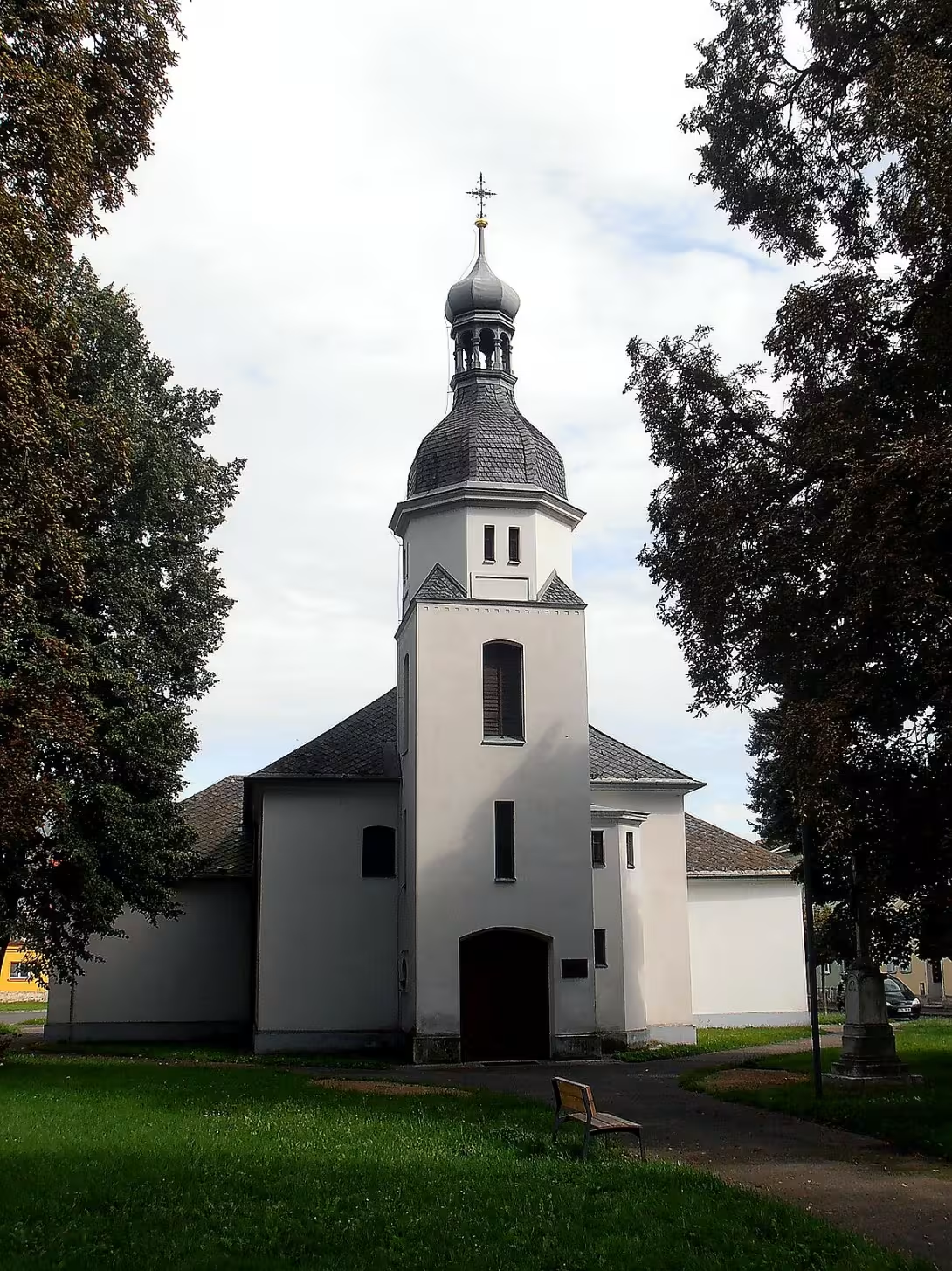
The Church of the Holy Trinity is one of the ancient oval sacral structures. It is a single-boat church with a five-side closed presbytery, which is an architectural solution typical of late Gothic times. As a cultural monument of the Czech Republic, everyone who is interested in medieval church buildings in northern Moravia deserves the attention.
The church was founded in 1463 when it was founded by a representative of the village in the form of a city council. It was a filial church, a church subordinate to a larger parish. It was settled in a very characteristic place - on the area of the old municipal pastures near the mill jet, which flowed along the Deep Way. The choice of location was therefore not random; the church became part of the infrastructure of urban management and social life Opava.
The cemetery area was also set up with a model city plan at the church. In order to be clearly separated from the surrounding land, the cemetery was surrounded by a wooden fence. Such a type of fence was common in the 15th century and served both practical purpose and symbolically to mark the sacral space. In the middle of the cemetery there was built the very brick church with the above-mentioned one-boat construction and a five-side closed by the presbytery, which represents a solid development of the age when technical possibilities and resources were limited.
From an architectural point of view, the church maintains its original characteristics of late goth - a single-boat arrangement made it possible to make the altar more visible to believers and was more economical for maintenance than for construction with more ships. The five-sided presbyterium (part of the church behind the main altar) belongs typologically to the common solution of the time and gives the presbytarium a preferred look.
Today the Church of the Holy Trinity is part of the cultural heritage of Opava and the region. To visit it is worth it to those who are interested in medieval architecture and history of Czech Moravia, or simply to those who want to understand how centuries formed the face of cities and took the form of the life of their inhabitants. The church recalls the time when urban communities actively managed their sacral and economic affairs, and remains a testament to those times.
Then and now
Drag the slider to compare how the landmark may have looked when it was built with the view today.
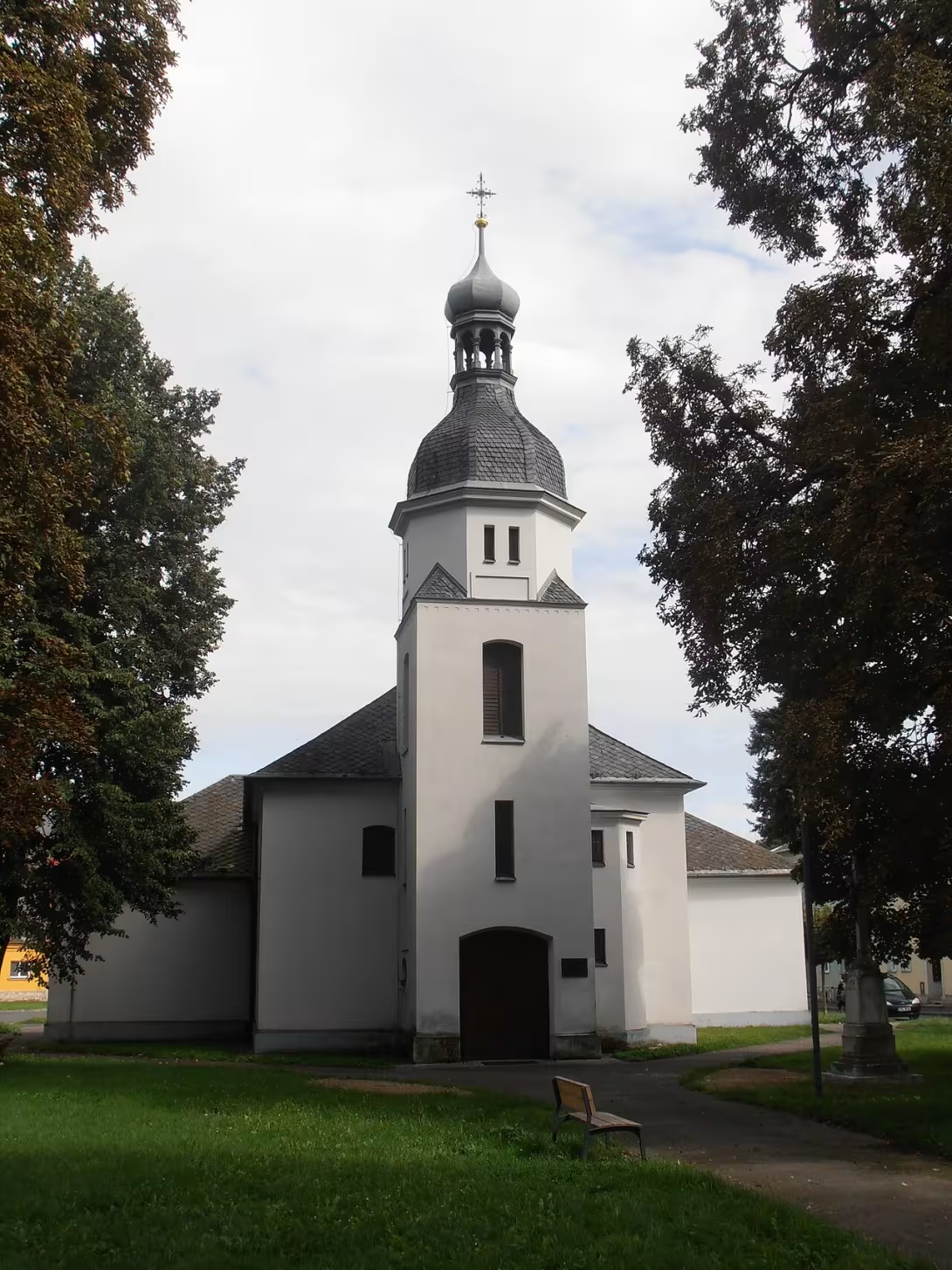

The historical appearance on the left is an AI-generated visualisation and serves as inspiration only.
Historical milestones
- 1463
- The establishment of the church by the city council Opava as a filial sacral building on old municipal pastures.
- around 1463-1480
- Completion of the late Gothic single-boat building with a five-sided presbytery.
- 15th century (before 1480)
- Creation of a cemetery area with a wooden fence separating the sacral space from the surrounding grounds.
- 16.-17th century
- Possible baroque modifications or minor building interventions, typical of the period of reformation and counter-reformation.
- 18th century (before 1784)
- The church worked as a filial church, probably subordinate to the parish in Opava or its surroundings.
- 1784
- The abolition of the cemetery as part of the Josephine reforms, when the cemeteries were moved out of town.
Architectural development
One-boat brick church with five-sided presbytery, built from local materials typical of Gothic architecture. The original wood elements (e.g. the fence of the cemetery) were probably replaced by walled ones. No significant reconstructions are documented, the church kept the original available.
Historical events
In 1463 the founding of the church by the city council Opava as a filial church; in the 19th century likely modifications or repairs which preserved its original Gothic character.
Points of interest
- The church was founded in 1463 by the city council of Opava as a filial church.
- It is located on the site of old municipal pastures near the mill drive along the Hlubčický way.
- The church area is supplemented by a cemetery surrounded by a wooden fence, typical of the 15th century.
- A single-boat building with a five-sided presbytery is a typical solution of late Gothic architecture.
- The church was built as part of the urban infrastructure and social life of Opava.
Guide
This guide is narrated by a synthetic voice generated by artificial intelligence.
Show guide text
This text was created by artificial intelligence and has not been editorially reviewed. It may contain inaccuracies.
Welcome to Opava. You're standing right where the history of the city touches the quiet edges of the inhabited world. In front of you is the Church of the Most Holy Trinity, a sacral building that has seen changes around this suburb. Before we go into deeper exploration, let yourself stand for a moment and perceive the atmosphere of this place. Can you feel the open space? There is a mill drive just outside, whose constant noise was an integral part of everyday life for the locals. This closeness of water and formerly large open spaces also today gives this place a special sense of peace, which is hardly in the heart of a busy city.
Let us now return together deep into the past, namely to 1463. Imagine then Opava, a city that grew strong and needed to expand its religious network to its limits. The town council of Opava made an important decision. It was not just about building another house for prayers, but about a strategic step to strengthen spiritual life in new parts of the city. They therefore decided to establish this church right here, in a place that served as an old general pasture back then. It's fascinating to think about how from a place where cattle were once grazed, it became a sacred center for the whole surrounding settlement. The church was founded at that time as a filial building, which means that it was part of a wider spiritual system linked to the main Parochies of Opava, but at the same time a separate point that provided the people in this part of the suburbs with the certainty and proximity of the divinity.
Now pay attention to the construction itself, which now appears before your eyes. Although time is relentlessly rushing forward, the church has retained its basic face, which today teaches us to read in the language of late goth. Look at its overall form. It's a single-boat structure, which means that the internal space is uniform, without complex wings or side ships to break it down. This simplicity has its own dignity and strength. But if you look at the end of the construction, the eastern part, you'll notice something very specific. The presbytery, the most sacred part of the church, ends with five-sided shapes. This five-sided conclusion is a typical feature of the architecture of the time and gives the building an organic, almost lively look. Although, over the centuries, especially during the period of reformation and subsequent counter-reformation between the sixteenth and seventeenth centuries, minor baroque adjustments could have taken place, the basic Gothic blocks and the geometry of the construction remained preserved. Feel the harmony between the simplicity of one ship and the precision of this five-sided ending.
If you look around the church itself, you might start to remember or just imagine what this place looked like at the time of its greatest bloom in the 15th century. The church wasn't just a lonely building. It was part of a wider complex that was surrounded by a wooden fence at the time. This fence was not just a common interface, but a symbol of the separation. He separated the sacred space of the cemetery and church from the ordinary, profane world of surrounding lands and pastures. Imagine the people back then who walked the Deep Way, saw this wooden fence and knew that there was a place behind it for peace, respect and memories of those who had already left. The cemetery was at that time an integral part of life and death within each community.
There is, however, one interesting historical change that has fundamentally affected the appearance of this place. If you're looking at the current space around the church, you might find it too loose. There's a reason for that in 1784. As part of the so-called Josephine reforms, which then changed the face of the entire empire, cemeteries were moved outside urban populated areas for hygienic and practical reasons. That's how this historic area changed. The place where there was previously a narrow, fenced space full of monuments of human life became a more open place, which we now see as a quiet greenery near the historical monument. This transformation is proof of how our views on death, on hygiene and on what the city should look like.
You may now be told whether there are any great secrets or names of famous heroes in these walls. Although the historical records of this particular site do not directly mention the names of particular architects or significant personalities who would leave their mark, its actual size lies in the anonymous power of the community. This church was built for people - for craftsmen, for families living in the surroundings of the millstone, for anyone who sought spiritual support in these neighborhoods. Its existence is a celebration of the collective efforts of the city council and the people who wanted to create something lasting in 1463.
Looking at the church you can now perceive its quiet persistence. He stood here when religion was changing, when political regimes were changing, and when the landscape around him was changing from pastures to modern suburbs. He's a time witness who teaches us humility. Every stone and every line of its five-sided presbytery tells the story of a man's attempt to connect with something higher and to create a place that will survive generations.
I hope that this short journey over time has helped you better understand what you are observing. Church of the Biggest The Three is not just a wall and a roof, it's a living fragment of Opava history. Before you go on your tour, stop for a while and feel the atmosphere of this place. You may be able to hear the echo of those prayers or feel the weight of the years this church has experienced. Thank you for choosing to pay attention to this memory. We wish you a beautiful and inspirational continued journey along the historic routes of our city. We'll say goodbye, but we believe the stories you've just heard will stay with you for a while.
Tips for visitors
The best time to visit the Church of the Holy Trinity is during the morning or afternoon hours in the summer months when the weather is pleasant outside and sunlight creates beautiful shadows in the interior. In winter, it is ideal to visit the church during a sunny afternoon when its gothic architecture and coloured glass in the windows appear. Avoid visiting during the service period if you do not want to be limited in movement and search.
Parking around the church is possible in public parking lots in the centre of Opava. It is recommended to use public transport, in particular trams or buses, which regularly go to the city centre. The location is also available by car on the Deep Way, which leads directly to the monument. The current connection and parking possibilities can be found in the traffic search engine.
When visiting the church, wear comfortable clothes and shoes because it is a historic building with stone stairs and uneven surface. It may be cold in the interior, so you will bring a light sweater or a coat. For a more comfortable tour you can take a small notebook or camera if shooting is allowed.
Photography in the church is permitted, but it is advisable to choose places with enough natural light such as windows with coloured glass or the entrance part of the church. The best time for photography is in the morning or in the afternoon when light falls favourably and creates contrasts. In the interior avoid flashing of lightning to avoid damaging historical elements.
In the vicinity of the church is worth visiting Opava Chateau, which is located within five kilometers of the monument. Another interesting thing is the site of the former monastery in Opava, which is also in close proximity. For nature lovers are suitable nearby forests and typical field services of the Moravian-Silesian Region, offering an opportunity to walk and explore the local landscape.
For families with children, a visit to the Church of the Holy Trinity is particularly interesting because of its historic atmosphere and the possibility to become acquainted with the architecture of the Middle Ages. Children can look at small detail elements such as statues or stone decorations. In the vicinity of the church it is possible to play on the Deep Way, which leads along natural elements, or visit the Opava Chateau, where children appreciate the opportunity to explore chateau walls and towers.
Frequently asked questions
Is Kostel Nejsvětější Trojice (Předměstí) open to the public?
Yes, the church is open to the public. The tour can be carried out without booking.
How do I get to the place by car / public transport?
You can get by bus No. 10 from downtown Opava or park on nearby parking areas.
How much is the entrance fee and is it paid on the spot?
Free admission to the church, but please submit the donation collection on departure.
Is the tour suitable for children and seniors?
Yes, the examination can be carried out regardless of age or medical condition. The church is accessible to all.
How long does the tour take?
The church tour can be performed for about 30 minutes.
What are the opening times and booking is required?
The church is accessible from 9 am to 15 pm. There is no need for a reservation, but please submit the donation collection on departure.
What's interesting in the immediate vicinity?
There are several restaurants and cafés around the church where you can listen to music or have fun. Visit the Museum of Opava (30 minutes by the nanny from the church).
For kids
Imagine coming back 563 years and showing up in the Opava suburbs. There stands the Church of the Holy Trinity, which is like a hidden treasure. It was built in 1463 and is today protected as a cultural monument of the Czech Republic.
How did it look here? Who lived here? What happened here? Imagine you were a little girl at the time or a boy who lives on a bath. You have four siblings and parents who tell you it's important to help in church. That's why you help clean up every week, and your father plays violin during religious service.
Businesses nearby
Do you run a restaurant, accommodation, shop, museum, rental, wellness or other visitor service near this monument? Show yourself directly to the people heading to it — this is how they will see you in the app and on the web:
Events nearby
Zdroj akcí: otevřená data měst a obcí ČR (Národní katalog otevřených dat) a kalendář akcí Národního památkového ústavu.
Nearby
In the vicinity there is a deep road which led along the mill's drive. Within 5 km are other historical monuments such as the Opava Chateau or the former monastery area in Opava. Natural elements include nearby forests and field formations typical of Moravskoslezský kraj.
Accommodation nearby
Themed route
Thematic cruise route: Baroque and historical trip to Předměstí and surroundings
1.Kostel Nejsvětější Trojice (Předměstí) * Type: * Sacral construction of Baroque architecture. * Why visit? * A unique example of a rural church with rich decoration, typical of a regional Baroque tradition. The interior keeps valuable altars and sculptures from the 18th century.
2. Deep Way * Type: * Historical communication and technical monument. * Why visit? * It led along the mill wheel and connected Předměstí with the surrounding municipalities. Today it is a picturesque trail with preserved elements of water management, ideal for a walk with a view of natural landscapes.
3. Opava Chateau * Type: * Chateau area with rich history. * Why visit? * It lies just a few kilometres from Předměstí and offers a view of medieval architecture with preserved walls and towers. The area is associated with the region's significant history, including the influence of the Přemyslovovs and Luxembourg.
4. Area of the former monastery in Opava * Type: * Historical complex with monastery buildings. * Why visit? * It is located in a close neighbourhood with the Opava Chateau and represents preserved remains of the medieval monastery with Gothic and Renaissance elements. Today it serves cultural purposes and is suitable for a short tour.
* The route is designed to connect sacral, technical and historical monuments within a 5 km radius of the Holy Trinity Church, with an emphasis on the natural and cultural context of the Moravian-Silesian Region. *
Seasonal recommendations
Spring - After winter sleep, the surrounding park comes to life with flowering trees and first greenery, creating a fine pastel background for the stone facade of the church. Morning sunlight penetrates the stained glass and brightens the interior, while evening light softens the gothic details. We recommend to come soon after opening, when visitors are still in the minority, and dress in a light layer because it may be cold in May, but the rains are common - don't forget the waterproof jacket and comfortable shoes on the uneven surface of the garden.
Summer - In the summer months, the church is surrounded by lush greenery and flowers, and sunlight complements the rich color of the stained glass, creating an almost kaleidoscopic effect. In the morning, the interior can be dazzling, therefore it is best to visit it in the early morning or late afternoon hours when the light is softer and the crowds of tourists are smaller. Due to higher temperatures, choose free clothes, but don't forget the hat and sunscreen, because part of the church is open on the outdoor terrace, where you can relax briefly.
Autumn - Falling leaves and golden shades of trees around them give the church a melancholy atmosphere, while weakening sunlight creates dramatic shadows on stone columns. During this period, the days are shorter, so it is advisable to plan a visit for the morning, when there is still enough natural light to photograph the stained glass. Dress in layered clothes - sweater and light jacket will protect you from colder autumn mornings and evenings, and keep tight shoes at hand, because leaves can slide along stone paths.
Winter - In winter the church receives a quiet, almost mystical atmosphere; The snow covers the surrounding garden and the light from the inner candles reflects the vitrates in the freezing glass, creating an intimate and calm mood. The opening hours are shorter, so it is advisable to arrive immediately after the opening so that there is time for a tour even in a limited schedule. Dress warm - a thick coat, hat, gloves and waterproof shoes, because the pavement can be slippery and the outside of the church can be cold. In advent time, the interior lights up even more with holiday lights, providing a unique experience.
Visualizations and artistic views


The visualisations are generated by artificial intelligence and serve as inspiration.
Photos from the area
Real photos taken near the monument


Zdroj a licence jsou uvedeny u každého snímku.
Atmosphere of the place
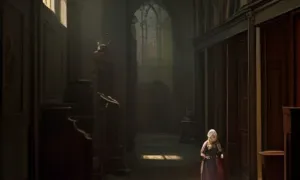
This atmospheric visualisation of the place and period was generated by artificial intelligence. It is not real footage of the location.
Tips from visitors
No tips yet. Be the first!
Log in and add your tip.
Sources and literature
Photos: Richard Zoban / CC BY-SA 3.0 — Wikimedia Commons. The author and licence also appear when you hover over the image.
Faktickým podkladem tohoto textu byl článek na Wikipedii, jehož autory jsou přispěvatelé Wikipedie. Článek je dostupný pod licencí CC BY-SA 4.0.
Location on the map

Příběhy a pověsti
Legendy, pověsti a příběhy spjaté s touto památkou
Fotografie návštěvníků
Zatím žádné fotografie. Buďte první, kdo přidá fotografii z návštěvy!
Log in a přidejte svou fotografii nebo hodnoťte.
Za ověřenou návštěvu v aplikaci získáte víc bodů — poznáme podle GPS, že jste na místě.
Reviews and comments