






Věžový vodojem Water tower
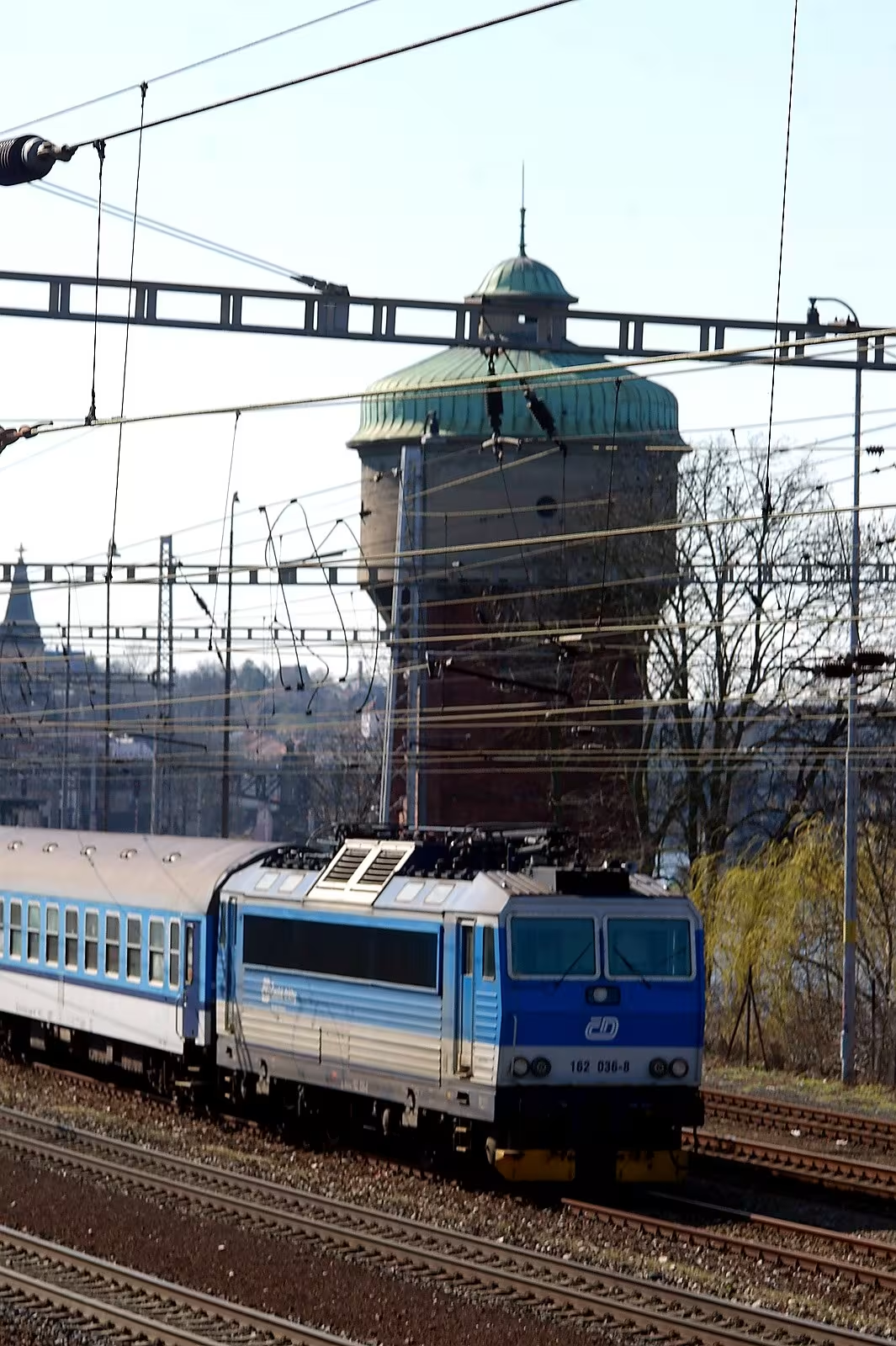
Věžový vodojem in Opava-Předměstí is a unique technical monument from the beginning of the 20th century. It is located in the area of a sewage treatment plant on the street Tesínská. Built in 1911 as the first reinforced concrete open construction of its kind in the territory of the Czech Republic today, it served to supply the dry cleaners with utility water. Today it is protected as a cultural monument and represents a rare example of industrial architecture in the spirit of Art Nouveau.
It was created in the construction of the Opava sewer system designed by engineers Eduard Bodenseher and Rudolf Nemetschke. The main sewers were built between 1907 and 1912, while the treatment plant for which the water supply was provided was completed between 1911 and 1913. The construction was carried out by Ed. Ast & Co. and was an innovative use of an open skeleton reinforced concrete structure, which was unprecedented in our territory at the time.
Architectural is a typical example of technical Art Nouveau. The square plan is supplemented by four iron-concrete pillars, which conically narrow upwards and connect the supports at three height levels. On each level there are sockets connecting steel ladders. The 18 cubic meter cylindrical storage tank is located at a height of 13 metres on a circular base, which also forms a gallery with a metal railing. The walls of the tank are plastered, separated by dark frames, and on the southwest side is placed the city emblem Opava with dates 1911 and 1913. There are also commemorative plates on the first floor with information about the year of construction and construction.
Declared by the cultural monument of 2005, today serves as a technical monument documenting the development of water management and sewage systems in the first half of the 20th century. Its uniqueness lies in the design solution and aesthetic processing, which combines functionality with artistic elements of the Art Nouveau.
Věžový vodojem is located in the area of the waste water treatment plant in the Opavy-Předměstí industrial area. Although it is not freely accessible to the public, its architecture and historical importance make it an interesting goal for lovers of technical monuments. The construction shows how the technical solution can also become a work of art.
Then and now
Drag the slider to compare how the landmark may have looked when it was built with the view today.
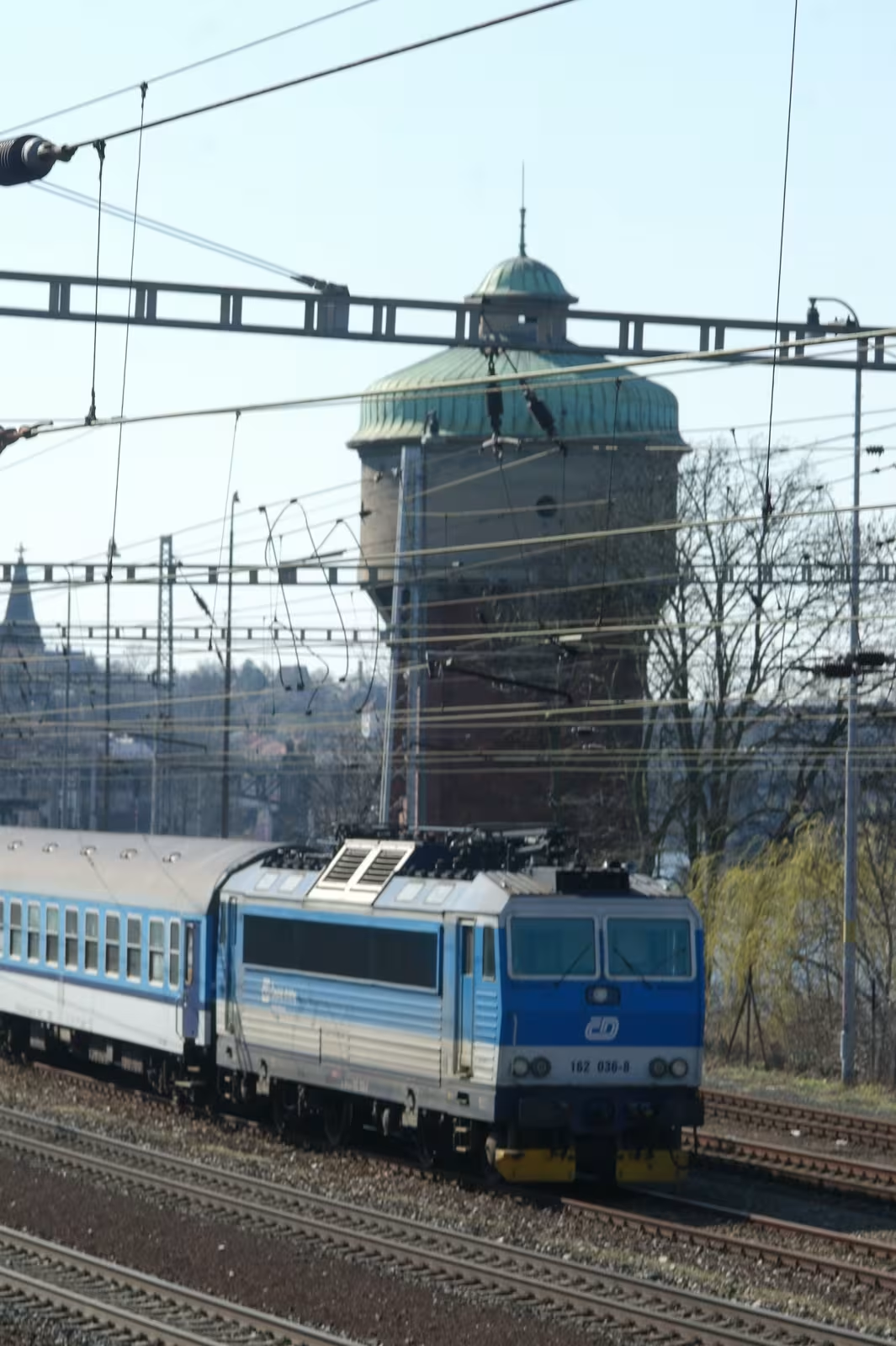
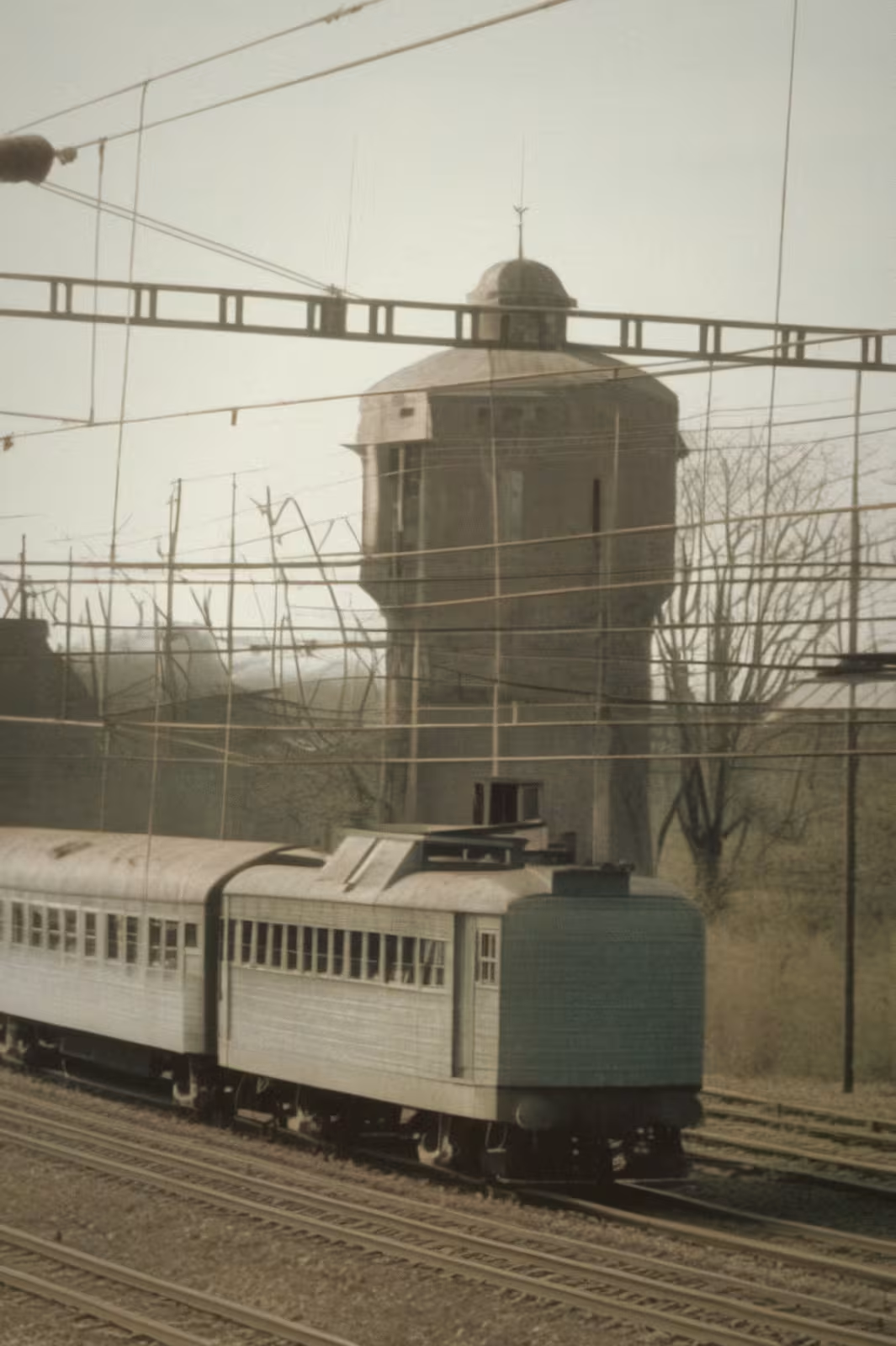
The historical appearance on the left is an AI-generated visualisation and serves as inspiration only.
Historical milestones
- 1907
- The beginning of the construction of the main sewers of the sewerage system in Opava according to the plans of the engineers Eduard Bodenseher and Rudolf Nemetschke.
- 1911
- The position of the tower water tower by Ed. Ast & Co. as the first reinforced concrete open construction of this type in the territory of today's Czech Republic.
- 1913
- Completion of the construction of a sewage treatment plant for which the water provided the supply of commercial water.
- 2005
- Declaration of construction by the Ministry of Culture of the Czech Republic for cultural monument.
Architectural development
Věžový vodojem was built in 1911 by Ed. Ast & Co. as an open skeleton reinforced concrete construction. The use of reinforced concrete was innovative at the time. The construction was designed as a functional technical work with aesthetic elements of Art Nouveau, such as plastered walls, frames and city emblem. The reinforced concrete structure was supplemented with steel elements such as ladders and stands.
Historical events
Věžový vodojem was built as part of the construction of the Opava sewer system according to the plans of engineers Bodenseher and Nemetschke. In 2005 it was declared a cultural monument of the Czech Republic. In the years 1911-1913, the entire sewage treatment plant was implemented in the area where the water used as a water supply for its operation.
Points of interest
- This is the first reinforced concrete open construction of its kind built on the territory of the Czech Republic today in 1911.
- Water was used to supply the sewage treatment plant with utility water in the construction of Opava sewage system.
- The construction is a typical example of a technical Art Nouveau where functionality is combined with artistic elements.
- On the southwest side is placed the city emblem Opava with dating 1911 and 1913.
- Declared by the cultural monument of 2005, it serves as a technical monument documenting the development of water management.
Guide
Show guide text
This text was created by artificial intelligence and has not been editorially reviewed. It may contain inaccuracies.
Welcome to Opava, Part Předměstí. Stop for a second and look ahead. You're standing in front of a construction that may seem unusual at first glance, perhaps even a little mysterious. It's a tower water. Notice his strange form. It's not a massive wall, as we're used to with the old water tanks, it's a so-called open skeleton. You see the four strong pillars that hold the whole structure? It is this aerial appearance that is the most striking feature that welcomes you here.
Now let's go back more than a hundred years together to the period when Opava was changing and modernising. It was the year of nine hundred and seven. At that time, the city faced challenges that accompanied the growth of all the great centers of that time. The issue of hygiene and the collection of impurities needed to be resolved. That is when the construction of the main sewers of the sewerage system in Opava began. This ambitious plan was prepared by two distant engineers, Eduard Bodenseher and Rudolf Nemetschke. Their vision was to create a system that would ensure the purity and health of the people of the city.
This watercourse that you are now facing was part of this great plan. A few years later, nine hundred eleven years later, it was built by Ed. And here comes the most interesting moment. Notice the material from which the tower is built. It's reinforced concrete. At that time it was a completely modern and revolutionary material. This building was the first of its kind in the territory of the Czech Republic today built in this open reinforced concrete construction. Imagine what courage and technical skill builders had to have when they tried something that no one in our countries had ever built in this form.
Now pay attention to the architecture itself and try to follow the building lines from the bottom up. Look at the base. The tower has a square plan, which makes it a stable base. See those four pillars? Watch them rise up and gradually converge together. This geometrical game creates a dynamic impression and directs your view to the top. At the end of these pillars there is a circular plate. This plate carries the tank itself, which is shaped like a cylinder. It is small, its volume is only 18 cubic metres, but it was completely sufficient for its purpose.
If you look up, you'll see the end of the tower. The tank is covered with a bell-shaped roof, which is increased by a lantern. This whole look is a typical example of technical Art Nouveau. Secese was a style that sought beauty in new forms and combined function with artistic approach. Here we can see that even a purely technical object, such as water, could have its aesthetic value. Engineers and architects did not try to hide the building, but instead showed its construction as part of beauty.
Perhaps you can think of a question as to why this water was needed at all and what it was used for. The answer will take us to nine hundred thirteen years, when the construction of a sewage treatment plant was completed. The water was not intended for drinking water for the inhabitants, but it provided supply of the dry cleaners with so-called utility water. It was therefore a purely technical tool without which the modern dry cleaners could not function properly at the time. It is fascinating to think that this elegant tower was basically the heart of a technical system that kept the city clean.
The key figures behind this work were Eduard Bodenseher and Rudolf Nemetschke. Although their names may not be everyone's home today, their work in Opava has left a trail that remains to this day. Thanks to their planning and courage to try new materials we can admire this unique piece of technical architecture today.
The interesting thing that may interest you is that this building was a real breakthrough in nine hundred and eleven years. At that time, the reinforced concrete was starting to promote itself in the industry, but using it for the open construction of the water tower was very brave. This tower thus served not only as a water supply, but also as a sorts technical experiment which proved that the new material is reliable and can also be beautiful.
For years, this building served its purpose, until it was finally recognised as an important part of our heritage. In the year two thousand and five, the Ministry of Culture of the Czech Republic officially declared it a cultural monument. This step recognised its unique character and historical importance for the whole country. It is no longer just an old technical object, but a protected piece of history that tells of ambition, progress and courage in the early twentieth century.
If you look at the whole structure for the last time, try to perceive the atmosphere of this place. Předměstí Opava thus retains the memory of the time when it was believed in the endless progress of technology and when even the ordinary water tank could be a work of art. It's a silent testimony about how the city of Opava became a modern center.
Thank you for accompanying me to this brief interpretation. I hope you're interested in this extraordinary iron concrete skeleton and that you now see more than just old concrete in this tower. I invite you to explore further the surroundings and discover other hidden corners of our city. I wish you a pleasant continuation of your journey and a beautiful day in Opava. I'll say goodbye to you and leave you to enjoy this unique memory in peace.
Tips for visitors
The best time to visit the water heater is early morning or late afternoon. In these times there are fewer visitors and you can see Art Nouveau architecture without disturbing crowd. Sunlight in the morning creates beautiful shadows on reinforced concrete structures that are ideal for photos. If you want to see the water lit, come here at night when it is illuminated and looks very impressive.
Water is calmer in these times and light is favourable to photography.
Parking is possible near the street Těšínská, where you will find plenty of vacancies. If you arrive by car, I recommend you search for parking in the vicinity of industrial buildings that are often less sought after. For a visit by public transport it is advisable to get off at a stop near the water tower. Find out the current connection in the traffic search engine.
Water is easily accessible both by car and public transport.
When visiting, wear comfortable shoes and suitable clothes because the water is located in an urban environment. In the summer months, bring plenty of water and sun protection, because the area does not have many shielded areas. If you want to take photos, bring a camera or smartphone with a good camera.
You count on comfortable clothes and possibly sun protection.
The best places for photography are the edges of an open skeleton water tower, where light is reflected on iron concrete elements. I recommend shooting from different angles, for example close to the construction details or from a distance to capture the overall impression. For best results use natural light, for example in the morning or afternoon sun.
Focus on the construction details and use natural light.
There are several interesting places around the water tower that are worth visiting. There is a sewage treatment plant nearby, which is part of the complex, and Těšínská Street, where you can explore the area. Within a few kilometres is Park Peace in Opava, which offers a quiet environment with many green areas ideal for families with children. In the park you can relax and enjoy nature.
Interesting are the sewage treatment plant and Park Peace in Opava.
For families with children, a visit to the water tower is interesting thanks to its unique architecture and the possibility to explore historical structures. Children can see the high pillars and open skeleton to the water tower, which is interesting and educational for them. In the vicinity of the water tower you can visit Park Peace where children can play and relax on green areas. I recommend that you take with you some toys or small activities that will impress the children during the visit.
Children can see the design and play in the park.
Businesses nearby
Do you run a restaurant, accommodation, shop, museum, rental, wellness or other visitor service near this monument? Show yourself directly to the people heading to it — this is how they will see you in the app and on the web:
Events nearby
Zdroj akcí: otevřená data měst a obcí ČR (Národní katalog otevřených dat) a kalendář akcí Národního památkového ústavu.
Nearby
V okolí se nachází čistírna odpadních vod, která je součástí areálu. V blízkosti se nachází ulice Těšínská a další průmyslové objekty. Přírodní prvky v okolí jsou převážně urbanizované, avšak v okruhu několika kilometrů se nachází parky a zelené plochy, jako je například Park Míru v Opavě.
Accommodation nearby
Themed route
Thematic cruise route from the village Předměstí
1. Věžový vodojem (Water Works) The main objective of our route is Věžový vodojem, which is a technical monument and a historical element of local infrastructure. Its architecture and functions are fascinating for any interest in the history of construction and water management.
2. Waste water treatment plant (industrial building) There is a waste water treatment plant near the Tower Water. It is an interesting place for those who want to know modern technologies and processes of water processing, which contributes to maintaining clean environment.
3. Těšín Street (city pass) Explore the street of Tesínská, which is an important communication in the area. It is an ideal place to know local life and architecture, which provides insight into the everyday functioning of the industrial zone.
4. Peace Park in Opava (green area) Approximately a few kilometres from the premises is the Park Peace in Opava, where you can relax the soul and explore the natural elements. It is a place ideal for short walks or relaxation on green areas.
This route offers a combination of technical, industrial and natural attractions near the village Předměstí.
Seasonal recommendations
Spring During spring, the tower water offers a unique combination of light and nature. The morning sun reflects off the water level, while the surrounding trees begin to bloom and create a green framework. The air is fresh, but still cold, and the atmosphere is calm, almost mysterious. I recommend visiting early in the morning when the area is almost empty and the light is the most beautiful. Dress up in straitjacket - spring weather can change quickly. Avoid late afternoon visits when fog may appear and visibility will be reduced.
Summer The main summer season is surrounded by hot air and sunlight, which creates toys of light on the surface of the water. The surrounding landscape is dry, but water gives the place a refreshing feeling. The best time to visit is early morning or late afternoon to avoid the biggest crowds. I recommend light, breathable clothes and a sun hat. Water may be warmer in the summer months, which increases the humidity - don't forget sunscreen and plenty of water.
Autumn Autumn brings golden and red shades of leaves around the water, which are reflected in a calm water surface. The atmosphere is calm, sometimes melancholic, and light is softer than summer. The best time to visit is in the afternoon, when the sun turns to the sunset and creates long shadows. Dress in warmer clothes because evenings can be cold. Avoid rainy days when the surroundings can become slippery and unpleasant.
Winter In winter it is surrounded by white snow and ice, which is formed on the surface. The atmosphere is quiet and mysterious, with short days and long evenings. The best time to visit is this afternoon, when the light is still sufficient, but the crowds are less. Dress up in warm, waterproof layers because the wind from the water can be cold. The opening time is shorter in the winter months, so check your operating hours in advance. Avoid visiting with strong wind, which may worsen the feeling of cold.
Visualizations and artistic views


The visualisations are generated by artificial intelligence and serve as inspiration.
Photos from the area
Real photos taken near the monument

Zdroj a licence jsou uvedeny u každého snímku.
Tips from visitors
No tips yet. Be the first!
Log in and add your tip.
Sources and literature
Faktickým podkladem tohoto textu byl článek na Wikipedii, jehož autory jsou přispěvatelé Wikipedie. Článek je dostupný pod licencí CC BY-SA 4.0.
Location on the map
Příběhy a pověsti
Legendy, pověsti a příběhy spjaté s touto památkou
Fotografie návštěvníků
Zatím žádné fotografie. Buďte první, kdo přidá fotografii z návštěvy!
Log in a přidejte svou fotografii nebo hodnoťte.
Za ověřenou návštěvu v aplikaci získáte víc bodů — poznáme podle GPS, že jste na místě.
Reviews and comments