






Kostel Nejsvětější Trojice a svatého Šimona a Judy Church
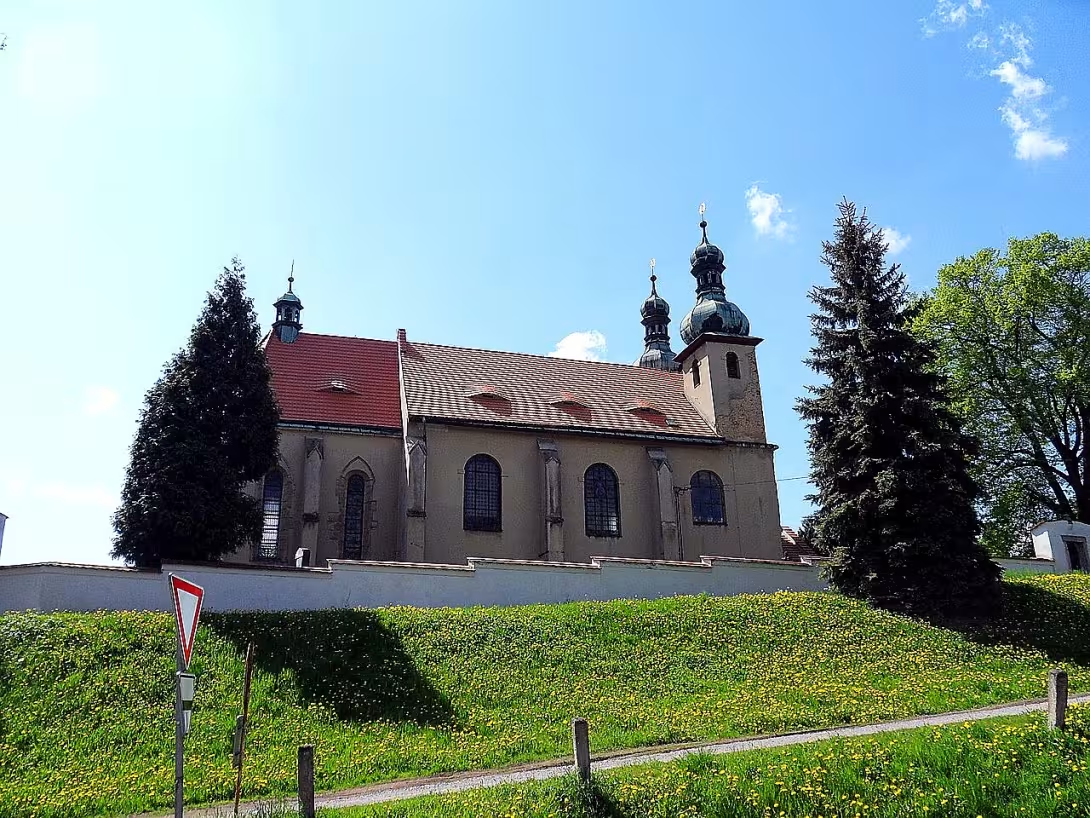
The Church of the Holy Trinity and Saints Simon and Jude in Dýšina, Plzeňský kraj, exemplifies both Gothic and Baroque architectural styles. Constructed in the early 14th century, this Roman Catholic church was first recorded in historical documents in 1328 when Bishop Přibyslav of Prague consecrated it. Its cultural significance is highlighted by its designation as a monument since 1958.
The church's origins date back to the early 14th century, during which Bohemia was part of the Holy Roman Empire. The Gothic style prevalent at that time reflected broader European trends towards verticality and light-filled ecclesiastical spaces. By 1352, it had become a parish church, as records indicate tithes were collected.
Architecturally, the church began in Early Gothic style but underwent significant transformations over the centuries. The most notable change occurred in 1696 with Baroque renovations, including tower additions. Further modifications took place in 1727 when Jakub Auguston, a builder from Plzeň, designed a cemetery wall and gate. Additional restorations followed in 1924, 1971, 1999, and 2003.
The church's interior features Baroque furnishings added progressively throughout the 18th and 19th centuries. The main altar showcases a Baroque replica of a late Gothic statue of the Virgin Mary with Child from 1723. Flanking the main nave are two side altars: one dedicated to Saint Barbara, featuring an image from 1722, and another to Saint John Nepomucene, dating back to 1710.
Today, the Church of the Holy Trinity and Saints Simon and Jude remains a significant cultural site. Its blend of Gothic and Baroque elements offers visitors a unique glimpse into architectural evolution over several centuries. The church's historical significance and artistic features make it a worthwhile destination for those interested in Bohemian history and architecture. Visitors are invited to experience this remarkable monument, which continues to symbolize cultural heritage in Dýšina.
Then and now
Drag the slider to compare how the landmark may have looked when it was built with the view today.
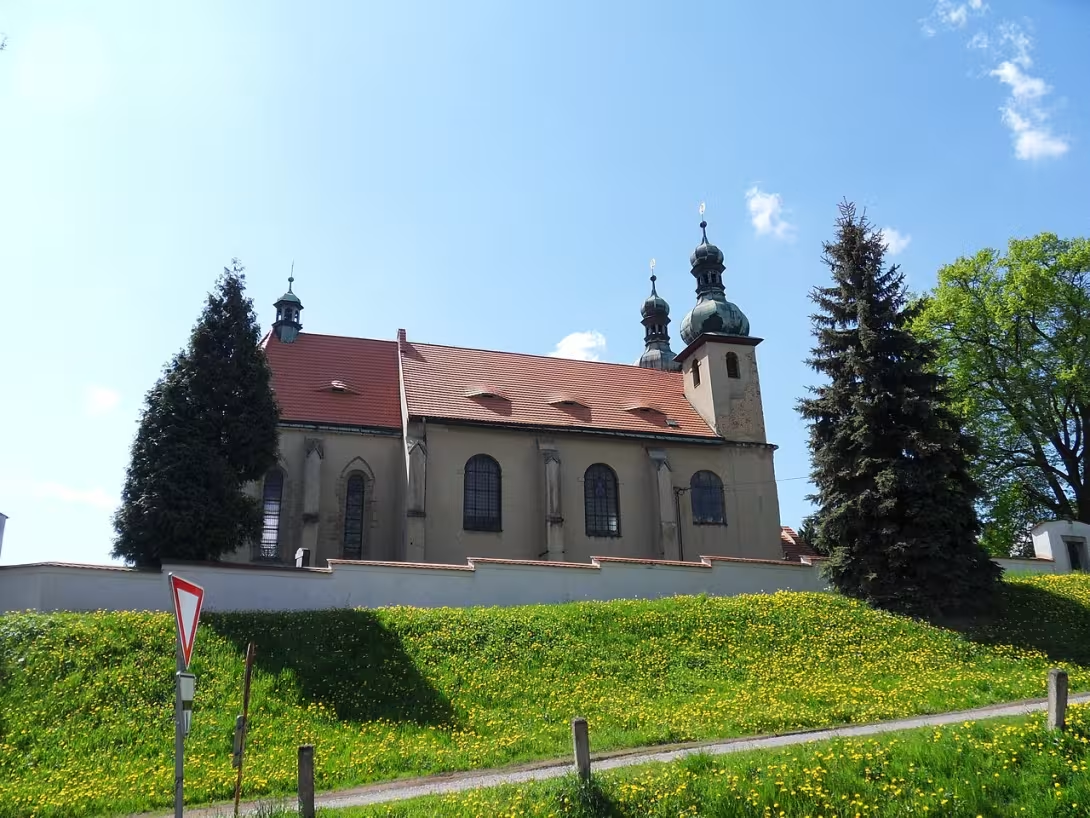

The historical appearance on the left is an AI-generated visualisation and serves as inspiration only.
Historical milestones
- 1328
- Biskup Přibyslav z Prahy konsakruje kostel.
- kolem 1330
- Kostel postaven v raném gotickém stylu.
- 1352
- Stane se farním kostelem, zaznamenávají se desátky.
- 1696
- Barokní renovace s přidáním věží.
- 1727
- Jakub Auguston navrhuje hřbitovní zeď a bránu.
- 1958
- Známkou kulturní památky.
Architectural development
Originally built in Early Gothic style during the first quarter of the 14th century, the Church of the Holy Trinity and Saints Simon and Jude has undergone several architectural transformations. The most notable change occurred in 1696 when it was renovated in Baroque style, which included adding towers to its structure. Further modifications were made in 1727 with the construction of a cemetery wall and gate designed by Jakub Auguston, a builder from Plzeň. Additional restorations took place in 1924, 1971, 1999, and 2003.
Historical events
- 1328
- The church was first mentioned in historical records when consecrated by Bishop Přibyslav of Prague.
- 1696
- The church underwent significant Baroque renovations, including the addition of towers.
Points of interest
- The church was consecrated by Bishop Přibyslav of Prague in 1328, a period when Bohemia was under the influence of the Holy Roman Empire, reflecting its political and religious significance at that time.
- In 1696, the church underwent Baroque renovations that included significant changes like tower additions, marking a transition from its original Gothic style to incorporate more elaborate Baroque elements.
- Jakub Auguston, a builder from Plzeň, was responsible for designing the cemetery wall and gate in 1727, highlighting local craftsmanship and architectural influence during the Baroque period.
- The main altar features a Baroque replica of a late Gothic statue of the Virgin Mary with Child created in 1723, showcasing how artistic styles were blended over time within the church's interior design.
- Despite numerous renovations, including those in 1924, 1971, 1999, and 2003, the church has maintained its status as a cultural monument since 1958, underscoring its enduring historical and architectural value.
Guide
This guide is narrated by a synthetic voice generated by artificial intelligence.
Show guide text
This text was created by artificial intelligence and has not been editorially reviewed. It may contain inaccuracies.
The Church of the Holy Trinity and Saints Simon and Judas in Dýšina belongs to the oldest buildings in the area around Plzen. It was built in the first quarter of the fourteenth century in the early Gothic style. It is first mentioned in the year 1328, when it was consecrated by Prague's consecrating bishop Přibyslav. By the year 1352 it was already documented as a parish church. The tithe registers noted at that time that it paid one cask of groschen. Since 1958 it has been protected as a cultural monument.
The present appearance of the church was significantly influenced by a Baroque reconstruction in 1696, when towers were added. Three decades later, in 1727, a cemetery wall with a gate was built according to a design by the Plzen builder Jakub Auguston. A staircase with a statue of the Virgin Mary Immaculate extends from it. Further modifications and repairs were carried out in 1924, 1971, 1999 and 2003.
The church has a single nave. From the Gothic building, the presbytery with a cross vault has been preserved, whose ribs have a pear-shaped profile, as well as a massive triumphal arch. An oblong main nave extends from it. On the western side it is closed by a simple, undecorated façade with two towers.
The interior furnishings are Baroque and accumulated gradually during the eighteenth and nineteenth centuries. The oldest is the main altar from 1666. In its niche stands a Baroque replica of a late Gothic statue of the Virgin Mary with the Christ Child, made in 1723. Above it is a painting of the Holy Trinity set into the altar. It was painted in 1851 by Plzen painter Jan Herzog. On either side of the altar stand copies of late Gothic statues of Saint Simon and Saint Judas Thaddaeus. To the right of the altar is a wooden Baroque pulpit, also from 1723.
The main nave is complemented by two side altars. The left one bears a painting of Saint Barbara from 1722 and above it a painting of the Holy Family. On the right is a painting of Saint John of Nepomuk from 1710 and in the upper part a relief of the Madonna.
A stone baptismal font dates from 1669. The organ on the gallery is much younger, having been built in the nineteen thirties.
Tips for visitors
The best time to visit the Church of the Holy Trinity and Saints Simon and Jude is during late spring or early autumn. During these seasons, the weather is typically mild, allowing for a comfortable exploration of both the church's interior and its surrounding areas. Additionally, visiting outside of peak tourist season means fewer crowds, providing a more serene experience as you admire the Early Gothic architecture.
When planning your visit, consider bringing comfortable walking shoes and weather-appropriate clothing, as you may want to explore the church grounds or nearby areas on foot. A small backpack with water, snacks, and perhaps a camera is also advisable, especially if you plan to spend several hours at the site. For those interested in photography, carrying a lens hood can help manage reflections from windows.
Photography enthusiasts will find that the best light for capturing the church's intricate details occurs during the golden hour—just after sunrise or before sunset. The soft lighting enhances the textures of the stonework and stained glass windows, providing stunning visual effects.
For families with children visiting the Church of the Holy Trinity and Saints Simon and Jude, consider planning a half-day trip that includes nearby attractions within 30 minutes' travel. The area offers several family-friendly sites such as local parks or small museums where children can engage in interactive exhibits. Bringing along coloring books or activity sheets related to church history might also help keep younger visitors entertained during the visit.
Frequently asked questions
Can the monument be visited?
Religious buildings are usually open mainly during services; at other times a visit is normally arranged with the parish or the operator. We have not verified specific times.
Where is the monument?
Location: Dýšina, Plzeňský kraj. The map on this page shows the exact spot.
Why is the monument protected?
It is listed in the Central List of Cultural Monuments of the Czech Republic as a cultural monument (register no. 22534/4-1214).
Businesses nearby
Do you run a restaurant, accommodation, shop, museum, rental, wellness or other visitor service near this monument? Show yourself directly to the people heading to it — this is how they will see you in the app and on the web:
Events nearby

Zdroj akcí: otevřená data měst a obcí ČR (Národní katalog otevřených dat) a kalendář akcí Národního památkového ústavu.
Accommodation nearby
Trips and activities nearby
Guided tours, tickets and activities nearby from GetYourGuide
Affiliate link: if you buy from the partner, we may receive a commission. The price for you does not change.
Search tours and activities →Themed route
Tematická výletní trasa: Kostel Nejsvětější Trojice a svatého Šimona a Judy
1. Kostel Nejsvětější Trojice a svatého Šimona a Judy
Typ: Náboženská památka
Proč stojí za návštěvu: Tento kostel je historickým centrem obce Dýšina, nabízejícím pohled na architektonickou krásu a duchovní atmosféru. Jeho vnitřek obsahuje umělecké prvky z různých ér, což ho činí zajímavým pro milovníky historie a umění.
2. Nádvoří kostela
Typ: Historický areál
Proč stojí za návštěvu: Nádvoří poskytuje klidnou zastávkovou zónu, kde můžete užít si panoramatického pohledu na okolní krajinu. Je to ideální místo pro odpočinek a reflektaci po návštěvě kostela.
3. Věž kostela
Typ: Architektonický prvek
Proč stojí za návštěvu: Vystoupením na věž můžete získat úchvatný pohled na obec Dýšina a okolní krajinné prvky. Je to skvělý způsob, jak poznat historické i současné prostředí z jedinečné perspektivy.
4. Park u kostela
Typ: Zelená zóna
Proč stojí za návštěvu: Park nabízí klidnou procházku v přírodním prostředí, kde můžete si užít pohledu na kvetoucí keře a stromy. Je to ideální místo pro relaxaci a krátké procházky po návštěvě kostela.
Tato trasa nabízí komplexní zážitek o historickém i přírodním bohatství obce Dýšina, zaměřený na hlavní památku a její bezprostřední okolí.
Seasonal recommendations
Spring: Visiting the Church of the Holy Trinity and Saints Simon and Jude during spring offers a unique experience as nature awakens around Dýšina. The blooming flowers and fresh greenery provide a picturesque backdrop, enhancing the serene atmosphere of this historic site. As daylight increases, the church is beautifully illuminated by natural light, highlighting its architectural details. Visitors should be prepared for occasional showers, so wearing layers and carrying an umbrella or raincoat is advisable. This season tends to attract fewer tourists, making it an ideal time to explore without large crowds.
Summer: Summer at the Church of the Holy Trinity and Saints Simon and Jude is marked by vibrant natural beauty with lush landscapes surrounding the site in full bloom. The warm weather invites visitors to enjoy outdoor activities nearby before or after their visit. However, this is also the peak tourist season, so arriving early can help avoid crowds. Comfortable walking shoes and light clothing are recommended due to the heat, along with sunscreen and a hat for sun protection. Visiting during late afternoon may offer cooler temperatures and softer lighting, enhancing your experience.
Autumn: Autumn transforms the area around the Church of the Holy Trinity and Saints Simon and Jude into a stunning display of warm colors as leaves change from green to shades of red, orange, and yellow. The crisp air and mellow sunlight create a tranquil atmosphere perfect for photography enthusiasts. This season sees moderate tourist activity, allowing for a more relaxed visit. Visitors should dress in layers to accommodate the cooler temperatures and bring along a light jacket or sweater for comfort as they explore.
Winter: Winter offers a unique charm at the Church of the Holy Trinity and Saints Simon and Jude with snow-covered landscapes creating a serene, almost ethereal atmosphere. The church is often illuminated by artificial lighting, casting a warm glow against the snowy backdrop. This season typically sees fewer visitors, providing an intimate experience. It's important to dress warmly in layers, including thermal wear, gloves, and a hat, as temperatures can be quite low.
Visualizations and artistic views


The visualisations are generated by artificial intelligence and serve as inspiration.
Photos from the area
Real photos taken near the monument


Zdroj a licence jsou uvedeny u každého snímku.
Tips from visitors
No tips yet. Be the first!
Log in and add your tip.
Sources and literature
Photos: Jik jik / CC BY-SA 3.0 — Wikimedia Commons. The author and licence also appear when you hover over the image.
Faktickým podkladem tohoto textu byl článek na Wikipedii, jehož autory jsou přispěvatelé Wikipedie. Článek je dostupný pod licencí CC BY-SA 4.0.
Location on the map


Příběhy a pověsti
Legendy, pověsti a příběhy spjaté s touto památkou

Příběh: Kostel Nejsvětější Trojice a svatého Šimona a Judy
Bylo to v pondělí ráno, kdy Matěj z Dýšiny, jehož ruce se třásly na nesouladných strunami harfy, stál u oltáře kostela Nejsvětější Trojice a svatého Šimona a…
Číst příběh
Pověst: Kostel Nejsvětější Trojice a svatého Šimona a Judy
Staří obyvatelé Dýšiny vyprávějí, že kostel Nejsvětější Trojice nestál vždy tam, kde jej dnes vidíme. Prý na místě prvotního záměru, kousek níže u prameniště…
Číst příběhFotografie návštěvníků
Zatím žádné fotografie. Buďte první, kdo přidá fotografii z návštěvy!
Log in a přidejte svou fotografii nebo hodnoťte.
Za ověřenou návštěvu v aplikaci získáte víc bodů — poznáme podle GPS, že jste na místě.
Reviews and comments