






Kostel Nejsvětější Trojice (Žďár nad Sázavou 1) Church
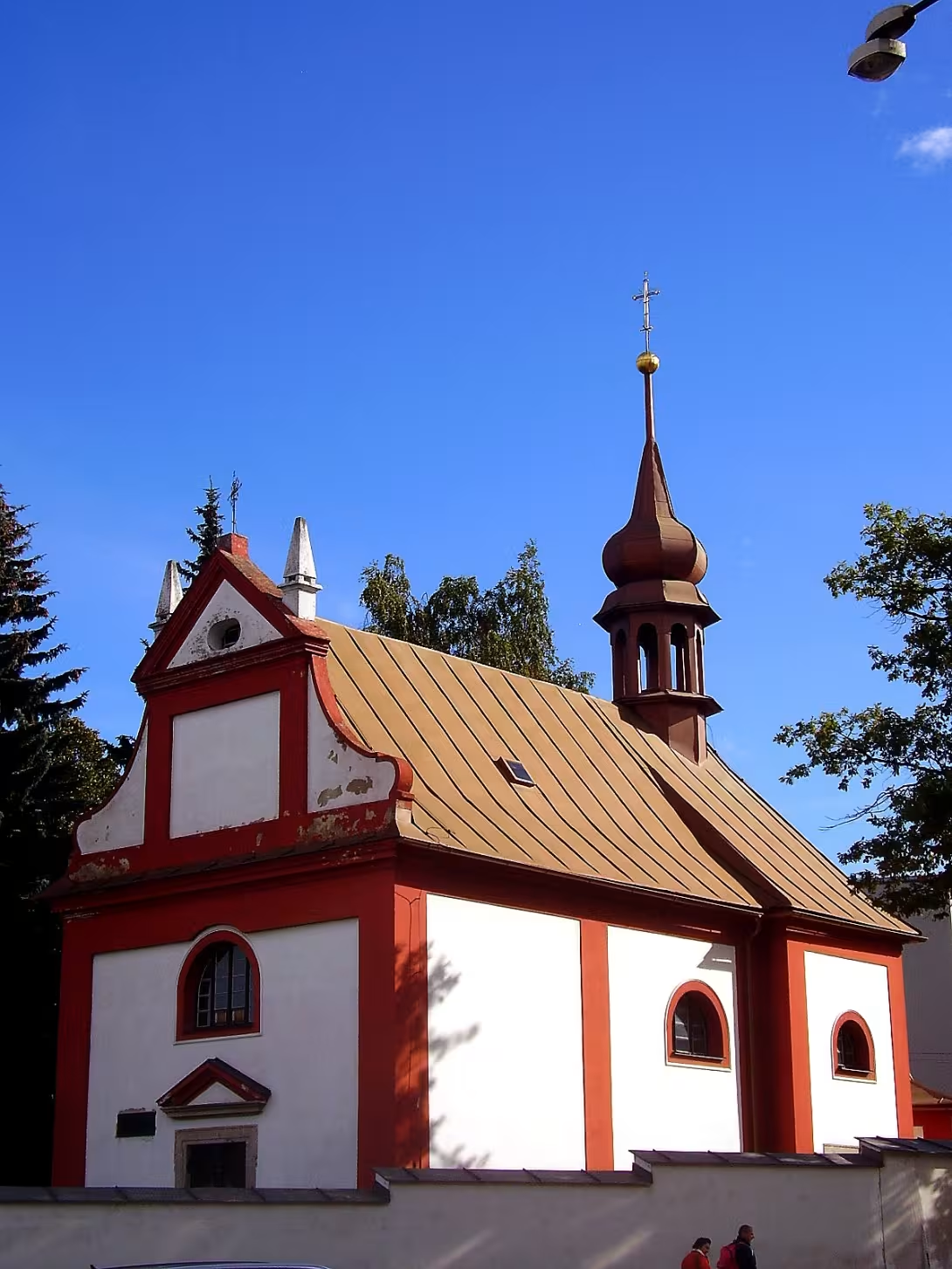
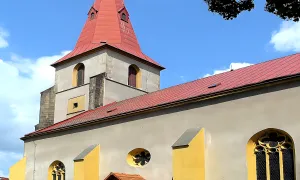
The Church of the Holy Trinity in Žďár nad Sázavou is a cemetery church situated on the eastern edge of the town's center. Built in the late 17th century in a simple, late Renaissance style, it originally served as a cemetery chapel. The church is a protected cultural monument of the Czech Republic.
The Church of the Holy Trinity was constructed in the late 17th century, a period of significant cultural and architectural development in Bohemia. The Counter-Reformation, emphasizing Catholicism in the region, influenced the church's design. The church's original purpose as a cemetery chapel reflects the need for a place of worship and burial for the local community.
The church's exterior is austere, with a sacristy featuring a flat, unbroken façade framed by pilasters and topped with a characteristic profiled cornice. The roof is a spire. The sacristy was added by Jan Blažej Santini-Aichel around 1715. Although his authorship is not documented, it can be inferred from his work at the Žďár Abbey. The sacristy's design is characteristic of Santini's work, with a unique spherical triangular window and a roof with a typical Santini-esque curvature.
The Church of the Holy Trinity is a notable example of Jan Blažej Santini-Aichel's work, showcasing his distinctive design approach and architectural style. The sacristy's spherical triangular window and curved roof are distinctive features of his style. The church's simple, late Renaissance design reflects the cultural and architectural trends of the time.
The Church of the Holy Trinity is a protected cultural monument of the Czech Republic and serves as a place of worship for the local community. It is a significant part of the town's historic center, surrounded by other historic buildings. The church is open to visitors, offering a glimpse into the region's rich cultural heritage.
The Church of the Holy Trinity is a must-visit destination for those interested in history, architecture, and culture. Its unique design and significance make it a valuable part of the region's cultural landscape. Visitors can explore the church and its surroundings, gaining a deeper understanding of the region's rich history and cultural heritage.
Historical milestones
- circa 1350
- Construction of the church
- 1715
- Jan Blažej Santini-Aichel adds a sacristy
- 17th century
- The church was built in the late Renaissance style
- 17th century
- The church served as a cemetery chapel
- 19th century
- The church was registered as a cultural monument of the Czech Republic
Architectural development
The church was built in the late 17th century in a simple, late Renaissance style. The sacristy was added by Jan Blažej Santini-Aichel around 1715. The sacristy's design is characteristic of Santini's work, with a unique spherical triangular window and a roof with a typical Santini-esque curvature.
Historical events
- 1715
- Jan Blažej Santini-Aichel added a sacristy to the church
Guide
This guide is narrated by a synthetic voice generated by artificial intelligence.
Show guide text
This text was created by artificial intelligence and has not been editorially reviewed. It may contain inaccuracies.
Welcome to one of the most precious historical landmarks in Žďár nad Sázavou - the Church of the Holy Trinity. You stand before a unique example of late Renaissance architecture, built in the 17th century. The church is surrounded by idyllic countryside and its simple yet elegant façade invites you to explore further.
Let's move through time and see how this church came into being. The Church of the Holy Trinity has its roots in the 14th century when a chapel originally stood here. During the 17th century, the chapel was rebuilt in the late Renaissance style characterized by simplicity and elegance. The church served as a cemetery chapel providing space for services and burials for local residents.
Notice how simple yet striking the façade of the church is. Observe the detailed work on the stone pillars and the decorated stonework ornamentation. The church is surrounded by idyllic countryside, and its atmosphere is calm and soothing.
Now turn your attention to the sacristy, added around 1715 by Jan Blažej Santini-Aichel. The sacristy is a characteristic element of the church, and its design is closely associated with the architectural style of late Renaissance.
The Church of the Holy Trinity is full of historical stories and curiosities. One of the most interesting facts is that the church was originally a cemetery chapel serving local residents as a place for services and burials. The church also hosted many important events in the history of Žďár nad Sázavou.
Today, the Church of the Holy Trinity is protected as a cultural monument of the Czech Republic and is considered one of the most precious historical landmarks in the region. It represents a unique example of late Renaissance architecture, and its simple yet elegant façade is full of details and historical curiosities.
Thank you for your attention, and I hope you enjoyed visiting the Church of the Holy Trinity. I hope you liked what you saw and heard. Enjoy your further walk around Žďár nad Sázavou!
Businesses nearby
Do you run a restaurant, accommodation, shop, museum, rental, wellness or other visitor service near this monument? Show yourself directly to the people heading to it — this is how they will see you in the app and on the web:
Events nearby
Zdroj akcí: otevřená data měst a obcí ČR (Národní katalog otevřených dat) a kalendář akcí Národního památkového ústavu.
Nearby
The church is located in the center of Žďár nad Sázavou, surrounded by the town's historic buildings.
Accommodation nearby
Themed route
Žďár nad Sázavou
1. Kostel Nejsvětější Trojice (Žďár nad Sázavou 1): This Baroque church is a UNESCO World Heritage Site and a masterpiece of architect Jan Blažej Santini-Aichel. It's a must-visit for its unique architecture and stunning views of the surrounding landscape.
2. Žďár nad Sázavou Town Square: The town square is surrounded by historic buildings, including the town hall, the church of St. James, and several Baroque houses. It's a great place to soak up the atmosphere and enjoy the local architecture.
3. Santini's Fountain: This beautiful Baroque fountain is located in the town square and is a great example of the town's rich history and culture.
4. Žďár nad Sázavou Castle: This castle is a 13th-century fortress that has been beautifully restored and now serves as a museum and a concert venue. It's a great place to learn about the town's history and enjoy some culture.
5. St. James' Church: This beautiful Gothic church is located in the heart of the town and features stunning stained-glass windows and a peaceful atmosphere.
Seasonal recommendations
Jaro
In the spring season, the Church of the Holy Trinity is surrounded by nature awakening from its winter slumber. The atmosphere is calm and serene, making it ideal for exploring this landmark. We recommend visiting the church in late spring when the weather is sunny and warm. The best time to go is in the afternoon, when the sun shines on the church, highlighting its architecture beautifully.
Summer
In the main summer season, the Church of the Holy Trinity attracts many tourists, so it's a good idea to arrive early to avoid large crowds. The lighting inside the church is excellent, but we recommend bringing sunglasses for protection against intense sunlight. The atmosphere is relaxed and serene, perfect for exploring this landmark. The best time to visit is in the morning or early afternoon when the church is still relatively empty.
Autumn
In autumn, the Church of the Holy Trinity is surrounded by beautiful fall foliage offering stunning color displays from tree leaves. The atmosphere is calm and serene, ideal for exploring this landmark. We recommend visiting the church in late autumn when the weather is sunny and warm. The best time to go is in the afternoon, when the sun shines on the church, making its architecture look truly magnificent.
Winter
In winter, the Church of the Holy Trinity is surrounded by white snow, giving it a unique atmosphere. The atmosphere is calm and serene, perfect for exploring this landmark. We recommend visiting the church in late winter when the weather is sunny and warm. The best time to go is in the morning when the church is still relatively empty, and opening hours are shorter. Don't forget to bring warm clothing to protect against the cold.
Visualizations and artistic views


The visualisations are generated by artificial intelligence and serve as inspiration.
Photos from the area
Real photos taken near the monument

Zdroj a licence jsou uvedeny u každého snímku.
Tips from visitors
No tips yet. Be the first!
Log in and add your tip.
Sources and literature
Fotografie: Isolda11 / CC BY-SA 3.0 — Wikimedia Commons. The author and licence also appear when you hover over the image.
Faktickým podkladem tohoto textu byl článek na Wikipedii, jehož autory jsou přispěvatelé Wikipedie. Článek je dostupný pod licencí CC BY-SA 4.0.
Location on the map


Příběhy a pověsti
Legendy, pověsti a příběhy spjaté s touto památkou
Příběh: Kostel Nejsvětější Trojice (Žďár nad Sázavou 1)
Bylo to v pondělí ráno, kdy Janek Černý zjistil, že noci v Žďáru se proměnily ve svůj nejtíživější souboj. Přestože noc byla stále a téměř hmatatelná klidem,…
Číst příběh
Pověst: Kostel Nejsvětější Trojice (Žďár nad Sázavou 1)
Podle místní pověsti přijel Jan Blažej Santini-Aichel do Žďáru nad Sázavou za šedého listopadového svítání, kdy mlha ležela hustá jako vlna nad mokřinami za …
Číst příběhFotografie návštěvníků
Zatím žádné fotografie. Buďte první, kdo přidá fotografii z návštěvy!
Přihlaste se a přidejte svou fotografii nebo hodnoťte.
Za ověřenou návštěvu v aplikaci získáte víc bodů — poznáme podle GPS, že jste na místě.
Reviews and comments