






Kostel Panny Marie Bolestné (Mutná) Church
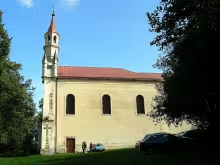
Kostel Panny Marie Bolestné, also known as Montserrat, is a Roman Catholic pilgrimage church situated on a wooded hill near Mutná in the Jindřichův Hradec district of Jihočeský kraj, Czech Republic. Originally built in 1651 and expanded by 1660 due to increasing pilgrim numbers, it derives its name from the famous Catalan site Montserrat. This church is significant for its historical role as a spiritual center for German-speaking residents and its architectural transformation into Neo-Romanesque style after reconstruction between 1858 and 1865.
The origins of Kostel Panny Marie Bolestné trace back to the aftermath of the Thirty Years' War, a time marked by religious and political turmoil in Europe. In 1651, Bartoloměj Tannzoll – Zill, a nobleman from Bolíkové, initiated the construction of a chapel following his pilgrimage to Montserrat in Catalonia. Inspired by his experience and gratitude for recovery from battle injuries, he commissioned a replica of La Moreneta, or the Black Madonna, known as Mare de Déu de Montserrat, which became central to the site's spiritual significance.
The church began modestly with its original chapel form in 1651. By 1660, it had expanded due to the growing influx of pilgrims. In 1712, the structure was transformed into a larger church but was demolished in 1785 under Joseph II's reforms. The significant reconstruction from 1858 to 1865 introduced Neo-Romanesque elements, guided by Michael Angelo Picchioni, who then owned the estate and Český Rudolec castle. This period marked a revival of the church as a pilgrimage site, with its main altar featuring an original polychromed wooden statue of Our Lady of Montserrat from Cizkrajov's parish church.
Throughout its history, Kostel Panny Marie Bolestné has experienced various changes in ownership and administration. Initially built by Bartoloměj Tannzoll – Zill, the site later came under Michael Angelo Picchioni during its reconstruction phase. The church served as a vital spiritual hub for German-speaking communities until political shifts led to a decline in pilgrimages following their displacement.
Key events include its initial construction in 1651 and subsequent expansion by 1660, reflecting its growing importance as a pilgrimage site. In 1712, it was rebuilt into a church but demolished in 1785 on Joseph II's orders. The reconstruction from 1858 to 1865 under Picchioni's guidance introduced Neo-Romanesque architectural elements and reestablished its status as a significant pilgrimage destination.
Today, Kostel Panny Marie Bolestné is open primarily during masses and pilgrimages, with the main season running from May to October on the third Saturday of each month. Located in a forested area 1 km west of Mutná's center, it remains an attractive site for tourists drawn by its natural beauty and historical significance. The church continues as a cultural monument protected by the Czech Republic, offering visitors insight into its storied past and architectural evolution.
Kostel Panny Marie Bolestné stands as a testament to the enduring spiritual and cultural heritage of the region. Its rich history and architectural transformation make it a compelling destination for those interested in exploring the intersections of faith, art, and history. Visitors are invited to experience this serene pilgrimage site, where echoes of past pilgrimages resonate amidst its Neo-Romanesque splendor.
Then and now
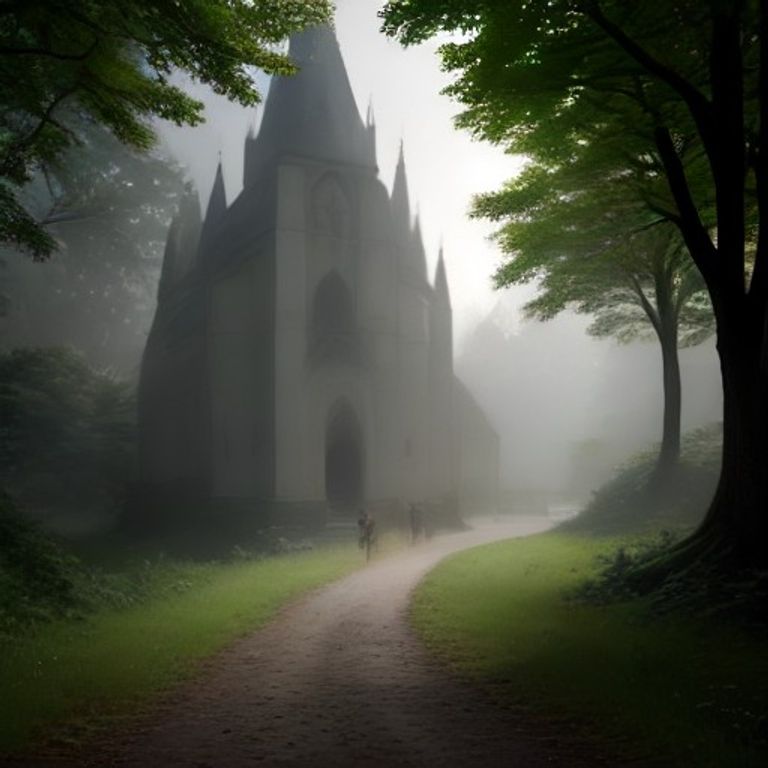
Drag the slider to compare how the landmark may have looked when it was built with the view today.
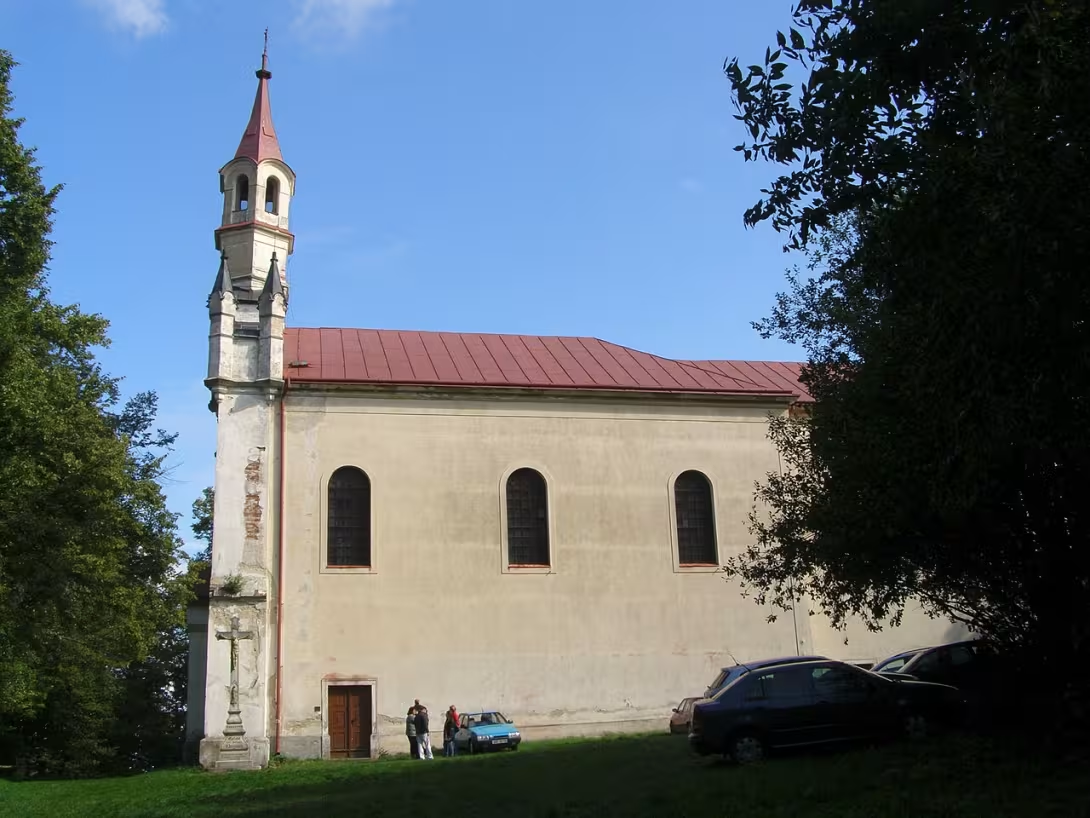
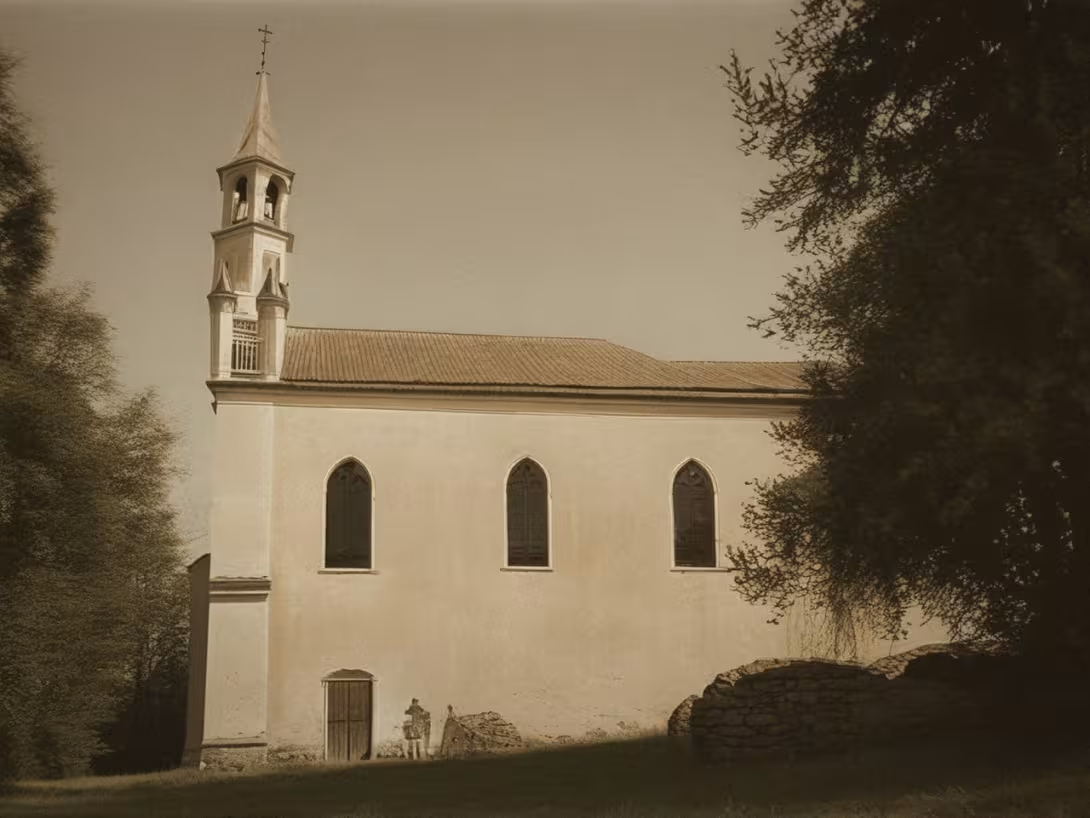
The historical appearance on the left is an AI-generated visualisation and serves as inspiration only.
Historical milestones
- 1651
- Original chapel built by Bartoloměj Tannzoll – Zill.
- 1660
- Chapel expanded due to increasing pilgrim numbers.
- 1712
- Chapel rebuilt into a church.
- 1785
- Church demolished on order of Joseph II.
- 1858
- Reconstruction began under Michael Angelo Picchioni.
- 1865
- Reconstruction completed with Neo-Romanesque style.
Architectural development
The church began as a small chapel in 1651 and was expanded by 1660. It was rebuilt into a larger church in 1712 but demolished in 1785 under Joseph II's reforms. Reconstruction from 1858 to 1865 introduced Neo-Romanesque elements, with the main altar featuring an original polychromed wooden statue of Our Lady of Montserrat.
Historical events
1651: Original chapel built by Bartoloměj Tannzoll – Zill after his pilgrimage to Montserrat.
1712: Chapel expanded into a church.
1785: Church demolished on order of Joseph II.
1858-1865: Reconstruction completed, adopting Neo-Romanesque style.
Points of interest
- The church's name is derived from the famous Catalan pilgrimage site Montserrat, reflecting a cultural and spiritual connection between the two locations despite their geographical distance.
- An intriguing aspect of the church's history is its repeated cycles of construction and demolition: initially built in 1651, expanded by 1660, rebuilt into a larger structure in 1712, and then demolished in 1785 due to Joseph II’s reforms before being reconstructed between 1858 and 1865.
Guide
Show guide text
This text was created by artificial intelligence and has not been editorially reviewed. It may contain inaccuracies.
Welcome! You are standing before a historical monument that is truly a gem of the South Bohemian landscape. The Church of Our Lady of Sorrows, also known as Montserrat, is located on a wooded hill near the village of Mutná. It is a Romanesque pilgrimage church inspired by the famous Catalan pilgrimage site Montserrat.
Let's step back in time and discover how the church developed. The first chapel was built in 1651 and originally founded by Bartoloměj Tannzoller - Zill. However, it soon became too small for the growing number of pilgrims, so it was expanded in 1660. In 1712, the chapel was rebuilt into a church and thus became an important pilgrimage site.
However, in 1785, the church was demolished by decree of Emperor Joseph II, leaving only ruins behind. Yet the church was not forgotten, and reconstruction began in 1858 under the direction of Michael Angelo Picchioni. The reconstruction was completed in 1865 in a Neo-Romanesque style.
Now stop in front of the church and take a look at its façade. Notice how it is built into the hill to be visible from afar. The church, constructed from stone, has a unique atmosphere that invites you to deepen your spiritual reflection.
Also notice that the church is named after the Catalan pilgrimage site Montserrat. This suggests cultural and spiritual connections between this place and the Catalan pilgrimage destination. It's truly a fascinating fact that leads us to consider the spiritual connection among people from different parts of Europe.
This church also stands out for its interesting history, having been destroyed and rebuilt multiple times. It is indeed a unique and captivating aspect that leads us to reflect on how churches have evolved over centuries.
Now let's return to the present and invite you to enjoy this church. Take in its beautiful architectural details and explore the interior space. Now it’s time for farewell. We hope the Church of Our Lady of Sorrows in Mutná has made an impression on you and that you enjoyed it. Enjoy further exploration of this beautiful monument!
Businesses nearby
Do you run a restaurant, accommodation, shop, museum, rental, wellness or other visitor service near this monument? Show yourself directly to the people heading to it — this is how they will see you in the app and on the web:
Nearby
Located in a forest on a hill near Mutná, the church is close to Slavonic and Cizkrajov. The area is popular for tourism due to its natural beauty.
Accommodation nearby
Trips and activities nearby
Guided tours, tickets and activities nearby from GetYourGuide
Affiliate link: if you buy from the partner, we may receive a commission. The price for you does not change.
Search tours and activities →Themed route
Mutná Tour
1. Kostel Panny Marie Bolestné (Mutná) A beautiful church located in a forest on a hill near Mutná, the church is a must-visit for its stunning architecture and peaceful atmosphere.
2. Slavonic A charming village nearby, known for its traditional architecture and picturesque streets. Take a stroll through the village and enjoy the local atmosphere.
3. Cizkrajov A nearby village with a rich history and culture. Visit the local church and explore the village's traditional architecture.
Seasonal recommendations
Jaro
In the spring season, St. Mary of Sorrows Church is surrounded by flower beds and greenery, creating a tranquil and idyllic atmosphere. The lighting is softer and warmer, providing a pleasant environment for visiting. We recommend visiting the church in the spring when it's open until 5:00 PM to avoid tourist crowds. It's also advisable to bring warm clothing as it can still be chilly during this season.
Léto
The main summer season peaks in July and August, when St. Mary of Sorrows Church is full of tourists. We recommend visiting the church early before it gets crowded to avoid crowds and enjoy a peaceful tour. The lighting is bright and clear, allowing you to see the interior details of the church. It's also wise to bring an umbrella and water as summer weather can often be unpredictable.
Podzim
In autumn, St. Mary of Sorrows Church is surrounded by the colors of fall nature, creating a pleasant and calm atmosphere. The lighting is softer and warmer, providing a cozy environment for visiting. We recommend visiting the church in autumn when it's open until 4:00 PM to avoid tourist crowds. It's also advisable to bring warm clothing as it can still be chilly during this season.
Zima
In winter, St. Mary of Sorrows Church is illuminated by warm and bright lights, creating a cozy environment for visiting. We recommend visiting the church in winter when it's open until 3:00 PM to avoid tourist crowds. It's also advisable to bring warm clothing and boots as the ground can be icy and wet during this season.
Visualizations and artistic views


Vizualizace jsou generovány umělou inteligencí a slouží jako inspirace.
Photos from the area
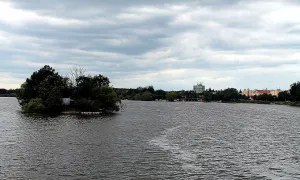
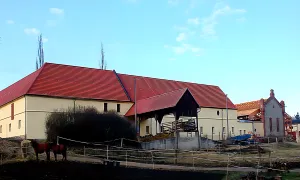
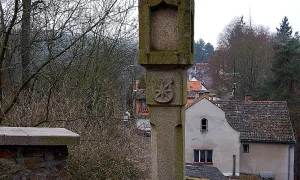
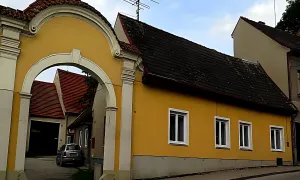
Real photos taken near the monument


Zdroj a licence jsou uvedeny u každého snímku.
Tips from visitors
No tips yet. Be the first!
Log in and add your tip.
Sources and literature
Fotografie: Daniel Baránek / CC BY-SA 3.0 — Wikimedia Commons. Autor a licence se zobrazí i po najetí na snímek.
Faktickým podkladem tohoto textu byl článek na Wikipedii, jehož autory jsou přispěvatelé Wikipedie. Článek je dostupný pod licencí CC BY-SA 4.0.
Location on the map
Příběhy a pověsti
Legendy, pověsti a příběhy spjaté s touto památkou
Fotografie návštěvníků
Zatím žádné fotografie. Buďte první, kdo přidá fotografii z návštěvy!
Přihlaste se a přidejte svou fotografii nebo hodnoťte.
Za ověřenou návštěvu v aplikaci získáte víc bodů — poznáme podle GPS, že jste na místě.
Reviews and comments