






Kostel Panny Marie Bolestné (Stachy) Church
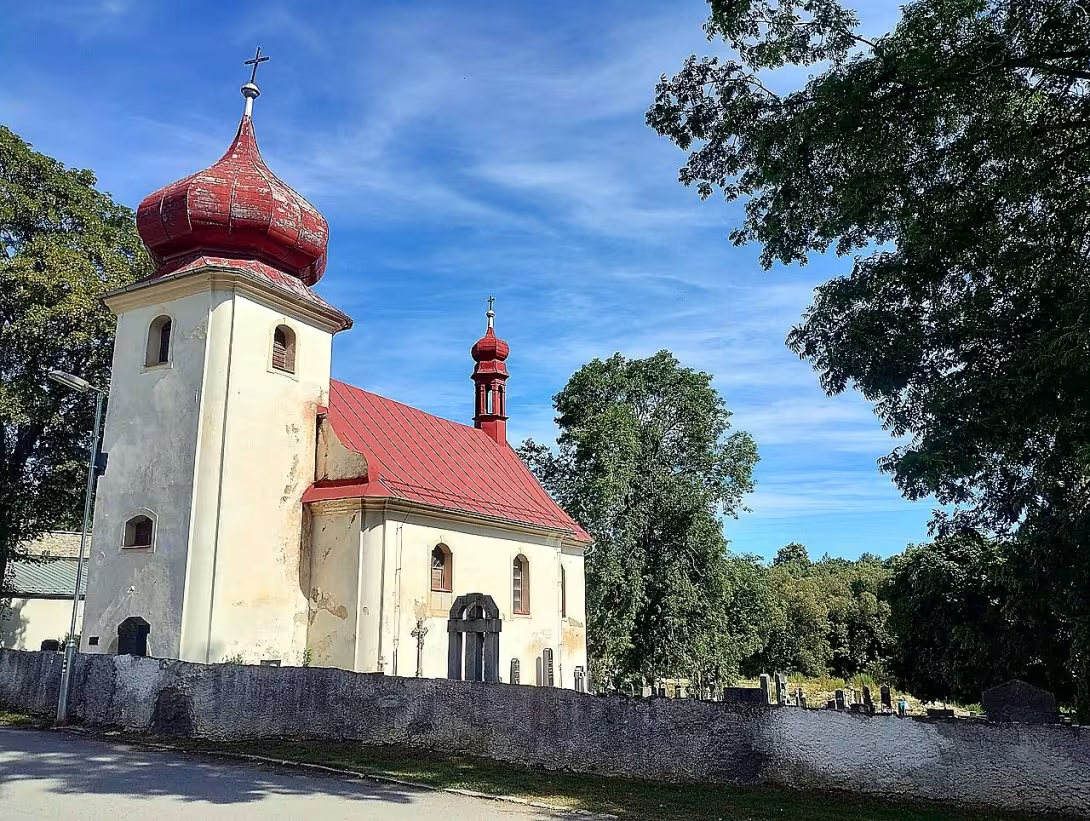
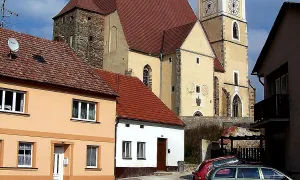
The Church of Our Lady of Sorrows in Stachy is a late Baroque church built in 1781. Originally serving as a parish church for the local community, it stands out due to its architectural style and cultural importance. Located in the village of Stachy within the Prachatice District of Jihočeský kraj, this historical monument met the spiritual needs of residents who previously relied on a distant church in Zdíkovci.
As the population grew, a new parish church dedicated to the Visitation of the Virgin Mary was completed in 1842. This led to the original church's transformation into a cemetery chapel. Today, it is notable for its preserved interior furnishings and distinctive architectural features.
The Church of Our Lady of Sorrows emerged during Habsburg rule over Bohemia, an era influenced by Enlightenment ideas that encouraged religious and educational reforms. These changes facilitated the construction of new churches across the region to accommodate growing populations and evolving spiritual needs. The church in Stachy provided a local place of worship for residents who previously traveled significant distances for their religious services.
Architecturally, it exemplifies late Baroque style with a single-nave structure and a barrel-vaulted presbytery. Its design includes imitated ribbed vaulting with pentagonal recesses and stucco panels, enhancing its aesthetic appeal. Despite falling into disrepair after World War II, the church underwent restoration at the end of the 20th century, preserving much of its original interior furnishings.
Throughout its history, the church has witnessed several key events. Initially serving as a parish church, it transitioned to a cemetery chapel following the construction of a new nearby parish church in 1842. The surrounding cemetery features interesting tombstones and iron crosses, including those of notable individuals such as Josef Klostermann, a local lumberjack known as Rankl Sepp, and the last royal castle's Stašský mayor. A striking feature is an elaborately decorated iron cross standing before the cemetery.
Today, the Church of Our Lady of Sorrows stands within an enclosed cemetery area, featuring expansions to the south and east that are not part of the protected site. Although minimally used in contemporary times, its historical and architectural significance makes it a worthwhile visit for those interested in regional history and Baroque architecture. Visitors can appreciate the church's preserved features and learn about the community's past through stories embedded within its walls.
The Church of Our Lady of Sorrows offers a unique glimpse into the religious and cultural evolution of Stachy, making it an invaluable site for both historical enthusiasts and casual visitors alike. Its enduring presence serves as a testament to the region's rich heritage, inviting all who are curious about its past to explore and reflect on its significance.
Then and now
Drag the slider to compare how the landmark may have looked when it was built with the view today.
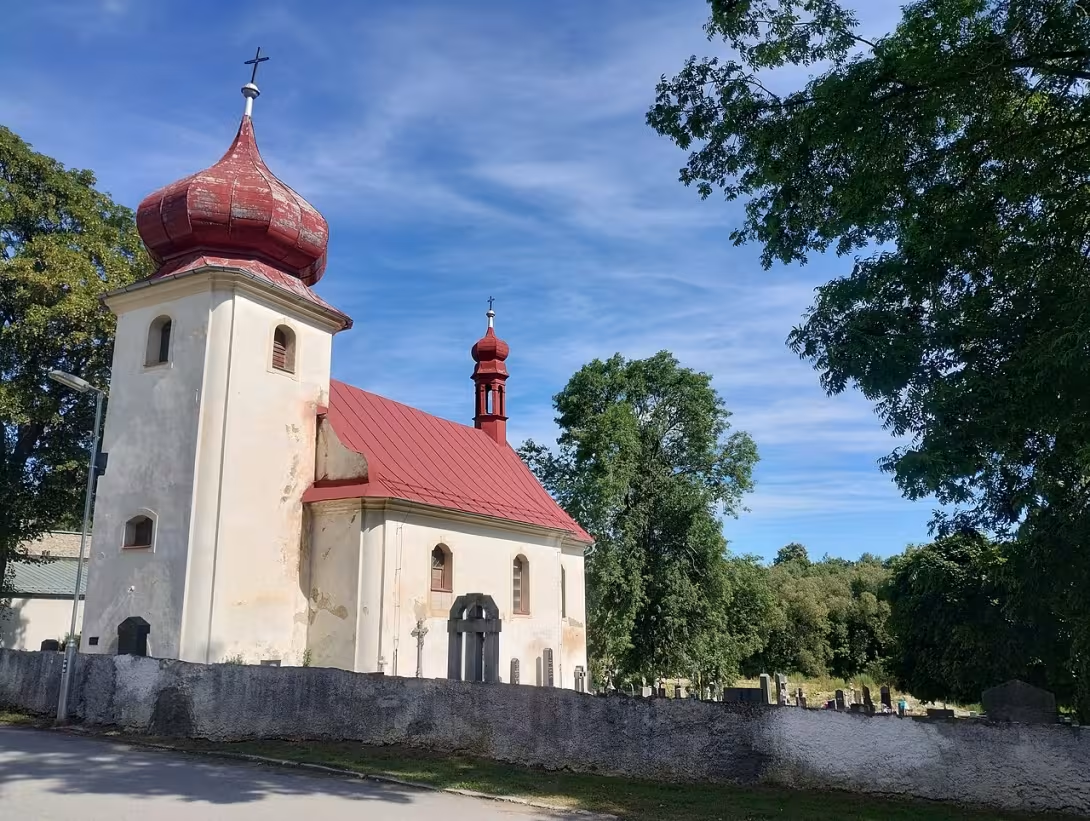
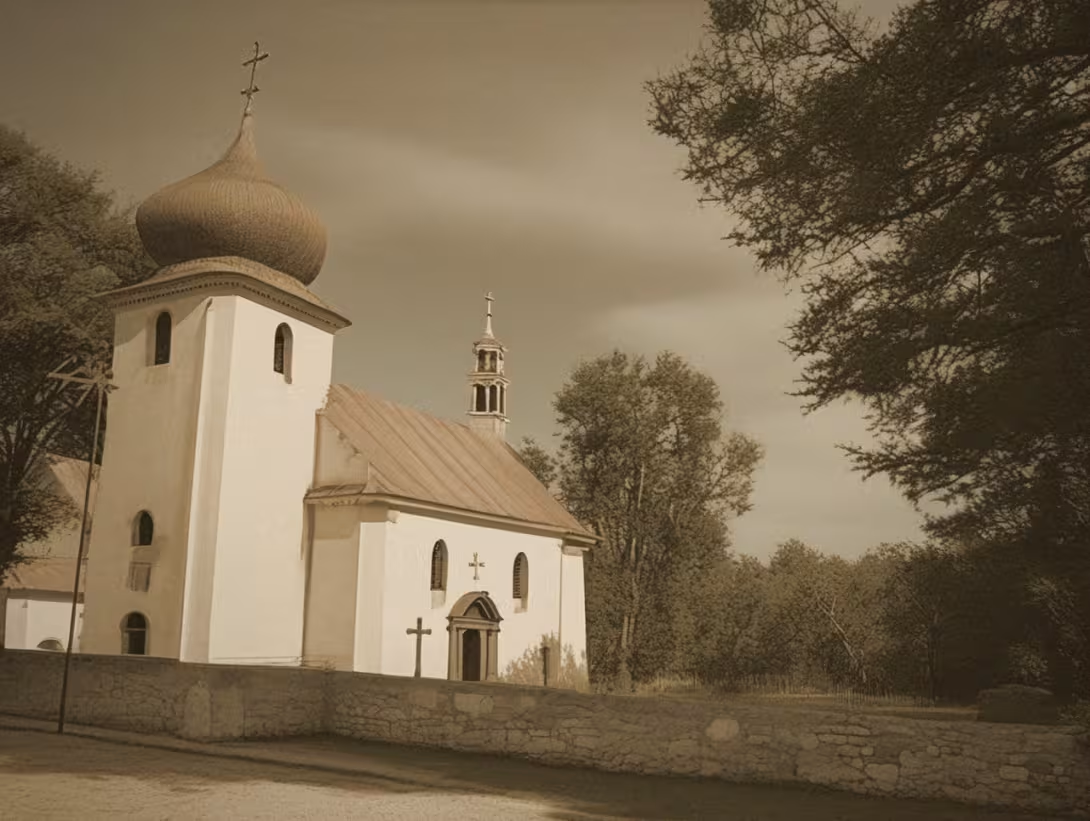
The historical appearance on the left is an AI-generated visualisation and serves as inspiration only.
Historical milestones
- 1781
- Construction of the Church of Our Lady of Sorrows as a Baroque parish church.
- 1842
- Completion of the new parish church and conversion of the original into a cemetery chapel.
- Late 20th century
- Restoration of the church after deterioration following World War II.
Architectural development
The Church of Our Lady of Sorrows was built in the late Baroque style in 1781. It features a single nave with a barrel-vaulted presbytery and imitated ribbed vaulting with pentagonal recesses and stucco panels. The church underwent restoration at the end of the 20th century after falling into disrepair post-World War II.
Historical events
1781: Construction of the late Baroque Church of Our Lady of Sorrows in Stachy, initially serving as a parish church.
1842: A new parish church dedicated to the Visitation of the Virgin Mary was completed, leading to the original church's role change to a cemetery chapel.
Points of interest
- The Church of Our Lady of Sorrows was initially a parish church before becoming a cemetery chapel in 1842 following the construction of a new parish church dedicated to the Visitation of the Virgin Mary. This transition reflects the evolving spiritual needs and population growth in Stachy.
- Josef Klostermann, also known as Rankl Sepp, is buried in the church's surrounding cemetery; he was a local lumberjack renowned for his skills and contributions to the community, adding a layer of personal history to the site.
- The elaborately decorated iron cross standing before the cemetery is one of its most striking features, symbolizing the area’s rich cultural heritage and serving as an artistic focal point within the burial grounds.
- Despite falling into disrepair after World War II, the church underwent significant restoration at the end of the 20th century, preserving much of its original interior furnishings and architectural details, which include imitated ribbed vaulting with pentagonal recesses.
- The last royal castle's Stašský mayor is also buried in the cemetery, linking the site to broader regional history and offering insights into the governance and societal structure during that era.
Guide
This guide is narrated by a synthetic voice generated by artificial intelligence.
Show guide text
This text was created by artificial intelligence and has not been editorially reviewed. It may contain inaccuracies.
Welcome to the enchanting village of Stachy, where history whispers through the air and architecture tells tales of devotion and community. You stand before the Church of Our Lady of Sorrows, a testament to the late Baroque period's grandeur and spiritual significance.
Constructed in 1781, this church was initially built as a parish church to serve the spiritual needs of the local inhabitants who previously had to travel to Zdíkovci for their religious services. As you gaze upon its structure, imagine the bustling community that gathered here, seeking solace and connection through faith during those times.
The Church of Our Lady of Sorrows is an embodiment of late Baroque architecture. While specific architectural details aren't documented in our records, take a moment to appreciate the overall aesthetic—note the symmetry and balance typical of the era. The church's design reflects both artistic sensibilities and practical considerations for accommodating its congregation.
As you stand here today, it’s interesting to note that by 1842, due to population growth, a new parish church was constructed nearby. This led to our current Church of Our Lady of Sorrows transitioning into a cemetery chapel—a poignant reminder of the ever-evolving needs of Stachy's residents and their enduring faith.
One captivating aspect of this site is its transformation over time—from a central place of worship to a serene chapel that now watches over the village cemetery. This change reflects not just architectural evolution but also shifts in community dynamics and spiritual practices.
As we conclude our visit, I invite you to explore further around Stachy, where each corner holds stories waiting to be discovered. Thank you for joining me on this journey through time at the Church of Our Lady of Sorrows. May your curiosity continue to guide you as you uncover more hidden gems in this historic village.
Businesses nearby
Do you run a restaurant, accommodation, shop, museum, rental, wellness or other visitor service near this monument? Show yourself directly to the people heading to it — this is how they will see you in the app and on the web:
Events nearby
Zdroj akcí: otevřená data měst a obcí ČR (Národní katalog otevřených dat) a kalendář akcí Národního památkového ústavu.
Nearby
The church is located in Stachy, surrounded by a cemetery with an enclosing wall and gate. The area features recent expansions of the cemetery to the south and east, which are not part of the protected site.
Accommodation nearby
Themed route
Thematic Walking Tour: Stachy's Historical and Cultural Landmarks
1. Kostel Panny Marie Bolestné (Stachy) - Church Begin your journey at the heart of Stachy with this beautiful church dedicated to Our Lady of Sorrows. The church stands as a testament to the town’s rich religious heritage and architectural beauty, featuring intricate designs that attract both history enthusiasts and art lovers. Explore its serene interior and take in the peaceful ambiance it offers.
2. Stachy Cemetery - Cemetery A short walk from the church leads you to Stachy's historic cemetery, enclosed by a traditional wall and gate. This site provides insight into the town’s past generations, with tombstones that tell stories of those who once lived here. The recent expansions to the south and east offer a glimpse into how the community has grown over time.
3. Cemetery Wall - Historical Structure As you explore the cemetery, take a moment to appreciate the enclosing wall. This structure not only serves as a boundary but also reflects historical construction techniques used in the region. Its presence adds an element of solemnity and history to your visit, making it worth exploring for its architectural significance.
4. Cemetery Gate - Architectural Feature The gate leading into the cemetery is another point of interest. It symbolizes both a physical and spiritual entryway, inviting visitors to reflect on life and legacy. Its design complements the overall aesthetic of the church and cemetery, making it an integral part of Stachy’s historical landscape.
5. Recent Cemetery Expansions - Cultural Development Conclude your tour by visiting the recent expansions of the cemetery located to the south and east. These areas highlight the ongoing development and adaptation within the community, offering a contrast between the old and new sections of the cemetery. They provide an opportunity to reflect on how traditions are preserved while accommodating modern needs.
This thematic walking tour offers a deep dive into Stachy's cultural and historical essence through its most significant landmarks.
Seasonal recommendations
Spring: Visiting the Church of Our Lady of Sorrows during spring offers a serene experience as nature comes to life around Stachy, with blooming flowers and fresh greenery enhancing the church's historic charm. The gentle light filtering through stained glass windows creates a warm, inviting atmosphere, perfect for contemplation. As this is just before the peak tourist season, you'll find fewer crowds, allowing for a more peaceful visit. Dress in layers to accommodate the variable temperatures, and consider bringing a camera to capture the vibrant landscape.
Summer: In summer, the Church of Our Lady of Sorrows basks in long daylight hours, providing ample time to explore its architectural details and historical significance without feeling rushed. The lush surroundings are particularly picturesque during this season, with gardens full of life and color. However, be mindful that it's also a popular time for visitors, so arriving early can help you avoid larger crowds. Wear comfortable shoes and light clothing suitable for warm weather, and don't forget sun protection.
Autumn: Autumn transforms the Church of Our Lady of Sorrows into a stunning backdrop with its rich tapestry of reds, oranges, and yellows. The cooler temperatures make it an ideal time for leisurely strolls around Stachy, enjoying the crisp air and vibrant foliage. This season often sees fewer tourists, allowing for a more intimate experience of the church's beauty. Dress warmly in layers to accommodate fluctuating weather conditions, and consider bringing a scarf or hat for added comfort.
Winter: Winter envelops the Church of Our Lady of Sorrows in a quiet, magical atmosphere as snow may blanket the area, creating a picturesque scene straight out of a storybook. The shorter days mean it's best to plan your visit during daylight hours, as opening times can be limited due to the cold weather. While fewer visitors are likely to brave the chill, those who do will enjoy a more tranquil experience. Dress warmly in insulated layers and wear sturdy boots for walking on potentially icy paths.
Visualizations and artistic views


The visualisations are generated by artificial intelligence and serve as inspiration.
Photos from the area
Real photos taken near the monument


Zdroj a licence jsou uvedeny u každého snímku.
Atmosphere of the place
This atmospheric visualisation of the place and period was generated by artificial intelligence. It is not real footage of the location.
Tips from visitors
No tips yet. Be the first!
Log in and add your tip.
Sources and literature
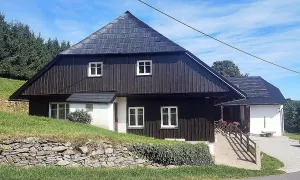
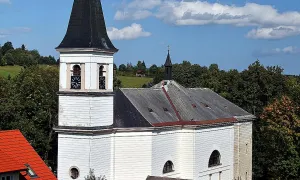
Fotografie: Susankovav / CC BY-SA 4.0 — Wikimedia Commons. The author and licence also appear when you hover over the image.
Faktickým podkladem tohoto textu byl článek na Wikipedii, jehož autory jsou přispěvatelé Wikipedie. Článek je dostupný pod licencí CC BY-SA 4.0.
Location on the map

Příběhy a pověsti
Legendy, pověsti a příběhy spjaté s touto památkou
Příběh: Kostel Panny Marie Bolestné (Stachy)
Bylo to v pondělí ráno, kdy Martin zjistil, že jeho svět se pohybuje kolem něj v tichém tanči podivných barv a stínů. Dřevěné schody vedly nahoru do kostela …
Číst příběh
Pověst: Kostel Panny Marie Bolestné (Stachy)
Staří obyvatelé stašského hřbitova vyprávějí, že bohatě zdobený železný kříž před ohradní zdí kostela Panny Marie Bolestné nestojí na svém místě náhodou. Za …
Číst příběhFotografie návštěvníků
Zatím žádné fotografie. Buďte první, kdo přidá fotografii z návštěvy!
Přihlaste se a přidejte svou fotografii nebo hodnoťte.
Za ověřenou návštěvu v aplikaci získáte víc bodů — poznáme podle GPS, že jste na místě.
Reviews and comments