






Kostel Panny Marie Královny míru Church
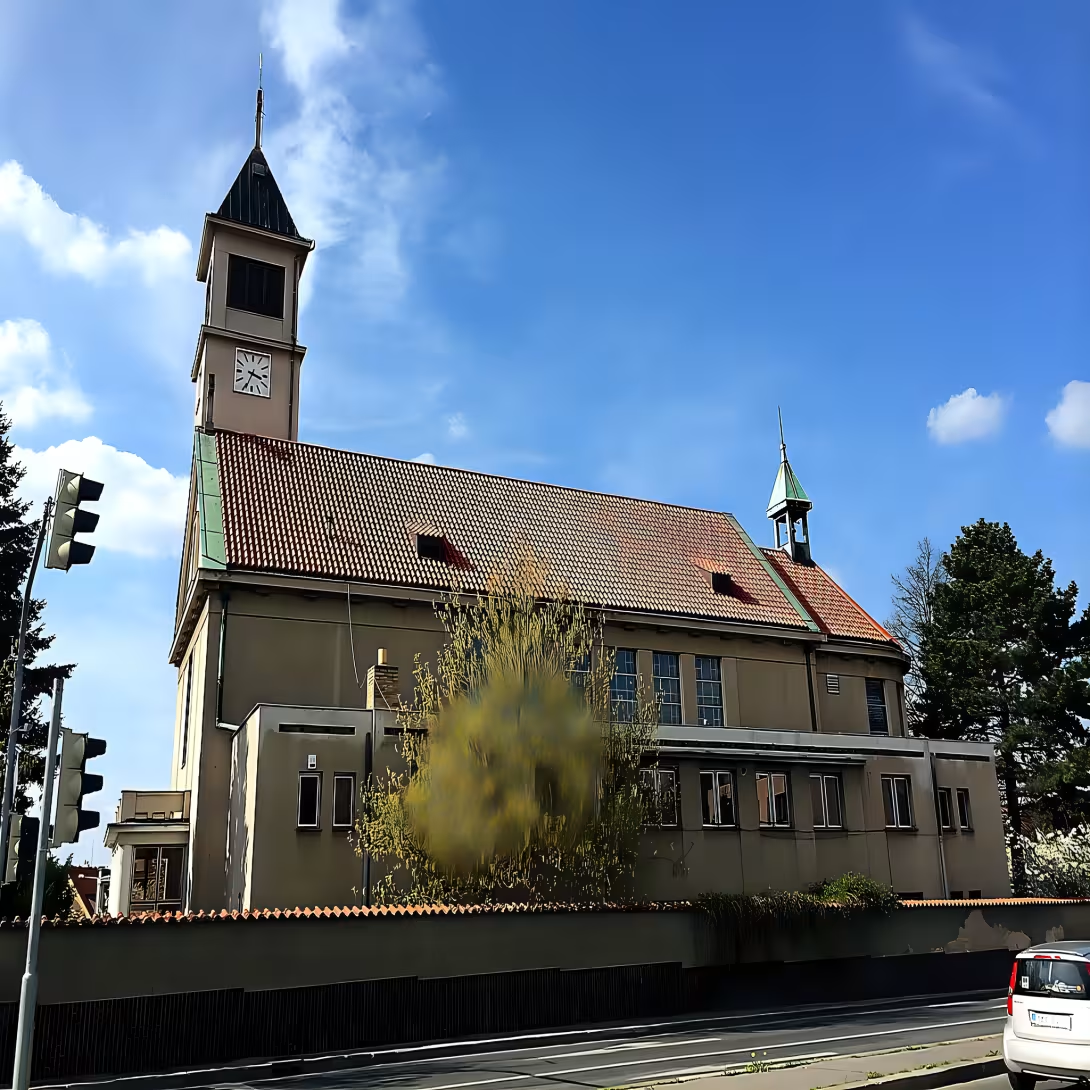
Kostel Panny Marie Královny míru in Prague 4-Lhotce is a Roman Catholic parish monument which is strongly based on healthy early years of the Czech first republic. Built in 1937 in a modern constructive style, it is characterized by a two-boat layout and a distinctive prism tower. It was created as one of the twelve churches that were built on the memory of a Marian pillar destroyed by a crowd in Old Town Square.
The destruction of the column had a stormy political undertext. The Czech public mistook it as a celebration of Austrian domination, although its original meaning was quite different - it reminded of the rescue of Prague from the Swedish troops at the end of the Thirty Years' War and the subsequent peace. This misunderstanding had tragic consequences. When President Tomáš Garrigue Masaryk arrived in Prague on 22 December 1918, he condemned the violent destruction of the column. In November 1918, the President himself had to explain in London when he returned from America that it was a political act, not a religious attack.
The church retains memory of the destroyed relic through its inner device. There is a column with a statue of the Virgin Mary, which is a replica of the original statue from the old town column. The sculptor Bohuslav Bek created this work according to the model by Břetislav Benda. The mosque ship illuminates the gothic motifs inspired by the stained glass of the temple of the Mother of God before Tyn, St. Wenceslas and St. Anežka Czech.
The exceptional element of the interior is a plastic cross route from sculptor Karl Stadnik. However, this cycle of work is not only in the tradition of church art - individual stops depict the suffering of man throughout history and also remind of the crimes of fascism and communism. The author himself noted: "In the cross road placed in the Church of the Queen of Peace in Prague at Lhotka, the Lord is depicted as poor, hungry, naked, thirsty, judged, sick, and in his brothers. It is the journey of the Easter, ending at the end of the eternal Easter, in a kingdom prepared from the creation of the world for those who loved the neighbor and God."
The church stands as a witness to complex relationships between history, national identity and faith. The ark of his tower rises above the Lhotek district as a reminder that things are not always as simple as they seem.
Then and now
Drag the slider to compare how the landmark may have looked when it was built with the view today.
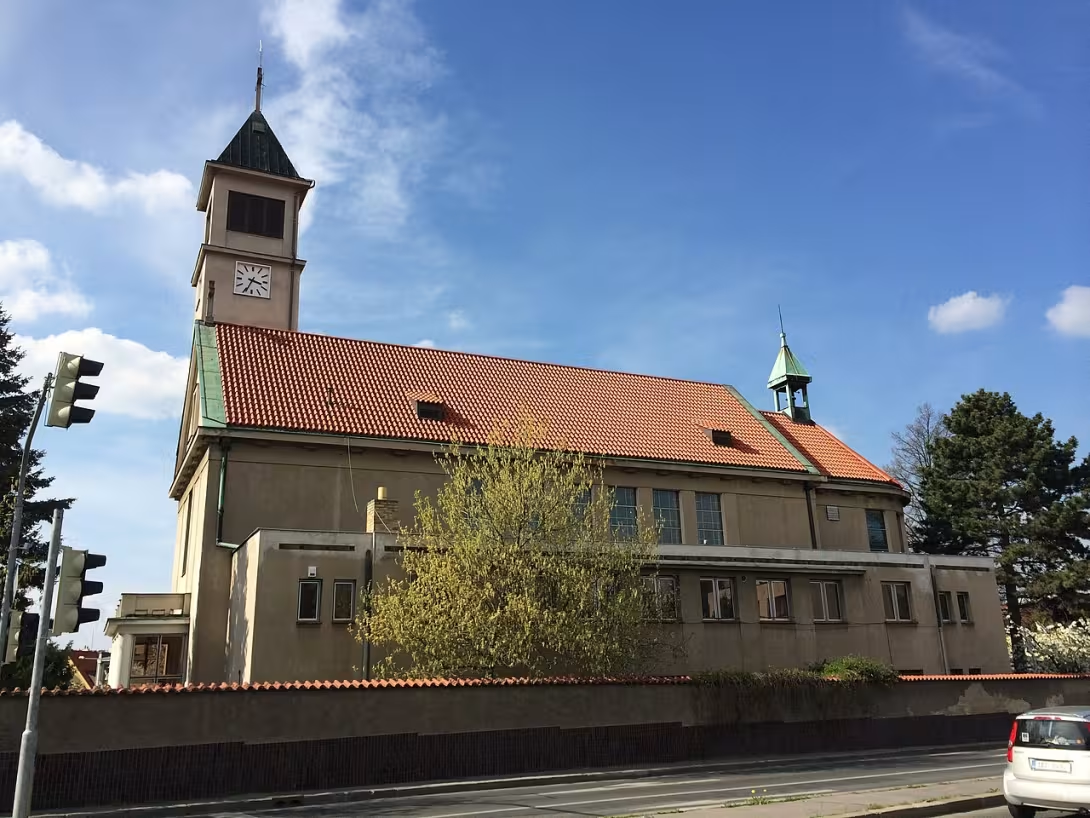

The historical appearance on the left is an AI-generated visualisation and serves as inspiration only.
Historical milestones
- 1648
- Rescue of Prague from Swedish troops during the Thirty Years' War and subsequent peace, in memory of which a Marian pillar was built.
- 1918
- The destruction of the Marian column in the Old Town Square by a crowd for political reasons, misinterpreted as a famous symbol of Austrian domination.
- 22 December 1918
- President Tomáš Garrigue Masaryk condemned the violent destruction of the Marian pillar and highlighted its political character.
- 1937
- The establishment of the Church of the Virgin Mary Queen of Peace in Lhotka as part of the replacement for the destroyed Marian pillar.
- Around 1937-1938
- Creation of a replica of the statue of the Virgin Mary for the church according to the model Břetislav Benda and the work of Bohuslav Bek.
- Around 1937-1939
- The creation of a plastic crusade of Karl Stadnik with reference to the suffering of people and the crimes of fascism and communism.
Architectural development
The church was built as a simple, functionalist building with a distinctive prism tower. The interior contains a replica of the statue of the Virgin Mary destroyed pillar, a stained glass with motifs of Czech saints and a plastic cross-path from Karl Stadnik. Materials and structures correspond to modern standards of the time of origin.
Historical events
- 1918
- The destruction of the Marian column in the Old Town Square by a crowd that President Masaryk condemned as a political act.
- 1937
- Establishing the Church of the Virgin Mary Queen of Peace as a symbol of peace and forgiveness for destroying the original pillar.
Owners
The sequence of owners with years if available, otherwise zero.
Points of interest
- The church was built in 1937 in a modern constructive style as one of the twelve new churches in memory of the destroyed Marian column in Old Town Square.
- In the interior is a replica of the original statue of the Virgin Mary from the Marian column, made according to the model Břetislav Benda and carved by Bohuslav Bek.
- The stained glass in the boat shows the temple of the Mother of God before Tyn, St. Wenceslas and Saint Anežka Czech, inspired by Gothic motifs.
The Crusade from Karl the Stadnik not only resembles the suffering of Christ, but also the crimes of fascism and communism.
- The church symbolizes the stormy political undertext of the destruction of the Marian pillar, which the public mistakenly associated with the celebration of Austrian domination.
Guide
This guide is narrated by a synthetic voice generated by artificial intelligence.
Show guide text
This text was created by artificial intelligence and has not been editorially reviewed. It may contain inaccuracies.
Audio guide to the Church of the Virgin Mary Queen of Peace in Prague - Lhotce
---
Welcome, dear visitors! You are standing in front of one of the most interesting modern sacral monuments in Prague. There's a space around you that's going to tell you the secret that was hiding behind the demise of an old Marian pillar. Look at what you see in front of you now - a double-boat structure with a distinctive prism tower that reminds you of the strength and boldness with which this church was built.
Let's move on to history. This church was founded in 1937 as a symbol of peace and renewal after the tragic events of the last century. Its origin is connected with a monument to the destroyed Marian column in the Old Town Square. It was built in 1648 to commemorate the rescue of Prague from Swedish troops during the Thirty Years' War. The column was mistakenly considered a symbol of Austrian domination, and this became the reason for its destruction in 1918 by the crowd that considered it a political instrument. President Tomáš Garrigue Masaryk condemned it and stressed that the destruction of the pillar was more political than religious.
Now pay attention to the interior. In the center of the church there is a replica of the statue of the Virgin Mary, which was created according to the model Břetislav Benda and carved according to his design. This statue is an important part of the monument which resembles the original statue of the Marian pillar. In the vicinity, you are reminded of other details that are connected to this event - for example, stained glass, which gives you a feeling of a deep spiritual atmosphere.
Another interesting thing is in the plastic cross road created by Karel Stadman. These works were created around 1937 to 1939 and refer to the suffering of people who were associated with fascism and communism. Each of them has a history and symbolism that will help you understand how people tried to express their feelings and ideas at the time this church was built.
Note also that the church was built as one of the twelve new churches in memory of the ruined Marian column. This means that it is only one of many places that remind Prague of the important events of the past. If you have time, explore other churches in the area that have similar meaning.
Now enjoy this place, which reminds you of peace, courage and spiritual strength. Keep in mind that each of us has a history and each of us can contribute to the future. Let your visit to this church become an exploration not only of the monuments, but also of the soul of Prague.
Thank you for your attention and we wish you pleasant tours. If you have any questions or want to know more about the history of this place, do not hesitate to ask. May your visit to Lhotka become an unforgettable experience.
Tips for visitors
{'paragraph': 'The best time to visit the Church of the Virgin Mary Queen of Peace is in the morning when it is quiet and you can see the interior without crowds. Another suitable period is lunch times when most visitors return from other monuments. In the summer months, it is advisable to avoid midday hours when it is the hottest and most people. The church is ideal for visiting on quiet days when the weather is pleasant and the light in the interior creates a pleasant atmosphere.'}
{'paragraph': 'The church is available by car and parking is possible in the vicinity. It is recommended to use public transport, which is well developed in Prague. The location is available from the city centre, you can check the current connection in the search engine. If you arrive by car, pay attention to local signs and parking modes. There are also some parking lots in the vicinity of the church that are paid for, so check the current conditions in advance.'}
{'paragraph': 'When visiting the church, wear comfortable clothes and shoes because the building has no air conditioning and the interior can be warmer than outside. It is also appropriate to take a small umbrella or raincoat, because in Prague the weather can be variable. If you plan to stay longer, you can also bring water and something to eat because there are no restaurants or refreshments nearby the church.'}
{'paragraph': 'Photography in the church is permitted, but care must be taken to respect other visitors and do not touch valuable objects. The best places for photography are mainly the interior of the church, especially its modern constructivistic architecture and windows. It is recommended to photograph in a pleasant light, i.e. morning or afternoon, when the light is softer and creates pleasant shadows. External photos are also interesting, especially in sunny weather.'}
{'paragraph': 'In the vicinity of the church, several important monuments are worth visiting, which are at most 30 minutes away. The nearest is Prague Chateau, which is one of the most important historical monuments in Prague. Another interesting thing is Vysehrad, which offers not only rich history, but also beautiful views of the city. The Old Town Square complex with its historic houses and monuments is also a great choice for further tours. All these locations are easily accessible by car and public transport.'}
{'paragraph': 'For families with children, a visit to the Church of the Virgin Mary Queen of Peace is particularly interesting thanks to its modern architecture and quiet atmosphere. Children can see interesting details of the interior and enjoy a quiet environment. There is also a natural park around the church where children can run and play in the fresh air. It is also recommended to visit Prague Chateau or Vysehrad where various interactive activities and exhibitions are prepared for children.'}
For kids
Imagine going back to a time when the world was full of fighting and fighting. It was the years of the 14th century when there were various wars and conflicts on our planet.
It was only in 1380 that a small wooden church grew on the site of today's Church of the Virgin Mary Queen of Peace. Back then, there were people from the surrounding villages who prayed and traded. But what did it look like then? The church was really small and it used to stand in places where today there are big trees.
Businesses nearby
Events nearby

Zdroj akcí: otevřená data měst a obcí ČR (Národní katalog otevřených dat) a kalendář akcí Národního památkového ústavu.
Nearby
The surrounding area is a natural park and local development of the village Lhotka. Within 5 km are significant monuments such as Prague Chateau, Vysehrad and the Old Town Square complex with its historic houses and monuments.
Accommodation nearby
Trips and activities nearby
Guided tours, tickets and activities nearby from GetYourGuide
Affiliate link: if you buy from the partner, we may receive a commission. The price for you does not change.
Search tours and activities →Themed route
Thematic cruise route with the Church of the Virgin Mary Queen of Peace in Lhotka
1.Kostel Panny Marie Královny míru The Baroque church from the 18th century, dedicated to the gentle Virgin Mary, is the dominant of the village. Its rich decoration and quiet atmosphere offers an ideal place for prayer or rest. The small chapel of St. John Nepomucký, which complements the historical value of the place, is nearby.
2. Prague Chateau (approximately 5 km) The symbol of Czech history and the seat of the President. Its extensive sites, such as the Golden Lane or the Vojtěšská Chapel, attract visitors with their architecture and panoramic views of the city. The Church of St. George is located nearby, which stands at the site of the original chateau church.
3. Vyšehrad (approximately 6 km) Historical fortress with rich past, today park with quiet walks. Important are the Rotunda of St. Martin and the Church of St. Peter and Paul, which are part of the complex. Vyšehrad also offers picturesque views of the Old Town and Prague Chateau.
4. Old Town Square The heart of the historical centre of Prague, surrounded by monuments such as Orloj, the Church of St. Nikola or the House of the Black Mother of God. The square is ideal for walking, visiting cafes or admiring Gothic architecture. The Church of St. Havel, which stands on the site of the original church from the 12th century, is located nearby.
The route connects the peaceful village of Lhotku with important Prague monuments, each point offering a unique atmosphere and historical context.
Seasonal recommendations
Spring: In spring, the church's surroundings awaken to life when green vegetation begins to grow and trees begin to bloom around. Light is soft and pleasant in this period, which gives the building a gentle touch. We recommend visiting the morning hours when the air is the cleanest. Clothes should be layered, because the morning cold can still feel, even when the sun is shining.
Summer: Summer months bring intense sunlight to Lhotka and long days that allow you to explore the surroundings in full light. The atmosphere is alive and the surrounding landscape is in the greatest bloom. Due to the increased interest of visitors in the main summer season, it is best to arrive early in the morning to enjoy your peace and avoid the greatest heat. Don't forget light summer clothes and sun protection.
Autumn: Autumn season offers a fascinating colour palette of golden and brown shades that accompany walks around the sights. The morning mist creates a mysterious and calm atmosphere that perfectly matches the spiritual character of the place. It is advisable to carry a waterproof jacket and warmer clothing because the weather is usually variable. The best time to visit is afternoon hours when the sun shines at a lower angle.
Winter: In winter, the church operates in quiet and quiet, especially if snow or frost cover the surroundings. The day is short and the light in the interior is very cozy and sparingly. Due to lower temperatures and shorter opening times, we recommend planning a visit around noon to provide enough daylight. The necessity is to choose very warm and practical clothes for any sudden cooling.
Visualizations and artistic views


The visualisations are generated by artificial intelligence and serve as inspiration.
Photos from the area
Real photos taken near the monument


Zdroj a licence jsou uvedeny u každého snímku.
Atmosphere of the place
This atmospheric visualisation of the place and period was generated by artificial intelligence. It is not real footage of the location.
Tips from visitors
No tips yet. Be the first!
Log in and add your tip.
Sources and literature
Fotografie: Shadster / CC BY-SA 4.0, rozlišení zvýšeno umělou inteligencí — Wikimedia Commons. The author and licence also appear when you hover over the image.
Faktickým podkladem tohoto textu byl článek na Wikipedii, jehož autory jsou přispěvatelé Wikipedie. Článek je dostupný pod licencí CC BY-SA 4.0.
Location on the map
Příběhy a pověsti
Legendy, pověsti a příběhy spjaté s touto památkou
Fotografie návštěvníků
Zatím žádné fotografie. Buďte první, kdo přidá fotografii z návštěvy!
Přihlaste se a přidejte svou fotografii nebo hodnoťte.
Za ověřenou návštěvu v aplikaci získáte víc bodů — poznáme podle GPS, že jste na místě.
Reviews and comments