






Kostel svaté Anny (Rychvald) Church
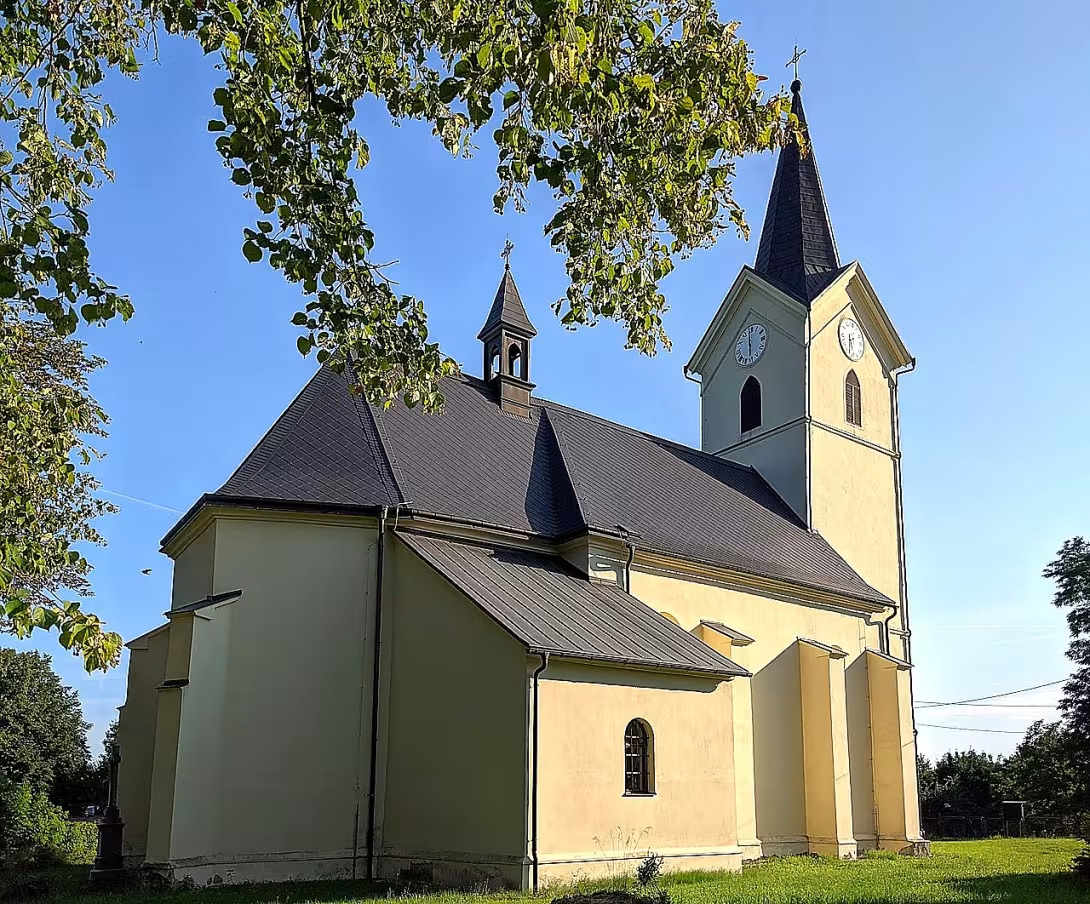
The Church of Saint Anne in Rychvald is a significant cultural monument and the parish church is located in the city of Rychvald, Moravian-Silesian region. Originally built in 1596, Bernard Barský z Baště destroyed an earlier wooden structure after a devastating fire, representing baroque elements despite its Renaissance origin. Over the centuries, the church has undergone numerous renovations reflecting historical events and architectural trends.
The oldest documented mention about Rychvald dates back to 1305. The contemporary stone church of St. Anne was built in 1596 after a great fire which destroyed the former wooden church in 1535. Bernard Barský z Baště, the then Protestant landowner, ordered this new construction, where the Bernard Leo z Locarna probably serves as an architect. After being damaged and left unused during the Thirty Years' War, Bishop Filip Gotthard Schaffgostsch was again sanctified in 1759.
Architecturally, the church of Saint Anne is a single-boat building with polygonal chancel and octagonal tower rising from the facade. Its design includes gothic elements such as a ribbed vault with decorative corbels in a boat and cross-arched candelas decorated with coats of arms Bernard Barský z Baště and his wife. The windows of the church are supplemented with pointed arches and three-sided arches which contribute to its distinctive aesthetics.
Throughout his history, the church of St. Anne saw various owners and administrators. Initially built by Protestant landowner, later became part of the Roman Catholic parish Rychvald near Karviné under the deanerie of Karviné. In the early 20th century, between 1920 and 1925, the church was transferred to the Czechoslovak Hussite Church.
the church witnessed several key events and renovations. In particular, it was sanctified again in 1759 after it was damaged during the Thirty Years' War. In 1845 an organ was obtained from Johann Neusser for 400 gold coins, thus strengthening his musical heritage. At the beginning of the 20th century there were other restaurants in 1911, including a new roof with eternal and partial reconstruction of roofs. In 2012, there was a significant recovery, financed partly by the EU regional operational programme, which included dendrological surveys and archaeological surveys.
Today, the Church of Saint Anne stands as proof of its rich history and architectural evolution. The active parish church remains under the Roman Catholic diocese of Ostrava-Opava. Visitors can appreciate its historical significance, architectural beauty and calm atmosphere. The church's re-efforts ensure that it continues to be a cultural monument in Rychvald.
The Church of Saint Anne is not only a place of worship, but also a symbol of resistance and adaptation over centuries of change. Its permanent presence invites visitors to explore its history and appreciate its architectural splendour, making it a valuable destination for people interested in cultural heritage and religious architecture.
Then and now
Drag the slider to compare how the landmark may have looked when it was built with the view today.
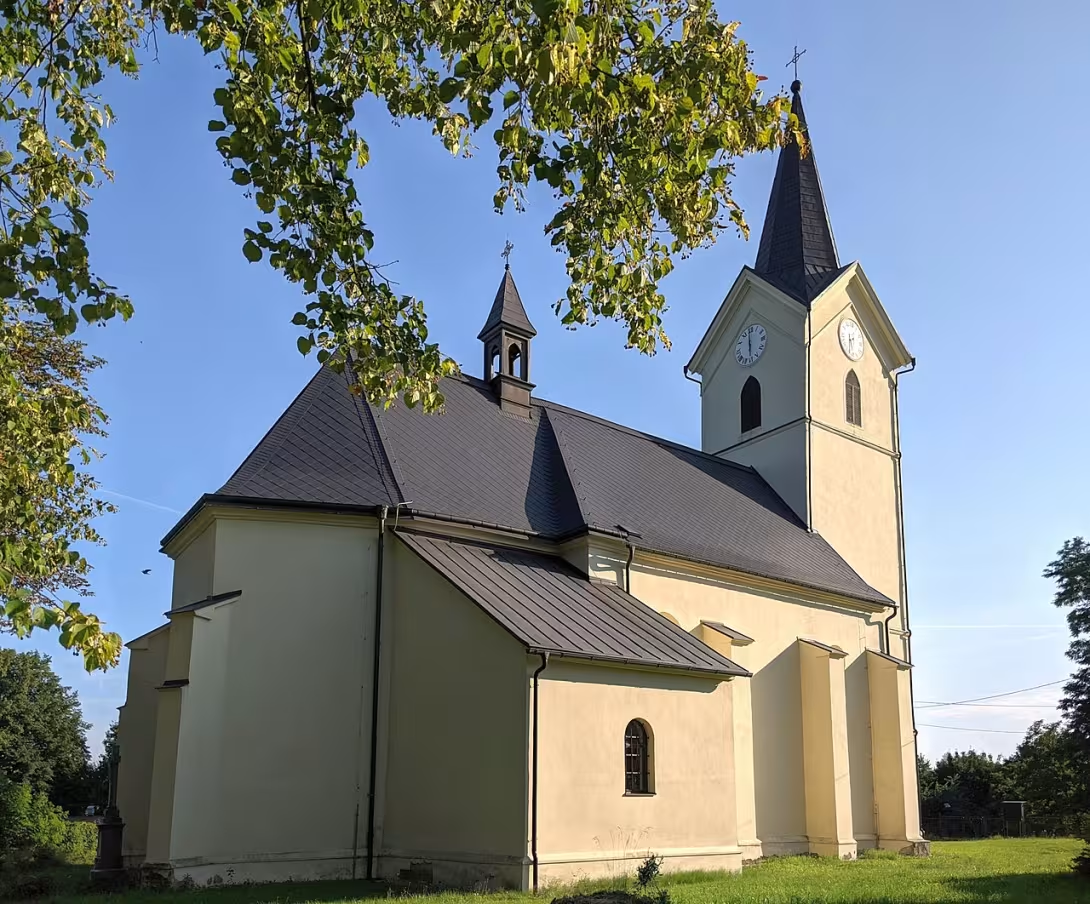
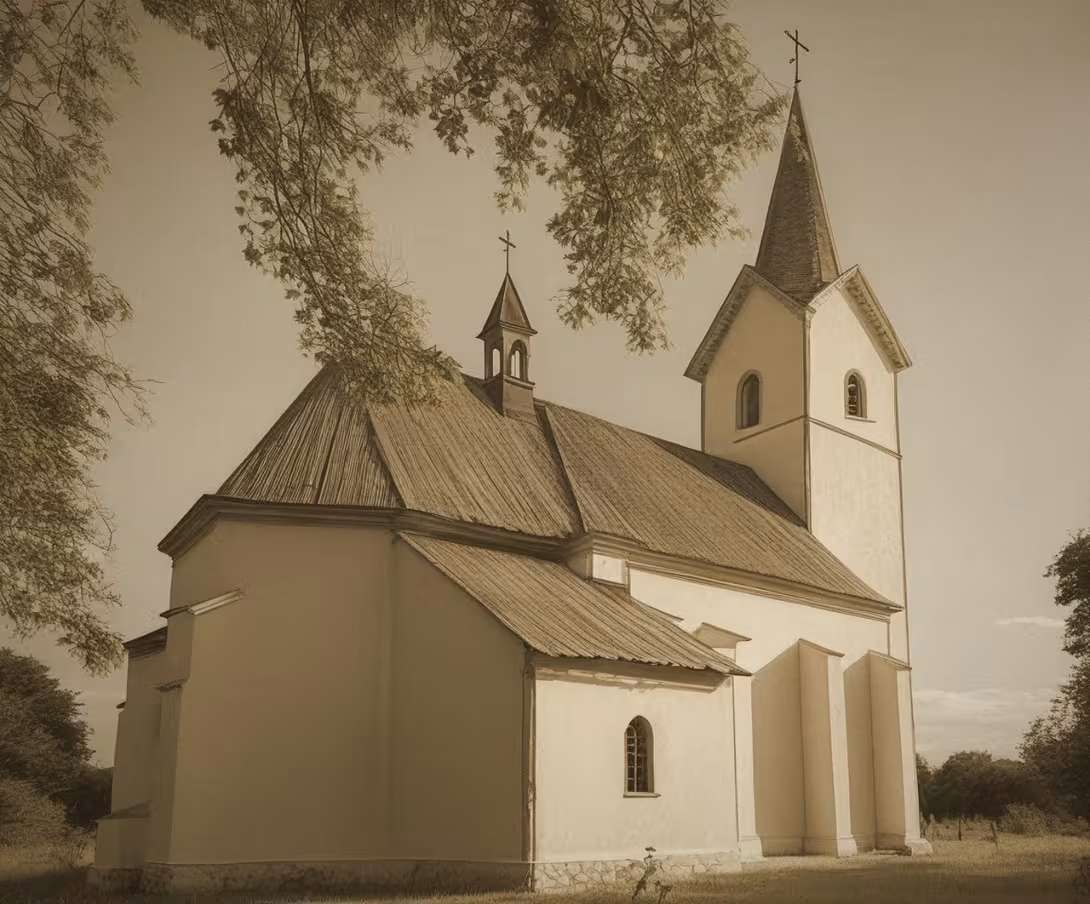
The historical appearance on the left is an AI-generated visualisation and serves as inspiration only.
Historical milestones
- 1596
- Construction church by Bernard Barský z Baště.
- 1759
- Restoration by Bishop Filip Gotthard Schaffgostsch.
- X2012
- Large-scale reconstruction financed by the EU regional operational programme.
Architectural development
the church, originally built in the late Renaissance, has a single-boat construction with a polygonal office and an octagonal tower. Over time, several renovations took place including modifications to the Baroque style, such as new altars and frescoes. The roof was covered with eternitus in 1911, and a significant recovery took place in the early 20th century.
Historical events
1596: Construction of the present stone church Bernard Barský z Baště.
1679-1759: The church was damaged after -thirty years of war and later again sanctified in 1759 by Bishop Filip Gotthard Schaffgostsch.
2012: Extensive recovery financed partly by the EU regional operational programme.
Points of interest
- The church of Saint Anne was originally entrusted with Bernard Barský z Baště, a Protestant landowner, reflecting religious diversity and tension in Moravia of the 16th century.
- During his history, the church switched from being part of a Protestant community to become a Roman Catholic parish, showing a changing religious landscape for centuries.
- The organ installed in 1845 was purchased with 400 gold coins from Johann Neusser, showing both the value placed on the musical heritage and the economic considerations of the time.
- In 1759 Bishop Filip Gotthard Schaffgostsch reordained the church after being damaged during the Thirty Years' War, highlighting its resilience between historical conflicts.
- Restoration in 2012 included dendrological surveys and archaeological surveys which demonstrated modern efforts to preserve and understand the historical layers of the church.
Guide
This guide is narrated by a synthetic voice generated by artificial intelligence.
Show guide text
This text was created by artificial intelligence and has not been editorially reviewed. It may contain inaccuracies.
Welcome to St. Anne's Church in Rychvald, a remarkable cultural monument nestled in this charming town in the Moravian-Silesian region. As you stand here, take a moment to absorb the calm atmosphere surrounding this historical structure. The facade before you radiates an aura of eternity that invites you to its ancient past.
The origin of this church dates back to 1596, when Bernard Barský z Baště destroyed the previous wooden building after a devastating fire. This act was not only about reconstruction, but also reflected religious diversity and tensions in Moravia of the 16th century, because Barský himself was a Protestant landowner.
As you look around, notice how the church smoothly blends Renaissance beginnings with baroque elements - the will of its architectural evolution for centuries. While specific details can escape without visual aids, imagine walking along a path where countless tracks have a lead before, every step echoing through history.
The vision of Bernard Barský z Baště was revived by Bernard Leo of Locarno, whose work resisted the test of time. The church later saw significant developments within Bishop Filip Gotthard Schaffgostsch in 1759 when he was reconsecrated, marking his transition from the Protestant community to the Roman Catholic parish.
An interesting aspect of this church is its journey through various renovations and reconstruction, including extensive, financed by the EU regional operational programme in 2012. These efforts ensured that the Church of Saint Anne was not only a place of worship, but also a beacon of cultural heritage.
As you continue your research, let yourself be drawn into the stories that have carved into this sacred space. Every rock and horn holds a whisper of history and invites you to think about the lives and stories that have emerged here.
We invite you to dive deeper into Rychvald's rich tapestry, where every corner offers a view of its living past. Thank you for joining us on this journey through time at St. Anne's Church. Let your visit inspire curiosity and wonder as you continue to discover this historic city. Have a good trip!
Businesses nearby
Do you run a restaurant, accommodation, shop, museum, rental, wellness or other visitor service near this monument? Show yourself directly to the people heading to it — this is how they will see you in the app and on the web:
Events nearby
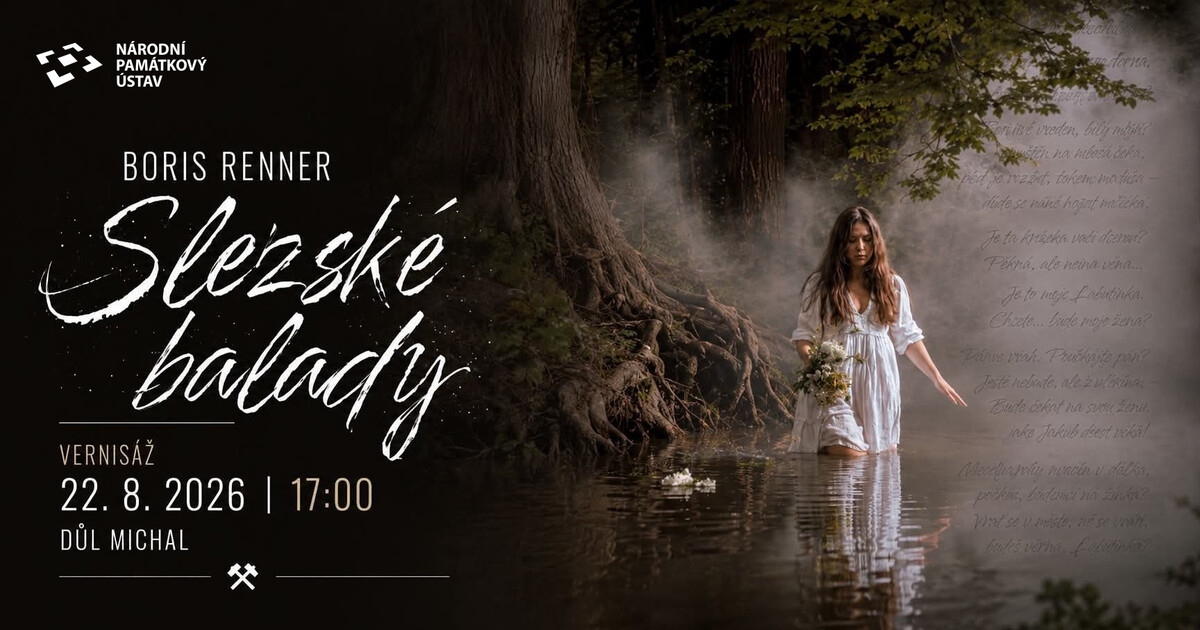
Zdroj akcí: otevřená data měst a obcí ČR (Národní katalog otevřených dat) a kalendář akcí Národního památkového ústavu.
Nearby
ITEX Show interactive overview of the surroundings - restaurants, accommodation, rentals and other places within a 15 km radius.
Data: OpenStreetMap contributors, 15 km radius.
‡ Historical monuments
- Castle Rychvald (1.7 km)
- Mine Michal (3.4 km)
- bridge Milos Sýkora (6.3 km)
- Mining Museum (8.0 km)
- Memorial to the victims of both world wars (8.9 km)
- Schloss Witkowitz (9.1 km)
- Castle Šumbark (9.1 km)
- Museum Vítkovic (9.2 km)
Restaurant and catering
- Stards (4.9 km)
- Castle Zábřih (11.7 km)
- Beskyd (Dork) (11.8 km)
- Wine bar Globus (13.4 km)
- Krčma u Zvolu (14.0 km)
- McDonald's (14.2 km)
- Racek (14.4 km)
- Boombay (14.4 km)
Accommodation
- Guesthouse Silma (1.1 km - Feature 5)
- Pension EvA (3.2 km)
- Jan Maria (5.8 km)
- Hotel Best (5.8 km - Keltickova 1297 / 60)
- Hotel Taurus (6.0 km - Teschen 1382 / 260)
- Quality Hotel Ostrava City (8.1 km)
- Vulture (8.8 km - U Postage 371 / 4)
- Europa (9.5 km)
› Rental and sports
- Squash centrum (3.5 km)
- Sportcentrum - Bosporka (5.0 km)
- Kolík (6.2 km - Silesia 1)
- Alpsport (7.1 km)
- Bike Sport Vratimov (11.6 km)
- Dingo Bike Sport Servis (11.7 km)
- RPH Fitness s.r.o (11.8 km - Šrakova 1379 / 2)
- TJ Sokol Hostikovice (12.0 km)
© Tourism and nature
- halda Ema (5.2 km)
- Most Miloš Sykory (6.4 km)
- OIS (7.2 km)
- Lhotecký jezxZ3ZX (10.1 km)
- U confluence Oder and Opavy (11.4 km)
- Hnej (bus) (13.3 km)
- Opavsko (13.4 km)
- Eagle (heavy fortification) (13.4 km)
Accommodation nearby
Themed route
Thematic walking tour: Rychvald and St. Anne's Church
1. Church of St. Anne (Rychvald) - Religious Heritage Start your journey in the heart of Rychvald with the stunning Church of Saint Anne, a remarkable example of Baroque architecture. This church is not only a place of worship, but also proof of the rich cultural and religious history of the region. Its complex design and historical importance make it a mandatory visit for anyone interested in architectural beauty and spiritual heritage.
2. Local Historical Museum (Rychvald) - Cultural View A short walk from the church, visit the local historical museum located in Rychvald. This museum offers a view of the past area, showing artifacts and exhibits that tell the story of the community over different periods. It provides a deeper understanding of cultural developments in this part of the Moravian-Silesian region.
3. Rychvald Square - Community Hub Continue to explore the central square of Rychvald where you can dive into the local atmosphere. This vibrating area is often busy with activity and serves as a common center for residents. Take a moment to appreciate the architecture around the square and perhaps enjoy a coffee in one of the nearby cafes.
4. Rychvald cemetery - Historical reflection Close the tour with a visit to the Rychvald cemetery where you can think about the historical people who shaped this community. The cemetery is not only a place of rest, but also a joyous reminder of the past of the area, which offers an opportunity for quiet reflection in a quiet environment.
This thematic walking tour offers a comprehensive survey of the cultural and historical landscape of Rychvald, concentrated around the most important monuments.
Seasonal recommendations
Spring: The spring value of St. Anne's Church in Rychvald offers one experience that differs and new leaves are born with pale world. This time of year is ideal for photographers, because the nature of the business of the surrounding landscapes and undermines architectural details of the skeleton. The rent in the spring business range can be expressed as there is no significant tourist level that could lead to this objective being achieved. No information is required for small enterprises which may be declared valid. it is also permissible to carry with you an umbrella or area costs that are intended for industrial enterprises. The best time for difficulty is usually at noon, when the sanctity makes the church the best.
Summer: Summer is the highlight of the tourist season for the Church of Saint Anne, which is equal to the summer sun and long days connect with the living cabbage of the surrounding park. The atmosphere is full of energy and heat, which makes a visit ideal for a native trip or active allowed. It is important to go early in the morning or later in the evening to avoid the peak of the crowd and make it difficult to relax the experience. Wearing Light Round and Forbidden Sunshine Creams is important for the use of these rights; it is also stored with drinking vu because temperatures may be known. Summer measures to ensure that no guarantees are provided for the activity of the church's response activity.
Autumn: The autumn essentials of the Church of Saint Anne in Rychvald is a fatality when the tree leaves promotion to live colors and sunny days are short. This season offers liquid facilities with currencies that are not in the summer, which allows for the permitted experience and most viewed as much. Over-enlightenment is warmer and constant, which gives a romantic mood to the church. The reference shall be no more than the area amounts to be deducted and may be rain; it is also permissible to take the appropriate purse, because the days are short. The best time based is the subject in the early afternoon to enjoy their sunny city.
Winter: The winter demanding Church of St. Anne offers a one-way atmosphere where the church appears in a quiet and quiet landscape covered with snow. This solution is ideal for those who drive the peace and tranquility that is minimal. The sun's value in winter dechh is less intense, adding quiet beauty to the church; the new value can achieve a magical feeling. It is persistent not to have warm rounded and forbidden shoes for cream because it can be used in Moravian-Silesia can be new. The opening hours of the church are usually shorter, so make sure you plan accordingly. The best article based on an article in the morning when the sun lights the church best and can claim its own beauty.
Visualizations and artistic views


The visualisations are generated by artificial intelligence and serve as inspiration.
Photos from the area
Real photos taken near the monument


Zdroj a licence jsou uvedeny u každého snímku.
Atmosphere of the place
This atmospheric visualisation of the place and period was generated by artificial intelligence. It is not real footage of the location.
Tips from visitors
No tips yet. Be the first!
Log in and add your tip.
Sources and literature
Fotografie: MartinVeselka / CC BY-SA 4.0 — Wikimedia Commons. The author and licence also appear when you hover over the image.
Faktickým podkladem tohoto textu byl článek na Wikipedii, jehož autory jsou přispěvatelé Wikipedie. Článek je dostupný pod licencí CC BY-SA 4.0.
Location on the map
Příběhy a pověsti
Legendy, pověsti a příběhy spjaté s touto památkou

Fotografie návštěvníků
Zatím žádné fotografie. Buďte první, kdo přidá fotografii z návštěvy!
Přihlaste se a přidejte svou fotografii nebo hodnoťte.
Za ověřenou návštěvu v aplikaci získáte víc bodů — poznáme podle GPS, že jste na místě.
Reviews and comments