






Kostel svaté Barbory (Zábřeh) Church
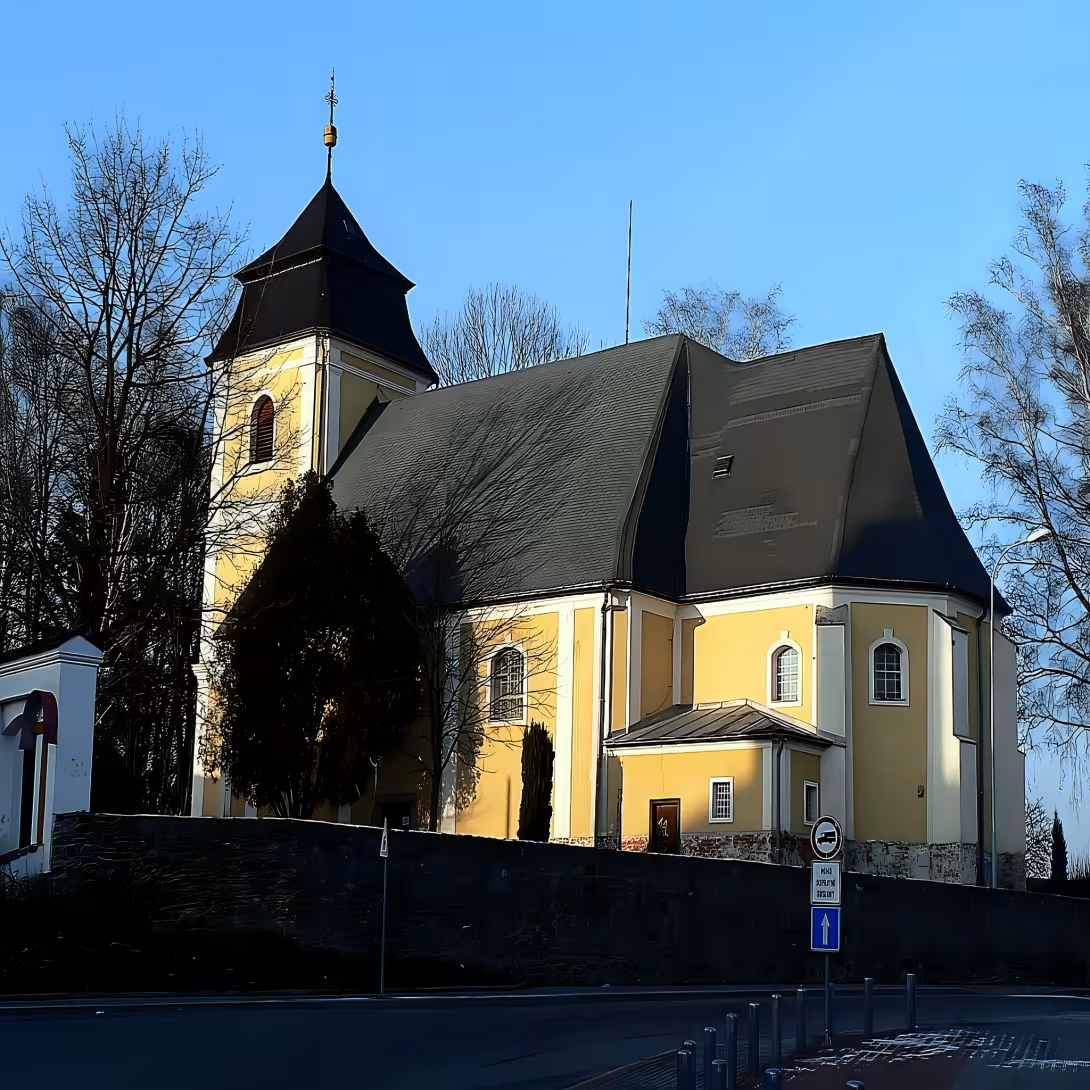
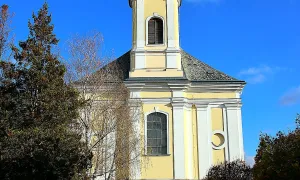
The Church of St. Barbara in Zábřeh is a medieval Gothic building with Baroque reconstruction from 1772, which was listed on the list of cultural monuments in 1958. According to legend, it was founded behind the city walls by members of the Templar Order; The oldest written mention dates back to the second half of the 15th century from John the Elder Tunkle's mosque foundation from Brníček. From this period a gothic presbytery with a polygon plan, protected by an external support system, was preserved.
During the Reformation, the temple was universally brotherly. From this period come two Renaissance bells which Ladislav Velen of Žerotín had cast. The largest of them, the bell of Saint Barbara from 1614, was created by the bell man Donák Schrötter of the Guesthouse and is among the most important bell works in North Moravia. The second bell, Saint Anne, was restored in 1917 during the First World War. After 1620 the faithful church returned to the Catholic Church and dedicated it to the Visitation of the Virgin Mary, but without enough the priests gradually lost their minds. In 1719 he was struck by lightning, which severely damaged the tower and roof. By 1750, the condition deteriorated so much that it reminded us of the ruin; The demolition was only prevented just before the end.
A key turn came in 1772 with the start of repair and reconstruction. During the next two years, the work was completed and a new mobility was acquired. The main altar was dedicated to Saint Barbara with her image; side altars decorated other paintings. The set of paintings of the Cross Road represents the peak of late Baroque art, based on the creation of Johann Wenzel Bergla. These are Rococo paintings with gilded cuttings; five of them are attributed to the painter Ignatius Oderlitzký. In 1769, the Baroque organ was installed, which served until 1931. On the fourth December 1774 the church was sanctified in honor of St. Barbara, who became the cemetery temple - the cemetery was gradually moved from the parish church and the burial continued here until 1911.
The 20th century brought joint care. The church was repaired in 1929 and for the second time in 1949-1950; In 1931 he received a new organ from Matìj Strmisly's workshop in Uherské Hradiště. A new plaster in 1976, a roof and a tower repair in 1980. However, since the 1990s, his condition has fallen; he has been closed and has been through break-ins. In 1994, an ambitious reconstruction proposal from the OSA study, which would fundamentally change the internal arrangements, was not implemented due to the opposition of the monuments. The subsequent clearance caused further damage.
The restoration began in 1999 with a restoration survey which revealed seven gothic windows in the presbytery. In 1999-2000, fourteen paintings of the Cross Way, stored in the church of St. Bartholomew, were restored. In 2000, the memorial bell of St. Barbara returned to the tower, which has been hanging in the tower of St. Bartholomew's Church since 1942. Since 2004, it has been generally made available to the public twice a year by local voters. Since 2007, the Civil Association of Saint Barbara Zábřeh has been engaged in the systematic restoration of the temple with the support of the Archbishop of Olomouc.
Then and now
Drag the slider to compare how the landmark may have looked when it was built with the view today.
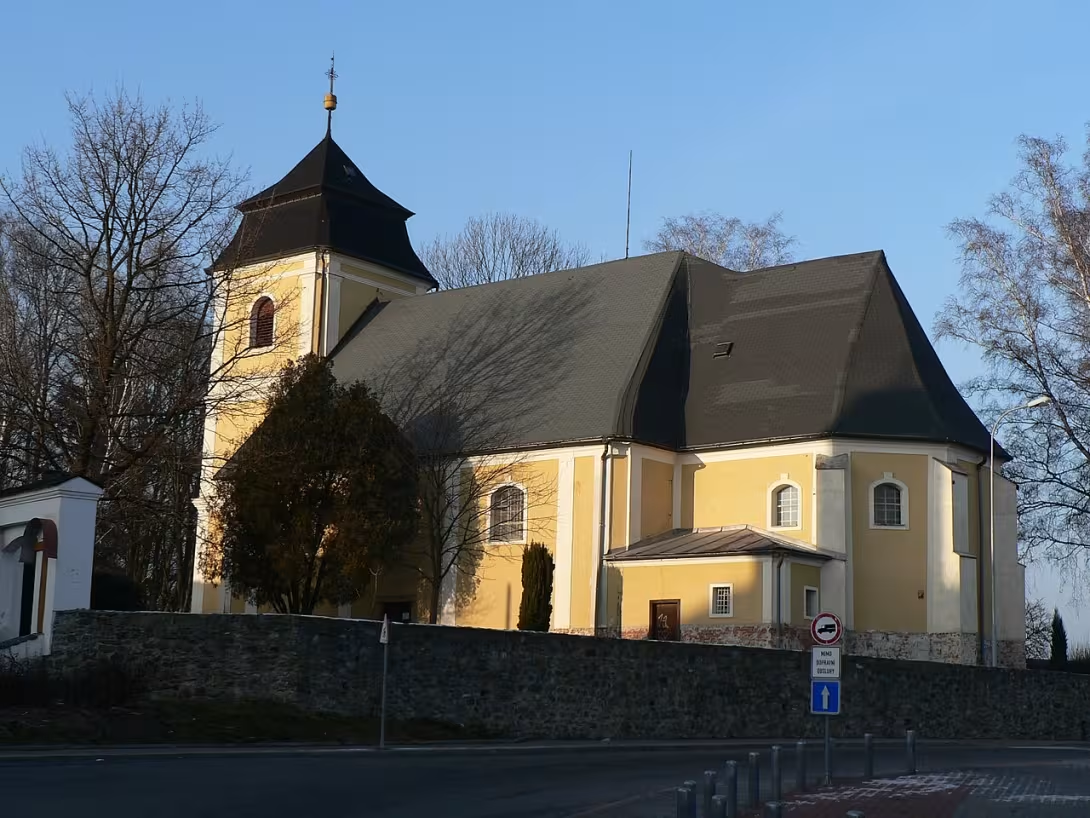
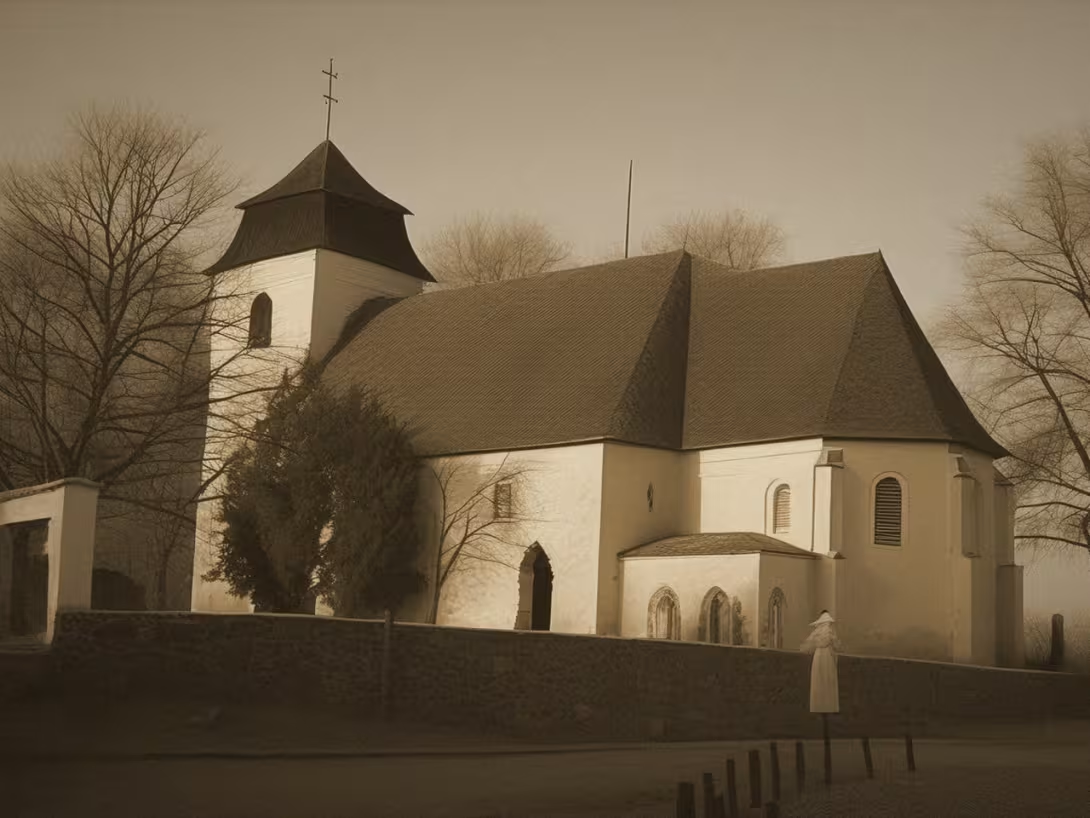
The historical appearance on the left is an AI-generated visualisation and serves as inspiration only.
Historical milestones
- 1450
- The first written mention of the church in the mosque of John the Elder Tunkl from Brník.
- 1614
- The rain of the bell of St. Barbara, important bell sights in North Moravia.
- 1719
- Damage to the church by lightning, which destroyed part of the tower and roof.
- 1774
- The consecration of the church to the honor of St. Barbara after Baroque reconstruction and new initiation as a cemetery temple.
- 1958
- Putting the church on the list of cultural monuments.
- 1999
- A restoration survey in which seven gothic windows were identified in the presbytery.
- 2007
- The establishment of the civil association Saint Barbara Zábřeh for church renewal.
Architectural development
A Gothic presbytery with a polygonal plan and a 15th-century support system was damaged by lightning in 1719. In 1772- 1774 a Baroque reconstruction took place, during which the church was adapted to the cemetery temple. The interior was supplemented by a new mobility, including altars and paintings of the Cross Way. Small repairs were made in the 20th century, but since the 1990s the church has been neglected and partially destroyed.
Historical events
- 1450
- The first written mention of the church in the mosque of John the Elder Tunkl from Brník.
- 1614
- The rain of the important bell of St. Barbara by Donát Schrötter from the Guesthouse.
- 1774
- The consecration of the church to the honor of St. Barbara after Baroque reconstruction and new initiation as a cemetery temple.
- 1958
- Putting the church on the list of cultural monuments.
Points of interest
- St. Barbara's Church in Zábřeh is a medieval Gothic building with a preserved presbytery from the second half of the 15th century, protected by an external support system.
According to legend, it was founded by members of the Templar order behind the city walls, but the first written mention dates back to the same period as the Gothic presbytery.
- The biggest bell of St. Barbara from 1614, cast by Ladislav Velen from Žerotín, is one of the important bell works in North Moravia.
- The church was rebuilt in 1772 by the baroque and in 1774 sanctified in honor of St. Barbara, and became a cemetery temple until 1911.
- In 1999, the original Gothic system of seven windows in the presbytery was discovered during restoration research.
Guide
This guide is narrated by a synthetic voice generated by artificial intelligence.
Show guide text
This text was created by artificial intelligence and has not been editorially reviewed. It may contain inaccuracies.
Welcome to St. Barbara's Church. You are standing in a place where centuries are met, where stone walls touch the sky, and where every stone tells the story of faith, endurance, and changes in time. Take a look at this structure and try to perceive its ununified but fascinating form. At first glance, you may be interested in the strange mixture of styles that are mirrored in her walls. You see the strength and stability of the medieval goth that intertwines with the softer and more extreme baroque line. It's a building that kept telling its story through changes that gave it time.
Now let's go back deep into the past to understand how everything started. Although this church seems to have been standing here since always, our first solid historical footprint dates back to 1450. It was at that time that this place was mentioned in writing for the first time by Jan Older Tunkle from Brníček. Imagine then Zábřeh, a city that had only just taken up its important position, and this church, which was already the center of spiritual life. Since then, Barbara's church has become a silent witness to many events that have shaped this area. It was not just an ordinary house of prayer, but a place that carried the weight of social and religious change.
Now pay attention to the architecture itself, which is right before your eyes. If you look at the back of the building, its presbytery, you'll see its typical polygonal shape. This multi-helical structure is a typical characteristic of the Gothic style, which is preserved here as a basic skeleton of the entire building. Note also external support systems. These stone pillars, which lean on the walls, are not just an aesthetic element; perform a major technical function. It was thanks to them that the walls of the church could be built so high that they allowed the creation of larger spaces that carry a sense of grandeur.
Although the construction is originally Gothic, its present appearance is the result of a fundamental transformation that took place in the second half of the eighteenth century. From 1772 to 1774 the church underwent extensive Baroque reconstruction. This era has brought a new feeling, a new softness and another way in which light plays with walls. This reconstruction was also linked to the new sanctification of the church, after which it became a cemetery temple, which gave him a specific, melancholy atmosphere that still radiates here.
But the history of this place wasn't always about building and beauty. We must also remember the moments of destruction and renewal. In 1719 the church became a victim of natural force. Lightning hit the building directly and caused devastating damage to the parts of the tower and the roof. Imagine the moment of horror and the subsequent work of many people who had to take care of the restoration of this sacred place. It is this ability to overcome destruction and rise again from the ashes that is one of the pillars of St. Barbara's history.
Now I want to take you to one of the greatest treasures this church holds. Even if you can't touch him right now, his presence is felt throughout the space. It's a 1614 Saint Barbara bell. This unique piece of bell art is one of the most important monuments of North Moravia. Imagine the sound this bell made. At a time when the world was turning into a chaos of wars, his voice had to be a symbol of stability and hope for all the people around him. This bell is not just metal; It's the voice of history that has been echoing for centuries.
If you look at the details in the presbytery, you may not realize what secrets were revealed here until recently. Seven Gothic windows were identified in the presbytery during the 1999 restoration survey. This discovery has enabled us to better understand the original face of the church and remind us that even after hundreds of years history can still hide new and unexpected treasures waiting for its discovery.
And if you're attracted to the vague, almost mystical side of this place, pay attention to the legend that whispers about the church. They say it was founded in the old days by members of the Templar Order. Although the historical records at our disposal do not directly confirm this theory and the first written reference dates back to the 15th century, this idea gives the place a special touch of mystery. The idea of knights in white robes with a red cross, as they build this temple behind the city walls, gives every stone in this space some weight and depth.
In your next step towards the heart of the church, don't just be enchanted by its size, but pay attention to its rich mobility. Most of the elements you see inside come from the eighteenth century and perfectly complement the baroque character of the place. Every altar, every bench and every detail of the interior was designed to give the visitor a sense of respect and peace.
St. Barbara's Church is not just a building of stone and mortar. It's a living organism that breathes the history of Zábřeh. It's a place where the Gothic power connects to baroque elegance and where the legend meets the harsh historical reality. I hope this brief introduction has helped you to better perceive the beauty and importance of this place. But now it's time for you to move on. Keep these images in your mind and let the church space just drift away. Look at every detail, feel the silence and atmosphere that time has created here. I wish you a beautiful tour and be enchanted by the spirit of history. Goodbye.
Frequently asked questions
Is Kostel svaté Barbory (Zábřeh) open to the public?
Yes, the church is open all year round and open to the public. The best time to visit is from April to October when the weather is mild and the surrounding nature is in full view.
How do I get to the place by car / public transport?
St. Barbara's Church is located in the heart of Zábřeh. By car you can reach right in front of the church, public transport (public transport) stops nearby.
How much is the entrance fee and is it paid on the spot?
Payment takes place directly at the church.
Is the tour suitable for children and seniors?
Yes, a church tour is also suitable for families with children or seniors. The church has wide stairs and ramps that allow access to people with health restrictions.
How long does the tour take?
The church tour takes approximately 30-45 minutes. If you want to know more about the history and architecture of the church, we recommend reserve 1 hour.
What are the opening times and booking is required?
The church of St. Barbara is open from Tuesday to Friday from 9: 00 to 5: 00, on Saturday from 10: 00 to 16: 00 and on Sunday from 12: 00 to 16: 00. Reservation is not necessary, but it is recommended to contact the church administration in advance when visiting larger groups.
What's interesting in the immediate vicinity?
In the immediate vicinity of the church is located the historical centre Zábřeh with a number of other monuments such as the chateau or town hall. There are also several restaurants and caviar where you can relax and strengthen.
For kids
Imagine going back 254 years until the church of St. Barbara in Zábřeh was still a medieval Gothic building. It's like you went or came to the place where this beautiful church is today.
When you close your eyes there, you realize it's in the middle of the historic city of Zábřeh. There are houses, streets and squares all around you that were once the center of shops and markets. And then there's the church of St. Barbara, which was originally built as a place of prayer and sanctuary for the locals.
Businesses nearby
Do you run a restaurant, accommodation, shop, museum, rental, wellness or other visitor service near this monument? Show yourself directly to the people heading to it — this is how they will see you in the app and on the web:
Nearby
{'memories': [{\ 'Nazek': 'Church of St. Bartholomew', 'distance': 'approximately 1 km', 'description': 'another important church in the centre of Zábřeha', 'description': 'Baroque chateau from the 18th century, which is another important cultural object in the surroundings.'}], 'priroda': [{'nazny': 'National Nature Reservation Zabradska meadows', 'description': 'approximately 3 km', 'description': 'Protected territory with rich nature and water fences'.]}]}
Accommodation nearby
Themed route
Thematic cruise route: Baroque and sacral treasures Zábřeha
1. Church of St. Barbara * Type: * Sacral building, dominant church in town. * Why visit? * A unique example of Baroque architecture with rich decoration and historical significance. The church bell tower is the symbol Zábřeha and offers panoramic views of the surrounding landscape.
2. Church of St. Bartholomew * Type: * Another Baroque church in the city centre. * Why visit? * It served as temporary preservation of the bell of St. Barbara and is an important part of local sacral history. The interior is also interesting with its artistic elements.
3. Castle Zábřeh * Type: * Baroque chateau from the 18th century. * Why visit? * One of the most important Baroque buildings in the region, with rich history and representative architecture. It currently serves cultural purposes and is open to the public.
* The route is designed to combine the main sacral and cultural monuments Zábřeha in logical order. *
Seasonal recommendations
Spring In spring, the Church of St. Barbara in Zábřeh offers a unique combination of awakening nature and historical atmosphere. The surrounding forests and meadows dress up in green and yellow shades, while the sunlight, which is extended in the spring months, creates fine shadows on the stone walls of the church and highlights its Gothic details. The air is fresh but still cold, and in the morning the church is surrounded by fog, which gives the place a mysterious, almost mystical mood. Virtually, it is best to visit it in the first half of the day when there are fewer tourists and light is favourable to photography. It is recommended to warm but not too heavy clothes - spring weather can be variable, and even when the sun shines, evenings are cold. In view of the reconstruction, please inform yourself in advance of the limited access possibilities as some parts of the church may be closed.
Summer Summer brings the hottest and most lively atmosphere to Zábřeh when the Church of St. Barbara shines in full power. The sun, which rises high in the morning, illuminates its facade so that it seems to be made of semi-precious stones - light shades of sandstone and darker tones of window fillings create the contrast that is most pronounced this season. The surrounding area of the church is full of green, but also dry grasses, which are noisy on hot days. The best time to visit is early morning or late afternoon when it is less hot and crowds. It is recommended to light but protect from the sun clothes, hat and plenty of water - in the main summer season the surrounding church is busy, and even if the entrance is free, waiting times at the entrance can be longer. Due to the reconstruction, it is worth monitoring up-to-date information on the accessibility of the interior, as some rooms may be restricted.
Autumn Autumn brings a rich variety of colors to Zábřeh and a quiet, almost meditative atmosphere. At this time, St. Barbara's church is dressed in golden and red shades that reflect the surrounding forests and groves. The fog that rolls through the trees in the morning adds mystery to the place, while the sun slowly bowing to the horizon creates long shadows on stone walls. At advent time, the church gains a more serious, pre-Christmas character, when its interior may seem even more impressive thanks to shadows and silence. The best time to visit is in the afternoon when the weather is mild and the crowds are less than in the summer. Hot, layered clothing is recommended - autumn weather is usually unstable, and even when the sun shines, evenings can be cold. Due to the reconstruction, it is worth checking whether some parts of the church are closed to the public, as the work on the facade or interior may restrict access.
Winter Winter transforms the Church of St. Barbara into a fairy tale scenery, where white snow covers the surrounding landscape and the church appears to be carved from ice plates. The freezing air and calm atmosphere give the place reverence, while the sun, which barely penetrates the fog at noon, creates fine, blue glare on the stones. In the winter months the church is almost deserted, which allows for a tour without crowds, but the opening time is shorter and some parts may be inaccessible due to reconstruction. The best time to visit is in the afternoon when light is more favourable and temperatures are less extreme. Very warm but comfortable clothing is recommended - winter frost in Olomouc Region can be sudden, and even a short walk around the church requires sufficient thermal insulation. In view of the reconstruction, it is recommended to verify in advance which parts of the church are freely accessible, as some works may take place in the winter months.
Visualizations and artistic views


The visualisations are generated by artificial intelligence and serve as inspiration.
Photos from the area
Real photos taken near the monument


Zdroj a licence jsou uvedeny u každého snímku.
Atmosphere of the place
This atmospheric visualisation of the place and period was generated by artificial intelligence. It is not real footage of the location.
Tips from visitors
No tips yet. Be the first!
Log in and add your tip.
Sources and literature
Fotografie: Martin Vavřík / Public domain, rozlišení zvýšeno umělou inteligencí — Wikimedia Commons. The author and licence also appear when you hover over the image.
Faktickým podkladem tohoto textu byl článek na Wikipedii, jehož autory jsou přispěvatelé Wikipedie. Článek je dostupný pod licencí CC BY-SA 4.0.
Location on the map
Příběhy a pověsti
Legendy, pověsti a příběhy spjaté s touto památkou
Fotografie návštěvníků
Zatím žádné fotografie. Buďte první, kdo přidá fotografii z návštěvy!
Přihlaste se a přidejte svou fotografii nebo hodnoťte.
Za ověřenou návštěvu v aplikaci získáte víc bodů — poznáme podle GPS, že jste na místě.
Reviews and comments