






Kostel svaté Hedviky Slezské (Český Těšín) Church
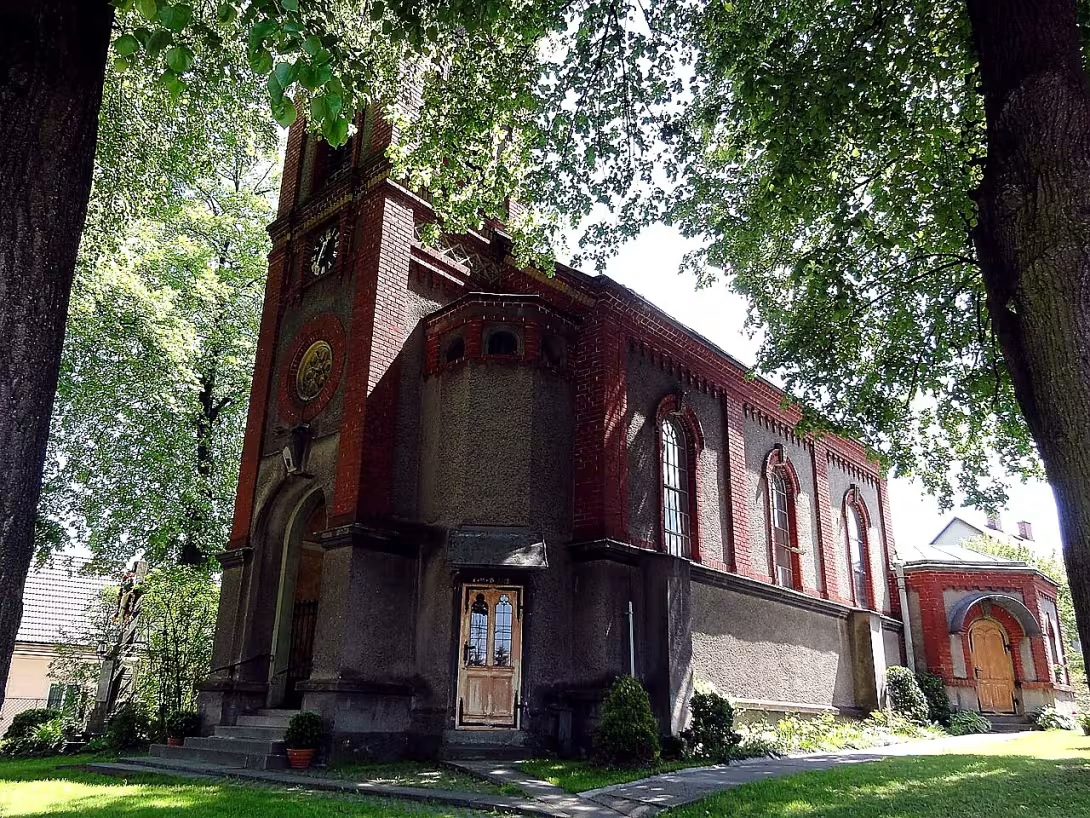
The church of Saint Hedvika Silesia in Svibica, the town district of Český Těšín, is a witness to the local community's initiative in the period of industrial development of the region. It is a one-boating filial church, built in a historic neo-romantic style, which, despite its moderation, radiates the dignity and effectiveness of sacral architecture at the end of the 19th century.
In the place of today's temple, the chapel has been standing since 1855, which over time has stopped calling out the needs of the parish. Local Mayor Tomanek convinced his fellow citizens of the need to build a larger building. The foundation stone was consecrated on 6 August 1892, the construction process continued quickly. On the 20th of September of the same year, the cross was consecrated for the church tower. In May 1893 two bells were consecrated by Josef Javorek, the owner of the local furniture factory; They were made by Karl Schwabe. The construction that was designed and carried out by the Teschen builder Friedrich Fuldy was completed in the summer of 1893. The final consecration took place on 24 September 1893. The project cost 15,000 gold - a considerable sum for a small parish.
Architecturally, the church is interesting in its moderation. The single-boat construction with polygonal closure is oriented north-south. On the north side there is a church tower with a steep needle roof; On the ground floor of the tower is the hall with the main entrance. The ship has three windows on both sides (both east and west) and is covered with a simple tent roof, which runs out the shield wall on the north side, on the south valba. The polygonal closure of the priestry is narrower than the ship. The facade is decorated with a combination of smooth plaster with red brick masonry.
The inner space induces balance. The boat is finished with a wooden ceiling on decorative garnish on white stone brackets. A wooden crust, just as moderate, is supported by two profile posts. The area of the priestry is opened with a high circular arch and is carved out by a brick vault. Coloured tiles and stained windows make up the only decorative elements.
To this day, the church serves the faithful according to their original destination. Religious services here celebrate the Roman Catholic parish Český Těšín in Czech and Polish, which reflects the multilingual character of the border region. The visitor will find here a modest but deeply human space, where architecture is covered in the background of a real mission - to be the roof of a common prayer.
Then and now
Drag the slider to compare how the landmark may have looked when it was built with the view today.
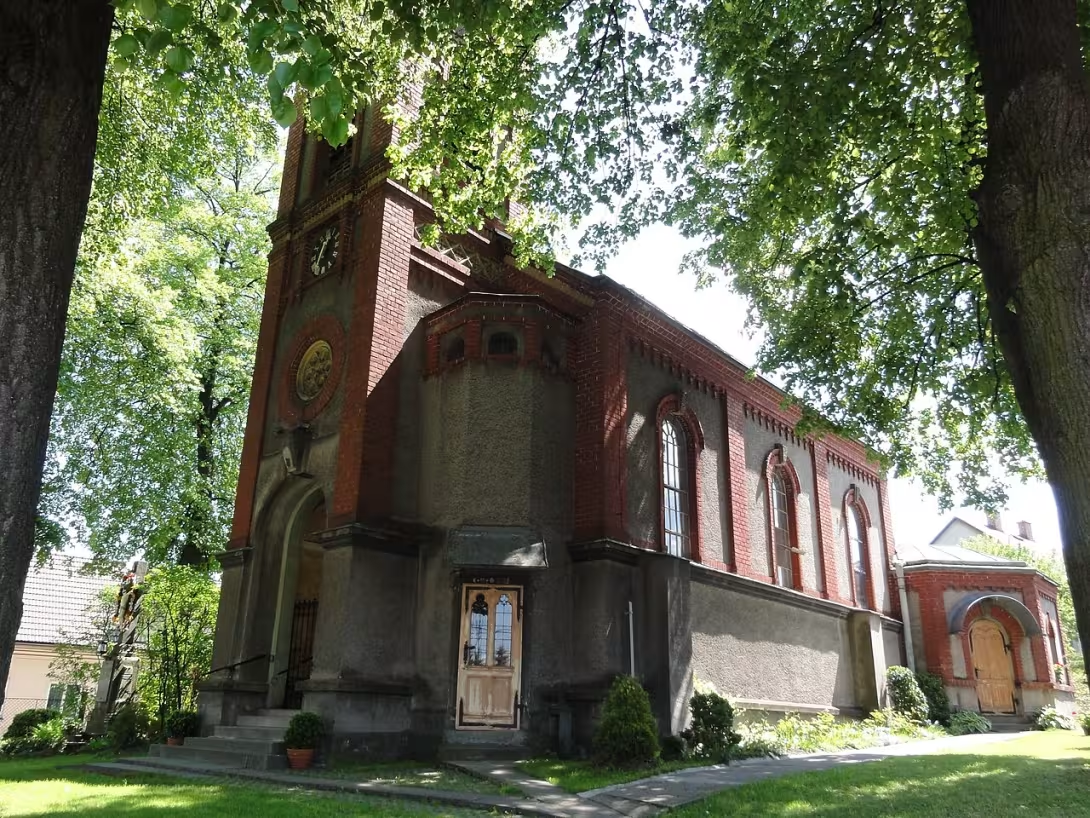

The historical appearance on the left is an AI-generated visualisation and serves as inspiration only.
Historical milestones
- 1855
- Built Chapel on site of contemporary church
- 1892
- Bearing in mind
- 1893
- Completion of construction
- 1893
- Final ordination
- 1893
- Two bells consecrated
- 1893
- Completion of construction
Architectural development
The church is built in a historic New Romanesque style in the direction north-south. On the north side there is a preplanted church tower with a steep needle roof.
Historical events
- 1855
- Built Chapel
- 1892
- Holy Base Stone
- 1893
- Holy Church
Points of interest
- The Church of St. Hedvika Silesia in Český Těšín is a witness to the local community's initiative in the period of industrial development of the region. The cornerstone was consecrated on August 6, 1892. The cornerstone was consecrated on August 6, 1892. The cornerstone was consecrated on August 6, 1892. The cornerstone was consecrated on August 6, 1892. The cornerstone was consecrated on August 6, 1892.
Guide
This guide is narrated by a synthetic voice generated by artificial intelligence.
Show guide text
This text was created by artificial intelligence and has not been editorially reviewed. It may contain inaccuracies.
Welcome to the church of St. Hedvika Silesian. You are standing in a place that is not only an important religious centre for Český Těšín, but also a living symbol of its history and identity. Look around you and feel the atmosphere of this place. In front of you is an elegant, small structure, which with its presence is peaceful and noble, even though it is located in an area that has been defined primarily by dynamic industrial development in the past. This church is not just a building of stone and mortar, it's a materialized story of people who lived here, worked and longed for something more than just everyday efforts to make a living. Feel the harmony with which this sacral architecture floats over the surroundings, and remember that this is where history meets the present.
In order to understand why this building is standing right here and why it is so important, we need to go back deep into the past, in the middle of the nineteenth century. It all started out much more modest. In 1855 only a small chapel was built here. At that time, this area was in a process of transformation, when traditional settlements began to form modern industrial parts of cities. But with the population growing and the city developing, the small chapel has become too tight for the growing community of believers. The need for a greater and more dignified place for prayer has become a clear signal. The process of conversion from chapel to church was not only a matter of space, but above all a matter of spiritual growth throughout the region.
Now pay attention to an important date in the history of this place. If we could return to August 1892, we would see a moment of great hope. On the sixth of August, the community of that time was the ceremonially consecrated cornerstone of the present church. It was a moment that meant confirmation of their efforts and unity to local people. The entire construction process was then carried out very quickly and efficiently. The construction was completed in 1893 and in the same year the final consecration took place. It was a period of peak bloom when architecture became an expression of a new era. In 1893, two bells were also consecrated, whose voices should not only address the people at that time, but also those who would come after them. This whole process from laying stone to completion was proof of the incredible strength of the local initiative.
Now let's look at the very form of this building. Notice her style. The church is realized in the New Romanesque style, which is a style that resonated very strongly in the second half of the nineteenth century. This style seeks to return to tradition, to fortress and to some architectural cleanliness, which perfectly matched the need to create in a rapidly changing industrial world instead of peace and stability. The architect Friedrich Fulda was behind this whole design. His work here shows the right degree of elegance that you can perceive when looking at the overall appearance of the building. Even though the church is smaller, its proportions and the way it works with the form give it a sense of dignity. When looking at the facade and the overall structure, you can realize how the architect managed to combine the demands of the then sacral architecture with ease, which does not distract attention from the spiritual purpose of the place.
Now think about who shaped this church. Although the historical record of the individual believers from that time may not name each name, the largest figure here is the entire local community. This church is primarily a testament to the human will. At a time when the region was turning into an industrial centre, when new people were coming to change the old ways of life, these people decided to build something lasting. Their initiative was the engine that resurrected this place. The Church of St. Hedvika of Silesia is not only the work of architect Fulda, but it is a joint work of hundreds of people who put their energy, their efforts and their faith in it.
The interesting thing that may surprise you is how this church still functions as a bridge between people. Today, when borders often become more important than connections, this church remains a place where two cultures meet. The services are in Czech and Polish. It is fascinating proof that sacral space can be a place that does not solve national differences, but connects people under one roof through a common tradition and faith. This ability to coexist and share the same sacred place is one of the most beautiful properties of this place.
Looking at the church, you can ask yourself what all these walls have experienced. Many generations have passed since 1893, many joy and sadness that took place in these premises. The church saw both the flourishing and hard times of the industrial city, saw changes in political regimes and the transformation of the entire region. Yet it still stands here as a silent witness to time, reminding that even in the fastest-changing times there are values that remain constant.
Now, I beg you, let yourself stop for a while and just observe. Feel the silence that is being created around this building and try to imagine the moments when the bells were first called in 1893. Imagine the joy of people who saw their dream of a new church come true. This history is not just in books, it's in every stone you see here.
Thank you for choosing to devote a few minutes of your time and get to know this important point on the map of Český Těšín. We hope that this view of the history of the church of St. Hedvika Silesia has brought you new insight and that its atmosphere has enriched you. Please continue your walk and discover other secrets of this city. Every street and every monument here has a story waiting to be revealed. We wish you a beautiful and inspiring rest of the day.
Tips for visitors
{'text': 'The best time to visit St. Hedvika's church is during autumn or spring weather, when the weather is sunny and the temperatures are mild.'}
{'text': 'The church is well accessible by car, it can also be visited by public transport. Information about the connection can be found in the search engine.'}
{'text': 'When visiting a church, it is advisable to take your photographable aids such as telelens or stabilizer.'}
{'text': 'Around the church there is a park where you can relax and relax.'}
{'text': 'For families with children it is advisable to visit nearby park where you can have fun and relax.'}
Frequently asked questions
Is Kostel svaté Hedviky Slezské (Český Těšín) open to the public?
Yes, the church is open to visitors during the usual hours of service and special events.
How do I get to the place by car / public transport?
By car you can park in nearby parking lots, or use public transport with the Frýdek station. From this point you can take the bus to Český Těšín.
How much is the entrance fee and is it paid on the spot?
The entrance to the church is free, but if you want to visit the courtyard or adjacent premises during special events, a small fee may be required.
Is the tour suitable for children and seniors?
Yes, the church is also accessible to families with children and elderly persons. The inside of the church is neither large nor complex, which makes it the perfect place for everyone.
How long does the tour take?
A tour of the church can take approximately 30 minutes if you just want to walk through and enjoy architecture.
What are the opening times and booking is required?
The opening hours of the church may vary depending on liturgical events. Usually there is no need for reservations, but we recommend checking the current times before visiting.
What's interesting in the immediate vicinity?
The historical centre of Český Těšín, museums and parks are located nearby. It is also possible to walk on the river Ostravice or visit nearby shopping centres.
For kids
Imagine going back 125 years and walking the streets of Český Těšín. It's 1893, and there are people in a room full of bubbling and glitter who will be the memory of Saint Hedvika Silesian today. They want to build a beautiful church for their community because people were breeding there like mice in a field. And what was closest to that? Medieval chapel! But the chapel has become insufficiently widespread, and now it's time for something truly spectacular.
Businesses nearby
Do you run a restaurant, accommodation, shop, museum, rental, wellness or other visitor service near this monument? Show yourself directly to the people heading to it — this is how they will see you in the app and on the web:
Nearby
ITEX Show interactive overview of the surroundings - restaurants, accommodation, rentals and other places within a 15 km radius.
Data: OpenStreetMap contributors, 15 km radius.
‡ Historical monuments
- Fallen airmen (1.7 km)
- Mieszko I Książę Cieszyński (1.9 km)
- Museum Těšín (2.0 km)
- Victims (2.1 km)
- Museum Protestantyzmu (2.3 km)
- Museum of Printer (2.4 km)
- Z8ZX (2.4 km)
- Pomnik Cesarza Francisco Józefa I (6.0 km)
Restaurant and catering
- Terra (6.8 km)
- Restaurant Hockey (7.6 km)
- Restaurant Napoleon (7.9 km)
- Restaurant Trisia (8.0 km)
- Burger bar (8.0 km)
- Pizzeria Cafe Vergnano (8.1 km)
- Lunch from Sikorek (8.3 km)
- Silesian Krčma (8.4 km)
Accommodation
- Hotel Piast (1.6 km)
- Hotel Central (1.8 km)
- Brama Wyższax3ZX (2.4 km)
- Liburnia (2.8 km)
- Fundacja (3.2 km)
- Gambit (3.4 km - Nestora Bucewicza 18)
- Mercure Cieszyn (4.2 km - Motelowa)
- Terra (6.8 km)
› Rental and sports
- Textbook swimming at school under Zvonek (0.1 km - Under Bell 1865 / 30)
- Biegshop.pl (1.8 km)
- Trefa Sport (1.8 km)
- Domino Sport (2.0 km)
- Atomica Sport (2.4 km)
- Totem (2.8 km)
- Gyzna (6.8 km)
- Sportisimo (6.9 km)
© Tourism and nature
- Hory (4.4 km)
- Weighted furnace Jasiowka (5.5 km)
- Above Button (5.8 km)
- Chełm (9.2 km)
- Weighted furnaces, valuable technical lands (9.5 km)
- U of God's Cross (11.0 km)
- Small Maple (11.4 km)
- Maple (12.1 km)
Accommodation nearby
Themed route
1. Church of St. Hedvika Silesian (sacral building) - Explore the inner space and capture the spiritual atmosphere of the temple. 2. Church reservoir (outdoor area) - Take a walk around the building and enjoy your peace. 3. Church Tower (architectural element) - Climb up to view the nearby area.
Seasonal recommendations
The spring in the Church of Saint Hedvika Silesian blossoms in fine light, when the sun's rays penetrate through the stained glass and illuminates the interior with pastel tones. The surrounding park wakes up, trees and shrubs are wrapped in fresh green and flowers along the path to the temple attract to a slow walk. We recommend arriving early in the morning when the visitors are less and you can enjoy the sound of the bells in peace. Laminated clothes with light coats protect you from frequent spring showers, and if you want to capture the atmosphere, choose the time around dawn when light changes and creates dramatic shadows on stone columns.
Summer brings the sun to the Church of Saint Hedvika, which highlights the details of Baroque statues and gold ornaments, and the surrounding city is lit up by the tourist rush. High temperatures and long days attract late afternoon visits, but it is at that time that crowds can appear, especially during weekends. It is best to arrive right after opening, when the queues are shortest and the air is not overheated yet. Light clothing, sunglasses and plenty of water will make you comfortable, and if you want to escape noise, choose a less busy day of the week.
The autumn season covers the Church of Saint Hedvika in golden and red shades, as the leaves of trees in the surrounding area slowly fall down and form a fragile mosaic along the path. Mild light of the midday sun penetrates the stained glass and creates warm, nostalgic tones that underline the historic atmosphere. At this time, the number of visitors is decreasing, allowing for a more peaceful tour. We recommend to dress in comfortable layers - sweater or light jacket - and choose the afternoon hour when the light is most pleasant and the temperature is still favourable, but it is no longer hot as in summer.
Winter in the Church of Saint Hedvika brings a quiet, almost mystical impression when the snow covers the roof and surrounding landscape, and inner lighting is reflected from white surfaces, creating a contrast game of light and shadow. The opening hours are shorter and the interior may be colder, therefore it is necessary to wear a warm coat, hat and gloves. Come in the late afternoon, when the snow lights up after the afternoon sun and you can enjoy a quiet atmosphere without crowds. In winter, it is also advisable to monitor current information on opening times as it may change depending on weather conditions.
Visualizations and artistic views


The visualisations are generated by artificial intelligence and serve as inspiration.
Photos from the area
Real photos taken near the monument


Zdroj a licence jsou uvedeny u každého snímku.
Atmosphere of the place
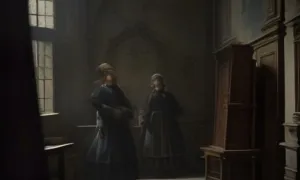
This atmospheric visualisation of the place and period was generated by artificial intelligence. It is not real footage of the location.
Tips from visitors
No tips yet. Be the first!
Log in and add your tip.
Sources and literature
Fotografie: D T G / CC BY-SA 3.0 — Wikimedia Commons. The author and licence also appear when you hover over the image.
Faktickým podkladem tohoto textu byl článek na Wikipedii, jehož autory jsou přispěvatelé Wikipedie. Článek je dostupný pod licencí CC BY-SA 4.0.
Location on the map



Příběhy a pověsti
Legendy, pověsti a příběhy spjaté s touto památkou
Fotografie návštěvníků
Zatím žádné fotografie. Buďte první, kdo přidá fotografii z návštěvy!
Přihlaste se a přidejte svou fotografii nebo hodnoťte.
Za ověřenou návštěvu v aplikaci získáte víc bodů — poznáme podle GPS, že jste na místě.
Reviews and comments