



kostel svaté Kateřiny Alexandrijské ve Stráži nad Nisou Church
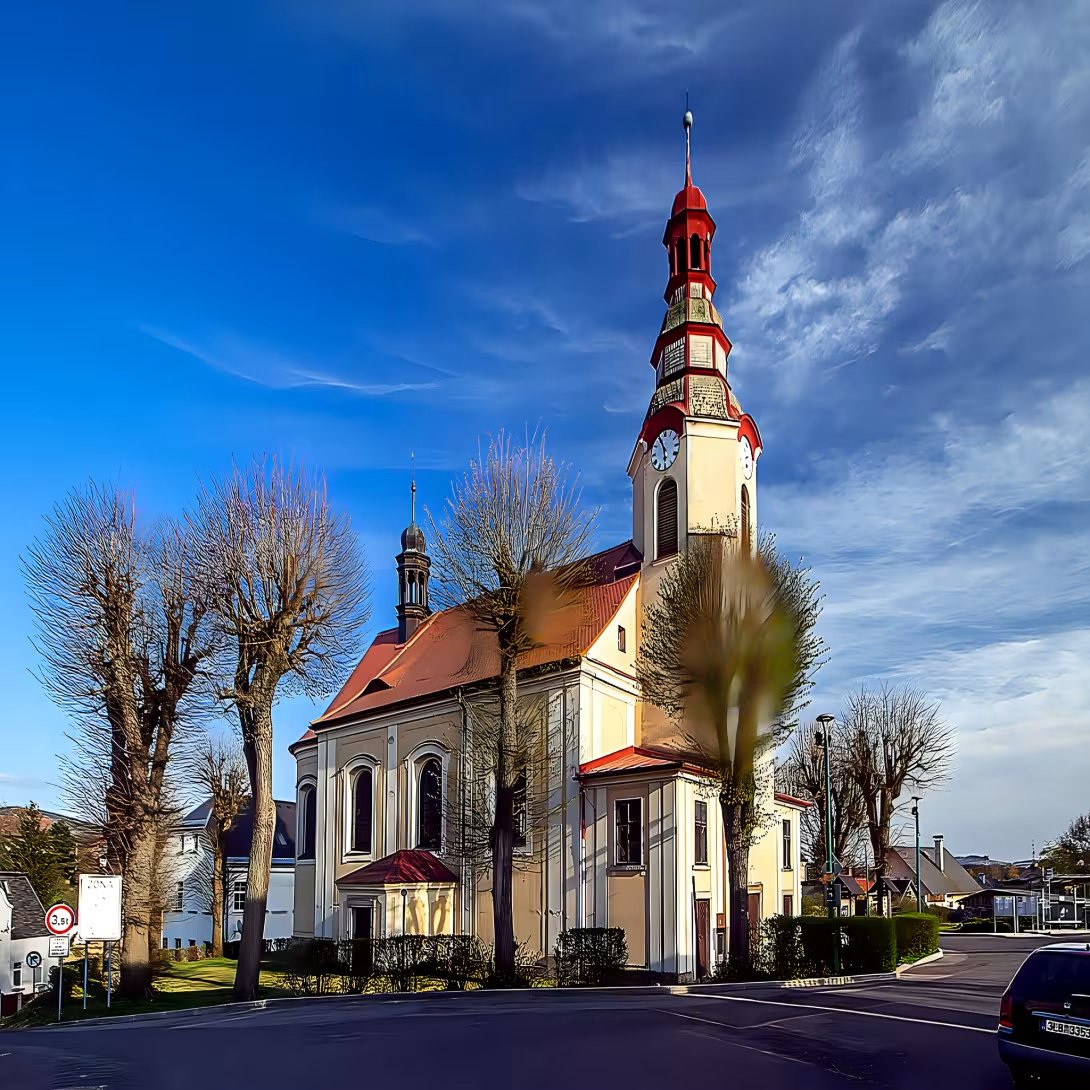
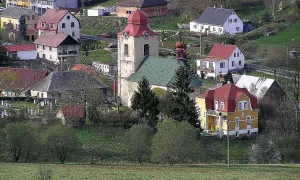
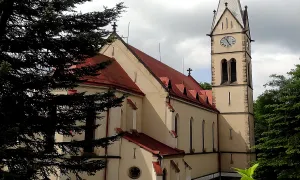
The Church of St. Catherine of Alexandria stands in the Guard of Nisa as a dignified witness to over three centuries of local religious history. It is a single-boat Baroque parish church of the lithomeric diocese, built in 1728. Since 1966, the state has protected it as a cultural monument.
The history of this place goes far beyond the current construction. Originally, there was probably a wooden church, from which only a mention of his bell was preserved. In 1599 it was replaced by a Renaissance church - Lutheran, in accordance with the period conditions. After 1627, the authorities tried to gradually reCatholic the municipality, but this process lasted a long time. In 1650, there was not a single Catholic in the village. The church was repaired in 1671, as evidenced by the dating carved into the corrugated tower.
A major change came in 1727-1728. As part of the wave of church repairs on the gallasov estate, the old building was demolished, only the tower was preserved. The new baroque church, which grew here, was equipped with rich interior facilities. Part of the interior came from the original building - especially the early Baroque pulpit from 1686 from carpenter J. Posselta or organ from 1721. Minor modifications were followed in 1856-1859, in 1873 the left music ring was added, but the essence of the object remained.
Architecturally, the church is rectangular, hall with semi-circular presbytery and sacristy on the south side. The characteristic part is the западí tower - prismatic with polygonal tip and covered with double onion shagging. The interior offers rolled vaults with lunettes and slightly excavated mirrors on the ceiling. The wooden three-arm circle is decorated with sixteen paintings from the life of Christ and the Virgin Mary from 1857.
The church is also affected by a sadder piece of history. This is where, on the evening of June 23, 1866, the first struggle of the Prussian-Austrian war took place. Its victims were the captain Emerich Berta of the Hungarian town of Ladana - the first fallen of this conflict. The memorial plate on the south wall of the church and the monument with a cross on the southeast corner of the neighbouring square commemorates this tragic moment.
The internal device comes from various epochs. The main altar is baroque from around 1728, two side classical altars are from 1857. The organ - originally a Baroque tool from 1721, which, during the 20th century, has undergone extensive repairs and extensions to today's twelve registers, deserves particular credit.
The church is still a vibrant parish sacristy and is worth visiting as a significant example of the Baroque architecture of the period of the post-white mountain with deep historical roots.
Then and now
Drag the slider to compare how the landmark may have looked when it was built with the view today.
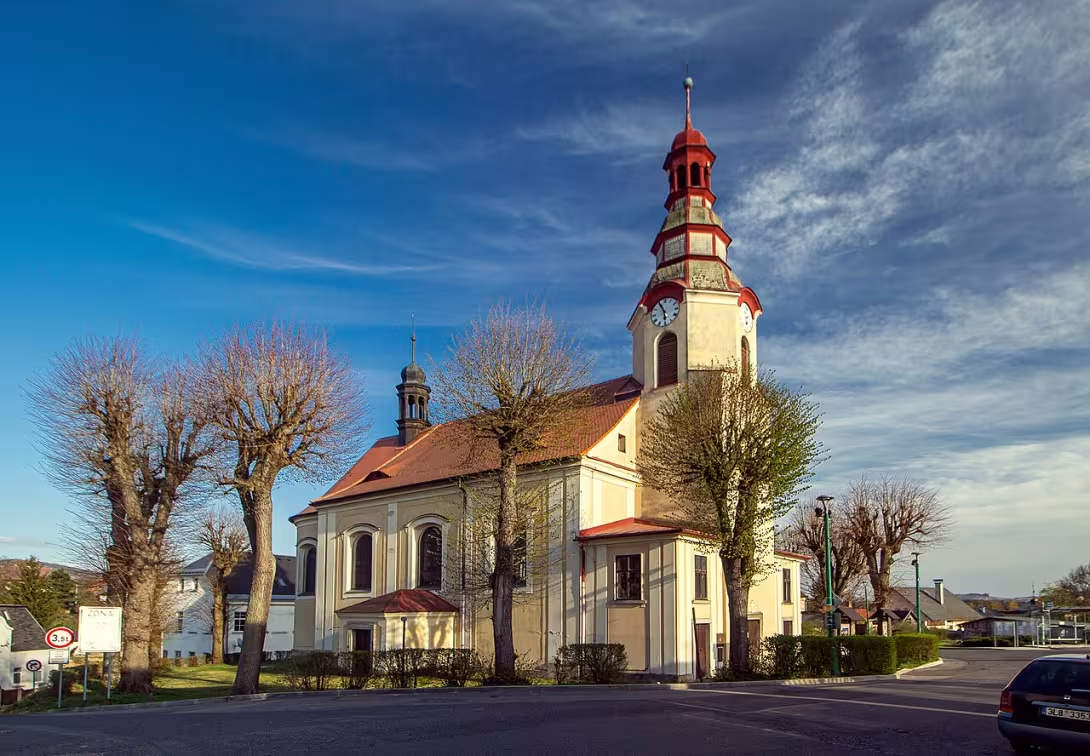
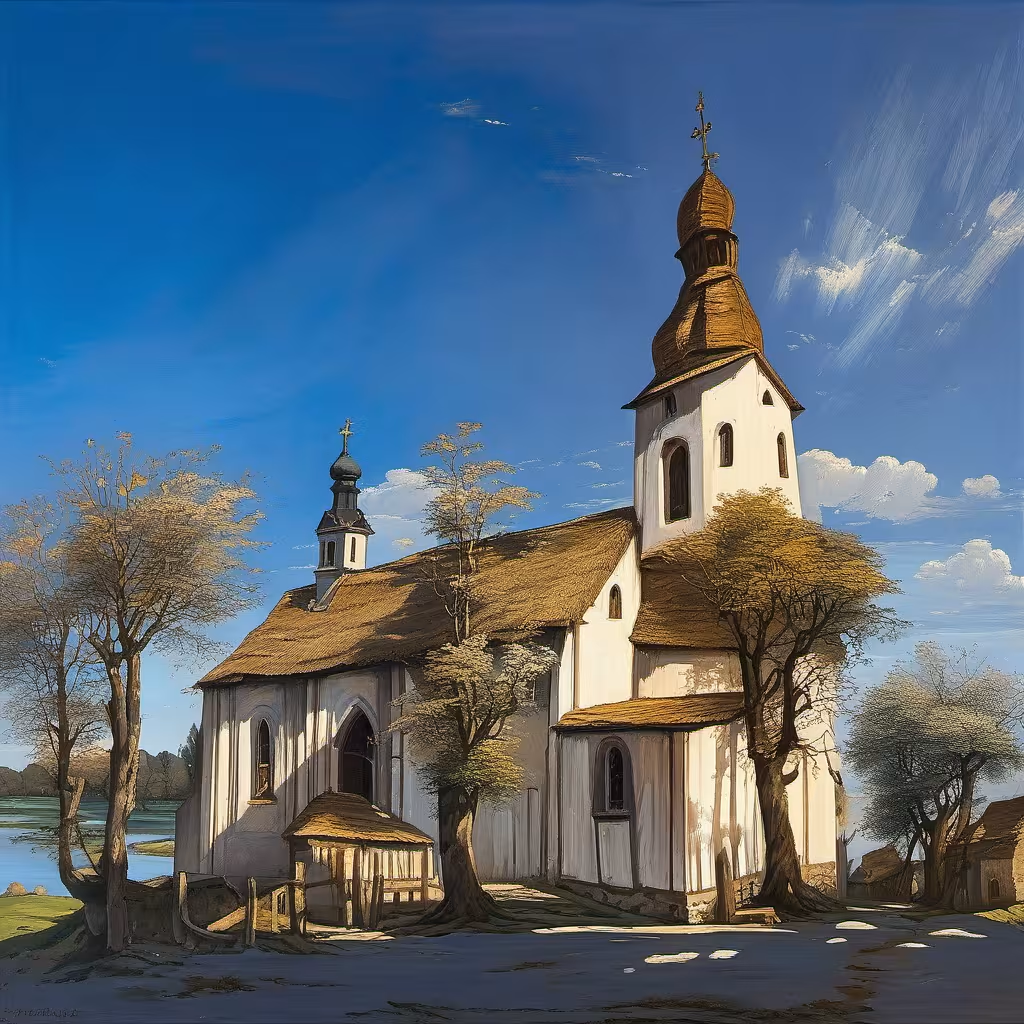
The historical appearance on the left is an AI-generated visualisation and serves as inspiration only.
Historical milestones
- 1599
- A Renaissance Lutheran church built.
- 1728
- The Baroque reconstruction of the single-boat church is completed.
- 1866
- In the Guard of Nisou there was the first fight of the Prussian-Austrian war.
- 1904
- New organ installed by Heinrich Schiffner.
Architectural development
The oldest documented building was wooden, replaced by a Renaissance church in 1599. During the Baroque reconstruction in the years 1727-1728, the old building was demolished up to the tower and replaced by a new single ship with a valence vault. During the 19th century there were minor extensions including the extension of the left musical circle.
Historical events
In 1599 a Renaissance Lutheran church was built replacing an older wooden building. In 1727-1728 a major Baroque reconstruction took place today. On 23 June 1866, the first struggle of the Prussian war took place here.
Owners
Guard of Nisou Parish
Points of interest
- The church of St. Catherine of Alexandria was built in 1728 as a single baroque parish church and since 1966 it has been protected as a cultural monument. - Before the present construction there was a wooden church and since 1599 a Renaissance Lutheran church, while still in 1650 there was not a single Catholic in the village. - During the construction of the new Baroque church in 1727-1728, the old building was demolished, but the original tower was preserved. - In the evening of June 23, 1866, the first struggle of the Prussian-Austrian War took place at the church, the first victim of which was the captain Emerich Berta. - The inner device includes a valuable early Baroque pulpit from the carpenter J. Posselta and the organ from 1721.
Guide
This guide is narrated by a synthetic voice generated by artificial intelligence.
Show guide text
This text was created by artificial intelligence and has not been editorially reviewed. It may contain inaccuracies.
The Church of Saint Catherine of Alexandria in Stráž nad Nisou is a Roman Catholic parish church of the Litoměřice diocese. The present single-nave Baroque building dates from 1728. Since 1966 it has been protected as a cultural monument.
A wooden church originally stood on this site. We know only that it had a bell. In 1599 it was replaced by a Renaissance Lutheran church. After 1627 the local authorities attempted to gradually return the parish to the Catholic faith. Yet even in 1650 there was not a single Catholic living here. In 1671 the church was repaired, as documented by the date on the weathervane on the tower. Between 1727 and 1728 a wave of church repairs took place on the Gallas estates. The old building was then demolished, only the tower remained and a new Baroque church was added to it. In 1873 the left music gallery was added.
The church is rectangular and hall-like. It has a semicircular presbytery and a sacristy on the south side. A prismatic tower stands on the west, polygonal at the top and covered with a double onion dome. The nave is vaulted with a barrel vault with lunettes and coffers, that is slightly recessed surfaces on the ceiling. The wooden three-armed gallery is decorated with sixteen scenes from the life of Christ and the Virgin Mary. They are painted on canvas and date from 1857.
The high altar is Baroque, from around 1728. Two neoclassical side altars are from 1857. They bear images of the Immaculate Virgin Mary and Saint Joseph, which were painted in 1892 by Maschek from Rychnov. The oldest piece of furnishing is an early Baroque pulpit by carpenter Posselt from 1686. It comes from the previous church. It is hexagonal and decorated with images of the four evangelists and Saint Paul.
Shortly after a bishop's visitation in 1904, the parish decided to acquire a new organ. It was built by the Prague firm of Heinrich Schiffner for 4,018 crowns, which were collected from charitable donors. The organ was consecrated on November 20, 1904. It has twelve stops and pneumatic action. In 1918, 27 tin pipes were removed for the arms industry, as were the bells. New pipes were supplied by the Krnov firm Rieger Brothers. The organ then sounded again in full force on April 5, 1922, on the feast of the Resurrection.
In Stráž nad Nisou, known in German as Habendorf, the first skirmish of the Prussian-Austrian War took place in the evening of June 23, 1866. Captain Emerich Berta from the Hungarian town of Ladany fell in it, the first victim of this conflict. A memorial plaque on the south wall of the church nave commemorates him. At the site where he died, in the southeastern corner of the square, stands a monument and a cross.
Tips for visitors
The best time to visit the Church of St. Catherine of Alexandria in the Guard of Nisou is in the morning during the weekdays, when the village is quiet and you can quietly look at this Baroque sacral building from 1728 built on older foundations. You can use a car or local public transport to get to the location, and check the current connection in the respective connection search engine; the village and its surroundings can be easily parked.
Take your comfortable shoes for a tour along the surrounding area and, if you are interested in the spiritual dimension of the place, a quiet respect for the parish church of the lithomeric diocese. If you like to photograph, the best light for capturing the exterior of a single-boat building is in the afternoon, when the sun picturesque illuminates the facade of the church standing in the heart of the village.
In the immediate vicinity of the church, you can visit a memorial and a cross in the southeast corner of the square south of the building reminiscent of the death of Emerich Berta. Since Stráž nad Nisou is located in the immediate vicinity of Liberec, you can reach all city facilities and other possibilities for a short trip to the 30-minute surroundings.
When visiting with children you will appreciate the quiet surroundings of the village Stráž nad Nisou, where children can walk safely through the square and explore the surrounding church; I'm sure the older children will be interested in the historical story associated with the memorial and the cross of Emerich Berta.
Frequently asked questions
Can the monument be visited?
Religious buildings are usually open mainly during services; at other times a visit is normally arranged with the parish or the operator. We have not verified specific times.
Where is the monument?
Location: Bergerovo náměstí, Stráž nad Nisou, Liberecký kraj. The map on this page shows the exact spot.
Why is the monument protected?
It is listed in the Central List of Cultural Monuments of the Czech Republic as a cultural monument (register no. 26975/5-4450).
For kids
About 298 years ago, a magnificent church appeared in the valley of the Guard above Nisou, as if a holy lord had come out of the dark forest and built a beautiful temple. This temple is known as St. Catherine's Church of Alexandria. When it was finished in 1728, he could pride himself on the beauty that the eyes of the children and the elderly settlers had surprised.
Businesses nearby
Do you run a restaurant, accommodation, shop, museum, rental, wellness or other visitor service near this monument? Show yourself directly to the people heading to it — this is how they will see you in the app and on the web:
Events nearby
Zdroj akcí: otevřená data měst a obcí ČR (Národní katalog otevřených dat) a kalendář akcí Národního památkového ústavu.
Nearby
The church is located in the village Stráž nad Nisou in the immediate vicinity of Liberec. South of the church in the southeast corner of the square stands a monument and a cross at the scene of the death of Emerich Berta.
Accommodation nearby
Trips and activities nearby
Guided tours, tickets and activities nearby from GetYourGuide
Affiliate link: if you buy from the partner, we may receive a commission. The price for you does not change.
Search tours and activities →Themed route
I propose a thematic tour of the main destination and its immediate surroundings in the village Stráž nad Nisou.
1. Church of St. Catherine of Alexandria in the Guard over Nisou Type: Church (Main objective) Why is it worth a visit: This sacral building represents the dominant part of the village Stráž nad Nisou in the immediate vicinity of Liberec and forms the historical and spiritual centre of the place.
2. Monument and cross at the death site of Emerich Berty Type: Monument and cross Why is it worth a visit: This piety element is located south of the church in the southeast corner of the square and reminds of a local historical event associated with the death of Emerich Berta.
Seasonal recommendations
Spring in the vicinity of the Church of St. Catherine of Alexandria in the Guard of Nisou brings awakening nature, when the surrounding trees begin to bloom and complement historical Gothic architecture with their fine colours. Sun rays penetrate freshly green leaves and create a fine shadow game on ancient stone walls, with the atmosphere extremely calm and quiet. During this period you will not meet large crowds of tourists, so you will enjoy the tour in undisturbed silence. Since spring weather is very variable and often cold wind blows, we recommend wearing a waterproof jacket and solid shoes on wet forest roads. The best time to visit is in the morning, when the morning fog slowly retreats and the sun warms pleasantly.
Summer offers a completely different experience, dominated by rich green tree crowns forming a welcome shadow around the whole area and long sunny days that illuminate the adjacent cemetery and the building itself. The atmosphere is full of summer comfort, but with the arrival of the holiday months, the number of visitors who discover the beauty of the Liberec region grows slightly. To ensure a quiet tour without crowds choose either early morning hours or late afternoon, when the sun falls to the horizon and gives the memory a warm golden touch. From the point of view of clothing, a light summer dress or pants will suffice, but do not forget the headgear and plenty of fluids, because the temperatures in the open spaces can be quite high.
Autumn covers Stráž nad Nisou into a colorful palette of warm colors, where the surrounding trees play shades of yellow, orange and red, creating a perfect scenery for photography lovers. Light is low and soft in this period, which gives the exterior of the church melancholy and noble character, especially when the morning mist surrounds the entire village. Practical advice for this season mainly includes choice of layered clothes and quality waterproof shoes, as fallen leaves on the road are usually slippery and dew. Tourists are relatively few in the autumn months, but due to early dimming, it is best to plan a visit to lunch or early afternoon hours so that you can go through the nearby area.
Winter turns the church into a quiet, almost fairy-tale place, especially if the landscape is covered by a layer of fresh snow, which dampens the surrounding sounds and creates a deep contrast to the dark wall of the monument. The lighting is very specific due to the reflection of the light from the snow cover and early twilight, which makes the mysterious atmosphere of the whole place stand out. As temperatures in this part of the region fall sharply, it is absolutely necessary to wear a warm winter jacket, hat, gloves and robust shoes with anti-slip soles. Due to the shorter daylight and cold weather, we recommend arriving around noon when the outdoor temperature is highest and daylight allows safe movement in the snowy terrain.
Visualizations and artistic views


The visualisations are generated by artificial intelligence and serve as inspiration.
Photos from the area
Real photos taken near the monument

Zdroj a licence jsou uvedeny u každého snímku.
Atmosphere of the place
This atmospheric visualisation of the place and period was generated by artificial intelligence. It is not real footage of the location.
Tips from visitors
No tips yet. Be the first!
Log in and add your tip.
Sources and literature
Photos: VitVit / CC BY-SA 4.0, rozlišení zvýšeno umělou inteligencí — Wikimedia Commons. The author and licence also appear when you hover over the image.
Faktickým podkladem tohoto textu byl článek na Wikipedii, jehož autory jsou přispěvatelé Wikipedie. Článek je dostupný pod licencí CC BY-SA 4.0.
Location on the map
Příběhy a pověsti
Legendy, pověsti a příběhy spjaté s touto památkou

Fotografie návštěvníků
Zatím žádné fotografie. Buďte první, kdo přidá fotografii z návštěvy!
Log in a přidejte svou fotografii nebo hodnoťte.
Za ověřenou návštěvu v aplikaci získáte víc bodů — poznáme podle GPS, že jste na místě.
Reviews and comments