






kostel svaté Kateřiny (Herálec) Church
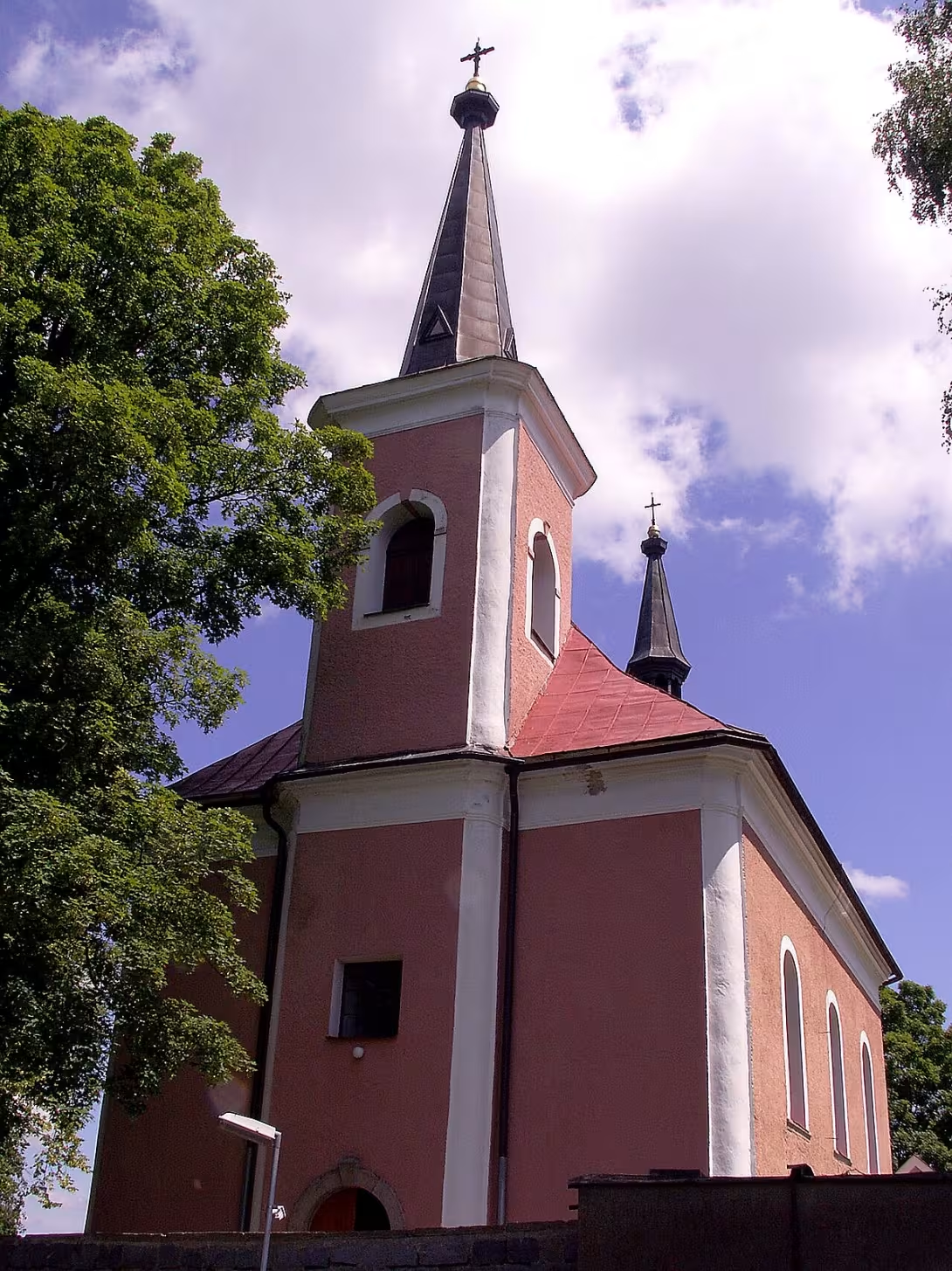
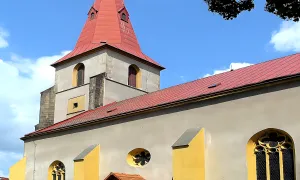
The Church of St. Catherine in Heralec is a Roman Catholic temple dedicated to St. Catherine of Alexandria. It is located in the Moravian part of the village Herálec and serves as parish church of the parish Herálec under the Žáková hora. Today it is protected as a cultural monument.
The present appearance of the church tells the story of endurance and rebirth. The construction of the original church dates back to the past, but it was marked by a natural disaster. In 1785, the garden was severely damaged by a violent storm. This destruction has become an impulse to a new beginning. During the following decade a new, late Baroque church was established, which was completed and ceremonially consecrated in 1790. At the beginning of the twentieth century, in 1900, the temple underwent further modernization - its facade and roof were replaced, thus gaining the form we know today.
The inside of the church gives a warm impression. In the priesthood - the most holy part of the temples - there is a main altar decorated with a holy tabernacle and an altar painting of St. Catherine of Alexandria, which is an expression of baroque ideal. In front of the ship stands a Marian side altar, which wreaths the way of the Virgin Mary. The walls are decorated with a painted cross path that leads the faithful from Christ's condemnation to his resurrection. The choir gallery has an organ that once filled the space with organ music. Among the other equipment there are wooden benches, which for centuries serve the faithful, and a baptist where the Christian journey begins.
The exterior of the church doesn't leave it out of life. The temple is situated right in the cemetery, where we meet with a view of the morgue - a construction that is inextricably linked to the fate of every community. This location gives the church a special bedeut - it is a place where they stop alive in moments of sadness and joy.
The visit to Heralka and its church offers readers and laymen the opportunity to understand how the Czech communities adapted to changes in times, how they recovered after disaster and how they kept their spiritual values. The church of St. Catherine in Heralec is a silent witness to these multi-annual процeses.
Then and now
Drag the slider to compare how the landmark may have looked when it was built with the view today.
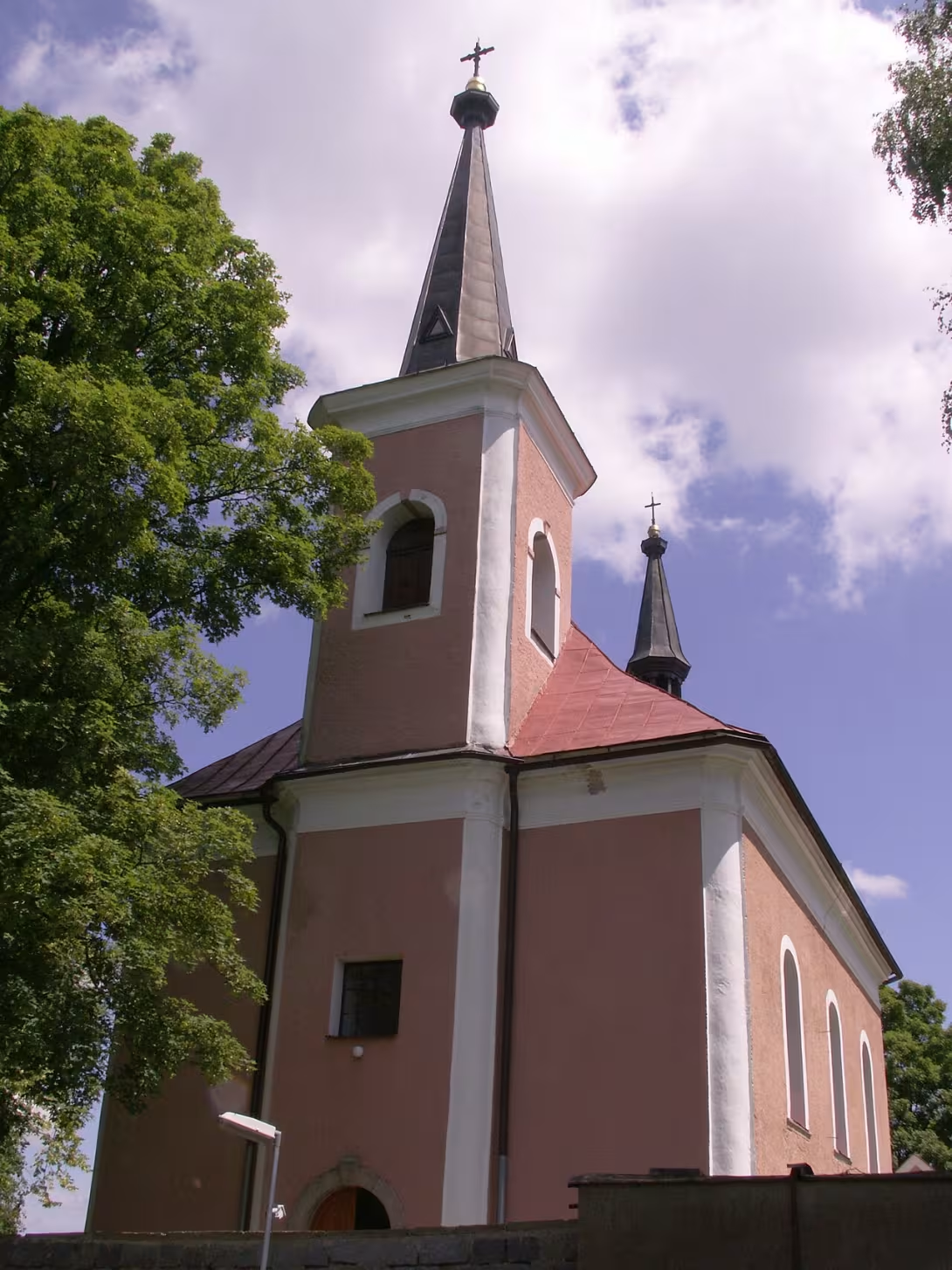
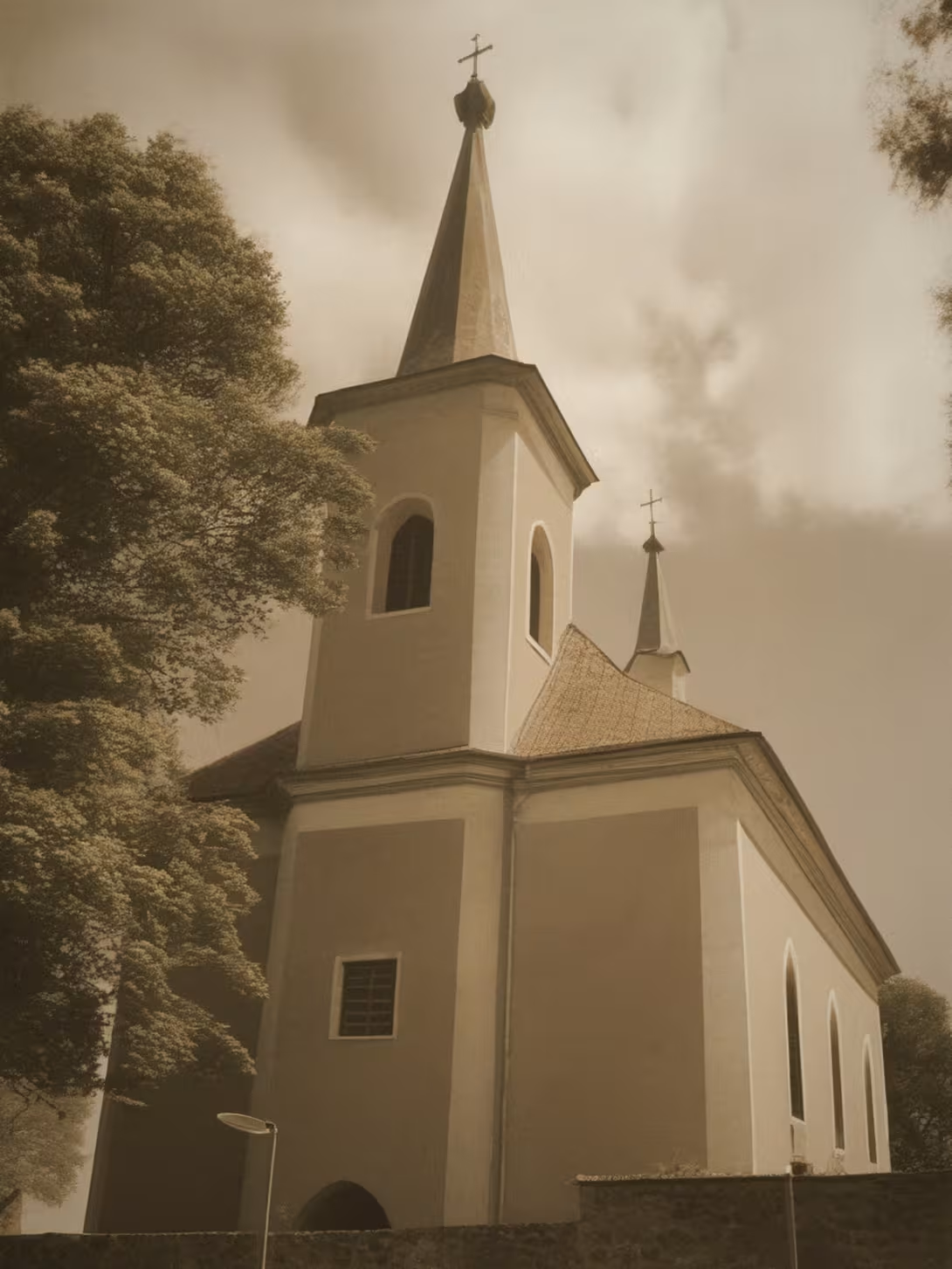
The historical appearance on the left is an AI-generated visualisation and serves as inspiration only.
Historical milestones
- 1785
- Damage to the older church by storm
- 1790
- Building and festive consecration of the present church
- 1900
- Exchange of facade and roof of church
Architectural development
The present late Baroque church was built on the site of an older building damaged by a storm. The construction is one-sided with a half-circle finish and a four-sided tower in the facade. A reconstruction of the facade and roof took place in 1900.
Historical events
In 1785, the older church was damaged by a storm. In 1790 the present late Baroque church was completed and ceremonially consecrated. The facade and roof were changed in 1900.
Points of interest
The original church was severely damaged in 1785 by a violent storm. - The new late Baroque church was built and ceremonially consecrated in 1790. In 1900, the facade and the roof of the temple were replaced. - In the priesthood there is a main altar with the image of St. Catherine of Alexandria and in the ship of the Marian side altar. The temple is located right in the cemetery next to the morgue.
Guide
This guide is narrated by a synthetic voice generated by artificial intelligence.
Show guide text
This text was created by artificial intelligence and has not been editorially reviewed. It may contain inaccuracies.
Welcome to the Heralese, a picturesque village in the heart of the Vysočina Region. Stop for a moment, delay your haste, and let the calm that rules here take hold. Before you is the church of St. Catherine, the late Baroque Roman Catholic parish temple, which has been the guardian of the souls of the locals for over two centuries. It is a building which forms an important cultural dominant of the whole village and whose silhouette harmoniously combines with the surrounding landscape. You are standing in an area which also includes a cemetery, and it is this closeness to the last resting place that gives the whole area a special, quiet dignity and atmosphere of reflection. Look at the front of the church. You see a simple but noble line of a single-boat structure that closes with a semicircular conclusion. On the facade, which was completely replaced with the roof in 1900, note the purity of shapes and proportions typical of the late Baroque. The facade is dominated by a four-sided tower, which in its calm, geometric shape contrasts with the softer lines of the ship. Although we do not know the names of the architects who designed and built this temple, their work today is a testament to the art and precision of the time.
Let's move back a few decades in time to understand why this church is developing like this today. It wasn't always this condition you see before you. The place where this ceremonial temple is today witnessed dramatic events in 1785. The violent storm, which overtook Herálec, seriously damaged the older church, which stood here earlier. The destruction of the original building was a great test for the village, but also an impulse to rebuild. The local community has decided that instead of repairing the damaged building, it will build something new, something that matches the spirit of that time and serve the parish for generations to come. And so she began to draw the resemblance of today's church. Work on the new construction took place with determination and in 1790 the work was completed. The ceremonial consecration of this new temple was certainly a great glory for Herálec and its surroundings. It was the moment when the village reunited around its spiritual center, which was now modern, firm and beautiful.
Now pay attention to the architectural details surrounding you. The late baroque in which the church is built is characterized by some elegance and calm, retreating from the luxury of an early baroque and heading towards the purity of the form. The one-ship layout means that the interior is spacious and transparent, without lateral chapels to divide the space. It creates an open atmosphere that is ideal for gathering the parish. The semicircular conclusion, i.e. the priesthood, is the elegant end of the ship and optically extends the space towards the altar. The four-sided tower in the facade is a symbol of stability and direction towards the sky. Although the facade was replaced in 1900, it retained its original character and proportions. Look at the roof, which was also restored at the same time. Its shape and inclination are part of the overall visual impression that the church has on the orbiting viewer. This building is not just a pile of bricks and stone, but a thought-out total, where each element has its place and function.
The key stories of this place are more linked to the history of the village and to the faith of its inhabitants than to specific famous personalities whose names have not been preserved in our files. We don't know the names of the builders or architects behind the creation of this work. That doesn't mean the church doesn't have a soul. On the contrary, it is the anonymity of builders from that time that often reflects the collective efforts of the entire community. It was the result of a joint effort, faith and desire for a beautiful and dignified place for worship. Historical personalities that would be directly associated with this place are not mentioned in the available records, leaving us room for our own imagination and thinking about how many people were praying here, how many weddings were held and how many children were baptized. Each generation contributed to the history of this church in its own way, either as a visitor or as a member of the parish.
An interesting thing, which may attract attention from a attentive visitor, is the process of recovery itself after the storm. Imagine how the village must have been hit in 1785. The destroyed church was not only a loss of the building, but a loss of the center of social and spiritual life. The decision to build a new church, and not just fix the old one, was a bold move. It shows the firm faith and determination of the local population. It is also interesting that the facade and roof were changed in 1900. This means that the church underwent a major reconstruction which provided it with another century of existence. This maintenance and maintenance of the memory is proof of how the village values its heritage. Although the facade has changed, the core of the church, its disposition and spiritual importance have remained.
If you choose to enter, you will feel in the space that is designed for contemplation and common prayers. In the priesthood, that is, the half-circle part behind the altar, is the main altar. On it is a picture of St. Catherine of Alexandria, patron saint of this temple. St. Catherine is known for her wisdom and courage, and her image here reminds us of the values that the parish reports. There is a Marian side altar in the ship, the main part of the church. Our Lady is honored here as a mother figure who protects and speaks for the believers. These two altars form the spiritual axis of the interior and attract visitors to the sky. The atmosphere inside is calm and quiet, ideal for reflection. The light that penetrates the windows illuminates a spacious ship and creates a peaceful atmosphere.
Herálec is a place where history and present come together. St. Catherine's Church is the heart of this village, a place where generations meet. His history, from the destruction of the storm in 1785 to the ceremonial consecration in 1790 to the reconstruction in 1900, is a story of resistance and faith. Although we do not know the names of the particular people who built and maintained this church, their legacy is visible in every stone and in every line of facade. The church is not only an architectural monument but also a living space where the spiritual life of the village takes place. Its simple but noble architecture of the late Baroque is a testament to the art and taste of the time.
In conclusion, I would recommend that you keep this space to yourself. See the facade from different angles, notice how the tower dominates the horizon and how the church integrates into
Tips for visitors
The best time to visit is the spring or autumn season when the weather is pleasant for walks around the monument. You can reach the place by car or public transport; Please check the current connection in the search engine.
We recommend that you bring drinking water and comfortable shoes that are suitable for movement on the premises. For families with children, a walk around the cemetery wall and historic buildings in a quiet environment is suitable for discreet observation of the surroundings.
For lovers of photography are the best places in the church area where baroque details can be captured and a separate building mortuary with a saddle roof. The best light for shooting architecture is during morning or late afternoon hours.
In addition to the temple itself, you can also visit the cemetery with a wall and a separate building of the morgue, which is part of the whole area.
Frequently asked questions
Is kostel svaté Kateřiny (Herálec) open to the public?
Yes, the church of St. Catherine in Heralec is open to the public. The tour is possible every day from 9: 00 to 5: 00.
How do I get to the place by car / public transport?
By car you can arrive directly in front of the church or use the parking lot nearby. The public transport stops near the church, so it is possible to get on foot.
How much is the entrance fee and is it paid on the spot?
The payment may be right inside the church.
Is the tour suitable for children and seniors?
Yes, a tour of St. Catherine's Church in Heralec is suitable for all ages. The church has accessible staircases and flat areas, so it is possible to move with children or seniors without problems.
How long does the tour take?
The tour of St. Catherine's Church in Heralec takes about 30 minutes. If you want more information about the church, you can arrange with the guide.
What are the opening times and booking is required?
The church of St. Catherine in Heralec is open to the public every day from 9: 00 to 17: 00. Reservation is not necessary, but if you want more information or with a guide to browse the church, we recommend to arrange in advance.
What's interesting in the immediate vicinity?
In the immediate vicinity of the church of St. Catherine in Heralec there are several historical objects such as the castle Herálec or the chapel of St. John the Baptist. The distance from the location is about 30 minutes walking distance.
For kids
Imagine going back to the past, when the Czech countries were full of heroes and fairy tales. And now you have the church of St. Catherine in Heralec, one of the most beautiful and famous churches in our countries.
Businesses nearby
Do you run a restaurant, accommodation, shop, museum, rental, wellness or other visitor service near this monument? Show yourself directly to the people heading to it — this is how they will see you in the app and on the web:
Events nearby
Zdroj akcí: otevřená data měst a obcí ČR (Národní katalog otevřených dat) a kalendář akcí Národního památkového ústavu.
Nearby
The church area includes a cemetery with a fenced wall and a separate building of a morgue with a saddle roof.
Accommodation nearby
Themed route
1. Church of St. Catherine, sacral monument. It represents the main destination of the tour and the historical core of the site. 2. A cemetery with a wall, funeral grounds. It offers a quiet environment within the area surrounded by historical walls. 3. Building morgue with saddle roof, historical building. It's a separate object with a distinctive roof that complements the whole.
Seasonal recommendations
In spring the church surrounds the awakening nature and lush green, which creates a fine contrast with the stone surface of the building. Soft spring light is ideal for capturing the details of the facade and surrounding landscape. We recommend to dress in layers because the weather in Vysočina is very variable in this period, and plan a visit to the morning hours.
The summer season brings radiant sun and rich green trees that provide a pleasant shade in the immediate surroundings of the monument. The atmosphere is full of energy and bright colors. In the main summer season it is advisable to come first thing in the morning to avoid the largest groups of visitors and the noon heat. Don't forget light, breathable clothes and plenty of fluids.
In autumn, the landscape around Heralka is painted in golden and red tones, which gives the place a melancholy and peaceful touch. Foggy wounds can create a mysterious atmosphere that underlines the historical nature of the temple. The best time to visit is late afternoon, when the low sun lights up architecture beautifully. A waterproof coat and a warm sweater are suitable.
In winter the church is very peaceful, especially if the landscape is covered with snow, which highlights clean lines of construction and calms the surroundings. The air is freezing, and the atmosphere is a dream. Due to a shorter day and limited opening times, we recommend a visit in the morning. Hot thermal clothing and solid footwear with anti-slip soles are essential.
Visualizations and artistic views


The visualisations are generated by artificial intelligence and serve as inspiration.
Photos from the area
Real photos taken near the monument


Zdroj a licence jsou uvedeny u každého snímku.
Tips from visitors
No tips yet. Be the first!
Log in and add your tip.
Sources and literature
Fotografie: BíláVrána / CC BY-SA 3.0 — Wikimedia Commons. The author and licence also appear when you hover over the image.
Faktickým podkladem tohoto textu byl článek na Wikipedii, jehož autory jsou přispěvatelé Wikipedie. Článek je dostupný pod licencí CC BY-SA 4.0.
Location on the map


Příběhy a pověsti
Legendy, pověsti a příběhy spjaté s touto památkou
Fotografie návštěvníků
Zatím žádné fotografie. Buďte první, kdo přidá fotografii z návštěvy!
Přihlaste se a přidejte svou fotografii nebo hodnoťte.
Za ověřenou návštěvu v aplikaci získáte víc bodů — poznáme podle GPS, že jste na místě.
Reviews and comments