






Kostel svaté Kunhuty (Nové Město na Moravě) Church
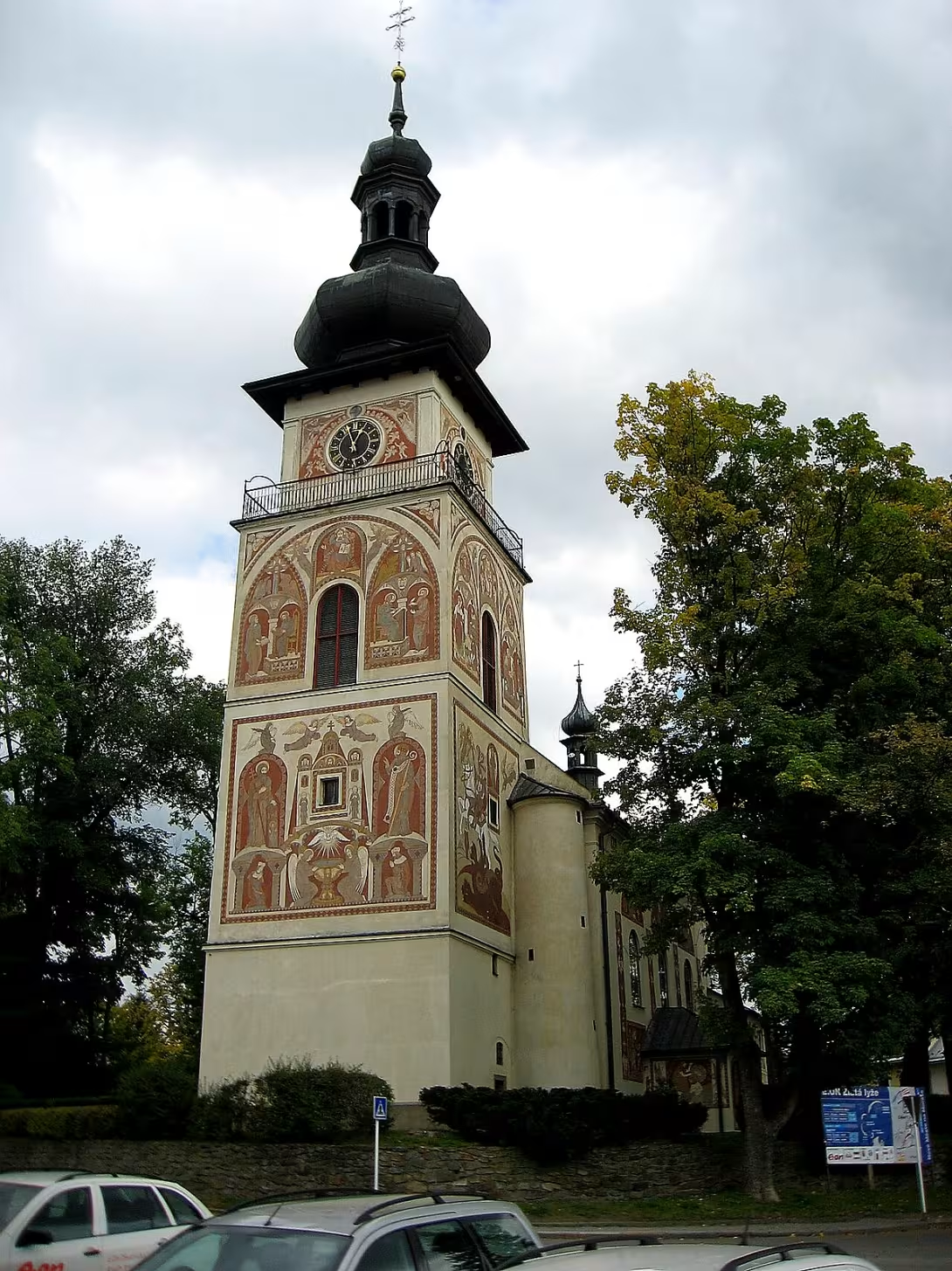
The Church of Saint Kunhuta in Nové Město na Moravě is a notable example of Gothic architecture with significant Baroque enhancements. Situated on Vratislavovo náměstí, it stands as the town’s oldest architectural monument and functions as a parish church within the Žďárské děkanství of the Brno diocese. Dedicated to Saint Kunhuta, this church is recognized for its cultural heritage status in the Czech Republic due to its historical importance and architectural beauty.
The church's origins date back to the 14th century with the construction of a Gothic presbytery. By the mid-15th century, a nave was added, marking an important development phase. The structure evolved further when a tower was built in 1499, later transformed into a spire by 1592. In 1723, a devastating fire damaged much of the church, leading to substantial Baroque renovations. These included constructing a new southern sacristy and transforming the northern one into what is now known as the Black Chapel.
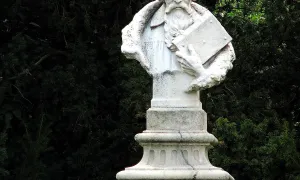
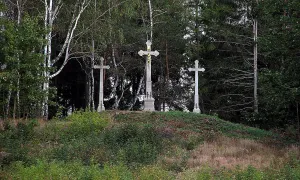
Architecturally, the Church of Saint Kunhuta blends Gothic and Baroque elements harmoniously. It features a single-nave design with a polygonal conclusion and a dominating spire on its façade. The exterior boasts valuable sgraffito decorations by academic painter Karl Němec, enhancing its artistic appeal. Near the church stands a statue and a cross, adding to the site's historical ambiance.
Throughout history, the church has been integral to Nové Město na Moravě’s community. It has undergone various changes, from architectural modifications to serving as a focal point for local religious activities. The church also contains notable burials, including a tombstone of an official named Želechovský's wife and crypts with remains of the Dubských z Třebomyslic and Kratzerů families.
Today, the Church of Saint Kunhuta remains a significant cultural landmark. It is open to visitors interested in exploring its rich history and architectural beauty. As a protected cultural heritage site, it holds importance not only for the local community but also for those fascinated by Gothic and Baroque architecture. Its historical context, combined with artistic elements like Karl Němec’s sgraffito work, makes it an attractive destination for visitors to Nové Město na Moravě.
The Church of Saint Kunhuta offers a unique glimpse into the architectural evolution from the Gothic to the Baroque period in Bohemia. Its preservation as a cultural heritage site ensures that future generations can appreciate its historical and artistic significance. Visitors are invited to explore this remarkable monument, where history and artistry converge to tell the story of Nové Město na Moravě's past.
Then and now
Drag the slider to compare how the landmark may have looked when it was built with the view today.
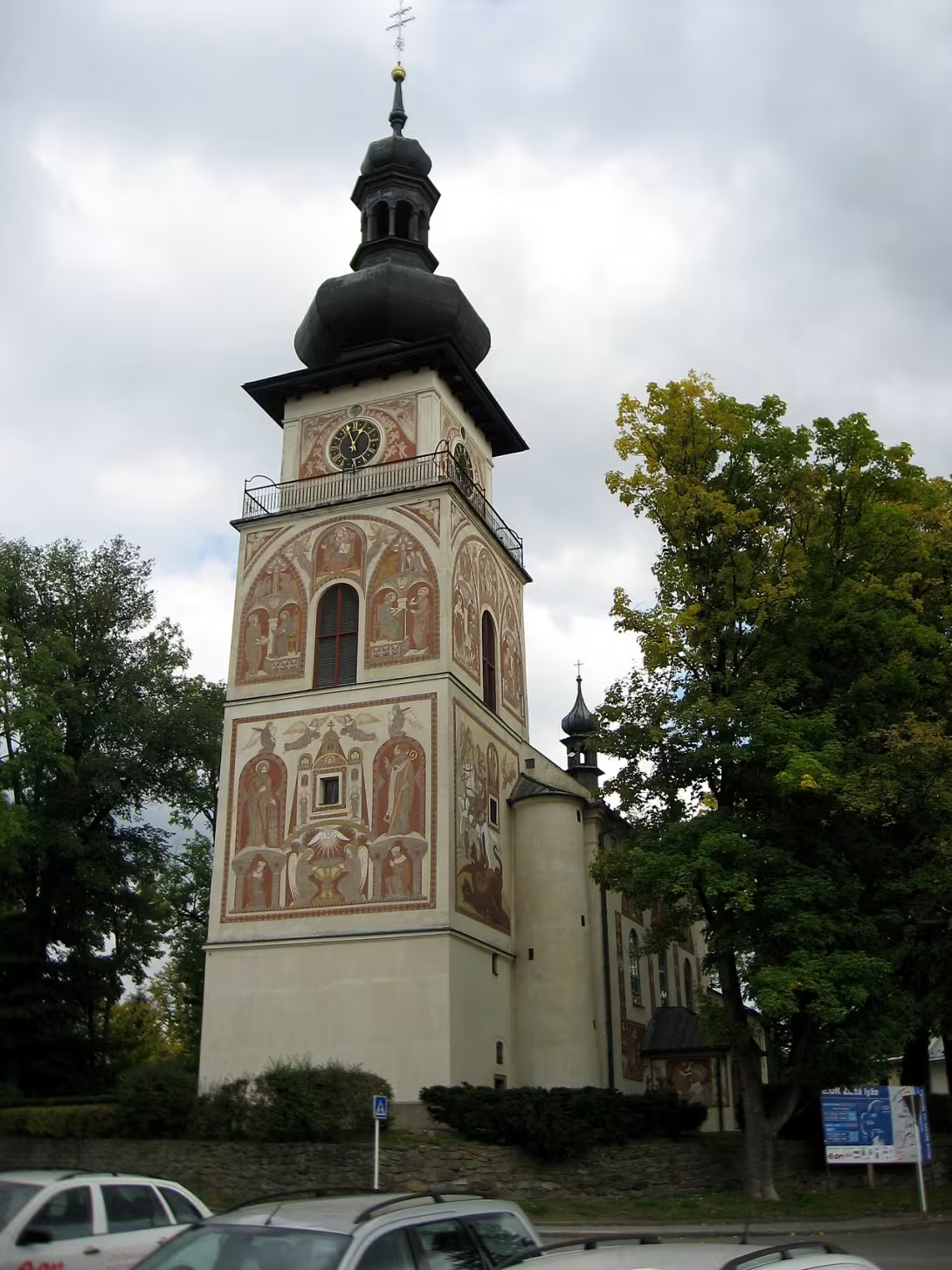
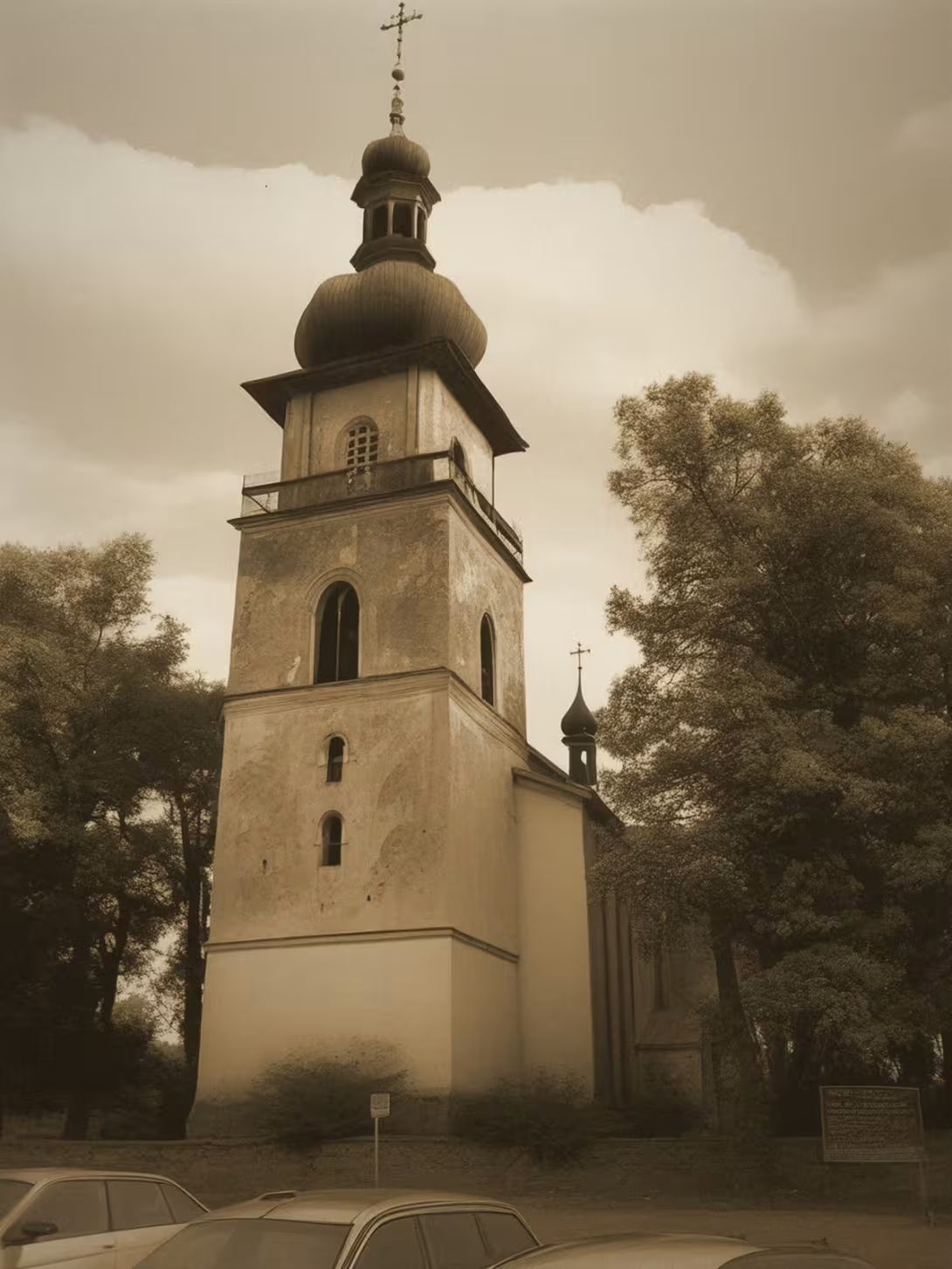
The historical appearance on the left is an AI-generated visualisation and serves as inspiration only.
Historical milestones
- 1400
- Construction of the Gothic presbytery began.
- 1499
- A tower was added to the church.
- 1592
- The tower was transformed into a spire.
- 1723
- The church suffered significant damage in a fire.
Architectural development
The Church of Saint Kunhuta began as a Gothic presbytery in the 14th century. By the mid-15th century, a nave was added to it. In 1499, a tower was constructed and later transformed into a spire in 1592. Following a devastating fire in 1723, significant Baroque renovations were undertaken, including new sacristies.
Historical events
In the mid-15th century, the nave was added to the original Gothic presbytery built in the 14th century.
A significant fire in 1723 destroyed much of the church, leading to a reconstruction that included a new southern sacristy and the transformation of the northern one into the so-called Black Chapel.
Guide
This guide is narrated by a synthetic voice generated by artificial intelligence.
Show guide text
This text was created by artificial intelligence and has not been editorially reviewed. It may contain inaccuracies.
Welcome to the Church of Saint Kunhuta in Nové Město na Moravě, a remarkable testament to the beauty and resilience of historical architecture. As you stand on Vratislavovo náměstí, take a moment to absorb the sight before you: an elegant structure that marries Gothic foundations with Baroque embellishments, standing proudly as the oldest architectural monument in this town.
The story of this church begins around 1400 when its Gothic presbytery was first constructed. Over time, it evolved significantly; by 1499, a tower had been added to enhance its skyline presence. This tower underwent another transformation in 1592, being converted into a spire that now reaches towards the heavens. However, its journey wasn't without adversity—1723 marked a year of challenge when a devastating fire inflicted considerable damage upon it.
As you look around, notice how the church's architecture tells a story of adaptation and survival. Its single-nave design is capped by a polygonal presbytery—a unique blend of Gothic and Baroque styles that is relatively rare in this region. This combination offers an intriguing study for those interested in architectural history, showcasing how different eras have left their mark on the building.
While specific architects or historical figures directly linked to its construction remain unknown, the church itself stands as a silent witness to centuries of history unfolding around it. It has served not just as a place of worship but also as a community pillar within the Žďárské děkanství of the Brno diocese.
One of the most fascinating aspects of this church is its resilience and ability to adapt over time, particularly after the fire in 1723. This event could have marked the end for many structures, but not for the Church of Saint Kunhuta. Instead, it became a catalyst for renewal, leading to significant Baroque enhancements that you can see today.
As we conclude our brief journey through history and architecture, I invite you to explore further. Walk around its perimeter, feel the texture of its walls, and imagine the stories they could tell if only they could speak. The Church of Saint Kunhuta is not just a monument; it's a living testament to the past, inviting us all to appreciate the beauty and resilience it embodies.
Thank you for joining me on this exploration. May your visit inspire curiosity and admiration for the rich tapestry of history that surrounds us.
Frequently asked questions
Can the monument be visited?
Religious buildings are usually open mainly during services; at other times a visit is normally arranged with the parish or the operator. We have not verified specific times.
Where is the monument?
Location: Vratislavovo náměstí 1340, Nové Město na Moravě, Kraj Vysočina. The map on this page shows the exact spot.
Why is the monument protected?
It is listed in the Central List of Cultural Monuments of the Czech Republic as a cultural monument (register no. 40027/7-4262).
Businesses nearby
Do you run a restaurant, accommodation, shop, museum, rental, wellness or other visitor service near this monument? Show yourself directly to the people heading to it — this is how they will see you in the app and on the web:
Events nearby
Zdroj akcí: otevřená data měst a obcí ČR (Národní katalog otevřených dat) a kalendář akcí Národního památkového ústavu.
Accommodation nearby
Themed route
Tematická výletní trasa: Kostel svaté Kunhuty a okolí Nového Města na Moravě
1. Kostel svaté Kunhuty (Nové Město na Moravě) - Hlavní cíl
Typ: Historická památka
Proč stojí za návštěvu: Tento barokní kostel je nejen významnou architektonickou památkou, ale také svědectvím bohaté historie a kultury Nového Města na Moravě. Jeho interiér nabízí krásné fresky a sochy, které přitahují návštěvníky z celého regionu.
2. Obecní úřad (Nové Město na Moravě)
Typ: Historický objekt
Proč stojí za návštěvu: Tento klasicistní budovou je zajímavým příkladem místní architektury 19. století. Při procházce okolními uličkami si můžete užít klidného prostředí a poznat více o historii obce.
3. Městské nádvoří (Nové Město na Moravě)
Typ: Veřejný prostor
Proč stojí za návštěvu: Toto místo je ideální pro odpočinek a relaxaci. Nádherné zelené prostory nabízejí krásnou příležitost k procházce, sledování místního života nebo jednoduše k uvolnění v klidné atmosféře.
4. Zvonice kostela svaté Kunhuty
Typ: Architektonická památka
Proč stojí za návštěvu: Výšková zvonice nabízí vynikající pohled na okolní krajinu. Je to také skvělá příležitost pro fotografování a prozkoumání historických detailů, které tvoří tento architektonický klenot.
5. Kaplička u kostela svaté Kunhuty
Typ: Religiozní památka
Proč stojí za návštěvu: Tato malebná kaplička je místo klidu a úvahy. Její historie a architektonické detaily přitahují návštěvníky, kteří hledají pohodlí v duchovním prostoru.
Tato trasa nabízí komplexní zážitek o kulturním a historickém bohatství Nového Města na Moravě, zaměřený především kolem kostela svaté Kunhuty.
Seasonal recommendations
Spring: Visiting the Church of Saint Kunhuta during spring offers a serene experience as nature awakens around Nové Město na Moravě. The surrounding landscape is adorned with blooming flowers and fresh greenery, creating a picturesque backdrop for your visit. This time of year often brings mild weather, making it an ideal period to explore the church's architecture without extreme temperatures. While the crowds are generally moderate, arriving in the morning can provide a more tranquil experience before visitors gather later in the day. Wearing comfortable layers is advisable as temperatures may vary.
Summer: Summer at the Church of Saint Kunhuta is vibrant and lively, with long daylight hours enhancing your visit to this historic site. The lush greenery and warm weather make it perfect for outdoor exploration around the church grounds. However, this is also peak tourist season, so expect larger crowds and plan accordingly by arriving early in the morning or later in the afternoon when visitors are fewer. Light clothing is recommended to stay comfortable during your visit.
Autumn: The autumn months bring a stunning display of colors as the leaves turn vibrant shades of red, orange, and yellow around Nové Město na Moravě. This picturesque setting provides a unique atmosphere for visiting the Church of Saint Kunhuta, with cooler temperatures making it pleasant to explore without the summer heat. While visitor numbers decrease compared to summer, it's still wise to check opening times as they may be shorter in this season. Layered clothing is advisable to accommodate changing weather conditions.
Winter: Winter transforms the area around the Church of Saint Kunhuta into a serene and quiet landscape, often blanketed with snow that adds a magical touch to its historic architecture. The cooler temperatures mean fewer visitors, allowing for a more intimate experience of this beautiful site. Visiting during daylight hours is recommended due to the limited natural light available in these months.
Visualizations and artistic views


The visualisations are generated by artificial intelligence and serve as inspiration.
Photos from the area
Real photos taken near the monument

Zdroj a licence jsou uvedeny u každého snímku.
Tips from visitors
No tips yet. Be the first!
Log in and add your tip.
Sources and literature
Photos: Dezidor / CC BY 3.0 — Wikimedia Commons. The author and licence also appear when you hover over the image.
Location on the map
More monuments – Nové Město na Moravě
Show all in the municipality


Příběhy a pověsti
Legendy, pověsti a příběhy spjaté s touto památkou
Fotografie návštěvníků
Zatím žádné fotografie. Buďte první, kdo přidá fotografii z návštěvy!
Log in a přidejte svou fotografii nebo hodnoťte.
Za ověřenou návštěvu v aplikaci získáte víc bodů — poznáme podle GPS, že jste na místě.
Reviews and comments