



Kostel svaté Kunhuty (Stanětice) Church
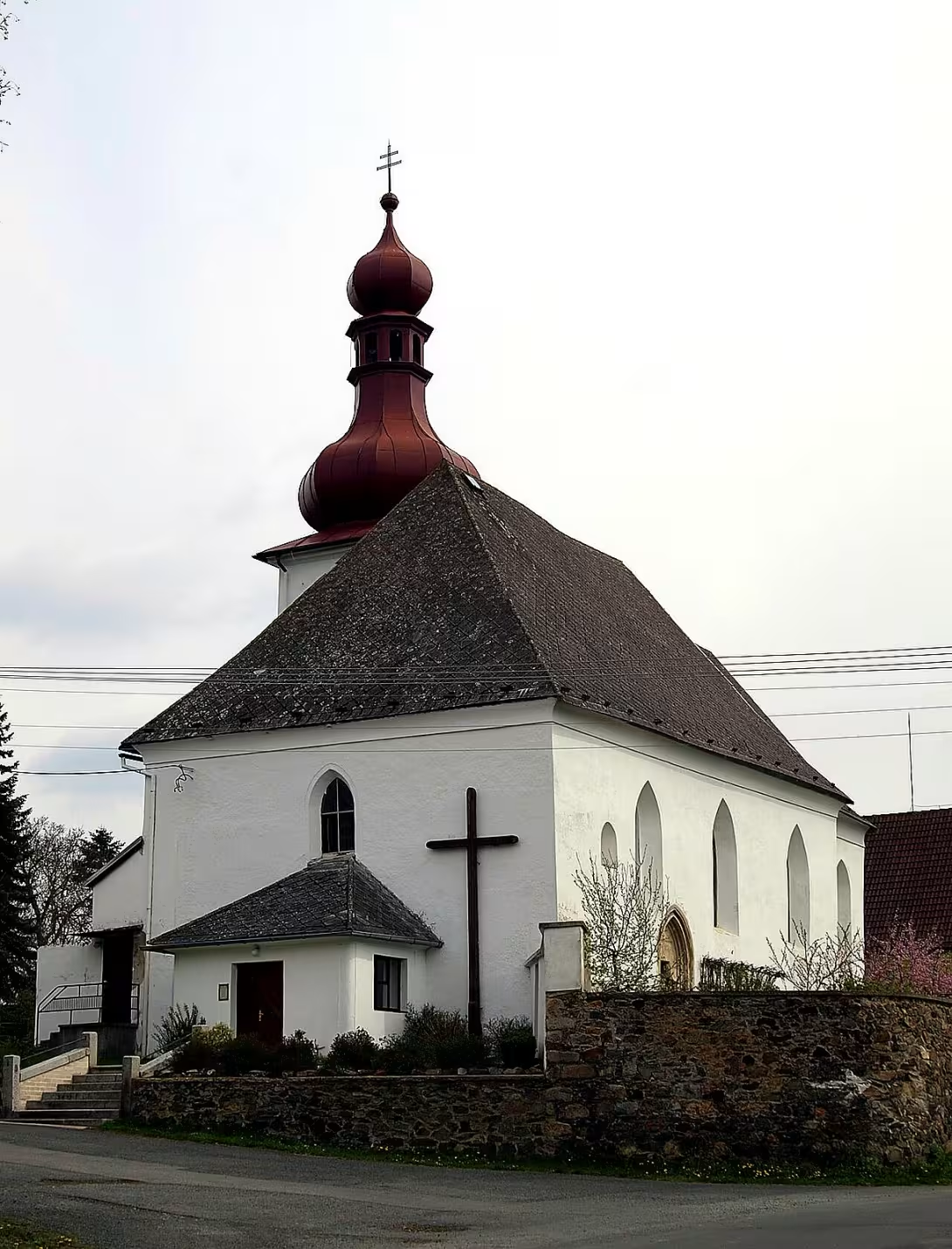
The Church of St. Kunhuta in Stanětice is a captivating fusion of Gothic and Baroque elements, situated on a gentle slope within the village. Its history dates back to the mid-14th century, with multiple phases of renovation reflecting the region's rich cultural and architectural heritage.
Built as a Gothic structure around 1350, the church's tower was constructed shortly after. The tower underwent repairs in the second half of the 15th century. In the 17th century, Baroque renovations took place, followed by further modifications in 1787. These changes significantly impacted the church's architecture and artistic form.
The church features a Gothic core with later Baroque additions and modifications. Original Gothic windows on the south side of the nave remain preserved today. The tower was rebuilt in the 15th century, and further renovations occurred in the 17th and 18th centuries. The unique blend of Gothic and Baroque styles is a testament to its rich history and cultural heritage.
During the church's construction period, Bohemia experienced significant cultural and architectural developments influenced by European trends. Little is recorded about the church's earliest history, but it has played an important role in the region's spiritual life for centuries.
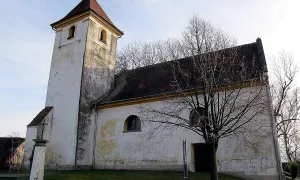
Since the 2012 demolition of the adjacent school building, the church is accessible from all sides. The original connecting wall between the two structures remains visible today. Visitors can explore the church's interior, featuring a Gothic core with later Baroque additions and modifications.
Today, the Church of St. Kunhuta in Stanětice stands as a testament to the region's rich cultural and architectural heritage. Its unique blend of Gothic and Baroque styles makes it a must-visit destination for anyone interested in history and architecture.
Then and now
Drag the slider to compare how the landmark may have looked when it was built with the view today.
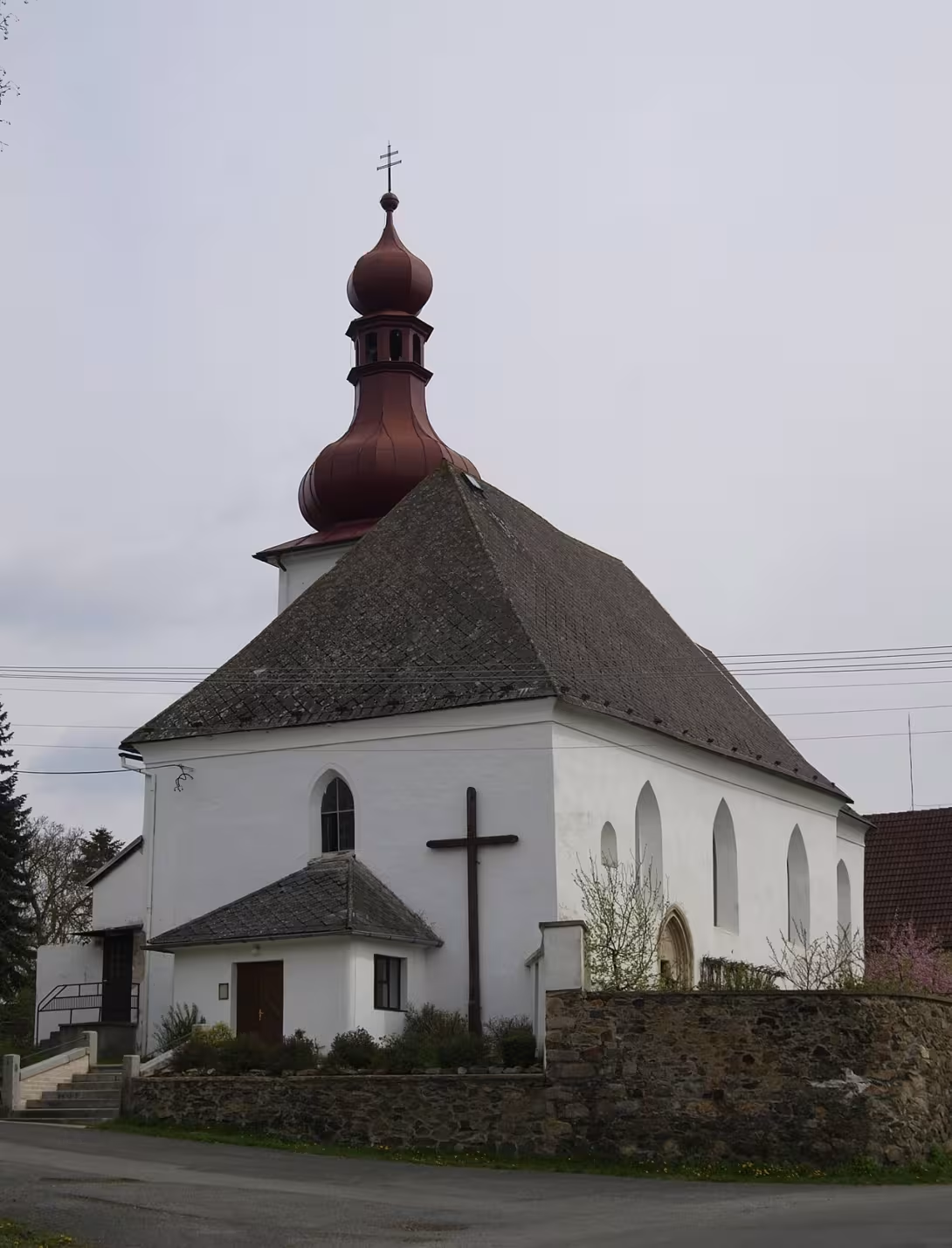

The historical appearance on the left is an AI-generated visualisation and serves as inspiration only.
Historical milestones
- 1350
- Built as a Gothic structure
- 1450
- Tower underwent repairs in the second half of the century
- 1650
- Baroque renovations took place
- 1787
- Further modifications occurred
Architectural development
The church features a Gothic core, with later Baroque additions and modifications. The tower was rebuilt in the 15th century, and further renovations took place in the 17th and 18th centuries.
Historical events
- around 1350
- The church was built as a Gothic structure.
- 15th century
- The tower was constructed.
- 17th century
- Baroque renovations took place.
- 1787
- Further Baroque renovations were made.
Points of interest
– The Church of St. Kunhuta in Stanětice has a unique feature – its tower was built with a deliberate lean, which is not typical for Gothic architecture.
– Despite being rebuilt and renovated multiple times, some original Gothic windows on the south side of the nave remain preserved to this day, offering a glimpse into the church's medieval past.
– The adjacent school building that stood next to the church until 2012 was demolished, revealing the original connecting wall between the two structures – a hidden architectural feature that is now visible to visitors.
Guide
This guide is narrated by a synthetic voice generated by artificial intelligence.
Show guide text
This text was created by artificial intelligence and has not been editorially reviewed. It may contain inaccuracies.
The Church of Saint Kunhuta stands on a gentle slope in the middle of the village of Stanětice, right at the intersection of roads. Until the sixteenth century, Stanětice was the seat of a parish that also administered the surrounding villages. From the south, a boundary wall defines the space of the church. From the north, a two-storey building of the former village school long adjoined the church. It was demolished in 2012, and since then the church has been accessible from all sides. The remainder of the wall that connected both buildings is still visible today.
The church was created around the middle of the fourteenth century as a high Gothic structure. The tower was added somewhat later and was repaired in the second half of the fifteenth century. In the second half of the seventeenth century and again in 1787, the church underwent Baroque modifications. These were most evident on the highest floor of the tower and on its roof. The gallery also dates from the same period. Later, annexes were added on the western side and structural changes were also made to the sacristy.
The church consists of a rectangular nave with a western vestibule. This is followed by a narrower chancel with a three-sided apse. At the junction of the nave and chancel stands a massive prismatic tower, topped with a Baroque onion dome with a distinctly red finish. From the church, the tower can be reached only through the sacristy, which adjoins it from the east. Another annex is a covered external staircase to the gallery at the northwest corner.
From the Gothic structure, the original window traceries have been preserved, that is, the stone decorative infills of the windows. They can be found on two windows on the southern side of the nave and also on the windows of the chancel.
Tips for visitors
Best Time to Visit: The Church of St. Kunhuta is a year-round destination, but the best time to visit is during spring and autumn when the weather is mild and sunny. This allows you to fully appreciate the church's architecture and surroundings without the harshness of winter or summer heat. The church is easily accessible on foot, taking approximately 10-15 minutes from the village center. What to Bring: Wear comfortable shoes for walking around the church and surrounding area. Don't forget your camera to capture the stunning architecture and picturesque views. Photography: The best spots for photography are around the church's exterior, particularly during golden hour (1-2 hours after sunrise or before sunset). The gentle slope of the surrounding terrain provides a unique perspective on the church's facade. Be mindful of any restricted areas or signs indicating no photography. What to See Nearby: Within 30 minutes' walking distance from the church, you can visit other historical landmarks in Stanětice village, such as the local museum and historic houses. Take a stroll through the picturesque countryside and enjoy the tranquil atmosphere. Tips for Families with Children: Bring your little ones along to explore the church's architecture and learn about its history. There are no specific activities or exhibits designed for children, but the peaceful surroundings make it an ideal spot for family bonding.
Frequently asked questions
Can the monument be visited?
Religious buildings are usually open mainly during services; at other times a visit is normally arranged with the parish or the operator. We have not verified specific times.
Where is the monument?
Location: Stanětice, Plzeňský kraj. The map on this page shows the exact spot.
Why is the monument protected?
It is listed in the Central List of Cultural Monuments of the Czech Republic as a cultural monument (register no. 41436/4-2214).
Businesses nearby
Do you run a restaurant, accommodation, shop, museum, rental, wellness or other visitor service near this monument? Show yourself directly to the people heading to it — this is how they will see you in the app and on the web:
Events nearby

Zdroj akcí: otevřená data měst a obcí ČR (Národní katalog otevřených dat) a kalendář akcí Národního památkového ústavu.
Accommodation nearby
Themed route
Tematická výletní trasa: Discovering the History of Stanětice
Stop 1: Kostel svaté Kunhuty (Stanětice) (Kostel svaté Kunhuty) A beautiful Baroque church built in the 18th century, featuring stunning architecture and a peaceful atmosphere. This is the main attraction of our tour.
Stop 2: Historic Village Center Explore the charming village center with its traditional houses, quaint shops, and lively atmosphere. Get a glimpse into the daily life of the locals and enjoy the rustic charm.
Stop 3: Village Museum (Muzeum v Staněticích) Learn about the history and culture of the region at this small but informative museum. Discover exhibits on local traditions, crafts, and way of life.
This tour provides a unique insight into the history and culture of Stanětice, from its stunning church to its charming village center and local museum. Enjoy the peaceful atmosphere and get a taste of traditional Czech life.
Seasonal recommendations
Spring
As you visit the Kostel svaté Kunhuty in spring, you'll be greeted by the vibrant greenery surrounding the church and the warm sunshine casting a golden glow on the stone walls. The air is filled with the sweet scent of blooming flowers and the gentle chirping of birds. To make the most of your visit, plan to arrive early to avoid the crowds that gather later in the day. Wear comfortable shoes for exploring the surrounding countryside and dress in layers for the unpredictable spring weather.
Summer
During the summer months, the Kostel svaté Kunhuty comes alive with the sounds of laughter and chatter. The warm sunshine makes it an ideal time to take a leisurely stroll around the church and enjoy the beautiful views of the surrounding landscape. Be prepared for larger crowds, especially on weekends and holidays, so plan your visit accordingly. Wear light, breathable clothing and don't forget to bring sunscreen and a hat to protect yourself from the sun.
Autumn
As autumn arrives, the Kostel svaté Kunhuty is surrounded by a kaleidoscope of colors as the leaves change with the seasons. The air is crisp and cool, making it an ideal time for a peaceful visit. Take your time to admire the stunning views and enjoy the tranquility of the surroundings. Wear warm clothing and comfortable shoes, and consider visiting early in the day or later in the afternoon to avoid the peak tourist hours.
Winter
In winter, the Kostel svaté Kunhuty takes on a serene and peaceful atmosphere, with the snow-covered landscape creating a picturesque backdrop. Dress warmly and wear sturdy shoes for exploring the surrounding countryside. Consider visiting during the quieter morning or afternoon hours to avoid the crowds that gather later in the day.
Visualizations and artistic views


The visualisations are generated by artificial intelligence and serve as inspiration.
Photos from the area
Real photos taken near the monument


Zdroj a licence jsou uvedeny u každého snímku.
Tips from visitors
No tips yet. Be the first!
Log in and add your tip.
Sources and literature
Photos: Horst / CC BY-SA 4.0 — Wikimedia Commons. The author and licence also appear when you hover over the image.
Faktickým podkladem tohoto textu byl článek na Wikipedii, jehož autory jsou přispěvatelé Wikipedie. Článek je dostupný pod licencí CC BY-SA 4.0.
Location on the map
More monuments – Stanětice
Show all in the municipality



Fotografie návštěvníků
Zatím žádné fotografie. Buďte první, kdo přidá fotografii z návštěvy!
Log in a přidejte svou fotografii nebo hodnoťte.
Za ověřenou návštěvu v aplikaci získáte víc bodů — poznáme podle GPS, že jste na místě.
Reviews and comments