



Kostel svaté Máří Magdalény (Chbany) Church
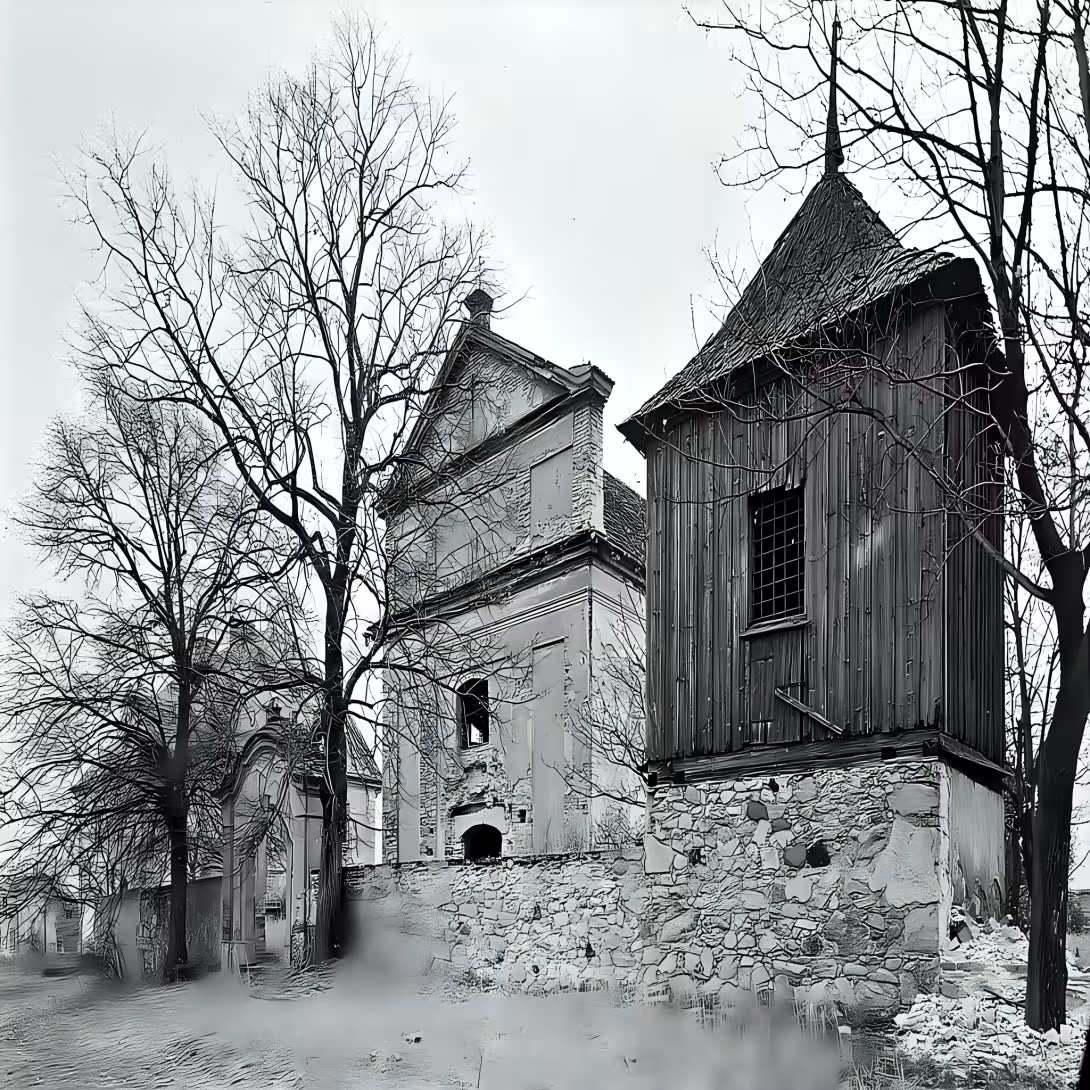
Objekt se nedochoval — na místě dnes nestojí. Následující text popisuje jeho historii, ne současnou návštěvu.
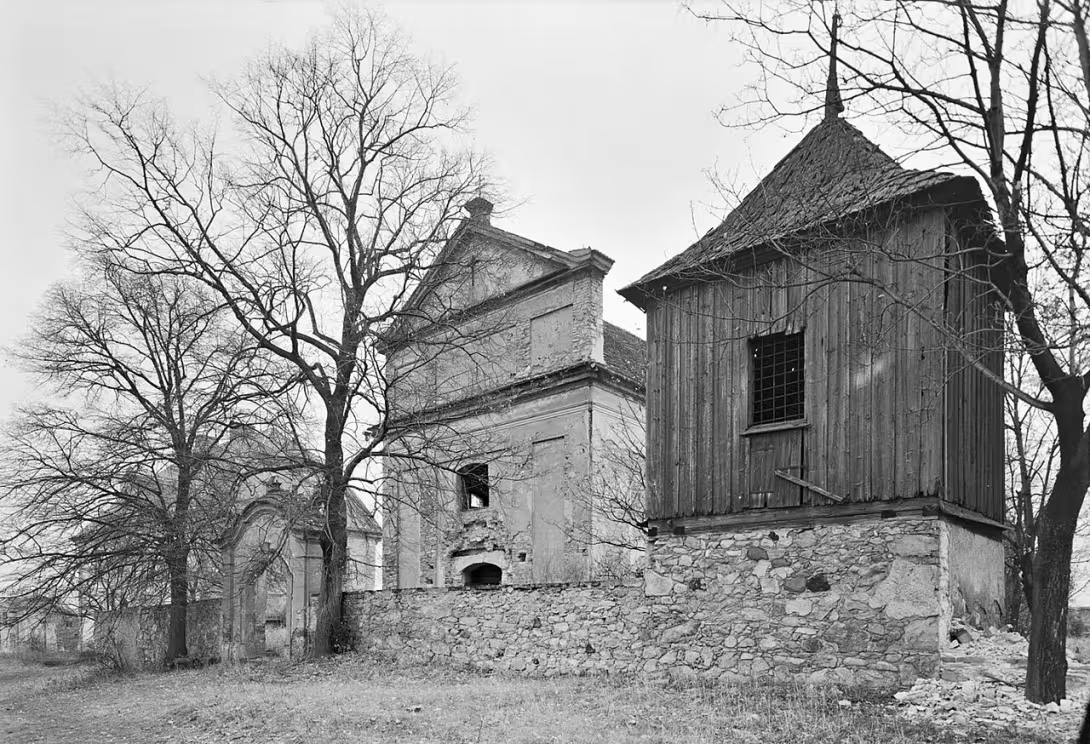
The Roman Catholic Church of St. Mary Magdalene stood in the extinct village of Lomazice in the district of Chomutov and was until its demise the parish church of the local parish. The monumental building was located in the cemetery area surrounded by a massive wall. The entrance to the cemetery was led by a gate from 1776, with a bell tower standing next to it.
The first written mention of the Lomazic parish church dates back to 1352, when the parish was liberated from the papal tithe for its poverty. The church was built in a Gothic style. During its duration, it gradually underwent reconstruction - in 1592 it was expanded, later in 1692, at the expense of Count Gustav Adolf of Wurmsbach, baroque arrangements that gave the church the form that he kept until the twentieth century.
Over time, the position of the parish changed. Sometime after 1761, the Lomazic parish was abolished and the church became just a filial temple in the Dolan parish. The building was also facing natural disasters - in 1772, the fire-damaged roof had to be repaired.
The construction form was moderate, but characteristic. The church had a rectangular plan with a polygonal presbytery. The north side of the presbytery was the sacristy, the south chapel. The facades were divided by simple segmented square windows. The facade was decorated with lizene frames, the facade highlighted a triangular shield.
The building was richly equipped. The interior was decorated by three early Baroque altars and a pulpit from 1692. The main altar of украPreparation was a painting of Mary Magdalena from 1851. The church was served by an organ from 1867. Among the most valuable parts were the original altar painting by Mary Magdalena from K. Trüble in 1777. The equipment included four inscription tombstones from the sixteenth to eighteenth century. Inside the church they had their tombs aristocratic families - Strojetic Strojetic and the earls of Pergen.
But the fate of the monument changed in the second half of the twentieth century. The church was demolished along with the whole village probably in 1967 because it found itself at the bottom of the water tank that was built. In this way, more than six centuries of the history of this church and parish has disappeared, which can only be remembered today through historical records and descriptions of the building.
Then and now
Drag the slider to compare how the landmark may have looked when it was built with the view today.
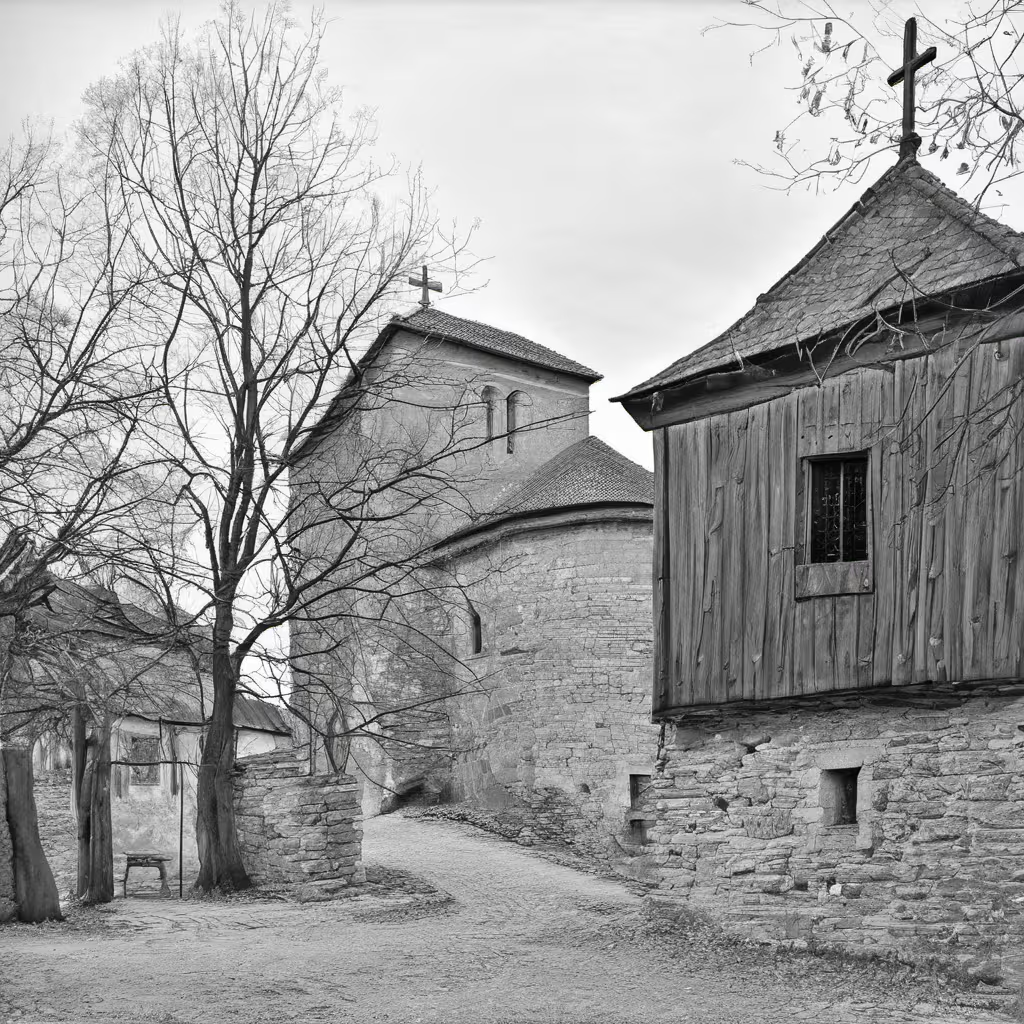
The historical appearance on the left is an AI-generated visualisation and serves as inspiration only.
Historical milestones
- 1352
- The first written mention of the Lomazic parish church - the parish was freed from paying the papal tithe for poverty.
- 1592
- The expansion of the church within its development.
- 1692
- Baroque arrangements of the church at the expense of Count Gustav Adolf of Wurmsbach.
- 1967
- The demise of the church and its demise - along with the desolate village, it was demolished because of the construction of the water tank Přezranice.
Architectural development
The church was originally built in a Gothic style with a rectangular plan and polygonal presbytery. It was expanded in the 16th century and detailed in the 17th century in the Baroque style. His facades were broken down by segmented windows and decorated with lizene frames with shields.
Historical events
1352 - the first written mention of the church as liberation of the parish from the papal tithe; 1592 - extension of church; 1692 - baroque adjustments for the costs of Count Gustav Adolf of Wurmsbach; 1967 - the demise of the church and village due to the construction of the Pherunice tank.
Owners
Parish Chbany
Points of interest
The first written mention of the church dates back to 1352, when the parish was liberated from the papal tithe for poverty. - In 1692, baroque adjustments were made to the costs of Count Gustav Adolf of Wurmsbach. - The interior decorated three early Baroque altars and a pulpit from 1692. - Among the most valuable parts was the original altar painting by Mary Magdalena from K. Trüble in 1777. - The church was probably demolished in 1967 because it found itself at the bottom of the built water tank of Pherunice.
Guide
This guide is narrated by a synthetic voice generated by artificial intelligence.
Show guide text
This text was created by artificial intelligence and has not been editorially reviewed. It may contain inaccuracies.
The Church of Saint Mary Magdalene stood in the deserted village of Lomazice in the Chomutov district. Today we cannot find it anymore. Together with the entire village, it was probably demolished in 1967 because it ended up at the bottom of the Nechranice water reservoir that was being built at that time.
Until its destruction, the church was surrounded by a cemetery with a massive wall. The cemetery was entered through a gate dated 1776. Next to it stood a bell tower with a timber-framed upper storey.
The first written mention of the Lomazice parish church dates from 1352. At that time, the church was exempted from paying papal tithes because of the poverty of the parish. The building was created in Gothic style and was expanded in 1592. In 1692, Count Gustav Adolf of Wurmsbach paid for Baroque modifications at his own expense. These gave the church an appearance that was preserved until the twentieth century.
Sometime after 1761, the Lomazice parish was dissolved and the church became a subsidiary church of the Dolanská parish. In 1772, the roof had to be repaired after it was damaged by fire.
The church had a rectangular floor plan and a polygonal presbytery. Some sources, however, state that the presbytery was rectangular. A sacristy was attached to its northern side and a chapel to its southern side. The facades were simple, divided only by square windows with segmental tops. The front was decorated with pilaster frames, that is, flat vertical strips in the masonry, and at the top it was emphasized by a triangular gable.
Inside there were three early Baroque altars and a pulpit from 1692. Above the main altar hung a painting of Mary Magdalene from 1851. An earlier altar painting of the same saint from 1777 was painted by Trübl. The furnishings also included an organ from 1867. The church also preserved four tombstones with inscriptions from the sixteenth to eighteenth centuries. The noble families, the Strojetičtí of Strojetice and the Counts of Pergenu, had their burial vaults there.
For kids
Imagine going back to the past in the Middle Ages. You're dressed like a peasant from that time on a horse in the woods and fields. After a while, you get off your horse and get off in front of a big stone church. The church is dedicated to St. Mary Magdalene, who was a well-known teacher and healer.
How did it look here? Who lived here? What happened here? You'll know all that if you look at the church. It was a magnificent building with high towers and beautiful windows. At that time Chbany was a small village where rural peasants and shepherds lived.
Businesses nearby
Do you run a restaurant, accommodation, shop, museum, rental, wellness or other visitor service near this monument? Show yourself directly to the people heading to it — this is how they will see you in the app and on the web:
Events nearby
Zdroj akcí: otevřená data měst a obcí ČR (Národní katalog otevřených dat) a kalendář akcí Národního památkového ústavu.
Nearby
The surrounding area of the church is characteristic of the agricultural landscape.
Visualizations and artistic views


The visualisations are generated by artificial intelligence and serve as inspiration.
Photos from the area
Real photos taken near the monument

Zdroj a licence jsou uvedeny u každého snímku.
Atmosphere of the place
This atmospheric visualisation of the place and period was generated by artificial intelligence. It is not real footage of the location.
Tips from visitors
No tips yet. Be the first!
Log in and add your tip.
Sources and literature
Photos: autor neuveden / Public domain, rozlišení zvýšeno umělou inteligencí — Wikimedia Commons. The author and licence also appear when you hover over the image.
Faktickým podkladem tohoto textu byl článek na Wikipedii, jehož autory jsou přispěvatelé Wikipedie. Článek je dostupný pod licencí CC BY-SA 4.0.
Location on the map

Příběhy a pověsti
Legendy, pověsti a příběhy spjaté s touto památkou
Fotografie návštěvníků
Zatím žádné fotografie. Buďte první, kdo přidá fotografii z návštěvy!
Log in a přidejte svou fotografii nebo hodnoťte.
Za ověřenou návštěvu v aplikaci získáte víc bodů — poznáme podle GPS, že jste na místě.
Reviews and comments